
Quick Take
- Pugs have 28 deciduous (baby) teeth, but 42 permanent (adult) teeth.
- Pugs have 20 upper teeth and 22 lower teeth
- Pugs have heterodont teeth consisting of incisors, canines, premolar and molars.
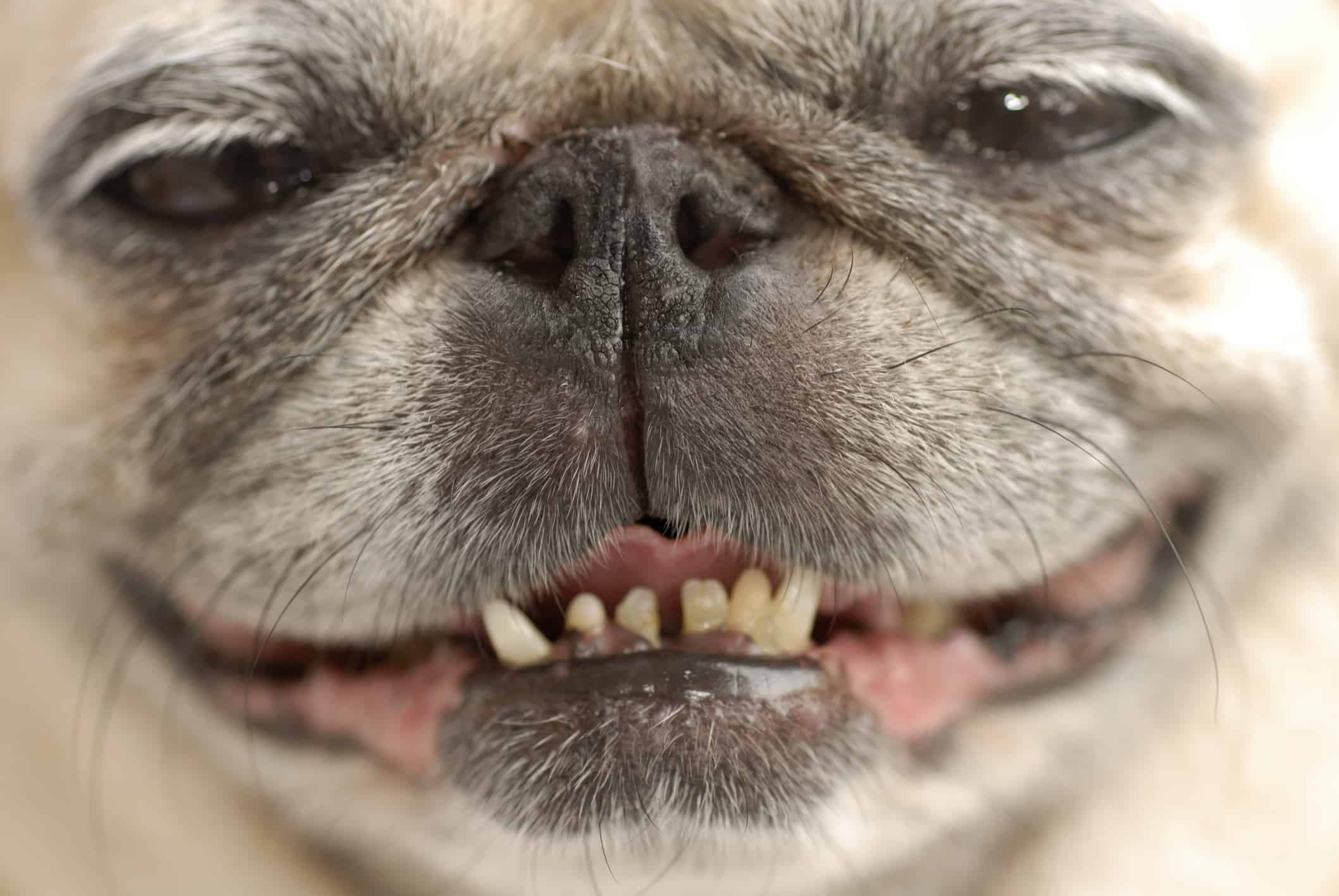
Pugs (Canis lupus familiaris) originated in China over 2,000 years ago, where they were the cherished companions of royalty. They were introduced to North America in the 19th century, with the American Kennel Club (AKC) recognizing the breed in 1885. They quickly became a common family pet in America, where they remain a favored breed, known for their sociable, charming personalities. Pugs are small, sturdy dogs with a distinctive appearance marked by a wrinkled face, large expressive eyes, a short muzzle, and a tightly curled tail. Like all other domesticated dogs, pugs have heterodont teeth, which consist of incisors, canines, premolars, and molars. Continue reading to discover everything you need to know about pug teeth.
What Kind of Teeth Do Pugs Have?
Pugs have heterodont teeth that include four different types. These include incisors, canines, premolars, and molars. They are diphyodonts, meaning they grow two sets of teeth in their lifetime. Their deciduous teeth, often called milk teeth or baby teeth, will erupt a few weeks after birth and be replaced by a set of permanent teeth as they grow older.
Pug puppies undergo a teething process when their first set of teeth, the baby teeth, erupt. The pug’s teeth emerge at different stages, but the first milk teeth will emerge when the puppy is between three and four weeks old. They typically have all 28 baby teeth by the time they are six to eight weeks old. Their deciduous teeth will begin to fall out at approximately 4 months of age as their permanent or adult teeth begin to emerge. At 9 months, the puppy will have its complete set of permanent teeth.
The puppy’s deciduous teeth are similar to its adult teeth, although they are smaller and do not include any molars
The teething process can be painful for pugs as it causes swollen gums. The swelling and discomfort drive puppies to constantly chew and gnaw.
It is not uncommon for a pug’s adult teeth to erupt before the deciduous teeth loosen. In this case, a veterinarian should remove the retained milk teeth so the emerging adult teeth can align properly.
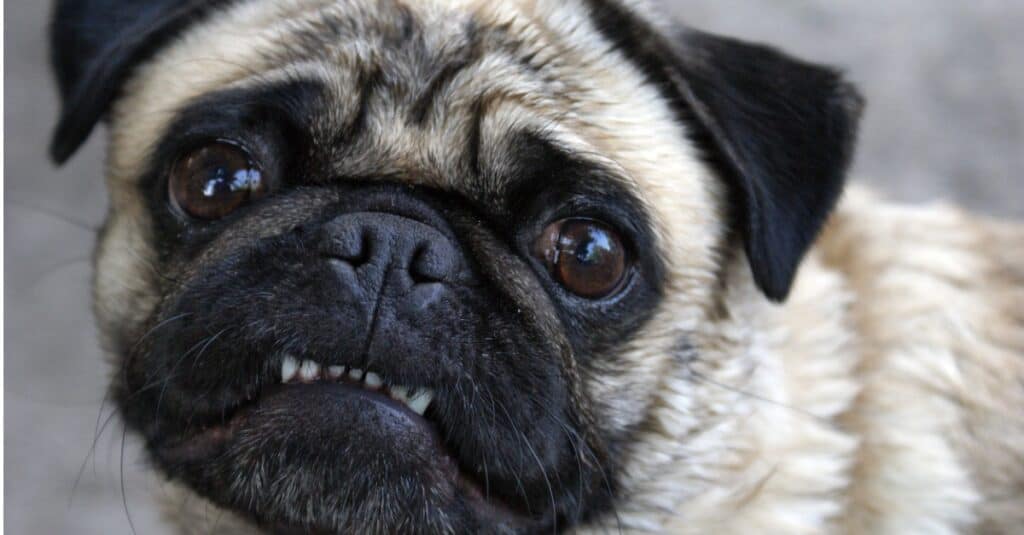
Pugs are prone to misaligned teeth, and underbites are not uncommon
©iStock.com/matt_benoit
How Many Teeth Do Pugs Have?
Pugs typically have 28 deciduous teeth and 42 permanent teeth. Pugs have a dental formula of Incisors 3/3, Canines 1/1, Premolars 4/4, Molars 2/3. In this formula, each number represents the number of teeth in each quadrant of the mouth: upper and lower, left and right.
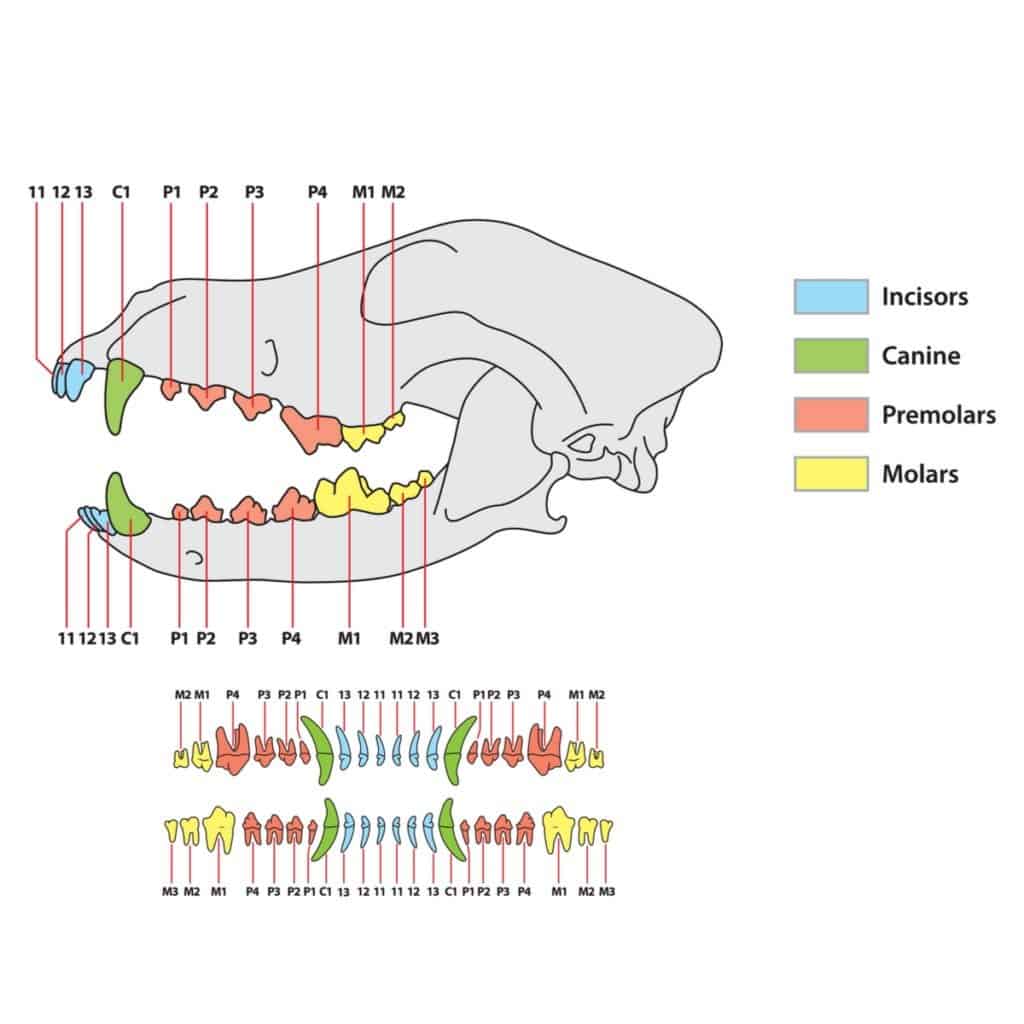
This diagram shows the arrangement of an adult pug’s teeth.
©Rainer Lesniewski/Shutterstock.com
Pugs have 20 teeth in their upper jaw and 22 in their lower jaw. Having more teeth on the bottom jaw than the top causes pugs to have their classic underbite, because the lower jaw is longer than the upper jaw. An underbite is a hallmark of brachycephalic (flat-faced) dog breeds.
What Do Pugs Use Their Teeth For?
Pugs have 12 incisors, located at the front of their mouth, six upper and six lower. They use their incisors to scrape and chew their food. The upper front teeth may be hard to spot because of the underbite, but their incisors have flat edges that help cut food.
Their four canines (two upper, two lower), which are adjacent to their incisors, are long, fang-like teeth that assist them in grabbing and tearing their prey. Domesticated dogs have evolved to eat pet food and pre-sliced meals; thus, they rarely use their canines when they eat.

Pugs have the same dental arrangement as all other domesticated dog breeds.
©iStock.com/adogslifephoto
The pug’s 16 premolars help cut and shred food, with the upper fourth premolar and lower first molar acting as the main carnassial (shearing) teeth. Their 10 molars are located behind the premolars. They are large, flat teeth that grind and mash food.
Do Pugs Bite?
Pugs are not typically aggressive dogs. However, if they are not trained to socialize, they can nip or bite people with whom they feel uncomfortable. They can also nip when teething, but these nips and bites are rarely severe. Due to the shape of their mouth, pugs have a difficulty biting efficiently.
Dental Concerns
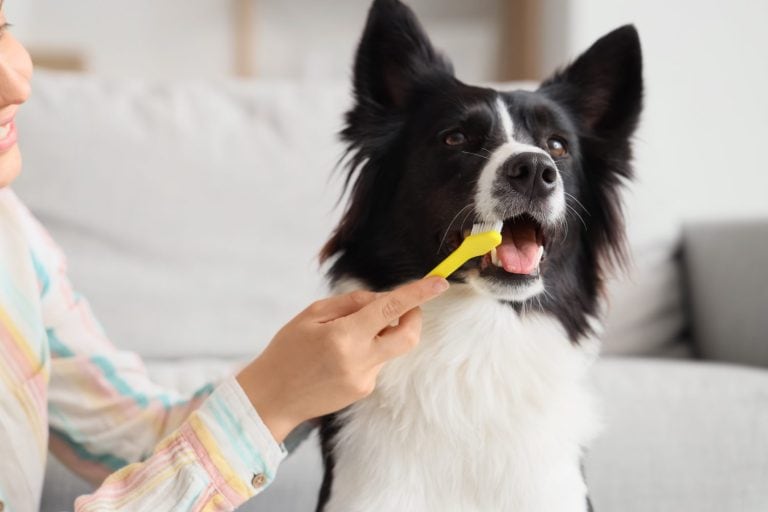
Pugs have a brachycephalic (short-nosed, flat-faced) skull structure, which compresses the bones of the face and jaw into a smaller space. This contributes to crowded, misaligned teeth and creates tight gaps where food and bacteria can easily become trapped. As a consequence, pugs are particularly prone to dental issues such as plaque and tartar, gingivitis, and periodontal disease. Their facial folds can also harbor moisture and bacteria, which can contribute to dental disease. Regular tooth brushing, professional dental cleanings, and routine veterinary checkups are especially important for maintaining good dental hygiene.