
Quick Take
- Scientists identified an entirely new species from a single fossil feature most people would never think to examine. See the fossil evidence →
- A longstanding scientific classification used to group these animals together is probably wrong, a fact that teeth finally exposed. How teeth rewrote taxonomy →
It’s a bear, it’s a dog, it’s… neither? One can imagine a paleontologist thinking this upon first discovering members of the extinct family of carnivorous animals known as amphicyonids. They look like both bears and dogs, but are actually neither, despite their popular name of bear-dogs. Recently, paleontologists have discovered a previously unknown species of amphicyonid.
The newly discovered species, named Paludocyon moyasolai, lived approximately 15.9 million years ago during the Middle Miocene epoch. Let’s learn more about this unusual bear-dog and why its unusually large molar teeth set it apart from other species in the amphicyonid family.
The Discovery
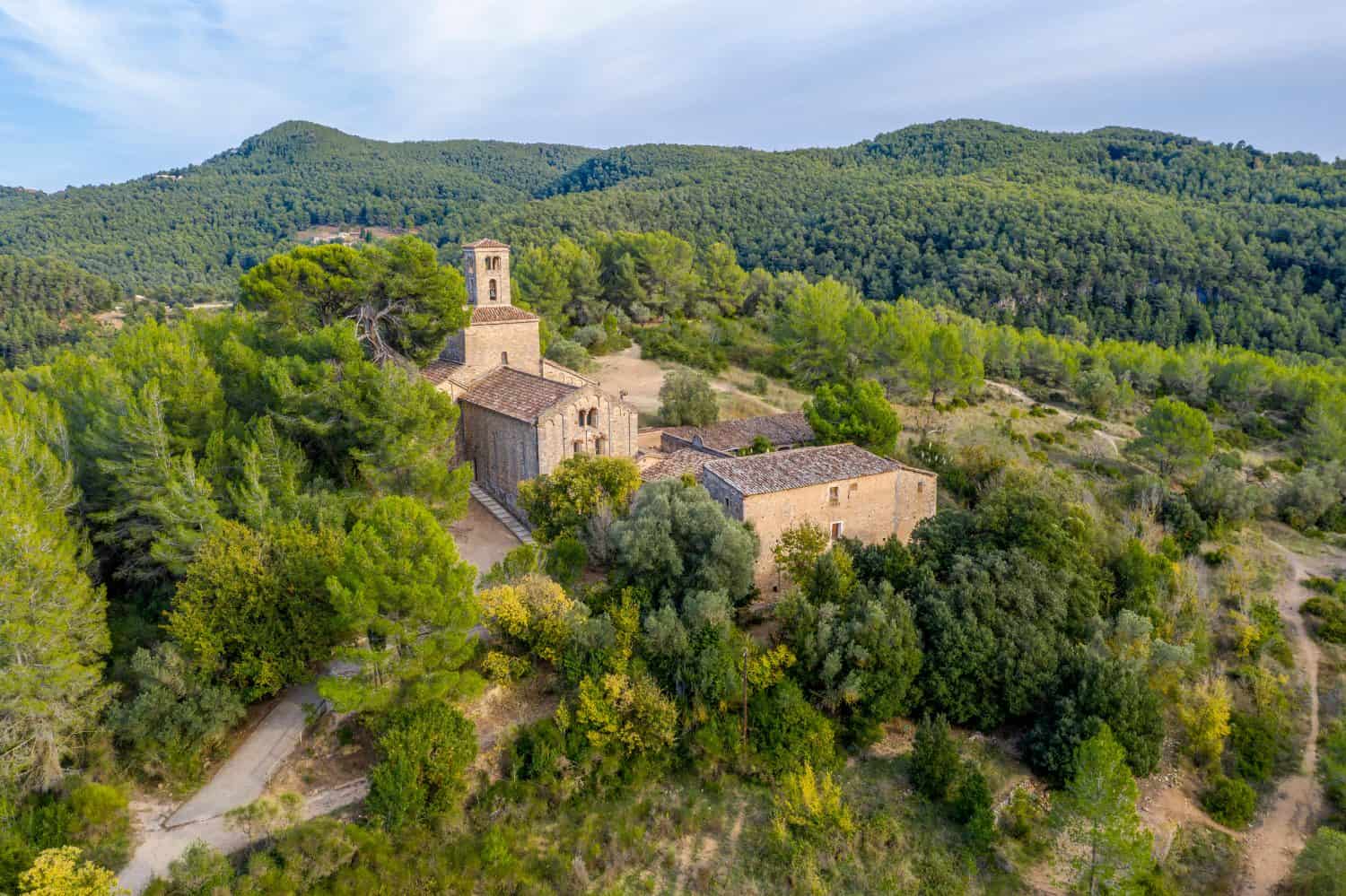
This region of Spain features a large number of vertebrate fossils from the Miocene Epoch.
©KarSol/Shutterstock.com
Scientists discovered a new species in the ancient amphicyonid family, also known as bear-dogs. The findings, published in the Journal of Mammalian Evolution, detail how and where scientists from the Museo Nacional de Ciencias Naturales found the creature. The team’s paleontologists, led by Dr. Jorge Morales, discovered two specimens of the newly named Paludocyon moyasolai species at the site of Els Casots in the Vallès-Penedès Basin, Spain. This region is notable for its large number of vertebrate fossils from the Miocene epoch of Southwestern Europe.
As for the newly discovered species of bear-dog, Paludocyon moyasolai was identified from a well-preserved, though compressed, partial skull with most of its teeth intact. The team also found a lower molar nearby. The exceptional preservation of the specimen allowed scientists to distinguish the species from its closest relatives based on the unusual proportions of its molar teeth. While the second upper molar appeared wider than the first, the third upper molar was considerably larger and highly developed.
As Dr. Jorge Morales explained in a statement to SCI News, this family of animals was notable during its time. He said, “The Amphicyonidae were an important component of carnivoran assemblages in North America and Eurasia during much of the Cenozoic Era.”
A Distinct Lineage
The dental structures found in these fossils helped the team identify what seems to be the earliest, most primitive branch of the genus. This also suggests that previous classifications were inaccurate. Case in point: the Cynelos genus, once used to describe a selection of these ancient bear-dogs, is probably not a single family. Instead, it’s a more inaccurate grouping of animals that don’t share the same direct ancestor.
However, a mystery remains regarding the similarity between European specimens and three North American species still classified within the Cynelos genus. These North American specimens have similar teeth to the Paludocyon family, and the scientists believe that the North American species probably evolved independently, originating in Asia or North America.
According to the study’s authors, this new species is the oldest and most primitive member of the Paludocyon family. They said, “The phylogenetic analysis indicates that Cynelos is paraphyletic but supports the monophyly of Paludocyon, with the new species being recovered as its basal-most member. It supports a distant relationship between the Cynelos species from Europe (Cynelos rugosidens and Cynelos lemanensis) and the Paludocyon clade, justifying their classification as distinct genera.”