
Quick Take
- The very first step has nothing to do with a litter box. Skip it and the rest of the training is almost guaranteed to fail. See the first step →
- The most popular litter box style sold in pet stores is actually the wrong choice for rabbits, and it could cause health problems. Choose the right box →
- There's a counterintuitive trick involving your rabbit's accidents that actually speeds up training, and most owners would never think to try it. Try this accident trick →
- If your rabbit refuses the litter box no matter what you do, the real cause might surprise you, and it has nothing to do with stubbornness. Find the real cause →
For many people, the barrier to allowing their pets to free roam is their rabbits’ toileting habits. However, did you know that you can litter train your rabbits? In just seven steps, they can free roam without urinating or defecating everywhere. In this guide, we’ll discuss the timeline you can expect, exactly how to litter train your rabbit, and some troubleshooting tips.
How Long Does It Take to Litter Train a Rabbit?
Many rabbits learn to use their litter box in less than a week. When it’s set up properly, a litter box works with their natural instincts. Rabbits go to the bathroom while they eat, and they naturally prefer to urinate in corners.
However, the timeline varies by the individual. Some rabbits will learn more quickly, and some will take much longer to learn. It’s also important to remember that they’re unlikely to use the box 100% of the time.

Litter training goes quickly for most rabbits.
©iStock.com/mstudeny
7 Steps to Litter Train Your Rabbit
In the sections below, we’ll walk through the seven steps required to successfully litter train your pet rabbits.
#1: Spay or Neuter Your Rabbit
Intact rabbits instinctively mark their territory and do so much more often than spayed or neutered rabbits. Spaying or neutering your rabbit also comes with a host of health benefits. Before litter training, your rabbit should be spayed or neutered. They also need time to fully recover before you can start expecting good litter box habits.
#2: Set Up Your Litter Box
There are a few things to consider when setting up your rabbit’s litter box:
- Selecting the correct litter box. Though lidded boxes are popular, they often don’t have enough ventilation and will trap odors and any dust created by your litter. This may cause respiratory issues. A large, open box is better for rabbits. Make sure they can stand completely inside the box while they eat their hay.
- Choosing a bunny-safe litter. Most cat litter isn’t safe for rabbits. They need a litter that is dust-free, comfortable on their feet, and safe if consumed. Paper bedding is a good choice.
- Ensuring the litter is deep enough to absorb urine and trap odors. Add one inch of clean litter covering the bottom of the pan.
- Adding hay. Hay piles inside the litter box are the easiest for your rabbits to eat and provide enrichment as rabbits can also dig and play in it. However, hay piles can be messy. Hay holders with large holes work well, but avoid those with small holes that could trap their heads or prevent access to hay.
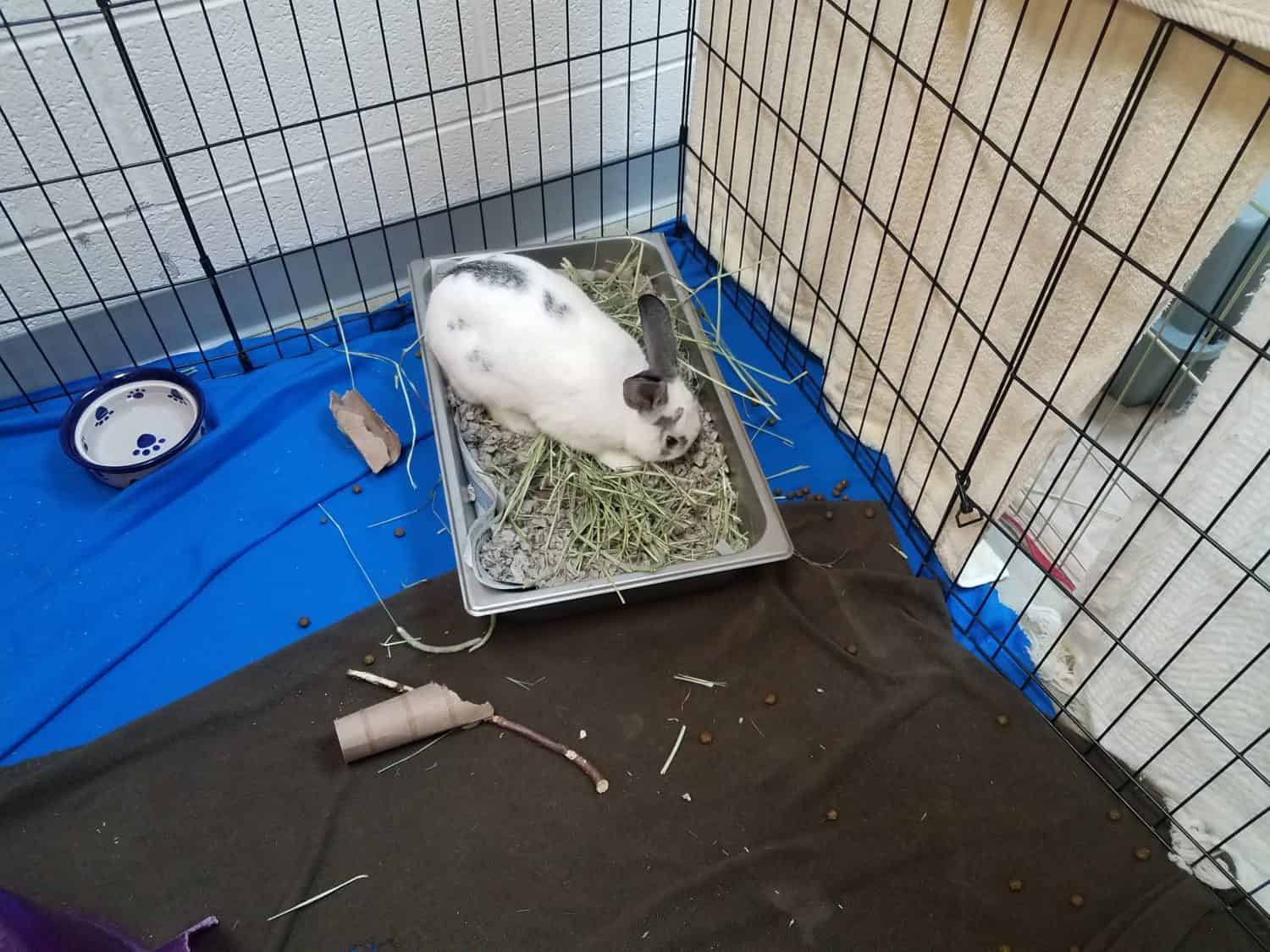
Keep your rabbit in a dog exercise pen during litter training to reduce their space until they learn to use the box.
©stockphotofan1/Shutterstock.com
#3: Start in a Small Area
Ideally, your rabbits will eventually free roam at least one room. While litter training, though, it’s best to start with a smaller space, such as a large dog exercise pen. Keep in mind that rabbits do not thrive in store-bought cages or hutches. Keeping your rabbits in a smaller area makes clean-up easier and ensures they aren’t urinating in hard-to-clean spaces, like under the bed or on the sofa. It also keeps the litter box nearby and convenient for them to use.
#4: Place the Litter Box in a Corner
Rabbits naturally urinate in corners, so placing their litter box in a corner of their pen will encourage them to go there. You might also choose to place boxes in multiple corners. If your rabbits end up urinating or defecating in a different corner, it’s often easier to move the litter box than to fight them on where they want to go. It’s a good sign that they’re at least going in the same place consistently.

Rabbits prefer to use the toilet in corners, and they go while eating, so work with their natural instincts.
©Farhad Ibrahimzade/Shutterstock.com
#5: Place Accidents Into the Box
It may seem gross, but pick up stray feces from your rabbit’s environment and place it into the litter box. This fills it with their scent and tells them where you want them to go next time. You can do the same with urine by soaking it up with paper towels and placing it in the litter box.
#6: Try to Catch Them Before Accidents Happen
If you see your rabbit about to go to the bathroom, usher them into the litter box. Avoid moving them if they’re already going, as it can make things much messier than letting them finish where they are. Interrupting them before they go and herding them into the box teaches them where you want them to go. You can also offer treats for going in the litter box to reinforce the behavior. Don’t trap your bunny in the litter box or act too forcefully, as this can make them avoid it out of fear.
#6: Clean the Litter Box Frequently
How often you need to clean your litter box depends on the size of the box, litter type and depth, how many boxes you have, and how frequently it’s used. You should deep clean the litter box at least once a week and may need to clean it as often as daily. Take a look whenever you top up your rabbit’s hay to see if the litter looks soiled or if the box smells, as these are signs it needs to be cleaned.
If you don’t clean the litter box often enough, your rabbits may stop using it. Like cats, rabbits are fastidious animals and often refuse to use a dirty litter box. Of course, who can blame them? No one wants to use a dirty toilet.

Litter training your rabbit may never work perfectly, but as they learn, you can expand their space.
©KanphotoSS/Shutterstock.com
#7: As Your Rabbits Learn, Slowly Expand Their Space
As your rabbits begin using the litter box consistently, slowly expand their space until they’re free roaming as much of the house as you desire. Be sure to place additional litter boxes in the free-roam space as they get used to it, and watch your buns carefully to stop them from having accidents. Gently guide them to a litter box if they look like they’re about to urinate, such as if they begin raising their tail.
You may want to return to a smaller area if you’re unhappy with how consistently your bunnies are using their litter box, but continue training them to use the litter box reliably even with more space. Lastly, remember that many rabbits will never use their box 100% of the time, and that accidents will happen.
Why Can’t I Litter Train My Rabbit?
There are a few reasons why you may be struggling to litter train your rabbit. These include preparation issues, training issues, and health-related reasons.
Preparation Issues
- Your rabbit isn’t spayed or neutered. This makes them much more likely to mark their territory, which means defecating and urinating outside of the box.
- The litter box isn’t in a secluded, quiet location. You don’t want a litter box next to the dryer, for instance, as your rabbit may fear the sounds when your clothes are drying. You also don’t want children or other pets disturbing your rabbits while they go to the bathroom.
- They have too much space. When litter training, you want to start with a small area, such as a large dog exercise pen. Expand their space little by little as they continue going in the litter box reliably.
- Your rabbit doesn’t like their litter box. It might not be large enough, the litter type may be uncomfortable on their feet, or it could be difficult to hop into.
Training and Other Health Issues
- They associate the litter box with bad memories. This could mean you’ve punished them for accidents, that they had an injury or illness associated with the litter box, such as a urinary tract infection, or that they were scared while using it.
- They need more litter boxes. Having many boxes will make toilet training your buns easier, especially if you have two or more rabbits.
- You haven’t cleaned well enough. Soiled areas must be cleaned thoroughly so your bun can’t smell where they went, or they’ll keep returning to the spot. Litter boxes must also be cleaned frequently.
- Your rabbit may have health issues. If your rabbit cannot seem to use the litter box reliably, no matter what you do, ask your vet about it at your rabbit’s next yearly check-up. If your rabbit previously used the litter box well and isn’t anymore, schedule a vet appointment soon to ensure illness or pain isn’t causing the change.
Please remember not to punish your rabbit for accidents outside of the litter box. They never urinate or defecate outside the box out of spite. If your rabbit continues to go outside of the box, review the issues listed above to help determine the problem, or consult your veterinarian.