
Quick Take
- The one thing most owners do to stop resource guarding actually makes it significantly worse. See why it backfires →
- Trying to be the "alpha" with a pit bull does not establish respect. It creates a much bigger problem. Why dominance methods fail →
- There's a narrow window in your pit bull puppy's development that determines how confident and calm they'll be for life, and most owners miss it entirely. Understand the critical window →
- Some of your pit bull's worst behaviors are actually your fault, and the fix has nothing to do with training the dog. See owner mistakes to fix →
Training your American pit bull terrier is essential due to the dog’s reputation. Unfortunately, they’re going to be judged even more harshly than other breeds for any misbehavior. The most important things to train your pit bull are basic cues and safety cues. It’s also important to begin socializing your pit bull puppy the moment you bring them home. The more positive experiences they have while young, the more confident and well-behaved they’ll be as adults. This pit bull training guide will discuss training tips and common training mistakes so you’ll know what to do and what not to do.
Are Pit Bulls Easy to Train?
Pit bulls are smart, willing to work, and eager to please. They tend to enjoy training and take to it with enthusiasm. However, there are some common training challenges in the breed. The first is dog aggression. Not all pit bulls are dog aggressive, but it is common due to their history of being bred for dog fighting.
Aggression toward humans is uncharacteristic of this breed, and they can be affectionate and good with children, though no dog should be left unsupervised with small children regardless of breed. they are usually not the best breed for a guard dog role since they are friendly pups, even with strangers. However, some pit bulls do have strong resource guarding instincts, leading to possessiveness over food, toys, or even family members, which can pose challenges.
These issues tend to be amplified by the dogs’ size and strength. Therefore, it’s important to socialize, train, and manage your pit bull well. This requires trust, never confrontation.

Pit bulls are easy to train but they require experienced dog owners.
©Anna_Bondarenko/Shutterstock.com
How Do You Discipline a Pit Bull?
The biggest mistake you can make is to try to dominate your pit bull or be the “alpha dog.” No dog breed responds well to this kind of training, and it tends to foster fear and aggression. Set boundaries and be calm but firm. It is important that you have your dog under control, but never use aversive tools like prong collars or shock collars. Management is best done through socialization and obedience training.
If your pit bull does something wrong, redirection is usually the best method to correct them. For instance, biting puppies should be redirected to their toys whenever they nip at your hands. You can also redirect adult dogs to a favorite toy, or even a specific command. Ignore bad behavior when possible, and use gentle corrections such as leashed timeouts.
Some of your dog’s misbehavior may also be your fault, indicating that we aren’t managing them well. If your pit bull eats food left out on the counter, they do not need discipline if they have not been trained that the counter is off-limits. Remember next time to put the food away before leaving the room, and train your dog that taking things off the counter is unacceptable. If they pee in the house, watch them more closely going forward and take them outside for breaks more often.
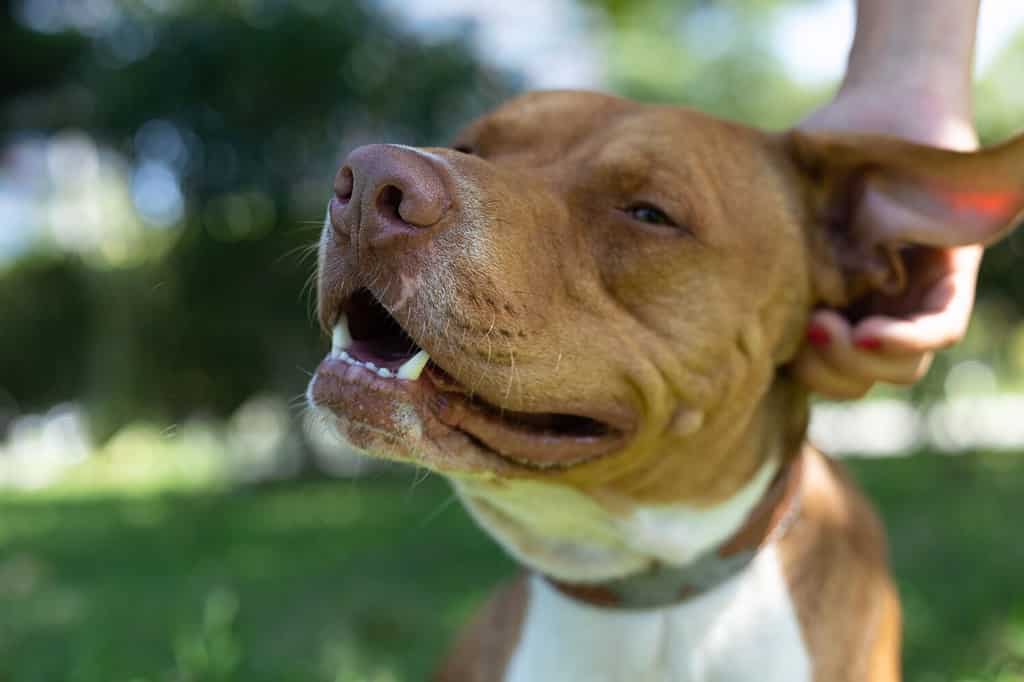
Early socialization is the key to a happy and confident adult pit bull.
©Tosha Bu/Shutterstock.com
Socializing Your Pit Bull
Socialization means introducing your pit bull to a variety of new experiences. It’s crucial to safely introduce your pup to new environments, sounds, people, and other animals. Experts note that the best time to begin socialization in puppies is between 3 weeks and 14 weeks old.
Adult dogs who haven’t experienced these things can become scared. Poorly socialized pit bulls can be fearful, reactive, or even aggressive, especially in public or when guests come over. Keep in mind that your dog doesn’t need to interact with a bunch of people or other dogs to become well-socialized. Being able to calmly walk past people and other dogs is enough.
Rather than trying to socialize your dog in chaotic environments like dog parks, well-run puppy behavioral classes can expose your dog to new experiences in a more controlled setting. Move at your dog’s pace, use plenty of positive reinforcement, and allow your dog to leave the situation if they want to. You can also ask your vet for advice on how to socialize your individual dog.
How Do You Raise a Calm Pit Bull?
Socialization is a big step toward raising a calm pit bull, but it isn’t all that’s needed. You’ll also want to teach them good manners, like not lunging during walks and not jumping on people. These are high-energy dogs who will always need plenty of daily exercise.
Pitties are also very intelligent and need mental enrichment to prevent boredom. A combination of good training and socialization, daily exercise, and plenty of mental enrichment will lead to a confident and calm pit bull who other people will enjoy interacting with.
How to Train a Pit Bull to be Dog Friendly
If your pit bull has shown dog aggression and especially if they’ve bitten, you should not allow them around other dogs without the help of a force-free trainer or dog behaviorist experienced in aggression cases. It’s not worth risking another dog being hurt in order to train your dog. The best thing to do in these cases is to manage your dog, meaning making sure they’re never around other dogs without a muzzle and leash.
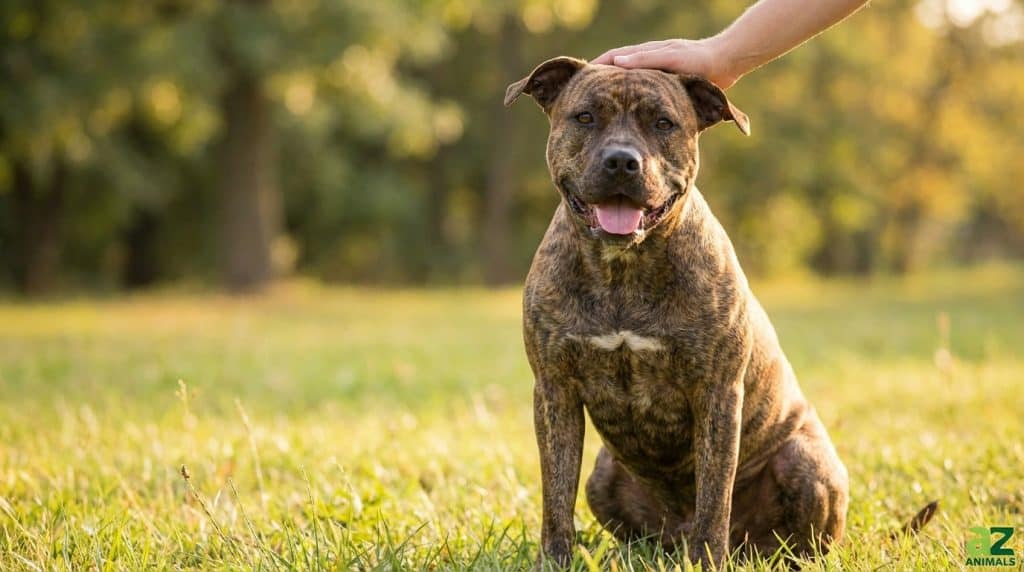
Pit bulls are high-energy dogs who need both exercise and mental stimulation to be happy and calm.
©A-Z Animals
Even pit bulls who’ve never bitten are not the best candidates for dog parks or doggy daycare. It’s safer to set up playdates with dogs your pit bull already gets along with, who have responsible owners, and who are friendly and vaccinated.
With pit bulls’ tendency toward dog aggression, it’s essential to know dog body language before attempting any introductions. Both dogs should be leashed and in your control in case something goes wrong, and introductions should be made slowly. Walking together is often a great way to introduce two dogs since they can share an activity in a neutral environment, and don’t need to interact with one another.
Basic Cues for Pit Bull Puppies to Learn
Begin training your pit bull puppy when you bring them home, but remember to keep your expectations in line with their age and development. For instance, a two-month-old puppy has a short attention span and likely cannot succeed at a prolonged “stay.” Your focus at this age should be on laying down a foundation, socializing your dog to new experiences, and teaching safety cues.
Some of the first cues to teach include:
- Sit
- Down (lay down)
- Stay
- Leave it
- Drop it
- Recall (coming when called)
- Wait (before going outside, eating dinner, etc.)
- Off (when jumping on people)
- Leash manners

Focus on developing a good foundation with your puppy and don’t worry if they aren’t perfect.
©dezy/Shutterstock.com
Advanced Cues and Dog Sports
Daily training is a great way to provide mental enrichment for your pit bull. They’re very handler-focused and tend to excel at obedience and dog sports. You can pick and choose what you teach at home, focusing on either fun or useful cues or a mix of both. Some advanced cues focus on directional commands, behavior chaining (linking multiple commands into a single sequence), and trick cues. You can also pay for training classes to learn from a professional and get some guidance if you’re unsure what to teach.
Your pittie might also enjoy lure coursing, agility, or other dog sports. Make sure your pup is fully grown before participating in strenuous activities, especially jumping, to avoid overworking their growing joints and causing issues like early onset arthritis or, in dogs with a genetic predisposition, worsening the likelihood of hip dysplasia.
Common Pit Bull Training Mistakes
Not only is it important to know how to train your pit bull, but it is also important to know how to avoid training blunders. Here are some common mistakes people make when training their pit bulls.
Not Providing Enough Exercise or Mental Enrichment
A tired dog is a well-behaved dog, and bored pups will get into mischief. You’re almost bound to have behavioral problems if you don’t first meet your pit bull’s basic needs.
Training for Aggression, Bite work, or Guarding
This can be incredibly dangerous and result in a dog who is inappropriately aggressive. Remember that pit bulls make good deterrents on their own and it’s unlikely they’ll need to truly guard you or your home.
Using Compulsion Training or Other Aversive Training Methods
Aversive methods and tools should be avoided as there are much more humane and effective ways to train your dog. Bad training methods can cause fear and aggression, so despite popular myth, they’re even more poorly suited toward big, powerful dogs than your average breed.
Not Actually Teaching Your Pit Bull What You Want Them to Do
Constantly saying no and never providing alternatives, or never praising what your dog does right, leads to confusion. For every no, you should be saying yes to something else. For instance, you might want them to go lay on their bed instead of barking and jumping on guests.
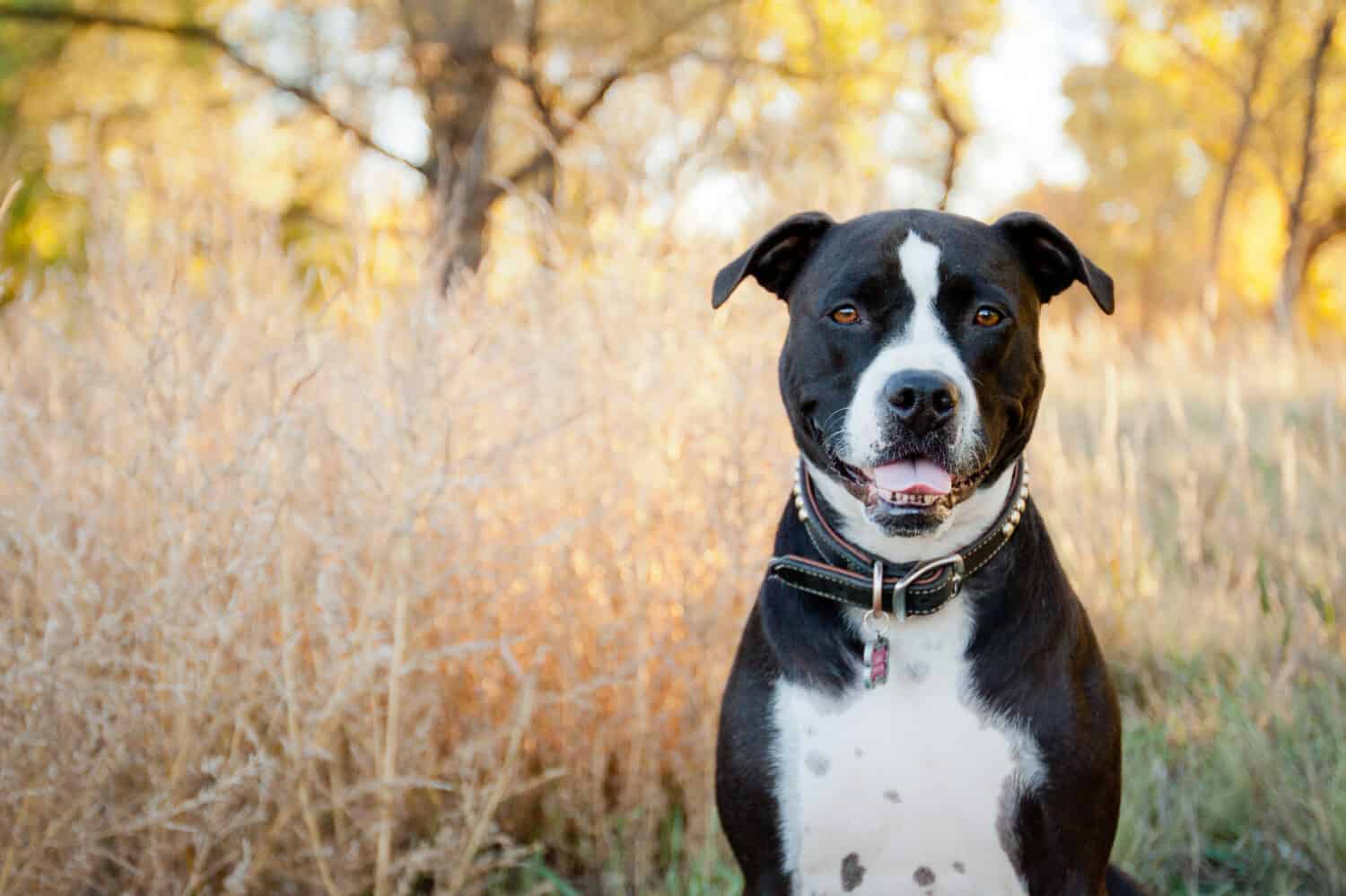
Avoiding common pit bull training mistakes can make life easier for you and your pup!
©Ali Peterson/Shutterstock.com
Setting Your Dog Up to Fail
Examples include leaving food out and expecting them not to eat it, not putting a dog who tends to door-dash into another room before opening the front door, etc. When possible, and especially when misbehavior can be dangerous, we want to completely eliminate the possibility that our dog will misbehave.
Walking Off-Leash Without Reliable Recall
Pit bulls’ tendency toward dog aggression and their strong prey drive mean that you must be very sure they’ll behave before allowing them off leash. Otherwise, there is a good chance they will run off or get into other types of trouble.
Taking Things From Your Pit Bull to Prevent Resource Guarding
Taking things from your dog, sticking your hand in their bowl while they eat, and similar methods all increase a dog’s chances of becoming a resource guarder. You want to build their trust in you to not take their things and to give them even higher-value rewards when you do need to take something. These methods betray that trust.
Introducing Dogs Too Quickly and Without Understanding Dog Body Language
As we discussed above, dog introductions must be done slowly and properly. Quick introductions can damage the dogs’ relationship long-term and can result in fights.