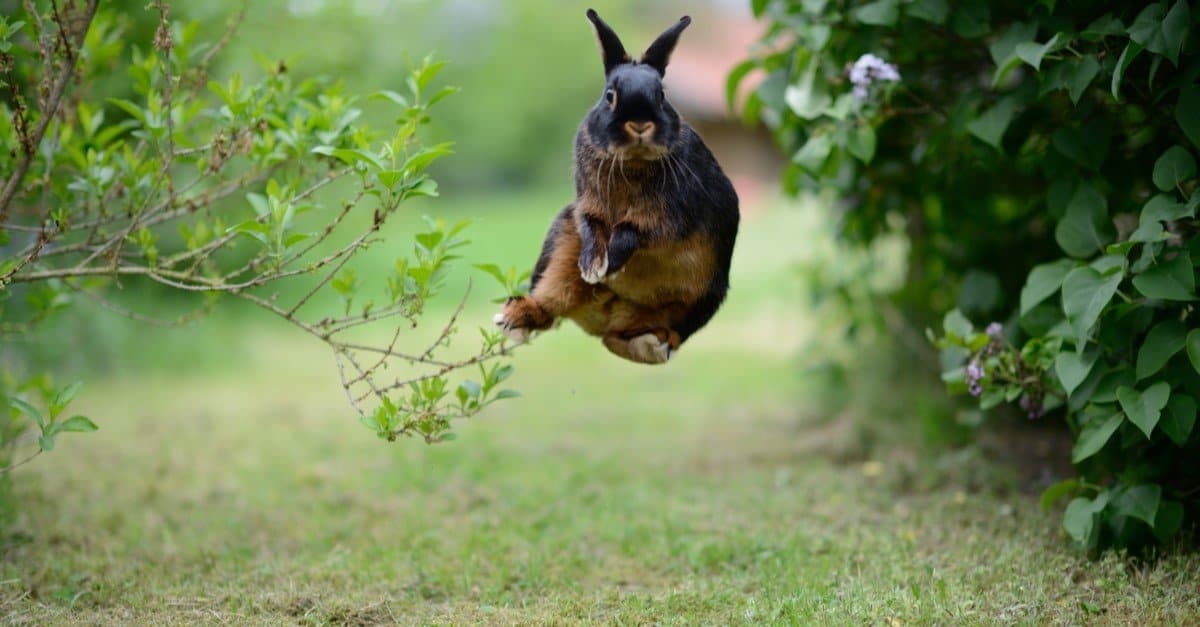

It’s fun to spot a group of rabbits at the local park or in your yard. You’ve probably seen them munching on plant leaves, hopping around a group of trees searching for food, or even standing on their hind legs to look around. However, have you ever seen them binky? If you aren’t sure, it may be because you’ve never heard of this behavior. Read on to get the lowdown on what it means to binky and find the answer to the question: Why do rabbits binky?
What Is a Binky?
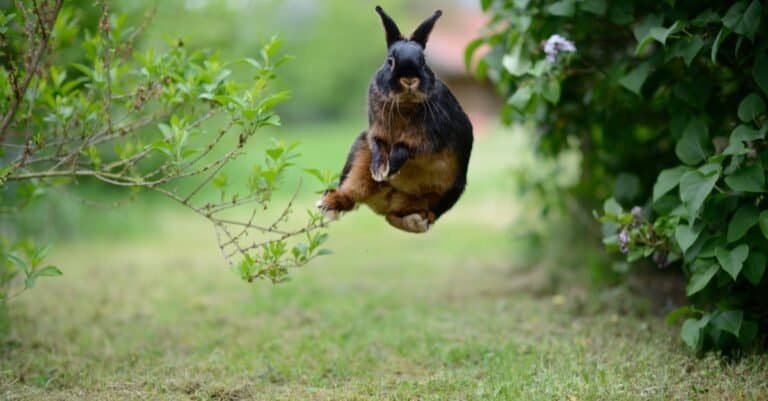
A binky is when a rabbit jumps straight up and quickly twists its hind end, head, or both. Some rabbits may even do a 180-degree turn. A binky occurs in just a fraction of a second, so you have to watch closely. A half-binky is when a rabbit quickly twists its head to the side or twitches its ears. A bunny may do one binky or a couple in a row, depending on its mood. So, chances are, you have seen a rabbit binky, but you just didn’t know it.
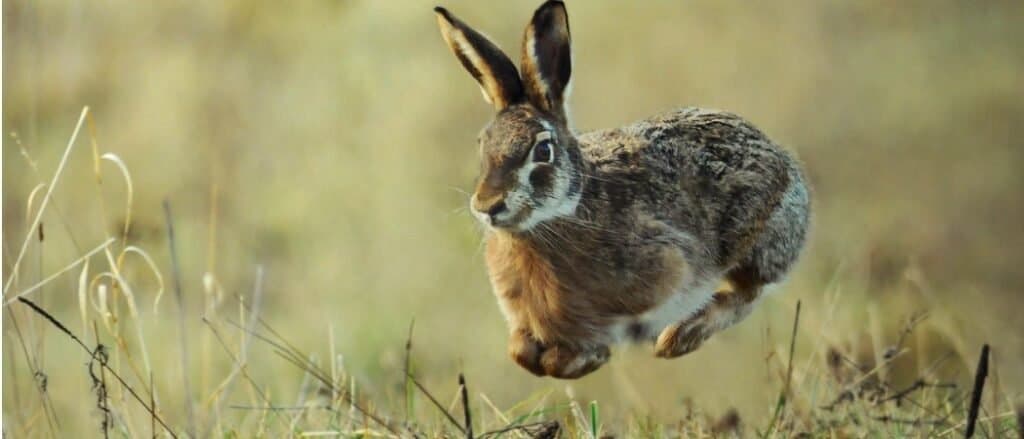
Rabbits generally binky when they are happy, whether they are pets or wild rabbits.
©iStock.com/Milan Krasula
Why Do Rabbits Binky?
Now that binky behavior has been defined, it brings up the question of why these animals perform this stunt. Are they bored? Are they aspiring acrobats? Well, the reason for the binky depends on the circumstances, environment, and how a rabbit is feeling.
A rabbit will usually binky because it is feeling happy or safe in its environment. A binky is a way for a bunny to jump for joy. An owner who gives a rabbit a loving home where it has enough food and attention is likely going to see a lot of binkies. Alternatively, a pet bunny that feels threatened or stressed is not going to binky.
Why Do Wild Rabbits Binky?
While happiness and contentment are reasons behind most rabbits’ binkies, there are some additional reasons why wild rabbits may do it. Wild rabbits might binky in an effort to get away from predators. If a rabbit is being pursued by a predator, it binkies so it isn’t moving in a straight path. Twisting and moving in a zig-zag pattern can confuse or throw off a predator long enough for the rabbit to get away.
A wild rabbit may also binky in place in front of another rabbit or a predator. This is so the rabbit will seem bigger and like more of a threat. Doing a binky in place may even be enough to discourage an intruder from coming any closer.
Of course, a wild rabbit can also do a binky because it is feeling happy. Baby bunnies may do binkies while chasing each other around a meadow. However, doing a binky is going to draw attention to this vulnerable animal. Bunnies have a lot of predators, so they are always on the watch for danger. Doing a binky may not be in their best interest in a natural environment.
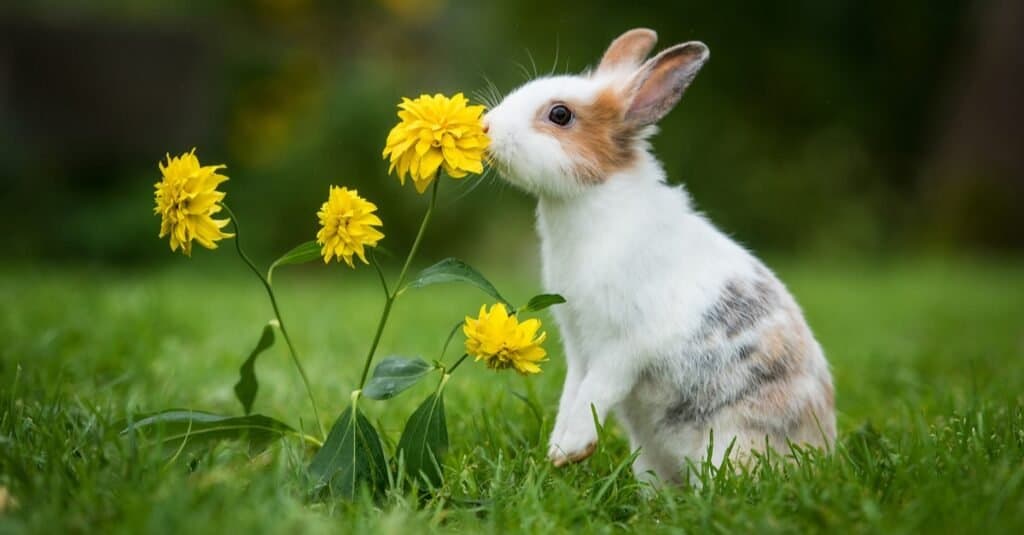
A trip to the garden may well be the opportunity for a pet bunny to binky.
©Rita_Kochmarjova/Shutterstock.com
How to Encourage a Binky
A bunny owner can’t force this pet to do a binky. It is behavior that just comes naturally. However, an owner can take steps to encourage their pet to do a binky. Making sure the bunny feels safe, comfortable, and happy will prompt a few binkies.
A healthy, nutritious diet is going to make the bunny feel at its best. If a bunny is feeling energetic and well-fed, there’s a better chance it will do a binky or two. Giving a pet bunny a favorite treat is another way to encourage binkies. This is especially true if an owner offers this treat to the pet every day. Bunnies are intelligent, so they are likely going to anticipate getting the treat.
A trip to the garden can be an opportunity for a pet bunny to binky, too. Of course, an owner should make sure the bunny is secure and safe from other animals in the garden area. A bunny that gets the chance to sniff and snack on vegetables in a garden may be inclined to binky to show its joy. Playing with a pet bunny can encourage it to binky. If a pet is playful and likes lots of attention from its owner, then it will probably binky during playtime.