
Quick Take
- There are three orangutan species, all found only on the islands of Borneo and Sumatra. Meet the three species →
- Orangutans are highly intelligent animals capable of using tools, planning ahead and learning behaviours from one another. Discover their tool use →
- Deforestation, palm oil plantations, hunting and their slow reproductive rate are putting further pressure on declining populations.
- Conservation efforts including habitat protection, rehabilitation centres and sustainable palm oil are helping give orangutans a better chance of survival.
Every year on August 19, World Orangutan Day is held to raise awareness for the plight of orangutans. Orangutans are one of our closest relatives, sharing 97% of our DNA, yet they are at high risk of extinction in the wild. Orangutans live in Southeast Asia, where the forests that they depend on are rapidly disappearing, leaving orangutans with nowhere to go. Keep reading to discover what is causing the decline of orangutans and what can be done to stop it.
Where Do Orangutans Live?
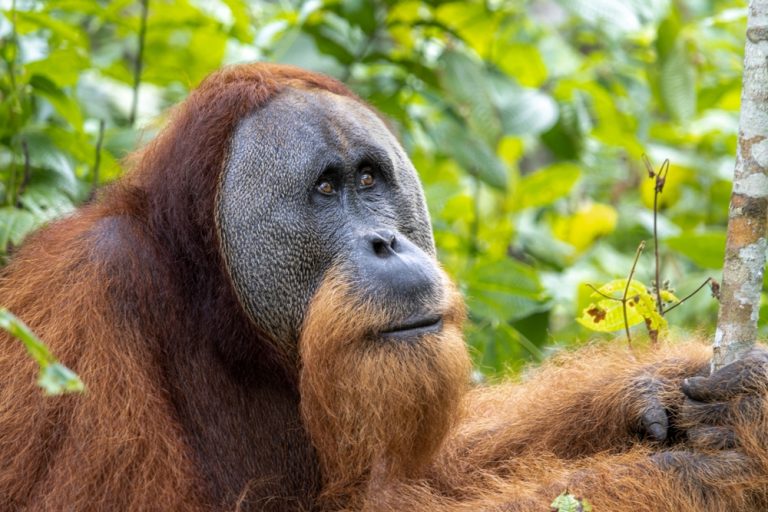
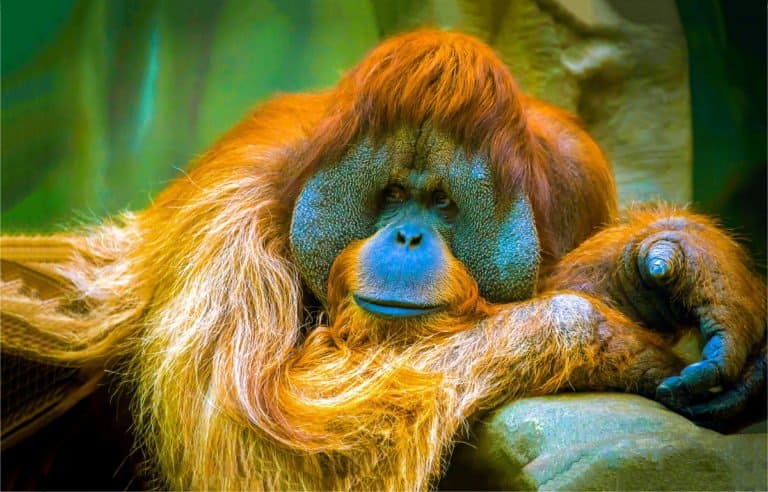
There are three species of orangutans – Bornean, Sumatran, and Tapanuli – and they inhabit only the islands of Borneo and Sumatra. The Bornean orangutan (Pongo pygmaeus) is endemic to Borneo but inhabits both Indonesia and Malaysia across the island. There are three subspecies of Bornean orangutans. The Central Bornean subspecies inhabits the West and Central Kalimantan provinces of Indonesia, while the Northeast Bornean subspecies inhabits the North and East Kalimantan provinces as well as the state of Sabah in Malaysia. Northwest Bornean orangutans inhabit only Sarawak in Malaysia and West Kalimantan in Indonesia.
Sumatran orangutans (Pongo abelii) have a much smaller range and inhabit only the northern region of Sumatra. The majority of them live in Aceh Province, with some in the Leuser Ecosystem. Some smaller populations exist south of the Leuser Ecosystem but are not considered to be viable long term.
Tapanuli orangutans (Pongo tapanuliensis) inhabit only the rainforests of the Batang Toru Ecosystem in Sumatra. They are the most recently identified species, having been officially recognized in 2017. Populations had historically existed in the area, but they were thought to be Sumatran orangutans and were largely overlooked until a 1997 study. Tapanuli orangutans are also the smallest species and are around four feet high, compared to Bornean orangutans, which are the largest at 4.5 to five feet high.
Why Are Orangutans So Remarkable?
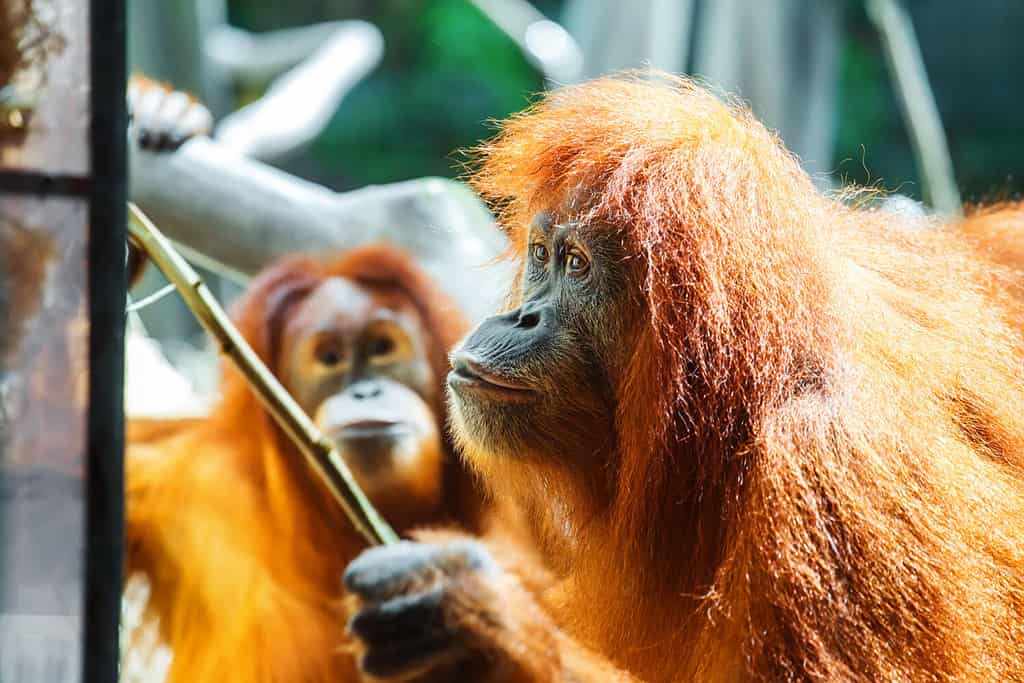
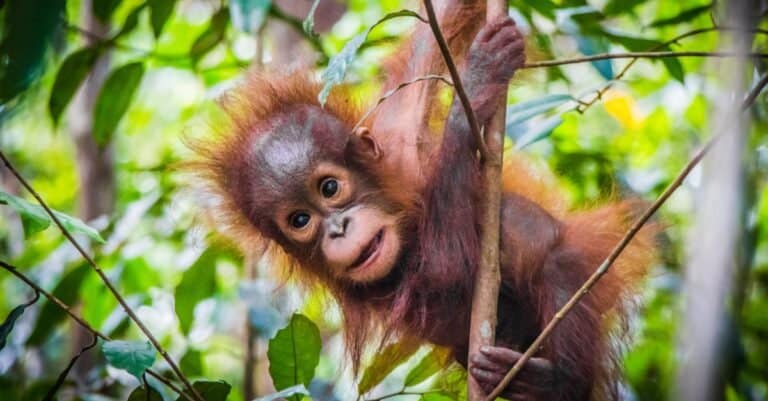
Orangutans sometimes use sticks or stones as tools.
©Funny Solution Studio/Shutterstock.com
Orangutans are some of the most intelligent animals in the world and are known for their use of tools. Some orangutans have been observed using sticks to extract insects from tree holes, while others have used sharp stones to cut or open things. Although orangutans in rehabilitation centers have been observed watching and copying human tool use, it has also been seen in wild populations. This shows that they seem to have some basic understanding of tool use without needing to learn it from humans. Other examples of tool use include orangutans using leaves as gloves for handling prickly plants and fruit, as well as using large canopy leaves as umbrellas.
Their intelligence also allows them to adapt their tool use to different situations, and some of these behaviors have been passed between individuals. This shows that they are capable of learning from each other, rather than always having to rely on instinctive behavior. Orangutans have also demonstrated the ability to plan ahead, including keeping tools that they might need later.
What Threats Do Orangutans Face?
Unfortunately, orangutans are facing many threats, which are causing a severe decline in their population. There were around 230,000 orangutans a century ago. However, the populations have declined significantly to the point that all three species are now classified as critically endangered by the IUCN. Bornean orangutans have the largest population at around 104,700. There are an estimated 11,694 Sumatran orangutans left, while the Tapanuli orangutan is the rarest of all, with a population of around 716.
Although the Bornean orangutan is the most numerous species, not all of its populations are secure. There are around 35,000 Central Bornean orangutans, but the Northwest orangutans have declined to around 1,500 individuals.
Habitat Loss
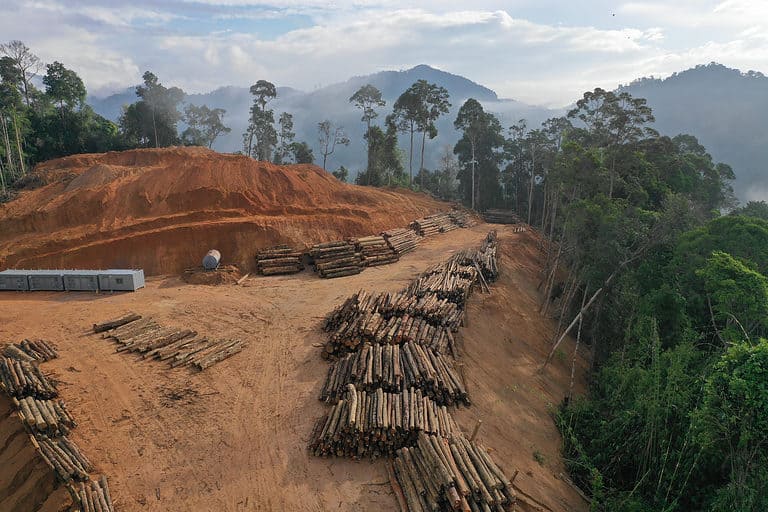
Due to their highly arboreal nature, orangutans are entirely reliant on rainforests. Huge swaths of rainforests have been cleared over the last twenty years to make way for agriculture, roads, and expanding settlements. However, one of the main drivers has been the rapid growth of palm oil plantations. Palm oil is used in thousands of everyday products, including food and cosmetics. As the demand for palm oil increases, more rainforests are cleared every year to make way for plantations.
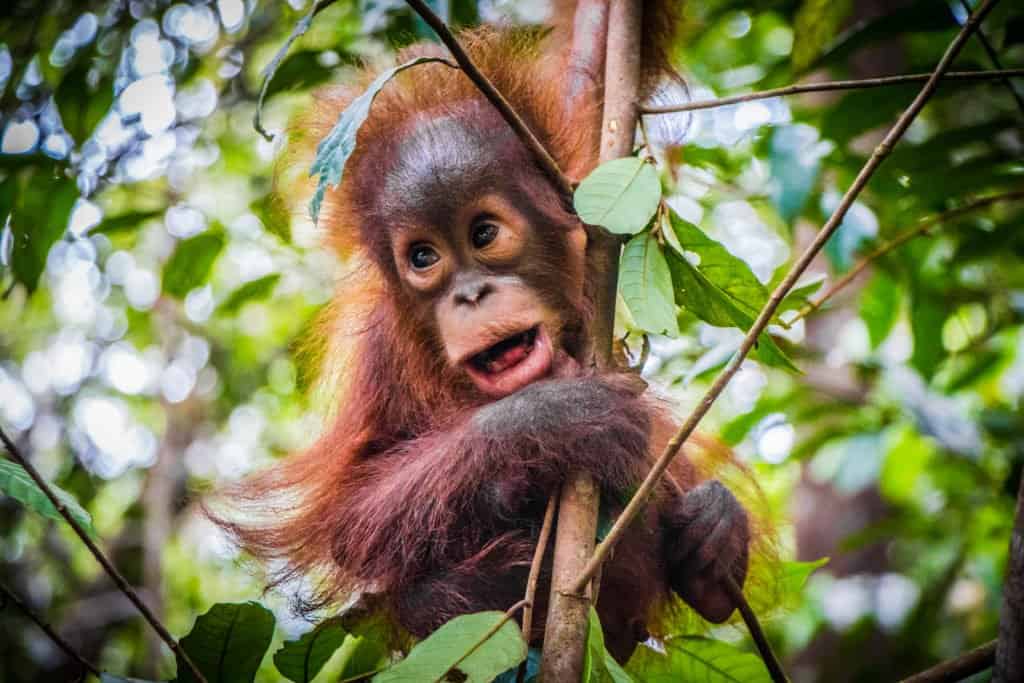
Habitat loss is the greatest threat to orangutans as rainforests are cleared for logging, farming, and expanding settlements.
©Alex East/Shutterstock.com
As orangutans already have a limited distribution with fragmented populations, they are particularly vulnerable to habitat loss. The destruction of the rainforests pushes orangutans into smaller and smaller areas and causes further fragmentation. This makes it harder for them to find mates and limits their access to food sources. It also pushes them closer to human settlements, which can lead to human-wildlife conflict.
Hunting
Poaching is another major concern for orangutans, as many of them are killed each year for the illegal wildlife trade. Juvenile orangutans are also often taken alive to be sold as pets on the black market. Even outside of the wildlife trade, orangutans are often killed as a result of conflict with humans. This occurs when habitat loss has pushed them into seeking food from farms and plantations. These orangutans are often labeled as pests and killed in retaliation. Many of the orangutans killed are females, which often results in a high number of orphans.
Reproduction Rate
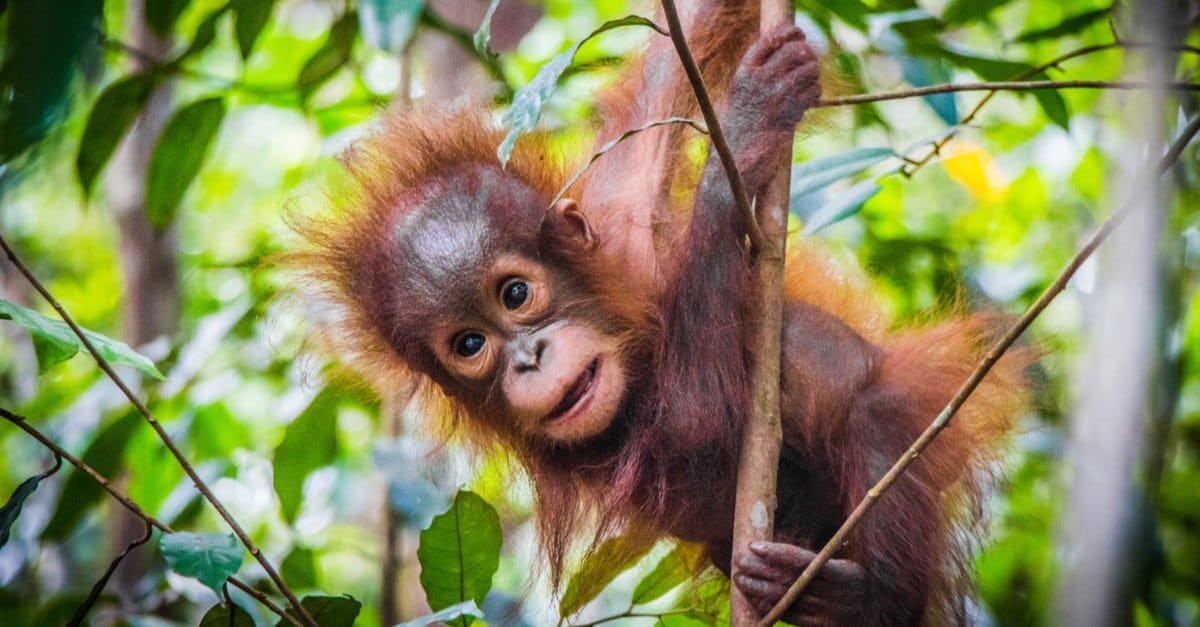
Another threat to orangutans actually comes down to their biology, as they have an extremely slow reproduction rate. Orangutans don’t reach sexual maturity until they are around 14 to 16 years old, and they give birth just once every seven to nine years. Orangutans stay with their mothers during this time and may continue nursing for six to eight years, which is longer than any other primate. The long gap between pregnancies means that orangutan populations grow very slowly. This is why any sudden losses are a major issue for them.
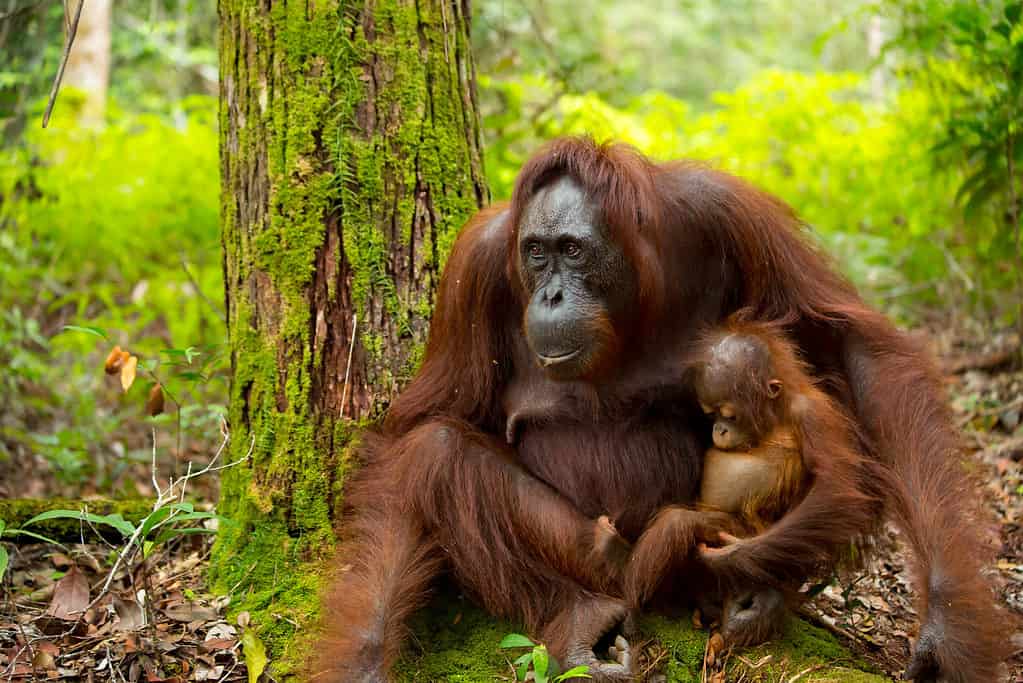
Orangutans give birth just once every seven to nine years.
©Katesalin Pagkaihang/Shutterstock.com
Protecting Orangutans
Many different organizations are working to protect orangutans and to halt their decline. Protecting the rainforests where they live is one of the main conservation efforts. These efforts include expanding protected regions and reconnecting fragmented areas through wildlife corridors. Governments and law enforcement agencies are also continually working to prevent illegal logging and poaching.
Rescue and rehabilitation centers also play an important role in orangutan conservation. Many of the orangutans arriving in these centers have either been displaced by deforestation or have been orphaned after their mothers were killed. It is estimated that hundreds of orangutans live in these centers each year. Before they can be returned to the wild, young orangutans spend several years in the rehabilitation centers, which are often called forest schools. During this time, they learn essential survival skills, such as climbing, nest building, and learning how to find food. Even after they are released, orangutans are carefully monitored. This is done to ensure they are adapting to life in the wild and are capable of surviving independently.
People around the world can also help to reduce the pressure on orangutans by choosing products that contain sustainable palm oil. Choosing sustainable palm oil encourages more responsible farming practices, which protect both the environment and the animals that live in it.