
Quick Take
- Raccoons can make a sound so alarming that some people might want to call an exorcist, and the sound responsible is not the one you would expect. Hear the alarming sound →
- One raccoon sound is actually a danger signal you should never ignore. Mistaking it for something harmless could put you and your pets at risk. Spot this danger signal →
- If your dog is barking at a wall, there is a specific raccoon behavior that explains exactly why, and understanding it will reveal that your problem is bigger than you think. Why raccoons bark indoors →
- Adult raccoons make a sound normally reserved for mother-baby bonding, and the reason they do it reveals something surprisingly human about their emotional lives. Explore this bonding behavior →
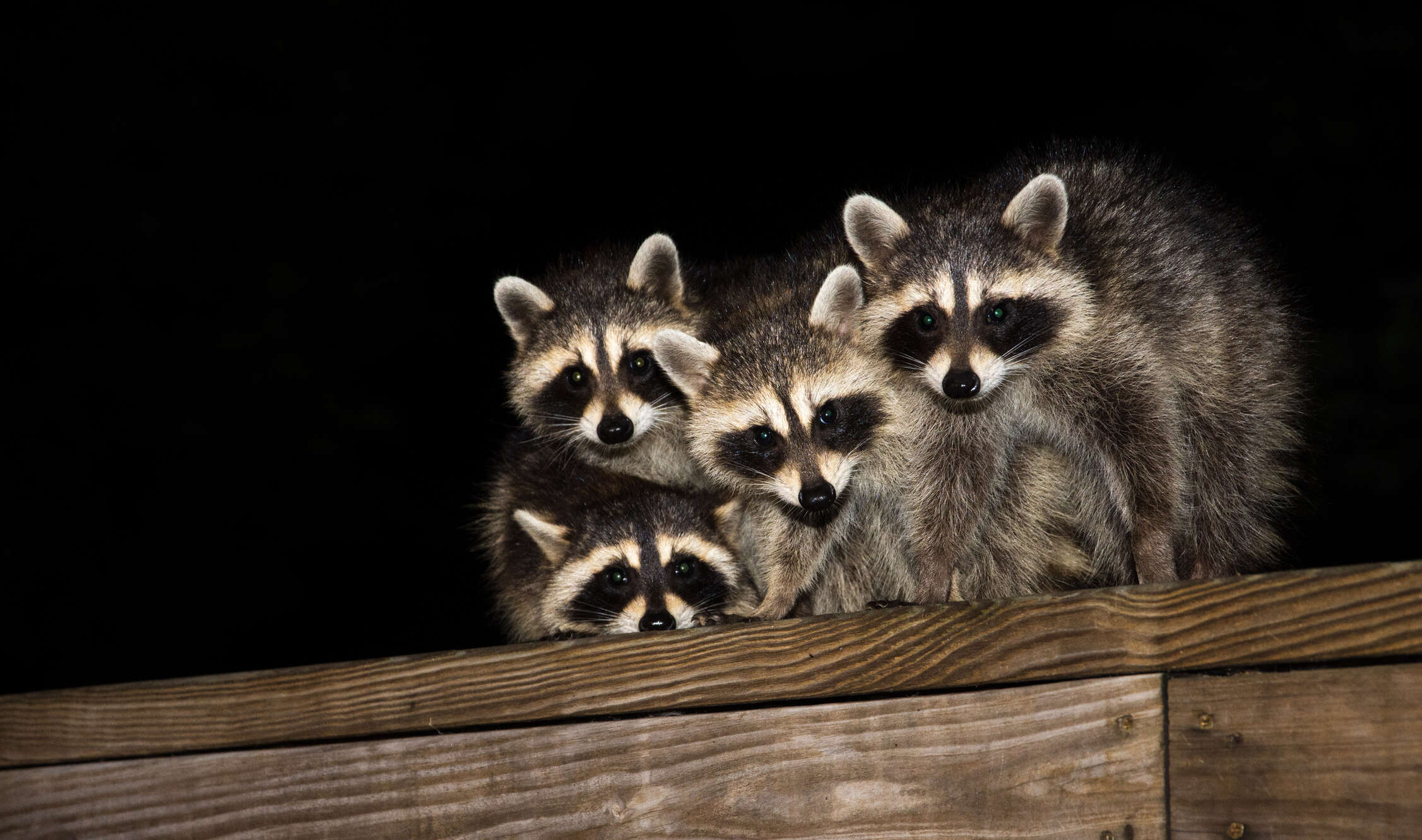
If you live in North America, you’ve likely encountered a raccoon (Procyon lotor). They range from Canada through Central America in the millions. What’s more, they’ve now become an invasive species in Central Europe and Japan. Highly intelligent, resilient, and able to manipulate objects with dexterous fingers, raccoons can adapt to all sorts of environments. They are no longer only a rural species but have become a full-fledged urban species as much as pigeons, rats, and feral cats are.
No matter where in North America you live, you might encounter raccoons while on a hike, having a picnic, taking out your garbage, or even at home, as they can climb into your walls and attic. In this article, we’ll help you identify some of the most common raccoon sounds and what they mean, so at least you’ll have a better idea of what you’re dealing with.
Why Are There So Many Raccoons?
Raccoons have multiplied explosively in North America primarily because of the enormous amount of food waste our affluent society creates. Overflowing trash bins provide an easy meal for them. They have an advantage in rummaging due to their sensitive, five-fingered hands with a highly developed sense of touch. They can find ways to open latches and packages and pick up small bits of food. Raccoons hear and see well, especially at night. They can also run and climb well and can even swim if they have to. They do have their predators, though. Coyotes, bobcats, birds of prey, and even invasive pythons in the Everglades help keep their populations down.
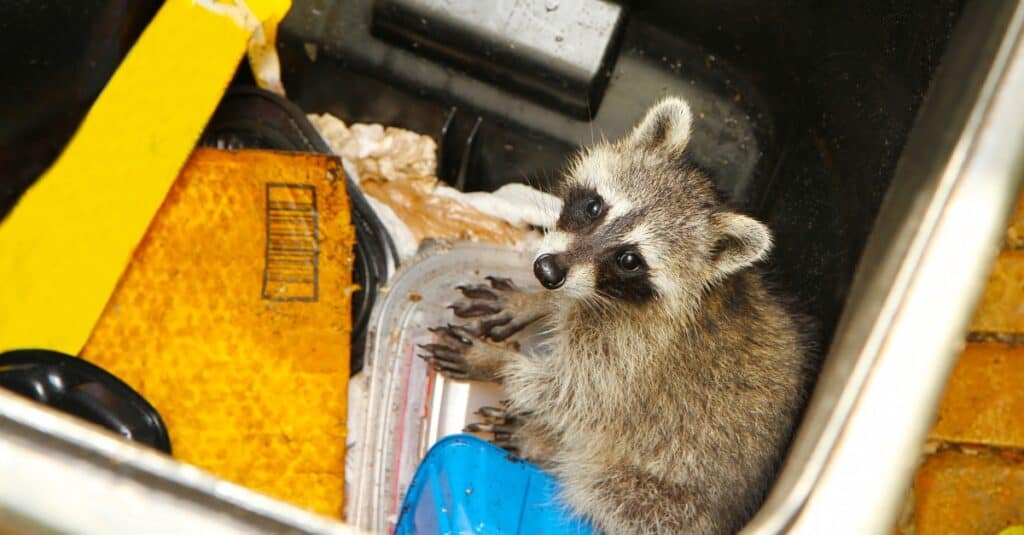
Imagine seeing this when you take a bag of trash out to your garbage can. What would you do?
©Jillian Cain Photography/Shutterstock.com
No doubt about it, these rascally little bandits with their black “masks” are adorable. They serve the environment by eating carrion and spreading seeds that cling to their fur or get expelled in their waste. However, these messy little “trash pandas” scatter garbage around the neighborhood, fight with pets, and spread contagious diseases like rabies, roundworm, or distemper. They can also get into the crawlspaces, attics, and walls of homes, damaging insulation, fraying wiring, and creating a fire hazard, and leaving behind smelly waste. Since they’re active at night, the eerie sounds they make can have you thinking it’s time to call an exorcist.
What Sounds Do Raccoons Make?
Raccoons are a very vocal species. While many sources claim they can make over 200 different sounds, scientists have recorded 13 distinct types of calls. Of course, we won’t describe all of those here, but below are some of their most common noises, and what they typically mean.
1. Growling
When a raccoon is in danger, angry, or trying to defend itself, it growls like a dog. Its growl can start as a deep bass rumble before turning into a snarl, continuing to rise to piercingly loud noises that can sound like screaming. This can be accompanied by body language such as lowering the head, arching the back, raising the fur, and puffing up the tail to make the raccoon look bigger.
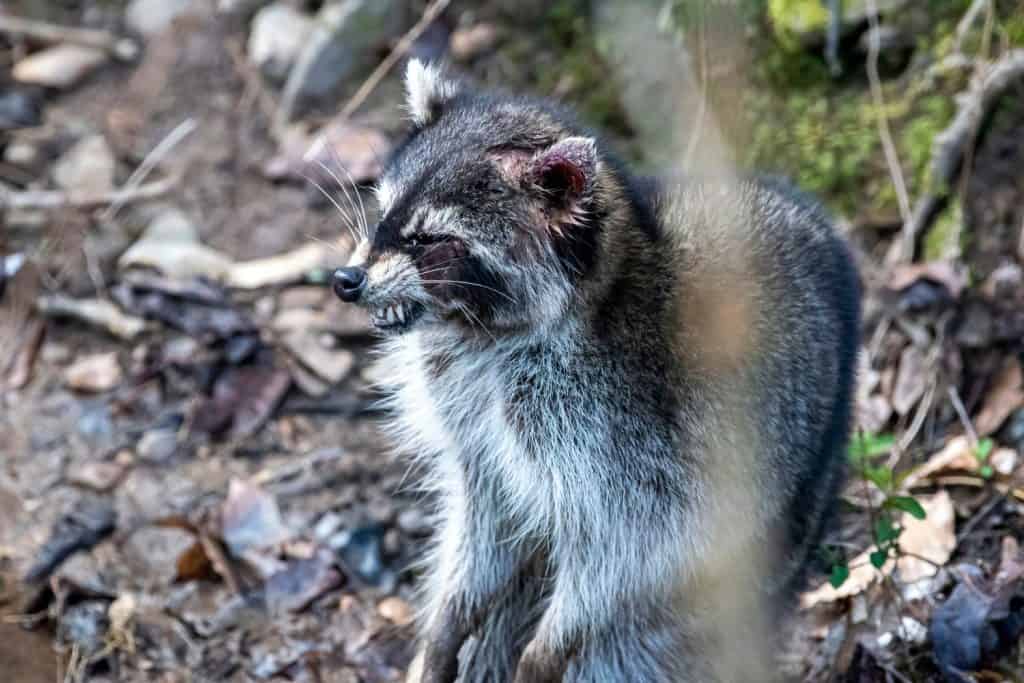
A raccoon may growl when it is in danger, angry, or trying to defend itself.
©Christopher J Barger/Shutterstock.com
2. Chittering
Chittering sounds a little like purring and clicking at the same time. Mothers communicate with their babies this way to calm them, and the babies do it to call their mothers. As adults, raccoons make the same mother/baby noises to soothe themselves when they are anxious or afraid.

Raccoon mothers and babies communicate with each other by chittering.
©garyjwood / Creative Commons – Original
3. Hissing
Usually, raccoons are a relatively non-aggressive species. However, when they feel scared or angry, they might make a hissing sound like a cat as a warning. They may also make this noise when rabid. Males often make these noises while competing with one another during mating season, which is from January through March. Hissing often signals the beginning of a fight, which quickly escalates to violence and a variety of other aggressive, vicious noises. Mothers will also hiss at males that get too close to their babies.
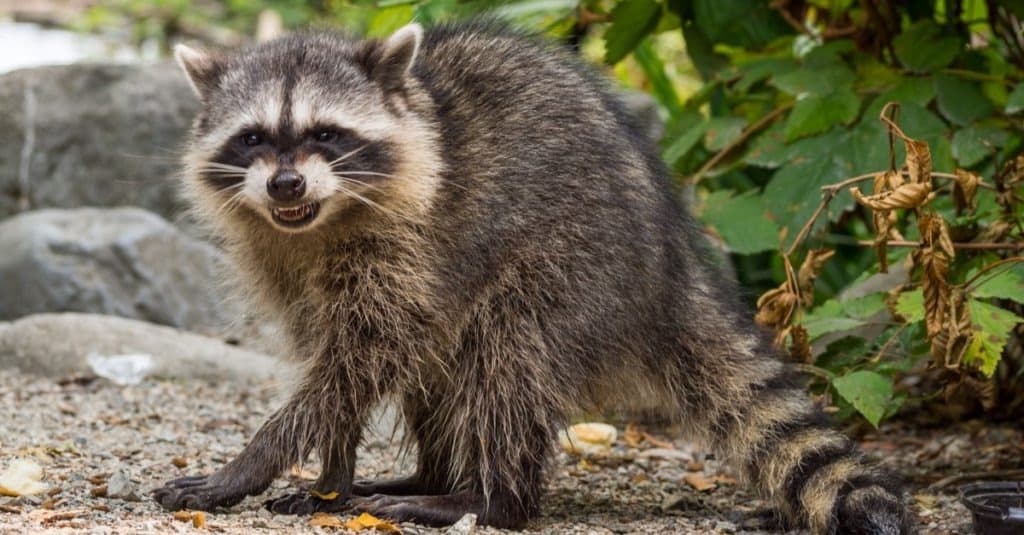
If a raccoon feels scared or angry, it may make a hissing noise like a cat as a warning.
©StoneMonkeyswk/Shutterstock.com
4. Purring, Cooing
Raccoons can make a faint purring sound like kittens. These sounds are often heard in young ones, but adults make them too when they’re extremely happy and content. If you hear this sound, you did something right for your resident raccoon. Of course, if you don’t want it to stay, you might want to stop doing that.
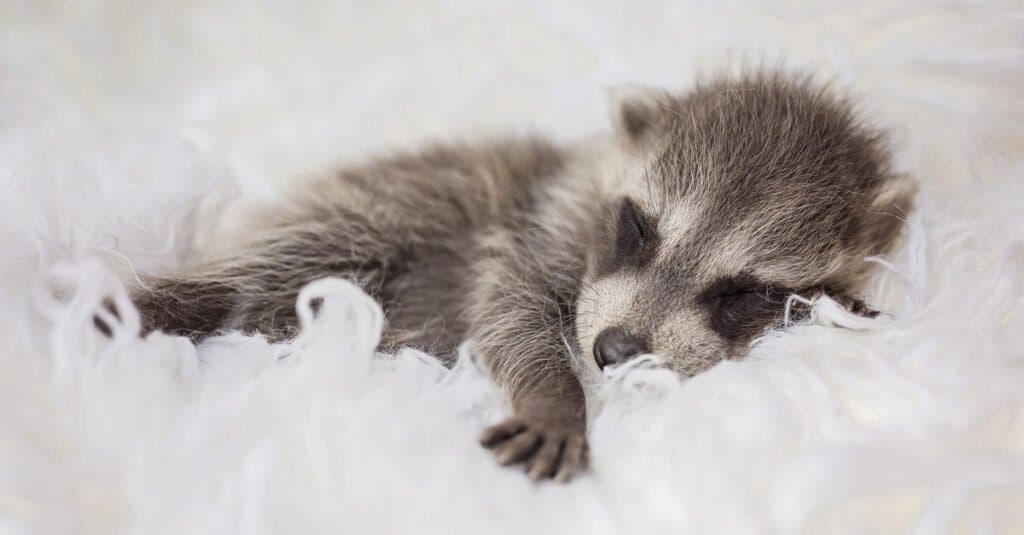
A happy, fluffy little raccoon will purr and coo as if to say “Ah, life is good!”
©sinagrafie/Shutterstock.com
5. Screaming, Screeching
When a raccoon is in intense distress or pain, it can make screaming, screeching, owl-like noises. These can be loud enough for you to hear inside the house with the windows closed. This may signal an injured animal. However, it could also be an indication of a rabid animal. Rabies is a fatal disease that can spread to people and animals through bites or scratches. Raccoons are one of the main carriers of rabies in the United States, so if you hear such noises or see abnormal behavior in a raccoon, steer clear and call wildlife officials.

©Vital9s/Shutterstock.com
6. Mewing, Whining
These are the crying sounds a baby raccoon makes when it’s scared, hungry, lonely, or just having a hard time and wants its mother. These sounds could come from a baby raccoon that has lost its mother to traffic or a predator, or it could be that the mother is nearby and will return to defend her baby if you get too close to it. It’s best to leave it where you found it.
If you feel you must intervene, you can put on heavy gloves to avoid being bitten or throw a thick blanket over the baby. Put it in a cardboard box it cannot climb out of and leave it where you found it. If the mother is near, she will come and set it free. Otherwise, if you return in a day and it is still there, place the baby in the box and call local wildlife authorities to take care of it.
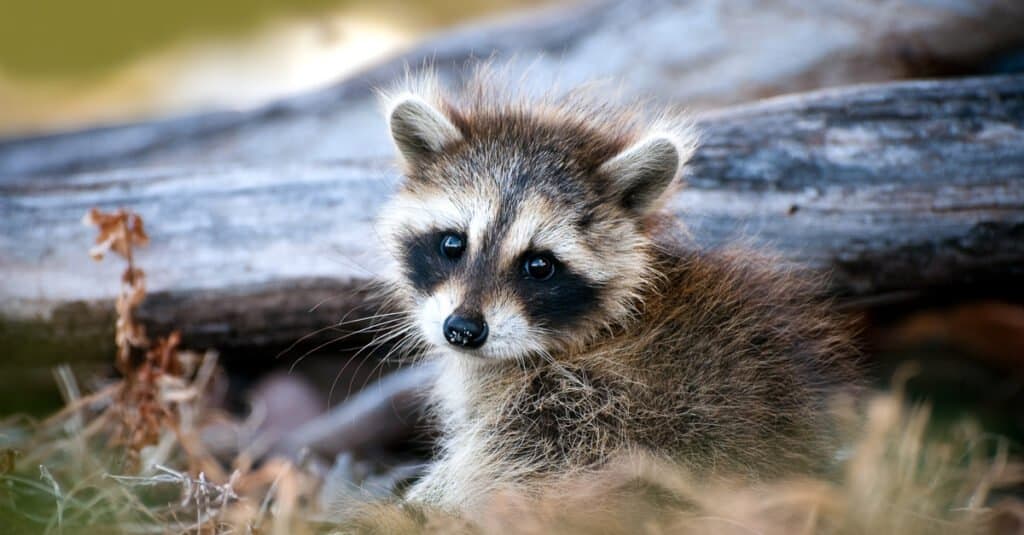
Baby raccoons will make whining sounds when they cannot find their mothers.
©Heiko Kiera/Shutterstock.com
7. Barking
A raccoon can bark like a dog. Its bark is often combined with a growling sound. It means they are excited or stressed, whether in a good or bad way. Mothers use it to call their babies when they’re out of sight. Some raccoons might bark when eating particularly appealing garbage. They can also use it as part of a threat display to scare off a predator.
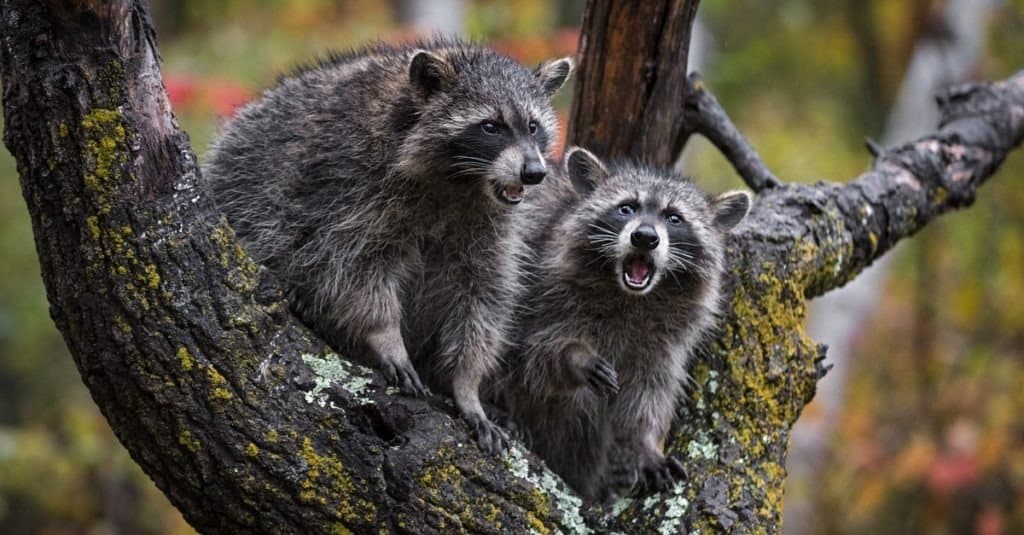
Raccoons can make barking sounds when excited or stressed, similar to dogs.
©Geoffrey Kuchera/Shutterstock.com
What Do Raccoons in Your House Sound Like?
If you have a raccoon in your walls, ceiling, or attic, you may notice rustling and scratching noises as it digs around in the insulation to build a nest. Gnawing noises might be audible as it chews through siding and wood to enlarge an entry hole or access other parts of the house. You’ll hear the faint pitter-patter of footsteps as it rummages around looking for food or nesting materials. There might be a little chittering or barking as the mother and babies communicate with each other.

If your dog is staring at the wall, there could be a raccoon in it.
©Anastasiia Cherniavskaia/Shutterstock.com
Even if you can’t hear these noises, your dog, with its vastly superior hearing, can. Has your dog ever started barking at one spot on the wall or the ceiling? Don’t worry; it’s (probably) not a poltergeist. By far, the most likely explanation is a raccoon or some other critter rummaging around the interior of your house. It doesn’t hurt to have a priest bless your house, but you might want to call a wildlife removal expert, too.