
Quick Take
- The one thing cat owners almost always do to get a cat's attention is actually the least effective method. See why voice alone fails →
- French researchers found a specific type of signal that makes even a stranger's cat respond, yet most people never think to use it. Discover the combined signal →
- Ignoring a cat entirely isn't as neutral as it seems, according to science that reveals an unexpected stress response. See the stress response →
- The sound you use to call a cat may say more about where you live than what cats actually prefer. Explore cultural cat-calling differences →
In a bustling Parisian cat café, a team of researchers set out to solve a mystery that has baffled cat lovers for generations: how do you reliably get a cat to pay attention to you? Led by Charlotte de Mouzon at Université Paris-Nanterre, the scientists immersed themselves in the daily rhythms of cats and their human visitors, searching for a breakthrough in interspecies communication.
Inside the Feline Mind: Seeking the Secret Signal
Cats have always been a paradox, aloof yet affectionate, fiercely independent but remarkably attached. Their enigmatic behavior piques the curiosity not just of pet owners, but also of scientists eager to decipher their social codes. Recently, a French study published in Animal Cognition turned the spotlight on one of the trickiest aspects of human-cat relations: attracting a cat’s attention, especially when it’s a stranger to you.
The researchers had a clear goal: find the most effective way to catch the eye (and ear) of a cat you’ve never met. What emerged upended some of the most common beliefs about feline behavior and communication.
Vocal Cues Aren’t Enough: The Power of Combined Signals
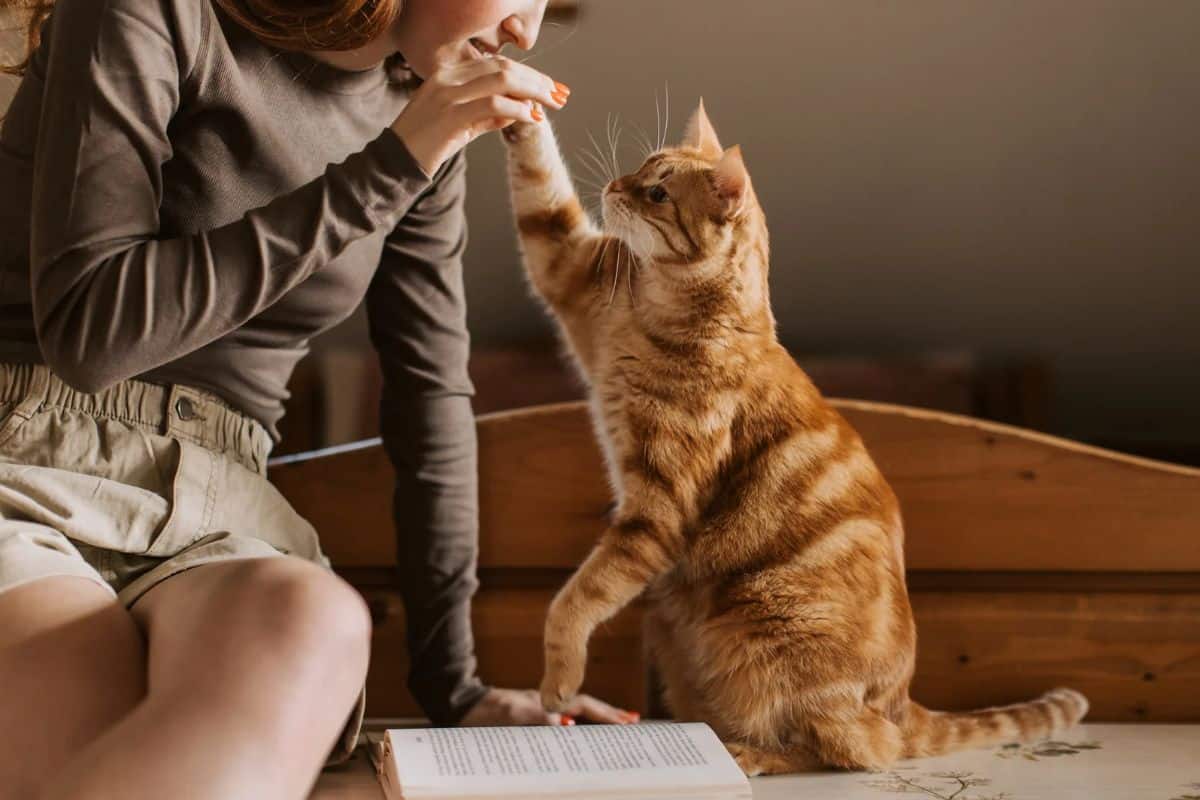
The stereotype suggests cats are largely indifferent to humans unless food is involved. But the researchers’ findings painted a more nuanced picture. They discovered that felines respond much faster when a person combines a visual gesture with a vocal cue, compared to using only their voice. The classic, sing-song “here, kitty kitty” may not be enough after all.
Even more striking, cats reacted more promptly to gestures alone than to vocal calls by themselves. This raised questions about decades-old habits, like calling out “minou, minou” or similar vocal summons popular in many households. For cats, it seems, what they can see has at least as much weight as what they can hear.
A Distinctively French Twist on Cat Calling
The French approach to beckoning cats added a cultural dimension to the findings. Charlotte de Mouzon used a sound familiar to cat owners in France, a “pff pff” noise. While this method is standard in France, other countries rely on a “pspsps” sound.
This detail led the team to question whether local audio cues might be more or less effective depending on the cats’ environment and experience. Future research could compare these different sounds across national borders to see if feline preferences follow cultural trends as closely as human ones do.
Stress Revealed by Silence: What Happens When Cats Are Ignored
The study didn’t just look at which signals garnered a cat’s attention. It also found that when people ignored cats altogether, the animals’ stress markers increased. Researchers observed more frequent tail shaking, a known sign of feline stress or discomfort, whenever a person was present but refused to interact.
This reaction may stem from cats’ uncertainty about a silent human’s intentions, especially in a shared space like a cat café with unfamiliar people. The finding highlights that cats are attuned to subtle changes in their social environment, even if outwardly they appear detached.
A New Chapter in Human-Cat Relations
The work of de Mouzon and her colleagues invites a reevaluation of how humans and cats communicate, and misunderstand one another. By tuning into the cues that matter most to cats, we can make everyday encounters more meaningful for both species. As it turns out, even the world’s most inscrutable companions are eager to connect, if only we learn to speak their language.