
Quick Take
- Sharks can absolutely hear you from stunning distances, and what they do next is the opposite of every shark movie you've ever watched. See how sharks actually react →
- Scientists had a specific reason to believe this level of shark hearing was physically impossible, but this study just broke that assumption. See the broken assumption →
- The researchers included a clever control in their experiment that proved the sharks weren't just reacting to the equipment itself, and the result was surprisingly clean. Explore the experiment design →
- Most of the shark reactions happened in a zone scientists had already written off as silent to sharks, a finding that changes what we thought we knew about their senses. See the surprising detection zone →
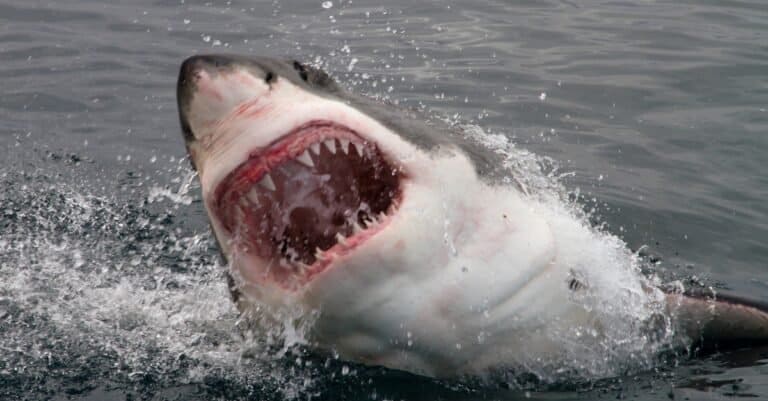
The water is barely deeper than a tall grown-up standing on the bottom. A speaker resting on the sand starts to thump, a low pulse like a bass note at a concert. Most of a football field away, a shark jerks sideways and takes off.
That’s the moment a team of scientists caught on camera off the coast of Florida. The farthest shark they filmed reacting was 74.0 metres from the speaker, which is 243 feet.
So yes, a shark really can hear you from that far. But here’s the part the movies never told you.
That shark was leaving.
A speaker on the sand, a camera in the sky

Why Hundreds of Blacktip Sharks Migrate Past This Florida Beach
©Gino Santa Maria/Shutterstock.com
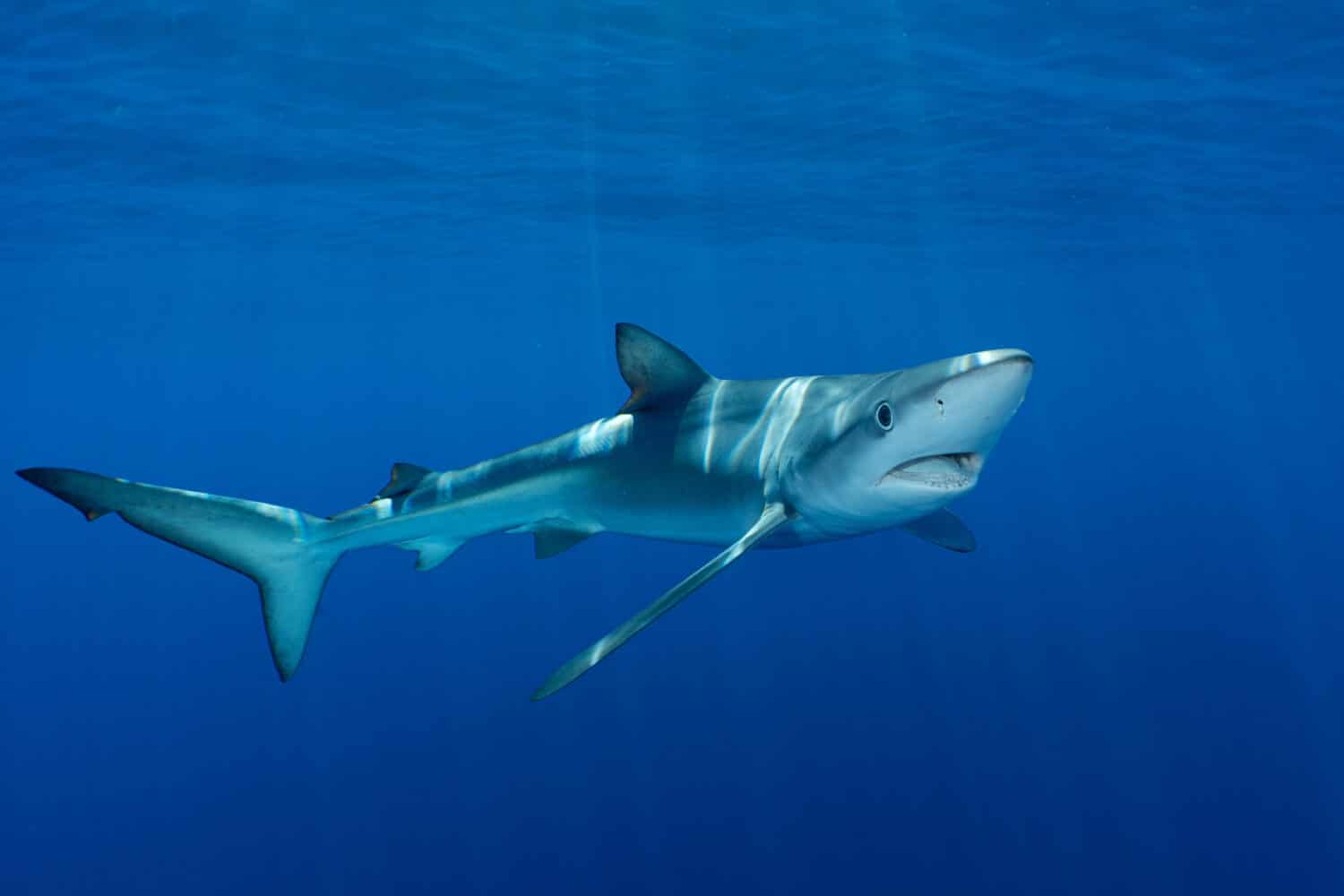
These were wild blacktip sharks, Carcharhinus limbatus, filmed from a flying camera drone off three inlets in southeast Florida: Jupiter Beach, Palm Beach and Pompano Beach. The water was only 2 to 5 metres deep. That’s beach water, the kind people swim in every weekend.
An underwater speaker played pulsed sound in three low frequency bands. For comparison, it also played a much higher tone, a thin whine at 10 kHz.
The high tone was the test of the test. If the sharks bolted from it too, then maybe the speaker itself was spooking them. Across 209 tries with the high tone, the sharks reacted zero times. Whatever they were fleeing, it was the low thump.
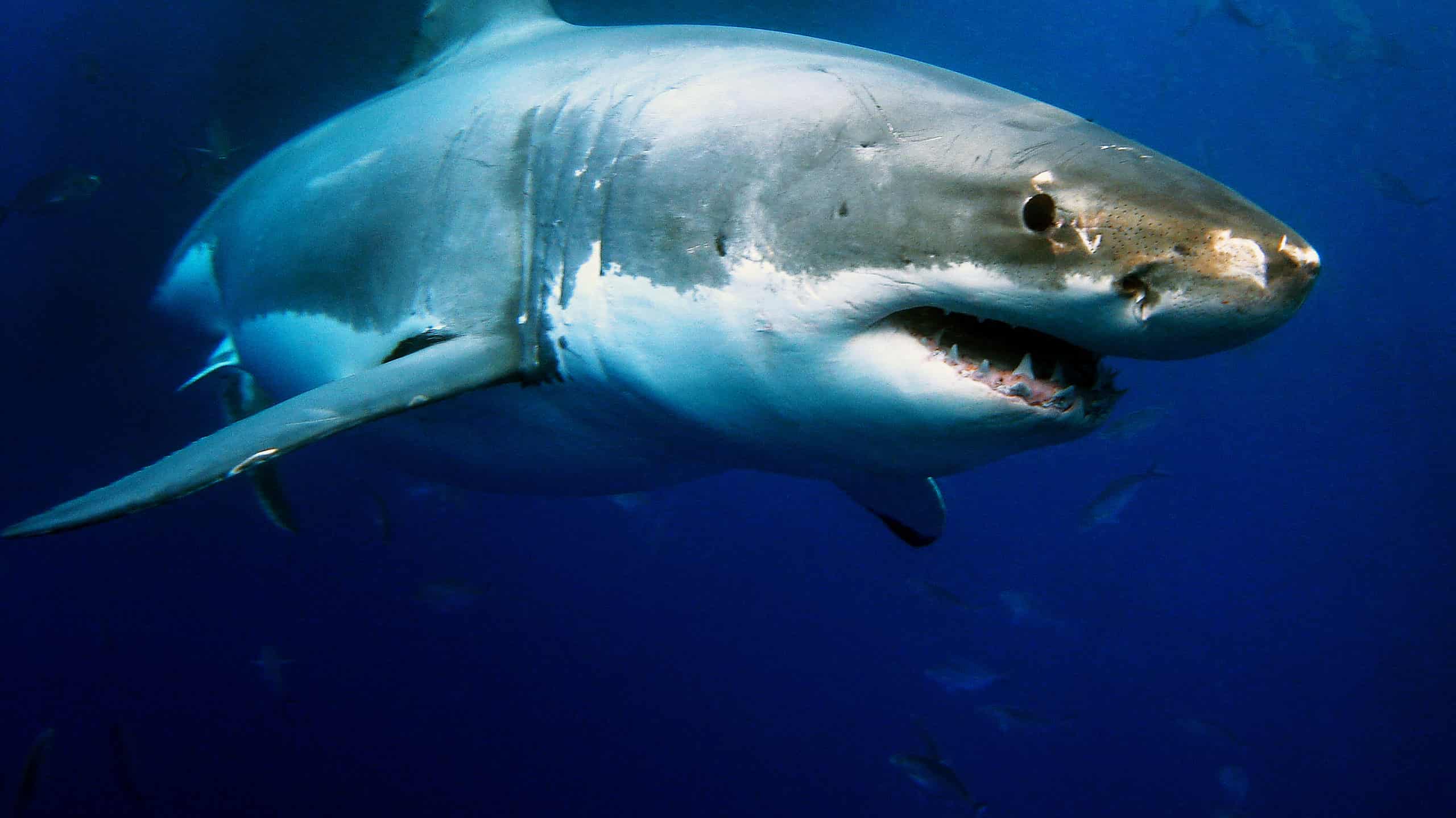
Sharks don’t have an outer ear the way we do. There’s just a small hole on either side of the head, leading to an inner ear buried in the skull. With that simple setup, they picked up a thump from most of a football field away.
What 243 feet really means

Are Sharks Blind?
©frantisekhojdysz/Shutterstock.com
The headline number is the record from the study, the single farthest shark that reacted. That shark was 74.0 metres from the speaker, which is 243 feet.
Most sharks reacted closer in than that, though still from farther than anyone expected. All three sounds drew a reaction from at least 62 metres, which is 203 feet. For the two lower sounds, the typical shark turned tail from a bit more than half the record distance.
And here’s the number that made me sit up. About seven out of every ten reactions happened in a zone scientists had assumed was silent to sharks. More on that in a minute.
Jaws didn’t come for you. Jaws left.
Here’s where the story flips. When a shark picked up the sound, it made a sudden, sharp turn away from the speaker, anywhere from 20 to 160 degrees, and swam off fast. The average turn was 72.7 degrees. That’s close to a right angle. A shark cruising along, the thump starts, and it swerves almost sideways and bolts, like a driver slamming the brakes and yanking the wheel at once.
Do Sharks Have Ears? Can They Hear?
©iStock.com/Whitepointer
I’ll be honest: I expected the opposite. This is the animal every shark movie trained us to fear, the one that circles in at the sound of splashing. Instead, the reaction the cameras caught, over and over, was a shark getting away.
That fits with what other researchers have seen. In some shark species, an unexpected sound, or a sudden jump in how loud a sound is, can send them rushing away from wherever it came from. The calls of killer whales, which can hunt sharks, have been reported to make sharks flee too.
One more honest note. Nobody screamed underwater in this study. The speaker played low, pulsed sounds. So the fair version of the headline goes like this: sharks can hear a loud, low sound from farther away than anyone thought, and when they do, they leave.
Why scientists thought this was impossible
Scientists already knew sharks react to low, pulsing sounds. They just believed that hearing gave out fast.
How Far Can Sharks Smell Blood?
©Ramon Carretero/Shutterstock.com
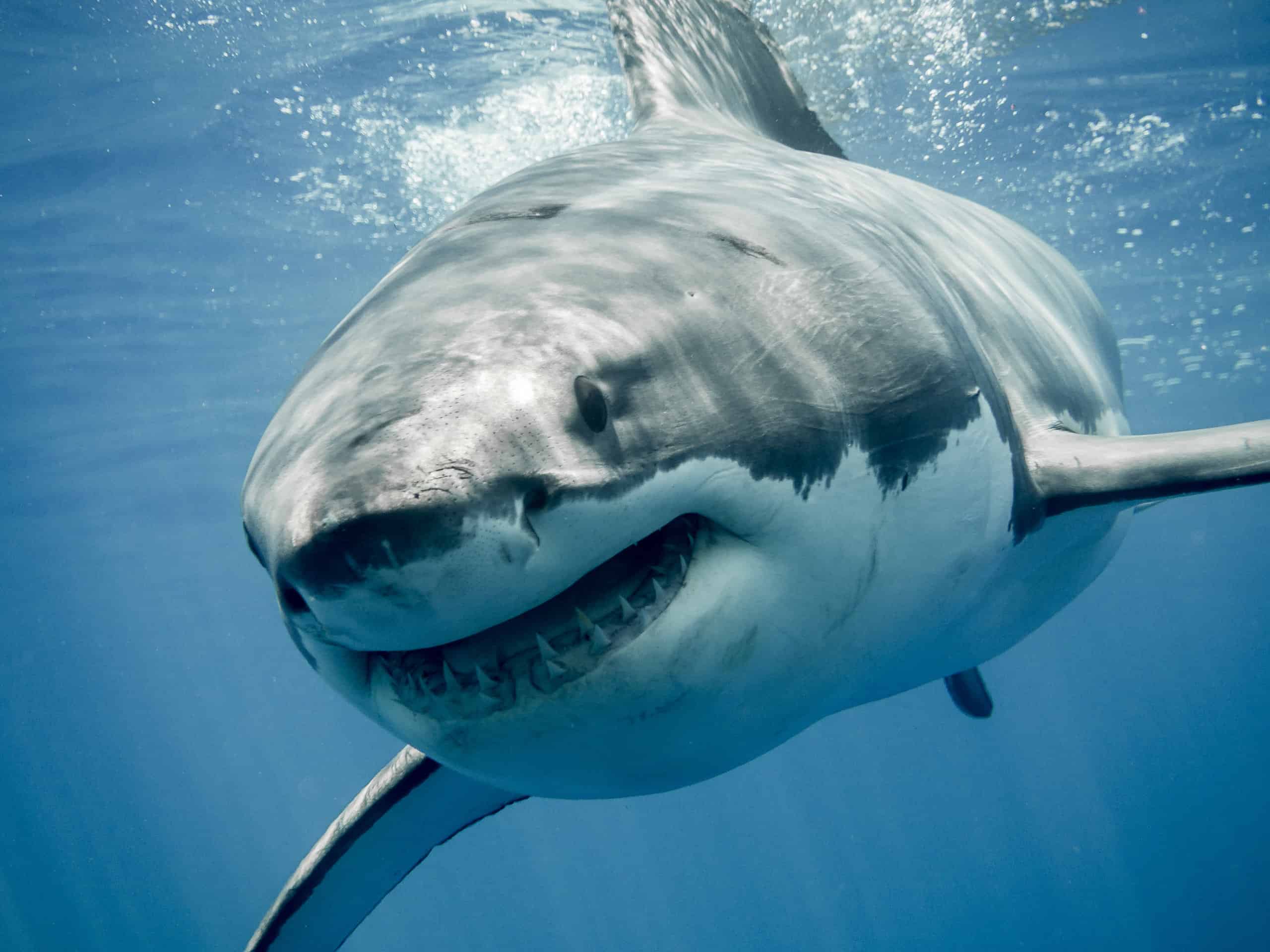
Here’s why. Right next to a sound source, the water itself gets shoved back and forth with each pulse. Scientists call that zone the near field. A little farther out, that shoving fades to almost nothing, and what’s left is mostly a wave of pressure rolling through the water. That’s the far field. Sharks were presumed to be unable to detect sound out there, beyond the near field.
These sharks did. They turned and fled from deep inside the zone that was supposed to be silent to them, again and again, from as far as 243 feet.
This is the part I keep thinking about. The study’s authors say that because the sharks could turn away from a sound that far out, they must be sensing the faint leftover shove in the water, out in the far field, something nobody had shown at this range before. And they point out why that would matter to a shark: hearing works from farther away than any other sense, so a predator that can hear a sound and place it has an edge.
Other work agrees that shark ears are better than they look. A study of three shark species found their inner ears can take in sound from all directions. Put that with the Florida footage, and a shark’s hearing is a lot bigger than the textbook version.
Turn around and get out
Can Sharks Smell or Sense Fear?
©Samy Kassem/Shutterstock.com
Go back to that shark in the drone footage. The thump starts, and from most of a football field away it swerves and vanishes.
A shark reacted to that speaker from 243 feet away. That part of the movie was true, and truer than scientists expected.
But the blacktip’s answer to a loud, strange noise was the same one most of us would give: turn around and get out of there. I find that a lot more interesting than the monster version.