Quick Take
- Raccoons don't actually hibernate, and what they do instead is far stranger and explains why you might spot one mid-winter. See how torpor works →
- Where a raccoon chooses to sleep might already be inside your home, and you would likely never know until it is too late. Explore their den choices →
- Raccoons are loners, but that is not always the case, and winter reveals a side of their behavior most people never expect. Discover their winter grouping →
- How long raccoons actually sleep each day might surprise you, and that knowledge reshapes when and why you're most likely to encounter one. Check their daily sleep hours →
The common raccoon (Procyon lotor) is a nocturnal mammal native to the Americas. They can be found from southern Canada, throughout most of the U.S., and down into northern South America. Raccoons can adapt to almost any environment. They can be found in coastal regions, mountains, and even urban areas. Because they are often active at night, you might wonder exactly where they sleep. Read on to learn more about raccoons’ sleeping habits.
About Raccoons
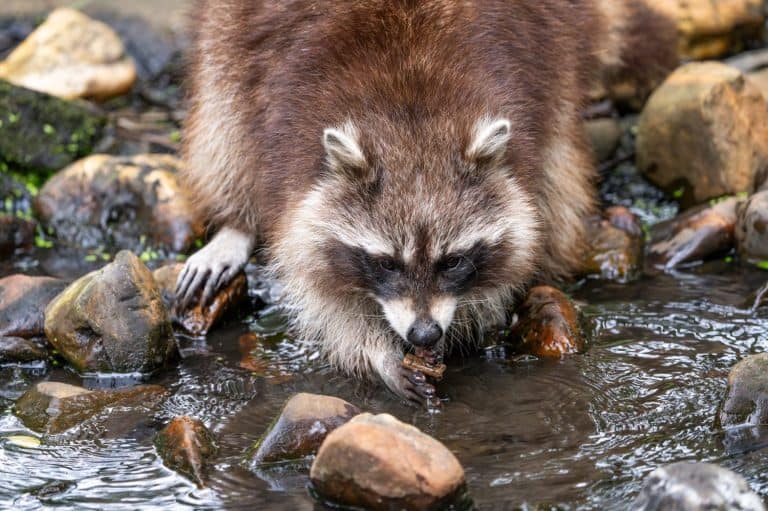
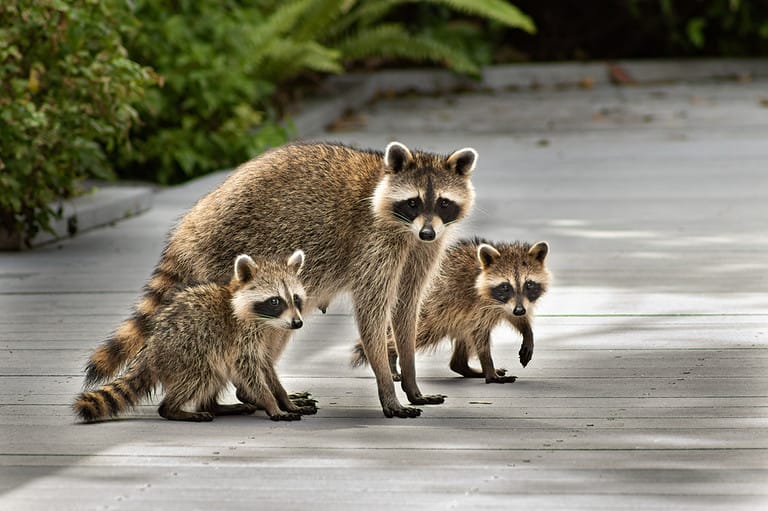
Raccoons have dense, greyish-brown fur, a black “bandit” mask on their white faces, and a bushy tail with dark rings. They have short, slightly rounded ears and a long, pointed snout. They measure from 23 to 38 inches in length with an extra 7 to 16 inches for the tail. Adults generally weigh anywhere from 12 to 36 pounds, but some individuals may grow larger. Their weight varies by age, genetics, diet, and habitat.

Adult raccoons typically weigh between 12 and 36 pounds.
©photofort 77/Shutterstock.com
They are opportunistic omnivores, feeding on anything that is easy to find. Their diet includes insects and other invertebrates, as well as aquatic organisms such as crayfish, crabs, mussels, fish, frogs, and snails. Raccoons raid bird nests to feed on eggs and nestlings. They consume small mammals such as rodents, squirrels, and rabbits. Raccoons also consume plant material including nuts, berries, grains, seeds, and agricultural crops. They are notorious for raiding garbage cans, stealing leftover pet food, and invading chicken coops.
Where Do Raccoons Sleep?
Raccoons are primarily crepuscular and nocturnal, so they are most active around dusk and dawn, as well as during the night. They generally sleep for 6-8 hours during the day, but they can occasionally be seen during the day if food is available.
They favor wooded areas near water, but as mentioned above, they are very adaptable. In wilder habitats, they make their dens in tree cavities, abandoned burrows, and rock crevices. In suburban and urban areas, they den in man-made structures such as brush piles, chimneys, attics, sheds, and barns.
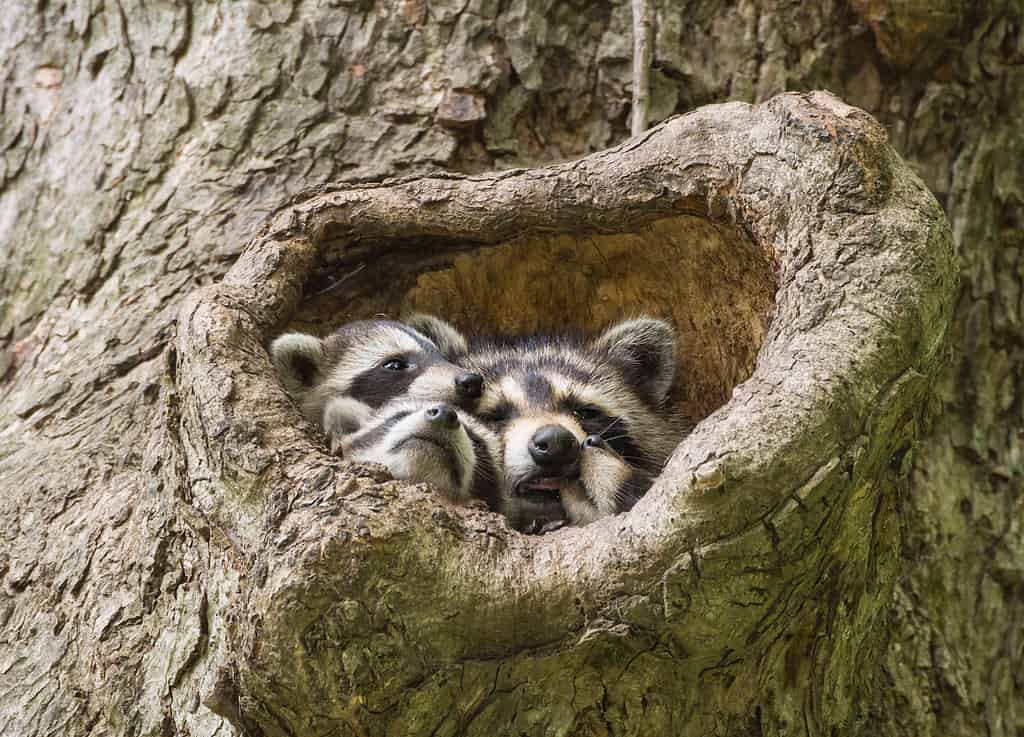
Raccoons favor sleeping in tree cavities, abandoned burrows, and rock crevices.
©Georgi Baird/Shutterstock.com
Where Do Raccoons Sleep in the Winter?
Raccoons don’t actually hibernate during the winter. Instead, they enter a state of torpor, especially in northern regions. This means that during the colder months, they may sleep for days or weeks at a time to conserve energy. However, they will often emerge to forage for food during warm spells. Raccoons bulk up on food during warmer weather conditions so that they can survive on their body fat during the colder months. Their fat layer can account for up to one-third of their body weight, and they grow thick winter coats.
In suburban and urban areas, raccoons often search for abandoned buildings to use as dens during the winter. However, attics, chimneys, and crawl spaces are also attractive winter dens. Although they are mainly solitary unless mothers are raising kits, you may find them sleeping in groups during the winter to stay warm. Young raccoons typically stay with their mother through fall, but may also remain with her through winter. To keep raccoons from denning inside your home, wildlife experts suggest closing any potential access points with 0.25-inch mesh hardware cloth, boards, or metal flashing.
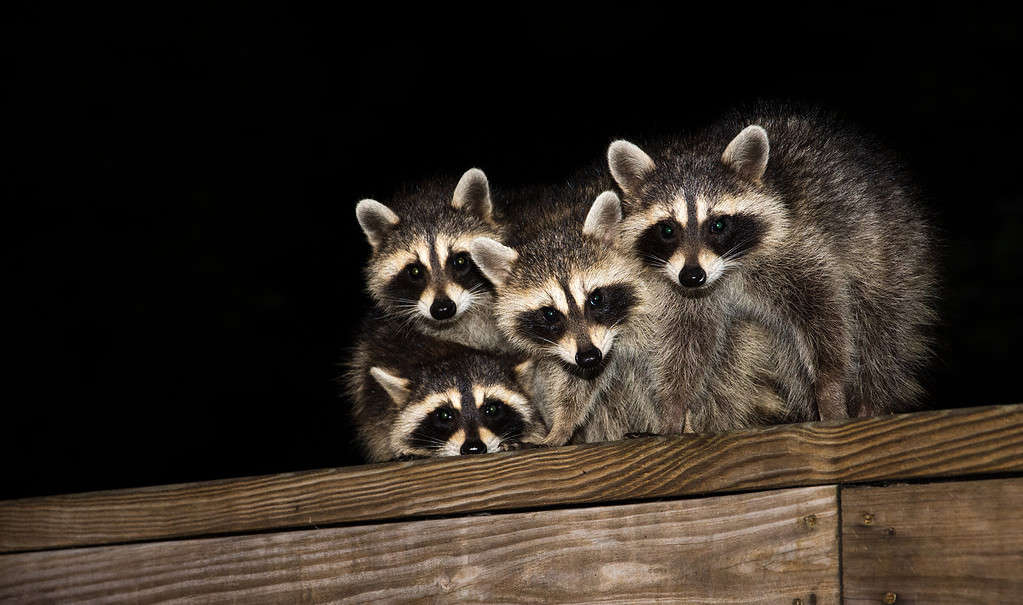
In suburban and urban areas, raccoons search for abandoned buildings to use as dens during winter.
©EEI_Tony/iStock via Getty Images