Quick Take
- One fox family can fill a den in a way that genuinely defies expectations, and you might be surprised to learn just how high the upper limit of a litter can go. See the litter size range →
- Red foxes aren't always red, and the cubs in this video look nothing like what most people picture. Watch the cubs yourself →
- Every time a cub darts back underground at the slightest noise, it is executing a survival calculation, and the predators driving that instinct are closer than you would think. Understand the survival instinct →
- Fox families keep turning up in Canadian backyards for a specific ecological reason, and that reason has nothing to do with habitat loss. Discover why foxes thrive here →
Just when you think you’ve seen the entire family, another little face pops out. A video captured in Guelph, Ontario, shows a seemingly endless parade of fox cubs emerging from their underground den. The curious youngsters venture outside, investigate their surroundings, and occasionally retreat when something catches their attention. But the real question is just how many little foxes are hiding down there. Every time the den appears to be empty, another cub seems ready to make an entrance.
An Ontario Fox Family Makes Its Debut
In the footage, the young foxes take turns exploring the area surrounding their den. Some appear more adventurous than others, while a few seem perfectly content to remain near the entrance. Even at such a young age, their awareness of the surrounding environment is impressive. A sudden movement or unfamiliar noise can send them scrambling toward the safety of their underground home.
These youngsters appear to be red foxes, a species commonly found throughout Ontario and much of North America. Despite their name, red foxes aren’t always bright orange or reddish-brown. Their coats can vary considerably, including darker color variations. Young kits also begin life with darker fur before gradually developing their adult coloration.
How Many Cubs Can One Fox Have?
Seeing so many little foxes emerge from one den might make you wonder whether several families are sharing the same home. However, red foxes are perfectly capable of producing surprisingly large litters. According to the National Wildlife Federation, a female can give birth to anywhere from one to 12 kits, although a typical litter contains approximately four to six youngsters.
Red foxes generally mate during winter, and the female gives birth after a pregnancy lasting approximately 52 days. Newborn kits arrive with their eyes closed and depend entirely on their parents. As they grow, they begin venturing outside the den, usually at around four weeks old. Both parents help provide food, although the female spends more time caring for the youngest kits. By late summer or fall, many youngsters begin dispersing to establish territories of their own.
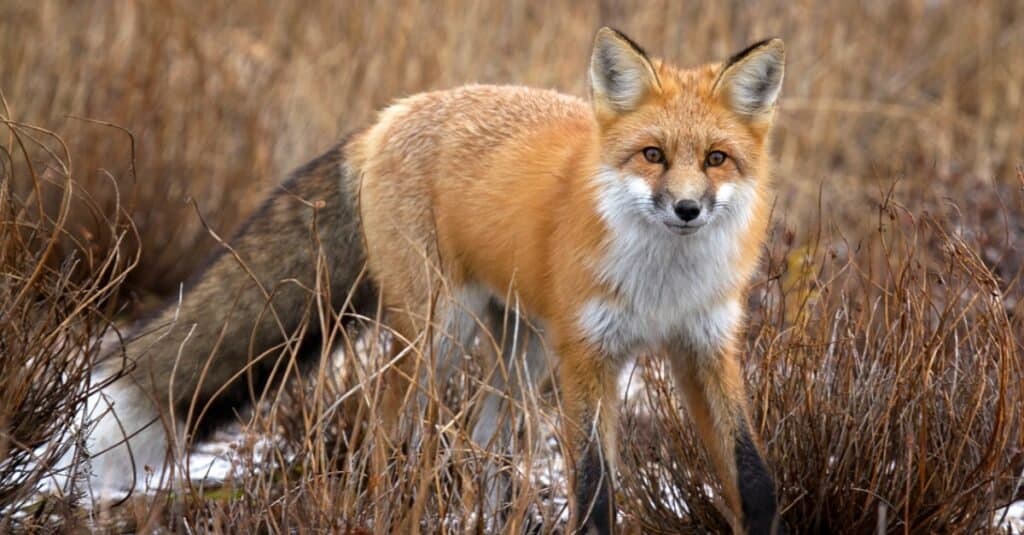
Red foxes are adaptable animals that thrive in forests, farmland, and even suburban neighborhoods.
©iStock.com/Lynn_Bystrom
Why Do Fox Cubs Stay So Close to Their Den?
For young foxes, an underground den is more than just a place to sleep. It’s their first line of defense against predators and dangerous situations. Red foxes may dig their own dens or take over abandoned burrows created by other animals, including groundhogs. Many dens have multiple entrances, providing additional escape routes if danger approaches.
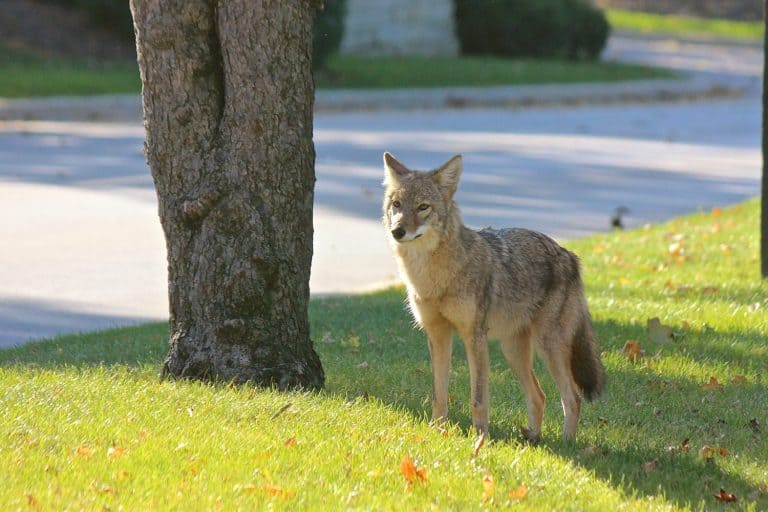
The cubs’ habit of darting back underground at the slightest disturbance is an important survival behavior. Young foxes are vulnerable to larger predators, including coyotes and birds of prey. Although their parents help protect them, learning when to retreat is essential. The youngsters gradually become more confident as they grow, spending increasing amounts of time exploring, playing, and practicing the skills they’ll eventually need to hunt on their own.
Are Red Foxes Common in Canada?
Canada is home to four fox species: the red fox, gray fox, swift fox, and Arctic fox. Red foxes are particularly widespread, occurring in every Canadian province and territory, including British Columbia. Their adaptability allows them to occupy environments ranging from forests and farmland to grasslands, suburban parks, and even areas near the Arctic tundra.
Although foxes occasionally cause trouble for people who raise chickens or other small livestock, they also play an important role in their ecosystems. Their diet includes mice, voles, rabbits, insects, birds, and fruit. By hunting rodents, foxes can help control animal populations that might otherwise damage crops and gardens. They’re also surprisingly comfortable living near people, which is why fox families sometimes turn up in residential neighborhoods.
Watch the Fox Cubs Emerge From Their Den
Watching these little foxes explore their surroundings is a reminder that even ordinary wildlife encounters can be surprisingly entertaining. One cub appears, another follows, and suddenly it seems like the entire neighborhood has moved into the same underground apartment. If you happen to discover a fox family near your home, the best approach is to give the animals plenty of space and observe from a distance. The parents are usually nearby, even when they aren’t immediately visible.
Now, watch the video below and see how many fox cubs you can count before they disappear back into their den.