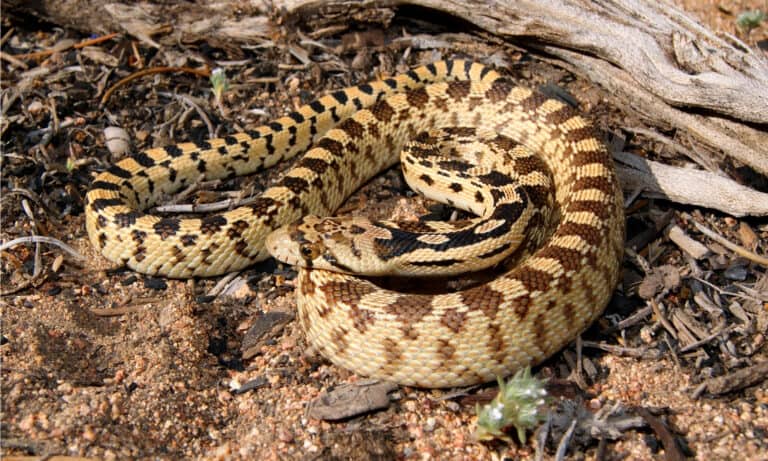

Most rattlesnakes gain their common names from their geographic distribution or some aspect of their physical appearance. A good example of the latter is the speckled rattlesnake (Crotalus mitchellii). You will want to keep your distance from these snakes, as they are venomous pit vipers belonging to the Viperidae family. They are also experts in camouflage, as their colors are ideally matched to their environment. However, one question that springs to mind is how big they are. A speckled rattlesnake is often medium-sized, which makes its ability to blend in even more impressive. But what is the record for the largest speckled rattlesnake? That is exactly what we will discover in this article, together with other fascinating facts!
What Do Speckled Rattlesnakes Look Like?
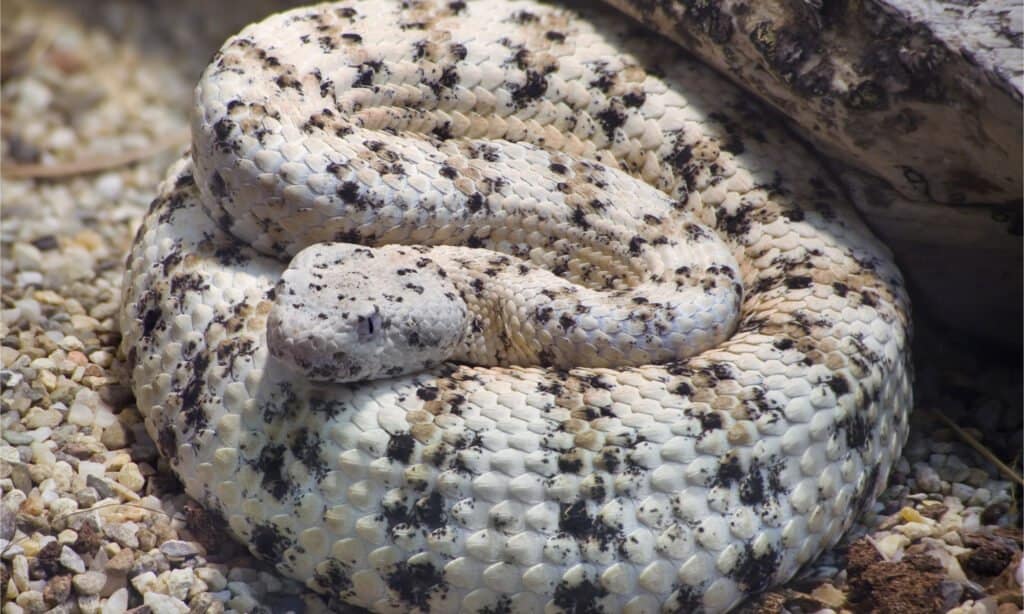
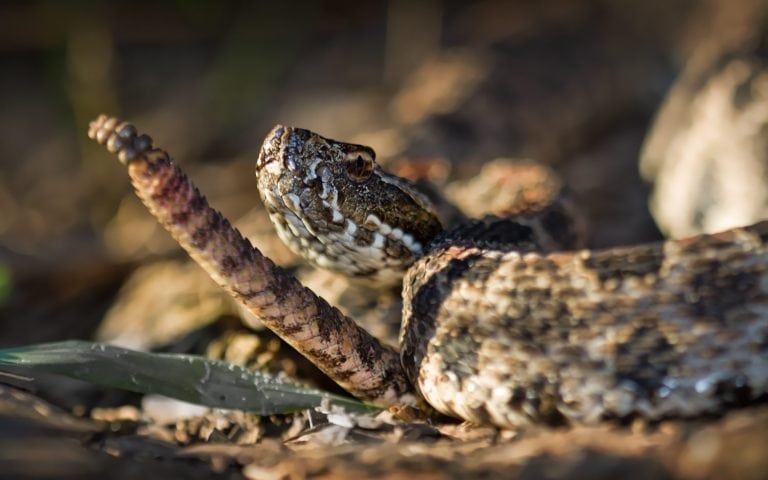
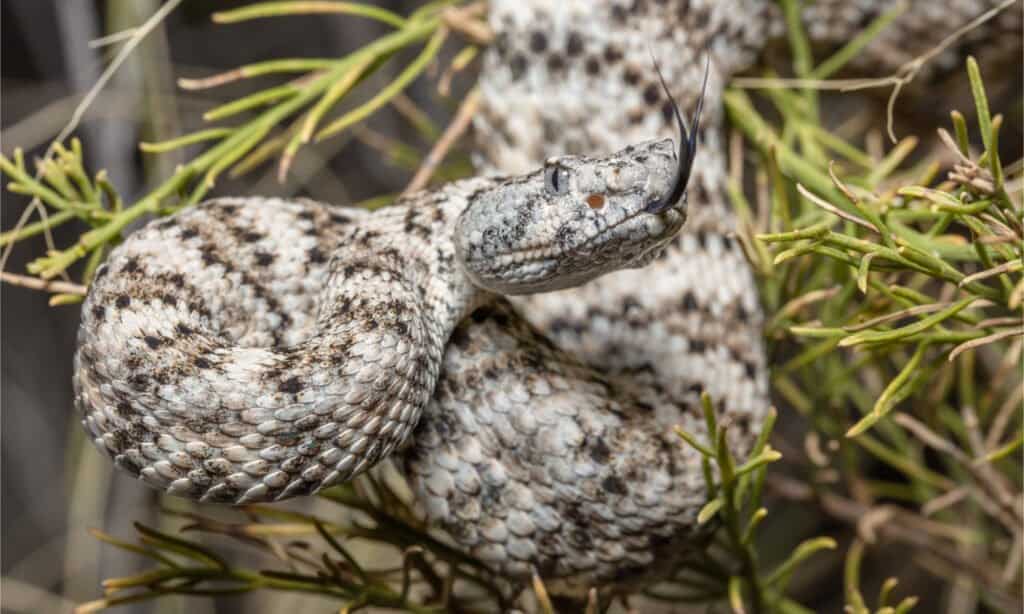
The southwestern speckled rattlesnake has a slender neck and a flat, wide, triangular head.
©Dario Sabljak/Shutterstock.com
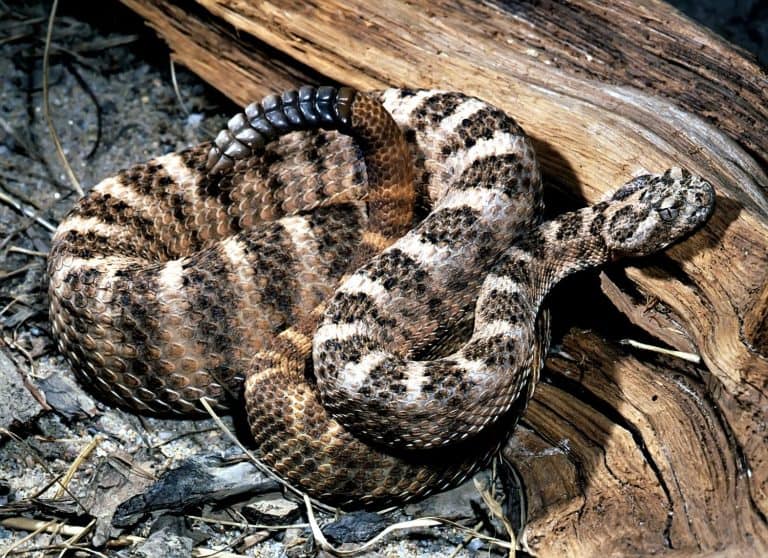
Individual color and pattern vary, typically reflecting the earth tones of the rocks and soil they call home, but speckled rattlesnakes always appear as speckled, gritty sand that matches their habitat. Some of the speckles appear in lovely colors of orange or pink, and some form irregular bands or pairs of blotches on the backs of most snakes. Some desert examples have a decomposed granite color. The darker-speckled scales have black ends, and the tail is frequently banded.
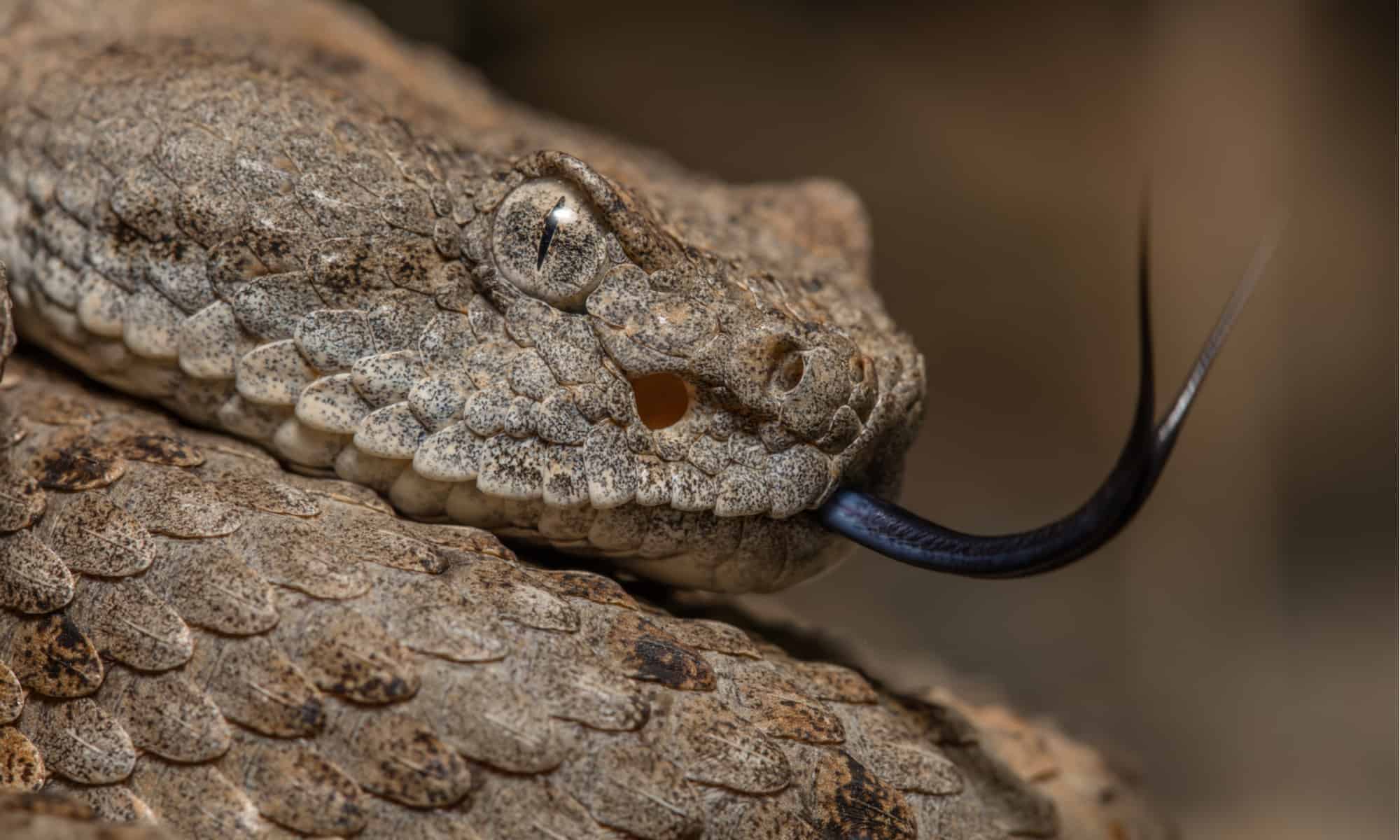
The speckled rattlesnake has a slender neck and a flat, wide, triangular head. Its rough-scaled body is moderately sturdy, with a short tail that ends in a rattle. With enlarged overhanging scales and vertical pupils, its eyes appear silvery. Similar to all rattlesnakes (and other pit vipers), this snake has heat-sensing pits on both sides of its head that it uses to detect warm-blooded prey. A pit is placed between the nostril and the eye on each side of the head. Their heat-sensing organs can detect any object whose temperature differs from the ambient temperature.
Where are Speckled Rattlesnakes Found?
In the United States, the range of speckled rattlesnakes includes east-central and southern California, southwestern Nevada, extreme southwestern Utah, and western Arizona. In Mexico, it is found across Baja California, including Baja California Sur. They also live on Angel de la Guarda Island, Carmen, Cerralvo, El Muerto, Espiritu Santo, Monserrate, Piojo, Salsipuedes, and San José islands in the Gulf of California, and Santa Margarita Island off the coast of Baja California Sur.
Speckled rattlesnakes prefer rocky terrain up to 8,000 feet. This species is more common in rocky areas inland from the shore in southern California. It also lives on rocky hillsides and alluvial deposits in the desert, but is rarely spotted along the coast. They have been seen emerging from mammal burrows at dusk, but they are not strictly rock dwellers. Their coloring varies depending on the habitat’s rocks and soil color.
How Long Do Speckled Rattlesnakes Grow?
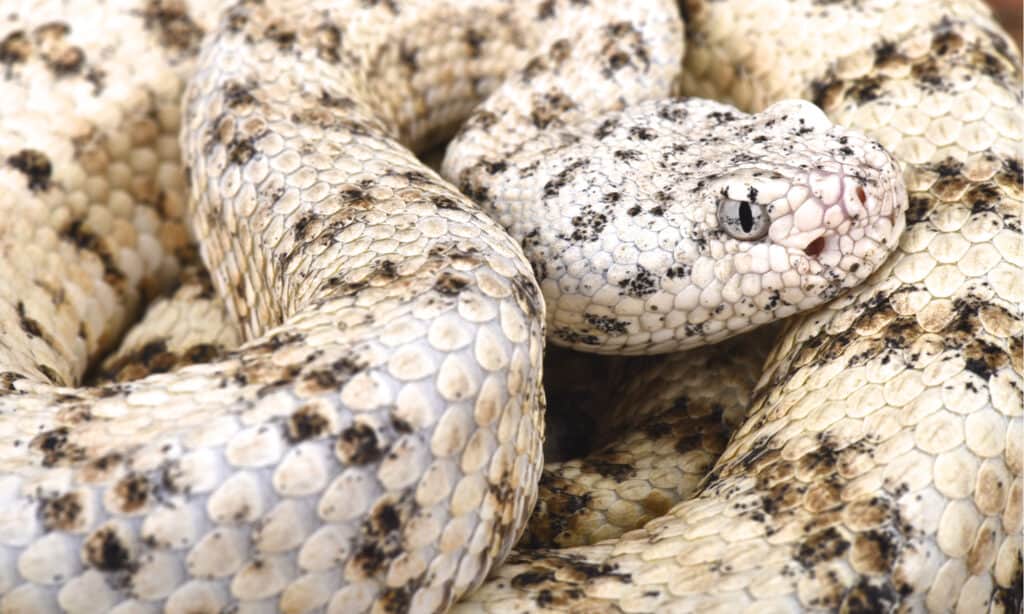
Southwestern speckled rattlesnakes can grow as long as 39 inches.
©iStock.com/reptiles4all
The overall length of a speckled rattlesnake, including the tail, typically does not exceed 39 inches, with large males measuring between 35 and 39 inches. Newborns are eight to 12 inches long, while average adult speckled rattlesnakes are usually 24 to 30 inches long. Speckled rattlesnakes are larger than several other lesser-known snakes. They are, nevertheless, attentive and often swift, despite their size.
How Long is the Largest Speckled Rattlesnake Ever Found?
The Angel de la Guarda Island speckled rattlesnake can grow up to 53.8 inches long.
©Alexander Wong/Shutterstock.com
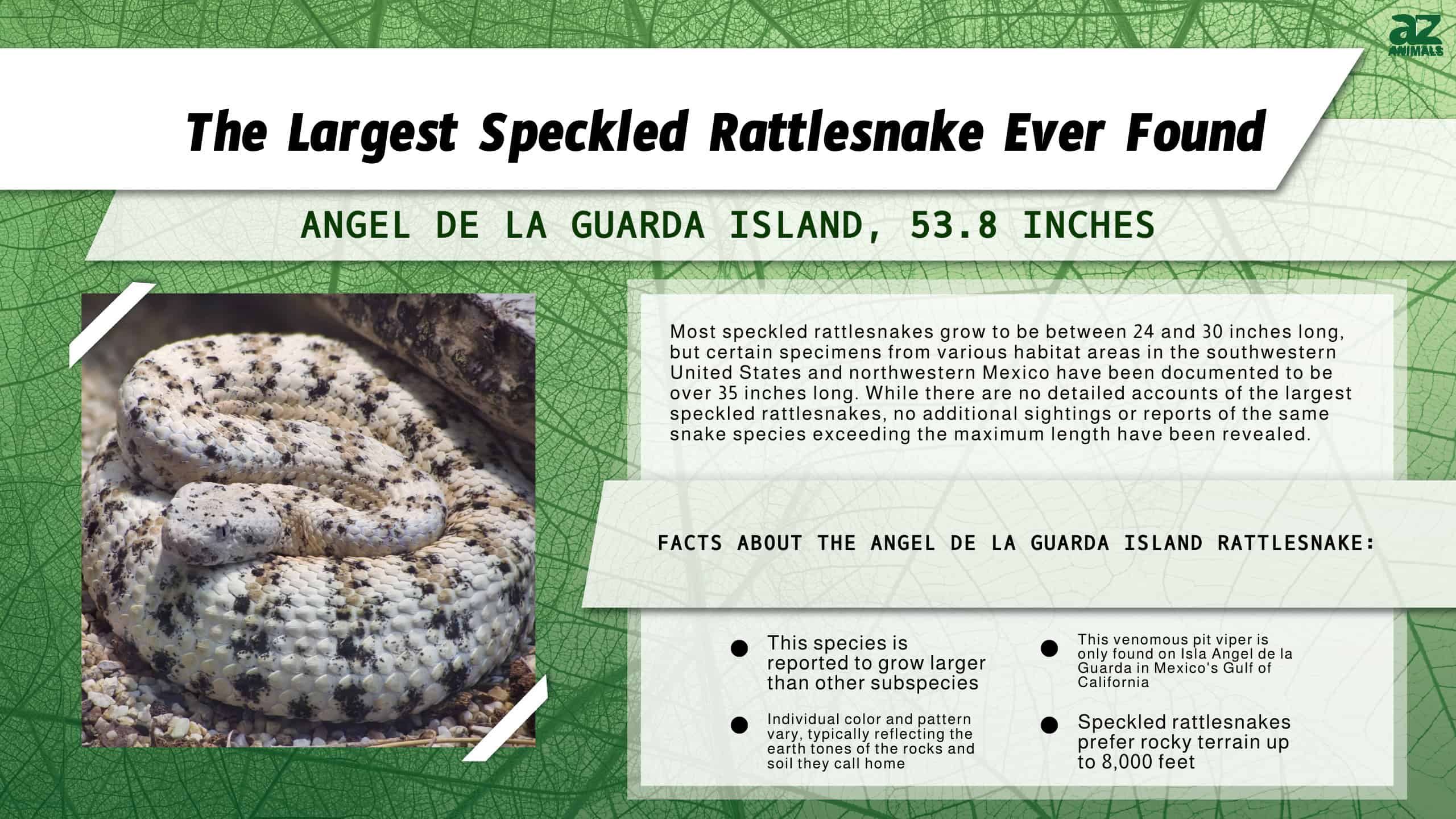
Even though no specific speckled rattlesnake has been discovered to be the largest of them all, the subspecies on Isla Angel de la Guarda in Mexico’s Gulf of California is reported to grow larger than other subspecies, with the longest specimen measured at 53.8 inches.
Most speckled rattlesnakes grow to be between 24 and 30 inches long, but certain specimens from various habitat areas in the southwestern United States and northwestern Mexico have been documented to be over 35 inches long. While there are no detailed accounts of the largest speckled rattlesnakes, no additional sightings or reports of the same snake species exceeding the maximum length have been revealed.
What Do Speckled Rattlesnakes Eat?
The speckled rattlesnake is an ambush predator that preys on small animals such as rodents, squirrels, rats, mice, birds, and lizards — the latter is particularly eaten by juveniles. The venom of the speckled rattlesnake, injected through needle-sharp front fangs, is hemotoxic, attacking its prey’s tissue and red blood cells.
Are Speckled Rattlesnakes Dangerous?
The quick answer is yes. A pair of long, needle-sharp front fangs distinguishes vipers in general. The speckled rattlesnake is a member of the Viperidae family of snakes, and its venom is hemotoxic, attacking its target’s tissue and red blood cells. Humans bitten by this snake may experience localized pain, swelling, discoloration, and possibly tissue damage.
The good thing is that human encounters with speckled rattlesnakes are uncommon. Thermal detection and vibration awareness help these snakes escape people and other larger predators. Approaching intruders may be warned by the snake’s constant rattling, higher head and body posture, and striking movements. This snake is not as aggressive as the “average” rattlesnake, yet it will bite if threatened, just like its cousins. A bite from this snake will result in a trip to the emergency room, and it can even be fatal if antivenom is not administered quickly. The speckled rattlesnake should be left alone if seen in the wild. If you want to see it from a safe distance, do so, but respect the snake’s right to personal space.
Other Record-Breaking Snakes
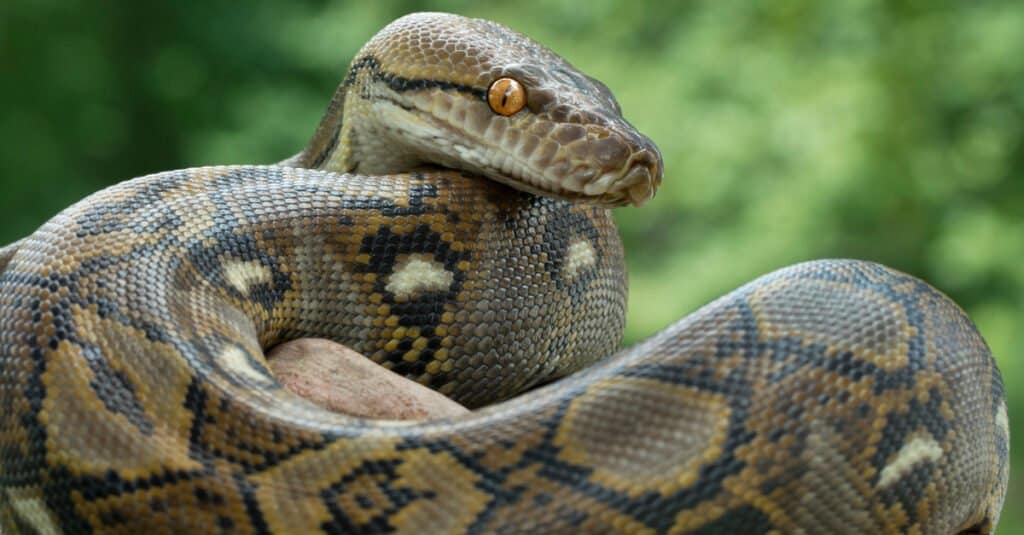
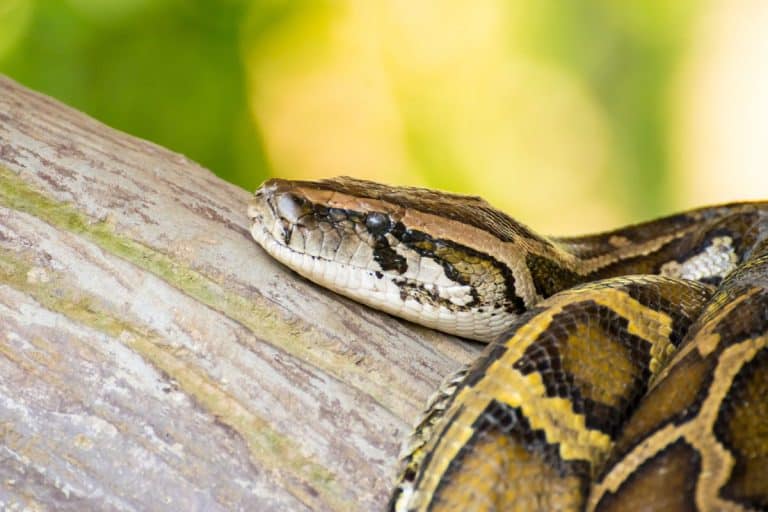
The reticulated python can grow to 30 feet
©Mark_Kostich/Shutterstock.com
If you’re interested in learning about other record-breaking snakes, then you might be interested in the reticulated python. A reticulated python was discovered in 1912 and measured about 32ft 9.5in long. The snake was found in Southeast Asia, where reticulated pythons can grow to be up to 30 feet long in some cases. They are nonvenomous constrictors that feed on small mammals, birds, and other reptiles like lizards and snakes.
Reticulated pythons can live up to 25 to 30 years in captivity. They can also be dangerous when threatened due to their size and ability to constrict prey tightly with their powerful muscles. In captivity, they need large enclosures with lots of hiding places as well as access to water for drinking/soaking since they do not drink from standing water sources like most other species of snakes do.