R
Species Profile

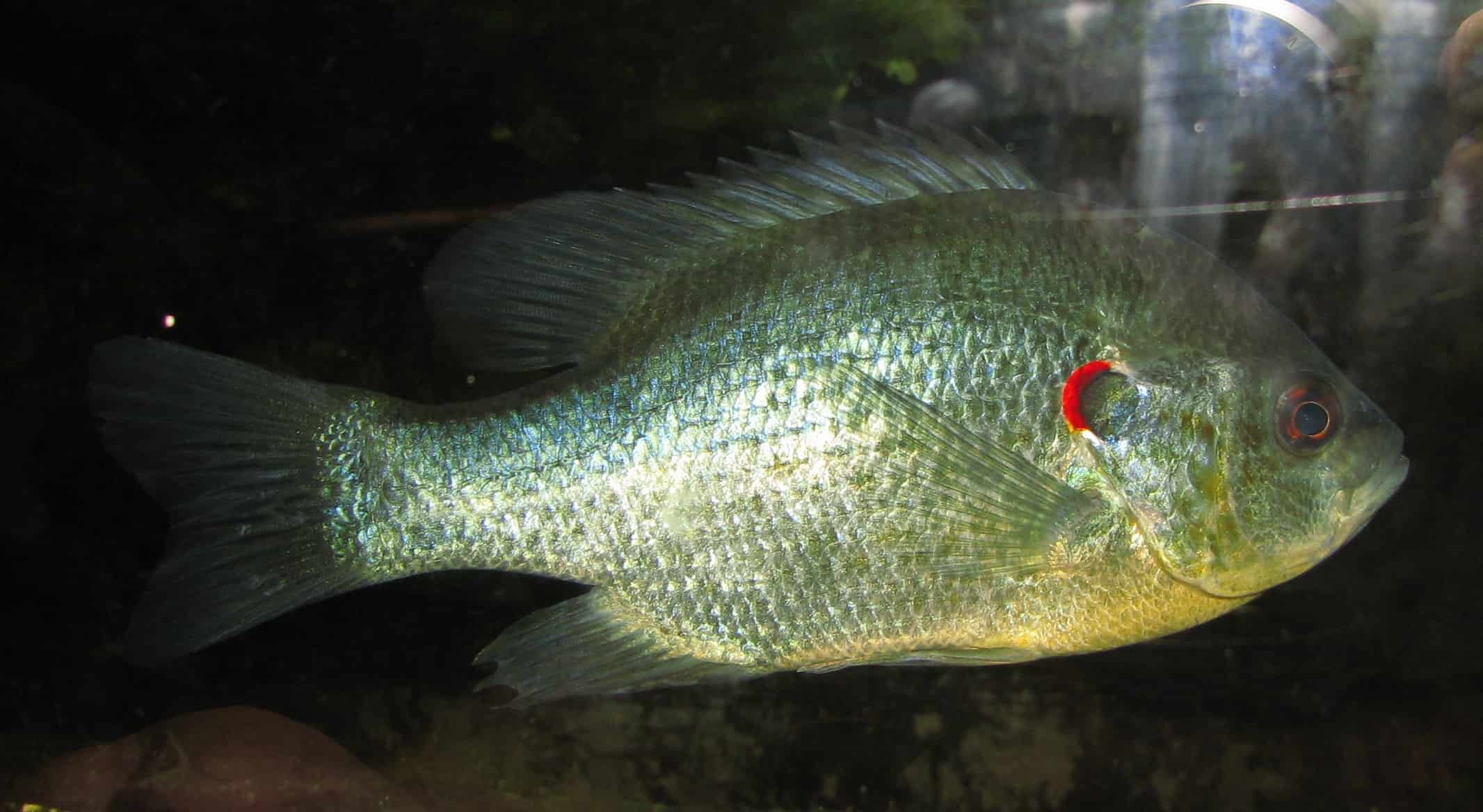
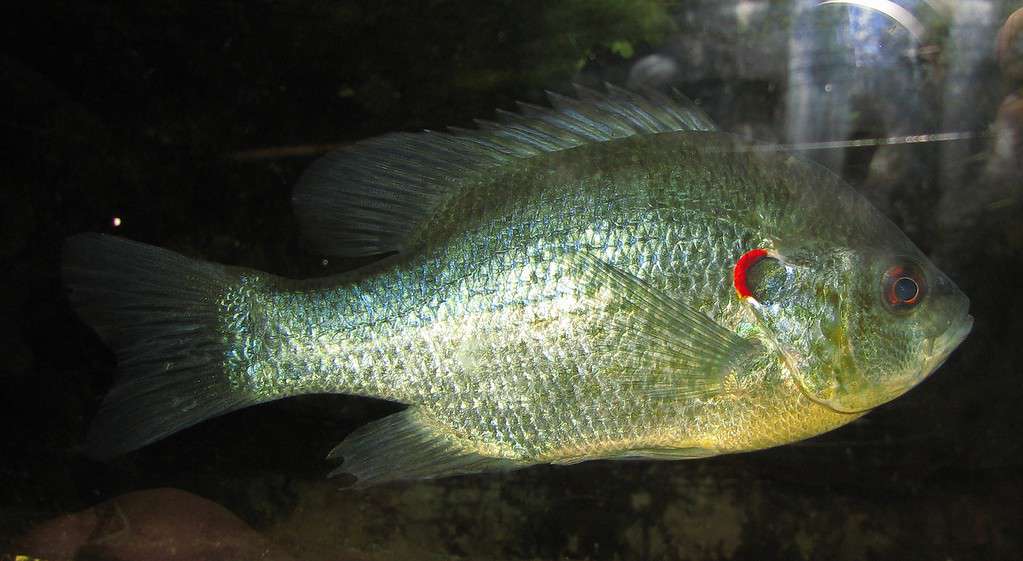
Redear Sunfish

Lepomis microlophus

The Shellcracker Sunfish
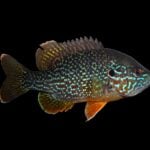
Ltshears / Public domain

Redear Sunfish Distribution

Click a location to explore more animals from that region

Invasive Species

This map shows coastal regions where Redear Sunfish are found.

Loading map...
Redear sunfish

At a Glance

Wild Species
Also Known As Shellcracker, Red-ear sunfish, Redear
Diet Carnivore
Activity Diurnal+
Lifespan 6 years
Weight 2 lbs
Status Least Concern
Did You Know?

Max reported size: 41 cm total length and ~1.8 kg (FishBase; IGFA records).

Scientific Classification

The redear sunfish is a freshwater ray-finned fish native to the southeastern/central United States and widely introduced elsewhere. It is a popular sport and pond fish, noted for feeding heavily on snails and other hard-shelled invertebrates.

Kingdom
Animalia
Phylum
Chordata
Class
Actinopterygii
Order
Centrarchiformes
Family
Centrarchidae
Genus
Lepomis
Species
microlophus

Distinguishing Features

  • Opercular flap often edged with red/orange ("red ear"), especially in adult males
  • Robust pharyngeal teeth adapted for crushing snails and other shelled prey
  • Deep-bodied sunfish shape typical of Centrarchidae, often with relatively muted body patterning compared to pumpkinseed

Physical Measurements

Length
8 in (4 in – 1 ft 4 in)
Weight
1 lbs (0 lbs – 4 lbs)
Top Speed
4 mph
swimming

Appearance

Primary Colors
Secondary Colors
Skin Type Ctenoid (rough) scales with mucus-coated skin; laterally compressed, deep-bodied sunfish form.
Distinctive Features
  • Opercular flap usually black with distinct orange/red border; no long "tab" like redbreast sunfish.
  • Compared with bluegill, has smaller mouth and less distinct vertical bars; often more uniform bronze-olive sides.
  • Thick pharyngeal tooth pads and robust pharyngeal bones specialized for crushing snails/mollusks (shellcracker).
  • Maximum total length reported ~43 cm; common adult lengths ~15-25 cm in many waters (FishBase; Froese & Pauly).
  • Maximum weight widely reported ~1.6 kg (FishBase; Froese & Pauly).
  • Longevity reported up to ~8 years (FishBase; Froese & Pauly).
  • Spawning: males build/guard nests in colonies in shallow water, typical of Lepomis; peak spawning often late spring-summer depending on latitude.
  • Native to southeastern/central United States; widely introduced/stocked in ponds and reservoirs for sportfishing and snail control (USGS NAS summaries).

Sexual Dimorphism

Males are typically larger and more intensely colored, especially in the breeding season, with darker bodies and brighter orange/red on the opercular margin and breast. Females are paler and more cryptically patterned outside spawning periods.

  • Often larger-bodied at maturity; deeper body and thicker caudal peduncle in some populations.
  • Breeding coloration: darker overall; brighter orange/red opercular margin and breast; more visible cheek lines.
  • Territorial nesting behavior; guards eggs and fry (centrarchid-typical parental care).
  • Usually smaller and paler; opercular margin often less vivid orange/red.
  • More subdued flank mottling/barring; less darkening during spawning.
  • Non-territorial during spawning; deposits eggs in male nests.

Did You Know?

Max reported size: 41 cm total length and ~1.8 kg (FishBase; IGFA records).

Often lives up to ~8 years in the wild (reported in regional fishery texts; e.g., Page & Burr, 2011).

Nicknamed "shellcracker" for its heavy use of snails and other hard-shelled prey.

Uses molar-like pharyngeal teeth in the throat to crush shells-one reason it can reduce snail hosts of fish parasites in ponds.

Compared with bluegill, redear typically has longer, more pointed pectoral fins and a less boldly barred body-helpful for quick ID in hand.

Native to the southeastern/central U.S. but widely introduced/stocked far beyond its native range for sport and pond management.

Unique Adaptations

  • Molariform pharyngeal teeth (in the throat) specialized for crushing hard prey such as snails and small mussels-key to the "shellcracker" niche.
  • Thicker, more robust pharyngeal jaw apparatus than many other Lepomis, supporting repeated shell-crushing without damaging delicate oral teeth.
  • Opercular "ear flap" with a red/orange margin (often strongest in males): a prominent visual cue used in identification and likely in social signaling during breeding.
  • Body/fin proportions that aid ID vs. similar sunfish: typically a longer, more pointed pectoral fin than bluegill, and less vivid facial striping than pumpkinseed.

Interesting Behaviors

  • Snail-hunting, bottom-oriented feeding: often noses along firm bottoms and vegetation edges, picking up mollusks and cracking them with pharyngeal teeth.
  • Colony nesting: males build and guard circular nests, often near other males' nests, and defend the area vigorously during spawning season.
  • Parental care: the male typically guards eggs and fry at the nest, fanning to improve oxygen flow and chasing intruders (a common centrarchid trait).
  • Seasonal depth shifts: in many reservoirs and natural lakes, fish move deeper outside the spawning period and return shallow to nest when water warms.
  • Opportunistic diet switching: while famous for snails, redear also shifts to insects, small crustaceans, and fish eggs/larvae when abundant.

Cultural Significance

Redear sunfish (Lepomis microlophus), called the "shellcracker", is a popular panfish in the southern U.S. Stocked with bass and bluegill to help fishing and eat nuisance snails, it has firm fillets and is used in pond management.

Myths & Legends

Naming lore in Southern angling culture: the nickname "shellcracker" comes from the long-told observation that big redears can be heard/seen crushing snails-an origin story repeated in fishing camps and local outdoor writing across the Southeast.

Pond folklore among landowners: stocking redear is sometimes described as "putting a dentist in the pond," a traditional saying that reflects its reputation for cleaning out snails and "fixing" parasite problems in bream fisheries.

Regional fish-camp tales often treat the red-edged opercular flap as a "badge" of the biggest males-stories claim the brightest 'ear' marks the toughest nest-guarders during the spawn (a common narrative motif in sunfish fishing culture).

Conservation Status

LC Least Concern

Widespread and abundant in the wild.

Population Stable

Life Cycle

Birth 15000 frys
Lifespan 6 years

Lifespan

In the Wild
1–8 years
In Captivity
4–12 years

Reproduction

Mating System Polygynandry
Social Structure Aggregation Group
Breeding Pattern Seasonal
Fertilization Substrate Spawning
Birth Type Substrate_spawning

In spring-summer, males build and defend shallow nests in colonies; several females may spawn in a male's nest, and females can spawn with multiple males. Eggs are externally fertilized on the substrate, and males alone guard and fan eggs and larvae.

Behavior & Ecology

Social Shoal Group: 20
Activity Diurnal, Crepuscular
Diet Carnivore Hard-shelled freshwater snails (Gastropoda)

Temperament

Mostly peaceful and loosely gregarious; strong male territoriality appears mainly around nests during breeding, varying with density.
Breeding males defend a small nest-centered territory; aggression peaks during active spawning (Page & Burr 2011).
Outside breeding, individuals tolerate conspecifics at feeding sites; spacing increases with low food availability.
Juveniles are more consistently social than adults, forming schools that disperse with growth and habitat complexity.

Communication

No species-specific vocal repertoire is well documented; centrarchids can produce low-frequency disturbance/courtship sounds.
Visual signals: opercular flap display, body darkening/paling, fin erection during aggression and courtship.
Mechanosensory cues: lateral-line detection of nearby fish and approach to nests/feeding patches.
Tactile interactions: brief contact/parallel swimming during courtship approaches at nesting sites.
Substrate/nest cues: circular nest construction and maintenance functions as a strong social/spawning signal Etnier & Starnes 1993; Page & Burr 2011
Chemical cues: gamete and metabolic cues likely aid mate and habitat assessment, as in other Lepomis.

Habitat

Terrain:
Riverine Coastal Plains Valley Sandy Muddy
Elevation: Up to 2296 ft 7 in

Ecological Role

Benthic invertebrate predator (mollusk specialist/durophagous sunfish) in warmwater freshwater systems

Regulates populations of freshwater snails and other benthic invertebrates, which can reduce densities of snail intermediate hosts involved in trematode/'grub' parasite cycles in fishes (commonly noted in pond management literature) Transfers benthic production to higher trophic levels (preyed upon by piscivores such as largemouth bass and other predators) Influences benthic community composition via selective predation on hard-shelled prey, potentially affecting periphyton/substrate ecology indirectly through grazing-snail control

Diet Details

Main Prey:
Freshwater snails Small bivalves Aquatic insect larvae Mayfly larvae and caddisfly larvae Small crustaceans Worms

Human Interaction

Domestication Status

Semi domesticated

Redear sunfish (Lepomis microlophus) is a wild fish native to the southeastern and central US that people widely raise and stock in ponds and hatcheries (semi-domesticated by regular raising). It is moved for sport fishing and pond control because it eats snails. Sunfishes are among North America’s most managed freshwater fishes.

Danger Level

Low
  • Physical injury from dorsal/anal spines when handled (puncture wounds)
  • Minor cuts/abrasions from opercular edge/scales during handling
  • Fishhook-related injury during angling
  • Indirect ecological risk where introduced: may alter local fish/invertebrate communities or compete with native sunfishes (risk is environmental rather than direct human harm)

As a Pet

Not Suitable as Pet

Legality: Laws vary. In much of the U.S., redear sunfish (Lepomis microlophus) are treated as game fish: fishing may be allowed, but keeping, moving, or putting live fish in ponds often needs permits and is restricted; check local rules.

Care Level: Experienced

Purchase Cost: Up to $30
Lifetime Cost: $800 - $3,000

Economic Value

Uses:
Recreational sport fishing (angling) Pond stocking / private aquaculture (warmwater pond fisheries) Ecosystem service in managed ponds (snail reduction; helps limit some snail-borne fish parasites in certain settings) Local food fish (minor; panfish) Bait/forage in managed systems (context-dependent; often regulated)
Products:
  • Stocked fingerlings/live fish sold by hatcheries for pond fisheries
  • Recreational fishing value (licenses, guided trips, equipment spending)
  • Edible fillets (panfish harvest)

Relationships

Related Species 11

Bluegill
Bluegill Lepomis macrochirus Shared Genus
Pumpkinseed Lepomis gibbosus Shared Genus
Redbreast Sunfish Lepomis auritus Shared Genus
Green Sunfish
Green Sunfish Lepomis cyanellus Shared Genus
Warmouth Lepomis gulosus Shared Genus
Longear Sunfish Lepomis megalotis Shared Genus
Spotted Sunfish Lepomis punctatus Shared Genus
Largemouth Bass
Largemouth Bass Micropterus salmoides Shared Family
Smallmouth Bass
Smallmouth Bass Micropterus dolomieu Shared Family
Black Crappie
Black Crappie Pomoxis nigromaculatus Shared Family
Rock Bass
Rock Bass Ambloplites rupestris Shared Family

Ecological Equivalents 5

Animals that fill a similar ecological role in their ecosystem

Pumpkinseed Lepomis gibbosus Redear sunfish (Lepomis microlophus) and similar sunfish develop strong pharyngeal teeth and eat snails and clams, often reducing pond snail numbers. Adults consume mollusks, spawn in colonies with males guarding shallow nests, and can reach up to 49 cm and live about 8 years.
Bluegill
Bluegill Lepomis macrochirus Common centrarchid in ponds and lakes that occupies vegetated littoral zones and has similar feeding habits; often hybridizes with other Lepomis. Redear sunfish consumes more mollusks, while bluegill consumes more insects and zooplankton. Both species use male-built, guarded, colonial nests.
Warmouth Lepomis gulosus Shares warm, vegetated lowland freshwater habitats and a generalist benthic-feeding role (insects, crayfish, small fish). Ecological overlap is strongest in weedy, sluggish waters where redear forages along the bottom for snails and other benthic organisms.
Redbreast Sunfish Lepomis auritus Similar size class and reproductive behavior: both build nests and exhibit male parental care. In parts of the Southeast where their ranges overlap or where they are stocked, both occupy shallow margins and feed on aquatic invertebrates; the redear is typically more mollusk-focused.
Freshwater Drum
Freshwater Drum Aplodinotus grunniens Not closely related, but occupies a convergent niche as a molluscivore: frequently consumes snails and bivalves using strong pharyngeal teeth. Overlap is most pronounced in larger lakes and reservoirs, where redear occupies littoral zones and the drum forages more broadly, including deeper areas.

The Red Ear Sunfish (Lepomis microlophus) is a game fish that’s native to the Southeastern United States. Some of the more notable names that it goes by include “Shellcracker,” “Georgia Beam,” “Sun Perch,” and “Chinquapin.”

This fish has some useful culinary and sporting characteristics. It makes for good eating and, because of its moderate size, it is relatively easy to catch. These qualities make it quite attractive to an errant angler man.

The Redear Sunfish fills some interesting ecological niches due to its diet and behavior. Some of the qualities have even made it an asset in the fight against invasive species.

If you’re interested in the Redear Sunfish and where you can find one yourself, then take a look at this summary of some pertinent information surrounding this fascinating fish.

Facts About Redear Sunfish

Redear Sunfish are a member of the Centrarchidae family. This family includes several other fish species like the fisherman’s favorites Largemouth Bass (Micropterus salmoides) and Walleye (Sander vitreus).

The Redear Sunfish was first described and identified by a scientist named Albert Karl Ludwig Gotthilf Gunther. Gunther cataloged the Sunfish in 1859 after observing the fish in the St. Johns River in Florida. The largest Red Ear Sunfish ever caught was six pounds and four ounces, caught in Arizona’s Lake Havasu.

One of the common names for this fish is “shellcracker.” This is due to the fact that its diet consists primarily of hard-shelled crustaceans and mollusks. The fish routinely snack on critters such as freshwater snails and mussels.

These attributes have sometimes come in handy in slightly unexpected ways. One example is that introducing Redear Sunfish to waterways that have been plagued with invasive Quagga Mussels (Dreissena rostriformis) tends to sharply reduce the populations of these invasive species. These qualities have proven quite useful. In fact, the United States Fish and Wildlife Service has purposely begun to introduce them to waterways infested with quagga mussels as pest control.
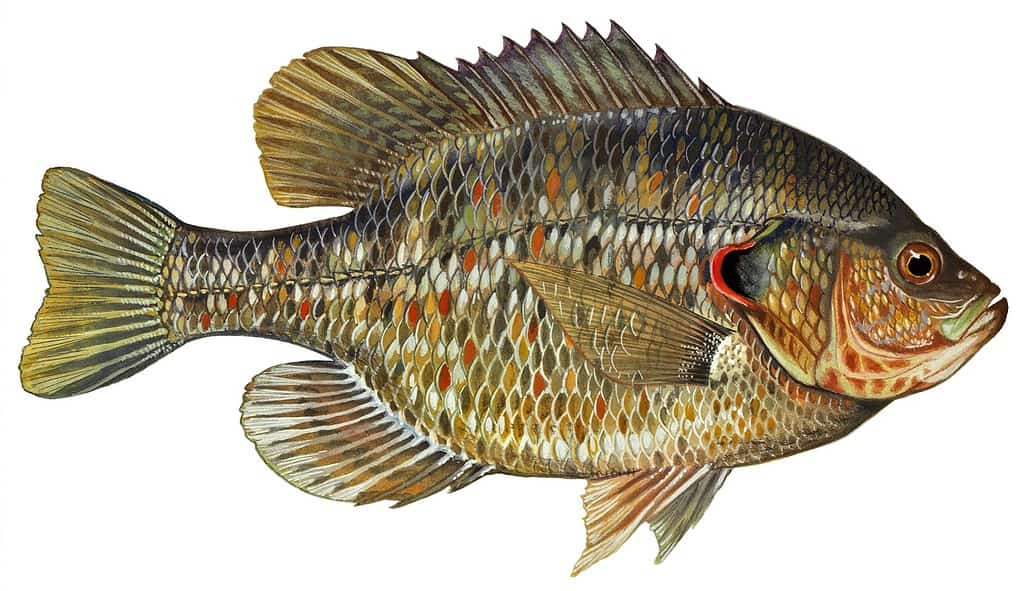
redear sunfish

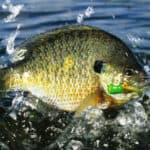
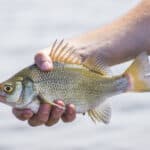
The Redear Sunfish has a pair of nominal red “ears” on its side.

Redear Sunfish Size Range

The Redear Sunfish is native to the Southeastern region of the United States. It is quite common along the Carolina coasts, down to the southern tip of Florida. The fish’s range also extends beyond the United States and into the Caribbean. This makes it easy to find in Puerto Rico and Guam.

For many decades, the Redear Sunfish was limited to these regions in terms of its range. However, due to its popularity as a game fish, it has been introduced to other waterways in the country.

On the East Coast, the fish’s range extends up into Pennsylvania and New York. There are even populations in waterways in Vermont and New Hampshire. West of the Mississippi, the Sunfish lives in Oregon, California, Colorado, Arizona, and many other states. However, it’s not native to any of these states.

Redear Sunfish Flavor

Redear Sunfish has a light and mild flavor that many describe as being similar to herring or sardines. Like those other species of fish, the Sunfish is a white fish.

One thing to keep in mind if you plan to catch and eat Redear Sunfish is that they tend to spoil quite rapidly after you pull them out of the water. The fish is ultimately best as a same-day meal.

This species of fish and other fish that it’s related to are called “panfish.” This is because they’re usually petite enough to fit the whole fish into a frying pan. Many fisherman enjoy their Sunfish catch as a pan-fried meal.

Because the Redear Sunfish is native to the Southeast and the South of the United States, it has occasionally found its way into Southern Cuisine. Like many other whitefish, fried Redear Sunfish can make a great ingredient for fish tacos.
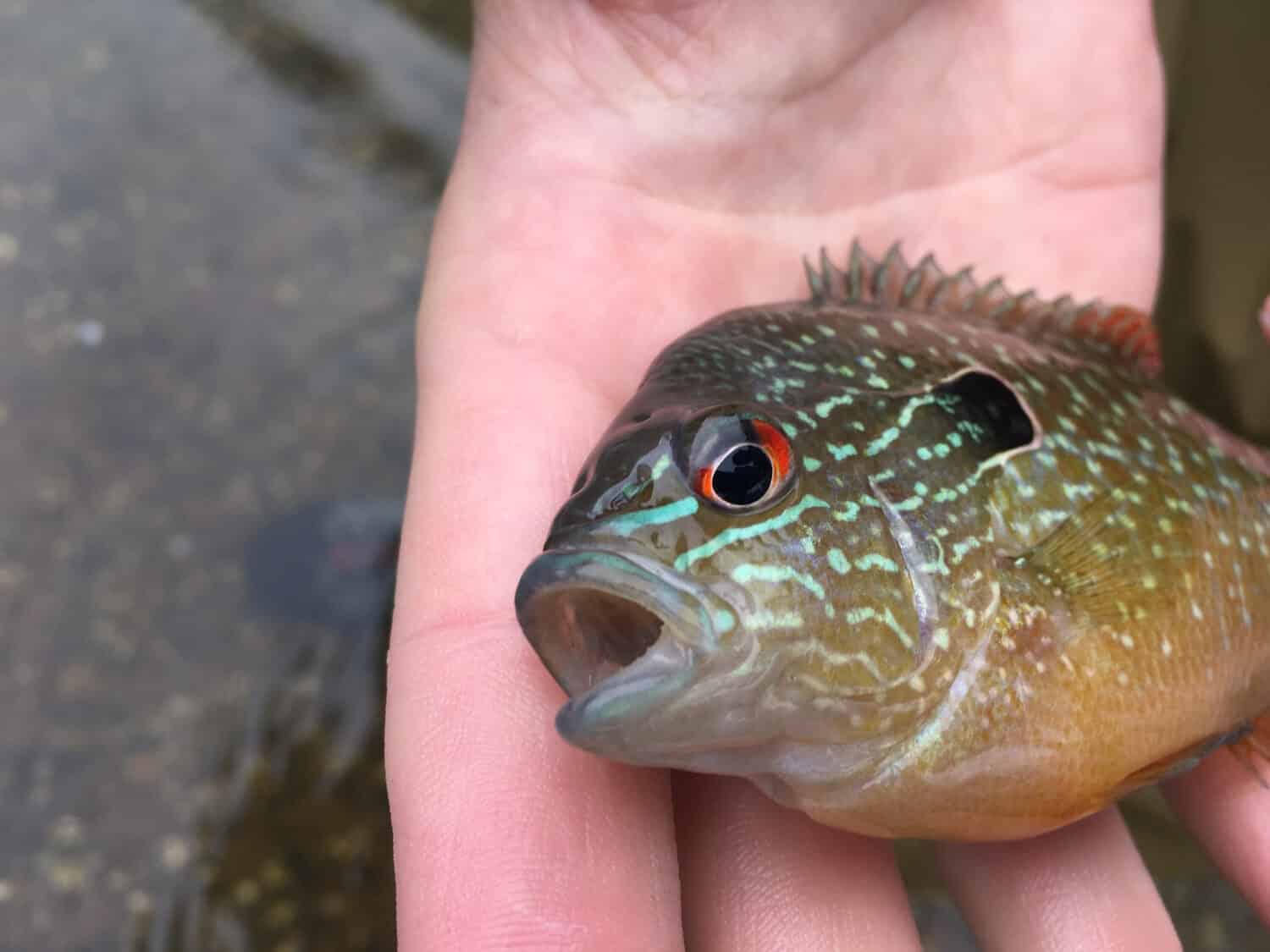
Long eared sunfish

The Redear Sunfish is often described as a “panfish.”

The Best Places to Catch Redear Sunfish

The preferred habitats to catch Redear Sunfish are typically still and deep ponds, lakes, and reservoirs.

Like many species of fish, the best time to catch Redear Sunfish is during their annual spawn, which occurs around March or April. Casting a rod with a heavy weight so it will sink to the bottom will increase your chances of catching a Sunfish. This is because this type of fish likes to prowl the bottom of lakes and ponds for crustaceans and snails.

Many fishermen consider live bait to be the best type of bait to catch this type of fish. Some examples of live bait include worms, mealworms, and crickets. In the past, you would have had to travel to the Southeast to catch one of these fish. Now, these fish are found all over the contiguous United States.
View all 181 animals that start with R

Thank you for reading! Have some feedback for us?