
F
Species Profile

Freshwater Sunfish

Centrarchidae

Spiny fins, sunny colors, fierce parents
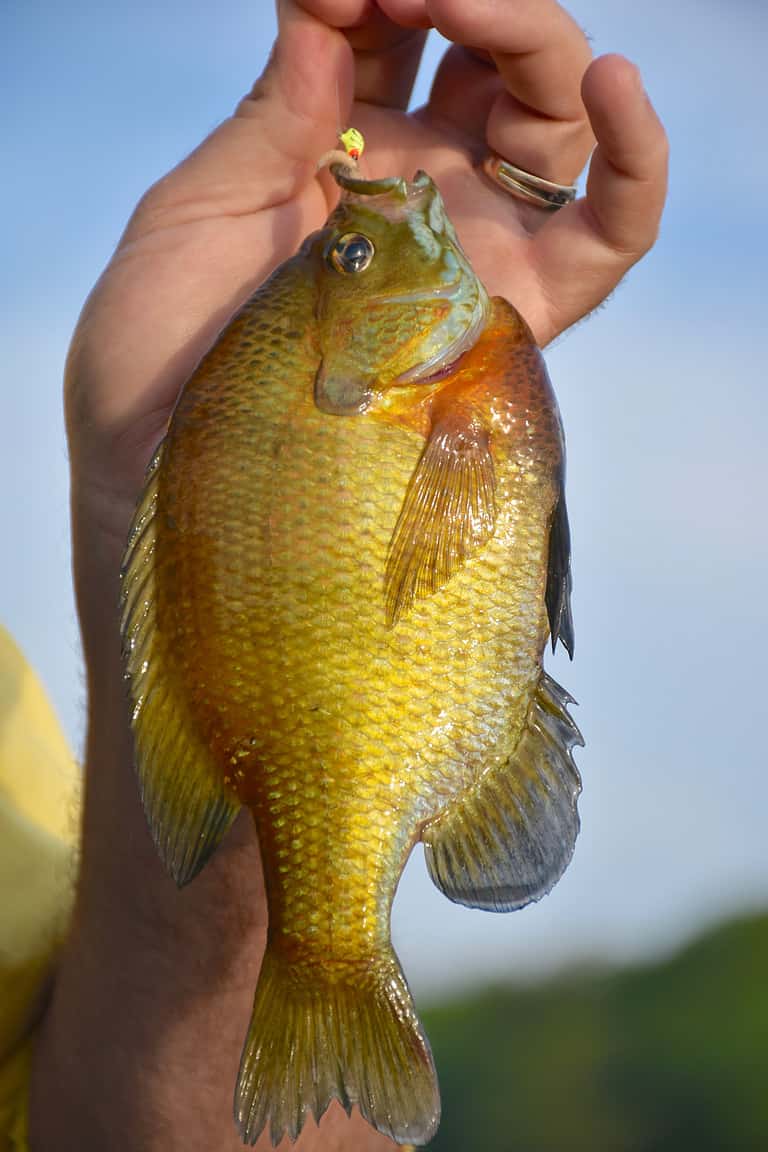
Clint H/Shutterstock.com

Freshwater Sunfish Distribution

Click a location to explore more animals from that region

Invasive Species

This map shows coastal regions where Freshwater Sunfish are found.

Loading map...
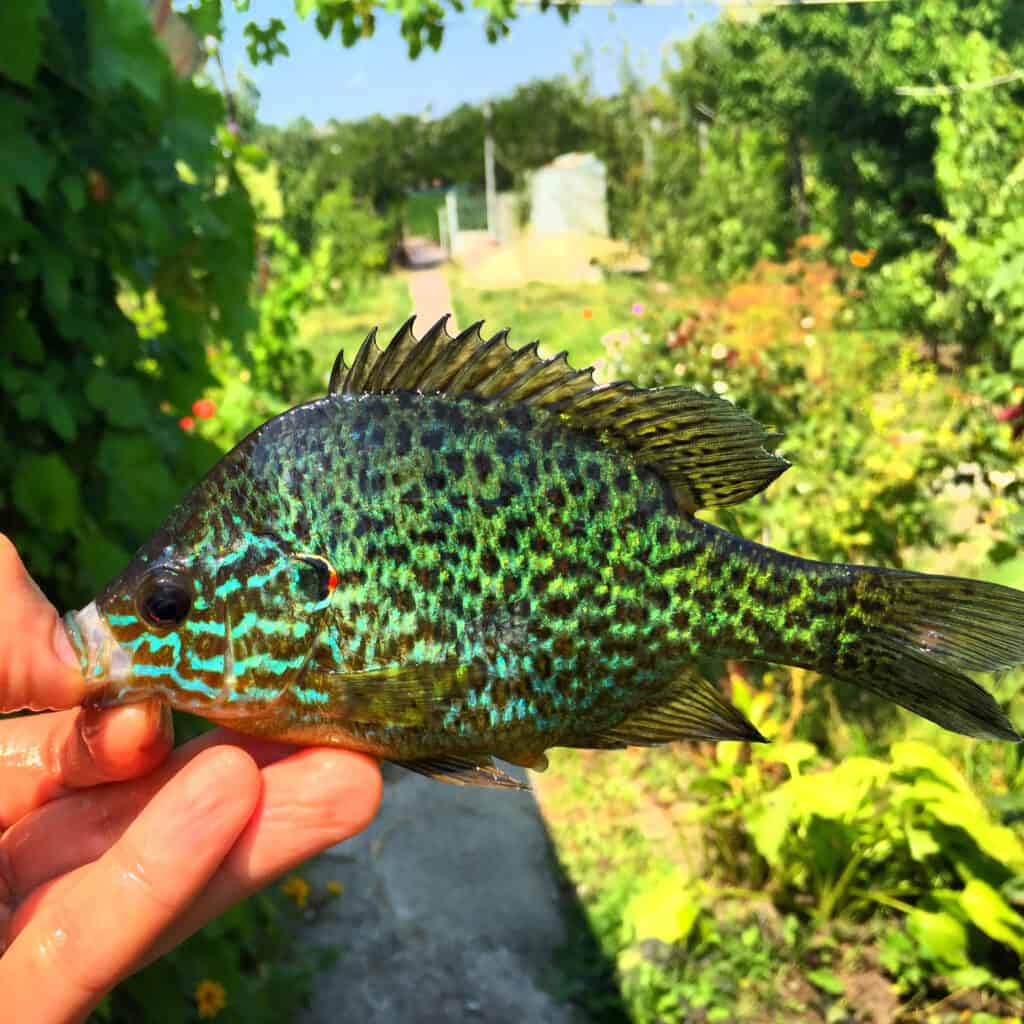
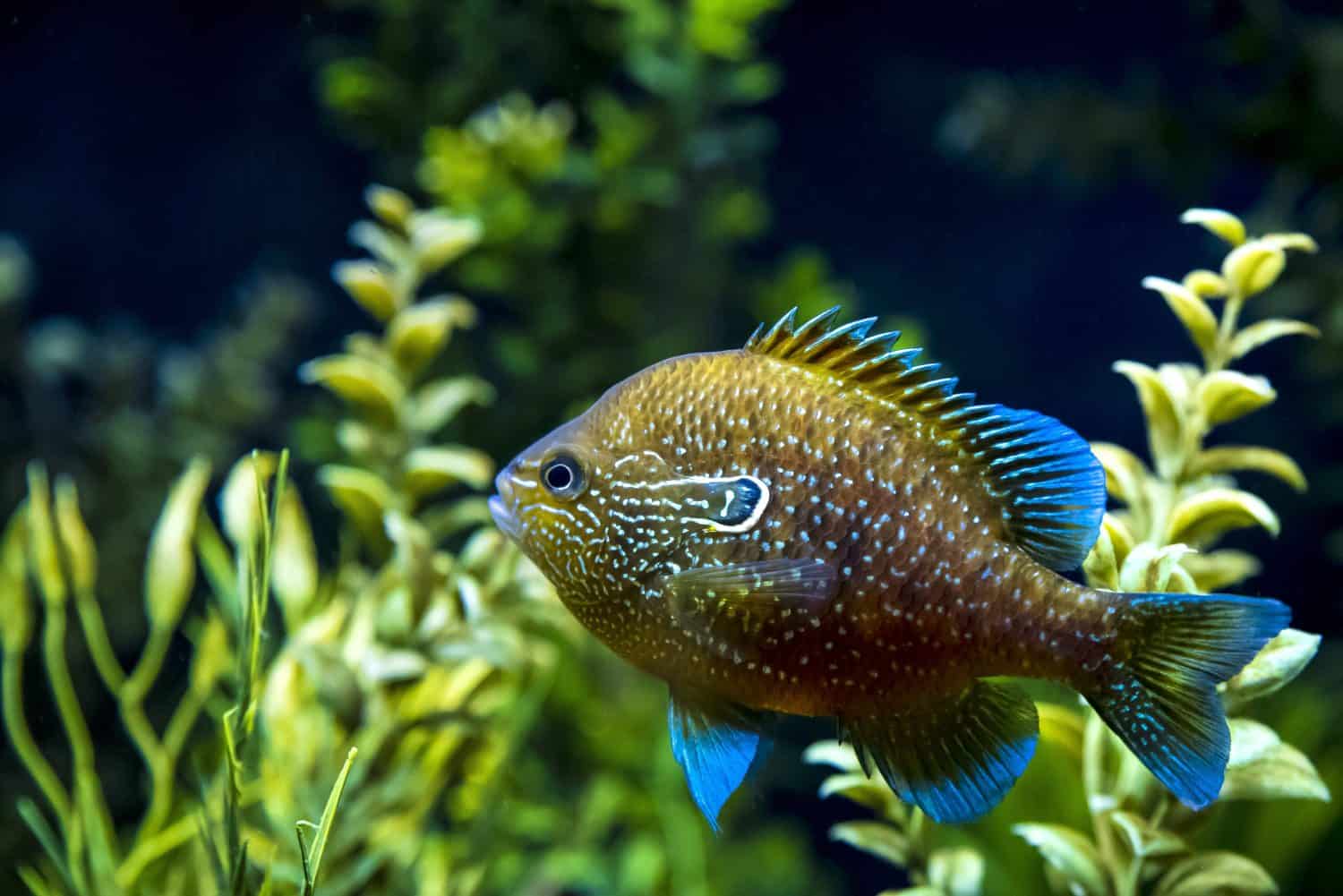
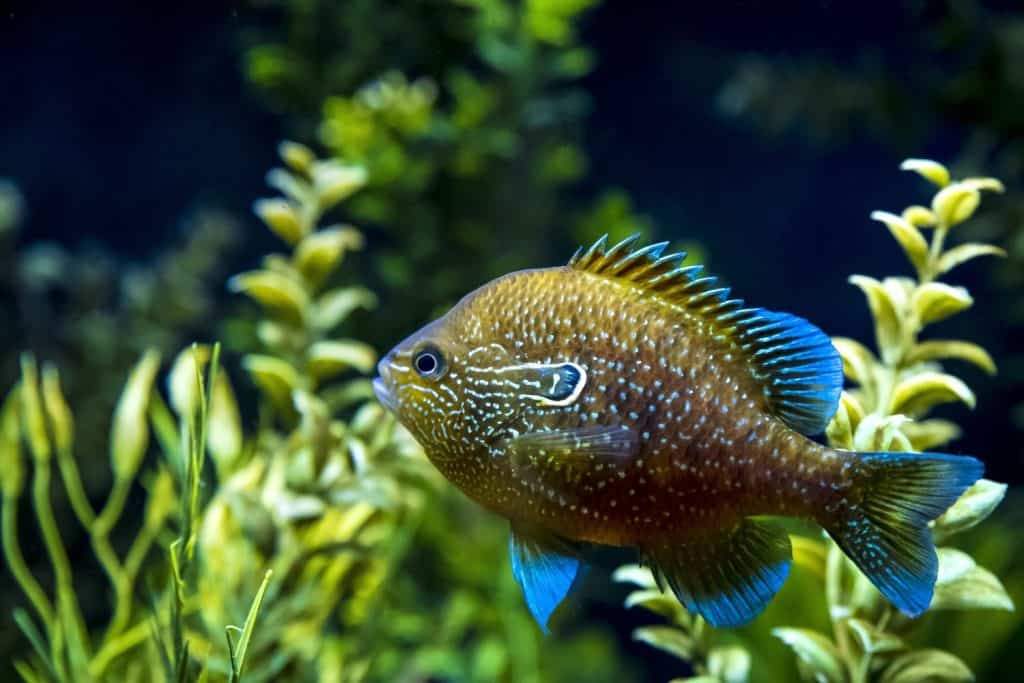
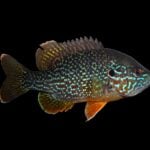
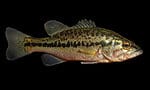
Longear Sunfish, Lepomis megalotis in a simulated natural setting from an East Texas lake

At a Glance

Family Overview This page covers the Freshwater Sunfish family as a group. Stats below are general traits shared across the family.
Also Known As panfish, bream, brim, centrarchids, sunperch
Diet Omnivore
Activity Diurnal+
Lifespan 7 years
Weight 10 lbs
Status Not Evaluated
Did You Know?

Size range is huge: from bantam sunfish (~7-10 cm) to largemouth bass approaching ~1 m and 10+ kg.

Scientific Classification

Family Overview "Freshwater Sunfish" is not a single species but represents an entire family containing multiple species.

Centrarchidae are a family of primarily North American freshwater ray-finned fishes commonly called sunfishes (and including black basses). They are popular sport and panfish, typically laterally compressed (Lepomis) with spiny and soft dorsal fin sections, and many show parental care with nest building and guarding.

Kingdom
Animalia
Phylum
Chordata
Class
Actinopterygii
Order
Centrarchiformes
Family
Centrarchidae

Distinguishing Features

  • Ray-finned freshwater fishes with a spiny dorsal fin (anterior spines, posterior soft rays)
  • Often laterally compressed body (especially Lepomis sunfishes)
  • Males commonly build/guard nests; pronounced breeding coloration in many species
  • Includes both smaller “panfish” sunfishes (Lepomis) and larger predatory black basses (Micropterus)

Physical Measurements

Males and females differ in size

Length
10 in (2 in – 3 ft 2 in)
8 in (2 in – 3 ft 2 in)
Weight
2 lbs (0 lbs – 22 lbs)
1 lbs (0 lbs – 24 lbs)
Top Speed
12 mph
Short bursts 10–25 km/h

Appearance

Primary Colors
Secondary Colors
Skin Type Ray-finned fish with overlapping scales (typically ctenoid, sometimes appearing smoother on certain areas), a mucus-coated skin surface, and prominent spiny + soft-rayed dorsal fin sections; fins are membranous with stiff spines anteriorly in dorsal/anal fins.
Distinctive Features
  • Family-level body plan: laterally compressed to moderately deep-bodied sunfishes (many Lepomis) through more elongate, torpedo-shaped black basses (Micropterus); all are freshwater centrarchids (not the marine ocean sunfish family Molidae).
  • Fin architecture: continuous dorsal fin with a spiny anterior portion and soft-rayed posterior portion; anal fin typically with strong spines; caudal fin usually moderately forked to slightly rounded depending on genus and ecology.
  • Head/mouth variation: small-to-moderate mouths in many panfish (often suited to insects/crustaceans) vs larger mouths in black basses (predatory on fish/crayfish); jaw size and gape vary widely across the family.
  • Opercular lobe ('ear flap'): many species have a distinct opercular flap, often dark with colored margins in some taxa; useful for recognition but highly variable across genera/species.
  • Centrarchidae size varies: smallest species about 7–10 cm, largest commonly 50–70+ cm and sometimes over 5–10 kg (big black bass). Body depth and weight differ by genus.
  • Lifespan (range across species): commonly ~4-10 years in many smaller sunfishes; larger, slower-growing species can often reach ~10-16+ years, with occasional individuals reported around ~20 years under favorable conditions.
  • Freshwater sunfishes live mainly in North American lakes, ponds, rivers, reservoirs and wetlands. They prefer warm water and cover. Diets range from insects and mollusks to fish (larger Micropterus). Most feed by sight.
  • Many sunfish species build and keep saucer-like nests in shallow water and show parental care. Males usually guard eggs and fry; nesting may be colonial, and guarding varies by species and conditions.

Sexual Dimorphism

Sex differences are common but variable in sunfish (Centrarchidae). Males often get brighter or darker and grow longer fin tips or stronger gill-cover color during breeding. Size differences vary by species and location.

  • Breeding males commonly show intensified colors (stronger blues/oranges/reds), higher contrast bars or darker overall body tone.
  • In many taxa, males are the primary nest builders/guardians; associated with darker or more vivid breeding patterning and sometimes minor fin elongation.
  • Opercular flap and fin-margin coloration may appear more pronounced in males during spawning periods.
  • Females are often drabber or less contrasting outside peak spawning, with subtler fin-margin/opercular-lobe coloration on average.
  • Body shape may appear slightly fuller when gravid (egg-bearing), but this is seasonal and not universal across all centrarchids.
  • In some species/populations, females can approach male size or exceed it; visual differences may be minimal except during male breeding coloration.

Did You Know?

Size range is huge: from bantam sunfish (~7-10 cm) to largemouth bass approaching ~1 m and 10+ kg.

Many species show bright breeding colors and distinct opercular "ear flaps," especially in Lepomis sunfishes.

Males typically build and guard nests; in some waters, colonies of nests ("beds") can cover shallow flats.

Diet spans the family: some are insect/crayfish specialists, while black basses are major fish-eaters and top predators.

Sunfishes are among North America's most important panfish and sport fishes, fueling local economies and tournament culture.

They're often confused by name: "sunfish" (Centrarchidae) are unrelated to the giant marine ocean sunfish (Molidae).

Unique Adaptations

  • Spiny-soft dorsal fin design: a front section of stiff spines plus a rear soft-rayed section helps deter predators while preserving maneuverability-typical of the group.
  • Laterally compressed bodies (especially Lepomis): "tall," thin profiles allow sharp turning and precise station-holding around weeds, roots, and woody cover; black basses are generally more elongate for pursuit and ambush.
  • Opercular flap ("ear") and display coloration: used in species recognition and courtship; shape and coloration vary greatly among species and often intensify in breeding season.
  • Strong suction feeding: rapid mouth expansion helps capture evasive prey (insects, small fish) in cluttered freshwater habitats.
  • Habitat versatility across the family: members occupy ponds, lakes, reservoirs, slow rivers, and some clearer rocky streams-tolerances to current, turbidity, and temperature vary by genus and species.
  • High reproductive investment via guarding: nest defense and fanning behavior boost egg oxygenation and survival, a notable adaptation among freshwater fishes.

Interesting Behaviors

  • Nest building & parental care (family hallmark): typically the male fans a saucer-shaped nest, courts females, then guards eggs and fry; intensity and duration vary by species and water conditions.
  • Colonial spawning (common in Lepomis): multiple males may nest close together, creating visible "beds"; spacing and aggressiveness differ by habitat and population density.
  • Territorial defense: guarding males chase intruders (including other fish and sometimes swimmers' shadows), with especially vigorous defense during egg and fry stages.
  • Flexible feeding strategies: centrarchids are primarily visual, daytime foragers; across the family, prey ranges from zooplankton and aquatic insects to crayfish, snails, and fish-larger Micropterus often shift strongly toward piscivory.
  • Seasonal movement patterns: many use deeper water or cover outside the spawning season, then move shallow to reproduce when temperatures rise; timing varies widely by latitude and species.
  • Complex predator-prey roles: smaller sunfishes are key forage for larger bass and other predators, while also shaping invertebrate communities and competing with each other in lakes/ponds.

Cultural Significance

Freshwater sunfishes (centrarchids) are well known in North America. Bluegill, pumpkinseed and other panfish link to family fishing. Black bass (Micropterus) support sport fishing, tournaments, and catch-and-release. They aid fisheries management and are state fish in several states.

Myths & Legends

Angling folklore across North America treats the appearance of shallow "bream beds" (sunfish nesting colonies) as a reliable seasonal sign-often linked in local tradition to the start of summertime fishing and swimming.

Longstanding "full-moon spawn" stories persist in fishing communities: many anglers time trips to moon phases believing bedding sunfishes and bass are easiest to locate and catch when nests are most visible.

Bass fishing lore includes cautionary tales of the "wise old bass" that learns lures-stories that circulate in local camps and guide culture and shape traditions about stealth, quiet boats, and "matching the hatch."

Regional naming traditions ("bream," "brim," "perch," "sun perch") function as cultural lore in their own right-handed down in families and communities, they encode place-based identity even when the names differ from scientific usage.

Early American sporting literature and club culture elevated black bass into a near-legendary gamefish, with 19th-20th century stories celebrating its fighting spirit and helping create modern bass-centered recreation.

Conservation Status

NE Not Evaluated (family-level hub). Conservation status is assessed at the species level; across Centrarchidae, most assessed species are currently Least Concern, but a minority of range-restricted or heavily impacted taxa are listed at higher risk categories (e.g., Near Threatened/Vulnerable and, in some cases, Endangered in parts of their ranges).

Has not yet been evaluated against the criteria.

Population Unknown

Protected Under

  • Varies by jurisdiction; many Centrarchidae are managed under state/provincial sportfish regulations (seasons, size/bag limits, gear restrictions) that can reduce harvest pressure.
  • Broad habitat and water-quality frameworks (e.g., U.S. Clean Water Act; Canada Fisheries Act; state/provincial wetland and riparian protections) indirectly protect populations where implemented/enforced.
  • Some range-restricted species and distinct local populations receive additional protections via state/provincial threatened/endangered listings, watershed plans, protected areas, and site-specific restoration; coverage is uneven across the family.

You might be looking for:

Bluegill

25%

Lepomis macrochirus

Common, widespread centrarchid with a deep body and dark opercular flap; classic “sunfish” in ponds and lakes.

View Profile

Pumpkinseed

18%

Lepomis gibbosus

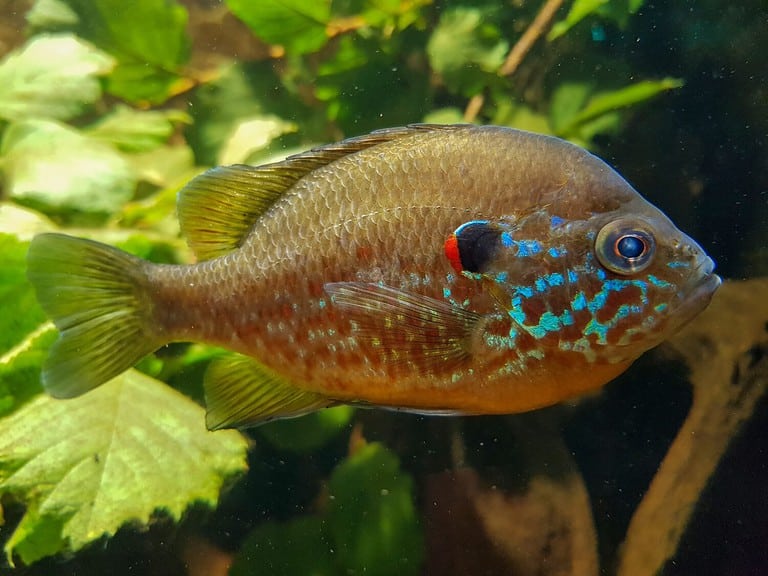
Colorful Lepomis sunfish with orange/red spotting on the opercular flap; often in weedy lakes and slow waters.

Green Sunfish

12%

Lepomis cyanellus

Hardy, large-mouthed sunfish common in warm, sometimes turbid waters; often introduced.

View Profile

Redear Sunfish (Shellcracker)

10%

Lepomis microlophus

Mollusk-eating sunfish with a red/orange margin on the opercular flap; popular sport/pond species.

View Profile

Largemouth Bass

8%

Micropterus salmoides

A centrarchid predator sometimes not thought of as a “sunfish” in casual speech, but within the same family.

View Profile

Ocean sunfish (Mola)

7%

Mola mola

Unrelated marine fish (family Molidae) sometimes called “sunfish”; not freshwater.

View Profile

Life Cycle

Birth 20000 frys
Lifespan 7 years

Lifespan

In the Wild
3–20 years
In Captivity
4–25 years

Reproduction

Mating System Polygynandry
Social Structure Aggregation Group
Breeding Pattern Transient
Fertilization Substrate Spawning
Birth Type Substrate_spawning

Sunfishes (Centrarchidae) usually show polygynandry: males make nests and guard eggs and fry, while females may spawn with many males. They spawn on substrate with external fertilization, often in nesting colonies; sneakers (e.g., in Lepomis) occur.

Behavior & Ecology

Social School/shoal (nesting colony during breeding) Group: 20
Activity Diurnal, Crepuscular
Diet Omnivore Across the family, most energy comes from animal prey-commonly aquatic insects and small crustaceans; in the largest centrarchids (notably black basses), fish often become the preferred prey as they grow.

Temperament

Variable across the family: often moderately tolerant in feeding aggregations but strongly territorial in breeding contexts, especially nest-holding males.
Opportunistic foragers (insectivory to piscivory); larger centrarchids can be aggressive predators and may show cannibalism under crowding or low prey availability.
Dominance and size-based hierarchies are common in confined habitats (littoral patches, small ponds) and within nursery groups; social spacing increases with body size.
Risk-sensitive behavior: individuals frequently shift between bold foraging and cover-seeking depending on turbidity, vegetation density, and predator presence.
High parental investment in many species: males typically guard nests/eggs/larvae and defend aggressively; intensity and duration of guarding vary among genera and environmental conditions.
Behavioral diversity is substantial: some species are more gregarious and panfish-like, while black basses tend toward greater territoriality and solitary ambush behavior outside brief aggregations.

Communication

Low-frequency grunts/croaks/clicks have been reported in several centrarchids (notably black basses), especially during courtship, nest defense, or handling; vocal activity varies widely by species and context.
Many species rely more on non-vocal signaling than sound; some produce faint disturbance/agonistic sounds that are easily overlooked in the field.
Visual signaling is prominent: rapid color changes (dark bars, bright opercular/fin highlights), lateral displays, fin erection, and opercular-flap posturing during aggression and courtship; display patterns vary strongly among species and sexes.
Tactile interactions occur at close range (nudging, circling, body contact) during courtship and dominance encounters, typically around nests or preferred cover.
Hydrodynamic/mechanical cues: tail beats, fin flicks, and water movements during chases, threat displays, and nest-related behaviors; fanning also moves water over eggs.
Chemical cues likely contribute to mate recognition, reproductive readiness, and habitat use (common in many freshwater fishes), though reliance and specificity vary among centrarchids.
Spatial/architectural signaling: nest construction (cleared substrate depressions) functions as an advertisement/assessment cue; nest density and placement influence social interactions and mate choice.

Habitat

Biomes:
Freshwater Wetland Temperate Forest Temperate Grassland Mediterranean Boreal Forest (Taiga)
Terrain:
Riverine Plains Valley Coastal Hilly Plateau Muddy Sandy +2
Elevation: Up to 6561 ft 8 in

Ecological Role

Mid- to upper-level predators in North American freshwater food webs (from insect-focused littoral foragers to fish-eating apex/near-apex predators in some systems), linking plankton-invertebrate-fish pathways and strongly shaping community structure.

regulation of aquatic insect and crustacean populations predation pressure that influences prey fish abundance and behavior (including size-structure effects) energy transfer between littoral (nearshore) and pelagic (open-water) zones via movement and diet shifts support of recreational and subsistence fisheries (sportfish/panfish), contributing to local economies and management incentives serving as prey for larger fish, birds, and mammals-supporting higher trophic levels, especially at juvenile stages

Diet Details

Main Prey:
aquatic insect larvae Terrestrial insects Zooplankton Crayfish and other small crustaceans Snails and other mollusks Worms, leeches and other benthic invertebrates Fish Fish eggs and fry +2
Other Foods:
Filamentous algae and periphyton Aquatic plant material Seeds and other small plant fragments Detrital plant matter

Human Interaction

Domestication Status

Wild

Centrarchidae (sunfishes, including black basses) are not domesticated pets. People manage them with fishing rules, hatcheries, pond care, and stocking. Aquaculture and private ponds sometimes breed selected strains for fishing, but most fish come from wild or hatchery stock. They are used for sport fishing, research, aquariums, and have been moved outside their native range.

Danger Level

Low
  • Painful puncture wounds from spiny dorsal/anal fins when handled (occasionally with localized infection risk)
  • Hook-related injuries during angling/handling
  • Minor bites/pinches from larger individuals (typically superficial)
  • Allergic reactions are uncommon but possible with fish slime or handling-related dermatitis in sensitive individuals

As a Pet

Not Suitable as Pet

Legality: Laws vary. In many U.S./Canadian areas, native centrarchids (sunfish) are sport fish: collecting, keeping, moving, or selling them may need a license or permit. Captive-bred may be allowed; release is usually illegal.

Care Level: Expert Only

Purchase Cost: Up to $100
Lifetime Cost: $500 - $15,000

Economic Value

Uses:
Recreational (sport) fisheries Food (panfish) fisheries Aquaculture and hatchery production Pond management/stocking services Tourism and local economies tied to angling Research and education
Products:
  • sportfishing value (licenses, guiding, tournaments)
  • edible fillets/whole fish (notably panfish species)
  • live fish for stocking (public waters, private ponds)
  • hybrid sunfish and bass strains for managed fisheries

Relationships

Related Species 5

True sunfishes Lepomis Shared Family
Black basses
Black basses Micropterus Shared Family
Crappies
Crappies Pomoxis Shared Family
Rock basses Ambloplites Shared Family
Banded sunfishes Enneacanthus Shared Family

Ecological Equivalents 5

Animals that fill a similar ecological role in their ecosystem

Yellow perch
Yellow perch Perca flavescens A common temperate freshwater mesopredator/forage predator that overlaps with many centrarchids in lakes and rivers. Similar diet breadth (aquatic insects to small fish) and use of structured habitat.
Walleye
Walleye Sander vitreus Occupies a similar piscivorous role to larger centrarchids, especially black basses, in many North American waters—competing for prey fish and using littoral/nearshore feeding areas, and often being more crepuscular.
Northern pike Esox lucius A freshwater ambush predator that frequently shares vegetated littoral zones with centrarchids. Although it often preys on centrarchids, it also overlaps as a top predator exploiting similar prey fish communities.
Channel catfish Ictalurus punctatus Broadly overlaps in warmwater lakes and rivers. Juveniles and adults can compete with centrarchid fishes for invertebrates (including crayfish) and small fish, especially in turbid or structurally complex habitats.
Blue tilapia Oreochromis aureus In warm regions where introduced, occupies similar shallow, vegetated freshwater habitats. Overlaps especially with omnivorous and invertebrate-feeding centrarchids and can compete for space and food, although tilapia are generally more herbivorous/detritivorous overall.

Types of Freshwater Sunfish

38

Explore 38 recognized types of freshwater sunfish

Mud sunfish Acantharchus pomotis
Shadow bass Ambloplites ariommus
Roanoke bass Ambloplites cavifrons
Ozark bass
Ozark bass Ambloplites constellatus
Rock bass
Rock bass Ambloplites rupestris
Sacramento perch Archoplites interruptus
Flier Centrarchus macropterus
Warmouth Lepomis gulosus
Blackbanded sunfish Enneacanthus chaetodon
Bluespotted sunfish Enneacanthus gloriosus
Banded sunfish Enneacanthus obesus
Redbreast sunfish Lepomis auritus
Green sunfish
Green sunfish Lepomis cyanellus
Pumpkinseed Lepomis gibbosus
Orangespotted sunfish Lepomis humilis
Bluegill
Bluegill Lepomis macrochirus
Dollar sunfish Lepomis marginatus
Longear sunfish Lepomis megalotis
Redear sunfish
Redear sunfish Lepomis microlophus
Redspotted sunfish Lepomis miniatus
Spotted sunfish Lepomis punctatus
Bantam sunfish Lepomis symmetricus
Shoal bass Micropterus cataractae
Redeye bass
Redeye bass Micropterus coosae
Smallmouth bass
Smallmouth bass Micropterus dolomieu
Florida bass Micropterus floridanus
Alabama bass (Warrior bass) Micropterus henshalli
Suwannee bass Micropterus notius
Spotted bass
Spotted bass Micropterus punctulatus
Largemouth bass
Largemouth bass Micropterus salmoides
Guadalupe bass
Guadalupe bass Micropterus treculii
Cahaba bass Micropterus cahabae
Chattahoochee bass Micropterus chattahoochae
Etowah bass Micropterus etowah
Tallapoosa bass Micropterus tallapoosae
Shoal bass (Apalachicola system; common usage) Micropterus warreni
White crappie
White crappie Pomoxis annularis
Black crappie
Black crappie Pomoxis nigromaculatus

Quick Take

  • Maintaining 38 species across three continents required a lineage spanning 28 million years.
  • Possessing 13 dorsal spines creates a mechanical disadvantage for species navigating low-flow streams.
  • Despite common assumptions, the largemouth bass is technically classified as a member of the sunfish family.
  • Performing a dancing courtship ritual is the mandatory process for males to facilitate egg-laying.

The freshwater sunfish is a family of freshwater fish, also known as Centrarchidae, that belongs to the order of Perciformes and is one of the most popular angling species in North America. This family includes 38 different freshwater species that fall into three subdivisions. The most distinctive feature of the freshwater sunfish is its rough scales and two spiny dorsal fins.

These fish can be found in warm, diverse habitats and have been introduced out of their native waters in North America, and now can be found in lakes, ponds, and streams throughout Africa and Europe.

An educational infographic about freshwater sunfish detailing their 28-million-year lineage, anatomical features like dorsal spines, and their classification including the largemouth bass.
They've survived for 28 million years, but even the mighty largemouth bass hides a family secret: it's actually a sunfish. © A-Z Animals

3 Facts About Freshwater Sunfish

Green Sunfish

The Green Sunfish is one of the most gorgeous types of freshwater sunfish.

  • Four out of the 38 identified species of freshwater sunfish have gone extinct.
  • All species of freshwater sunfish are carnivorous, feeding primarily on insects, crustaceans, and other invertebrates, and some also prey on smaller fish.
  • Freshwater sunfish can reach 18 inches in length.

Classification and Scientific Name

There are 44 different species of freshwater sunfish. Four of these have gone extinct. They belong to the Centrarchidae family, which is a family of nest-building fish. One of the largest groups of centrarchids is the true sunfish, or Lepomis, which is a small species.

Here are some of the most popular freshwater sunfish species:

  • Bass (Micropterus salmoides)
  • Crappies (Pomoxis)
  • Bluegill (Lepomis macrochirus)
  • Redear sunfish (Lepomis microlophus)
  • Longer sunfish (Lepomis megalotis)
  • Pumpkinseed sunfish (Lepomis gibbosus)
  • Warmouth sunfish (Lepomis gulosus)
  • Redbreast sunfish (Lepomis auritus)
  • Green sunfish (Lepomis cyanellus)
  • Orange-spotted sunfish (Lepomis humilis)
  • Black-banded sunfish (Enneacanthus chaetodon)

Evolution
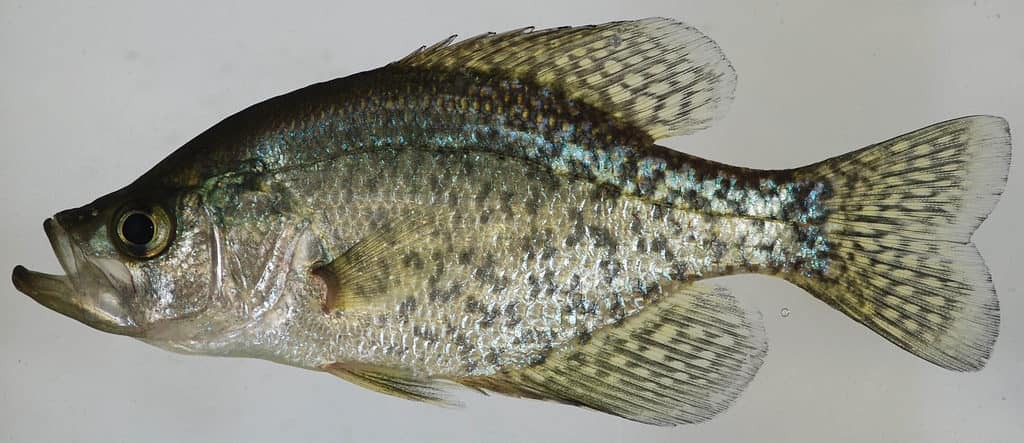
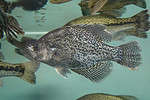
Black crappie

Black crappie are members of the ancient subfamily Centrarchinae.

The oldest Centrarchidae fossils were discovered in Montana and South Dakota and were dated to be around 28 million years old. These specimens belonged to species of freshwater sunfish that are now extinct, but scientists believe they belonged to the subfamily Centrarchinae, a distinction they would share with such modern-day freshwater sunfishes as crappies and rock basses, making these fish, in turn, likely to be some of the oldest living members of the  Centrarchidae family.

Appearance

All freshwater sunfish have a pancake-like body structure that makes them look flat. They have two dorsal fin rays, one that has sharp spines and the second that has soft rays. Each species has between three and nine anal fins and two dorsal fins that are fused but can have a different appearance.

They have six to 13 dorsal spines on the fins, and the smallest species of sunfish, the black-banded sunfish, grows as small as 3.1 inches in length, whereas the largemouth bass grows up to 3.3 feet in some instances. Most freshwater sunfish have an average length of 18 inches.

Some species of freshwater sunfish have rounder bodies that are not as flat as the others, as well as smaller mouths. Other species, usually from the Micropterus genus, have streamlined bodies and much larger mouths. The size of the mouths determines how the freshwater sunfish feeds, as large-mouthed sunfish use ram-feeding (a method of feeding in which the sunfish swims into its prey with an open mouth), whereas small-mouthed species use suction feeding (a method of feeding in which the sunfish sucks in its prey).

The coloration of freshwater sunfish varies by species, but is generally green, blue, yellow, or silvery.
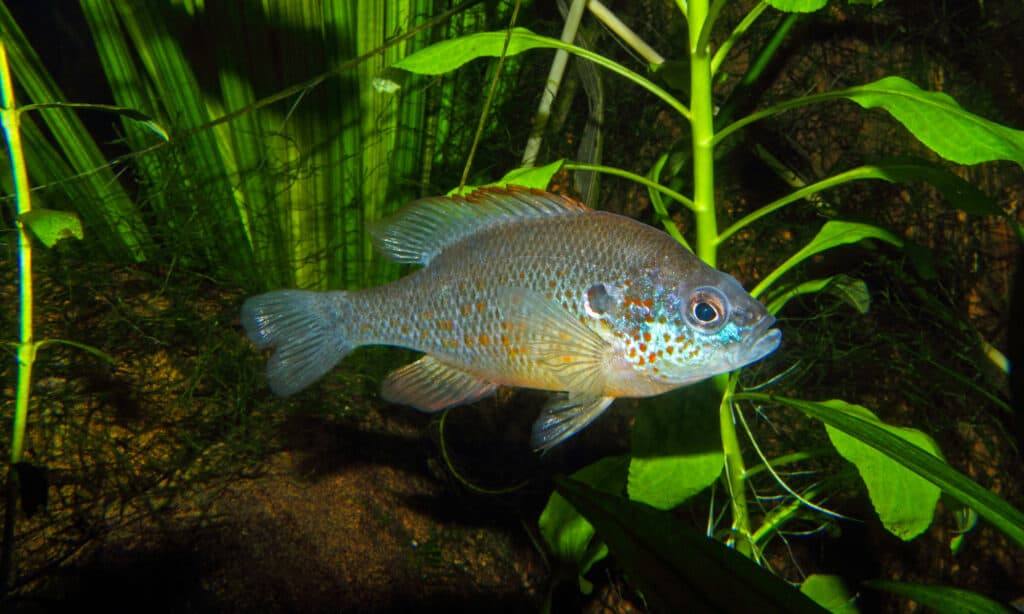
Orange-spotted Sunfish

Orange spotted sunfish is a North American species of freshwater sunfish in the family Centrarchidae and order Perciformes.

Distribution, Population, and Habitat

Distribution

Freshwater sunfish are native to parts of North America, but they have now populated waters in Europe and Africa. You can find freshwater sunfish in New Jersey, where they inhabit some of the state’s largest reservoirs and lakes, along with small farm ponds. The main species found in New Jersey are the redbreast, pumpkinseed, and bluegill freshwater sunfish. The redbreast species of freshwater sunfish is distributed throughout Ohio, Tennessee, Missouri, South Dakota, and Arkansas.
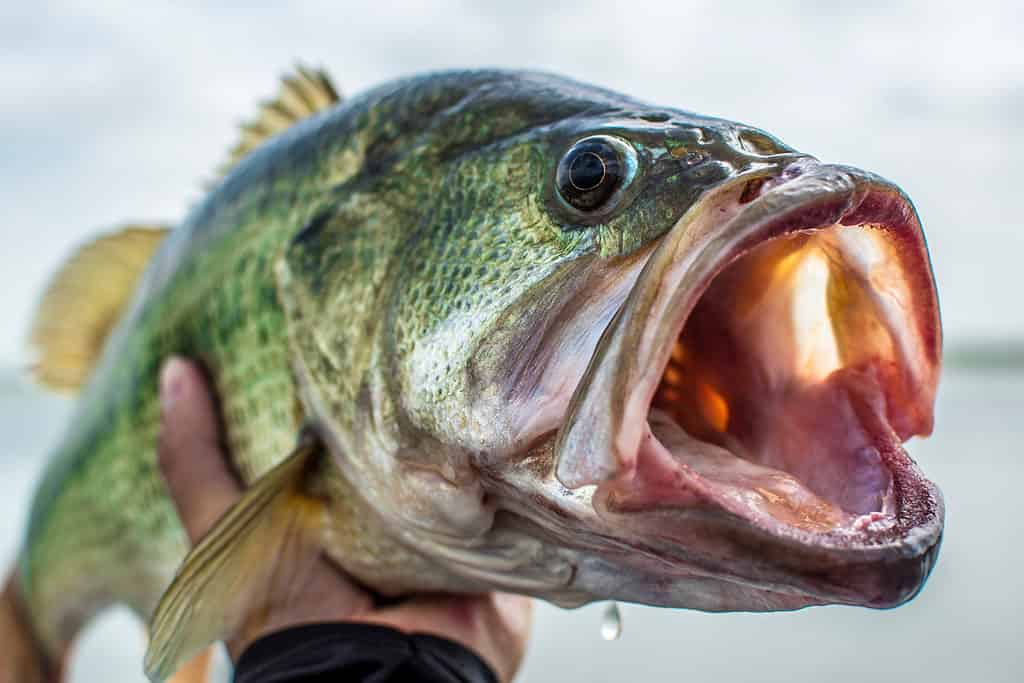
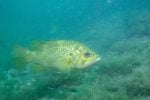
Big Largemouth Bass

Largemouth Bass are one of the most popular breeds of Freshwater Sunfish for sport fishing.

Population

There are thirty-eight identified species of freshwater sunfish; four of these species are now extinct. They can be found throughout North America, Europe, and Africa. A few species of freshwater sunfish are considered threatened or endangered in certain regions, and local regulations may restrict their harvest to protect populations.

Habitat

The freshwater sunfish inhabits a variety of different water systems, from small lakes and ponds to large creeks and rivers. They prefer warm, clear bodies of water. Some species of freshwater sunfish can also be found in low-flow streams and swamps. The Bluegill freshwater sunfish can be found east of the Rockies, whereas others, such as the popular Redbreast, inhabit river systems of eastern Canada and the United States.

Diet
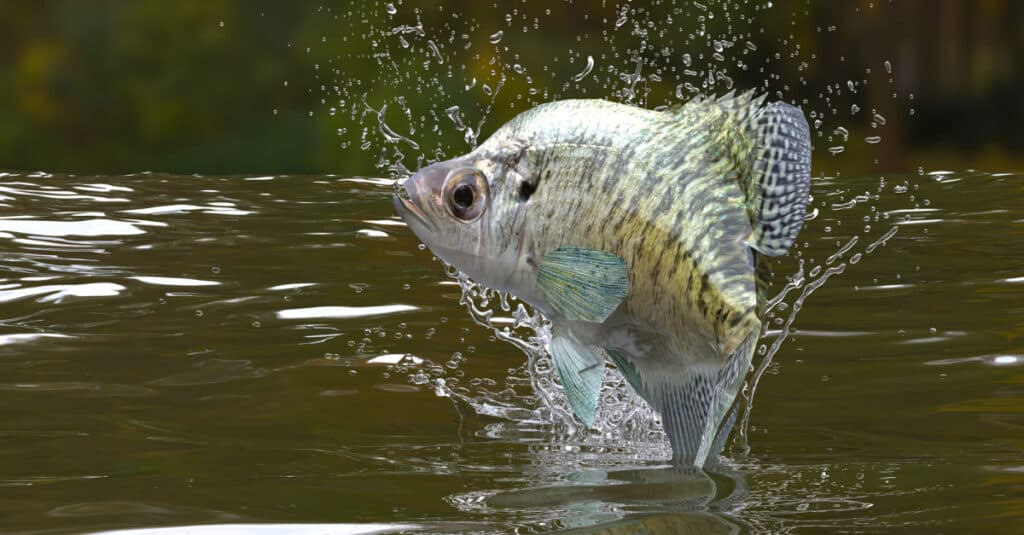
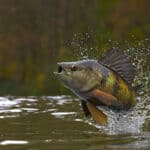
Crappie jumping out of water

Crappies primarily eat insect larvae.

Young freshwater sunfish start off by eating fish larvae, either through suction or ram feeding. Sunfish are considered to be carnivores, and they primarily eat small invertebrates like insects, mollusks, crustaceans, snails, and smaller fish. Small species of freshwater sunfish that uses suction feeding eats fish larvae and very tiny fish. The Micropterus species are ram feeders, and they eat in limnetic zones, which are open areas.

Reproduction and Lifespan
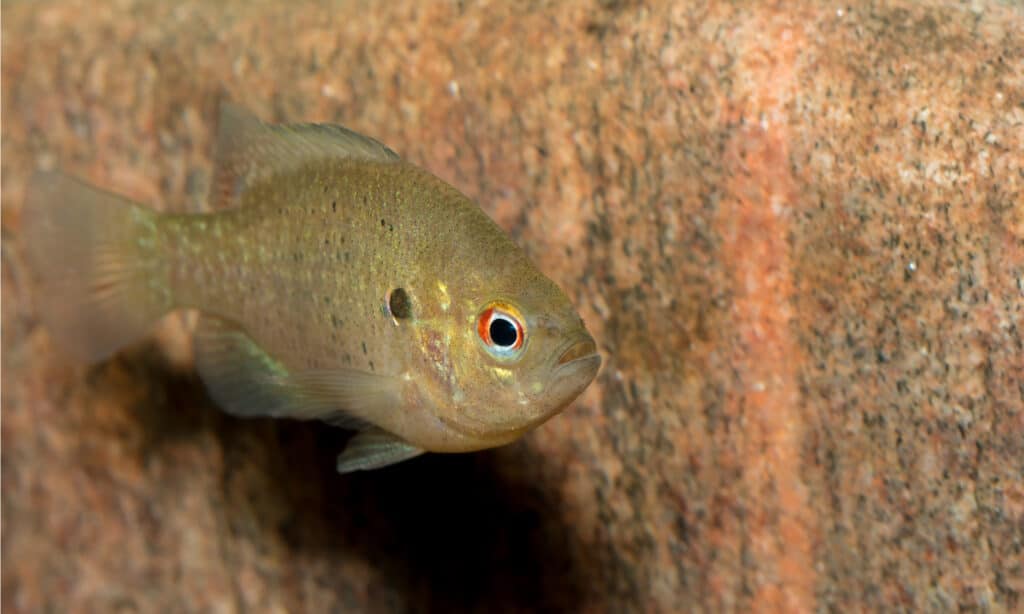
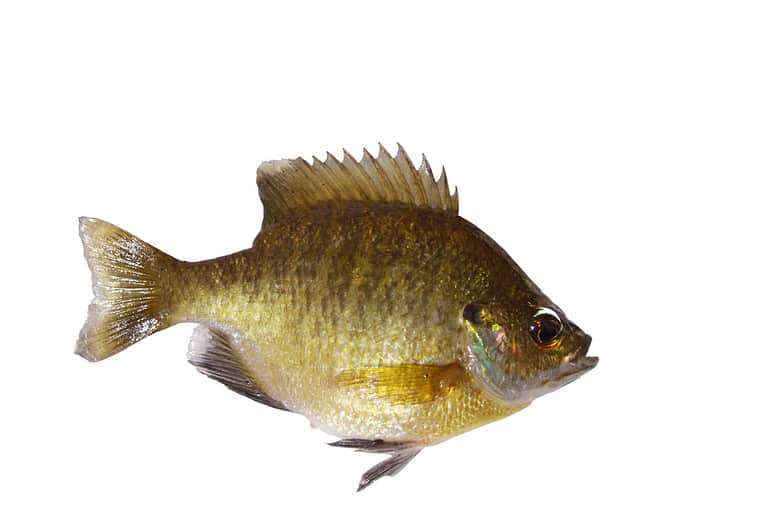
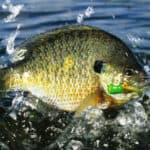
A distinctive feature of bluegills is the dark spot at the end of their dorsal fin.

Bluegills can live up to 11 years old, and grow about an inch for every year that they live.

Freshwater sunfish are nest builders and dig round nests along the shorelines of lakes and streams during late spring in preparation for reproduction. The nest will contain mud, sand, and gravel, and is usually dug by the male. Sunfish can become quite territorial and aggressive when they make their nests and are very protective of their eggs.

While the females are egg layers, the males will build and guard the nest until the larvae develop into fry and are large enough to swim. The female freshwater sunfish will lay eggs in the nest after the male has performed a dancing courtship ritual, and the larger the male freshwater sunfish is, the more likely he is to attract a female.

Freshwater sunfish have an average lifespan of four to six years, but some species can live for up to 10 years, like the bluegill sunfish.

Freshwater Sunfish in Fishing and Cooking
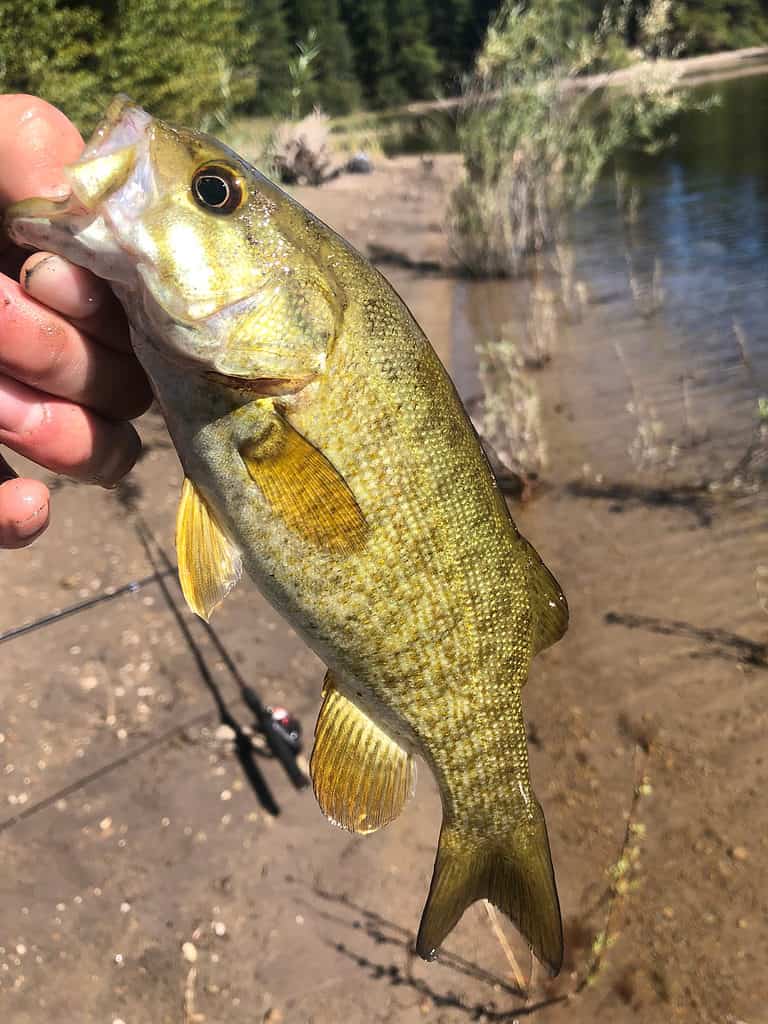
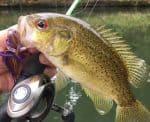
Spotted Bass

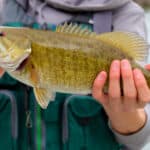
Many of the most popular species of fish are Freshwater Sunfish, such as the smallmouth bass.

Freshwater sunfish have been caught in still, baitcasting, drift, and fly fishing. They can be baited with worms and make a popular angler fish. They are better for seasoned anglers, and you will need to find the right location, use the right equipment, and try different techniques to successfully catch freshwater sunfish. Lake sunfish are the most popular fish to fish for in the United States, but make sure it is legal to fish for this species in your area, as some species are endangered.

You can eat freshwater sunfish, and many people say they taste like black sea bass or tuna. They are a good source of essential minerals and can be baked, grilled, or fried in preparation.

View all 170 animals that start with F

Sources

  1. Wikipedia / Accessed September 24, 2022
  2. LiveAbout / Accessed September 24, 2022
  3. Florida Fish and Wildlife Conservation Commision / Accessed September 24, 2022
  4. Kapamego / Accessed September 24, 2022
  5. Fishing Hand / Accessed September 24, 2022
Corinna Cybele

About the Author

Corinna Cybele

My name is Corinna! In my profile photo you can see me with one of my two cats, Bisky! The other's name is Yma and she's a beautiful black Bombay kitty. I'm 24 years old and I live in Birmingham, AL with my partner Anastasia and like to spend my free time making music, collecting records and reading. Some other animals I've owned were a hamster, 2 chihuahuas and many different kinds of fish.

Thank you for reading! Have some feedback for us?


Freshwater Sunfish FAQs (Frequently Asked Questions)

Freshwater sunfish are mainly found in North America, but they have been introduced into Europe and Africa. Here the freshwater sunfish inhabits warm, freshwater ponds, streams, creeks, lakes, and reservoirs.