Quick Take
- One species starts life as a meat-eater and completely reinvents its diet as an adult, a shift driven by a striking physical transformation. See the diet shift →
- The leatherback's body has a built-in trap designed for one specific prey, and this design is unlike anything else in the reptile world. Explore the jaw adaptations →
- Not all sea turtles hunt the same way. Their jaw shapes alone reveal entirely different predatory strategies hiding in plain sight. Compare jaw shapes →
- The smallest and most endangered sea turtle spends its earliest days drifting on the open ocean before its lifestyle takes a sharp turn. Discover the Kemp's ridley →
Sea turtles are marine reptiles that live in most of the world’s oceans, with the exception of the polar regions. There are seven species of sea turtles in the order Testudines. They spend most of their lives at sea, only coming ashore to lay their eggs. Most sea turtles are highly migratory, traveling thousands of miles each year between breeding grounds and feeding areas. So, where are these feeding areas and what do sea turtles eat?
Sea Turtle Species
Sea turtles have protective shells, hydrodynamic bodies, and large, powerful front flippers to help them swim long distances. Unlike terrestrial turtles, sea turtles cannot retract their heads into their shells for protection. Sea turtles can thrive in a wide variety of habitats from coral reefs to open oceans. They favor warm tropical and subtropical waters. As reptiles, they are ectotherms and rely on the ambient temperature of the environment to maintain their core body temperature.
There are six hard-shelled turtles in the family Cheloniidae, including the green turtle (Chelonia mydas), loggerhead (Caretta caretta), hawksbill (Eretmochelys imbricata), Kemp’s ridley (Lepidochelys kempii), olive ridley (Lepidochelys olivacea), and flatback (Natator depressus). There is one leathery-shelled turtle, aptly named the leatherback (Dermochelys coriacea), in the family Dermochelyidae. The flatback is the only species not found in U.S. waters. It is only found off the coasts of Australia, southern Indonesia, and Papua New Guinea.
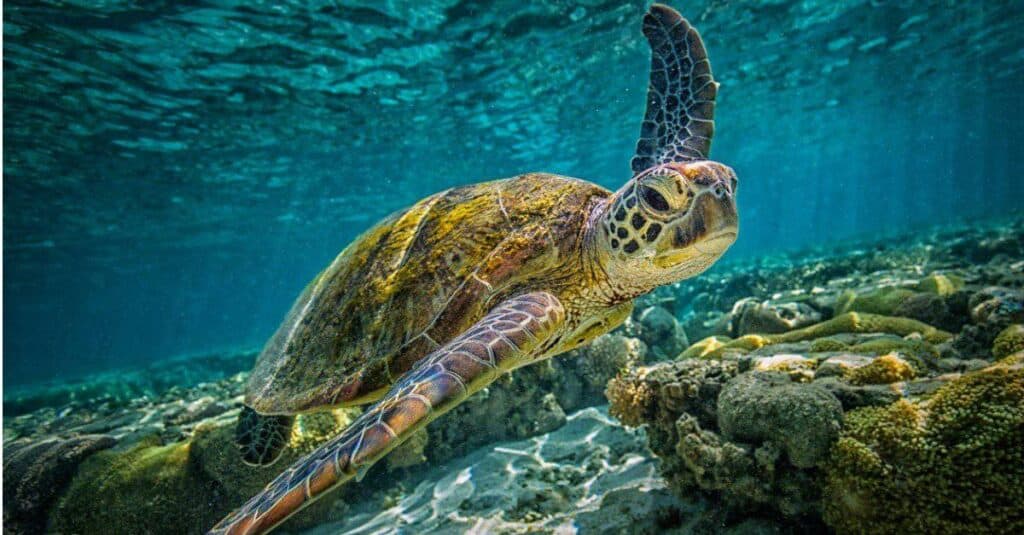
Sea turtles can thrive in a wide variety of habitats from coral reefs to open oceans.
©iStock.com/Greg Sullavan
The Sea Turtle Diet
A sea turtle’s diet depends on its age and species. They have adapted to different diets based on available food sources. Some are herbivores, some are omnivores, and some turtles are even carnivores. The mouths and jaws of different sea turtle species are uniquely shaped, allowing them to specialize on specific foods. The hatchlings and juveniles of some species may also have different diets than the adults. Take an in-depth look at the diets of each sea turtle species in the sections below.
Green Turtles
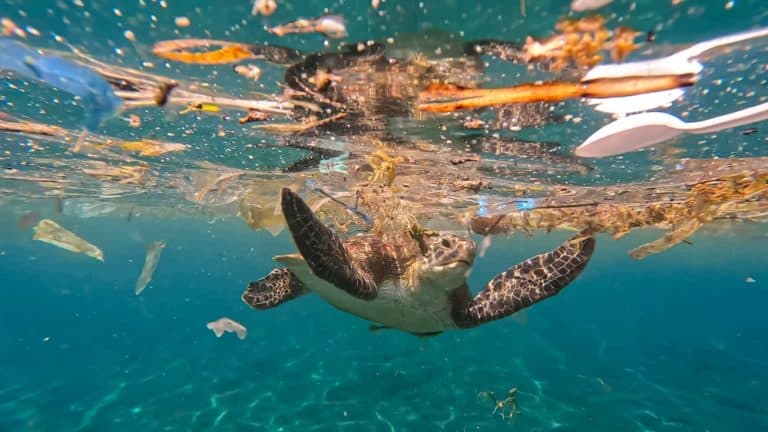
Green turtles begin life with a more carnivorous diet as hatchlings, typically feeding on crustaceans, zooplankton, and mollusks. As juveniles, they begin to switch to a more plant-based diet. Juveniles eat mainly algae and seagrass, but they may also consume invertebrates like jellyfish and sponges. Adult green turtles have a herbivorous diet, living in shallower waters where they mostly eat seagrass and some algae. Their beaks have saw-like edges to tear seagrass and scrape algae off rocks and other hard surfaces. They are the largest hard-shelled sea turtles, reaching between 250-400 pounds.
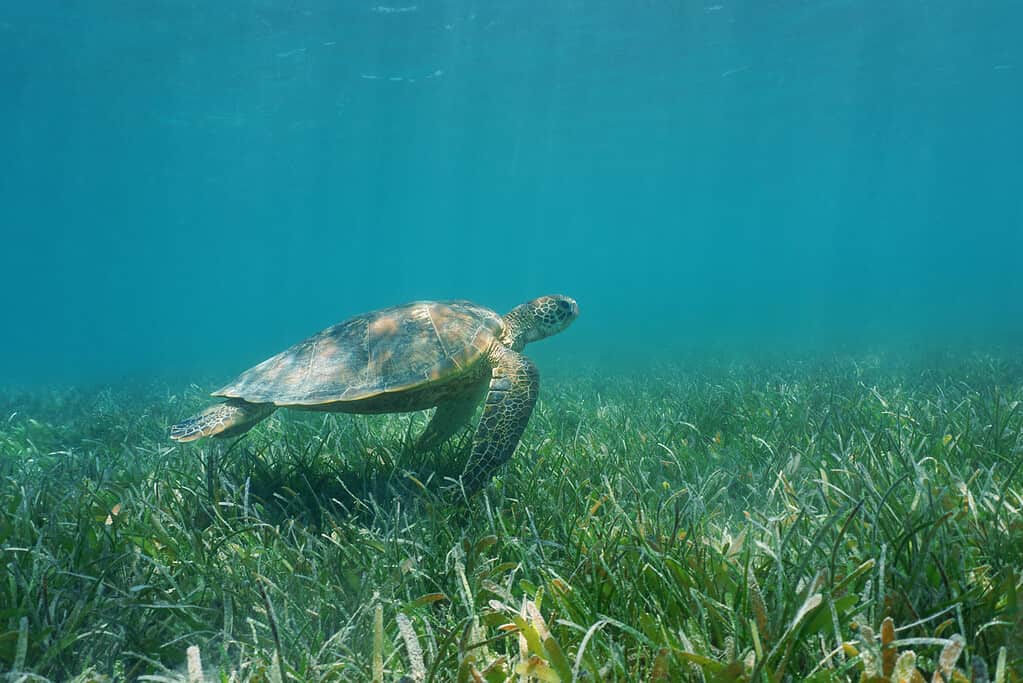
Green sea turtles primarily eat seagrass and algae.
©Damocean/iStock via Getty Images
Loggerhead Turtle
Loggerhead turtles are considered carnivores. Both juveniles and adults feed on crustaceans and mollusks found on the ocean floor. Their diet includes lobsters, crabs, shrimp, conches, whelks, snails, and mussels. However, they may also occasionally consume algae and seagrass. Loggerhead turtles have large heads with powerful jaws that allow them to easily crush hard-shelled prey. They can reach between 200 and 350 pounds.
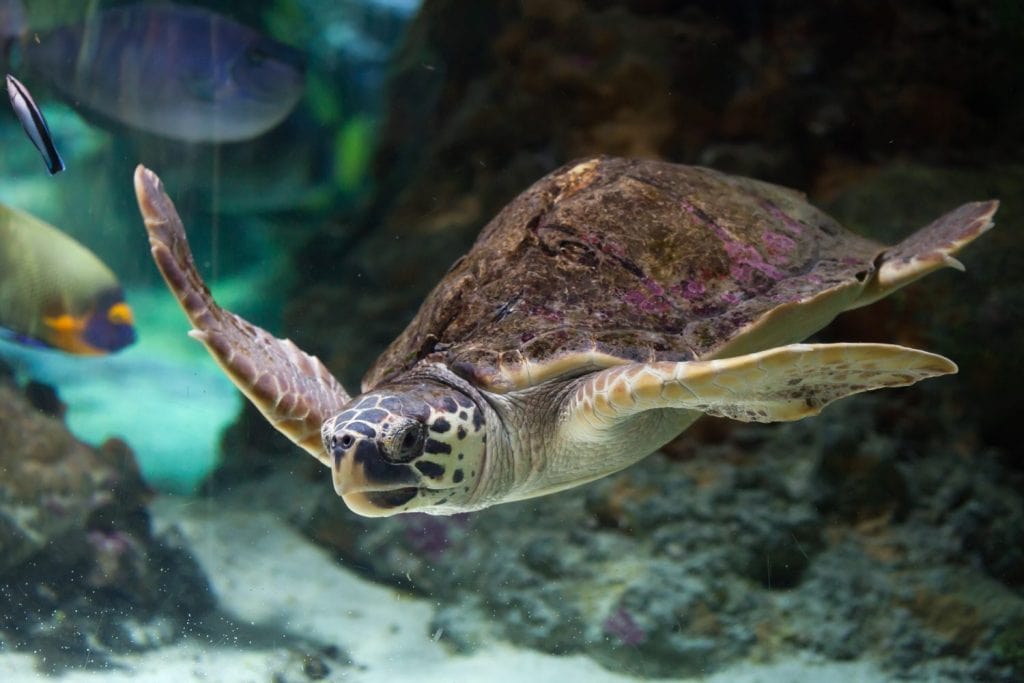
Loggerheads feed on crustaceans and mollusks from the ocean floor.
©Vladimir Wrangel/Shutterstock.com
Hawksbill Turtle
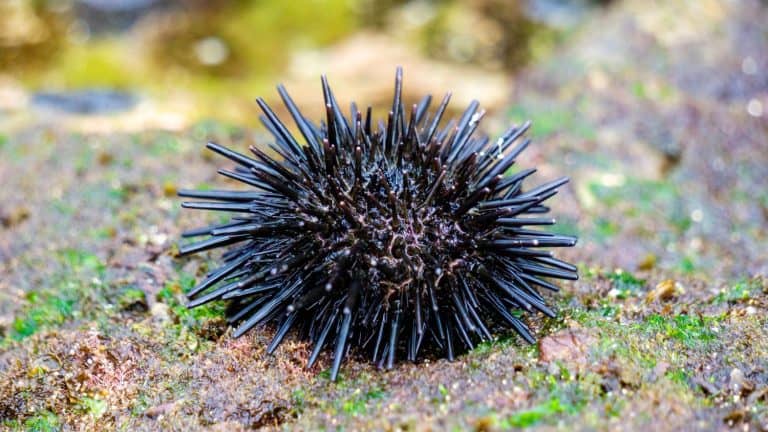
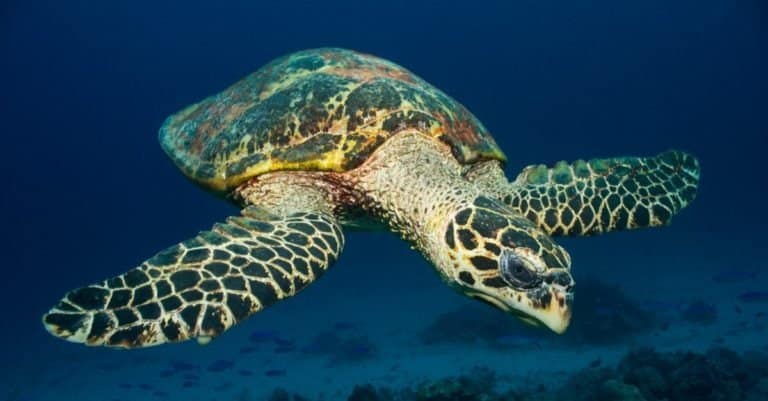
Hawksbill turtle hatchlings also begin life as carnivores, feeding on macroplankton, fish eggs, crabs, barnacles, and algae. Juvenile and adult hawksbill turtles can have a more herbivorous or omnivorous diet, depending on their habitat. Hawksbills in the Caribbean live around coral reefs where they primarily eat sponges. However, those that inhabit the reefs of the Indian Ocean eat a wider variety of foods. In addition to sponges, they also consume sea urchins, jellyfish, and corals. Their beak-like mouths resemble the beak of a hawk, allowing them to reach food in the cracks and crevices of the coral reefs. Adult hawksbill turtles typically weigh between 100 and 150 pounds.
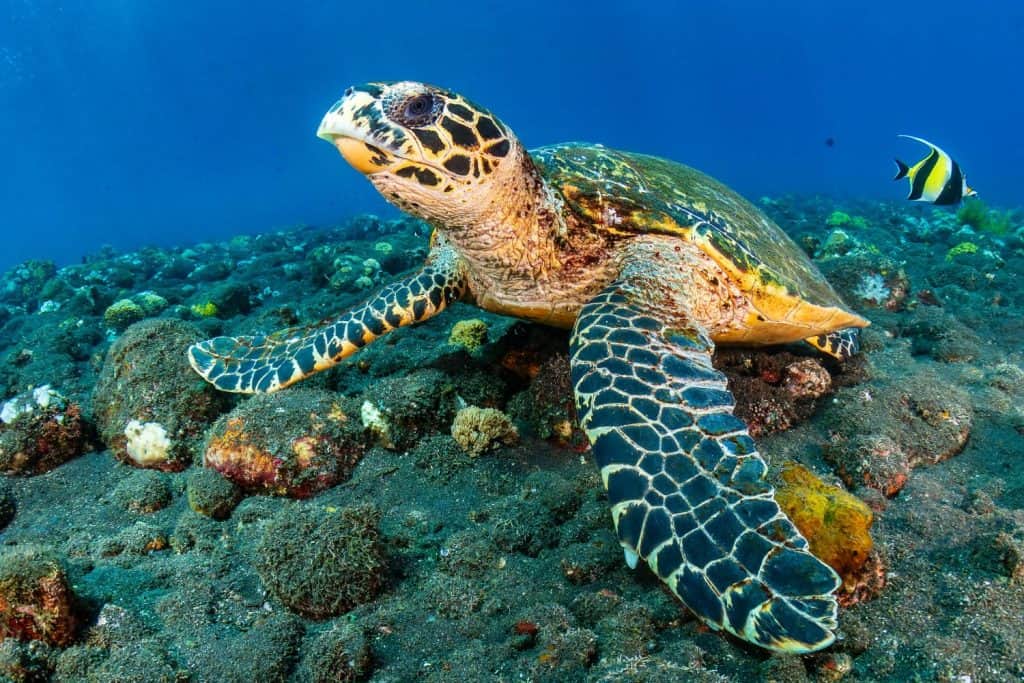
Hawksbill turtles generally inhabit coral reefs.
©Richard Whitcombe/Shutterstock.com
Kemp’s Ridley Turtle
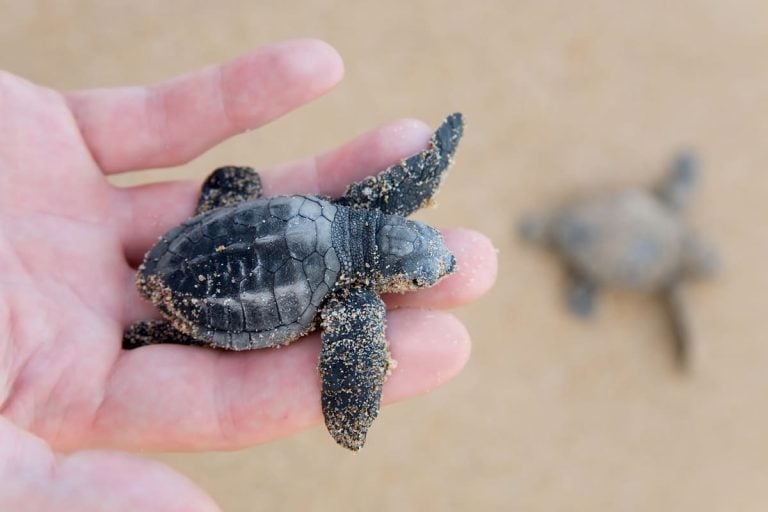
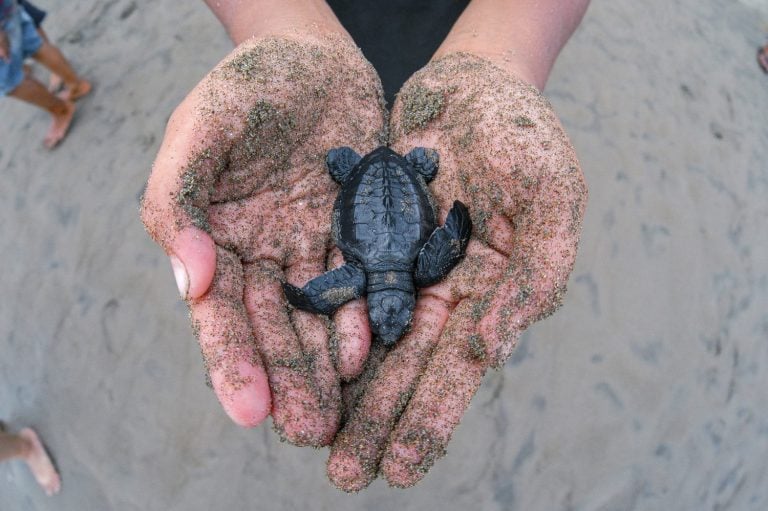
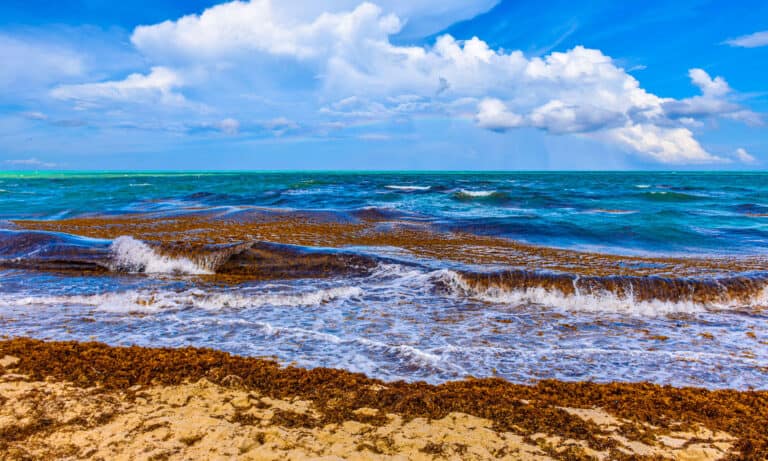
As hatchlings and juveniles, Kemp’s ridley turtles live in the ocean, drifting on floating Sargassum algae and feeding on small plants and animals. Once they reach about eight inches in length, they migrate to nearshore areas of the northwestern Atlantic or the Gulf of America. As older juveniles and adults, they are opportunistic carnivores, primarily feeding on crabs and other crustaceans, mollusks, and sometimes fish. Kemp’s ridley sea turtles are the smallest sea turtles, weighing just 70-100 pounds. They are also the most endangered sea turtle species.
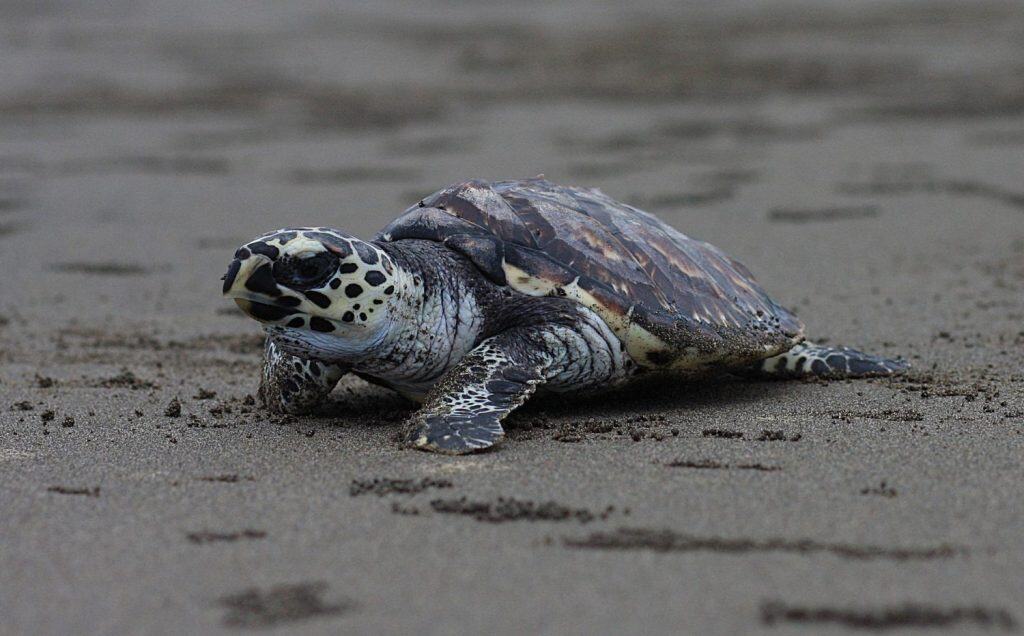
Kemp’s ridley turtles are only found in the northwestern Atlantic and the Gulf of America.
©Mahmud Hidayat/Shutterstock.com
Olive Ridley Turtle
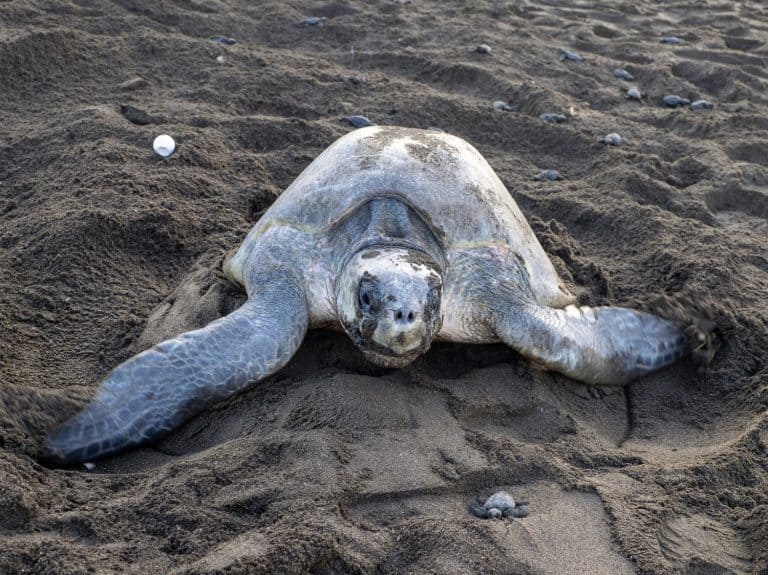
Olive ridley turtles are omnivores, eating a wide variety of foods in the open ocean. These turtles typically feed on crabs, mollusks, tunicates (marine invertebrates), jellyfish, shrimp, algae, and sometimes fish. These turtles can also dive up to 500 feet to forage for invertebrates that inhabit the sea floor. Olive ridley turtles are the most widespread and numerous of sea turtles. They are also relatively small, reaching just up to 100 pounds.
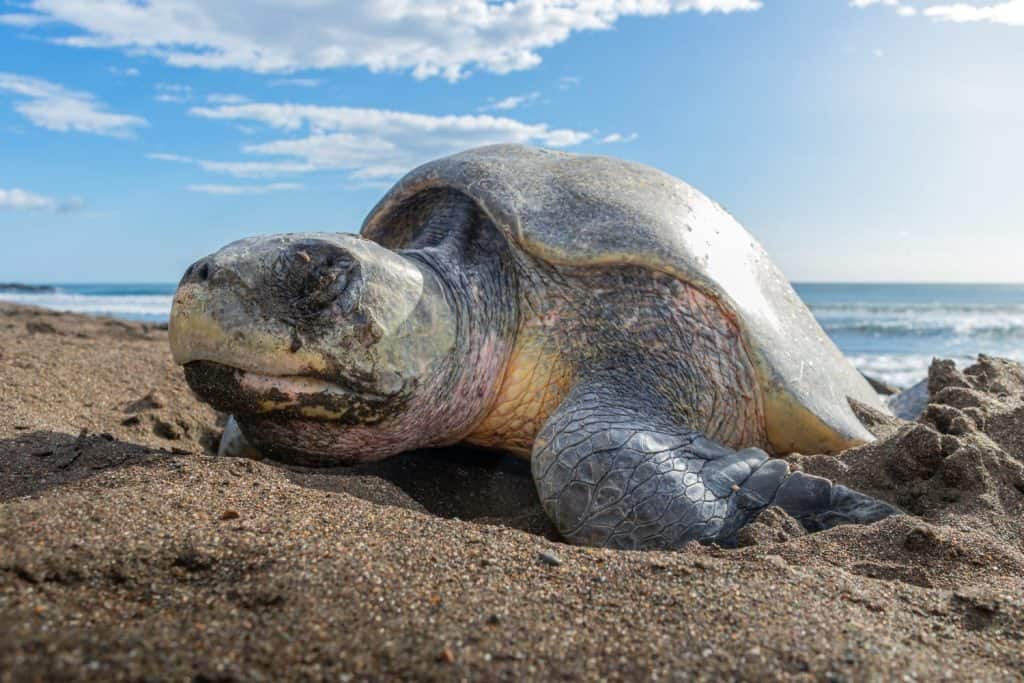
Olive ridley turtles live in the open ocean, but like all sea turtles, they lay their eggs on the beach.
©Kevin Venegas Barrantes/Shutterstock.com
Flatback Turtle
Flatback sea turtles have the smallest range among sea turtles, living along the continental shelf between Australia, southern Indonesia, and Papua New Guinea. Research on their diets as hatchlings is ongoing. However, juvenile and adult flatbacks are primarily carnivores, consuming crabs and other crustaceans, jellyfish, snails, corals, and soft-bodied invertebrates such as sea slugs. Flatback sea turtles can reach weights of up to 220 pounds.
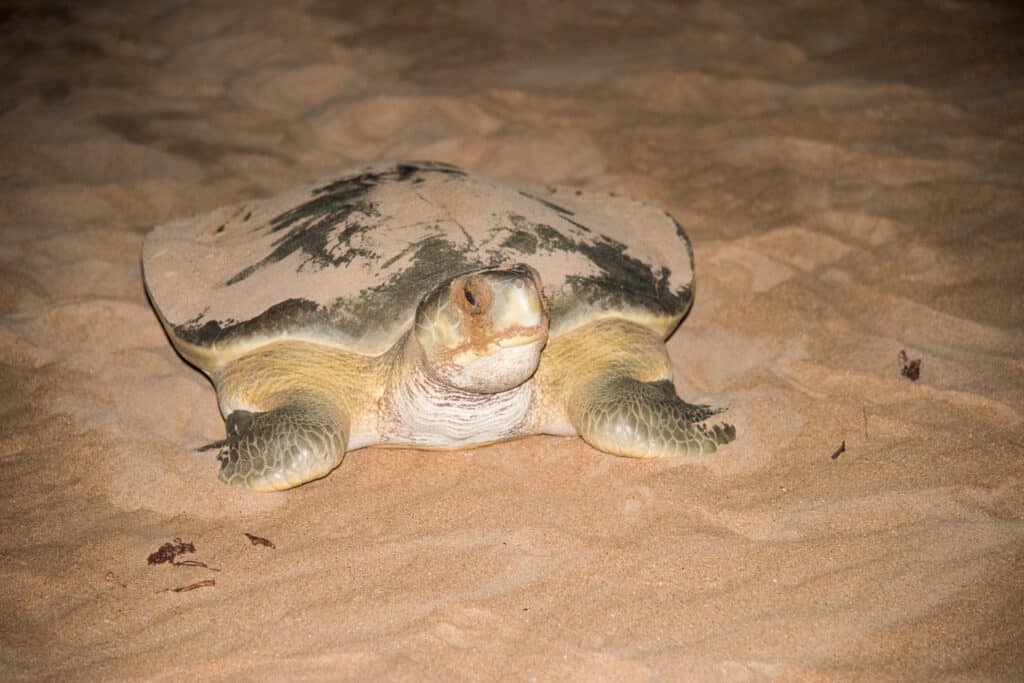
Flatback sea turtles live and nest along the continental shelf north of Australia.
©iStock.com/EAGiven
Leatherback Turtle
Leatherback sea turtles have no scales and a tough, rubbery shell rather than a hard, scaled shell. They have the widest distribution among reptiles, inhabiting every ocean except the Arctic and Antarctic. Leatherbacks also have the longest migrations among sea turtles, with some traveling over 10,000 miles a year between nesting and feeding areas. These turtles are carnivores, feeding primarily on jellyfish. However, they have also been reported to feed on other soft-bodied animals like salps, as well as squid and octopus. Leatherbacks have sharp, pointed, tooth-like cusps on their jaws that enable them to grasp and hold gelatinous prey. They also have papillae, which are backward-pointing spines in their throats, to keep prey from escaping and help move it down to their stomachs. Leatherbacks are the largest sea turtles, with adults weighing from 750 to 1,000 pounds or more.
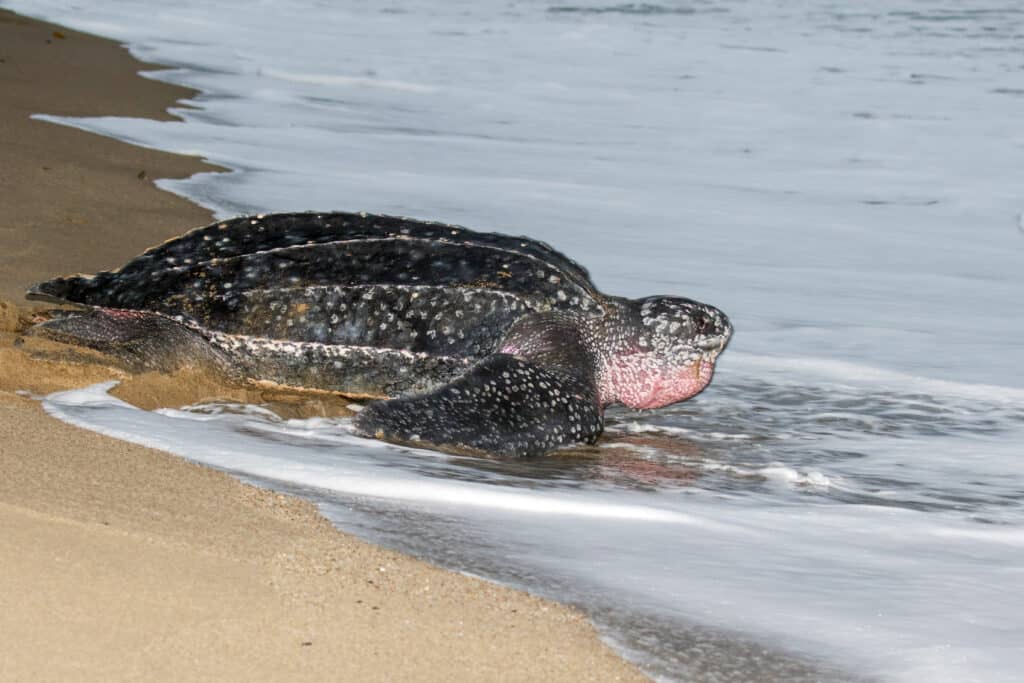
Leatherback sea turtles are the largest sea turtles in the world, weighing 1,000 pounds or even more.
©iStock.com/AGAMI stock