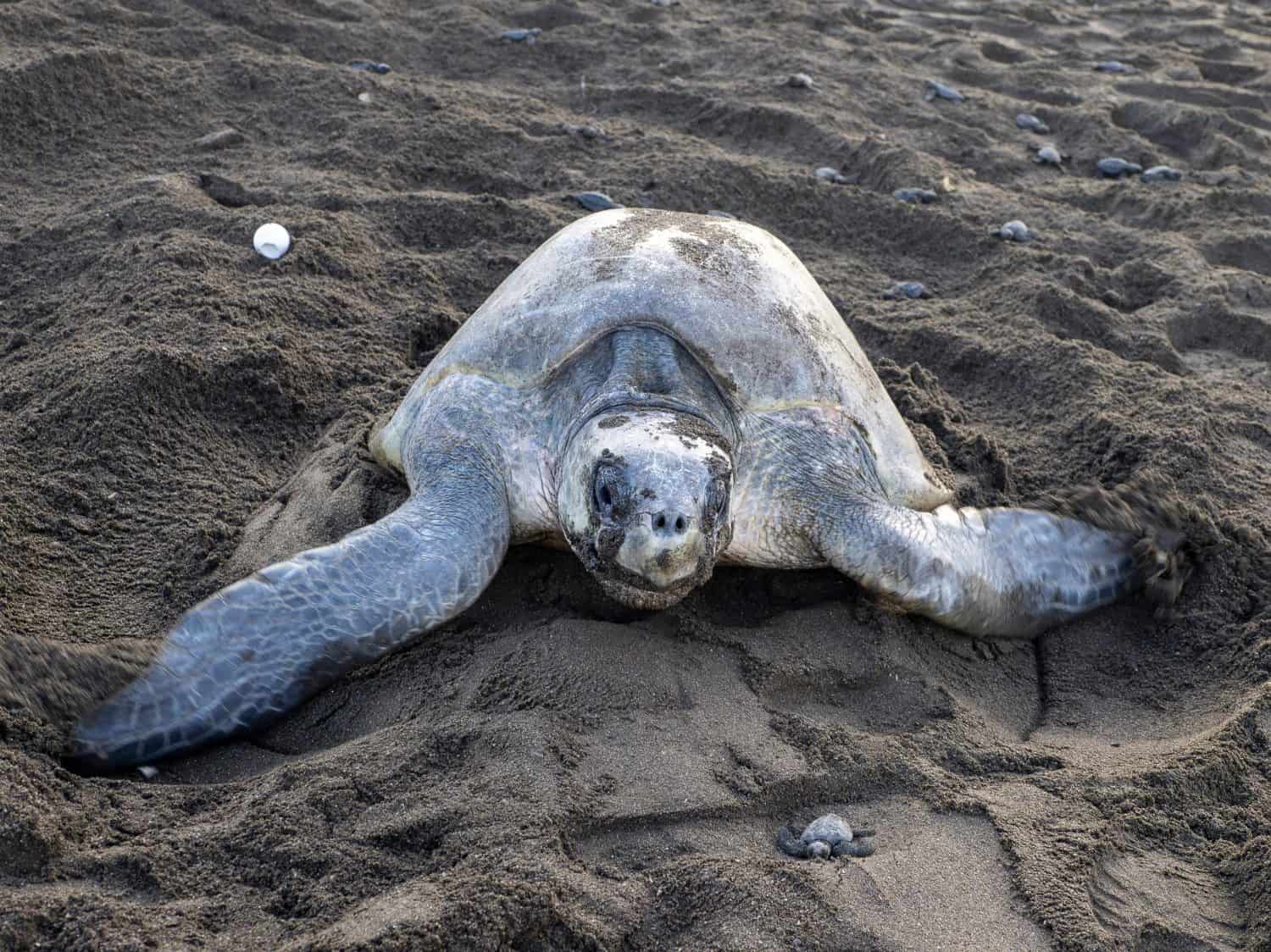

Quick Take
- 700,000 turtles descended on a single beach, and the mechanism they use to find it after a decade at sea is stranger than any GPS. See how they navigate →
- Each turtle lays over 100 eggs, yet the species is still declining. The survival odds reveal a brutal numbers game most people never consider. Explore the survival odds →
- One common light source near the beach is quietly pushing hatchlings toward death instead of the ocean. See the hidden dangers →
- The 2025 nesting season broke records, but whether that's a conservation triumph or a statistical illusion depends on what happens in the next 60 days. What happens next 60 days →
Each year, olive ridley turtles retreat from the ocean during a massive migration. This migration is not a long-term event. Instead, it is short-lived, with the turtles only coming ashore to lay eggs. They then head back to the ocean and return to their foraging grounds, never knowing how many of their offspring survive.
Olive Ridley Turtles Come to Odisha for Annual Migration
From December to April, adult female olive ridley turtles come ashore to beaches in Odisha, India. From Gahirmatha Beach, within Bhitarkanika National Park, to Rushikulya River Mouth and Devi River Mouth, thousands of olive ridley turtles take over the shoreline as they dig nests and lay eggs.
While the olive ridley turtles are always a spectacle, 2025 proved to be a year for laying eggs like no other on record. As @briefo.in caught on video, turtles came to Rushikulya in droves to lay their eggs. In total, almost 700,000 olive ridley turtles nested at this location alone.
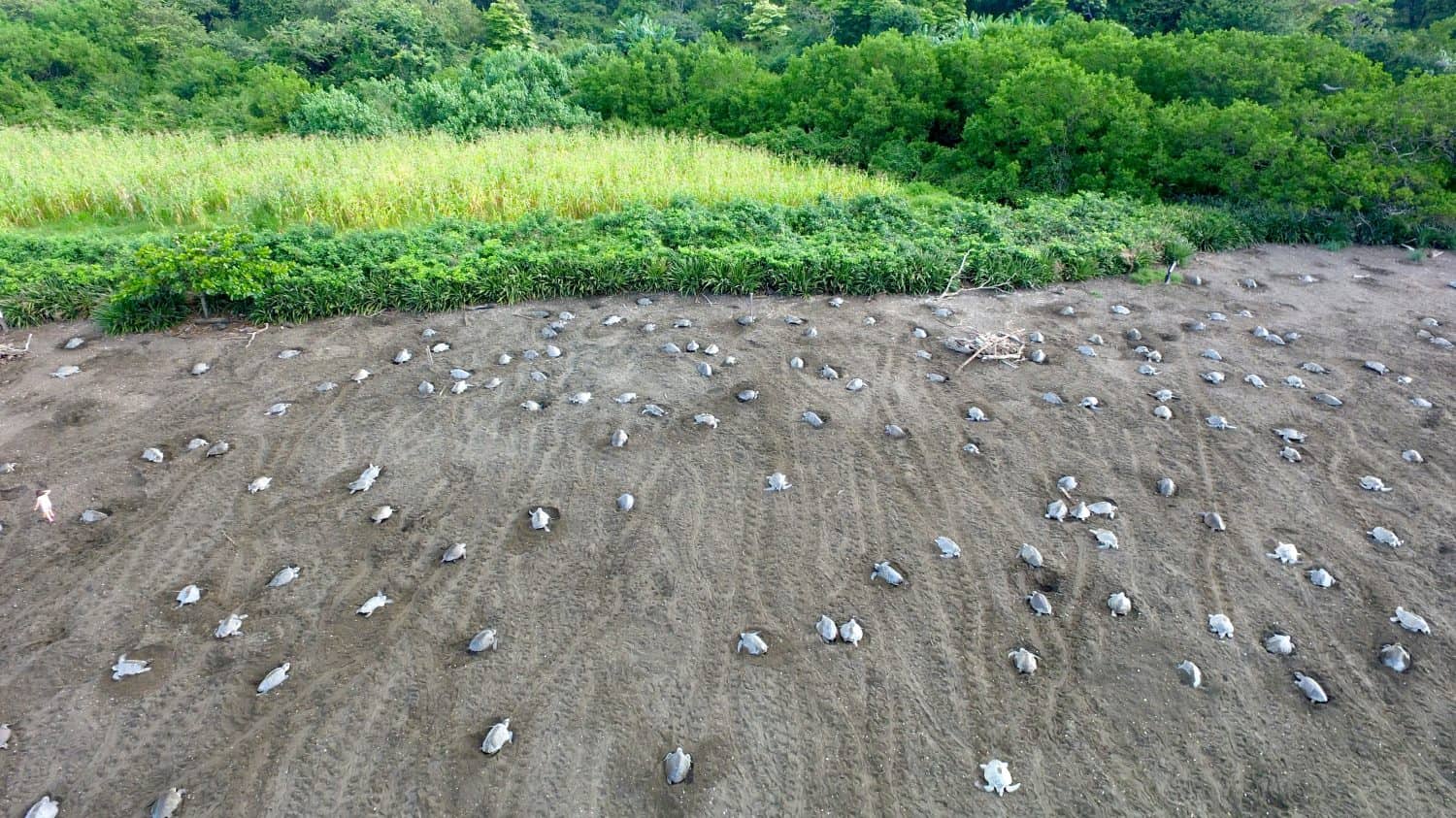
Olive ridley turtles come en masse to lay eggs in Odisha, India.
©Vanessa Bezy/Shutterstock.com
The nesting stages were broken down into two different timeframes:
- First phase (February 15 to 23): Just over 698,700 turtles
- Second phase (March 20 to 27): Approximately 200,000 turtles
The annual event is known as the Arribada, which is Spanish for “arrival” or “landing.” It is clear when olive ridley turtles participate, with hundreds of thousands taking to the beaches in a matter of days.
Why Do So Many Olive Ridley Turtles Return Annually?
Olive ridley turtles come back to Odisha every year without fail. Because of this, the Odisha Forest Department and the Indian Coast Guard can both patrol and protect the hundreds of thousands of olive ridley turtles that come to local beaches to lay their eggs.
The turtles return to Odisha every year, going back to the beach where they were born. It can be a decade or more after olive ridley turtles leave the beach as hatchlings before they return as adults. The Earth’s magnetic field helps them accomplish this remarkable feat. By using “magnetoreception,” or sensing changes in the magnetic field, the turtles can stay on course for their natal beach.
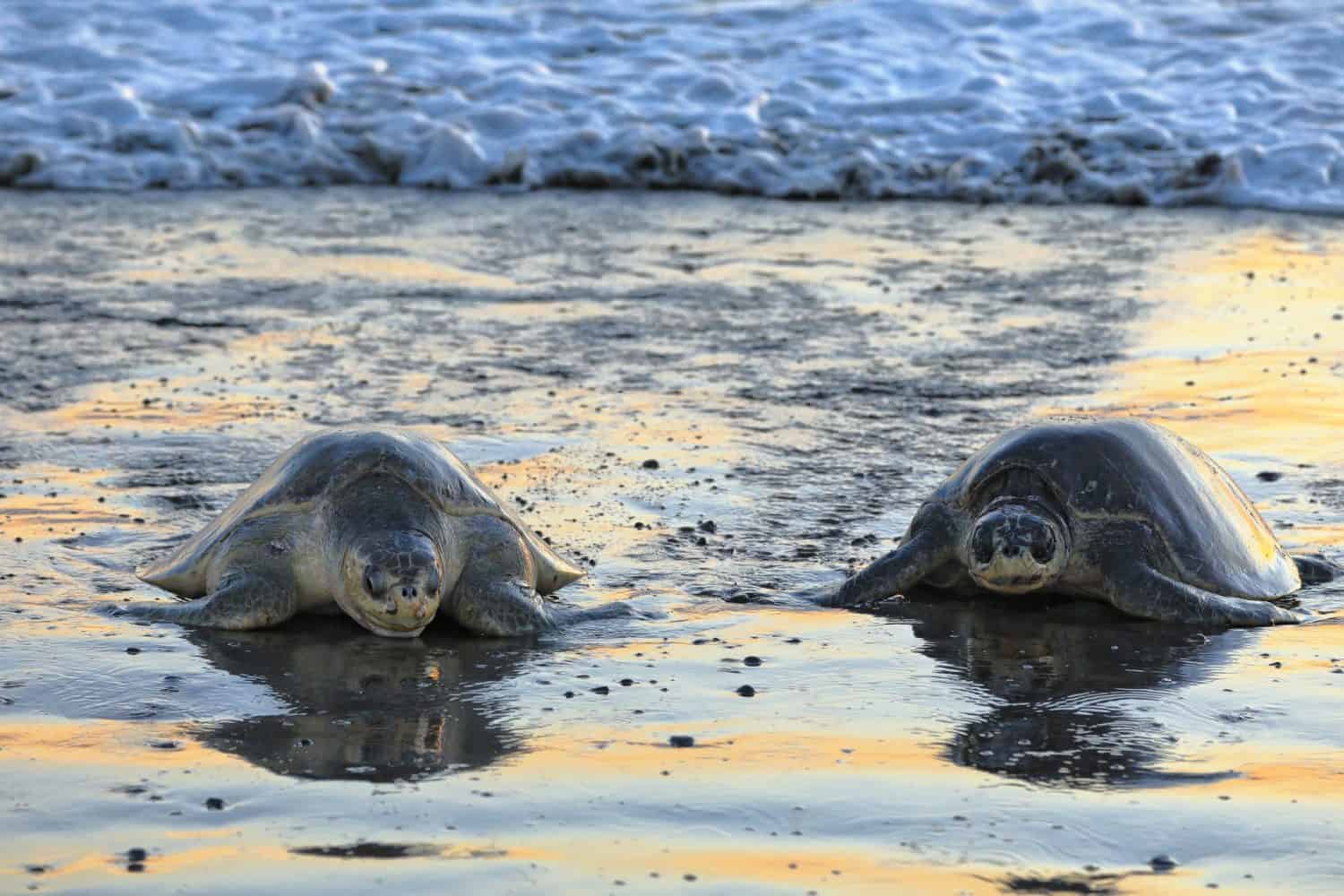
Olive ridley turtles return to the same beach they hatched from when they reach maturity.
©Balakate/Shutterstock.com
While the olive ridley turtles spend the majority of their lives in the ocean, they do not tend to travel much farther than 450 miles from the beach where they were born. This relatively short distance from the beach, along with their ability to imprint as young turtles on the currents, shoreline slope, ocean water composition, and more, allows olive ridley turtles to return without fail to where they were born.
How Many Eggs Olive Ridley Turtles Lay
While the number of olive ridley turtles coming ashore in Odisha is impressive, what’s even more amazing is the number of eggs these small turtles lay.
In total, one olive ridley turtle will lay between 100 and 150 eggs. This inordinate number of eggs is indicative of the harsh conditions the young sea turtles face.
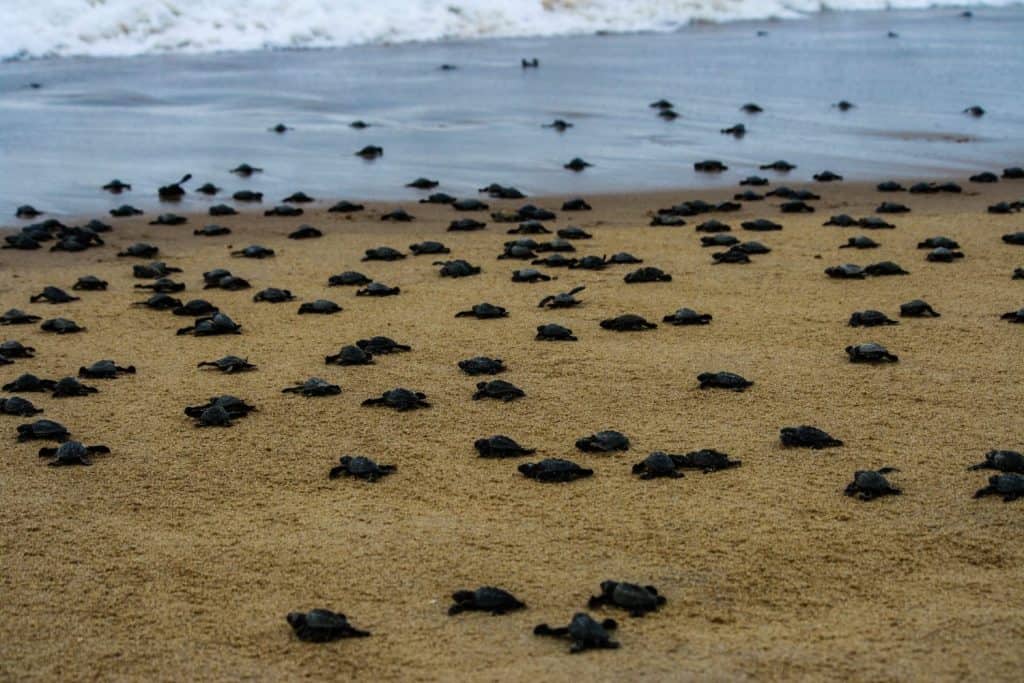
Each olive ridley turtle will lay between 100 and 150 eggs each season.
©EKTA CHAURASIA/Shutterstock.com
Though 900,000 turtles laid eggs in Odisha in 2025, only a tiny fraction of their offspring are likely to survive their early years. Current estimates suggest that only around 0.1% of olive ridley turtles make it to adulthood.
When Do the Olive Ridley Eggs Hatch?
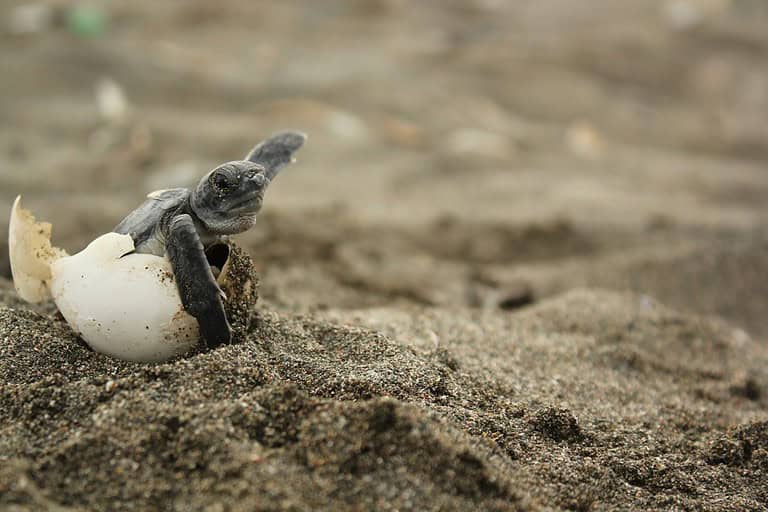
After the incredible migration to Odisha for the mass egg-laying event, the excitement dies down until the baby olive ridley turtles hatch. Depending on environmental conditions, hatchlings can appear anywhere from 45 to 60 days.
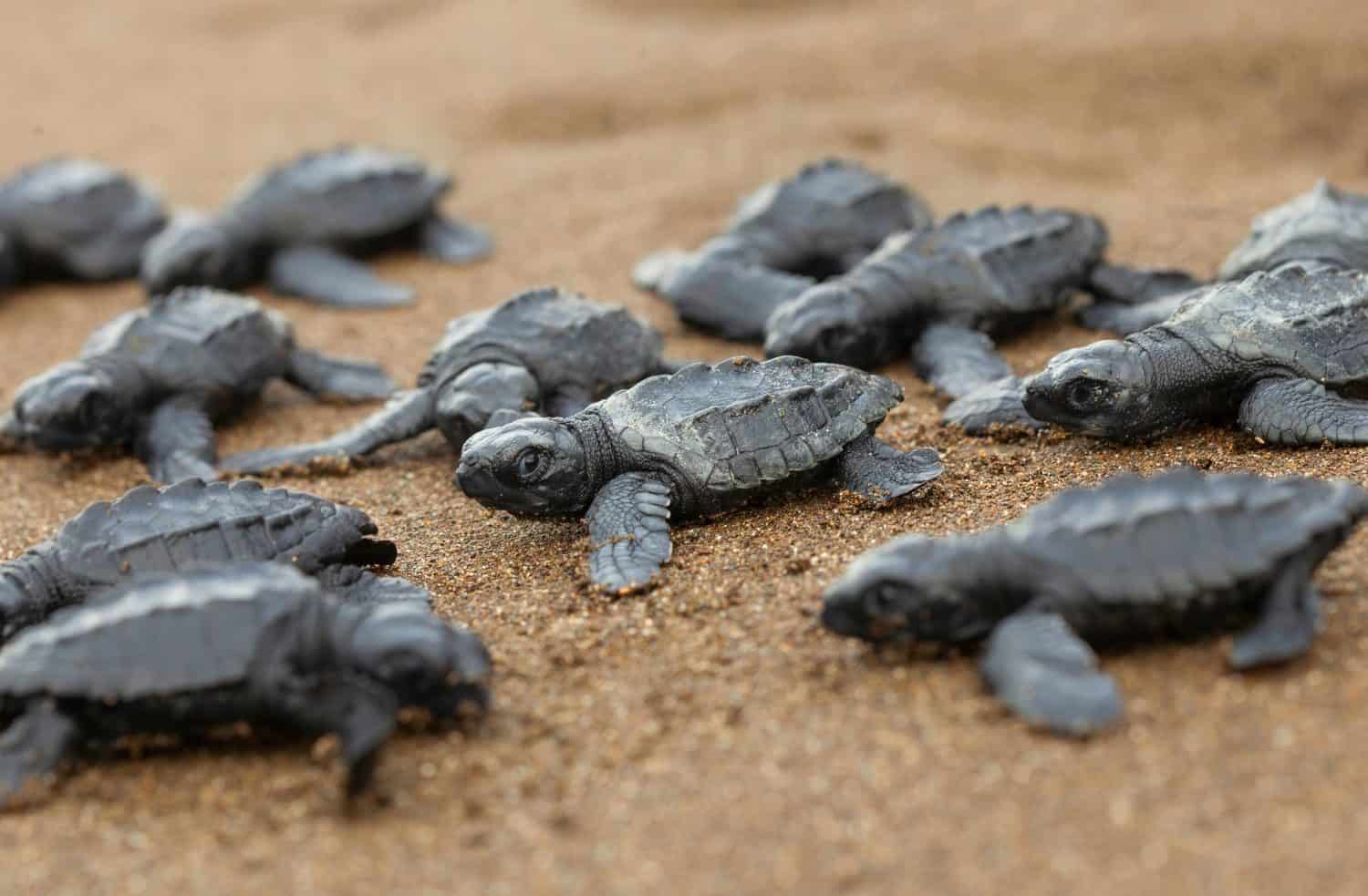
The timing of olive ridley turtle hatching depends on environmental conditions.
©Memo Ossa/Shutterstock.com
The environmental conditions that can impact the timing of the olive ridley hatchlings include:
- Temperature stability
- Wind
- Tidal patterns
- Climate change
When environmental factors are not ideal, it can affect the timing and the number of eggs that hatch. While hatchings can occur between November and April, the peak of baby olive ridley turtles making their journey to the ocean typically occurs between February and March.
Biggest Threats to Olive Ridley Turtles Today
Olive ridley turtles are considered a vulnerable species. According to the IUCN, the species is declining. This means that, without change, the turtles could be reclassified as endangered soon.
Many factors contribute to the continued decline of the olive ridley turtle population. Some of the most common reasons include:
- Bycatch
- Capturing turtles and gathering eggs for food
- Poaching
- Artificial lighting in areas around beaches
- Vessel strikes
- Marine debris, specifically plastic
- Climate change
- Warming ocean temperatures
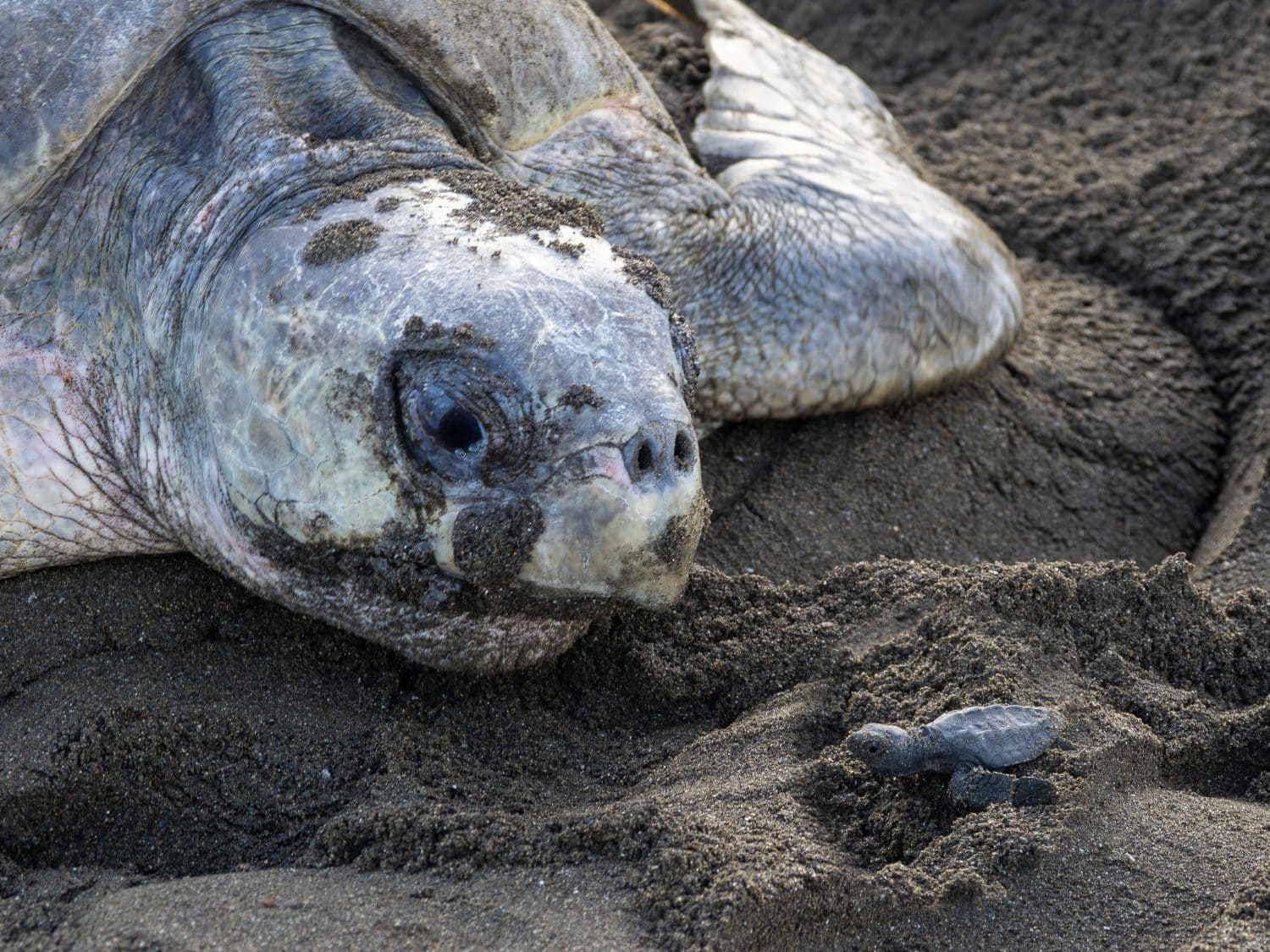
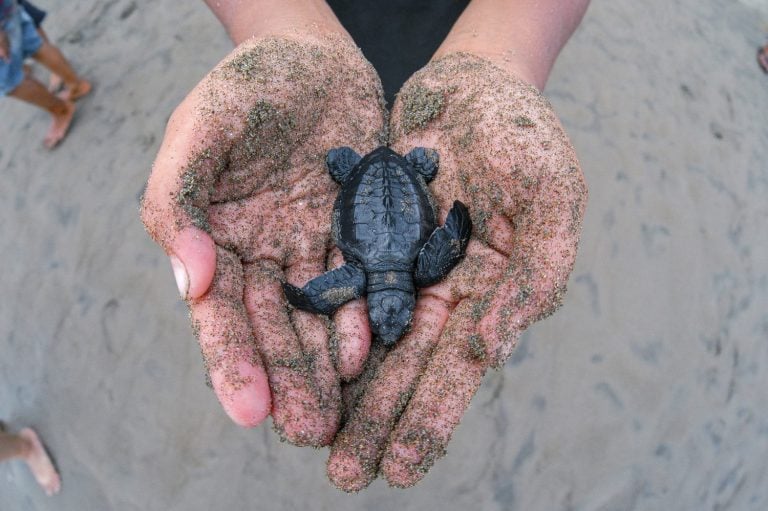
Olive ridley turtles face threats both in adulthood and as hatchlings, leading to a declining population.
©Scupix/Shutterstock.com
Of course, for these factors to pose a threat, olive ridley turtles need to reach adulthood. This is a monumental task, since only one in 1,000 make it to this stage of life.
For baby turtles, once they emerge from their sandy pits, they must reach the water before they dehydrate. Light pollution can be fatal to the youngsters, as they may be drawn away from the water instead of toward it. But even when moving in the right direction, there are plenty of predators to contend with. Only a small percentage of olive ridley turtles have a chance of living a long life in the ocean.