
Quick Take
- An octopus that carries its house with it has forced scientists to redefine what counts as tool use and to reconsider which animals are smart enough to qualify. See the coconut octopus →
- Walking on two legs isn't just a human trick. One sea creature does it for a reason that has nothing to do with locomotion. Watch it walk on two arms →
- One bug discovered how to weaponize another species' alarm system against it, and scientists are now debating whether that behavior counts as tool use. Meet the assassin bug →
- Octopuses have been caught stealing from neighboring tanks, but that's not even close to the strangest thing they've done in captivity. Explore octopus cleverness →
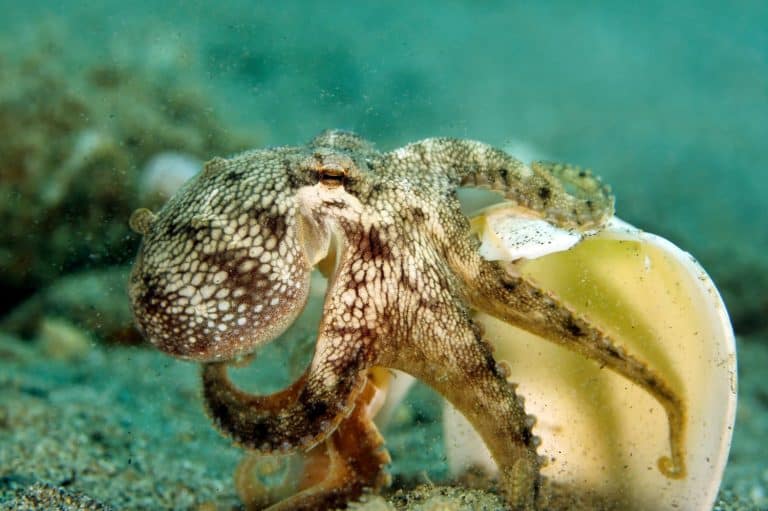
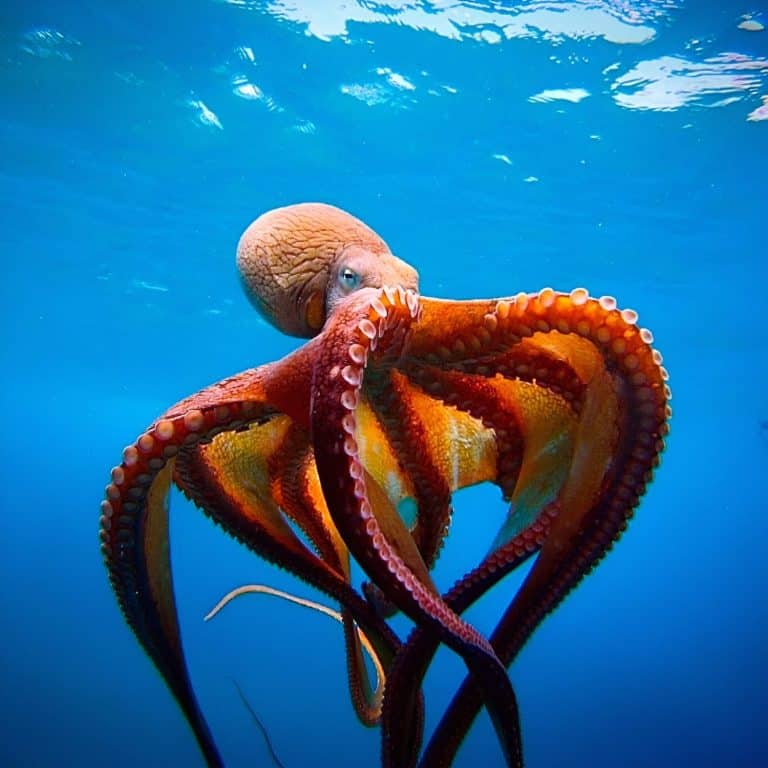
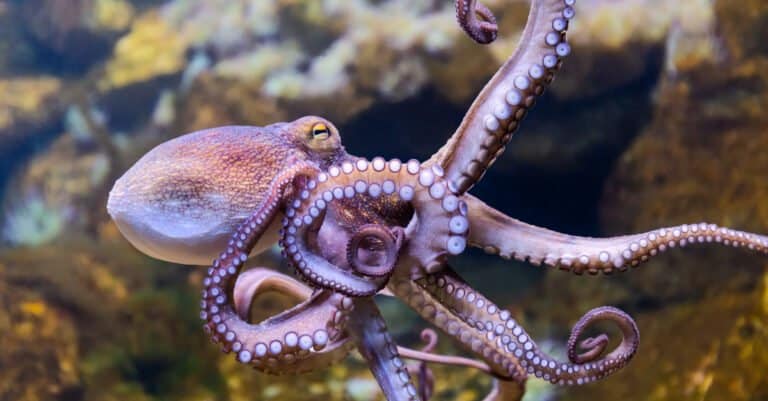
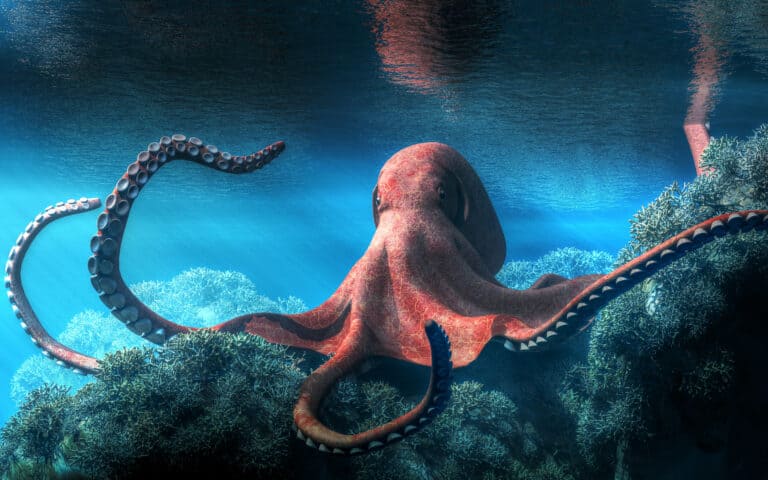
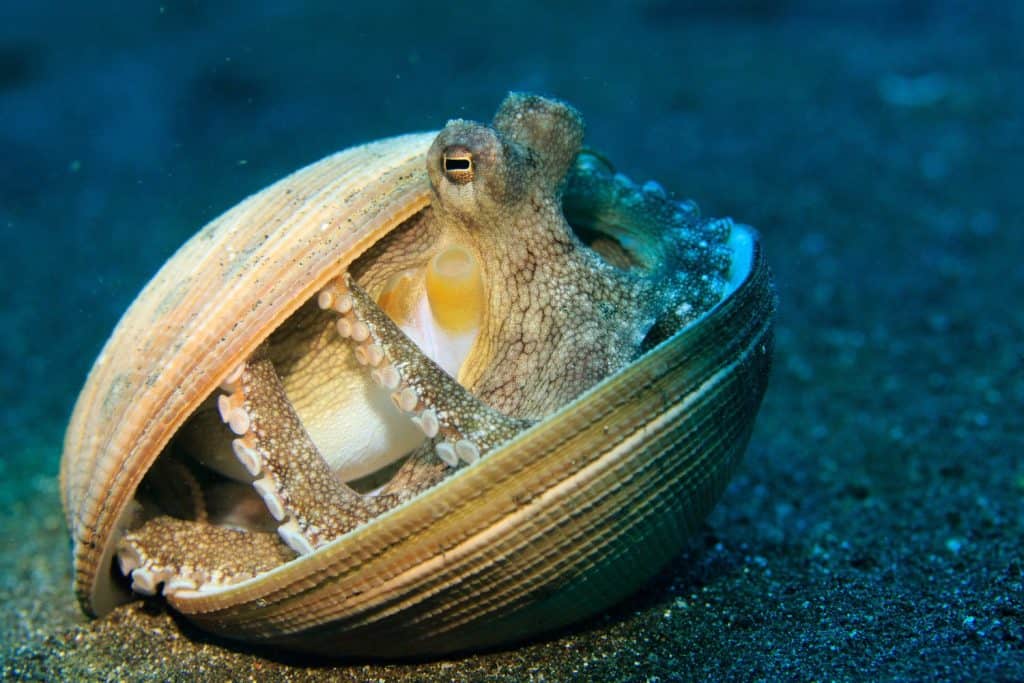
Octopuses use various tactics to protect themselves from predation: they change their color or texture to blend into their surroundings, blast jets of water to quickly propel themselves away from danger, or release clouds of ink to confuse predators. These defenses are important because, aside from the beak, every part of an octopus’s body is soft. But one species has learned an unusual way to compensate for this vulnerability. The coconut octopus (Amphioctopus marginatus) uses shells and coconuts as both shields and shelter.
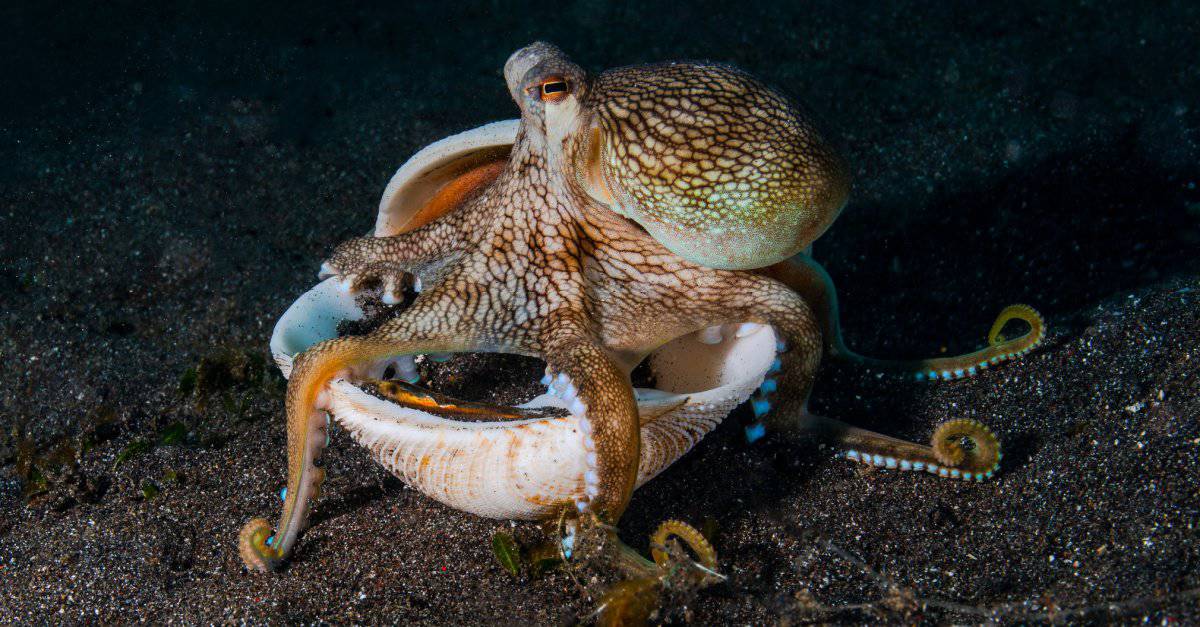
A coconut octopus taking shelter.
©DiveIvanov/Shutterstock.com
An Invertebrate That Makes Tools, Houses, and Plans
The small coconut octopus can be found in the warm, tropical waters of the Indo-Pacific Ocean, at depths up to 600 feet. It inhabits sandy or muddy flats on the continental shelf, where it hunts crabs, shellfish, shrimp, and small fish. Unfortunately, this uniform habitat lacks rocks or other features that the cephalopod could use for cover. With plenty of sharks and larger octopuses acting as predators, what’s a soft bodied creature to do?
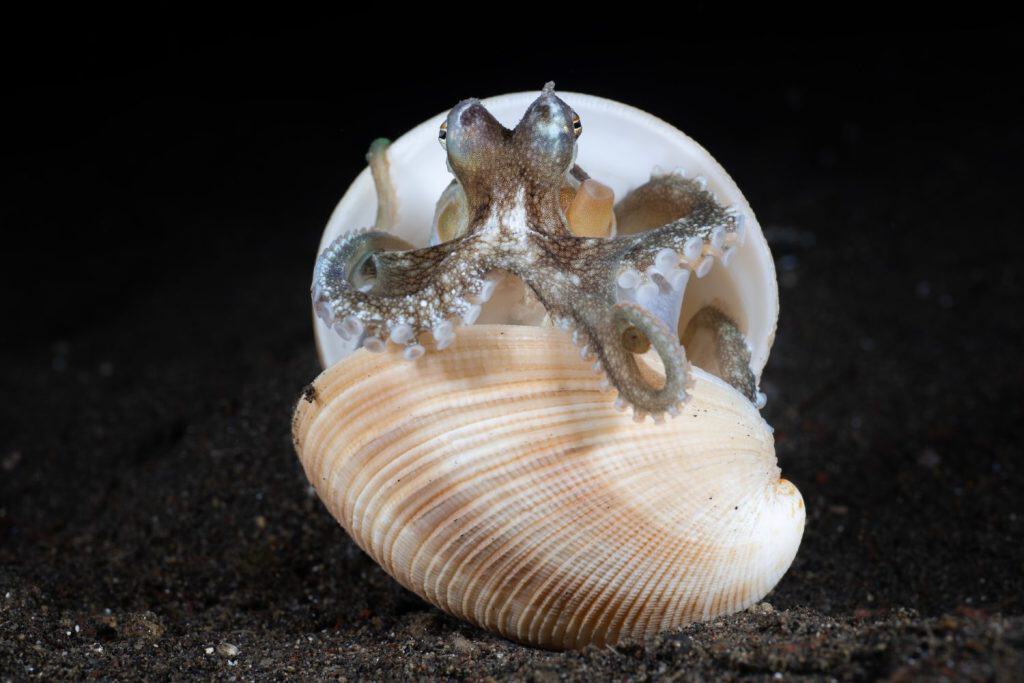
This is where the octopus’s unique intelligence comes in. Coconut octopuses have been seen sorting through coconut husks and carrying them to a preferred spot on the seafloor, where they later use them to create a spherical shield. This has been described by scientists as “true tool use.” This means that the octopus is holding and manipulating objects in its environment to change something or create something; in this case, protective armor. Because these octopuses examine and carry items for future use, this behavior demonstrates planning and a complex understanding of their habitat.
A Rare Bipedal Sea Creature
The flat expanses that coconut octopuses call home are full of danger, and one way that this species gets around while maintaining a low profile is by walking along the seafloor on two arms. While doing so, the octopus resembles a glob of algae rolling across the seafloor. The octopus also walks on two arms while carrying shells or coconut husk shields.
An Oddly Intelligent Animal
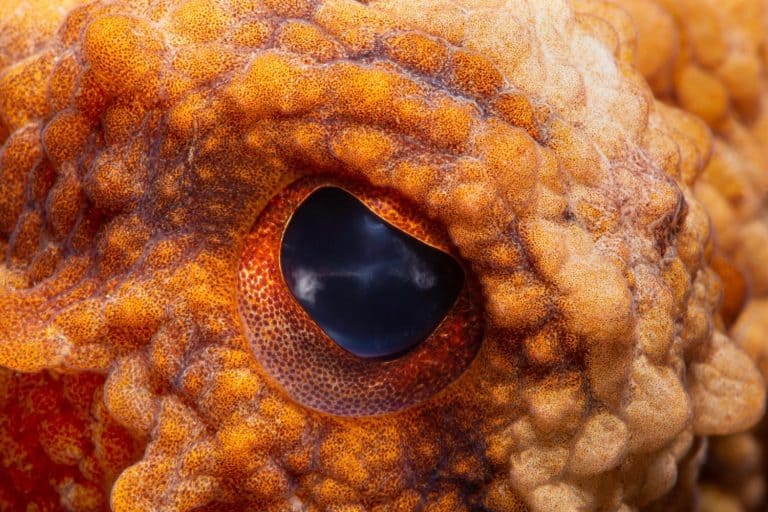
©SergeUWPhoto/Shutterstock.com
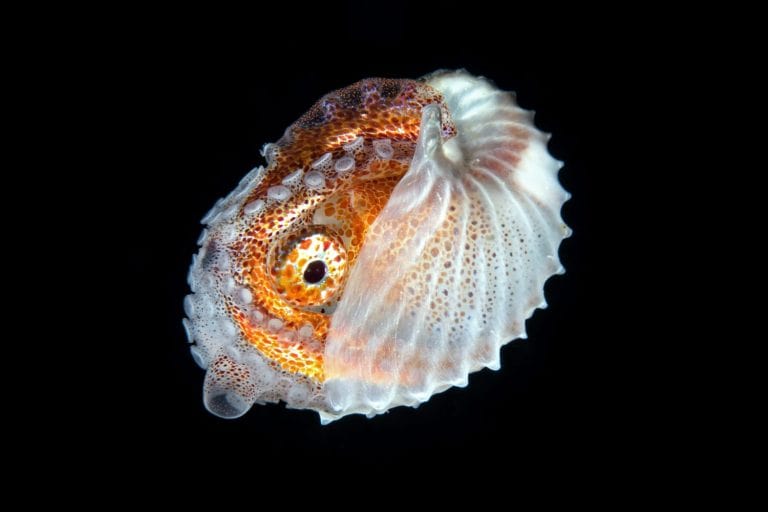
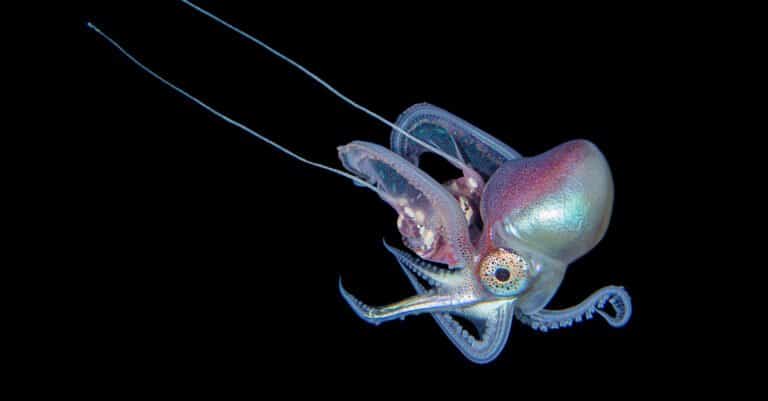
Armor building is by no means the only clever trick we’ve observed octopuses using. In captivity, they’ve been known to solve puzzles, navigate complex mazes, and escape their enclosures. They may squeeze through tiny passageways to steal fish from other enclosures before sneaking back to their own tank. The common blanket octopus (Tremoctopus violaceus) carries tentacles it has removed from Portuguese man O’ wars, which contain a potent venom to which the octopus is immune. Scientists believe these stollen tentacles may be used defensively or as a weapon, but it has yet to be observed in action.
Octopuses seem to have unique personalities. One octopus was known for squirting a jet of water at a particular researcher it didn’t seem to like. Others shot water at lights that scientists think might have been annoying them, causing power outages.
Their incredible intelligence has fascinated us, as seen in the award-winning documentary, My Octopus Teacher (2020), and the best-selling novel Remarkably Bright Creatures (2022), which was later adapted into a Netflix film. Both projects depict humans forming close relationships with these beautiful, short-lived ocean invertebrates.
What Other Invertebrates Use Tools?
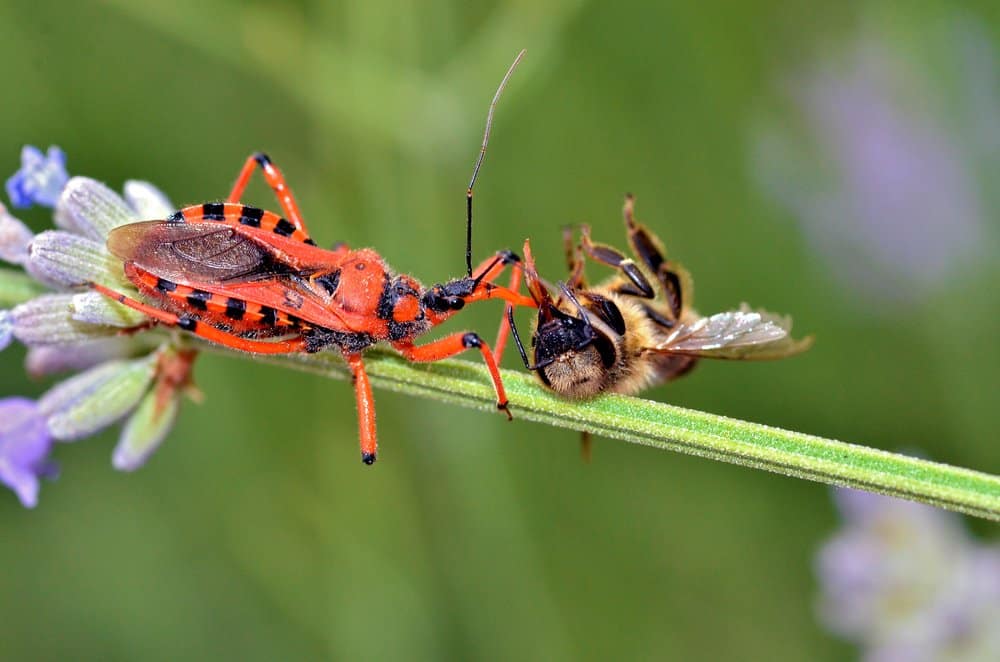
The Assassin Bug uses its long proboscis to spear its prey.
©Christian Musat/Shutterstock.com
When scientists discovered coconut octopuses using shells and coconut husks as armor, it was the first time we’d seen invertebrates using tools, but they might not be alone in this ability. There is some dispute about what counts as tool use in the scientific community, but generally speaking, for an animal to be described as using a tool it must be holding and manipulating an object for a specific purpose.
Another example of invertebrate tool use can be found among assassin bugs. Pahabengkakia piliceps is a specialist predator of stingless bees that turns the insects’ own alarm system against them. Stingless bees deposit resinous material near the entrances to their nests, which releases volatile compounds when disturbed and alerts colony members to defend the hive. P. piliceps takes up an ideal hunting position before manipulating this resin with its forelegs, increasing the release of the airborne compounds. When guard bees emerge in response to the apparent threat, the assassin bug attacks them before retreating to a nearby hideout.