
Quick Take
- Baby seahorses, called fry, can consume over 3,000 copepods daily.
- A seahorse‘s unique physiology requires near constant feeding.
- Seahorses must anchor themselves to a stationary object with their prehensile tail to feed.
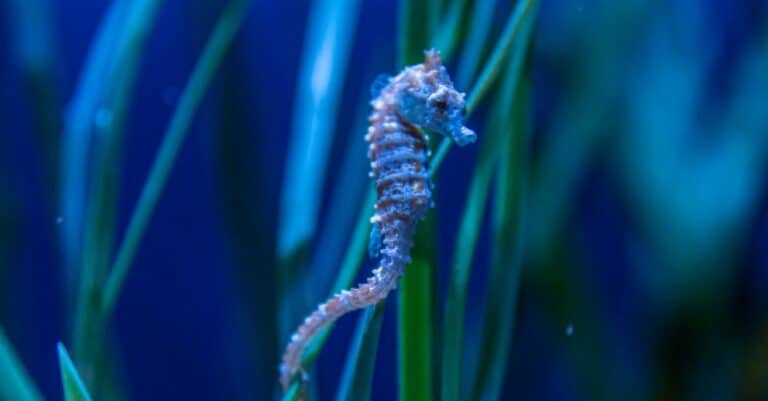
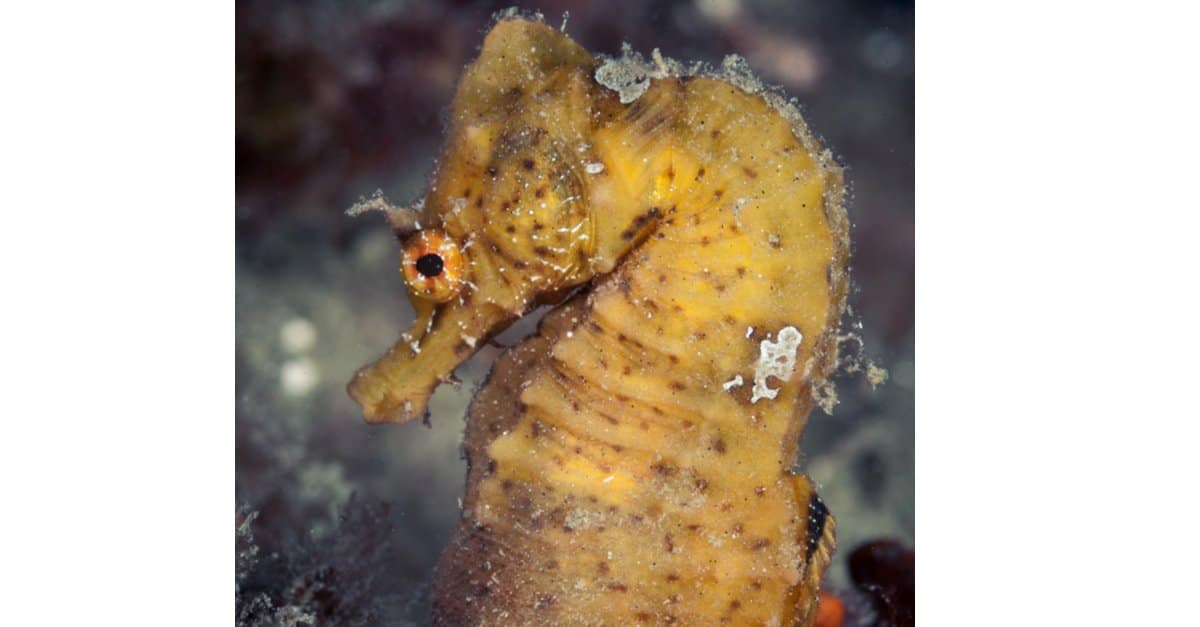
Seahorses (Hippocampus) are small marine fish with between 40 and 50 recognized species. They inhabit shallow tropical and temperate coastal waters worldwide. They use their prehensile tails to anchor to vegetation, allowing them to conserve energy and survive in fast-moving currents, as they are poor swimmers. This behavior provides stability that allows them to hunt by lying in wait for prey without being swept away. Seahorses are carnivorous ambush predators with no teeth or stomachs that must consume large quantities of food, eating often throughout the day. Continue reading to discover everything you need to know about what seahorses eat.
What Foods Do Seahorses Eat?
All seahorses are obligate carnivores. They are voracious predators that rely entirely on consuming live animal matter, specifically targeting small crustaceans like mysid shrimp, copepods, and other tiny invertebrates. Because they lack a stomach and teeth, they feed constantly, sucking up to 3,000 prey items daily.
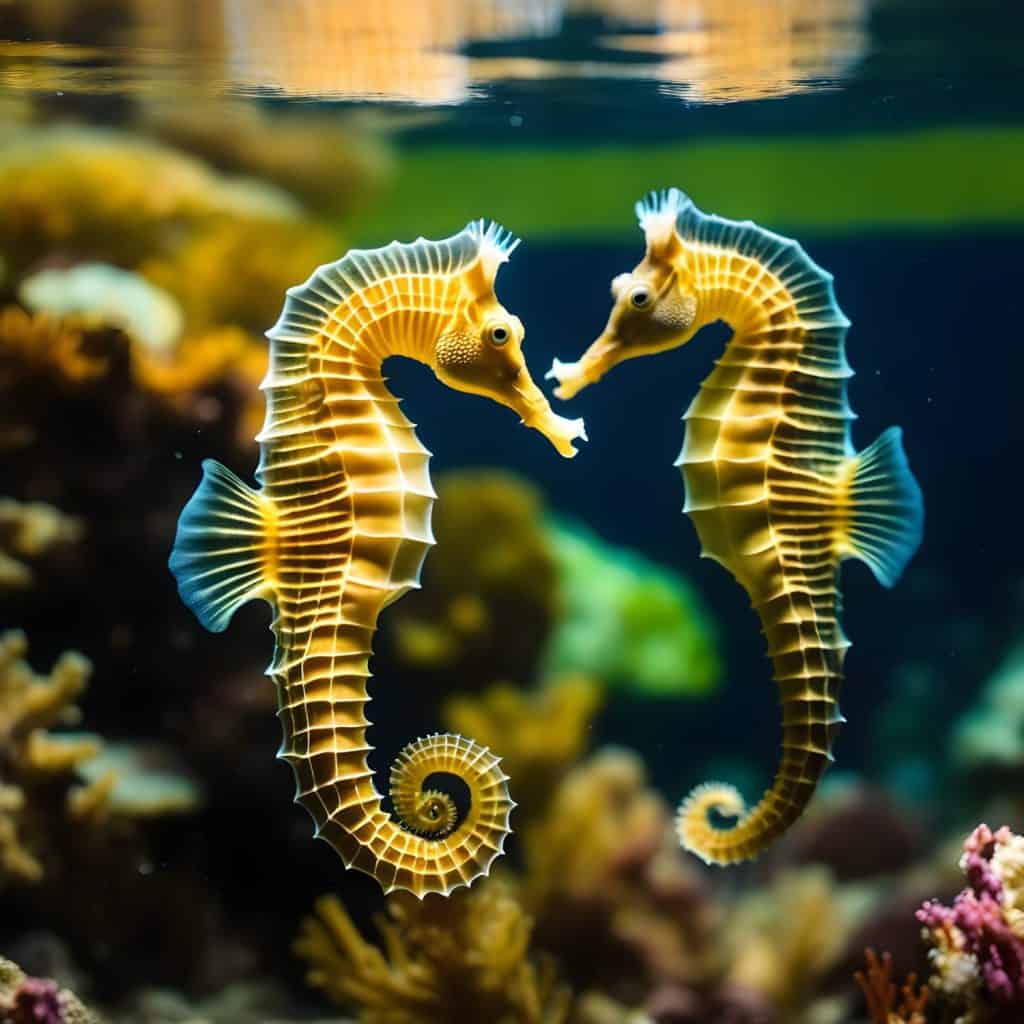
Wild adult seahorses eat almost continuously throughout the day, feeding 30 to 50 times per day.
©Cade Foster/Shutterstock.com
The foods that seahorses are most likely to consume include:
- Krill
- Sea snails
- Zooplankton
- Phytoplankton
- Algae
- Mysis shrimp
- Caridean shrimp
- Caprellidae
- Amphipods
- Copepod
- Rotifers
- Cleaner shrimp
- Daphnia
- Brine shrimp
- Ghost shrimp
- Red shrimp
- Grass shrimp
- Guppies
- Glass shrimp
The list of creatures that seahorses eat makes it clear that they demonstrate a preference for crustaceans, especially shrimp. It is important to keep in mind that seahorses are very small fish, and the creatures they eat are even smaller. The brine shrimp and sea snails consumed by the seahorse are less than half an inch in length, and their larvae are even smaller.
How Much Do Seahorses Eat?
Seahorses exhibit a wide size range, from tiny pygmy species to larger species that are over one foot long. Their lengths range from just 0.5 inches for the smallest pygmy seahorse, Satomi’s pygmy seahorse (Hippocampus satomiae), up to 14 inches for the largest species, Big-belly seahorse (Hippocampus abdominalis).
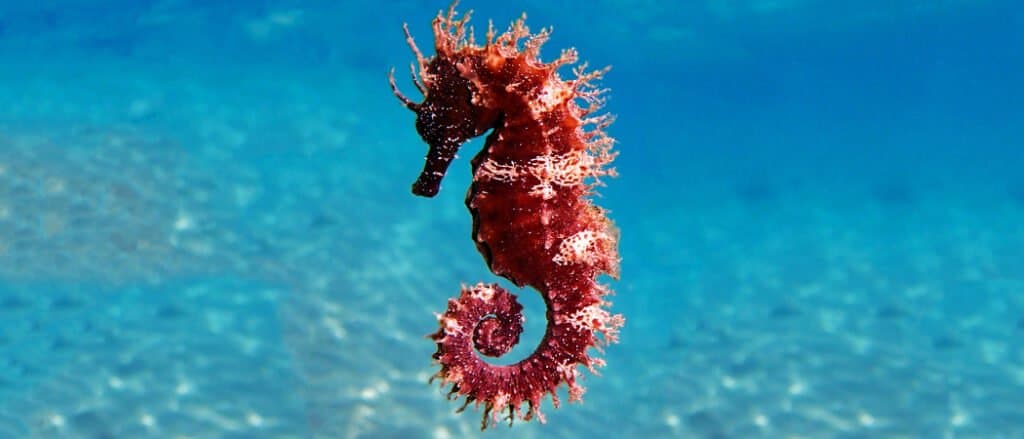
Seahorses are among the slowest fish in the ocean.
©Vojce/Shutterstock.com
Seahorse feeding requirements vary based on species, size, age, activity level, and metabolism. Because seahorses lack a true stomach, have a rapid digestive tract that only partially absorbs nutrients, and have high metabolic rates, they require frequent feedings rather than a single large meal.
How Do Seahorses Hunt Food?
Seahorses have an amazing sense of sight that they use to track the small crustaceans that fulfill their dietary needs. They can track small crustaceans and utilize rapid suction feeding to inhale the prey via a tubular snout.
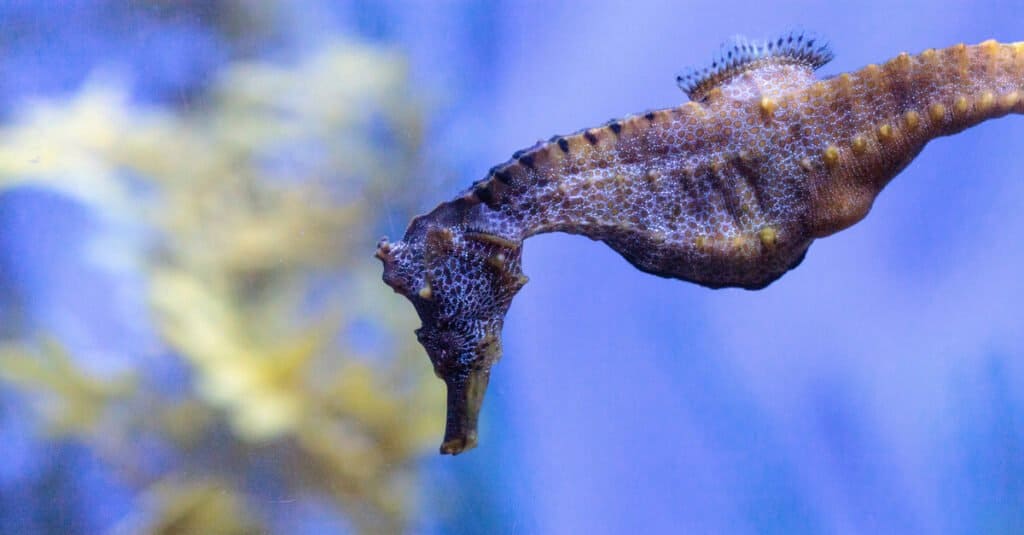
Seahorses use their great sight to identify prey and then suck them up with their snout.
©SunflowerMomma/Shutterstock.com
Seahorses use their prehensile tails to grip onto a stable anchor point, such as coral or vegetation, which also provides camouflage. Once anchored, they wait for food to float by before ambushing it and eating it.
The shape of a sehorse’s head is highly specialized for hydrodynamic stealth, allowing it to approach prey without creating significant water disturbance or detection. The seahorse is not an incredibly cunning predator, but they are very effective, eating several dozen small shrimp each day.
What Do Baby Seahorses Eat?
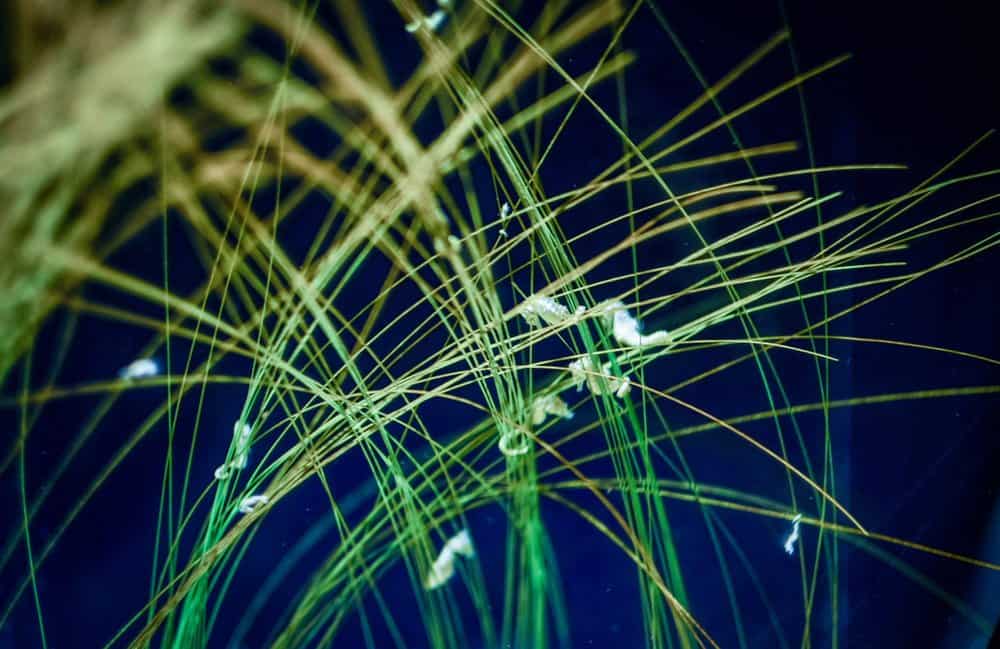
Baby seahorses eat small crustaceans like brine shrimp and copepods.
©Nicole Griffin Ward/Shutterstock.com
Baby seahorses, called fry, eat brine shrimp, rotifers, and other exceptionally small crustaceans. The moment fry are ejected from the male’s brood pouch, they are fully formed, miniature versions of adults. They do not require any parental care and are immediately independent, capable of swimming, feeding, and finding shelter on their own.
A baby seahorse can consume up to 3,000 small copepods during a 10 to 12-hour period.
Seahorses will consume their prey whole, even as babies. They have no teeth, so they just suck the creature in through their snout and swallow.
What Predators Eat Seahorses?
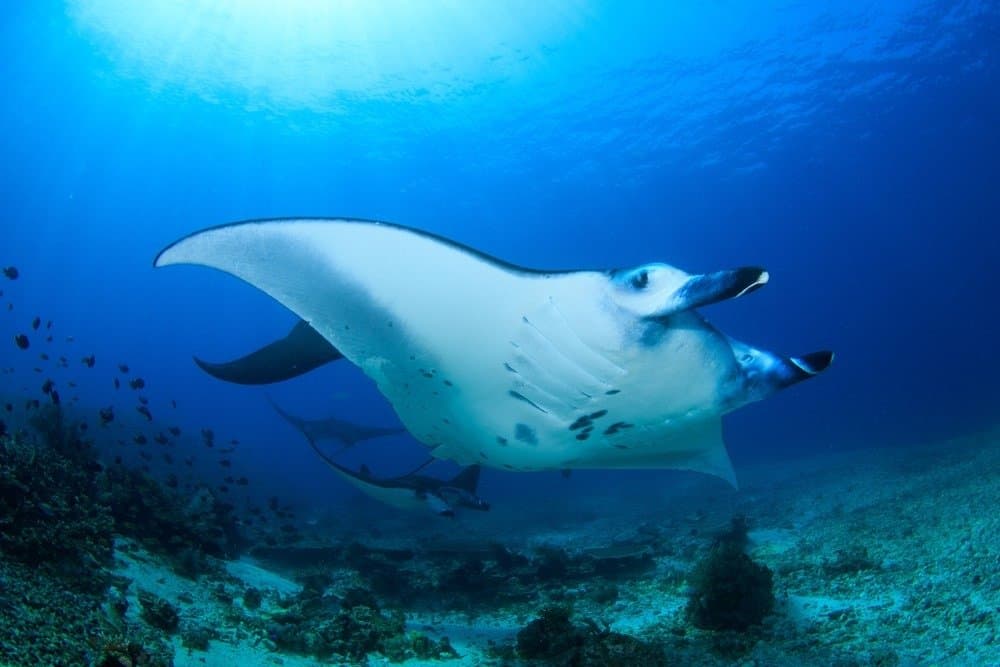
Manta rays can make quick work of a seahorse.
©SergeUWPhoto/Shutterstock.com
Seahorses have many factors working against them in the ocean. They are among the slowest fish in the ocean, they have no defensive measures against actual predators, and if they get caught outside of cover, they are easy to pick off.
One thing they have working for them is their ability to camouflage themselves. They can use their shape, size, and color to blend into the background and keep themselves safe from any predators, especially those that rely upon their sight to hunt.
Nevertheless, seahorses are an easy meal for predators, even ones that are not that ambitious. As such, it’s common for seahorses to fall victim to a wide variety of creatures, including:
- Crabs
- Bluefin tuna
- Sharks
- Rays
- Tigerfish
- Penguins
- Various carnivorous fish
- Humans
All these creatures are better adapted for attacking than seahorses are for defending themselves. The vast majority of seahorses that are killed are juveniles.
Although humans do not often kill and eat seahorses, they are considered a delicacy in some parts of the world. They are also harvested for medicinal uses. Currently, human activities such as overfishing, habitat destruction, and use in traditional medicine are among the greatest threats to seahorse populations