
Hamsters are known as adorable little pets with cheeky faces and acrobatic habits that make us laugh. So, the idea that they could do something as unpleasant as eat their own young is horrifying. Here, we take a close look at this startling behavior in hamsters and examine how and why it happens.
Normal Reproduction in Hamsters
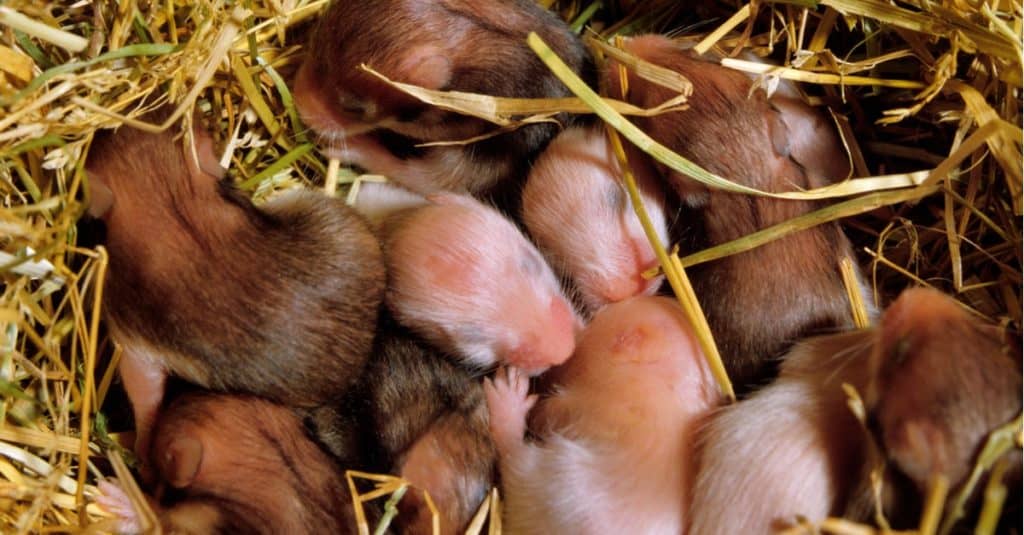
Most hamster reproduction is successful.
©slowmotiongli/Shutterstock.com
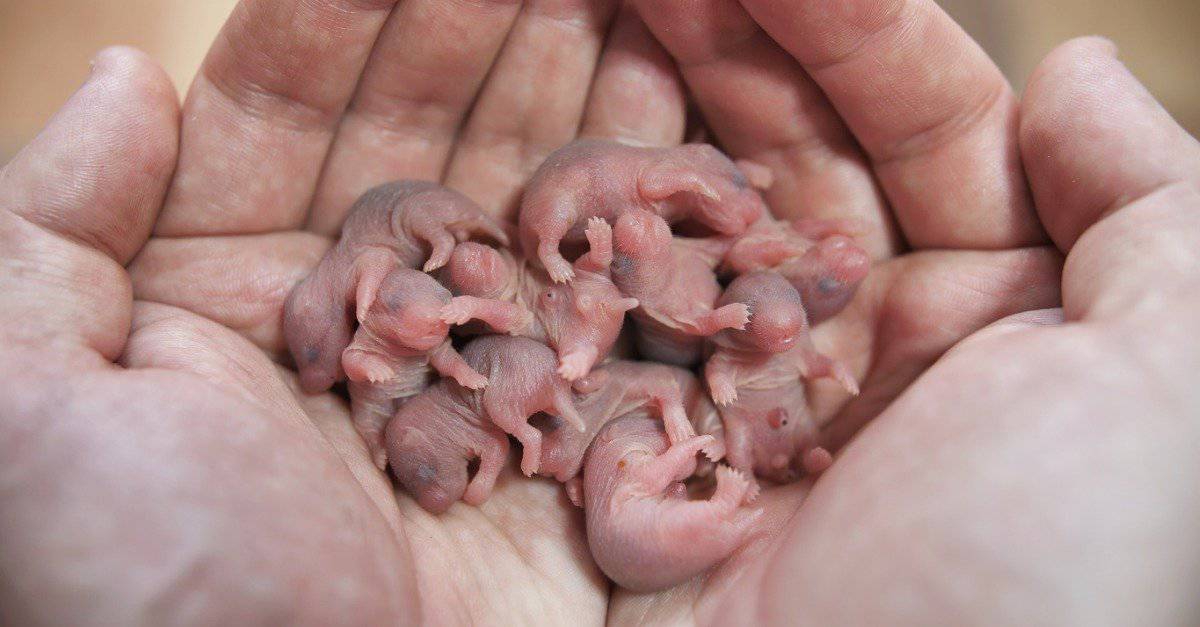
Female hamsters prepare a nest from soft material for the arrival of their young. Their pregnancy lasts for around three weeks, and up to 20 (normally six to eight) offspring can be born in a litter. Hamster pups are hairless, and their eyes and ears are closed. The babies are very dependent on their mother and feed on her milk.
Provided the mother is well fed and is left undisturbed with her pups, she usually cares for them very well. However, sometimes something can go wrong. When these mother hamsters are pets, you may notice that one or more babies go missing. This may be because one of the babies has died. It is normal for a mother to consume a dead pup to keep the nest clean. However, mother hamsters have also been known to consume their live babies in a form of cannibalism.
Reasons Why Hamster Cannibalism Occurs
This is a sign that something is very wrong, and it is rarely seen in the wild. Here are a few potential reasons why it may occur:
Stress
The process of getting pregnant, giving birth, nursing, and caring for the young pups places a lot of stress on the female hamster. If it becomes too much for her, she may eat her young. Young females having their first litter are more likely to become stressed, as a lack of maternal experience can be a factor. A small size is another risk factor.
Fear
In addition to the normal physiological stress of pregnancy and rearing pups, fear can make females more likely to eat their young. Loud noises and constant disturbances can be triggers. Hamsters living in overcrowded conditions are more likely to kill their own babies.
Scent
Hamsters have an excellent sense of smell and are very sensitive to changes of scent in their cage and in their offspring. If there is a strange scent on the babies, for example, because you have touched them, she may perceive them as intruders and kill them.
Poor Nutrition
Scientists found that wild European hamsters raised in laboratories and fed on a diet rich in corn showed some odd behaviors, which included eating their babies. The hamsters developed symptoms similar to pellagra, a condition caused by a shortage of niacin (vitamin B3). Once their diets were supplemented with niacin, the behavior stopped.
Reducing Litter Size
If the mother hamster feels that she cannot look after the entire litter, she may eat some of the babies, though the exact number consumed varies. This cannibalism increases the chances of survival for the surviving babies—a brutal but not uncommon calculation.