
There are sharks in Puget Sound, but there has never been a shark attack in the peaceful waters of the Salish Sea. There have only been two recorded nonfatal shark attacks in Washington State waters, and both occurred in Gray’s Harbor. This is no surprise. Despite sharks’ reputation for being bloodthirsty, they are not aggressive and only attack humans if provoked. So, while sharks can be quite large, they aren’t menacing. Continue reading to learn about the biggest sharks in Washington State.
10. Spiny Dogfish
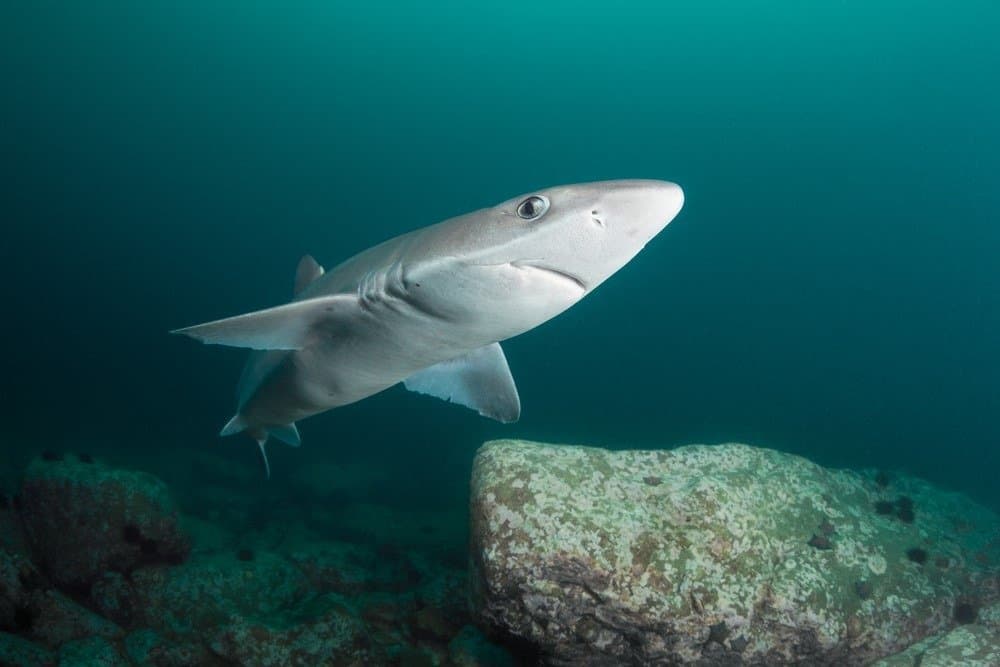
Spiny dogfish live in shallow coastal waters in many parts of the world.
©Boris Pamikov/Shutterstock.com
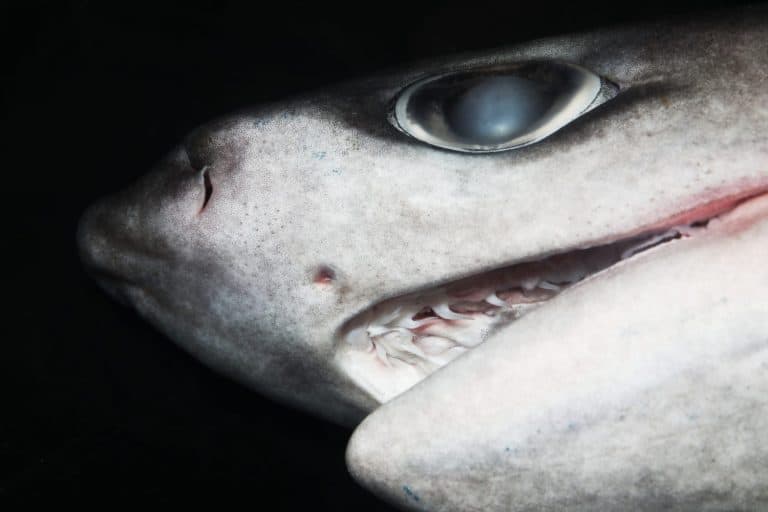
The spiny dogfish (Squalus acanthias) might not be the biggest shark in Washington State, but they are no small fry. These sharks grow up to five feet long and weigh up to 10 pounds, though larger specimens have been recorded. Spiny dogfish have light gray, slender bodies. Spiny dogfish are believed to live 70 years or more. As deep-water sharks, they are found between 150 to 500 feet below sea level. Spiny dogfish are Endangered in the Northeast Atlantic and classified as Vulnerable globally
9. Pacific Angel Shark
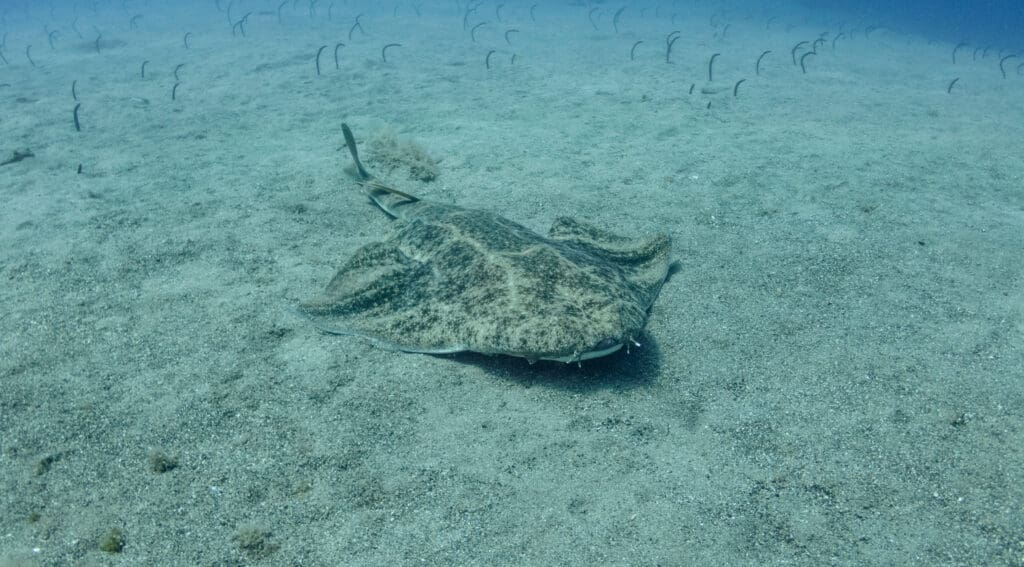
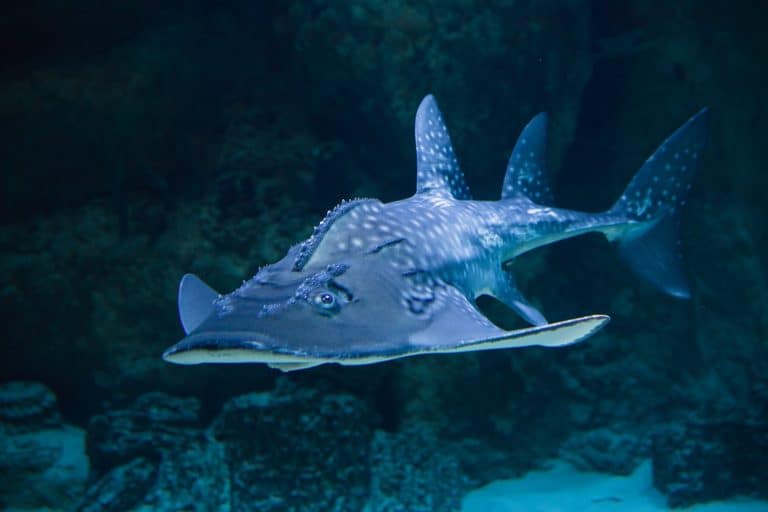
Despite its scientific name, the Pacific angel shark inhabits the western coasts of most of North and South America.
©LuisMiguelEstevez/Shutterstock.com
Pacific angel sharks (Squatina californica) weigh up to 60 pounds and can be up to seven feet long. They do not resemble typical sharks. Pacific angel sharks look more like stingrays. They have flattened, sand-colored bodies, wide heads, and large pectoral fins with long, thin tails. They are listed as Near Threatened by the IUCN and spend most of their time on the seafloor waiting for prey.
8. Broadnose Sevengill Shark
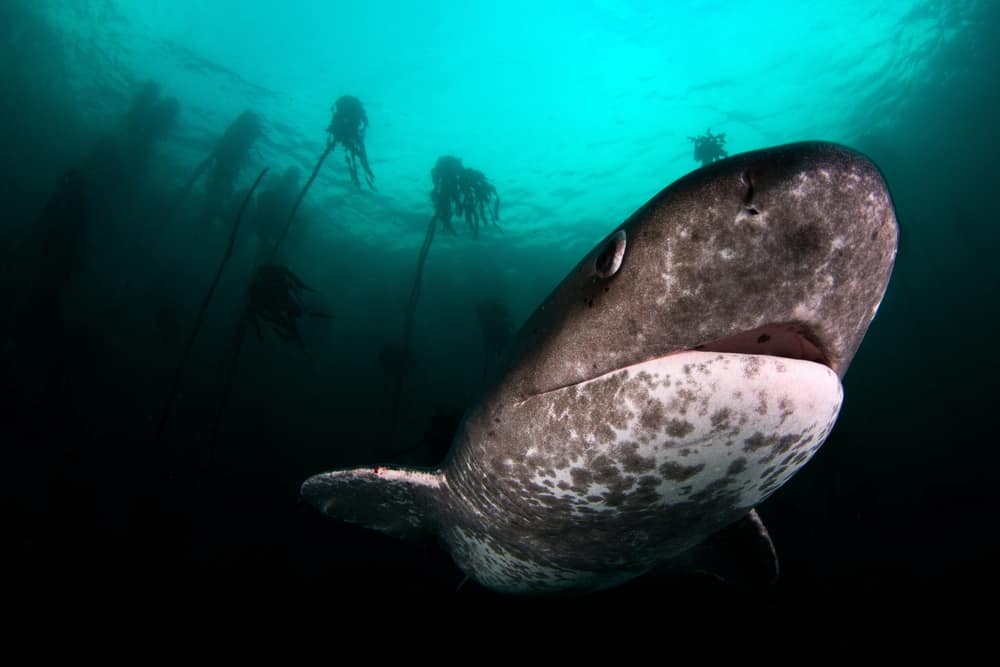
The broadnose sevengill shark gets its name from its seven pairs of gills.
©Tomas Kotouc/Shutterstock.com
Most sharks have five gills on either side of their head; the sevengill shark (Notorynchus cepedianus) has seven. As some of the biggest sharks in Washington State, these sharks grow up to 10 feet long and weigh 400 pounds. They are not found in Puget Sound, but they are occasionally caught by fishermen off the coast of Washington State in deep ocean waters. Sevengill sharks eat other sharks, fish, porpoises, dolphins, seals, and carrion. They travel to Willapa Bay and Grays Harbor on the Washington coast to have their pups.
7. Salmon Shark
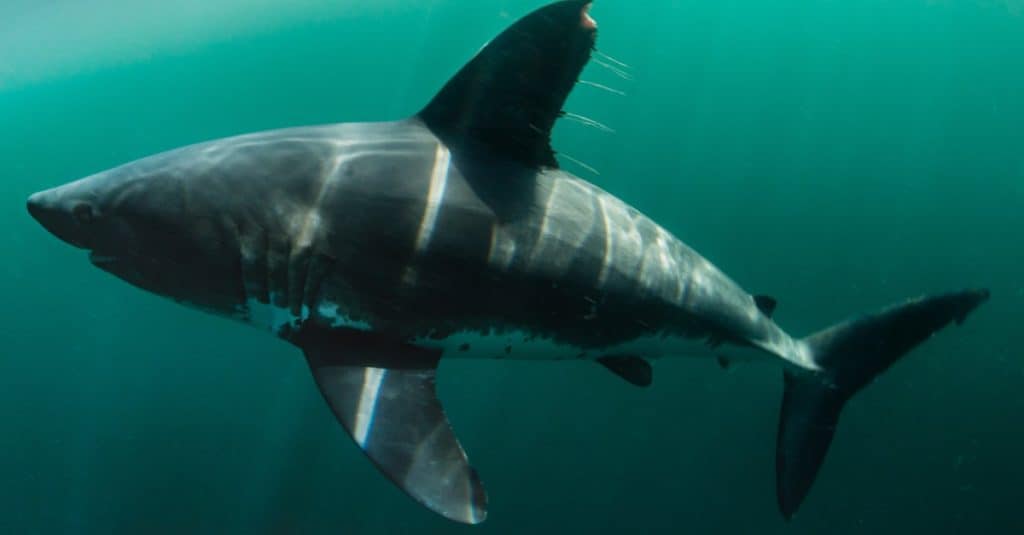
The salmon shark is occasionally seen by fishermen off Washington’s west coast.
©Warren Metcalf/Shutterstock.com
Salmon sharks (Lamna ditropis) are some of the biggest sharks in Washington State, and are often mistaken for Great Whites, as both are mackerel sharks. However, salmon sharks only grow to a maximum length of ten feet, and a weight of 210 pounds. Salmon sharks also do not attack people. They eat salmon, spiny dogfish, squid, and any other fish they come across. Salmon sharks live in the coastal waters of Washington State, not Puget Sound.
6. Blue Shark
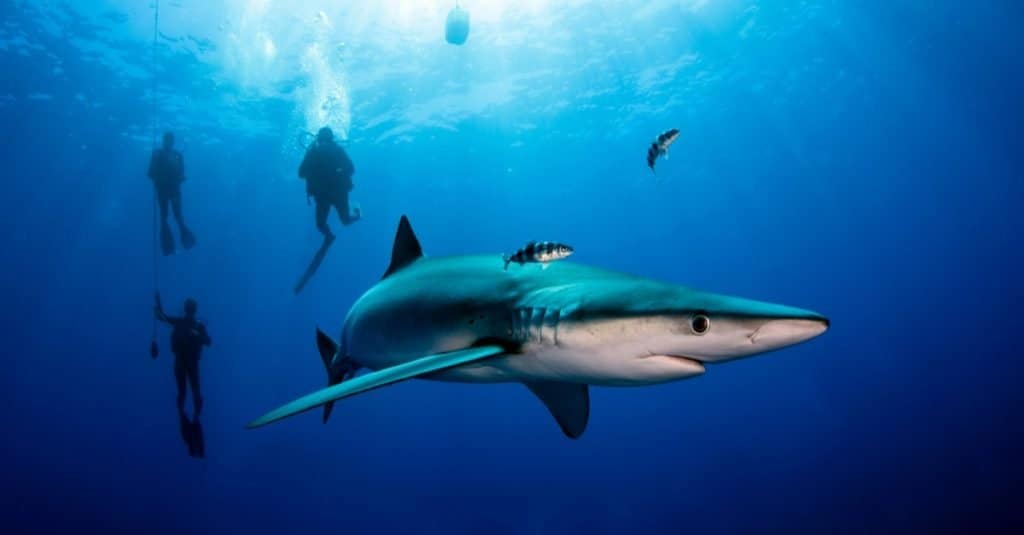
The blue shark lives off the coast of western Washington State in open ocean waters.
©Vladislav Klimin/Shutterstock.com
Blue sharks (Prionace glauca) grow up to 13 feet long and weigh up to 250 pounds. Blue sharks have long, slender bodies, making them fast swimmers. They are found in the oceanic waters off the coast of Washington State and are seldom seen in Puget Sound. Blue sharks eat squid, fish, crab, shrimp, and octopus. They are almost entirely nocturnal. Female blue sharks can bear up to 135 pups at a time.
5. Pacific Sleeper Shark
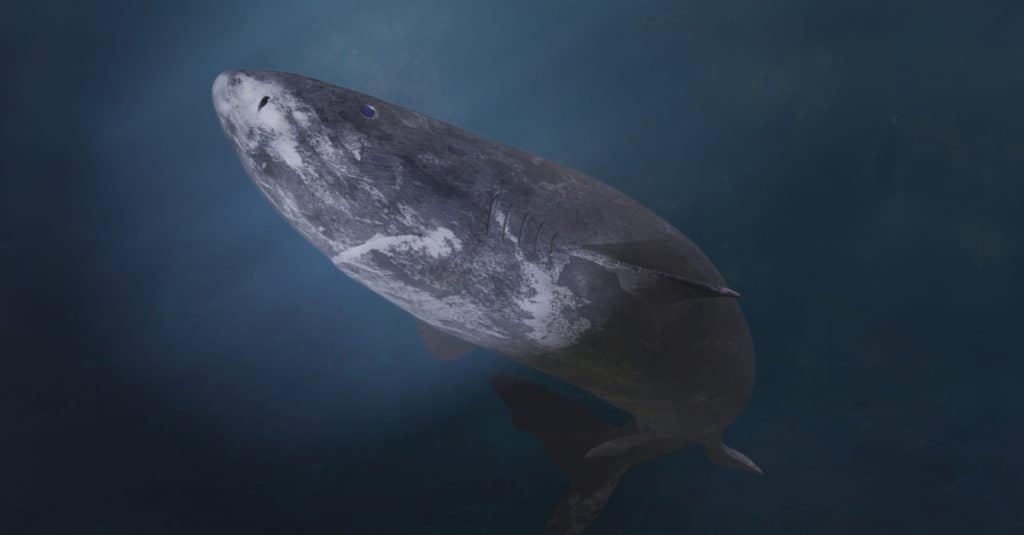
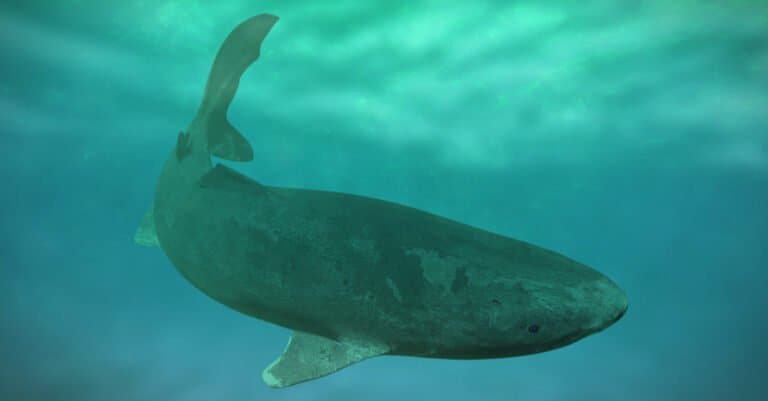
The Pacific sleeper shark lives deep below the ocean’s surface and is rarely seen by humans.
©iStock.com/dottedhippo
Puget Sound is home to one of the biggest sharks in Washington State: the Pacific sleeper shark (Somniosus pacificus). These sharks grow up to 14 feet long and weigh between 700 and 2,000 pounds. Pacific sleeper sharks eat fish, shrimp, crab, squid, salmon, and occasionally porpoises or sea lions. They live both in Puget Sound and off the coast of Washington State and are often preyed upon by orcas (Orcinus orca).
4. Great White
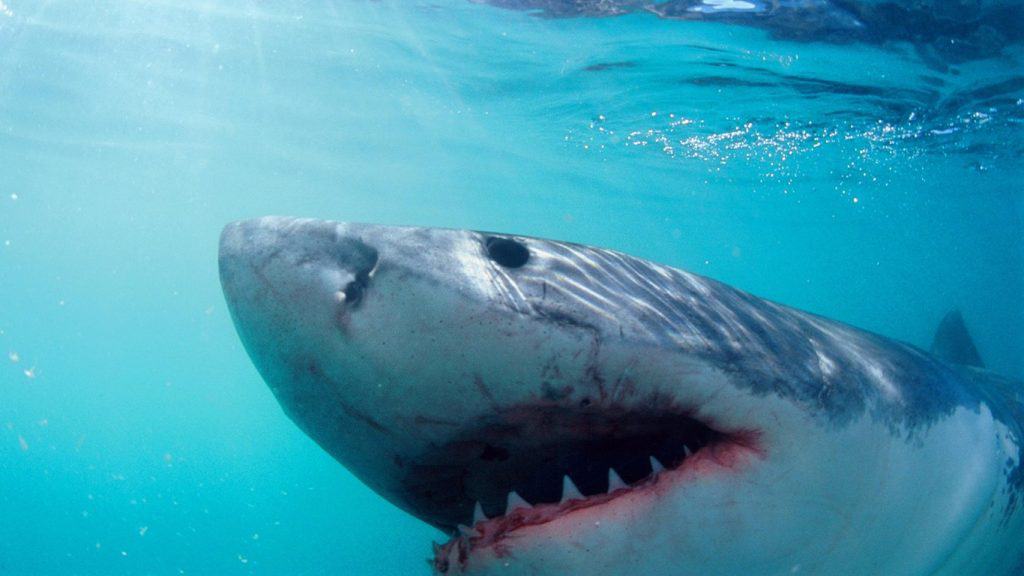
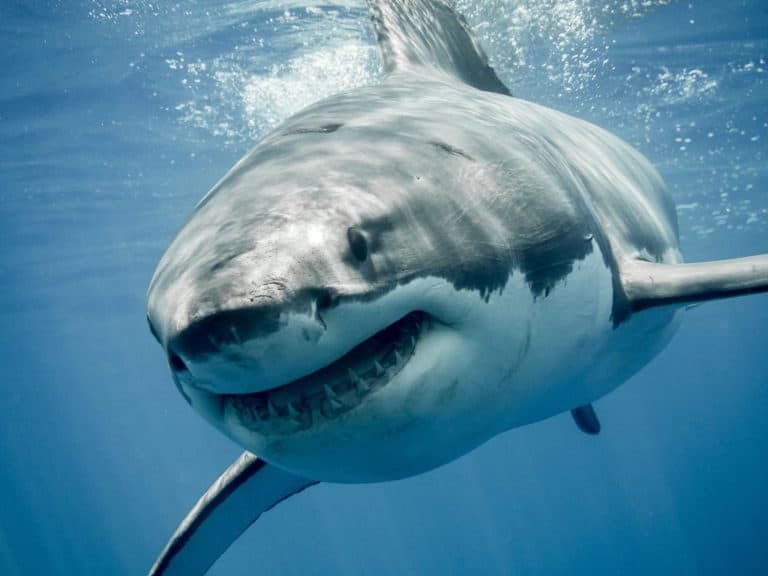
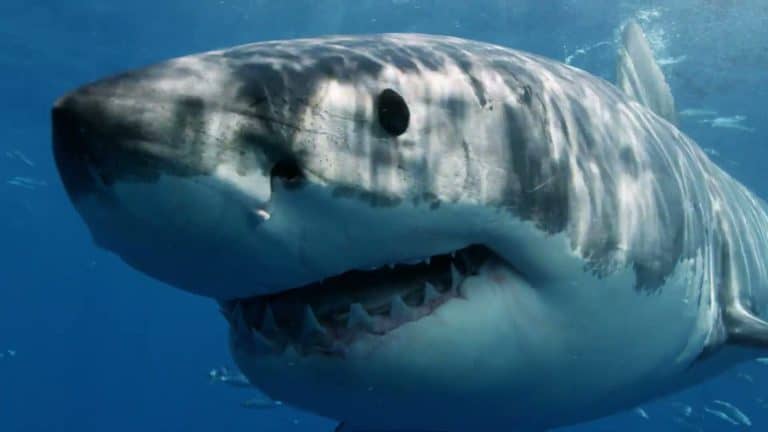
The only shark attacks in Washington State were perpetrated by great white sharks.
©Global_Pics / Getty Images
Great white sharks (Carcharodon carcharias) are among the most impressive apex predators. These behemoths can grow up to 16 feet long, though some can reach lengths of up to 20 feet. Great whites weigh between 1,500 and 4,000 pounds. They eat seals, dolphins, bony fish, and porpoises. Great white sharks occasionally approach the coastal waters of Washington. The only two recorded shark attacks in Washington State are attributed to great white sharks.
3. Common Thresher
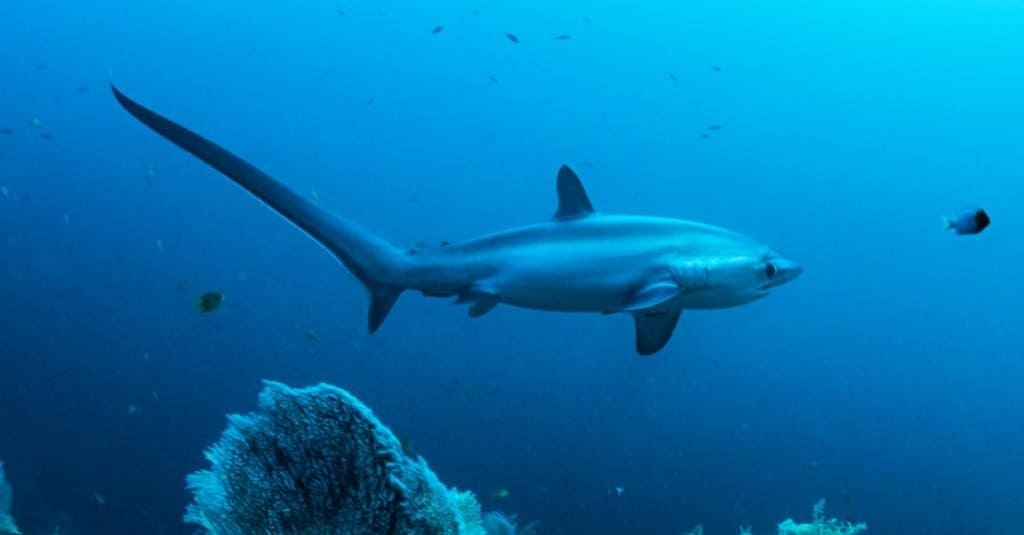
The common thresher inhabits the coastal waters of western Washington State.
©Shane Gross/Shutterstock.com
Common thresher sharks (Alopias vulpinus) grow up to 20 feet long, with slender bodies that can weigh up to 1,000 pounds. They have extremely long tails that can make up almost half their overall length. These sharks are not found in Puget Sound, but they are occasionally encountered by fishermen off the west coast. Like many sharks, common threshers are currently listed as Vulnerable by the IUCN. They are aggressive hunters that eat fish.
2. Bluntnose Sixgill Shark
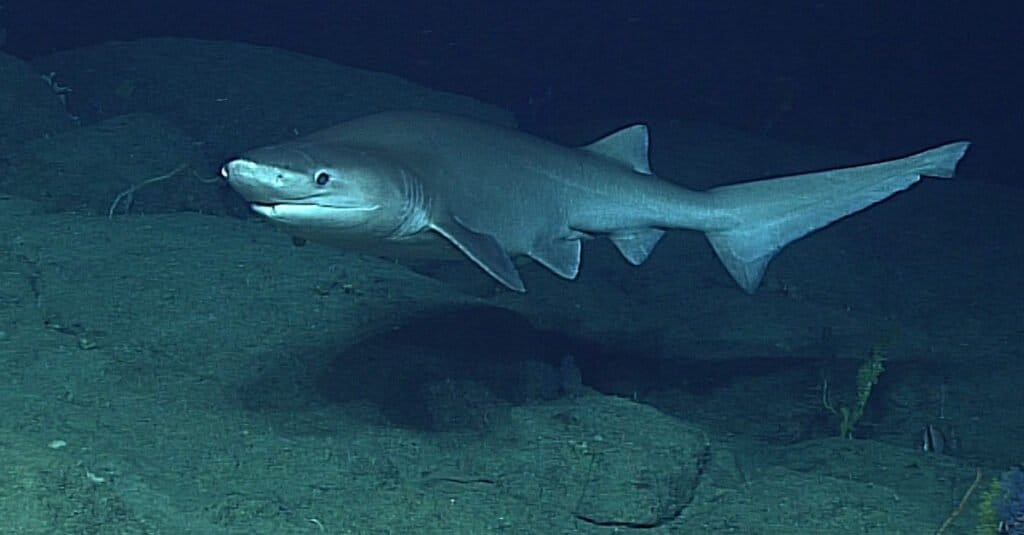
The bluntnose sixgill shark is also known as a cow shark.
©NOAA Ocean Explorer from USA / CC BY-SA 2.0, via Wikimedia Commons – Original / License
Bluntnose sixgill sharks (Hexanchus griseus) are some of the biggest sharks in Washington State. They can reach 20 feet long and weigh over 1,000 pounds. They usually live between 300 and 6,000 feet below the sea. Juveniles are a common sight in Puget Sound. Adults longer than ten feet live off the coast of Washington State. They eat fish, crab, shrimp, seals, and other sharks. Adult bluntnose sixgill sharks are seldom seen by humans.
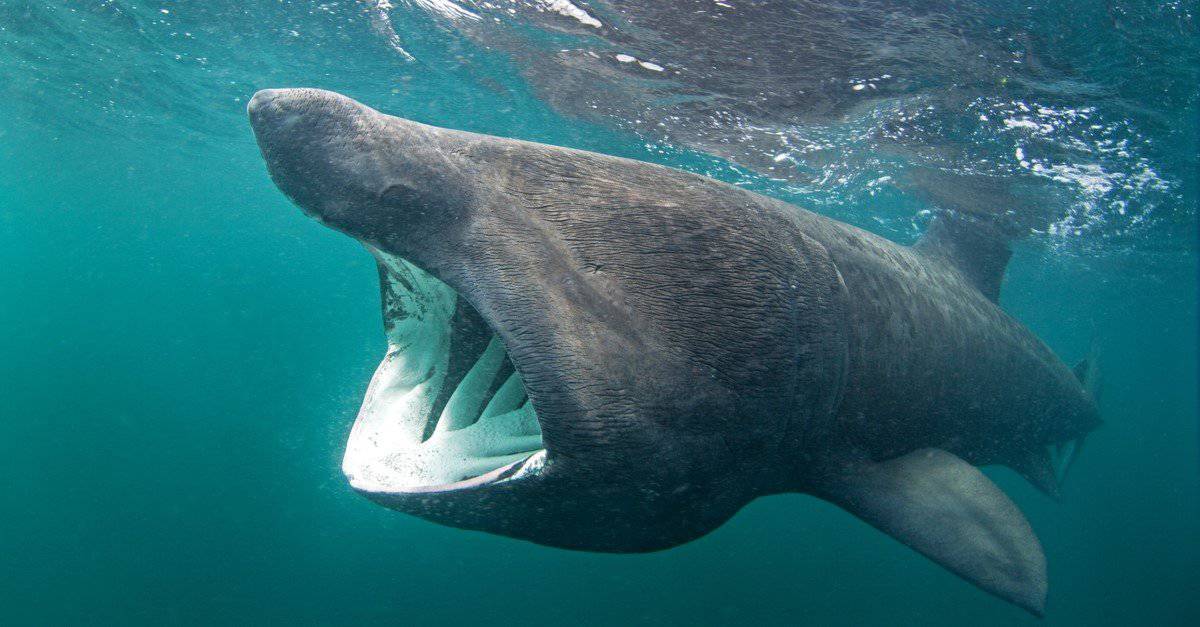
1. Basking Shark
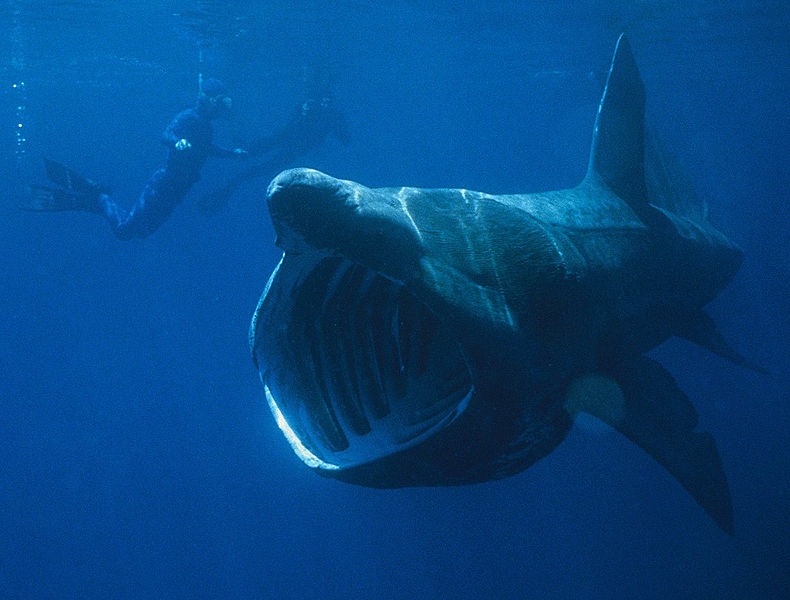
The basking shark is the second-largest extant shark. Only the whale shark (Rhincodon typus) tops it in size.
©Chris Gotschalk / Public Domain, from Wikimedia Commons, the free media repository – Original / License
Basking sharks (Cetorhinus maximus) are the biggest sharks in Washington State. They are not found in Puget Sound, but they do visit the waters of coastal Washington. These sharks grow up to 45 feet long and weigh between 800 and 35,000 pounds, with an average weight of around 10,000 pounds. Despite their huge size, basking sharks are filter feeders that eat zooplankton and tiny fish. Basking sharks are currently listed as Endangered by the IUCN primarily due to overfishing and bycatch, with additional threats from habitat degradation and historical targeted fisheries.