
Quick Take
- Every shark in the Squaliformes order shares a single defining trait. Interestingly, it is not something they have but something they are missing. Discover their missing feature →
- One species here can outlive entire human dynasties, and scientists have the evidence to prove it. Explore the lifespan evidence →
- The smallest shark on this list barely exceeds 10 inches, yet it pulls off a daily physical feat most deep-sea creatures never attempt. Meet the migrating pygmy shark →
Sharks are incredible creatures that often get a bad rep for being aggressive. However, these fish are not inherently violent or dangerous. In fact, there are countless shark species that we aren’t even aware of, falling under various orders. Each order has its own unique qualities, behaviors, and traits.
In this article, I’ll be covering the Squaliformes order of sharks, a particularly diverse order. Here’s what you should know about Squaliformes.
What Is the Squaliformes Order of Sharks?
The Squaliformes order includes a variety of dogfish, sleeper, and lantern sharks. These species live in oceans worldwide.
“Order Squaliformes is a very mixed group of sharks, whose only unifying feature across every species is their lack of an anal fin compared to other shark orders,” says Maggie Winchester-Weiler, shark biologist and senior manager of Ocean Conservancy’s Florida conservation program. “For the most part, they are small- to -medium-sized; have long, slender bodies; and can be found all around the world.”
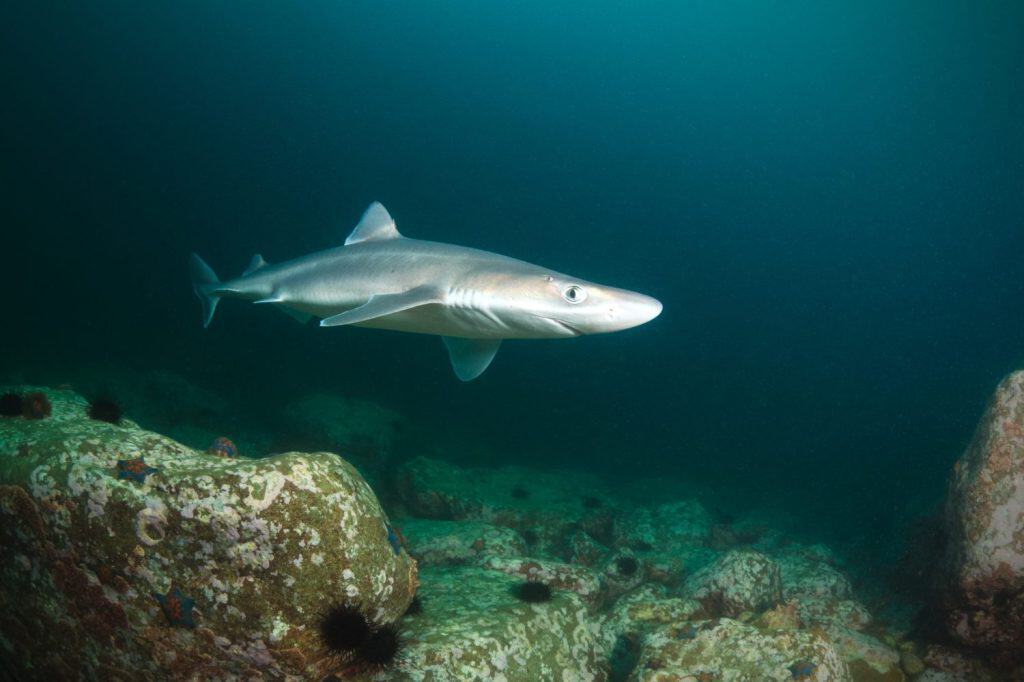
The spiny dogfish is one of the species under the order Squaliformes.
©Boris Pamikov/Shutterstock.com
According to Winchester-Weiler, this shark order is one of the most unique, as the sharks have intriguing qualities that set them apart from others.
“They include many deep-sea species with extraordinary features that reflect adaptations to their cold, dark environments,” she says.
Types of Squaliformes Sharks
There are various species of Squaliformes sharks. Here are nine shark species that belong to this order.
Bramble Shark
It’s relatively easy to spot bramble sharks, as they have thorns all along their bodies. They are typically gray, brown, or black, with some individuals displaying red or black markings.
These large sharks mostly reside in deep waters or continental and island shelves throughout the East Atlantic Ocean, Mediterranean Sea, and Indo-West Pacific Ocean. As a result, humans rarely encounter this species.
When it comes to diet, bramble sharks feed on bony fish, small sharks, and crustaceans.
Cookiecutter Shark
Cookiecutter sharks have a cigar-shaped body, thanks to their short snouts and dorsal fins set far back on their bodies. The species is gray or brown in color with bright green eyes.
According to Winchester-Weiler, “The cookie cutter shark is a small squaliform shark that uses bioluminescence to mimic small fish in dark waters, which lures in larger prey, before using specialized teeth to cut perfectly circular holes into their prey, earning their name of ‘cookie cutter.’”
In other words, this unique ability helps them prey on larger sharks and marine mammals. Cookiecutter sharks are notorious for being poor swimmers and are mainly found in the Atlantic, southern Indian, and Pacific Oceans.
Great Lanternshark
Living up to its name, the great lanternshark is a large shark with a long tail and black body. They tend to occupy the deep waters of the North and Eastern Central Atlantic. Their prey includes crustaceans, small bony fish, and squid.
The Greenland shark, which can grow over six meters (19 feet) in length, is famously known for its extraordinary lifespan, with many individuals growing beyond 300 years of age!
Maggie Winchester-Weiler, shark biologist and senior manager of Ocean Conservancy’s Florida conservation program
Greenland Shark
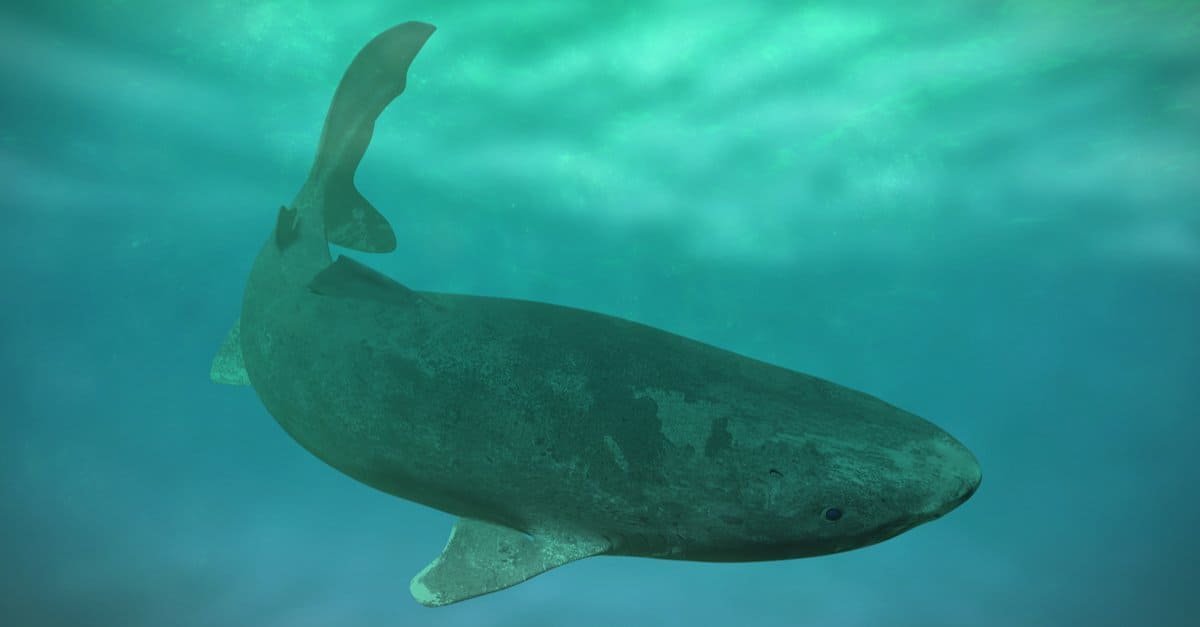
The Greenland shark is a massive species in the order Squaliformes, located in the deep waters of the Arctic Ocean and the North Atlantic.
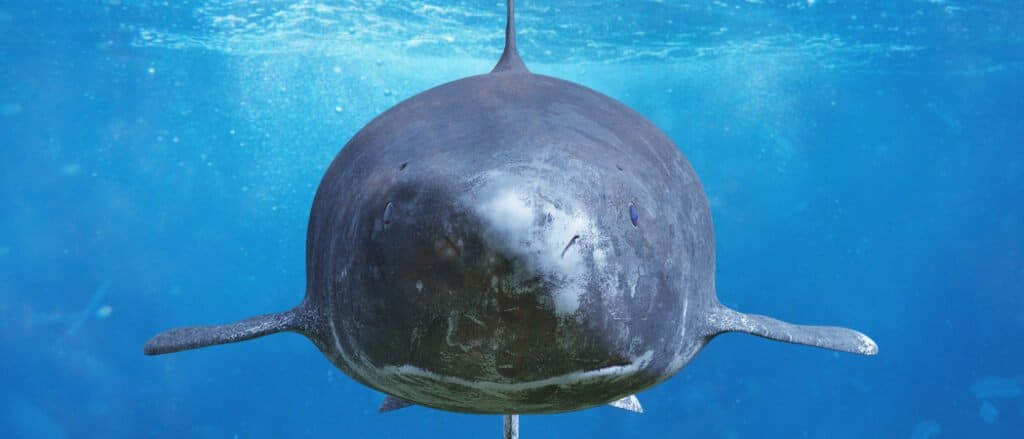
The oldest Greenland shark was estimated to be 392 years old.
©Dotted Yeti/Shutterstock.com
“The Greenland shark, which can grow over six meters (19 feet) in length, is famously known for its extraordinary lifespan, with many individuals growing beyond 300 years of age!” says Winchester-Weiler.
This species preys on fish, marine mammals, and carrion. Despite their size, they’re quite lazy and easy to catch.
Gulper Shark
Gulper sharks, found mostly in the Atlantic and West Indian Oceans, are deep-sea ambush predators. They feed on bony fish, squid, and crustaceans, using their large mouths and green eyes to hunt. This smooth, dark gray or brown dogfish shark has a short, thick snout and a long, slender body.
Kitefin Shark
Kitefin sharks are medium-sized, brown or black sharks that live in the deep waters of the Atlantic, Indian, and Pacific Oceans. Due to their deep-sea habitat, they are not typically dangerous to humans. These solitary hunters feed mostly on deepwater fish, smaller sharks, rays, and squids.
Pygmy Shark
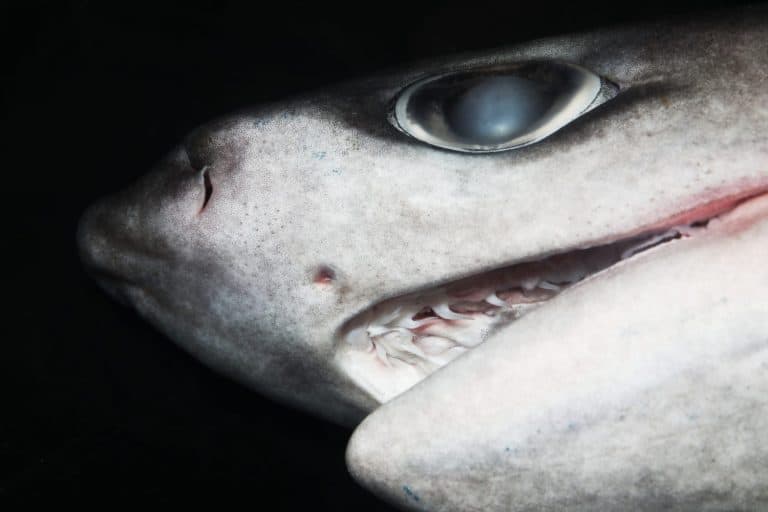
The pygmy shark is one of the smallest shark species, reaching a max length of around 10 inches. They are also cigar-shaped, with dark bodies, large eyes, and luminous organs. They live in the Atlantic Ocean, Indian Ocean, and Pacific Ocean.
When it comes to prey, the pygmy shark mainly eats bony fish, deepwater squid, and small crustaceans. They typically perform diel vertical migrations, which involve swimming up and down from the surface to the ocean floor throughout the day.
Spiny Dogfish
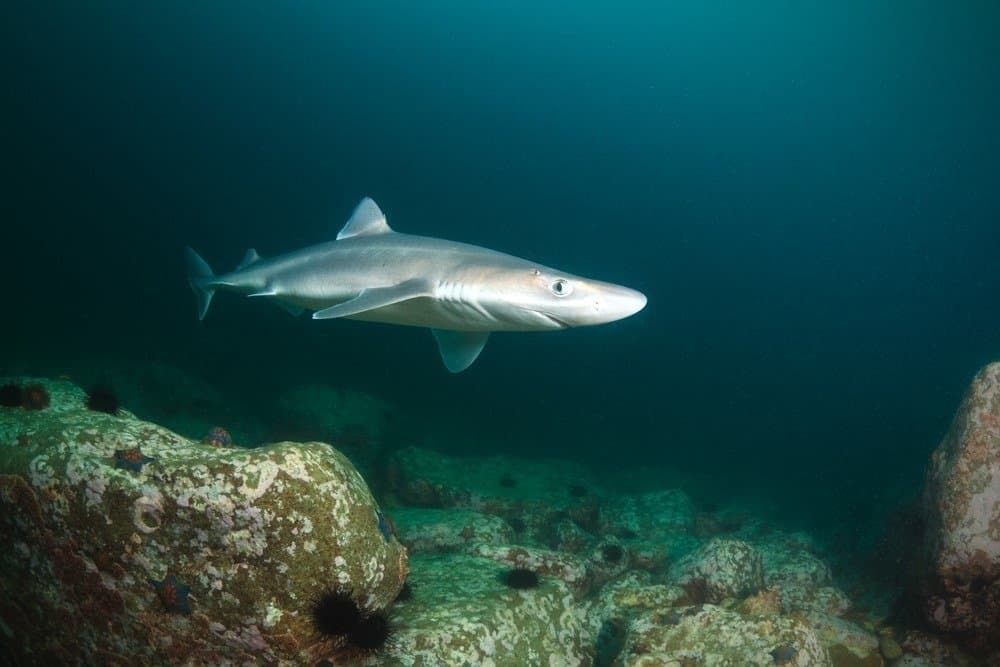
Spiny dogfish are listed as Vulnerable globally on the IUCN Red List of Threatened Species.
©Boris Pamikov/Shutterstock.com
Spiny dogfish live in oceans worldwide. These small, slender sharks are gray, blue, or brown, with white spots on the sides and tops of their bodies. They’re also opportunistic predators, hunting small fish, crustaceans, and squid.