
Quick Take
- One prehistoric giant dwarfed today's great white, yet nobody has ever found its full skeleton.
- A shark with a strange anvil-like feature on its back may have used it for something unexpected.
- One extinct predator could outswim every shark alive today, but something still hunted it.
- A shark with a bizarre spiral-like tooth arrangement left scientists guessing about its diet and its demise.
Prehistoric waters held all kinds of fascinating animals, including ancient sharks. We mostly discover these extinct sharks through their teeth, which hold up better to time than the cartilage throughout the rest of their bodies. Sharks as a species are still going strong, though, and they remain one of the oldest animals on earth. Read on to learn amazing facts about some of the most interesting extinct sharks, and discover how we came to know about them.
1. Megalodon
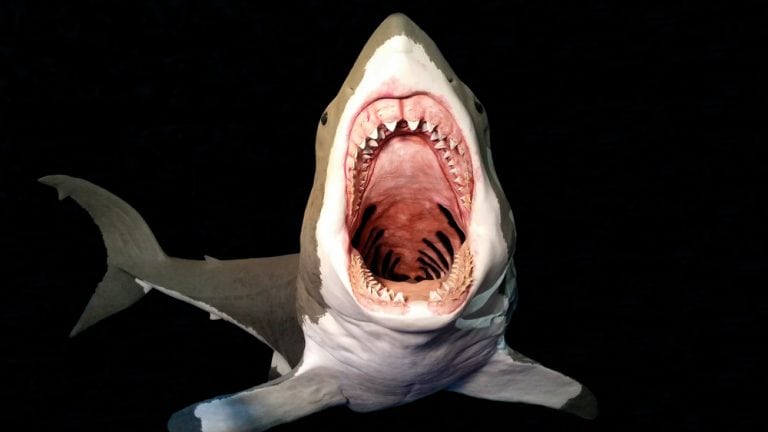
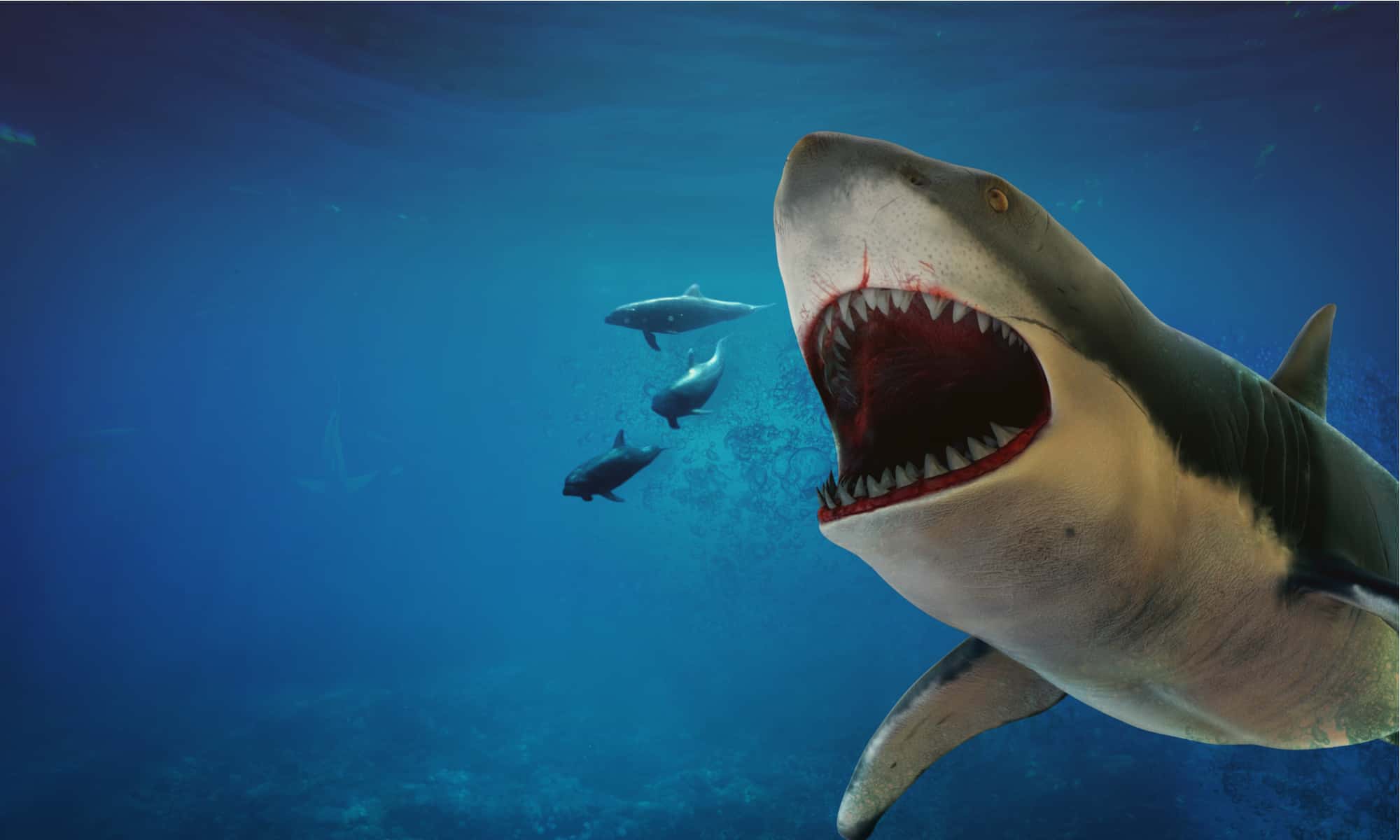
Megalodon is the largest shark that ever existed. It is estimated to have measured as much as 60 feet in length, which scientists have judged by the size of its massive teeth. In fact, Megalodon translates directly to “large tooth.” These teeth have helped researchers learn a lot about the animal, from its diet to its hunting style, and even when it went extinct. An entire Megalodon skeleton has never been found preserved.
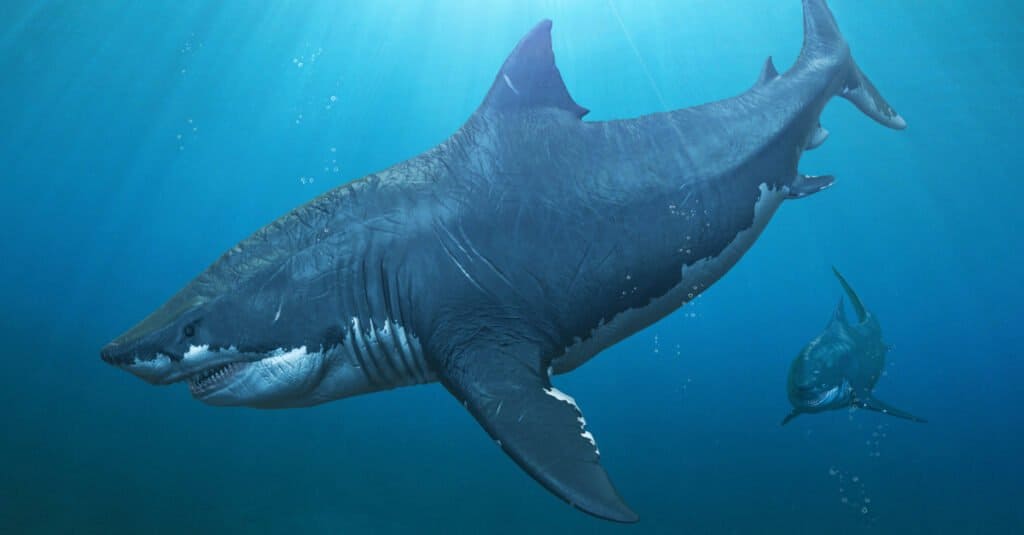
Megalodons are estimated to have measured nearly 60 feet in length.
©Herschel Hoffmeyer/Shutterstock.com
The species survived for over 16 million years and went extinct around 3.6 million years ago. They thrived around the world during their prime, and their teeth have been found on nearly every continent except Antarctica. We don’t know for sure what killed off the Megalodon all those years ago, but it was likely the cooling of the planet. These sharks lived in warm waters, and the ocean cooling would have led to a reduction in its habitat and prey.
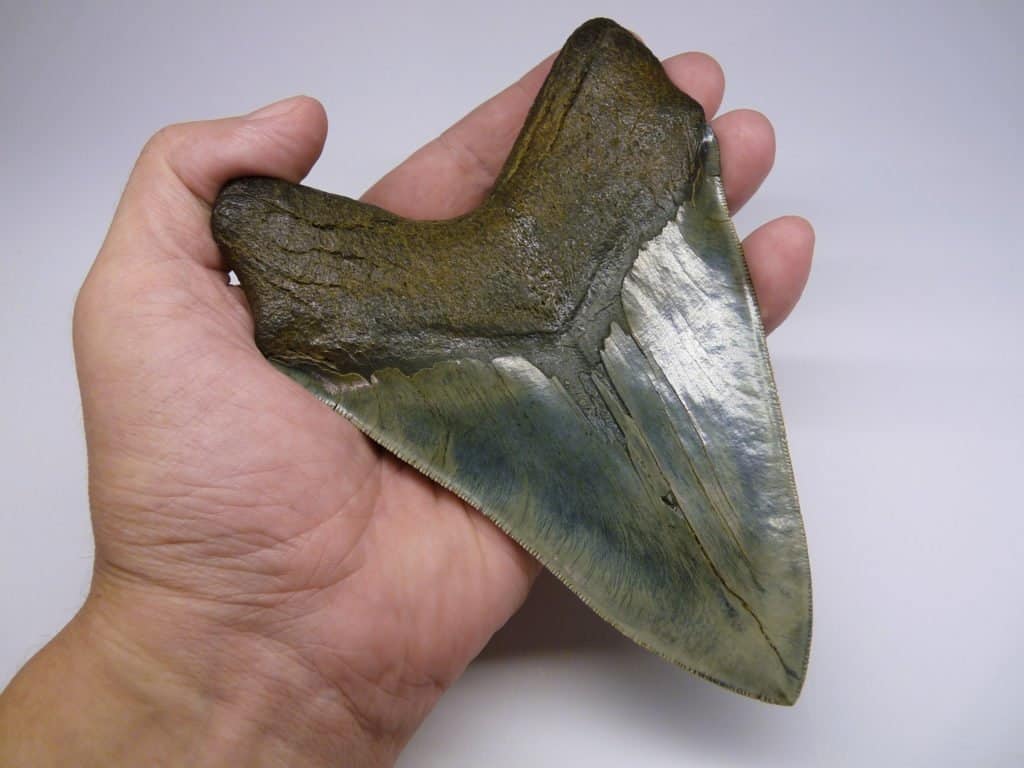
Megalodon teeth have helped scientists estimate its size.
©Nico Ott/Shutterstock.com
2. Cladoselache
The next shark on our list is much smaller. Cladoselache sharks measured only 6 feet. They are known from fossilized remains in rocks formed over 300 million years ago. It is a good example of what early species of shark looked like. Although, considered the first type of shark to exist, it had a fish-like head with 5 gills, though some have suggested it may have had up to 7. Its body was longer and less muscular than modern sharks, but it is believed to have a body evolved for speed.
Cladoselache sharks had very few scales and no claspers (organs which are used to transfer sperm from male to female sharks). It’s not known for certain how they reproduced, but they lived in the waters of North America during the Late Devonian. Their extinction occurred over 350 million years ago.
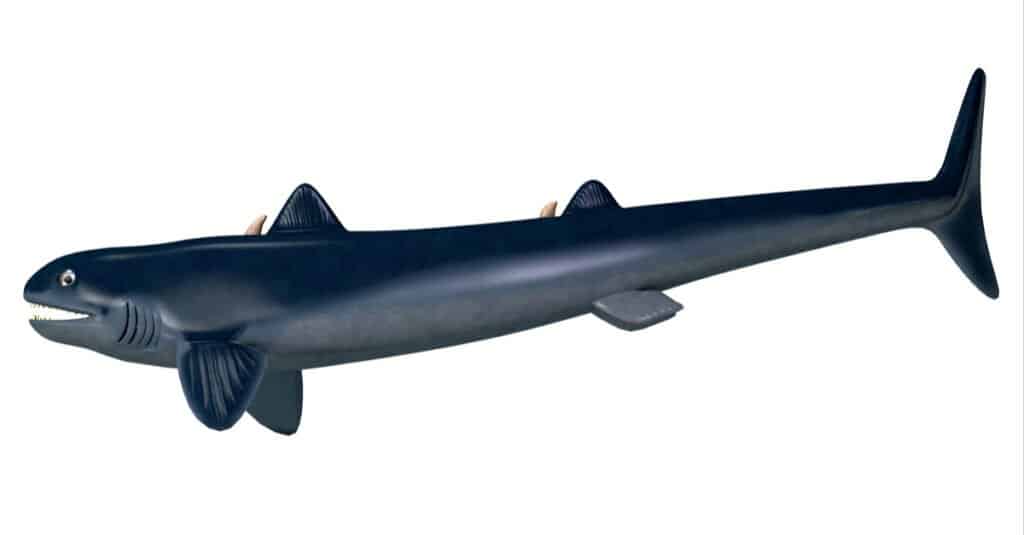
Cladoselache had a body evolved for speed.
©Catmando/Shutterstock.com
3. Stethacanthus
Another small shark, the Stethacanthus grew to around 5 feet long, though some species may have been larger. Its name, which translates to “chest spike,” came from the flat protrusion on the backs of the male sharks. It’s thought that they used it to attach themselves to female sharks when mating. The protrusion also slowed their movements considerably. The Stethacanthus were likely bottom-feeders rather than speedy predators. They lived in North America, Asia, and Europe. The species died almost 300 million years ago.
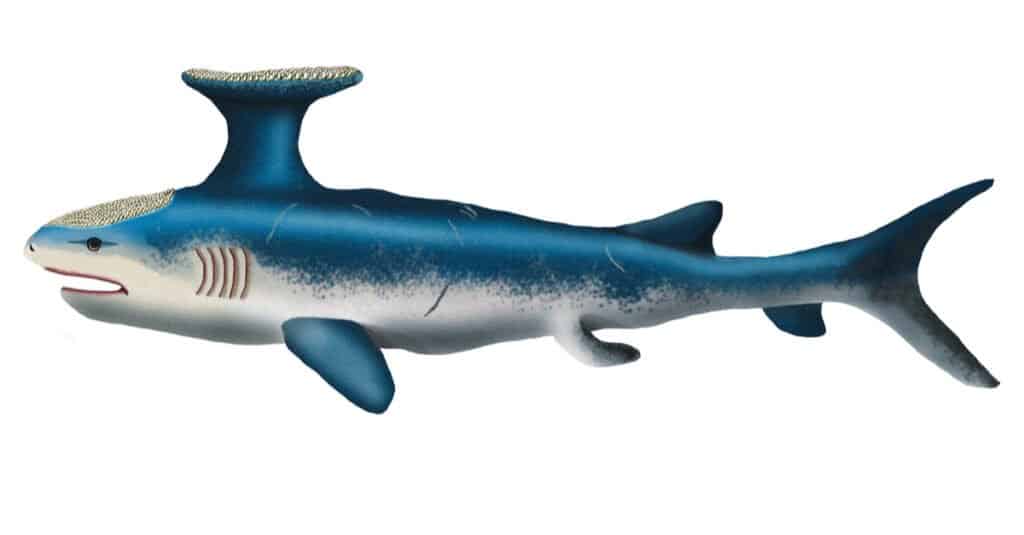
Male Stethacanthus sharks had a flat protrusion on their backs.
©Zero Smany/Shutterstock.com
4. Orthacanthus
The Orthacanthus was a freshwater shark native to Europe and North America. Its defining feature was the spike that jutted from its head, which is thought to have deterred predators and may have even been poisonous. It lurked in waters dense with foliage, which provided great hunting grounds for stealth predators.
Orthacanthus sharks navigated these waters with long, lithe bodies made to fit through tight crevices. For this reason, they are sometimes referred to as the “eel shark.” They are estimated to have measured up to 10 feet long. Orthacanthus sharks went extinct around 260 million years ago.
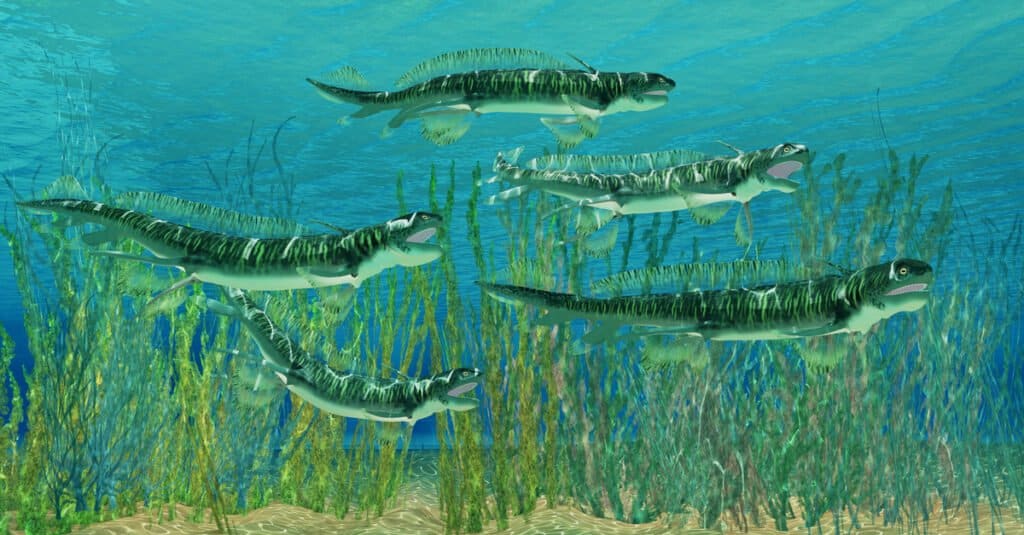
Orthacanthus lived in freshwater habitats.
©Catmando/Shutterstock.com
5. Xenacanthus
The Xenacanthus is basically a mini eel shark. At around 3 feet long, it was only one third of the size of Orthancanthus. The two sharks lived alongside one another, with Xenacanthus likely feasting in hard-to-reach areas between plants or land. They did not compete with one another, but instead ate prey of different sizes. Living a little longer than its counterpart, Xenacanthus went extinct during the Permian period, over 250 million years ago.
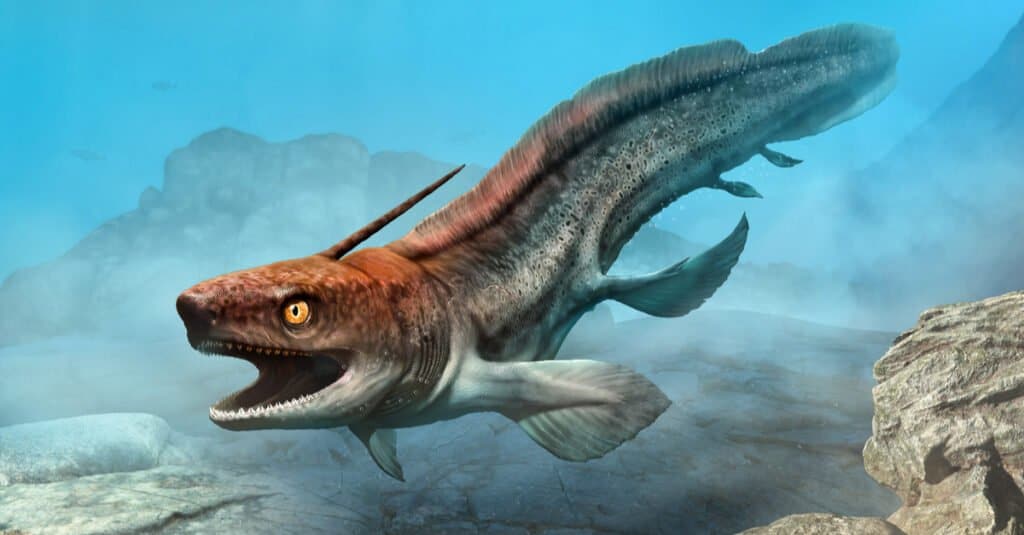
Xenacanthus went extinct more than 200 million years ago.
©Warpaint/Shutterstock.com
6. Hybodus
Hybodus sharks were small and quick, built to chase down prey at top speeds. They had small horns at the top of their heads and compact bodies measuring 6-8 feet in length. They lived in shallow waters and ate their prey in bites, twisting their heads to rip their food to pieces. Hybodus lived during the Jurassic period, though its wider group of hybodont sharks survived until around 66 million years ago. The most common Hybodus fossils are teeth and spines.
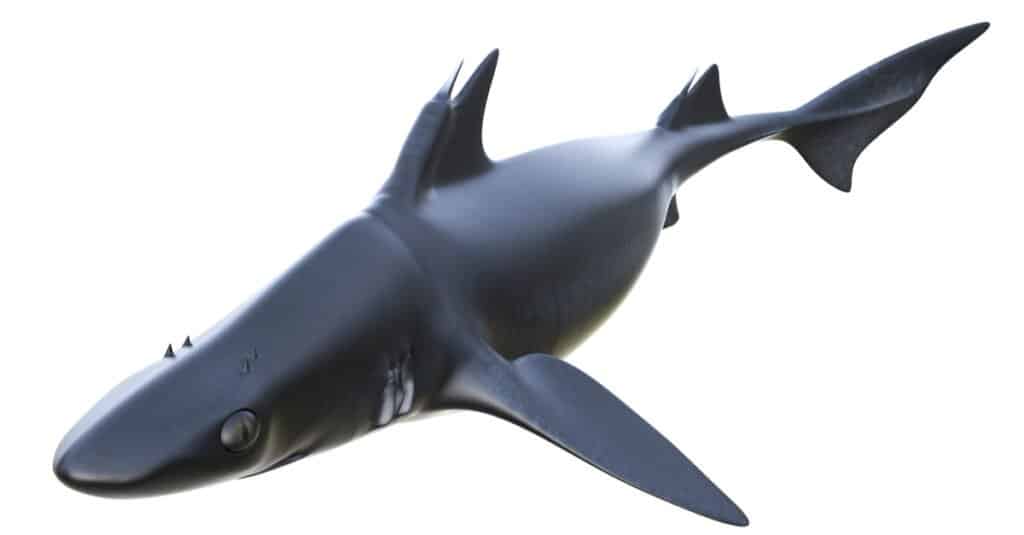
Hybodus was built for speed.
©Herschel Hoffmeyer/Shutterstock.com
7. Ptychodus
Ptychodus lived until around 75 million years ago. This carnivore ate mostly shellfish and mollusks, with teeth specialized to break through hard shells. Though mostly small sharks eat this diet today, Ptychodus sharks fed on the much larger ancestors of these animals.
These include the 9-foot mollusk, Platyceramus, and the 6.5-foot clam, Inoceramus. At around 33 feet long, Ptychodus sharks were one of the largest known sharks in the ocean at the time. Genetically, they were very closely linked to the sharks of today.
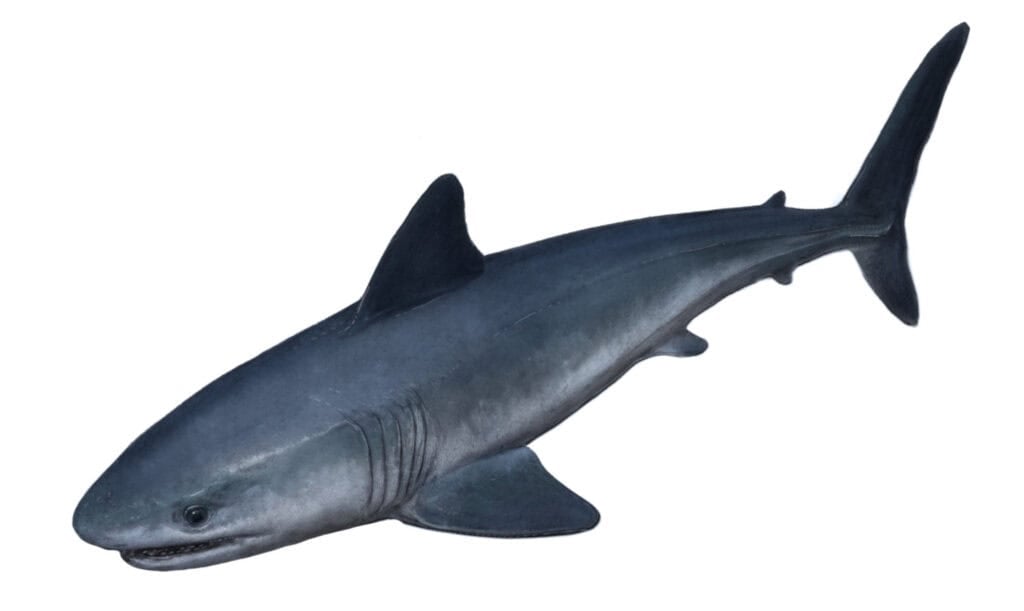
Ptychodus mortoni lived during the Late Cretaceous.
8. Cretoxyrhina
These sharks lived all around the world until about 73 million years ago. They competed with pliosaurs and mosasaurs for food, as they all ate large prey. One of these prey, a 20-foot long fish called Xiphactinus, was found undigested inside of a fossilized Cretoxyrhina.
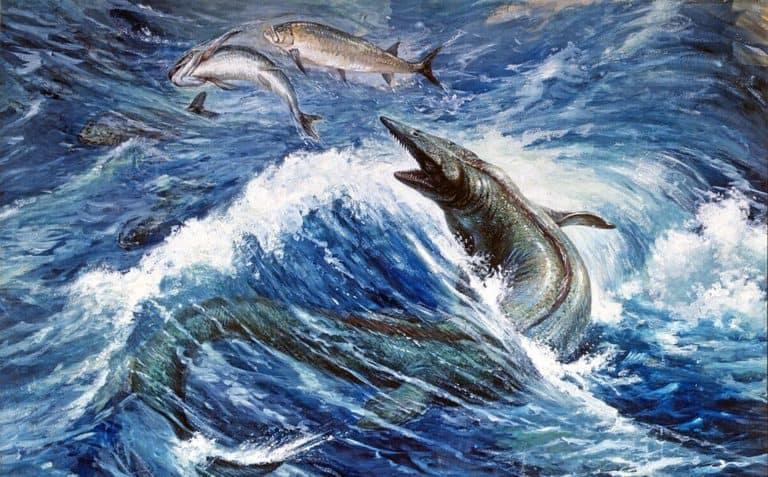
Cretoxyrhina wasn’t at the top of the food chain, however, as it was hunted by larger sea creatures like the reptile Tylosaurus. Larger than a great white at up to 26 feet in length, these sharks were also incredibly quick, possibly swimming as fast as 43 miles per hour. If they were still alive today, they would be the fastest sharks in the world.
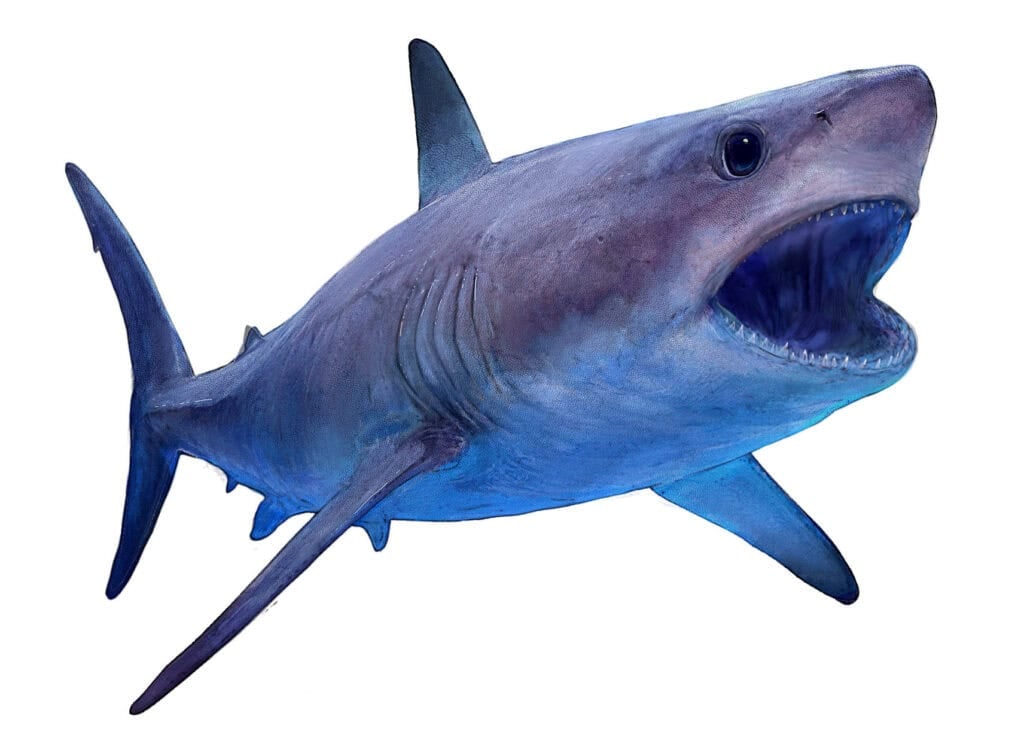
Cretoxyrhina disappeared around 73 million years ago.
9. Edestus
Otherwise known as the scissor-tooth shark, Edestus sharks lived over 300 million years ago. Their teeth grew differently from modern sharks, forming a single line from the back of their mouths to the front. As new teeth grew in at the back of their mouths, this caused the newer teeth to press forward to the outside.
The lack of fossils from the sharks’ bodies leaves a lot of questions unanswered. They likely hunted by either slicing through or stabbing their prey with their unique teeth, but what they ate in particular is unknown. One theory is that the sharks were specialized hunters. If this were the case, the death of their prey may have led to their own extinction. The largest Edestus sharks are estimated to have exceeded 22 feet in length.
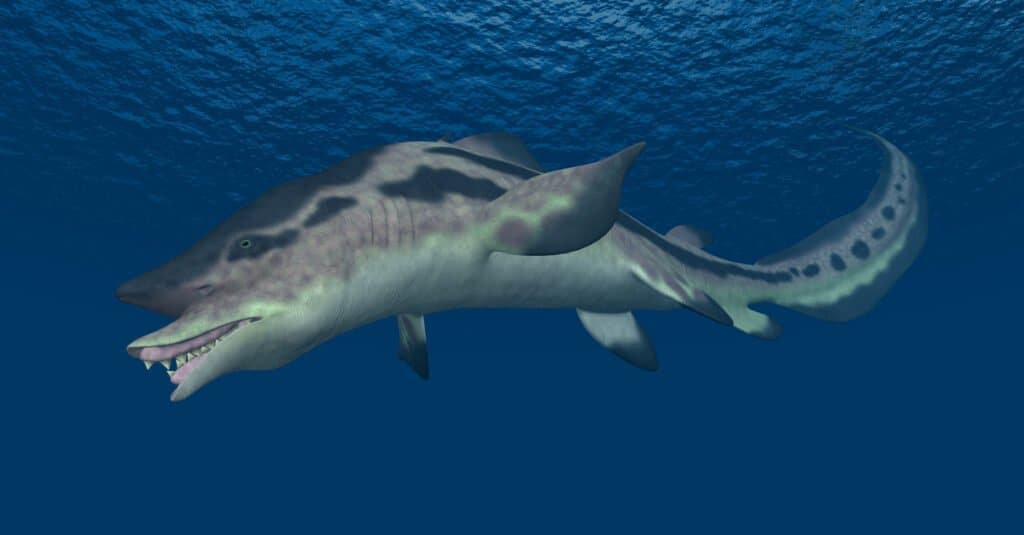
Edestus lived over 300 million years ago.
©Michael Rosskothen/Shutterstock.com
10. Scapanorhynchus
Scapanorhynchus went extinct around 66 million years ago, at the end of the Cretaceous. Before then, they swam the seas for over 50 million years. They had long, pointed snouts and teeth designed to catch and tear apart prey. Most of the sharks in this genus were incredibly small, measuring just over 2 feet.
Scapanorhynchus sharks hunted by lurking in the ocean’s depths, waiting patiently for prey to pass by. They weren’t fast swimmers and thus were quite passive hunters. These sharks are very similar to the goblin sharks that live today, but some key changes differentiate the two including their fins.
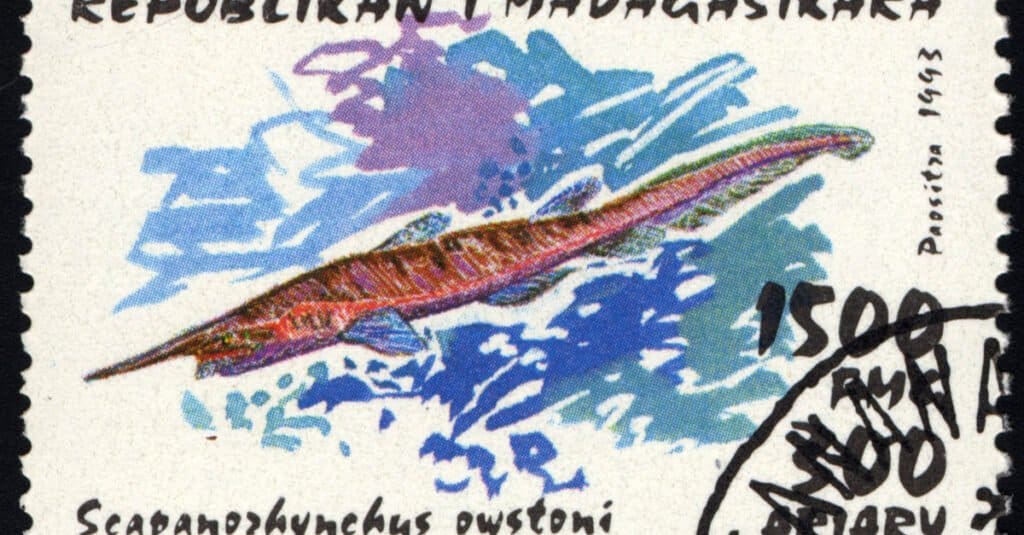
Scapanorhynchus had long, pointed snouts and looked similar to today’s goblin sharks.
©tristan tan/Shutterstock.com