
Quick Take
- A student identified fossils that had stumped experts for years, and what he found broke a rule scientists thought was set in stone. Meet the student's discovery →
- This predator wasn't chasing anything, and its hunting strategy is exactly why it survived millions of years longer than it should have. See how long it survived →
- South America's prehistoric food chain looked nothing like scientists assumed, and one overlooked fossil has just rewritten the whole timeline. See the rewritten timeline →
- Its name was borrowed from a 19th-century outlaw hunter, and the reason why fits the animal perfectly. Explore the name's origin →
Fossil discoveries are exciting, but they can also change what scientists think they know about the planet millions of years ago. A recent discovery of a new saber-toothed predator has rewritten South America’s prehistoric timeline, leaving the scientific community wondering what other creatures are still waiting to be found on the continent.
New Saber-Toothed Predator Discovered in South America
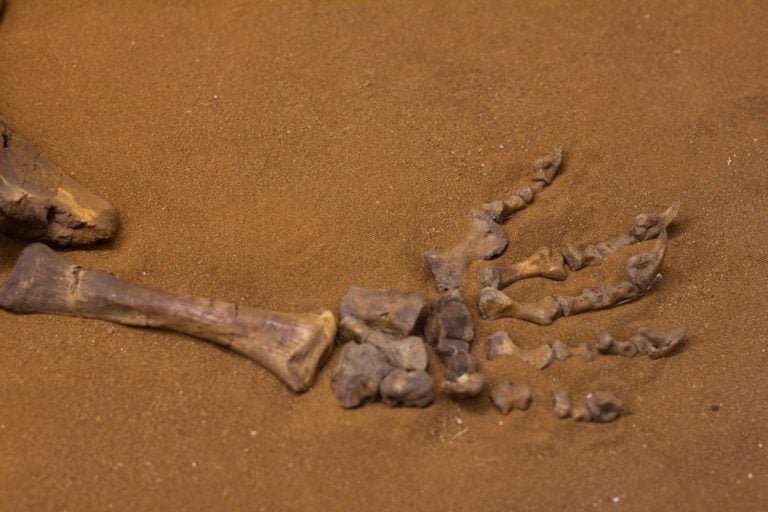
In 2014, museum members found some interesting fossils in the Argentine pampas along a seaside cliff. The creature appeared to belong to an ancient group of saber-toothed predators, but that idea was initially set aside because of the age of the fossils. So, what animal had been discovered?
According to a new study published in Alcheringa: An Australasian Journal of Palaeontology, the original hypothesis of the bones belonging to the order Sparassodonta was spot on. Although most sparassodonts are believed to have gone extinct in the mid- to late Pliocene, no other explanation existed regarding the identity of the creature. Therefore, according to the study’s lead author, Eric del Campo, a paleontologist at the Argentine Museum of Natural Sciences in Buenos Aires, this particular saber-toothed species lived longer than anyone had anticipated.
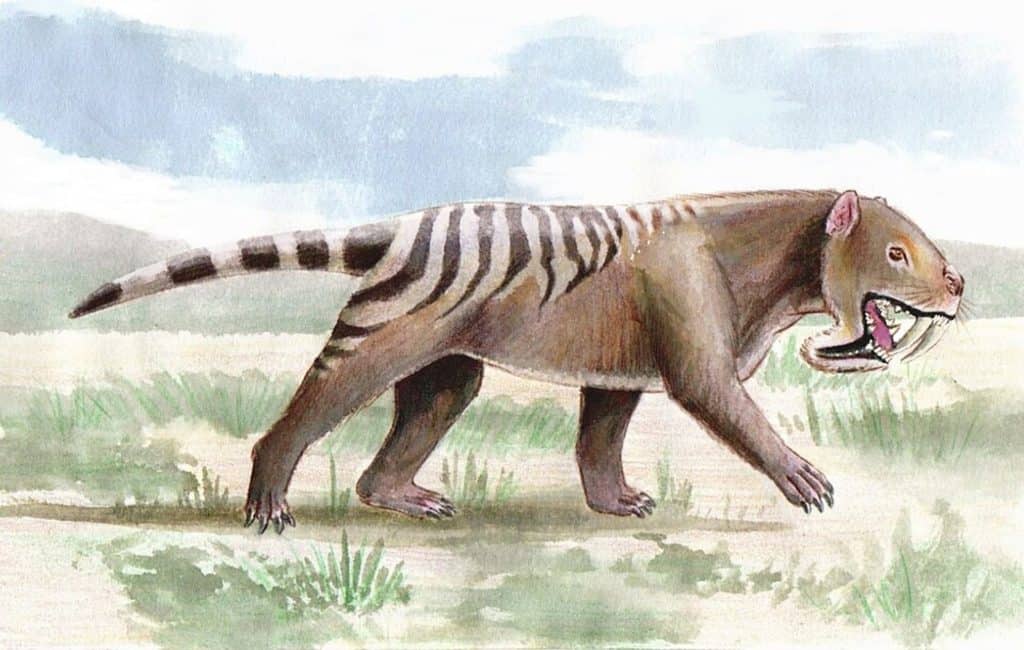
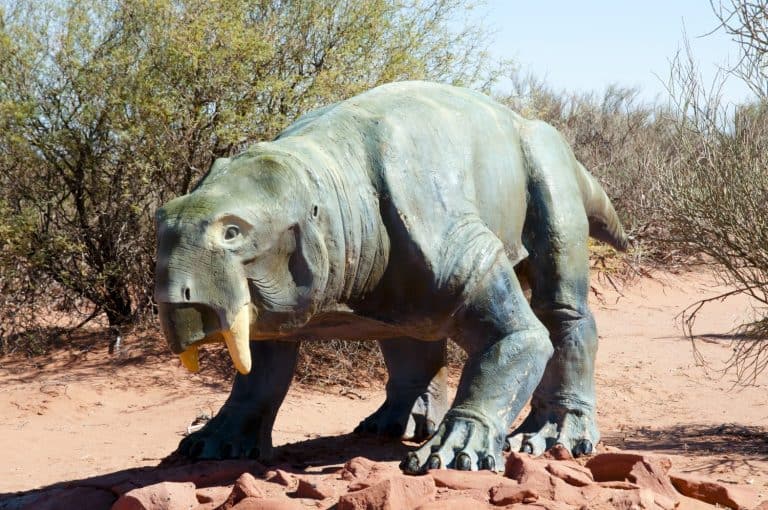
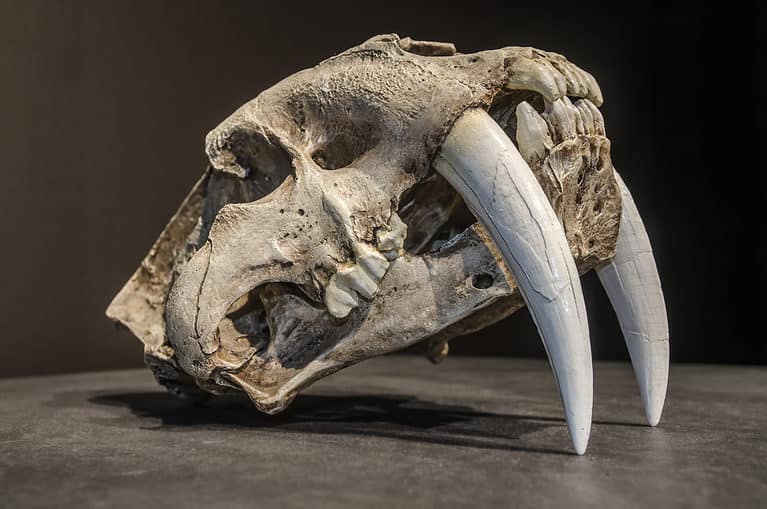
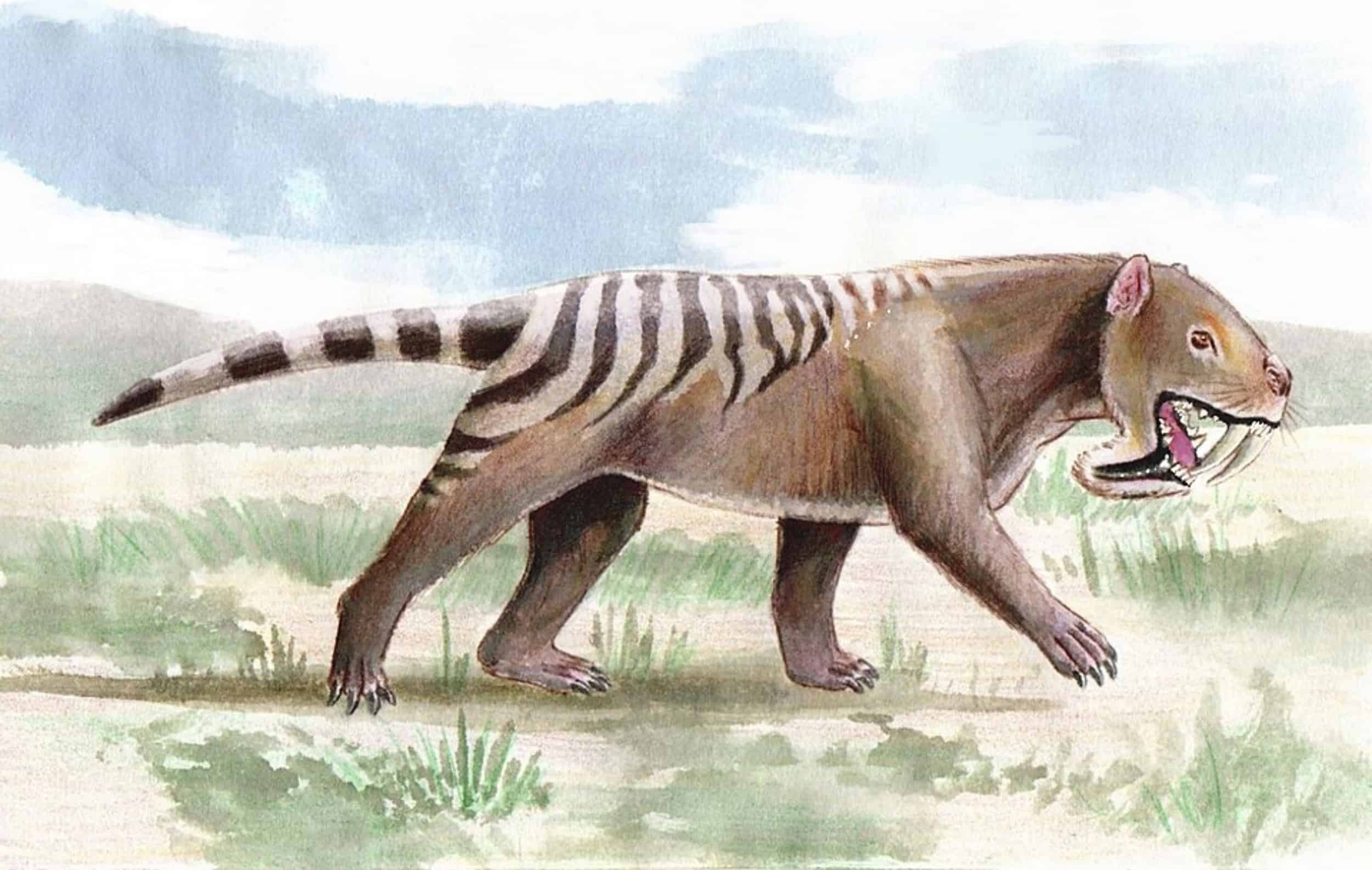
Pampaluctor would have looked similar to this Thylacosmilus millions of years ago.
©Baperookamo, CC BY-SA 4.0 , via Wikimedia Commons – Original / License
The fossils discovered in 2014 sat unidentified for years. It was not until del Campo took a crack at identifying them as a bachelor’s student that the identification became clear. The mammal was indeed a sparassodont, or a saber-toothed animal. However, after further research, del Campo found that the bones most closely matched those of a thylacosmilid, believed to have gone extinct three to four million years ago.
Not only were the fossils outside the timeframe in which thylacosmilids were believed to have lived, but the bones were also unlike any other ever discovered. Consequently, del Campo made the discovery of a lifetime with a new species, the Pampaluctor calibar, something he called a “highlight” to be able to describe.
Why the Discovery of Pampaluctor Changes South America’s Prehistoric Timeline
Pampaluctor is not the first species discovered in recent years to turn the prehistoric timetable in South America on its head. However, it adds to the growing number of fossils found that prove these mammals lived far longer than researchers ever believed possible.
“Historically, it was believed that some native South American animals (both carnivores and herbivores) had lost to the more ‘modern’ northern ones when North and South America fully connected…” del Campo explained in a press release. “The finding of Pampaluctor shows that native South American animals lived longer than previously assumed and interacted with the first ‘northern newcomers.'”
As a result, these saber-toothed mammals likely interacted with animals that had recently migrated into the region, rather than being immediately killed off by them. While fascinating, this leaves far more questions than answers as to when and for how long Pampaluctor lived.
What Pampaluctor Looked Like
When people think of saber-toothed animals, saber-toothed cats come to mind first. However, while both saber-toothed cats and Pampaluctor were impressive ambush hunters, they were different species.
The Pampaluctor is described as about the size of a small horse and weighing around 220 pounds. According to the study, this makes the species one of the “largest known mammalian predators” to have ever lived in South America.
The authors went on to describe Pampaluctor as having strong, muscled front legs and a thick neck, both of which were designed to hold down prey. According to del Campo, this meant that Pampaluctor was likely not an animal to chase prey.
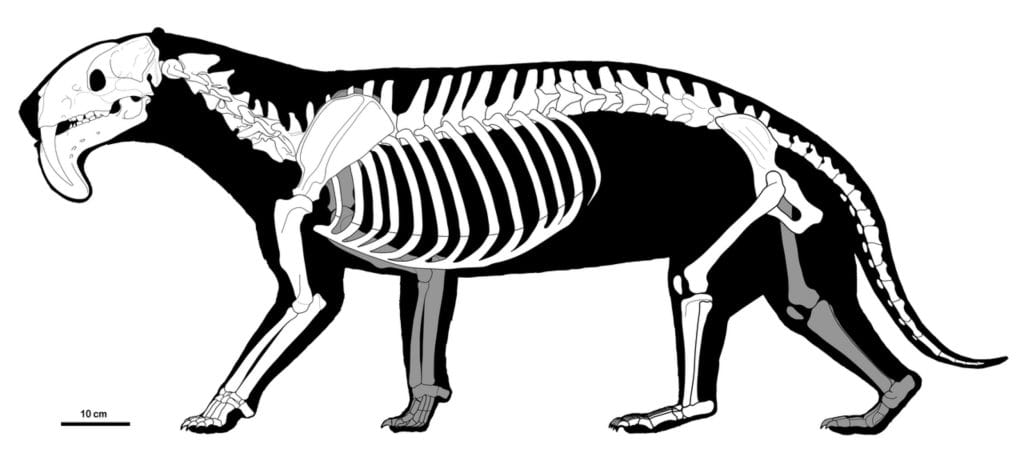
Pampaluctor is believed to have looked similar to this Thylacosmilus.
©Ivan Iofrida, CC BY-SA 4.0 , via Wikimedia Commons – Original / License
“I would describe Pampaluctor as a strong ambush hunter, not particularly graceful,” del Campo explained in a press release, “relying instead on overpowering prey with brute force rather than giving chase.”
Based on the recovered fossils, Pampaluctor is believed to have had a short, broad snout with large canines, like other creatures of the time with saber-like teeth. It also had a tail, likely used for balance while hunting.
The study authors created a name that fit the strong animal capable of pinning its prey. With no skeleton recovered yet, they determined that the best name to describe the known physical features was “luctor” meaning “to wrestle,” according to the study. They then chose “Calibar” for the species to reflect a 19th-century gaucho from the region known for hunting evildoers and finding those who were lost.
What Other Creatures Were Sparassodonts
Pampaluctor was not the only sparassondont animal to live in South America. Other carnivorous metatherian mammals also lived on the continent. Although all are related to modern marsupials, none are true marsupials, even though some of these creatures have a pouch to carry their young, making them a unique group of mammals indeed.
Some other sparassondonts known to have lived in South America include:
- Borhyaena: Wolf-like predator known for being rather large
- Paraborhyaena: Largest of the sparassodonts, the creature is believed to look similar to and be the size of a bear with saber-like teeth
- Thylacosmilus: Feline-looking creature with a pouch and saber-like teeth
- Hathliacynidae: Fox-looking creature with saber-like teeth
- Lycopsis: Otter-looking mammal with saber-like teeth
- Dukecynus: Dog-looking animal with saber-like teeth
Animals in the order Sparassodonta all had saber-like teeth. However, their looks and sizes varied widely. This may explain why some survived longer on the planet than others, given their dietary needs and the abundance of prey available during their lifetimes.
When Do Researchers Believe Pampaluctor Went Extinct?
It was believed that creatures like Pampaluctor went extinct during the mid- to late Pliocene. This would have been 3.6 million to 2.58 million years ago. Instead, according to the study, the discovery of Pampaluctor completely changes this theory, given when the saber-toothed predator appears to have gone extinct.
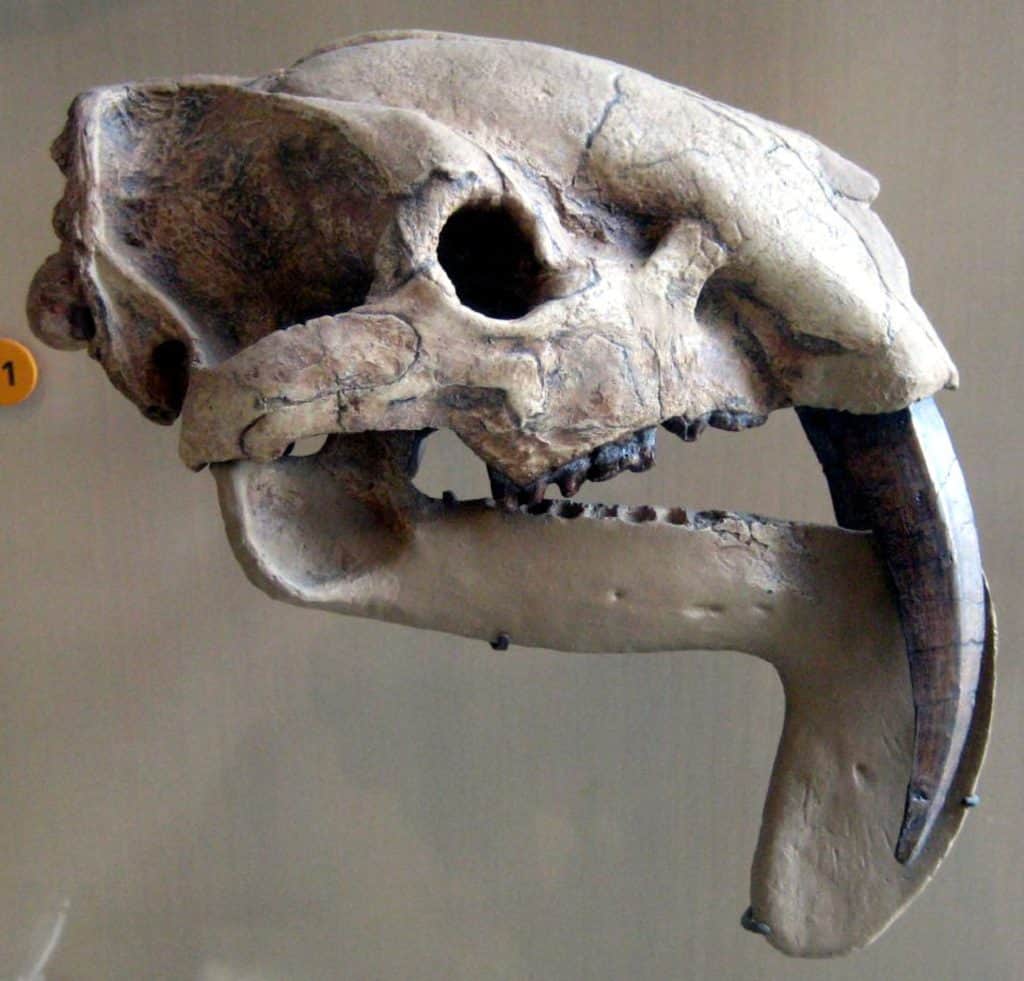
The Pampaluctor, similar-looking to Thylacosmilus, is believed to have gone extinct in the early Pleistocene.
©Claire Houck from New York City, USA, CC BY-SA 2.0 , via Wikimedia Commons – Original / License
With the discovery of the Pampaluctor fossil, the creature is believed to have lived until the end of the Pliocene or early Pleistocene epoch. Therefore, Pampaluctor and potentially yet-to-be-discovered similar predators would have lived alongside animals migrating south from North America. While the exact timeline of their extinction has yet to be determined, the early Pleistocene epoch is divided into two ages: the Gelasian Age and the Calabrian Age. The former occurred 2.58 million to 1.8 million years ago, while the latter occurred 1.80 million to 117,000 years ago.
Even though the exact timing of Pampaluctor’s extinction remains unknown, evidence that it survived into the late Pliocene or early Pleistocene suggests that sparassodonts lived in South America much longer than scientists previously believed. Does this mean more of these predators are waiting to be discovered on the continent? Only time will tell!