
Quick Take
- On average, whale sharks can grow to between 18 and 32 feet.
- Some researchers estimate that whale sharks can weigh up to 40 tons.
- The largest whale shark on record reached 61.7 feet in length.
Whale sharks (Rhincodon typus) are calm, gentle filter feeders found in warm waters throughout the world. They are called whale sharks not only because their large size is comparable to many whales, but also because their feeding habits are similar to those of baleen whales. However, the whale shark is a fish, not a marine mammal like a whale. In fact, whale sharks are the largest living fish in the world, but how big can they actually get? Keep reading to discover the largest whale shark on record.
How Big Do Whale Sharks Normally Get?
Whale sharks live in tropical and moderately temperate seas worldwide, inhabiting both coastal areas and the deep ocean. They can also dive more than 3,280 feet. Throughout the year, they migrate thousands of miles to follow food and warm water temperatures.
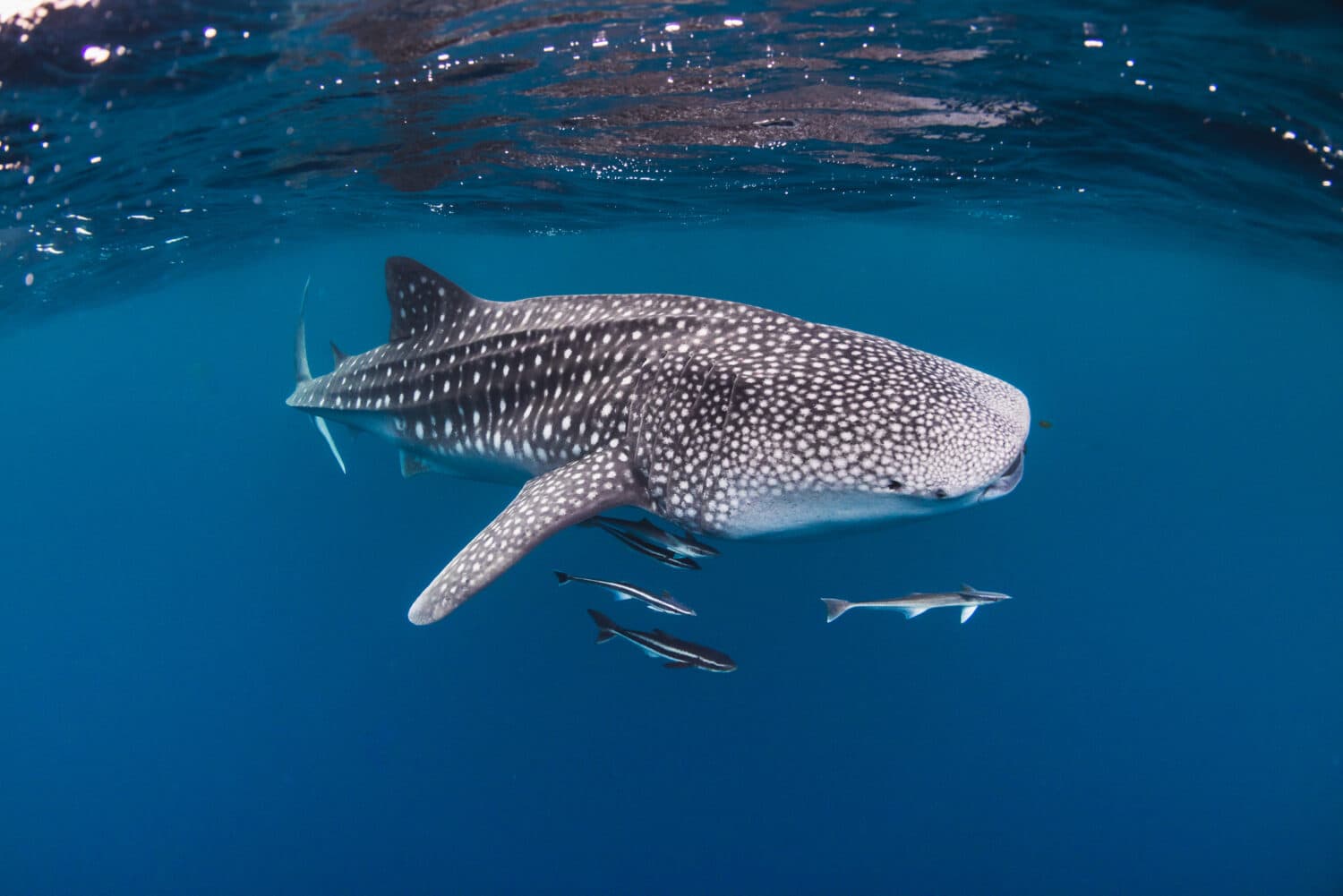
Whale sharks average between 18 and 32 feet but can grow much larger.
©Fata Morgana by Andrew Marriott/Shutterstock.com
On average, whale sharks grow to between 18 and 32 feet. Whale sharks are believed to be sexually dimorphic, with males and females showing observable differences. Both sexes are considered fully mature at around 30 feet, but females are thought to grow larger. However, the small sample size makes it difficult to accurately estimate their maximum size. Some estimates suggest that that these sharks can weigh up to 40 tons.
What Is the Biggest Whale Shark Ever Discovered?
There have been many reports over the years of record-breaking whale sharks, but they have not been scientifically verified. In 1868, Irish scientist Edward Perceval Wright went on an expedition to the Seychelles to study whale sharks. He claimed to have seen specimens over 50 feet long and heard reports of others over 70 feet. However, there is no official documentation.
The largest whale shark ever recorded was 61.7 feet long.
©Lindsey Lu/Shutterstock.com
In 1995, a shark that was estimated to be 68 feet was stranded on the coast of Ratnagiri, a port city in Maharashtra, western India. Although the shark was stranded near a large city, its size could not be determined accurately.
The largest whale shark on record reached 61.7 feet in length. This record is considered reliable, as it was taken during a scientific study on marine megafauna. It is possible that whale sharks are the largest fish to ever live on the planet.
How Do Whale Sharks Grow So Large?
Whale sharks have a few advantages that allow them to grow so large. The lack of large predators and a diet of small marine organisms both contribute to their size. Learn more about each of these advantages in the paragraphs below.
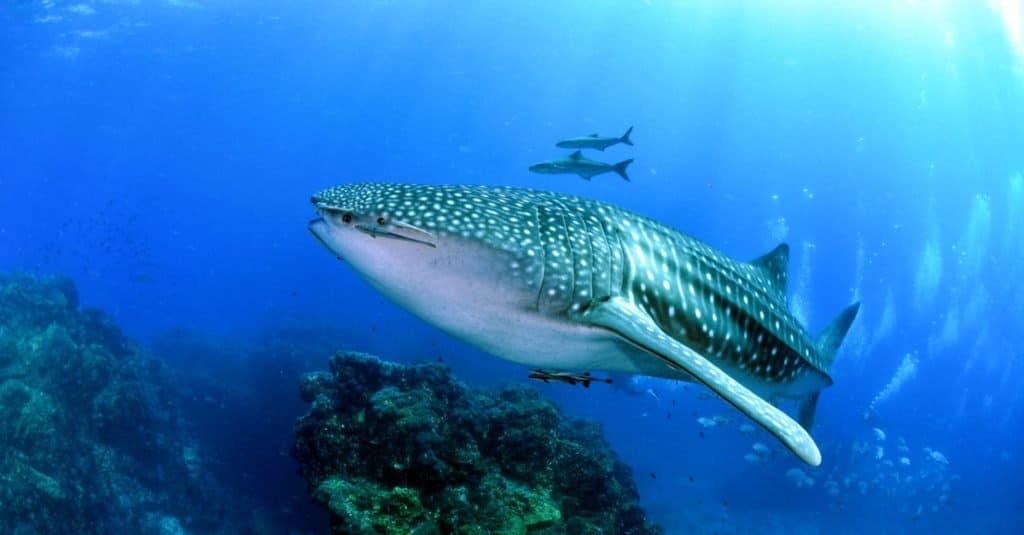
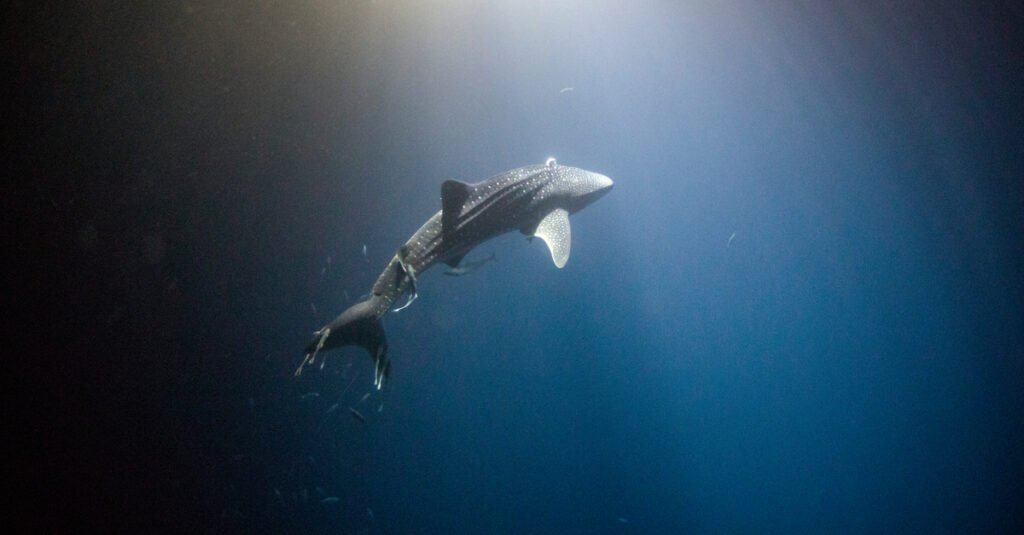
Scientists believe whale sharks may be able to live to 130 years old.
©weera bunnak/Shutterstock.com
Lack of Predators
The first and most obvious advantage is that they have no known natural predators. When whale sharks are born, they measure between 16 and 24 inches, making them easy prey for other sharks. As they grow, however, they soon outpace other marine animals, making them less susceptible to predation.
Whale sharks grow more quickly when they are young but slow down as they mature. They reach sexual maturity and their average size of 30 feet by 25 years of age, and some scientists estimate they can live to 130 years old. With such a long lifespan, it’s no wonder these fish can grow so large.
Diet
The whale shark’s diet also contributes to its size. Whale sharks are filter feeders. The blue whale, the largest animal on Earth, and the basking shark, the second largest shark in the world, are also filter feeders.Filter feeding on small organisms at the bottom of the food chain requires little energy. By consuming enormous amounts of this food, whale sharks can grow very large.
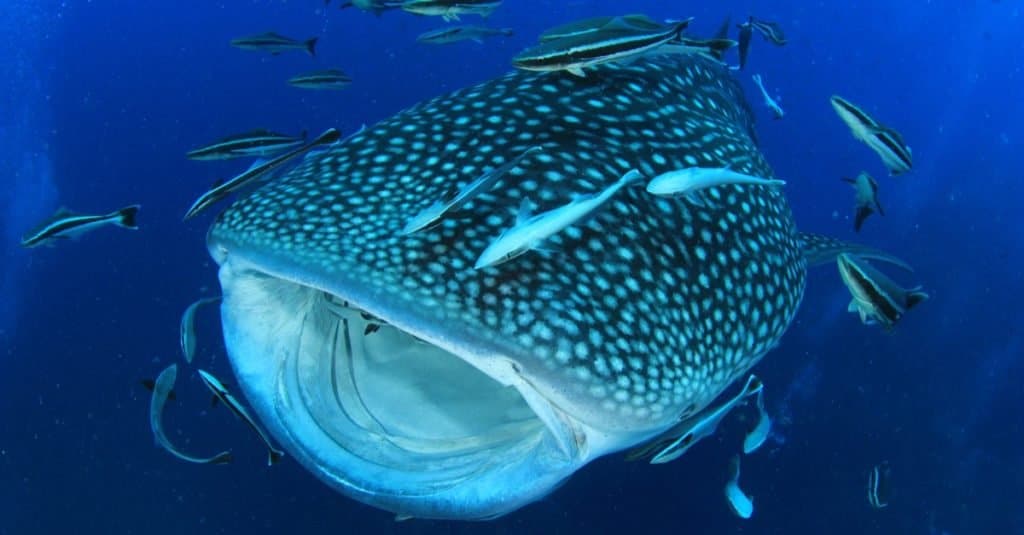
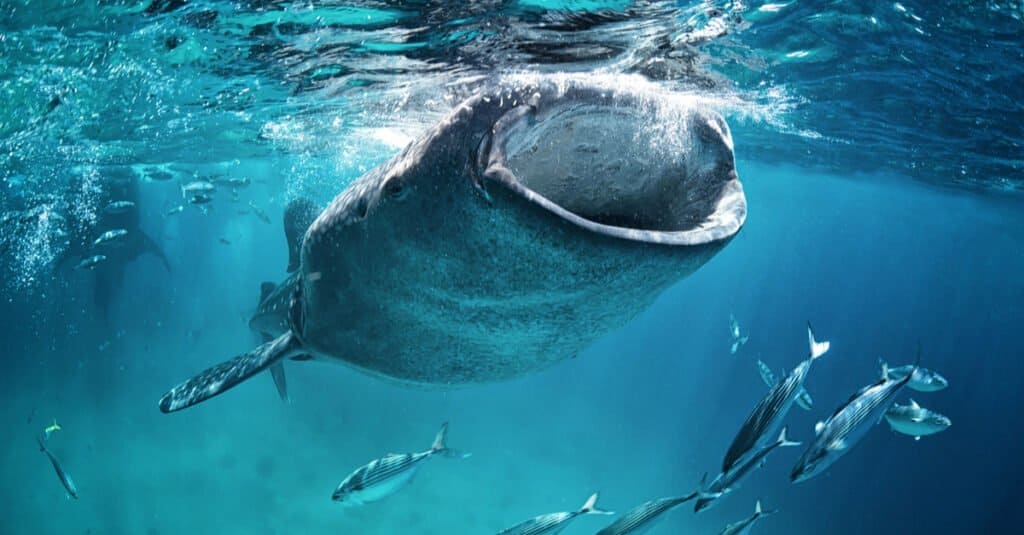
Whale sharks are filter feeders like blue whales and basking sharks.
©Rich Carey/Shutterstock.com
Filter feeders save energy because they do not actively hunt their food. They suction feed by opening and closing their mouth as they swim along at around 2.9mph, creating suction that pulls in large volumes of water. The water is filled with krill, plankton, fish eggs, small fish, and other small marine creatures. The shark then forces the water back out through its gill slits, while its filter pads capture the food.