
Quick Take
- Researchers found a way to lure baby coral to bare seafloor using nothing but sound, and the results held up for two years. Explore the methodology →
- Coral reefs are surprisingly noisy places, and that noise turns out to be a lifeline for animals trying to find a home. See settlement findings →
- Fish larvae showed up in dramatically different numbers depending on one variable at the study site, and that variable had nothing to do with food or water temperature. See fish larval counts →
- DARPA is already betting on this research with a real-world project off O'ahu, a effort that could change how we rebuild dying reefs. See DARPA's reef project →
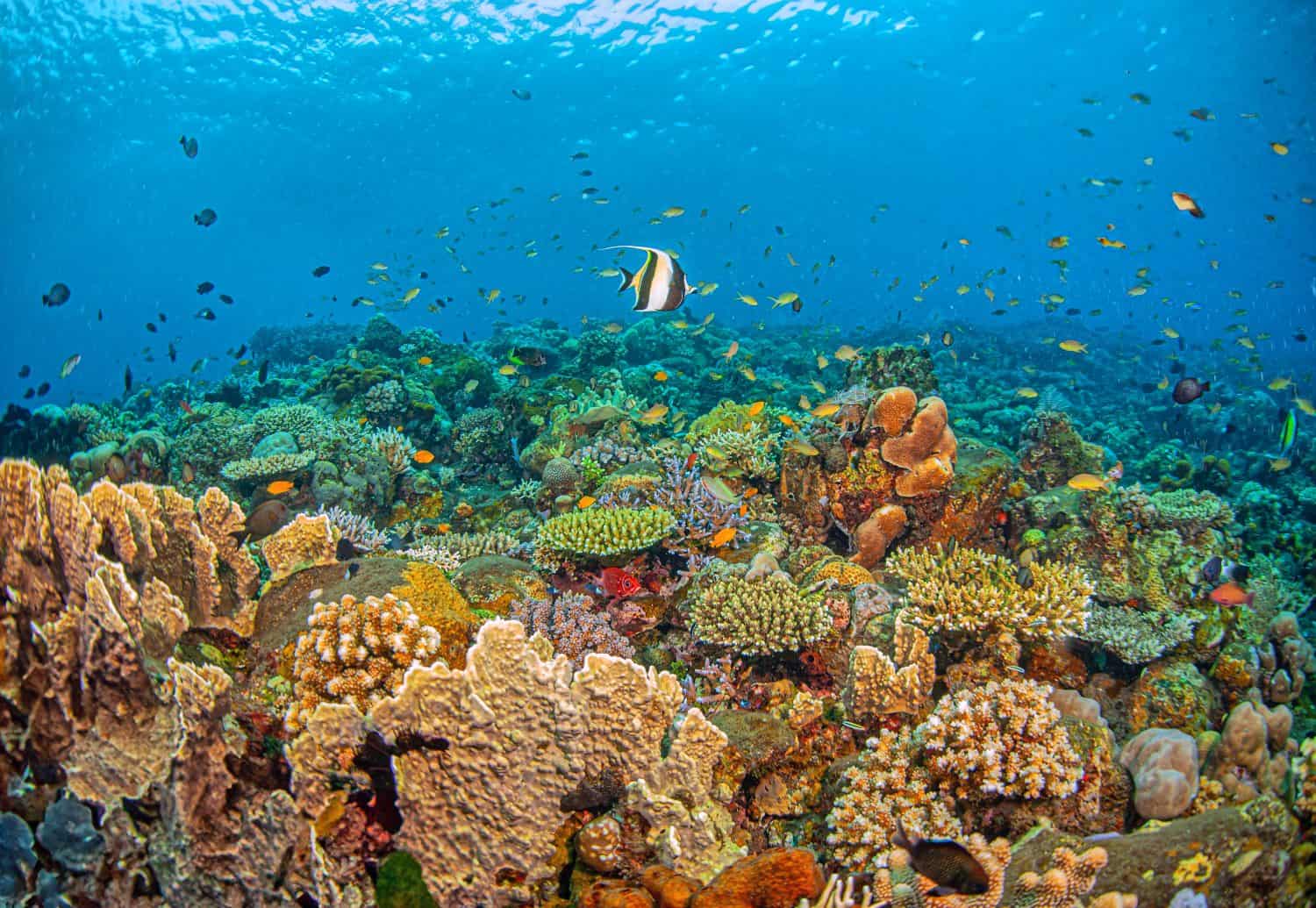
Though a human’s experience of the world is filtered through five traditional senses, our visual acuity tends to dominate our perspective. We don’t always notice smells or sounds, but our eyes are nearly always open. This is not necessarily the case for other animals, particularly those that spend most of their time underwater. Furthermore, organisms we don’t associate with noise, such as coral reefs, actually produce plenty of sound. Two studies recently published by researchers from UC San Diego’s Scripps Institution of Oceanography demonstrated the benefits of sounds emitted by coral reefs for marine life.
One study focused on coral larvae, while the other concentrated on fish larvae. Both, however, found that the effects of underwater sound from healthy reefs can motivate development and support recovery for both reefs and the fish that call them home. The first studies of their kind, these experiments highlight how important sound from the unlikeliest of places can be in promoting healing. Let’s learn more about these studies, how researchers pulled them off, and what they tell us about the interconnected web of life that inhabits coral reefs.
Coral Care
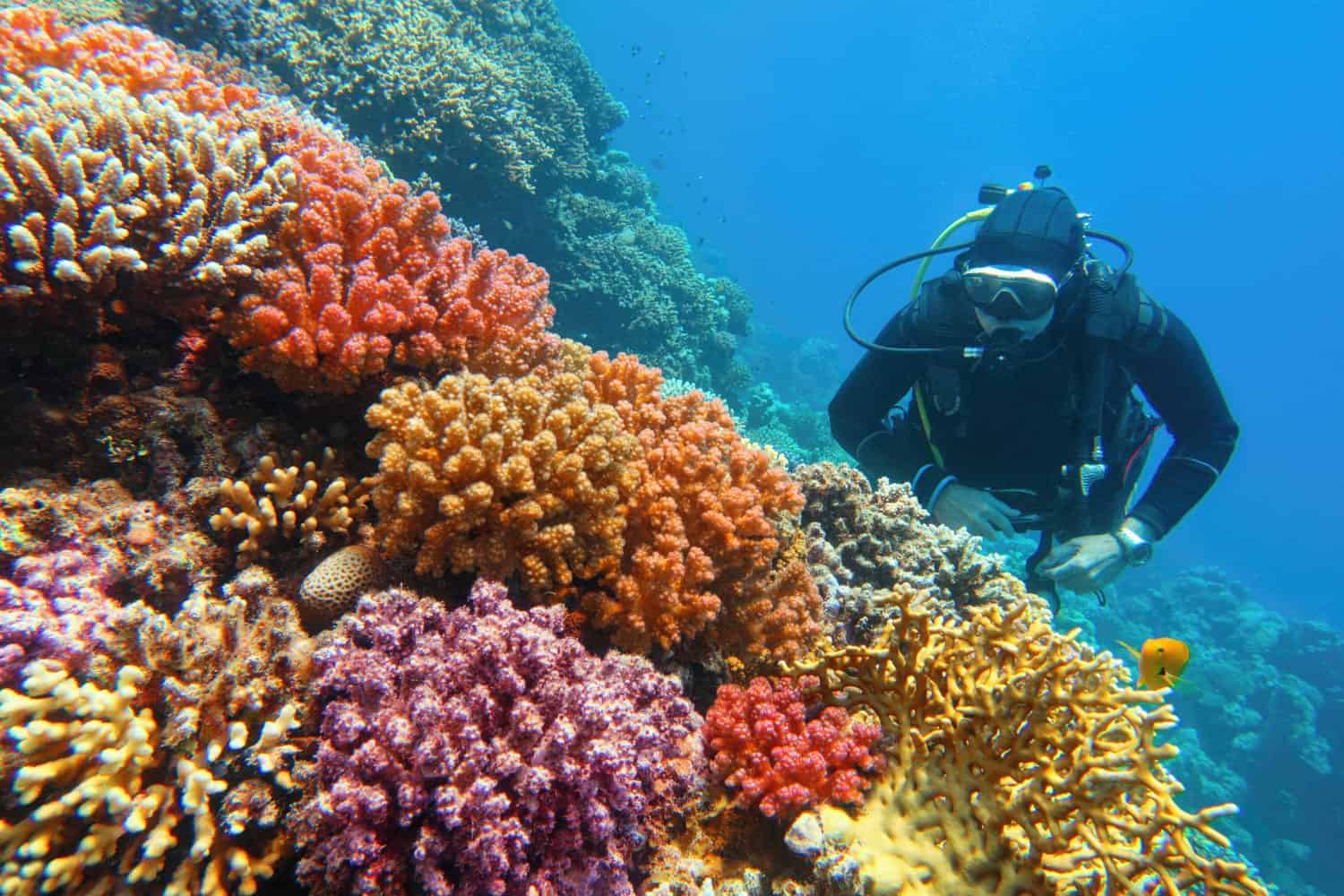
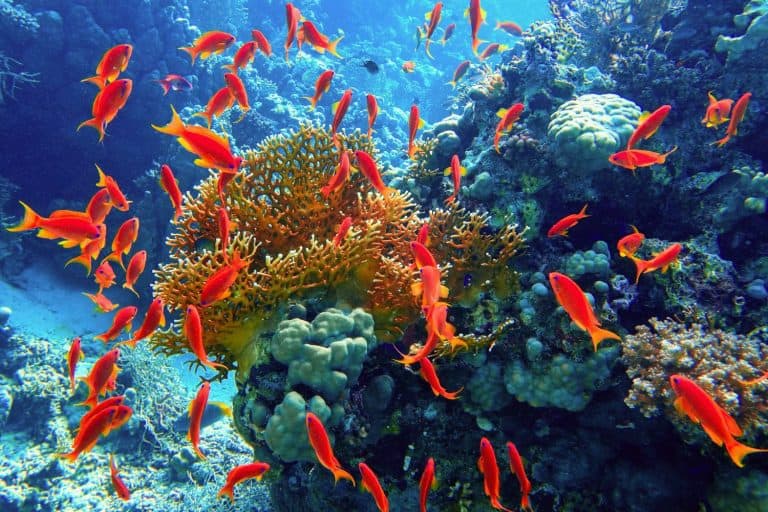
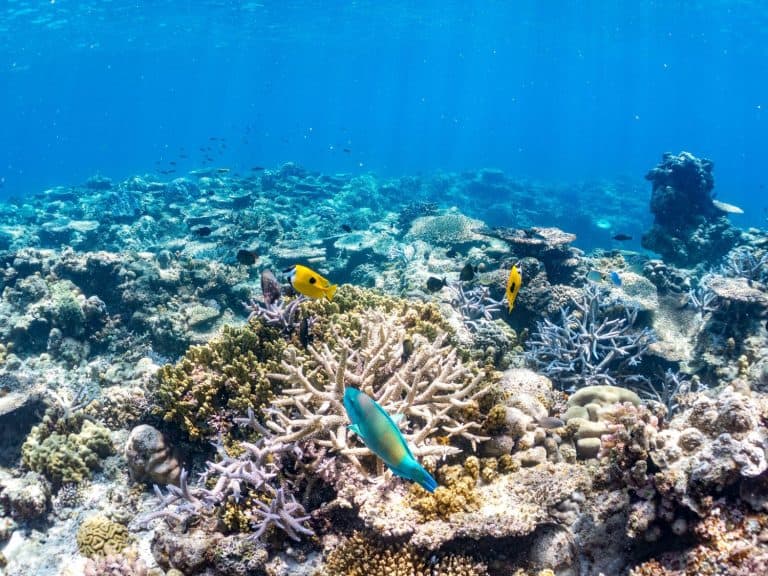
Researchers collected sounds produced by coral reefs and broadcast them at different sites featuring printed materials to see if the sounds attracted coral larvae.
©Tunatura/Shutterstock.com
On October 8th, researchers published their study regarding the effects of acoustic enrichment on coral larval settlement in the journal Communications Biology. They found that the sounds of coral reefs had a demonstrable effect on coral larvae during the life stage when they transition from free-floating to settlement, attaching to a surface and beginning to build a reef.
Doing so required careful collection of recordings, controlled living environments, and 3D-printed structures. First, the team collected the sounds produced by healthy coral reefs near O’ahu, Hawaii. Over an entire lunar cycle, researchers captured every sound emanating from the reef, from fish to shrimp and crustaceans. With a collection of ambient tracks in hand, the researchers then broadcast their recordings from an underwater speaker at a flat, sandy spot off the island of Moku o Loʻe. These sounds played nightly for two weeks, from sunset to sunrise.
They placed 37 artificial structures on the seafloor around the speaker, at 15-foot depths and in spots between three and 138 feet away. Some structures featured protected settlement spaces. Others featured BRINK, a bioactive substrate with living bacteria, which was developed by researcher Natalie Levy and her colleagues at Scripps’ Coral Reef Ecophysiology and Engineering Lab.
The Results
For the next two years, the researchers conducted three experiments wherein they measured coral larval settlement a week or two after a new moon. They counted the new larvae using blue light and yellow filters. They found that structures placed closest to the speakers had the highest levels of coral settlement. Furthermore, the structures treated with BRINK had the best results. Though specialized 3D-printed structures worked well, researchers noted that these structures were treated with sound alone, without BRINK.
As the study’s lead author, Aaron Thode explained to Eureka Alert, these experiments were a success. He said, “Our data indicate that when these drifting organisms detect a lot of sound from a reef, it signals to them that this is a good place to settle. Our analysis also provided strong evidence that synthetic chemical cues attract these organisms to reefs.”
Fish Activity
The researchers knew that fish activity is an important part of a healthy coral reef, as fish feed on algae that prevents coral growth. This notion informed a related study published in Scientific Reports. Fish, however, scatter quickly when a human moves through the water. To get around this, Scripps PhD candidate Océane Boulais built a system of autonomous cameras to document fish movement. She placed them near the entrance to the 3D-printed structures around the speaker and at another site with no sound.
This proved effective. The new moon brought larval counts to their peak, but the site with speakers drew in four to fourteen times more fish larvae than the site without sound. Even when the team swapped locations of the true speaker and the control speaker, the results held.
As Boulais told Eureka Alert, using autonomous cameras allowed the research team to observe how fish behave when no one is watching. She said, “The cameras are relatively new, but they’re already helping us learn so much about the early life stages of reef fish, and how sound might enhance their presence on a reef.”
Going Forward

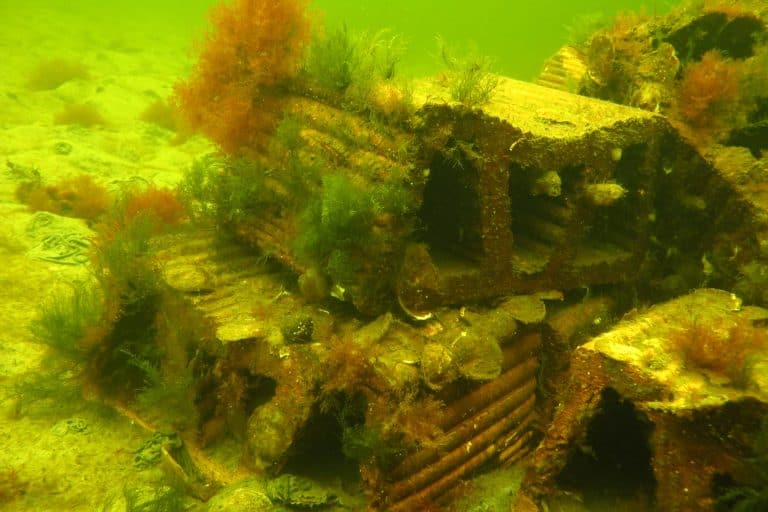
DARPA plans to install a hybrid reef structure off the coast of O’ahu featuring technology developed by Scripps researchers.
©fansntt/Shutterstock.com
As lead author Aaron Thode explained to Eureka Alert, the acoustic enrichment experiments were a success. He said, “We have demonstrated in a single set of field studies that acoustic enrichment increases the presence of both fish larvae and coral larvae on artificial reef structures.”
These findings will guide the future of coral reef restoration. Indeed, the Defense Advanced Research Projects Agency (DARPA) plans to install a hybrid reef structure off the coast of O’ahu later this year, with coral planting scheduled for early 2027. This hybrid reef will incorporate new technologies, including the microstructures and acoustic enrichment system developed by Scripps researchers.