
Quick Take
- A great white shark tracked a moving shadow the same way a housecat chases a laser dot, and what that actually reveals about shark cognition is stranger than it looks. Watch the footage →
- The filmmaker deliberately moved the drone's shadow toward multiple sharks, and their consistent reaction raised a question science still can't fully answer. See Gauna's experiment →
- Great white sharks are highly visual hunters, but their eyesight works nothing like you'd expect from an apex predator. Explore shark hunting behavior →
- Whether the shark saw the shadow as prey, a curiosity, or something else entirely changes everything about what this footage actually proves. Explore the shark's reaction →
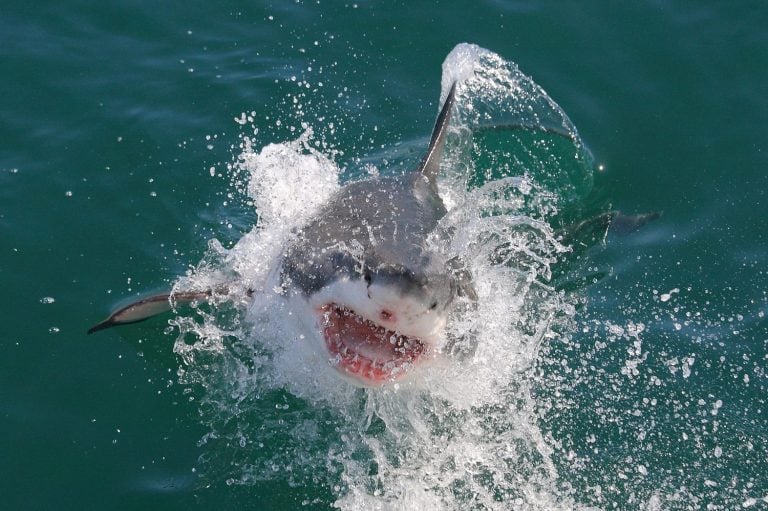
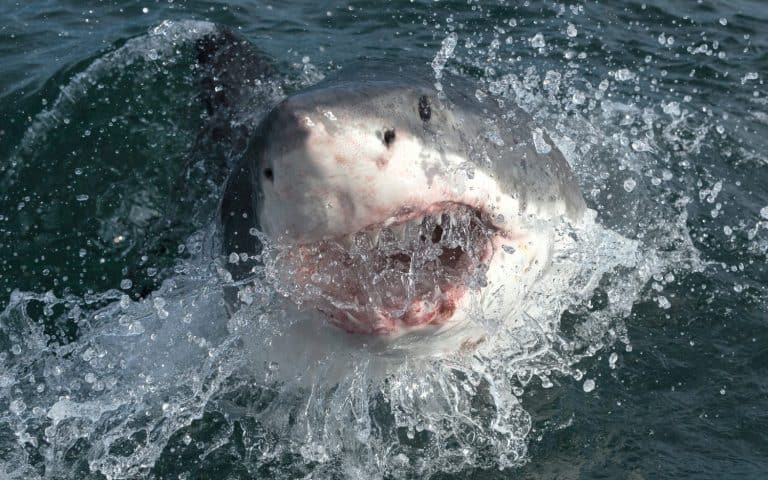
If you’ve ever watched a cat lock onto a moving laser dot, the behavior in this video may look familiar. A great white shark notices the shadow of a drone moving across the water and begins following it. That does not necessarily mean the shark thinks the shadow is prey, or that it is “playing” in the way we usually use the word, but the reaction is fascinating to watch. Check it out in the video below.
Watch the Great White Shark Follow the Drone’s Shadow
Great White Shark Filmed Off California
The footage above was captured by Carlos Gauna, the wildlife cinematographer and photographer behind The Malibu Artist. Gauna regularly uses drones to document California‘s marine wildlife, with much of his work focused on great white sharks along the Southern California coast.
His channel is heavily focused on white sharks, but Gauna also documents other wildlife and uses aerial footage to show animal behavior that can be difficult to see from shore. In this case, the drone itself became part of the story.
Great White Shark Follows a Drone Shadow
The video opens with an aerial view of the ocean. Gauna frequently uses a drone to locate and film great white sharks from above. In this clip, however, he deliberately moves the drone’s shadow near a shark to see whether the animal notices it.
The shark does. It changes direction and begins following the moving shadow. It would be too strong to say the shark cannot see the drone itself, but Gauna’s footage suggests the shadow is what triggers the clearest response. Research on shark vision also suggests that motion and brightness contrast are important visual cues. As Popular Science has reported, white sharks are highly visual animals even though their ability to resolve fine visual detail is more limited than ours.
Gauna tested the reaction with multiple sharks and saw similar responses to the moving shadow. The behavior looks a little like a housecat tracking a laser dot, but there is no way to know whether the sharks interpreted the shadow as prey, simple movement worth investigating, or something else entirely. What the video clearly shows is that the shadow got their attention.
Is a Great White Shark a Predator or Scavenger?

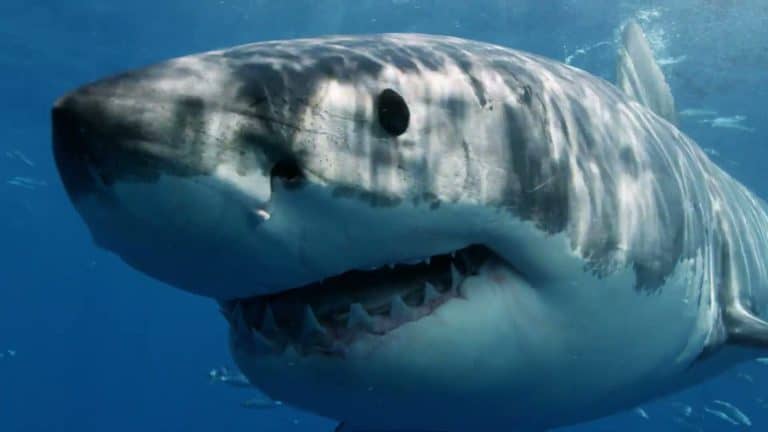
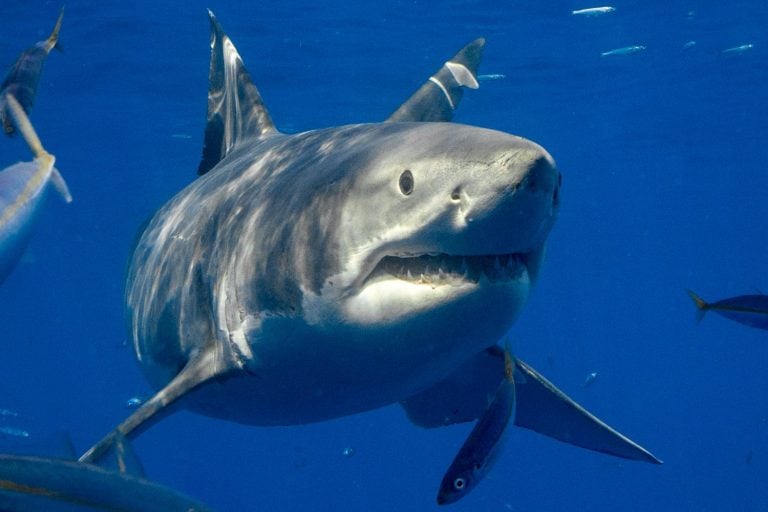
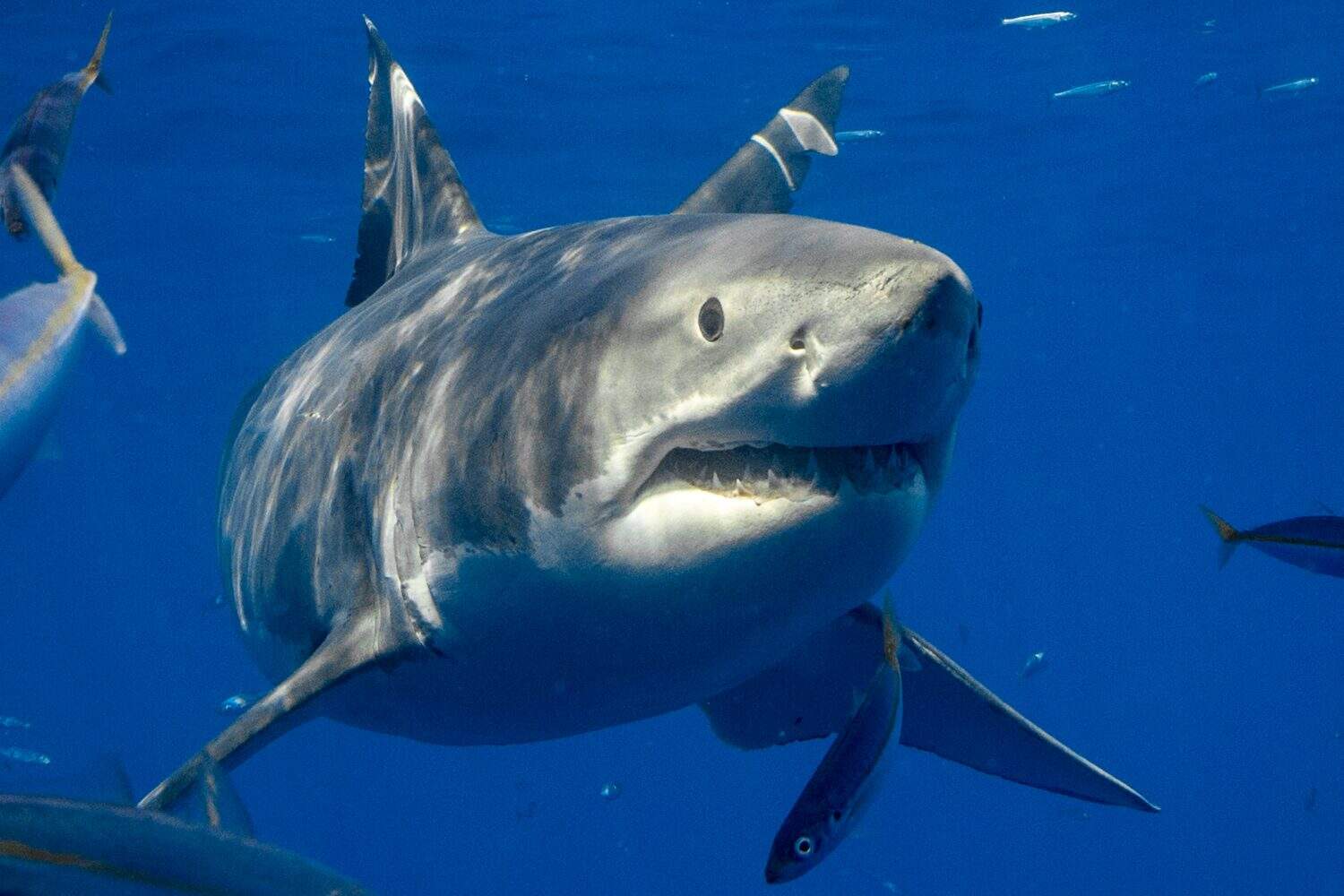
Adult great white sharks can grow to about 21 feet long.
©iStock.com/USO
The answer is both. A predator hunts and feeds on living prey, while a scavenger feeds on animals that are already dead. According to the California Department of Fish and Wildlife, great white sharks are among the ocean’s top-level predators, but they also scavenge when the opportunity presents itself.
Great white sharks (Carcharodon carcharias) are carnivores, but their diet changes as they grow. Juveniles primarily eat fish, smaller sharks, and rays. Adults have a broader diet that includes fish, seals, sea lions, dolphins, seabirds, sea turtles, rays, and other sharks. They are also known to scavenge whale blubber.
That makes the drone-shadow footage especially interesting. The shark clearly responds to a moving visual cue, but the video cannot tell us exactly what the animal thought it was seeing. Sometimes the most interesting wildlife footage leaves you with a better question instead of a neat answer.