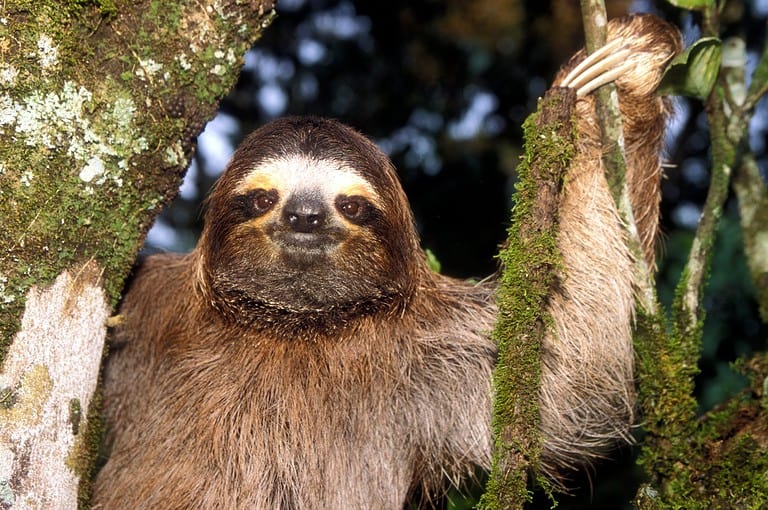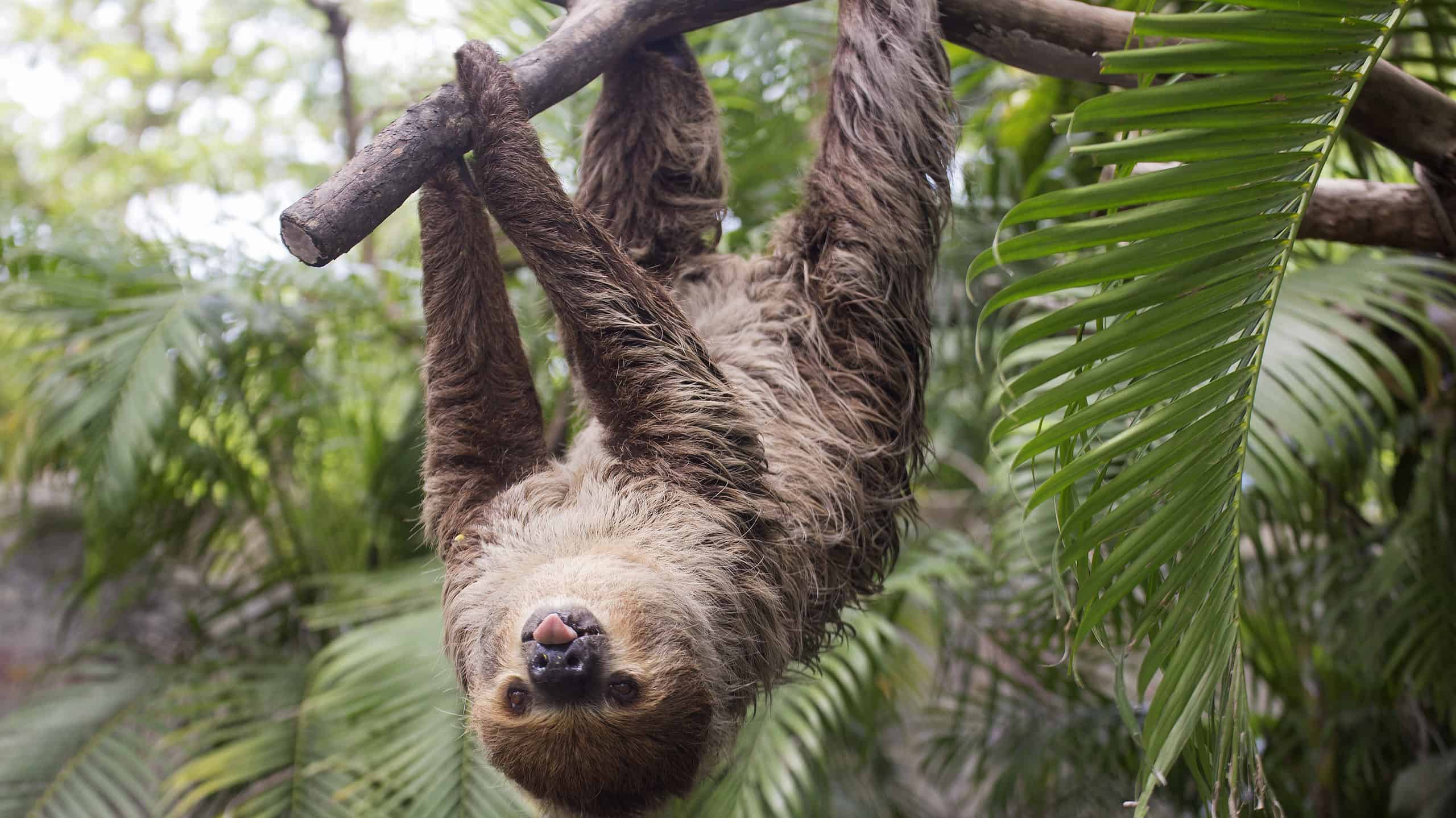

Despite only having six species of sloths living today, sloths were one of the most prolific animal species during the Ice Age. Unlike the slow, tree-dwelling, leaf-eating sloths of today, ancient sloths such as the giant mylodon, which could grow up to ten feet tall, and other giant sloth genera were much larger and more diverse.
In a new study from Johns Hopkins Medicine and the Philadelphia College of Osteopathic Medicine, scientists have announced the discovery of a new ground sloth species in the Dominican Republic. Now extinct, they suspect this species was smaller than a black bear and roamed the lowland areas of South America. This sloth did live at the same time as its cousins; however, those cousins occupied the jungle treetops, while this species is predicted to have lived on the ground.
How Do We Know This Is A New Sloth?

Sloths are part of the superorder Xenarthra, which evolved in South America around 60 million years ago.
© – Original
The newly discovered, but extinct, sloth species, parocnus dominicanus, was discovered in a now-underwater sea cave. The cave, which is now underwater, was once above water and dry. Scientists hypothesize that the sloth climbed into the cave when it was dry and was unable to get out.
The partial skeleton and various other bones show anatomical and size differences between the parocnus dominicanus sloth and its Pleistocene cohort.
The bones were much smaller than those found in other fossil records from the same period, suggesting that this species was a smaller version of ancient sloths, some of which could reach the size of elephants.
In addition, the parocnus dominicanus sloth had anatomical variations in its forelimbs and muscle attachments. The deltoid muscle attached to the sloth’s forelimbs at a different location than in other discovered and studied species. Researchers suggested this was to provide a wider range of motion.
The different attachment of the deltoid suggests that this sloth species most likely walked more on its forearms compared to its tree-dwelling cousins.. Ground-dwelling species need more strength in their forelimbs as well as a better ability to manipulate their forelimbs to survive and thrive on the ground. Researchers believe that these anatomical differences made it possible for the ground sloth to live in the Caribbean lowlands.
Why Are New Sloth Species Important?
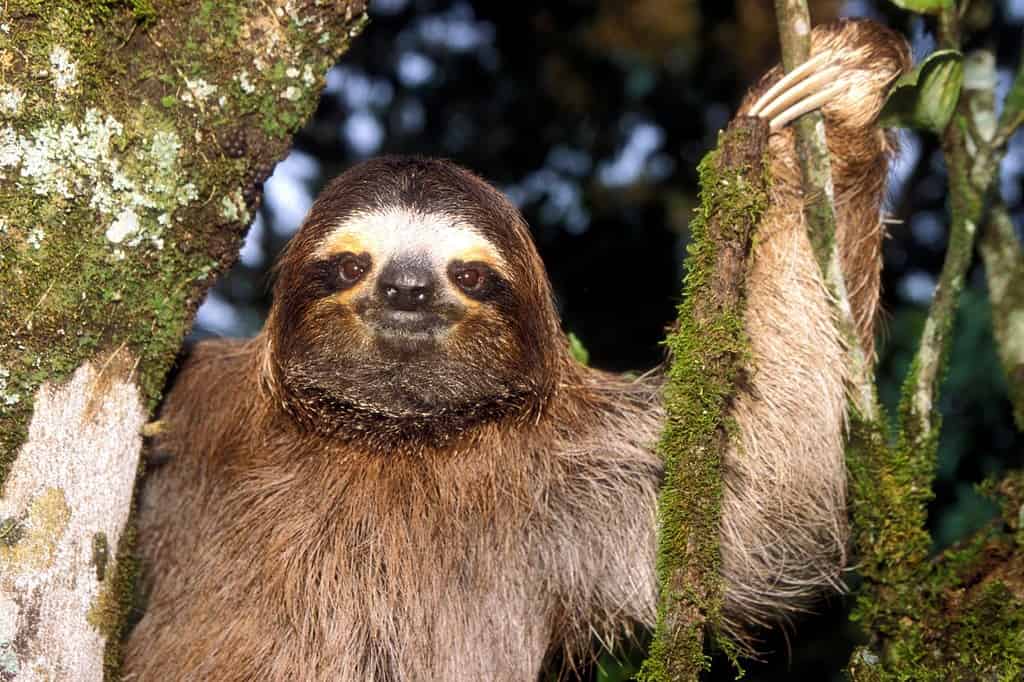
While there are only six species of modern sloths alive today, scientists have identified more than 100 different sloth species throughout history.
©COULANGES/Shutterstock.com
Fossil records indicate that some ground sloths, such as Megatherium, were among the largest mammals living in South America at the end of the Stone Age. Previous research indicates that sloths were a diverse group 5,000 years ago; giant sloth species were stretching across the Americas. With many sloth species being much larger than present-day sloths—some, like the Megatherium, growing to the size of an elephant—these creatures truly ruled the post-Stone Age. Studies indicate that these species were faster than present-day sloths, possibly semi-aquatic, living on both land and in the sea, and omnivorous, eating both plants and animals.
How did this prolific and diverse sloth genus evolve into the small, tree-dwelling creatures of today?
By continuing to expand the fossil record of the sloth genus, researchers can reconstruct the lives of ancient sloths and possibly discover the reasons for their extinction and the evolution of today’s slow-moving species. Though humans and giant sloths coexisted in the Americas during the Ice Age, recent research suggests that human hunting likely contributed to the extinction of these species, although climate change may have also played a role.
The discovery of Parocnus dominicanus is another piece in the ancient and giant sloth puzzle. By continuing to learn more about this smaller species, its life, and its adaptations, researchers will be able to learn more about these animals and their place in Earth’s timeline.