
Quick Take
- Scientists have discovered massive tunnels in South America that are too big to be created by geological formations or early humans.
- The claw marks on the tunnel walls are indicative of megafauna, such as giant ground sloths.
- The tunnels may have been for shelter or protection from predators.
- Ancient megafauna died out approximately 50,000 to 9,000 years ago due to climate change and overhunting.
Across parts of South America, researchers have made an unusual discovery – a vast network of massive underground tunnels carved into a rocky landscape. Their origins were a mystery – too large to be a natural phenomenon and unlikely to be created by early humans. However, one theory has become more likely: these tunnels may have been created by megafauna. Keep reading to learn what megafauna are and whether they really created these tunnels!
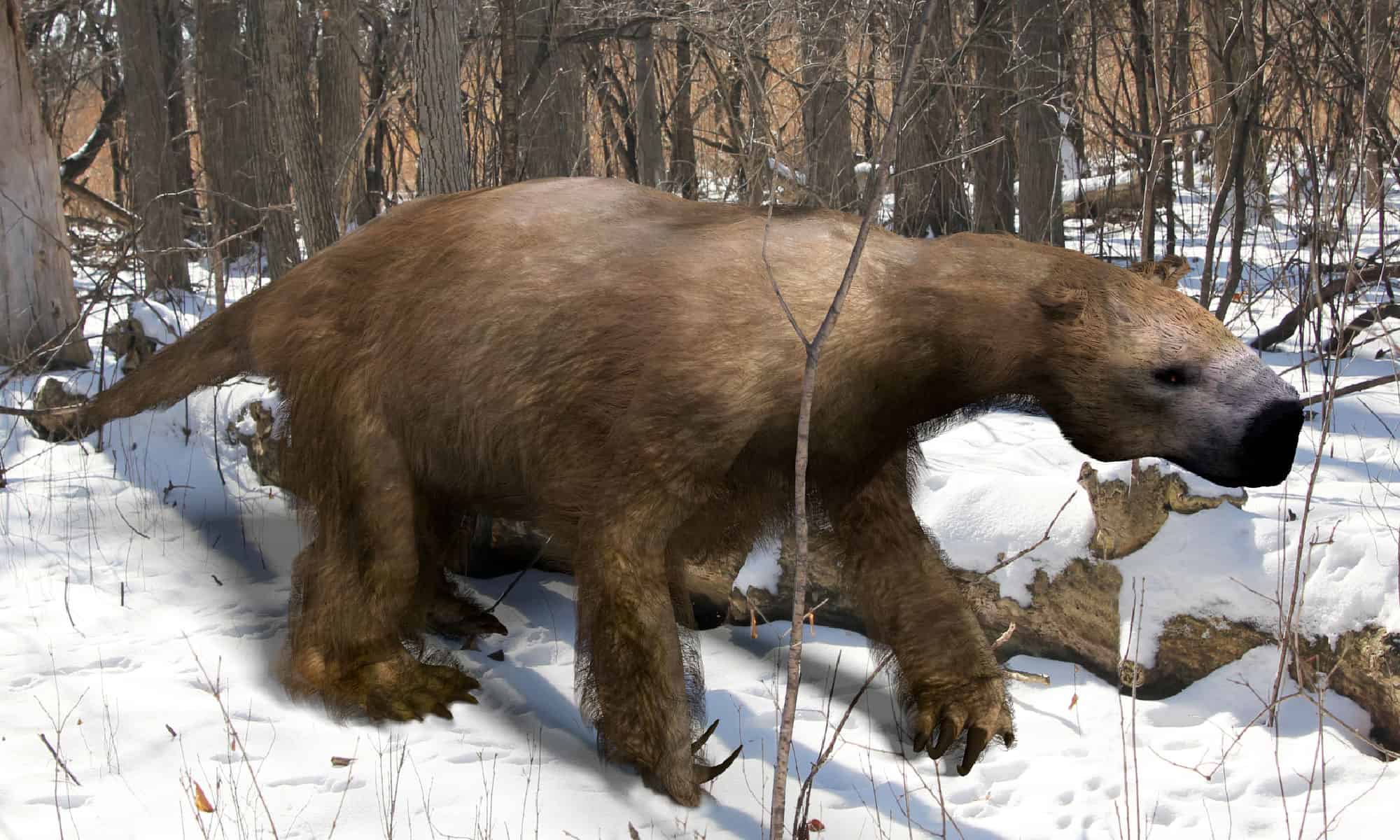
Ancient megafauna were huge animals like ground sloths.
©Catmando/Shutterstock.com
The Discovery of Massive Tunnels
New discoveries are being made all the time, and there are many pieces of evidence that provide insights into the lives of different ancient animals. However, one of the most fascinating discoveries in recent years is that of giant tunnels. These vast structures are around six feet wide, tall enough for a human to walk through with ease, and are up to 600 yards long. They are located in northern Argentina and southern Brazil.
Along with their impressive size, one of the most surprising things about these tunnels is that they have been carved into rock. Layers of volcanic rock and sandstone form large parts of the local landscape. However, they are too tough for humans to dig into without modern excavation equipment. Additionally, the walls of the tunnels are mostly smooth and uniform, except for long, parallel claw marks etched into the rock.
The tunnels are not random formations; they consist of a complex network of crisscrossing patterns. This complexity, combined with the sheer size, leads scientists to believe the tunnels were not created by humans or any natural geological process. Instead, scientists believe these are paleoburrows created by prehistoric megafauna.
What Are Megafauna — and Could They Have Dug the Tunnels?
The term “megafauna” is used to describe very large animals, typically those weighing more than 100 pounds. Although megafauna still exist today, the term is more often associated with huge animals that lived during the Pleistocene Epoch – particularly the Ice Age. These animals lived on every continent except Antarctica. They include species such as mammoths, mastodons, saber-toothed cats, and giant ground sloths.
Due to their sheer size and behavior, megafauna were capable of influencing or transforming ecosystems. They influenced their environment by consuming and trampling vegetation and dispersing seeds. This ability to transform landscapes makes megafauna the likely creators of the mysterious tunnels.
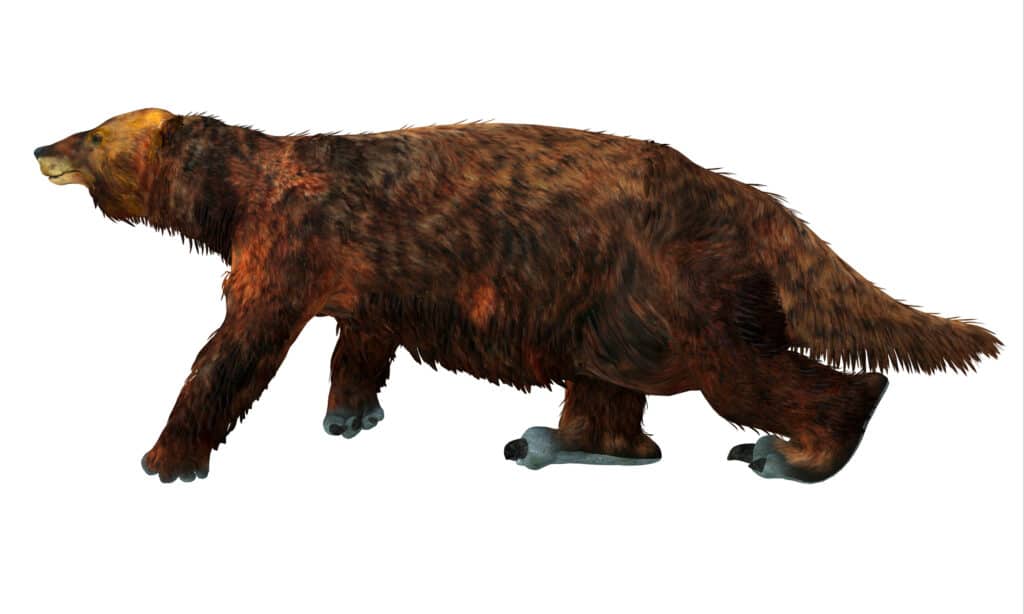
The prime suspects are a group of giant ground sloths, known as Megatherium. Megatherium was endemic to South America. They were approximately 20 feet long and stood around 12 feet tall on their hind legs. Megatherium also weighed up to 8,800 pounds – a size comparable to an Asian elephant. They had powerful forelimbs and long, sharp claws. Megatherium also had self-sharpening teeth, similar to those of modern rodents, and a prehensile upper lip. They were browsers and primarily ate plants, although some theories suggest that they may have also scavenged meat.

Megatherium had large, curved claws that matched the claw marks in the tunnels.
©Esteban De Armas/Shutterstock.com
The size and curved shape of Megatherium’s claws match the excavation marks in the tunnels. Unlike smaller burrowing animals, giant ground sloths were large and powerful enough to dig through layers of soil and rock. It’s not known exactly why Megatherium created these tunnels, but it’s thought that they served multiple purposes. The tunnels may have served as shelter from extreme weather or even as protection from predators. Rather than being only temporary shelters, these tunnels may have been used by multiple generations of ground sloths.
What Happened to the Megafauna?
Although the term “megafauna” still applies to living species such as elephants, rhinos, hippos, and bison, the majority of the world’s megafauna died out from the Late Pleistocene to the early Holocene, approximately 50,000 to 9,000 years ago. However, some isolated populations survived until much later — such as the mammoths of Wrangel Island, which survived until around 4,000 years ago. It’s estimated that 80% of all mammals weighing more than 2,200 pounds became extinct during this period.
There are two main factors that contributed to the extinction of the megafauna: hunting by humans and climate change. As the end of the Ice Age approached, rising temperatures caused a major shift in ecosystems. Open habitats such as grasslands began to shrink as more vegetation and forests began to expand, reducing the grazing land available for large herbivores. This was a critical change for large animals that required vast amounts of food to survive. Additionally, many of these large species reproduce very slowly. As a result, even relatively low levels of hunting by humans could have significantly reduced their populations and caused rapid declines.