
With more than 40,000 species of snail in the world today, it is no surprise that they have diverse sizes and appearances. They are found throughout the world in a wide variety of habitats. From the most common garden snails to sea snails, there is far more to snails than meets the eye. We typically picture snails as small, but some snails grow to be far larger than you might expect. So, which snails are the largest? Keep reading to discover the largest snails in the world.
#10: Pomacea Maculata
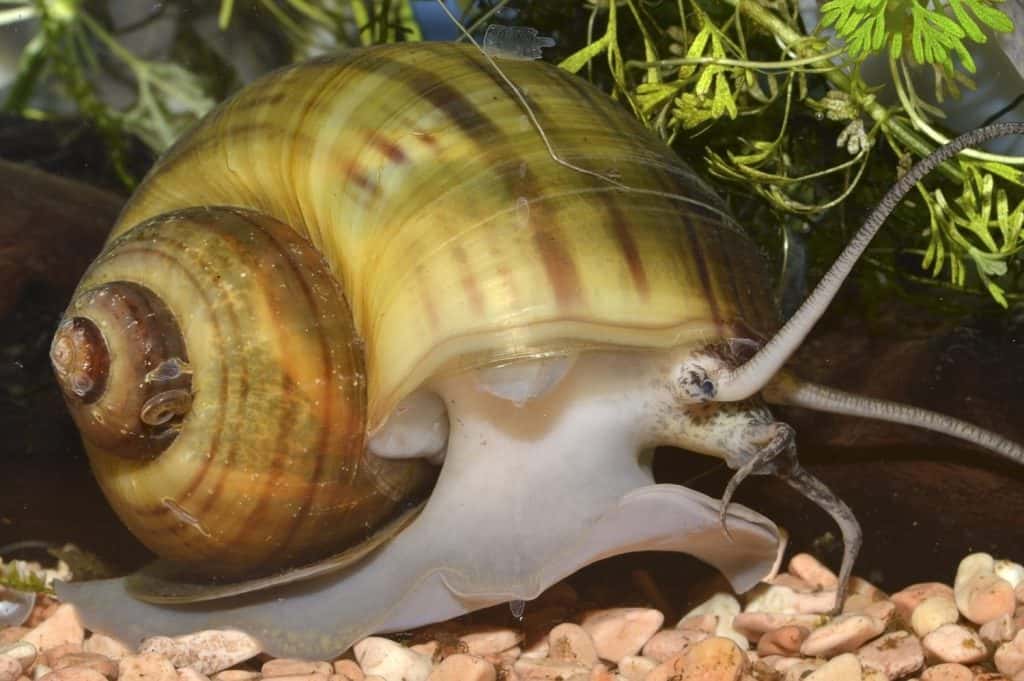
Pomacea maculata is believed to be the largest apple snail at around 6.5 inches long.
©Guillermo Guerao Serra/Shutterstock.com
The largest apple snail species is arguably Pomacea maculata, sometimes referred to as the giant apple snail or the spotted apple snail. This snail grows to around 6.5 inches long. They have yellow-green to dark brown shells with spiral bands and a large opening. They have both gills and lungs, allowing them to survive in both water and on land. Apple snails originated in South America but have rapidly spread to other parts of the world as an invasive species. They prefer slow-moving freshwater and wetlands near agricultural areas. The diet of Pomacea maculata consists of aquatic plants, but in some regions, they also consume rice and taro crops, causing significant economic damage.
#9: Lissachatina reticulata
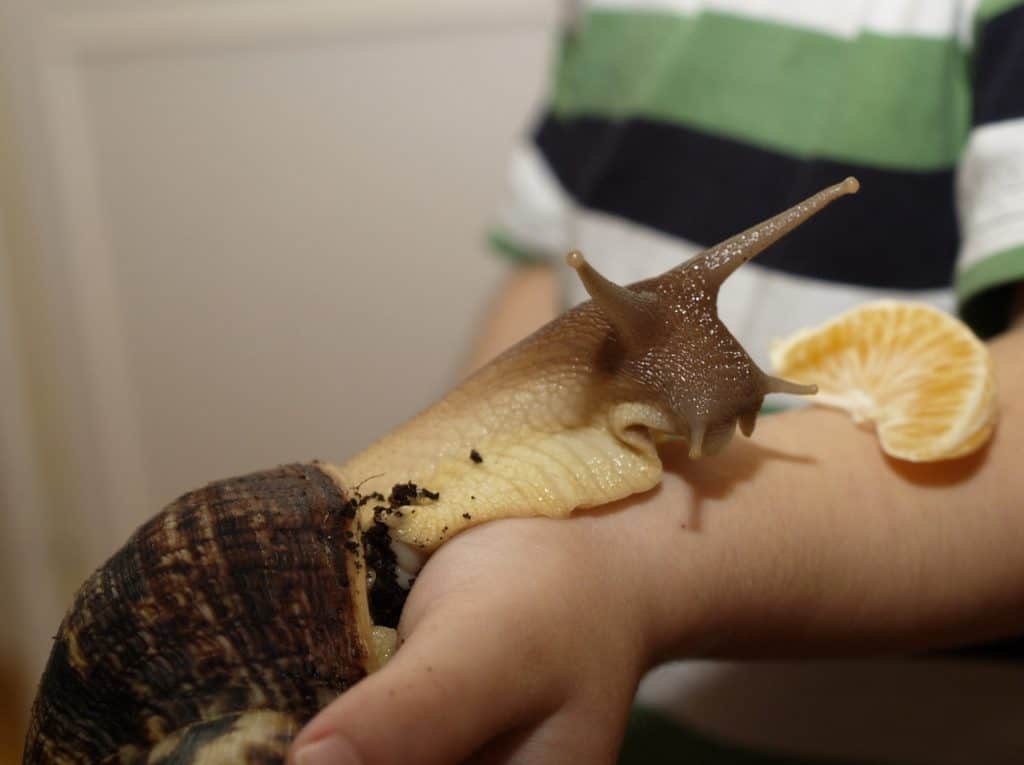
Lissachatina reticulata has a reticulated, or net-like, pattern on its shell.
Lissachatina reticulata, commonly known as “retics,” also belong to the family of giant African land snails. Their name comes from the reticulated, or net-like, patterned shell, which features brown, yellow, and orange colors. These snails can grow extremely quickly, reaching a maximum size of around 7 inches in length. They are found mainly in the Tanzanian archipelago of Zanzibar, which is located off the southeast coast of Africa. They prefer a wet environment with a high level of humidity. The Lissachatina reticulata diet mostly consists of fruits, vegetables, and leaves.
#8: Lissachatina fulica
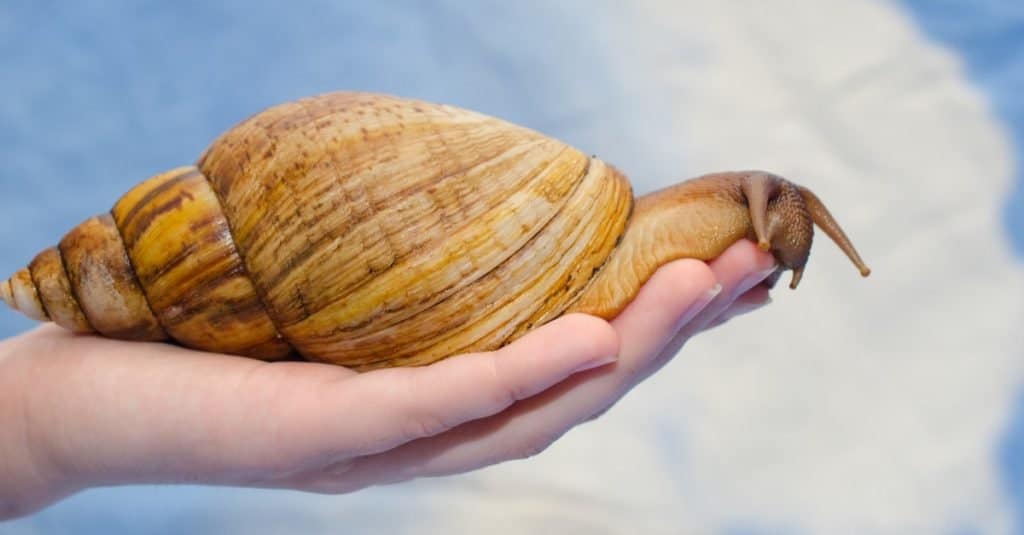
Importation of the invasive giant African land snail, Lissachatina fulica, is banned in the U.S.
©Olena Kurashova/Shutterstock.com
Lissachatina fulica is said to be about the size of a human fist. These massive snails are native to East Africa, but are now found on every continent except Antarctica. Lissachatina fulica can reach up to 8 inches in length and 4 inches in diameter. They have dark brown shells with lighter brown stripes. These giant African land snails are also a highly invasive species and are known as major pests due to the damage they cause to plants and crops. They also carry the rat lungworm parasite that can cause meningitis in humans. It is illegal to own them in many places, and their importation is banned in the U.S.
#7: Giant Whelk
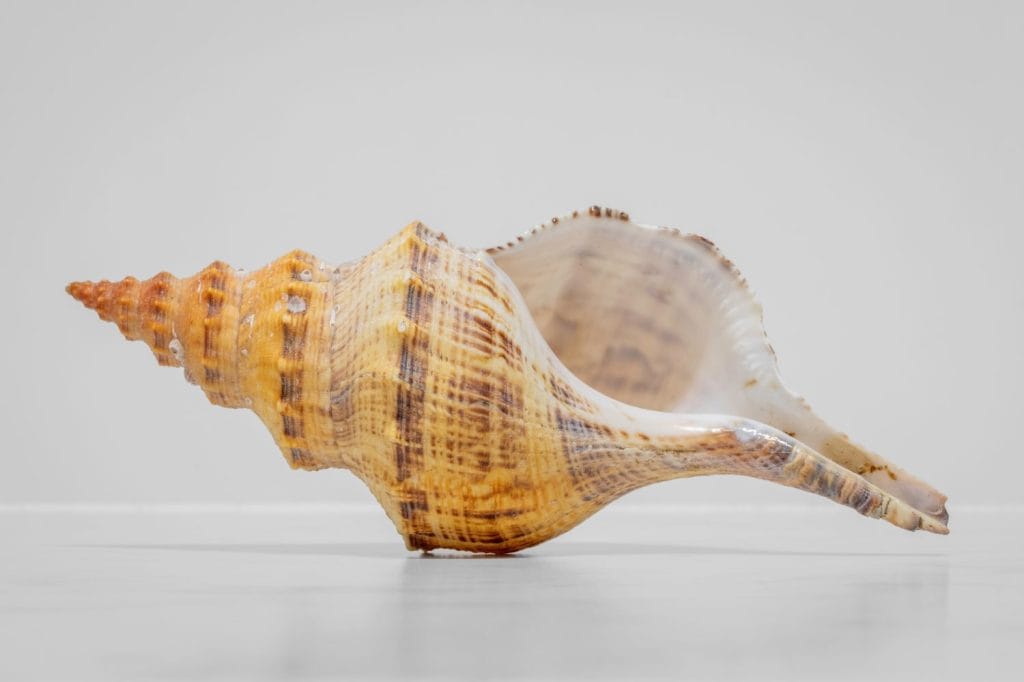
The giant whelk is found in the South Pacific.
©Jonathan Steinbeck/Shutterstock.com
The first sea snail on our list is the giant whelk, or great whelk (Penion maximus). This snail can grow to a shell length of around 10 inches. The giant whelk is found in the waters off the east coast of Australia to Tasmania. Their diet consists of crustaceans, worms, and even other snails. Giant whelk shells are white to tan colored with distinctive brown spirals on the surface.
#6: Achatina achatina
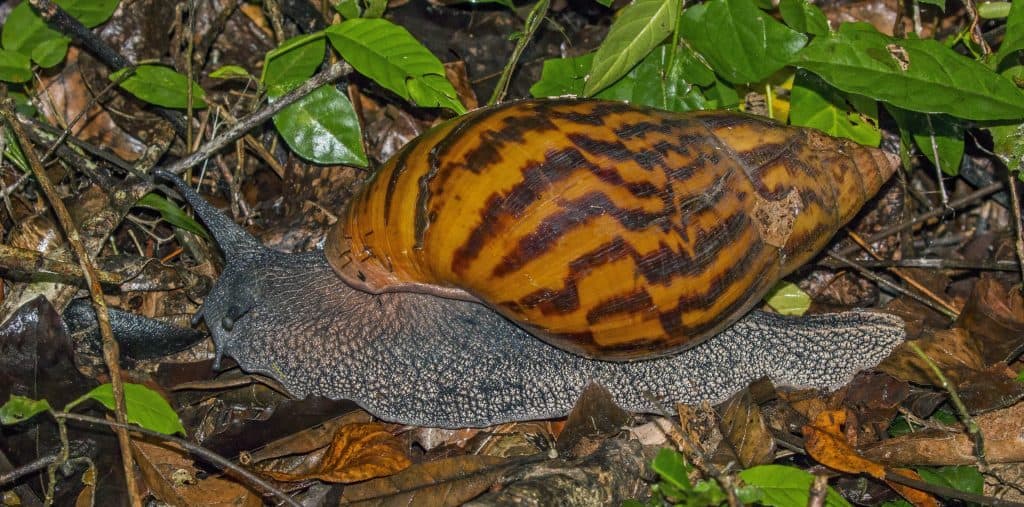
The giant tiger land snail has a shell length than can reach over 10 inches long.
The largest land snail ever recorded is the West African giant tiger land snail, Achatina achatina. They can grow to a total body length of 15.5 inches long, with a shell length of 10.75 inches. Their primary diet consists of parts of plants, including the fruit, flowers, leaves, and stems. They are considered pests, as they have also been known to eat vegetable crops in the Ivory Coast, as well as fruit and oil palm crops in Ghana. The giant tiger land snail has a conical, whorled shell with a brown base and darker brown vertical stripes.
#5: Knobbed Whelk
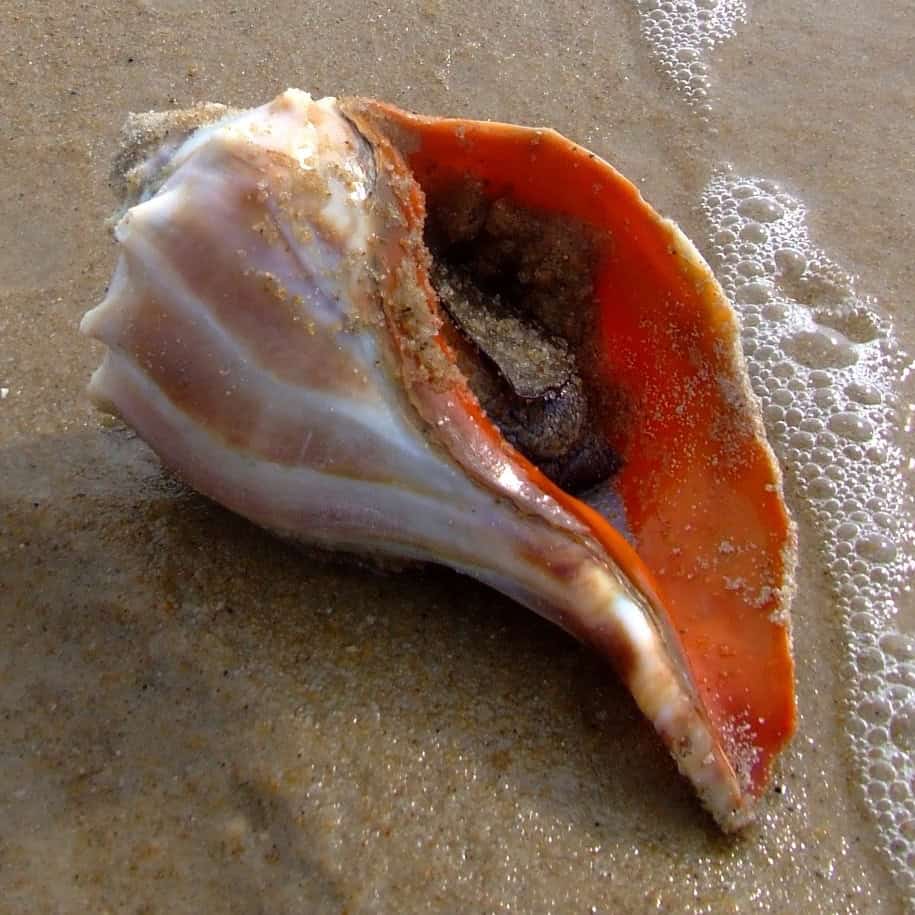
The knobbed whelk can be found off the Atlantic coast of the United States.
Knobbed whelks (Busycon carica) are carnivorous sea snails. They can be found off the Atlantic coast of the U.S. from as far north as Massachusetts down to Florida. Knobbed whelks can grow to a length of around 12 inches. Their shells are pale grey to tan with pinkish-brown streaks and an orange opening. They have clockwise spirals with knobs protruding around the top. These snails prefer the shallow waters of tidal estuaries where they feed on bivalves such as mussels and clams.
#4: Lightning Whelk
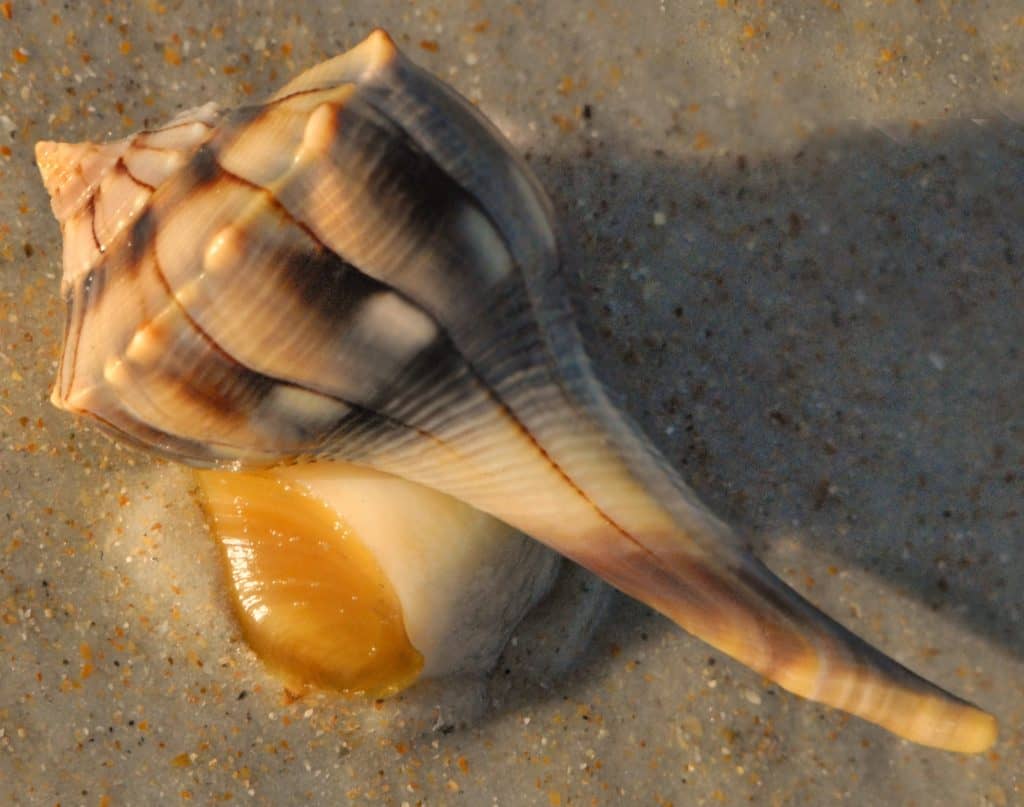
Lightning whelks are the largest whelk species, growing as long as 16 inches.
The lightning whelk (Sinistrofulgur sinistrum) is found along the Atlantic coast of the U.S. and west to the Gulf of Mexico. Females can reach lengths of up to 16 inches, but males only reach about half that size. Unlike other gastropods, lightning whelks have shells that open on the left instead of the right. Their shells are a cream to grey color with vertical brown streaks and they spiral counterclockwise. Lightning whelks prefer shallow, coastal waters with sandy or muddy bottoms. These carnivorous snails primarily consume clams, oysters, and other bivalve mollusks.
#3: Giant Triton
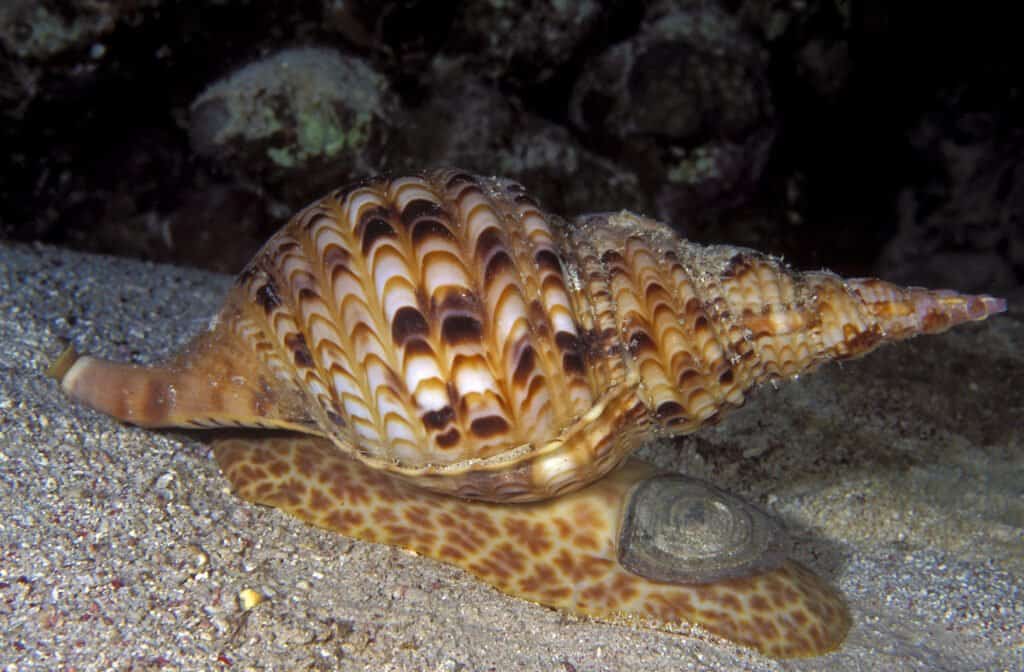
The giant Triton paralyzes prey with its saliva.
©zaferkizilkaya/Shutterstock.com
The giant Triton (Charonia tritonis) is a large sea snail that can grow to a length of around 2 feet. It is also called Triton’s trumpet, as Triton, who was the son of the Greek god Poseidon, was said to use this shell as a trumpet. They are found throughout the Indo-Pacific oceans and are important to the health of coral reefs. They are a natural predator of the highly venomous Crown-of-Thorns starfish, which feed on the reefs. As well as feeding on starfish, the giant triton also eats other snails. The triton hunts by chasing its prey and then paralyzing the target with saliva. Their patterned shells are usually white to yellow-brown and have a spindle-like shape.
#2: Florida Horse Conch
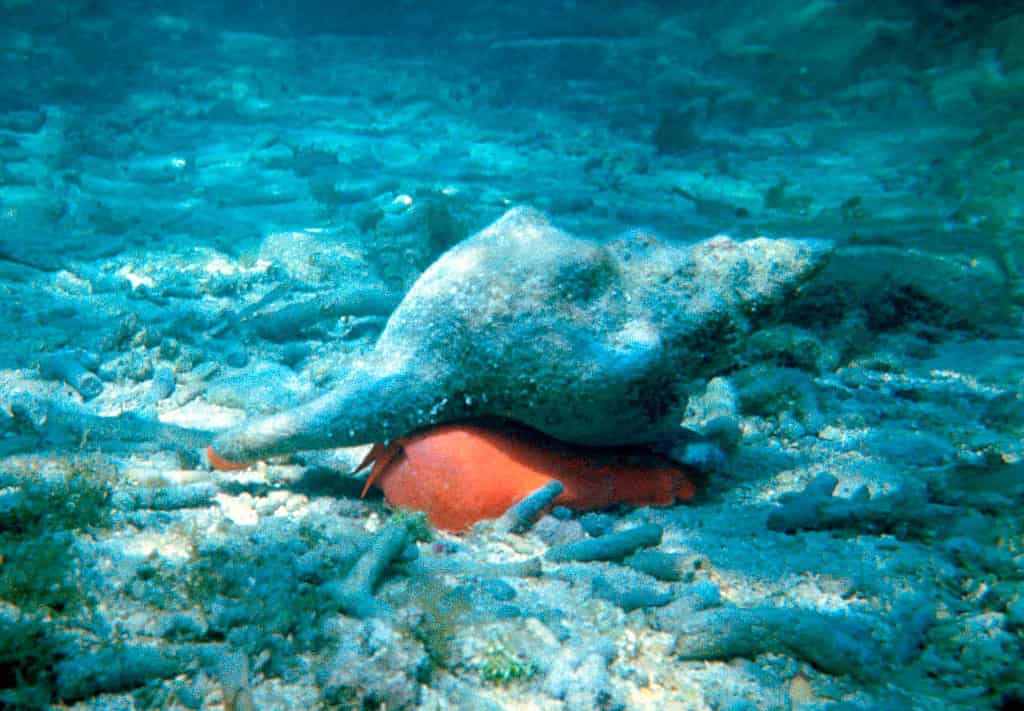
The Florida horse conch is the largest snail in U.S. waters.
©Heather Dine – Florida Keys NMS / Public Domain – Original / License
The Florida horse conch is a sea snail that has a shell length of up to 2 feet. It is commonly found along the Atlantic Coast of the U.S. from North Carolina to Florida and into the Gulf of Mexico. It is the largest snail that can be found in U.S. waters. This snail prefers to live in the sand and mud flats of relatively shallow coastal waters. The Florida horse conch eats other snails and also hermit crabs. Its whorled, spindle-shaped shell is white or salmon-colored. The snail’s body is a distinctive orange color that fades as the snail gets older.
#1: Australian Trumpet
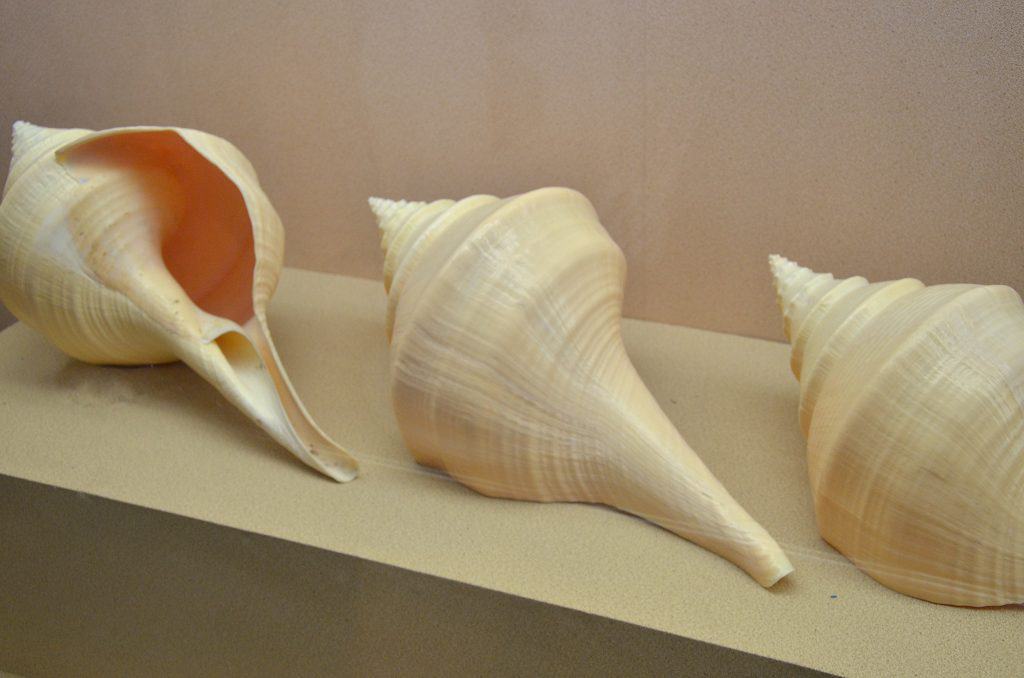
The Australian trumpet can weigh up to 40 pounds.
Easily coming in at number one is the Australian trumpet (Syrinx aruanus). It is a huge sea snail that is found in the waters around its native Northern Australia, as well as Eastern Indonesia and Papua New Guinea. These giants can grow to nearly 3 feet and can weigh up to 40 pounds. So, the Australian Trumpet is undeniably the largest snail in the world. They are often hunted for both food and for their impressive shells, which are not only unique, but also highly collectible. Their shells are pale apricot or yellow and have a distinctive shape that is narrower at one end.