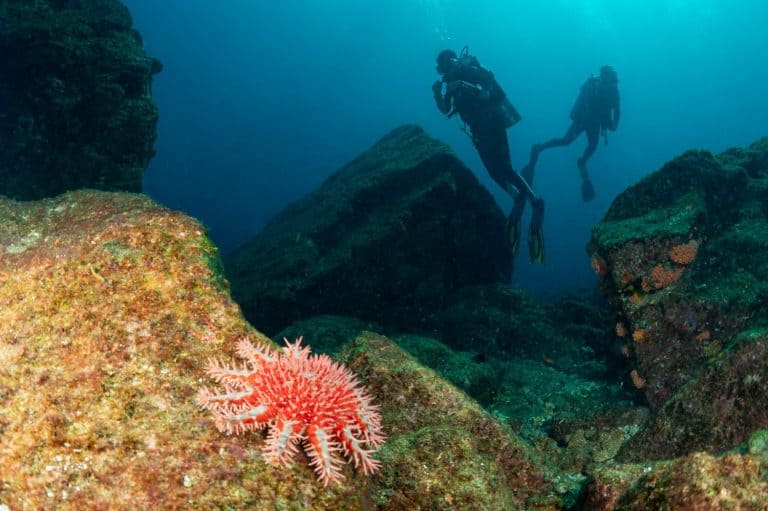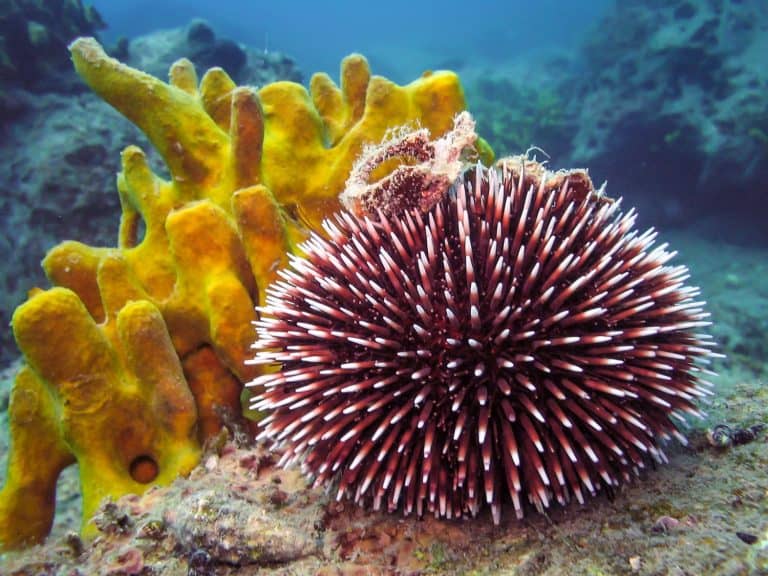

Starfish are star-shaped marine invertebrates that are found in all of Earth’s oceans, from shallow coastal waters to abyssal depths. Starfish, also known as sea stars, are incredibly unique animals. The majority of species eat by turning their stomach inside out through their mouths to engulf prey. There are approximately 2,000 species of starfish, including some that are venomous. Continue reading to learn about the ten largest species, ranked by diameter.
10. Northern Pacific Sea Star
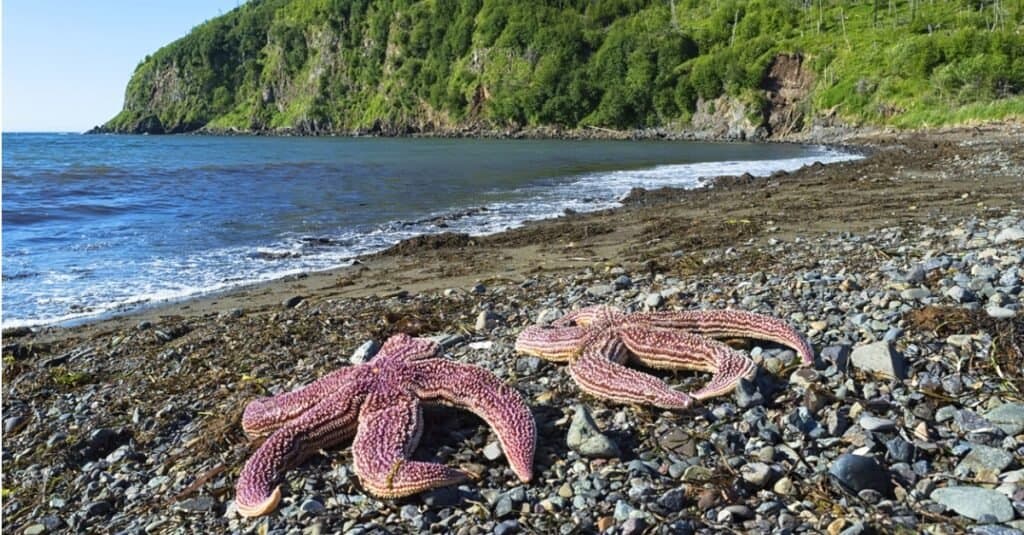
Northern Pacific sea stars are one of the most invasive species in the world.
©iStock.com/bksrus
Also known as the Japanese common starfish, the Northern Pacific sea star (Asterias amurensis) is found in shallow waters around the coasts of Alaska, British Columbia, China, Japan, Korea, and Russia. Northern Pacific sea stars measure a maximum diameter of 19.5 inches. They are also an invasive species in Southern Australian waters and are on the list of the 100 most invasive species in the world. They have five arms, which are covered in small spines. Northern Pacific sea stars have orange, yellow, and red dorsal sides, while they are completely yellow underneath. They primarily prey on mollusks, but also crabs, barnacles, and algae, and their main predators are other starfish. Incredibly, if one of their arms is severed, it can grow into an entirely new starfish called a comet form.
9. Stimpson’s Sun Star
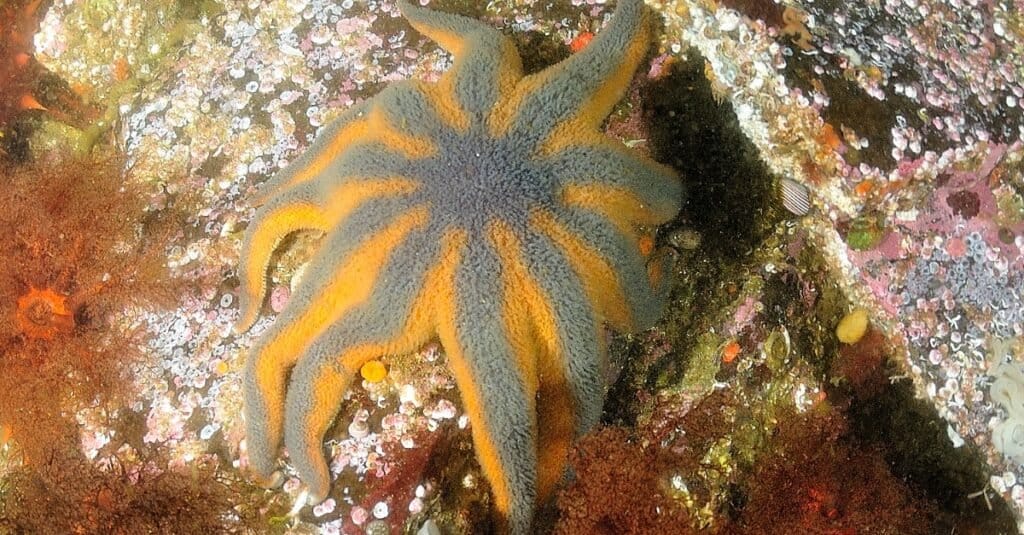
Incredible color – Stimpson’s sun stars are bright and vibrant.
©iStock.com/Eduardo Baena
Stimpson’s sun stars (Solaster stimpsoni), also known as striped sun stars, have a diameter of approximately 19.5 inches. They are found on rocky surfaces in seas around Japan and the West Coast of America from California to Alaska, at depths up to 2,000 feet. Stimpson’s sun stars have between eight and twelve arms. Their arms are long and slender, and each one has two rows of tube feet. Stimpson’s sun stars prey on sea cucumbers, brachiopods, and sea squirts. Their main predator is the morning sun star (Solaster dawsoni).
8. Red Cushion Sea Star
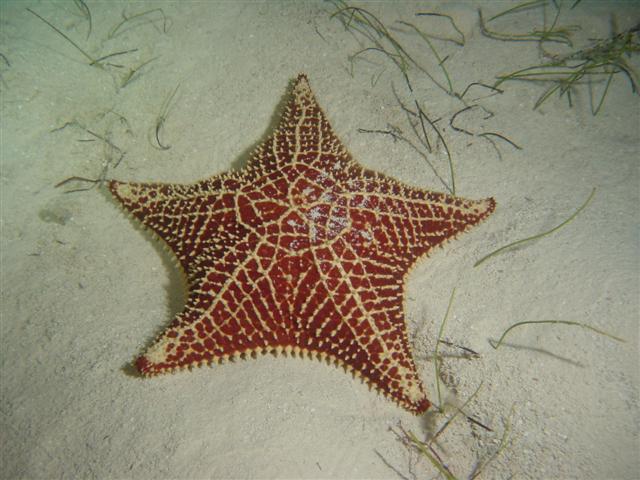
Red cushion sea stars have broad, cushioned central discs.
©Dlloyd / Creative Commons – Original
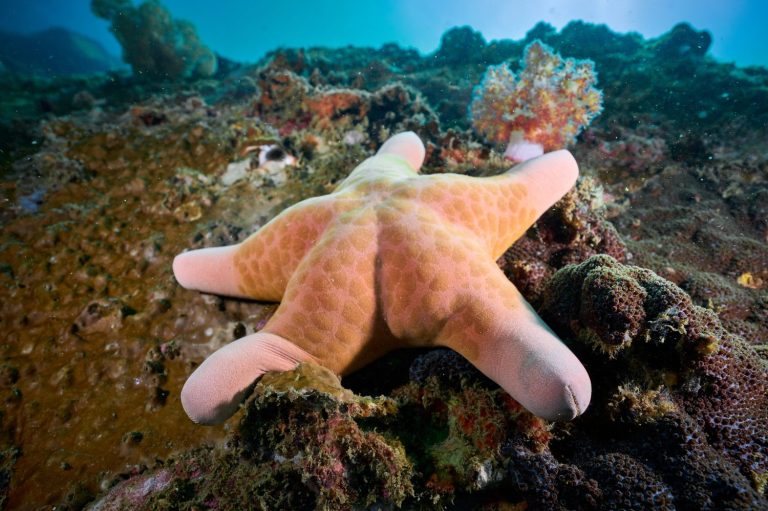
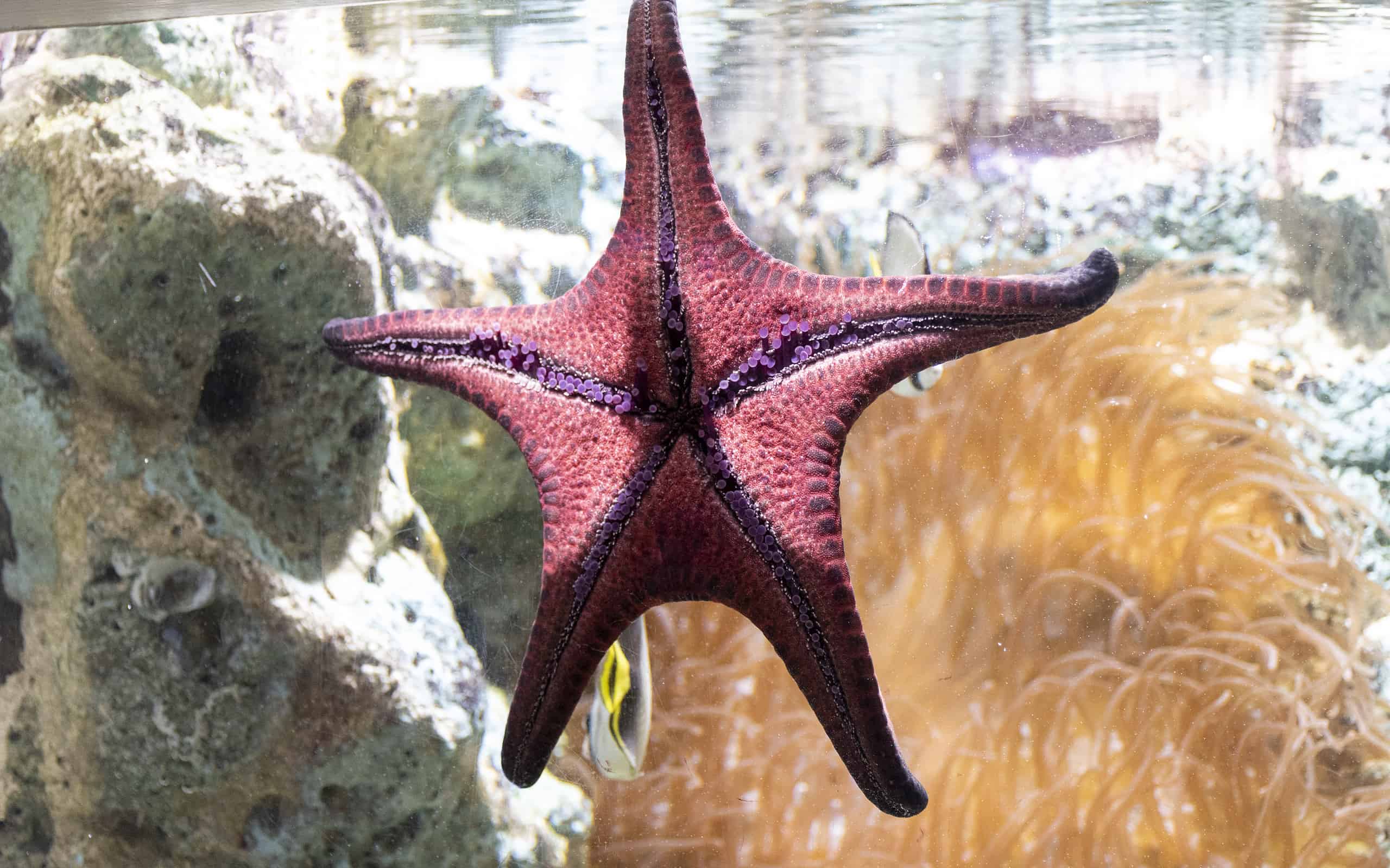
The red cushion sea star (Oreaster reticulatus), also known as the West Indian sea star, has a diameter of approximately 20 inches. They live in the Caribbean Sea and the Western Atlantic Ocean, where they live in shallow waters of 120 feet deep. In the winter, they migrate offshore to avoid rough water. Red cushion sea stars are red, orange, or yellow. They have a broad disc and five arms, although they do sometimes have more. Red cushion sea stars are omnivores and feed on algae, sponges, and other small invertebrates.
7. Mottled Star
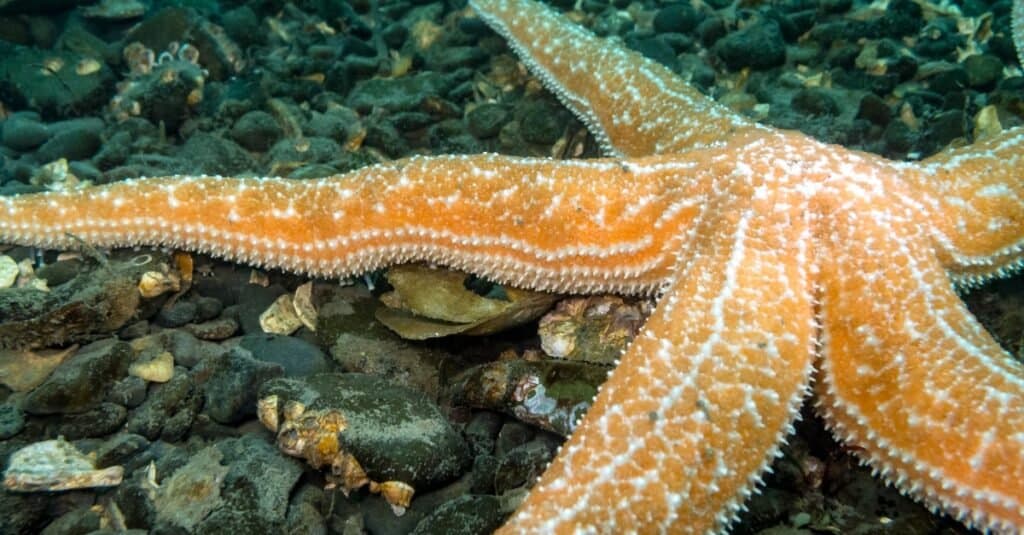
Large, powerful mottled stars can break open mollusk shells with ease.
©iStock.com/naturediver
Mottled stars (Evasterias troschelii) are named for their mottled appearance, of orange, brown, grey, or purple. They have five narrow arms, which are often curled at the tip and have a maximum diameter of 20 inches. Mottled stars are found on the West Coast of North America and in Bechevinskaya Bay, where they are found on rocks at depths of 230 feet. They are powerful starfish and can use their arms to pull open mollusk shells to prey on the animal inside. Morning sun stars, sunflower sea stars (Pycnopodia helianthoides), and king crabs are their main predators.
6. Antarctic Sun Starfish
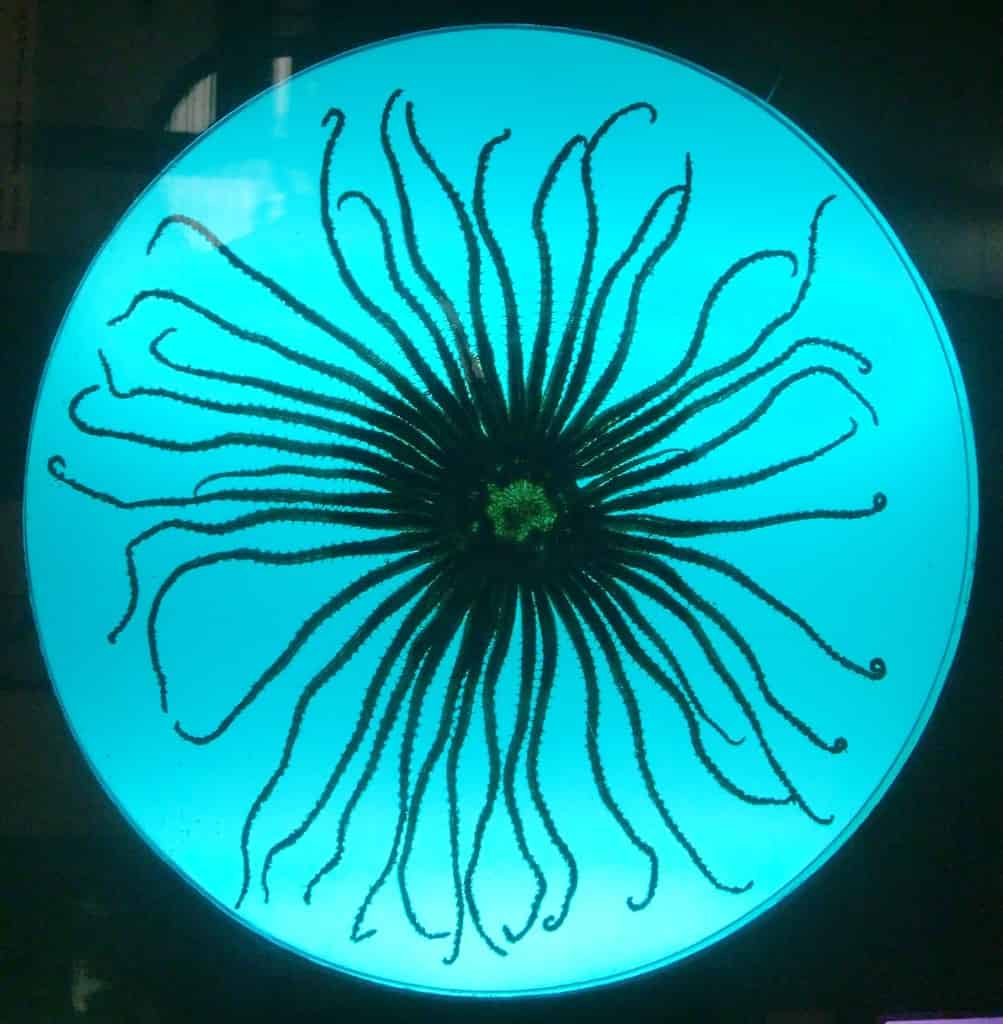
Antarctic sun starfish are found in cold water in the Antarctic.
The Antarctic sun starfish (Labidiaster annulatus), or wolftrap starfish, has between 40 and 45 slender, flexible arms that measure up to 23.5 inches in diameter. They are pale orange or pinkish red in color, and their rays are covered in overlapping scales. Antarctic sun starfish are found in cold water in the Antarctic at depths of approximately 1,800 feet. They are opportunist scavengers that sit on rocks and extend their arms to search for food, seizing anything that passes by. Small fish and invertebrates make up the majority of their diet.
5. Giant Sea Star
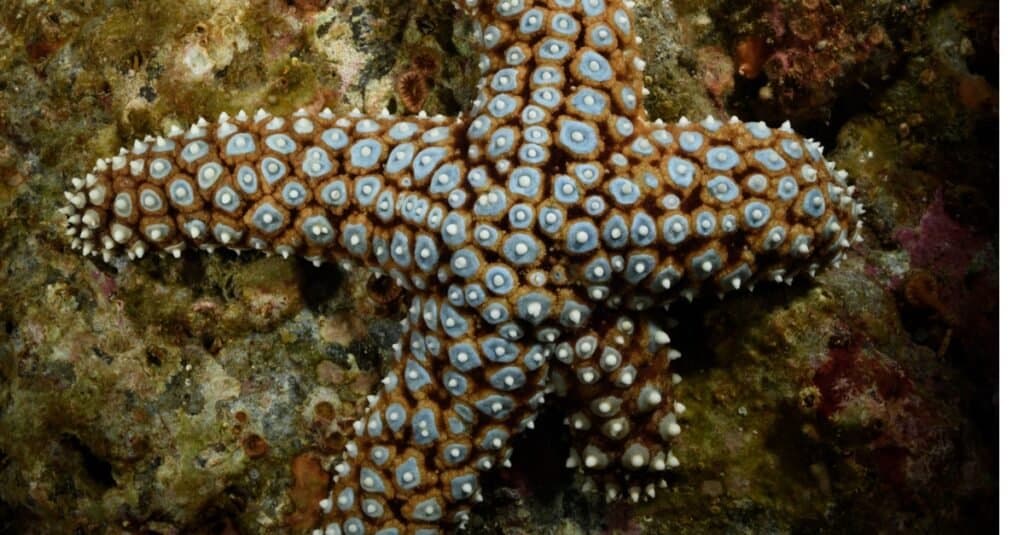
A giant sea star on a rock.
©iStock.com/Michael Zeigler
The giant sea star (Pisaster giganteus) has a 24-inch diameter. Giant sea stars are found on the West Coast of North America, usually on rocks and near the low tide mark. They have five wide arms that are either purple, yellow, orange, or brown. They are also covered in thick, blue spines that have white or purple tips on them, which is where they get their other common name, giant spined star. Giant sea stars primarily prey on mollusks, but also eat barnacles, gastropods, and limpets. Sea birds and sea otters are their only predators.
4. Spiny Starfish
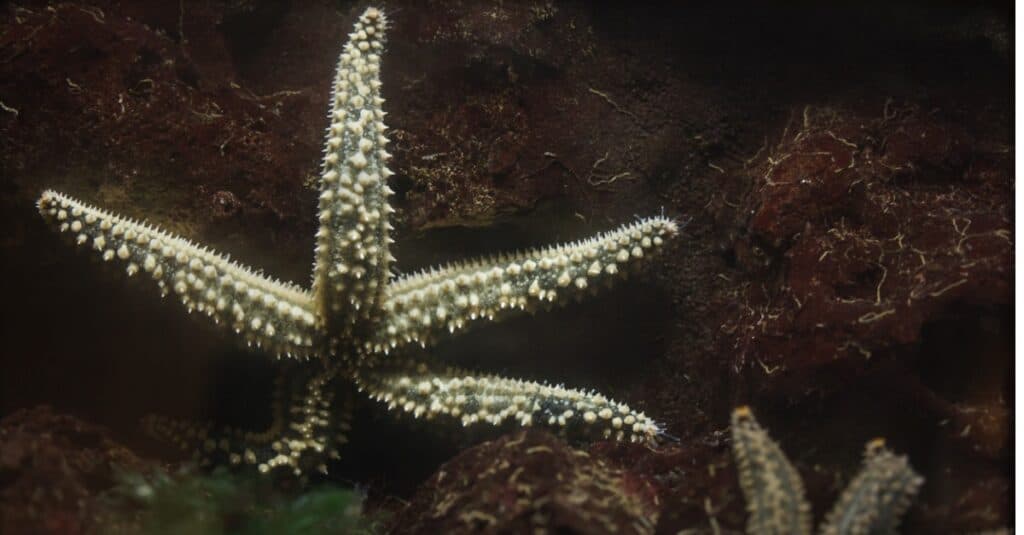
Marthasterias glacialis have five slender arms covered in white spines.
©iStock.com/wrangel
Spiny starfish (Marthasterias glacialis) are native to the Eastern Atlantic Ocean at depths of 650 feet, where they live in rocks and muddy areas. They have five slim arms and a diameter of 27 inches. Each arm has three rows of white spines that have purple tips on them. They use their spines for protection and to help them gather food. Spiny starfish prey on mollusks and other small invertebrates.
3. Pink Sea Star
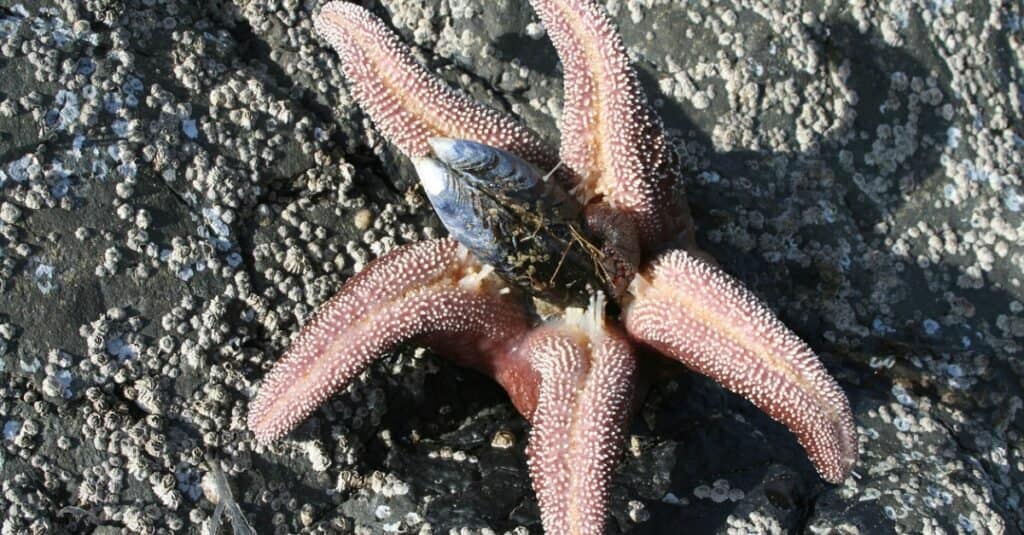
A pink sea star feeding on its prey.
©iStock.com/towlake
Pink sea stars (Pisaster brevispinus) have five thick arms and can reach 28 inches. They are native to the Northeast Pacific Ocean in shallower water near the coast, usually no deeper than 360 feet. They live on the seabed where they dig in the muddy sea floor for prey using their tube feet. Pink sea stars can dig up to 4 inches into the seabed for buried clams and then break them open. They are capable hunters and often fight with the larger sunflower sea stars over prey. Sheep crabs, sea otters, morning sun stars, and seagulls are their main predators.
2. Sunflower Sea Star
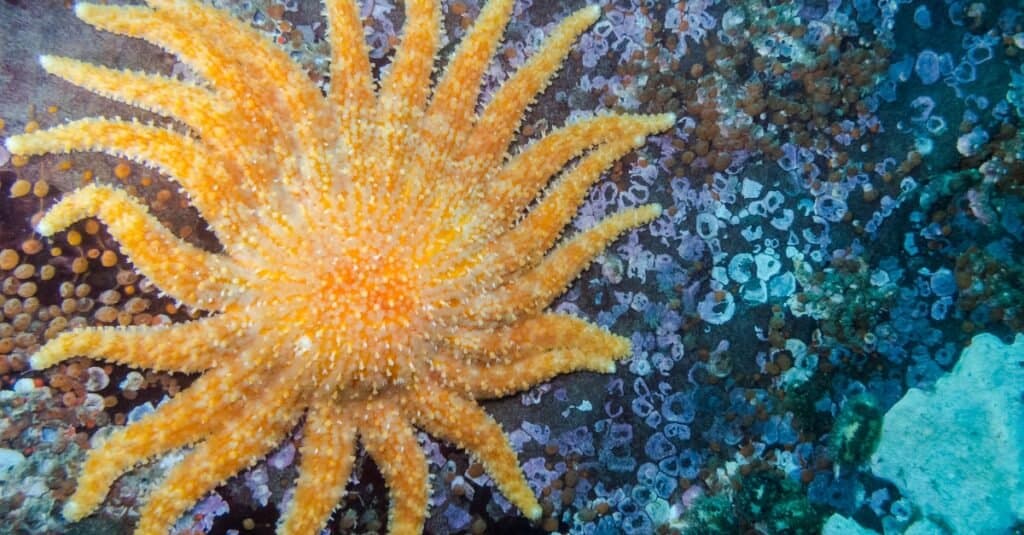
The sunflower sea star resembles a sunflower.
©iStock.com/naturediver
Sunflower sea stars have 16 to 24 arms that can be virtually any color and a 39-inch diameter. They are found in the Northeast Pacific Ocean, where they prey on sea urchins, snails, and clams. The king crab is their main predator, and incredibly, sunflower sea stars can shed an arm if they need to escape from predators quickly. Luckily, their arms grow back within a few weeks. However, the population of sunflower sea stars has declined rapidly, and the IUCN now lists them as Critically Endangered.
1. Midgardia Xandaros
The largest starfish in the world is Midgardia xandaros with a massive 53-inch diameter. These little-known starfish are particularly unusual as they have an incredibly small central disc that is only 1 inch across, but extremely long arms. Midgardia xandaros has twelve arms that are covered in spines. They are found deep in the Gulf of Mexico, at depths of approximately 2,000 feet. As they live so deep, very little is known about them, nor have they ever been observed in their natural habitat.