
Sea turtles have been around for millions of years. They are a hardy species that not only survived but thrived after the last mass extinction event. Today, however, many of the remaining seven species of sea turtles are endangered, and all are protected under the Endangered Species Act.
Between pollution, being caught as bycatch, climate change, habitat loss, and illegal poaching, sea turtles have the cards stacked against them. While some have made small steps in population recovery, others have not fared so well. But conservationists are not willing to give up the good fight, continuing to advocate for sea turtles in hopes that the tide will turn and these marine reptiles will once again flourish.
Here is a complete guide to today’s sea turtles:
Flatback Sea Turtle
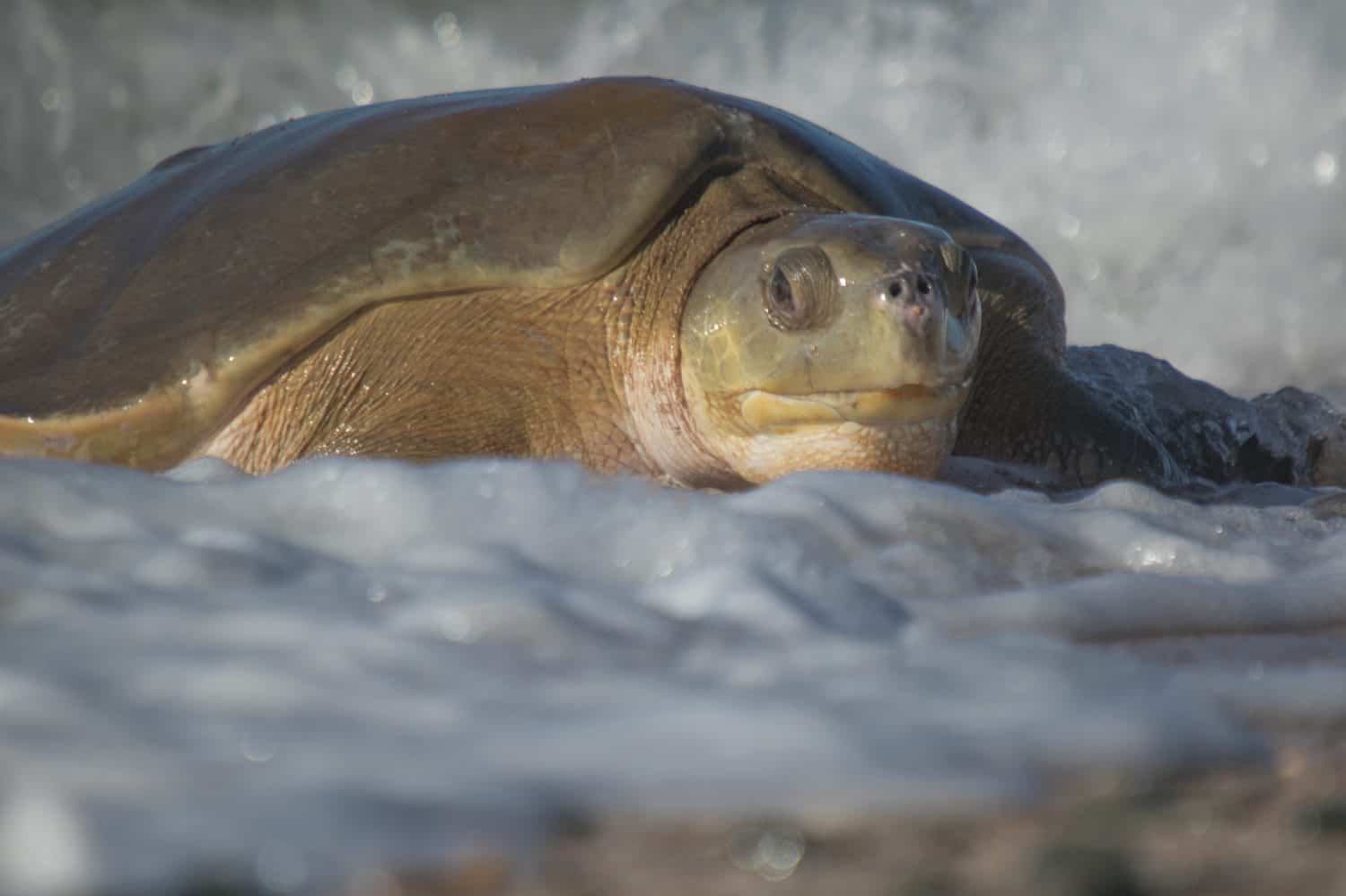
There is not enough population information on flatback sea turtles to determine their conservation status.
©Tracey Heimberger/Shutterstock.com
Found only in Australia, the flatback turtle’s conservation status is unknown. The number of individuals left is unknown, given the species’ data-deficient status.
Unlike other sea turtles that like to swim in the open ocean, flatbacks prefer coastal waters, staying close to the continental shelf off the coast of Australia.
Flatback turtles can weigh as much as 150 pounds and be three feet long. They tend to be a light green-gray color, with a lighter underbelly. This allows the turtles to camouflage themselves in the ocean while they hunt. Some of the favorite foods of the flatback turtles include:
- Jellyfish
- Sea cucumbers
- Shrimp
- Soft corals
- Fish
- Seaweed
These large turtles face numerous threats, including habitat loss, oil spills, the harvesting of eggs and turtles for consumption, and bycatch. How many of the flatback turtles are lost each year is unknown, given their data-deficient status.
| Family | Cheloniidae |
| Conservation Status | Unknown |
| How Many Of The Species Remain | Data-deficient |
| Where Species Lives | Australia |
Green Sea Turtle
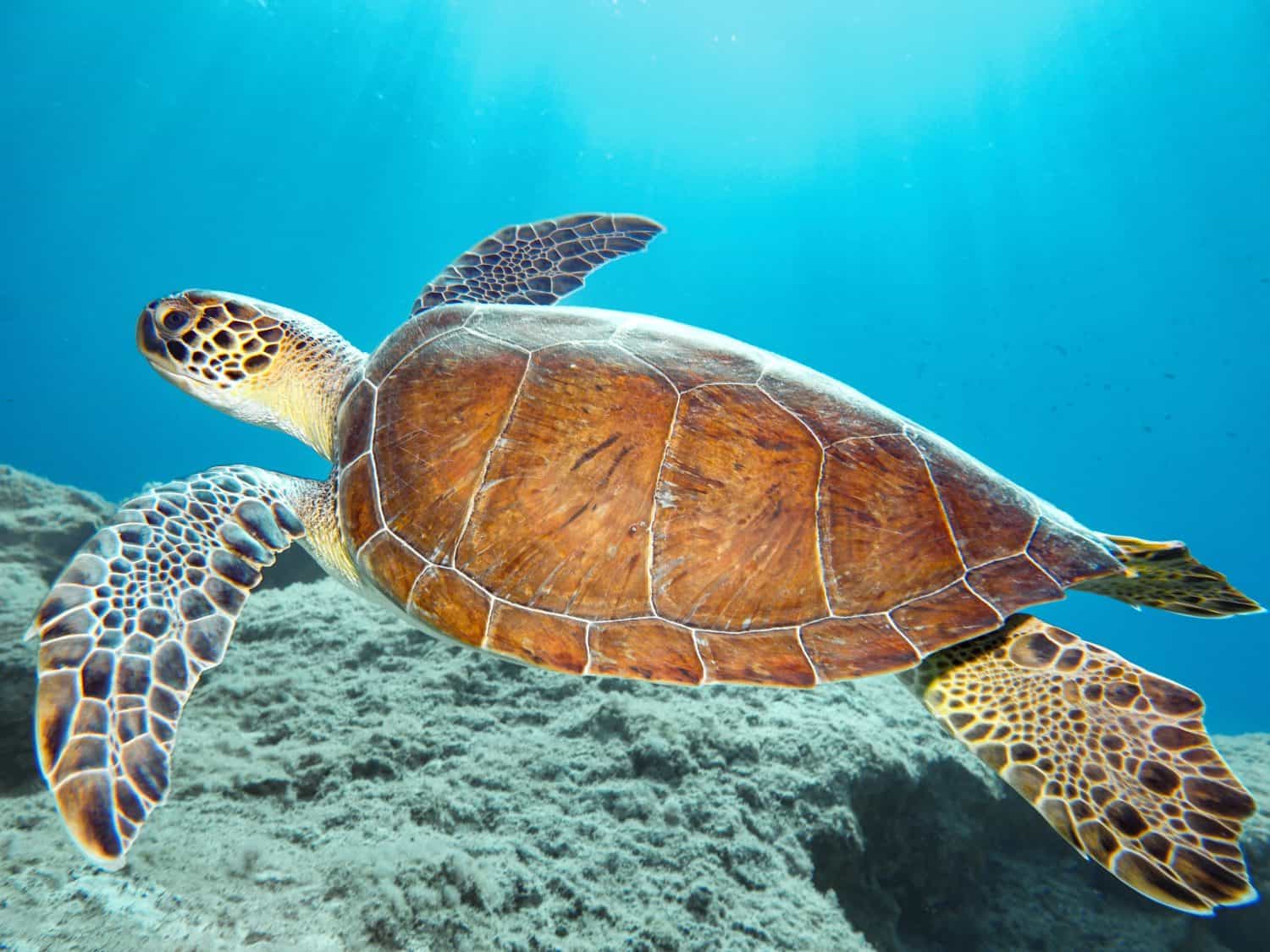
Thanks to conservation efforts, the green turtle is now a species of least concern.
©Sakis Lazarides/Shutterstock.com
A bright light among the dwindling sea turtle population is the green sea turtle. Just this month, in October 2025, it was announced that the green sea turtle is no longer considered an endangered species. Thanks to the population rebound, these turtles are now a species of least concern.
These large, hard-shelled turtles range from olive green to gray, brown, or reddish-brown with a cream-colored belly. They can grow to be up to four feet long and weigh up to 400 pounds. In total, it is believed there are 80,000 to 90,000 green sea turtles left today. While this is a decent-sized population, it is a far cry from the estimated 19 to 33 million that swam through the oceans in the past. This is why, while conservationists are celebrating the population rebound, they issued a warning: Don’t get too comfortable with the green turtles’ status, as it could easily change.
Some of the threats that face green sea turtles today include:
- Pollution
- Habitat loss
- Bycatch
- Rising sea temperatures
- Climate change
While some of the plants and animals that sea turtles eat are under threat due to rising ocean temperatures, seagrass, their primary food source, has proven to be a bit more resilient. This staple in the green sea turtle diet remains plentiful, even as global temperatures continue to climb.
| Family | Cheloniidae |
| Conservation Status | Species of least concern |
| How Many Of The Species Remain | 80,000 to 90,000 |
| Where Species Lives | Australia; Bangladesh; Brunei Darussalam; Cambodia; China; India; Indonesia; Japan; Korea; Malaysia; Myanmar; Philippines; Taiwan; Thailand; Timor-Leste; Vietnam |
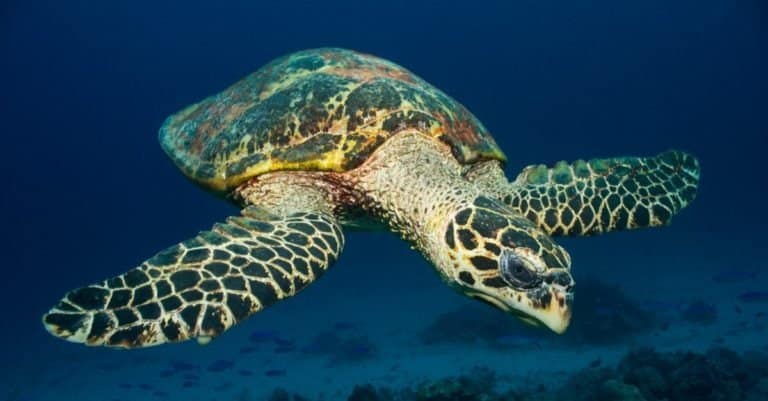
Hawksbill Sea Turtle
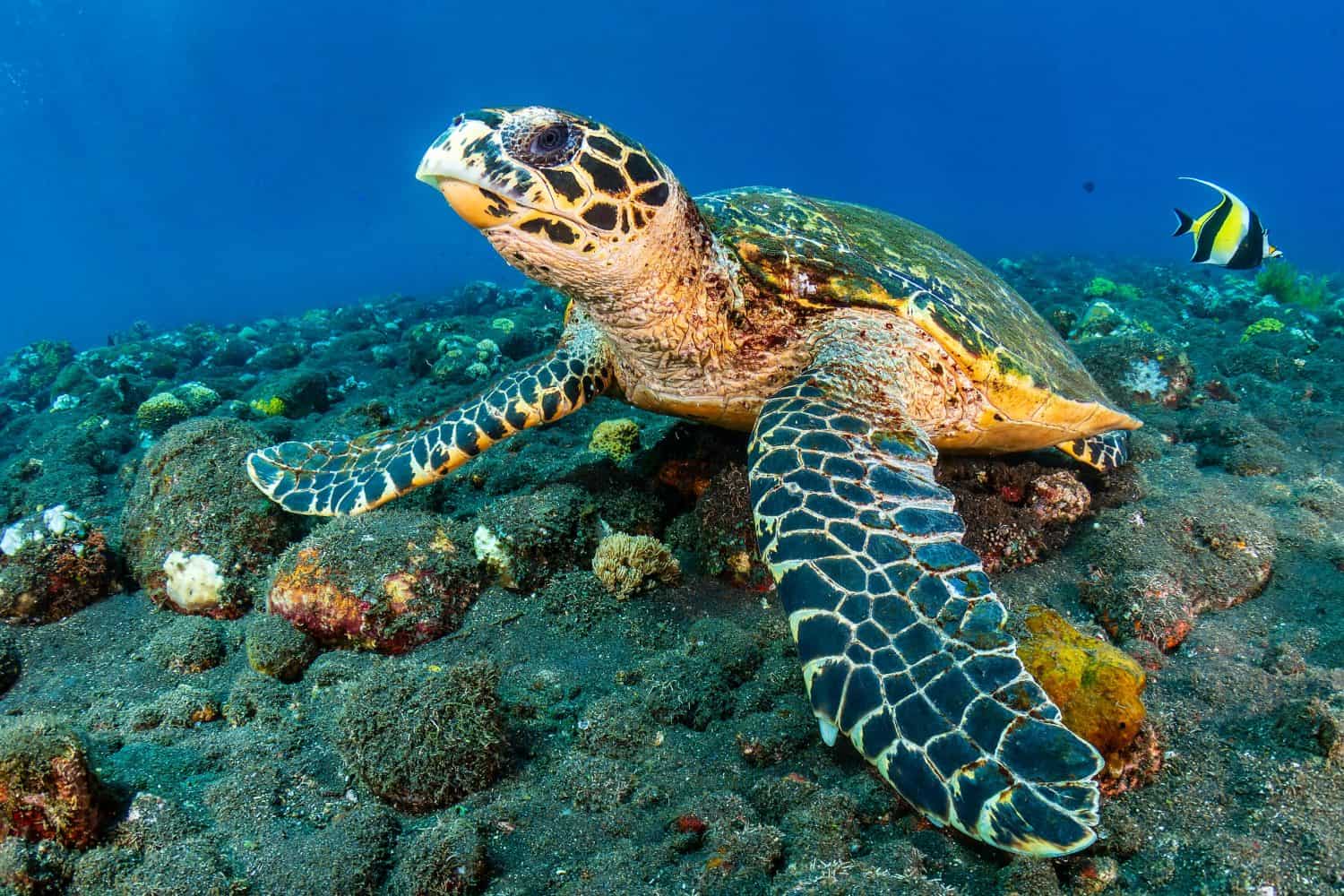
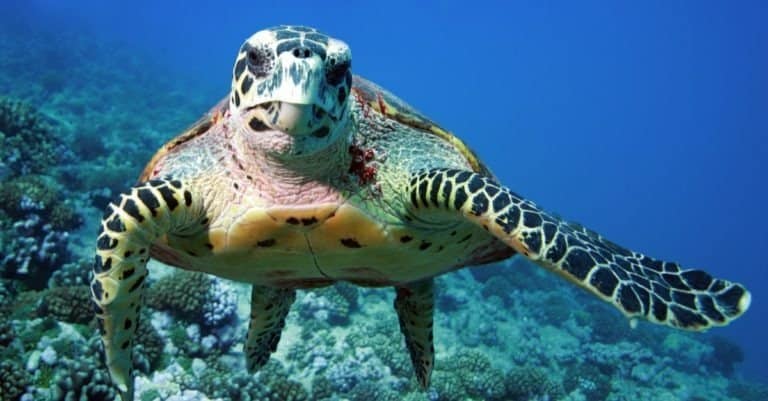
The hawksbill sea turtle is a critically endangered species.
©Richard Whitcombe/Shutterstock.com
The hawksbill sea turtle was named for its beak that resembles a hawk’s. Their characteristic beak and remarkable coloration, which ranges from combinations of reddish brown to red, orange, yellow, black, and even brown, make it one of the most unique sea turtles.
Interestingly, hawksbill sea turtles are known to live on a diet of mainly sea sponges. Because of this, the 150-pound and over three-foot-long turtles play a massive part in keeping the sponge population under control.
Unfortunately, the hawksbill sea turtle is critically endangered. Their conservation status is due to a number of factors, which include:
- Habitat loss
- Bycatch
- Pollution in the water
One of the biggest reasons that hawksbill sea turtles are targeted, however, is due to their beautiful shells. While it is illegal to hunt these sea turtles, hunting still occurs, with jewelry and other accessories made out of the shells. These products are sold to unsuspecting buyers who may not know the status of the turtles.
| Family | Cheloniidae |
| Conservation Status | Critically Endangered |
| How Many Of The Species Remain | 8,000 |
| Where Species Lives | American Samoa; Antigua and Barbuda; Australia; Bahamas; Bahrain; Barbados; Belize; Bonaire, Sint Eustatius and Saba; Brazil; British Indian Ocean Territory; Cambodia; China; Colombia; Comoros; Costa Rica; Cuba; Curaçao; Dominican Republic; Ecuador; Egypt; El Salvador; Equatorial Guinea (Bioko); Eritrea; Fiji; Grenada; Guadeloupe; Guam; Honduras; India; Indonesia; Iran, Islamic Republic of; Jamaica; Japan; Kenya; Kuwait; Madagascar; Malaysia; Maldives; Martinique; Mauritius; Mayotte; Mexico; Micronesia, Federated States of ; Mozambique; Myanmar; Nicaragua; Oman; Palau; Panama; Papua New Guinea; Philippines; Puerto Rico; Qatar; Saint Kitts and Nevis; Saint Martin; Samoa; Sao Tome and Principe; Saudi Arabia; Seychelles; Sint Maarten; Solomon Islands; Somalia; Sri Lanka; Sudan; Taiwan, Province of China; Tanzania, United Republic of; Thailand; Trinidad and Tobago; United Arab Emirates; United States; Vanuatu; Venezuela; Vietnam; Virgin Islands; Yemen |
Kemp’s Ridley Sea Turtle
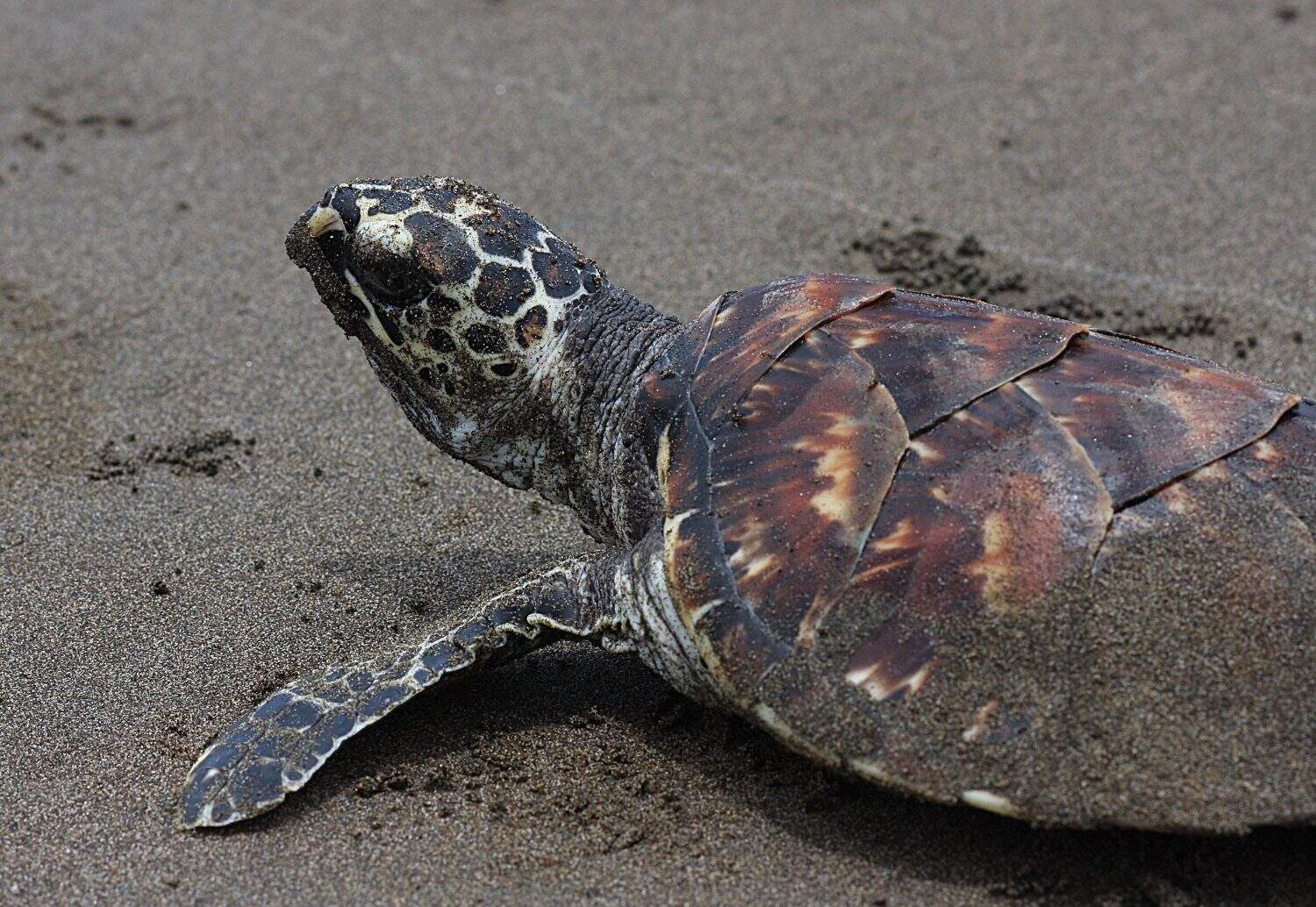
Kemp’s ridley sea turtle is a critically endangered species.
©Mahmud Hidayat/Shutterstock.com
Kemp’s ridley sea turtle is one of the rarest sea turtles. Additionally, it is also the smallest. The critically endangered turtle is about two feet long and weighs under 100 pounds on average. The majority of the shell is olive-gray with a cream-colored bottom. This allows the Kemp’s ridley sea turtle to blend into its surroundings as it hunts for its next meal.
Kemp’s ridley sea turtles’ favor prey include:
- Crabs
- Clams
- Mussels
- Shrimp
- Jellyfish
- Squid
- Sea urchins
Kemp’s sea turtles are critically endangered due in large part to human activity. People collect their eggs for consumption and kill female turtles for their meat. However, bycatch, habitat loss, and climate change have more heavily contributed to population decline in recent decades.
| Family | Cheloniidae |
| Conservation Status | Critically Endangered |
| How Many Of The Species Remain | 22,341 |
| Where Species Lives | Mexico; United States |
Leatherback Sea Turtle
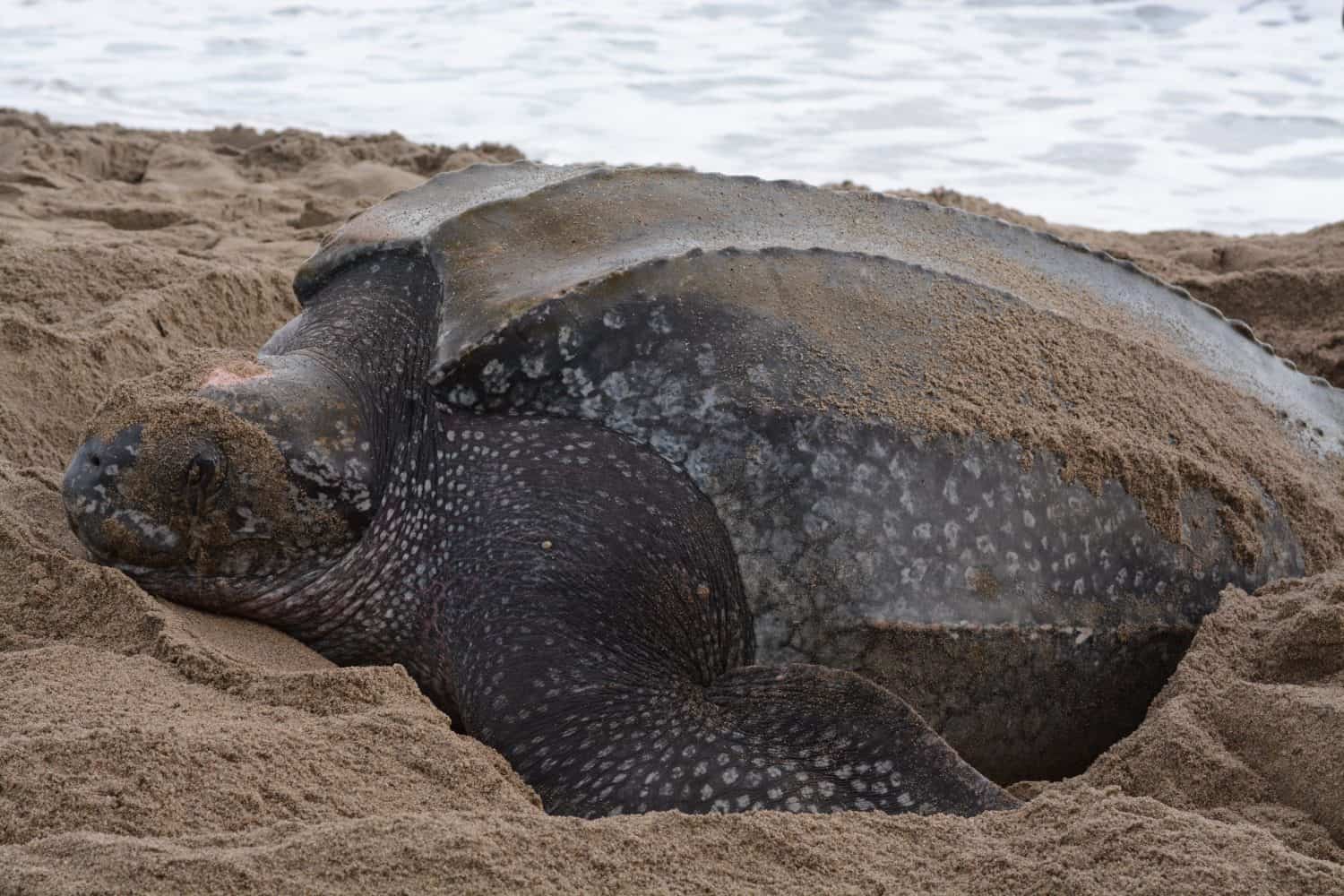
The overall conservation status of leatherback sea turtles is vulnerable, but there are some populations that are endangered.
©Gilbert S. Grant/Shutterstock.com
The leatherback sea turtle is the only sea turtle that does not have a hard shell. Instead, the shell is made of “flexible, leather-like skin.” The dark coloration of the leatherback, black or deep gray, helps it camouflage in the ocean while it makes its long annual journey across the Atlantic and Pacific. They embark on this migration to feed on the jellyfish off the coast of California.
While the overall species of leatherback sea turtles is classified as vulnerable due to their population size and distribution, some subspecies are considered to be critically endangered. Conservation efforts continue to be underway to save the massive 6.5-foot-long and 2,000-pound leatherback.
In addition to jellyfish, leatherback sea turtles enjoy other prey in the ocean. Some of these include:
- Crabs
- Shrimp
- Fish
Occasionally, leatherbacks will eat seaweed. But the bulk of their diet consists of jellyfish, which they eat in large quantities.
Like other sea turtles, the leatherback turtles are seeing population declines due to bycatch, illegal harvesting of eggs, and climate change. If substantial changes are not made soon, the entire species will be reclassified from vulnerable to endangered.
| Family | Dermochelyidae |
| Conservation Status | Vulnerable |
| How Many Of The Species Remain | 34,000 to 36,000 |
| Where Species Lives | Albania; American Samoa; Angola; Anguilla; Antigua and Barbuda; Argentina; Aruba; Australia; Bahamas; Bahrain; Bangladesh; Barbados; Belize; Benin; Bermuda; Bonaire, Sint Eustatius and Saba; Bosnia and Herzegovina; Brazil; Brunei Darussalam; Cambodia; Cameroon; Canada; Chile; China; Colombia; Comoros; Congo; Congo, The Democratic Republic of the; Costa Rica; Croatia; Cuba; Curaçao; Cyprus; Côte d’Ivoire; Dominica; Dominican Republic; Ecuador; Egypt; El Salvador; Equatorial Guinea; Eritrea; Fiji; France; French Guiana; French Polynesia; French Southern Territories; Gabon; Gambia; Ghana; Greece; Grenada; Guadeloupe; Guam; Guatemala; Guinea; Guinea-Bissau; Guyana; Haiti; Honduras; India; Indonesia; Ireland; Italy; Jamaica; Japan; Kenya; Kiribati; Korea, Democratic People’s Republic of; Korea, Republic of; Lebanon; Liberia; Libya; Madagascar; Malaysia; Marshall Islands; Martinique; Mauritania; Mauritius; Mayotte; Mexico; Micronesia, Federated States of ; Montenegro; Montserrat; Morocco; Mozambique; Myanmar; Namibia; New Caledonia; New Zealand; Nicaragua; Nigeria; Northern Mariana Islands; Palau; Panama; Papua New Guinea; Peru; Philippines; Portugal; Puerto Rico; Russian Federation; Saint Helena, Ascension and Tristan da Cunha; Saint Kitts and Nevis; Saint Lucia; Saint Martin; Saint Vincent and the Grenadines; Samoa; Sao Tome and Principe; Senegal; Seychelles; Sierra Leone; Sint Maarten; Slovenia; Solomon Islands; South Africa; Spain; Sri Lanka; Suriname; Syrian Arab Republic; Taiwan, Province of China; Tanzania, United Republic of; Thailand; Togo; Tonga; Trinidad and Tobago; Tunisia; Turks and Caicos Islands; Tuvalu; United Kingdom; United States; Uruguay; Venezuela; Virgin Islands |
Loggerhead Sea Turtle
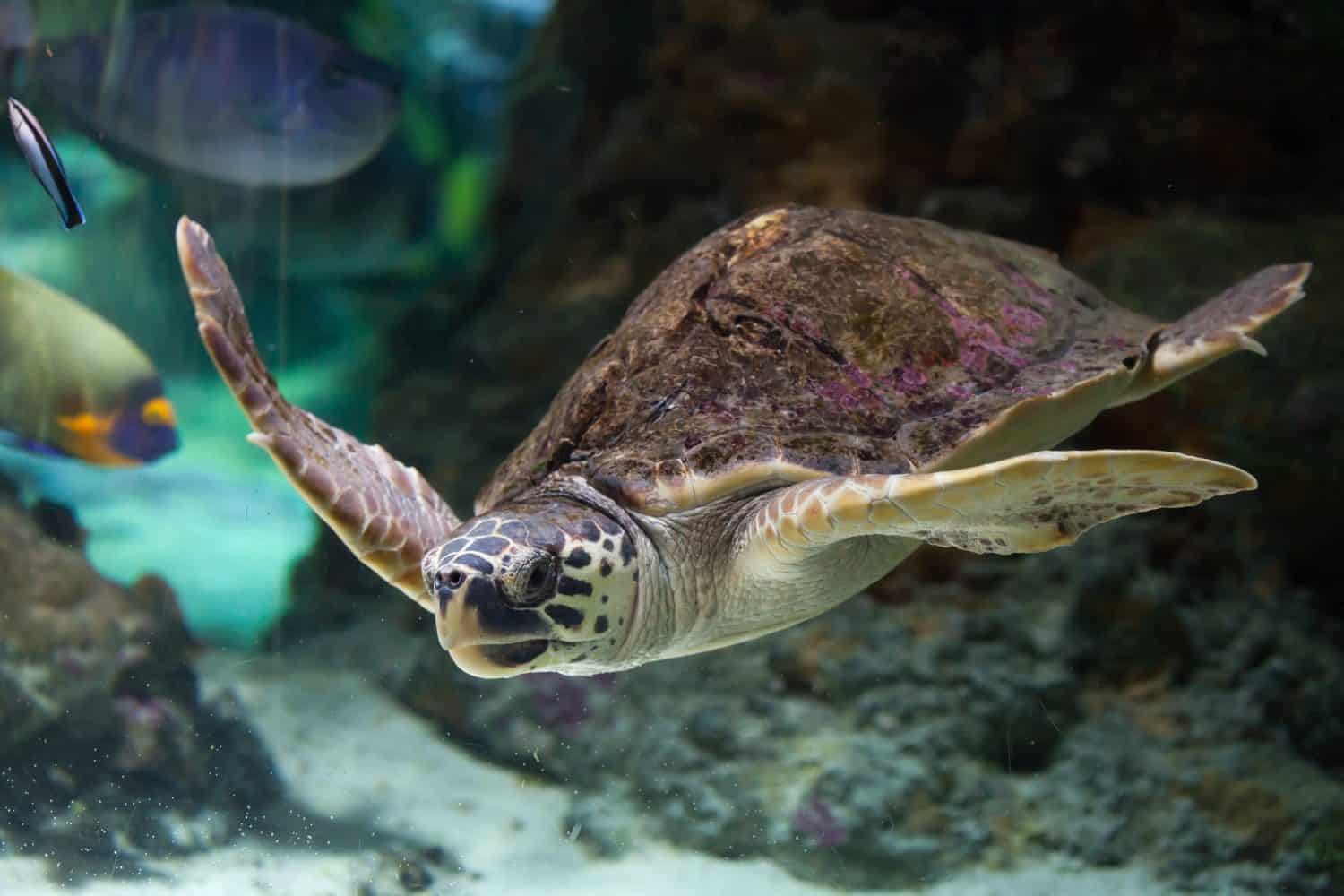
Loggerhead sea turtles have a vulnerable conservation status, but some populations are considered endangered.
©Vladimir Wrangel/Shutterstock.com
The loggerhead sea turtle is considered a vulnerable species. These turtles are plagued by habitat loss, water pollution, bycatch, and climate change.
Loggerhead sea turtles are up to 3.5 feet long and weigh between 250-350 pounds. They get their name for their large heads with strong beaks, which allow them to consume their favorite prey, whelks and conch. Without their hardy beaks, the loggerheads would be unable to break the shells of these animals. But these are not the only prey that loggerheads target.
Some of the other menu items include:
- Jellyfish
- Fish
- Squid
- Mollosks
- Seagrass
- Algae
With a varied diet, loggerheads can live off the coast of a variety of countries around the world.
While the overall conservation status of loggerhead turtles is vulnerable, some populations are considered endangered. Consequently, conservation groups continue to work to save the turtles, both through education and policy changes around the world.
| Family | Cheloniidae |
| Conservation Status | Vulnerable |
| How Many Of The Species Remain | 50,000 to 80,000 |
| Where Species Lives | Albania; Algeria; Angola; Anguilla; Argentina; Aruba; Australia; Bahamas; Bahrain; Bangladesh; Barbados; Belize; Bermuda; Bonaire, Sint Eustatius and Saba; Brazil; Cabo Verde; Cayman Islands; Chile; China; Colombia; Comoros; Costa Rica; Croatia; Cuba; Curaçao; Cyprus; Djibouti; Dominican Republic; Ecuador; Egypt; Eritrea; Fiji; France; French Guiana; French Polynesia; Greece; Grenada; Guadeloupe; Guatemala; Haiti; Honduras; Indonesia; Iran; Israel; Italy; Jamaica; Japan; Kenya; Korea, Republic of; Kuwait; Lebanon; Libya; Madagascar; Malaysia; Malta; Mauritius; Mexico; Montenegro; Montserrat; Morocco; Mozambique; Myanmar; Namibia; New Caledonia; New Zealand; Nicaragua; Niue; Oman; Pakistan; Panama; Papua New Guinea; Peru; Philippines; Portugal; Puerto Rico; Qatar; Saint Barthélemy; Saint Kitts and Nevis; Saint Lucia; Saint Vincent and the Grenadines; Senegal; Sierra Leone; Slovenia; Solomon Islands; Somalia; South Africa; Spain; Sri Lanka; Suriname; Syrian Arab Republic; Tanzania; Tokelau; Tonga; Trinidad and Tobago; Tunisia; Turks and Caicos Islands; Türkiye; United Arab Emirates; United States; Uruguay; Venezuela, Bolivarian Republic of; Vietnam; Virgin Islands; Yemen |
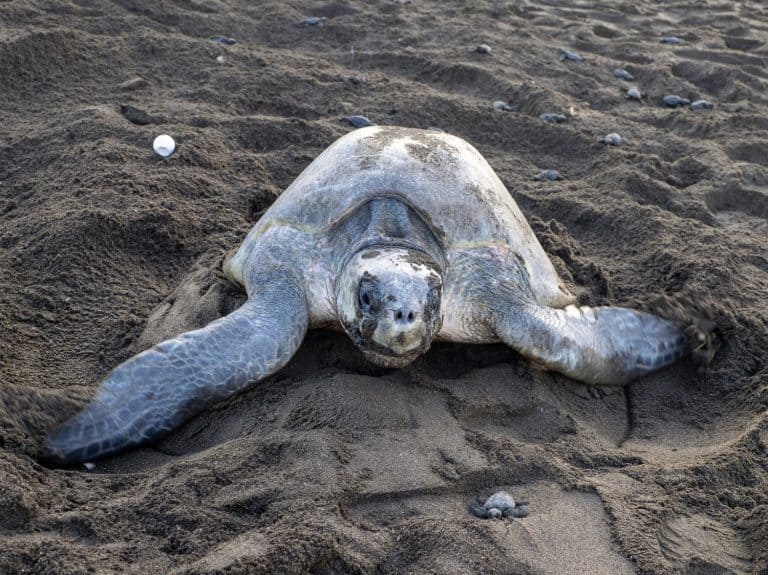
Olive Ridley Sea Turtle
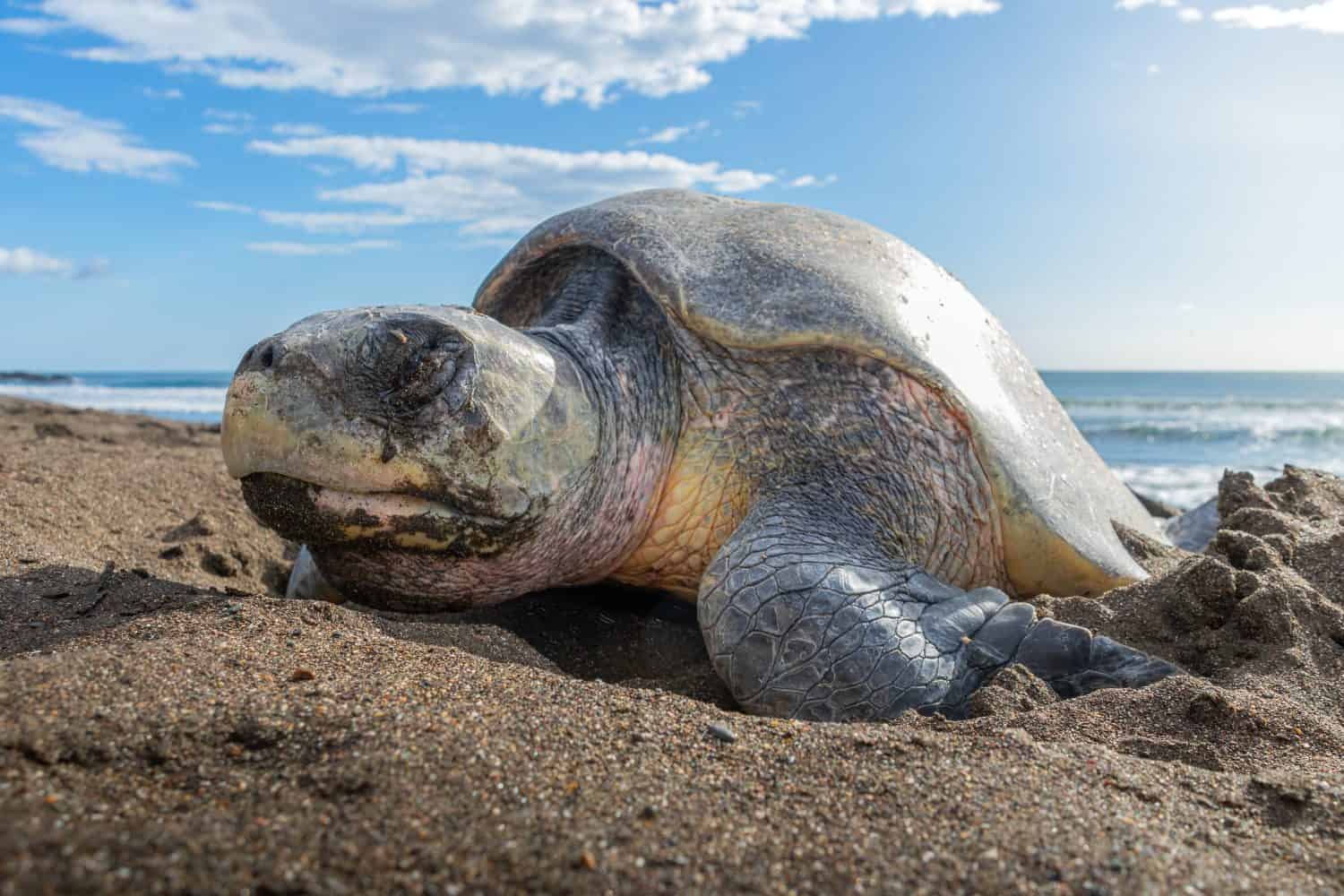
Olive ridley sea turtles are the most abundant sea turtles, with a population of over 800,000, but they are still a vulnerable species.
©Kevin Venegas Barrantes/Shutterstock.com
The olive ridley sea turtles are the most abundant sea turtles today. With a worldwide population of 800,000 individuals, this species is faring better than other sea turtles. However, with their population continuing to be threatened by factors such as bycatch, illegal harvesting for food, polluted oceans, habitat loss, and climate change, the olive ridley sea turtles are considered a vulnerable species.
Named for their olive-green shells, these sea turtles are on the smaller side, weighing in at around 100 pounds, with a two to 2.5-foot body length.
Like other sea turtles with sharp beaks, the olive ridley sea turtle is an omnivore. Some of the prey it consumes include:
- Jellyfish
- Crabs
- Shrimp
- Snails
- Algae
Given its varied diet, the olive ridley sea turtle plays an important role in the ecosystem, controlling populations of other creatures. They also help seagrass by removing algae from its habitat, allowing sunlight to reach it.
| Family | Cheloniidae |
| Conservation Status | Vulnerable |
| How Many Of The Species Remain | 800,000 |
| Where Species Lives | Angola; Antigua and Barbuda; Australia; Bangladesh; Benin; Brazil; Brunei Darussalam; Cabo Verde; Cambodia; Cameroon; Chile; Colombia; Congo; Costa Rica; Cuba; Côte d’Ivoire; Dominican Republic; Ecuador; El Salvador; Equatorial Guinea; Eritrea; French Guiana; Gabon; Gambia; Ghana; Guadeloupe; Guatemala; Guinea; Guinea-Bissau; Guyana; Honduras; India; Indonesia; Iran; Jamaica; Japan; Kenya; Liberia; Madagascar; Malaysia; Maldives; Martinique; Mauritania; Mexico; Micronesia, Federated States of ; Morocco; Mozambique; Myanmar; Namibia; Nicaragua; Nigeria; Oman; Pakistan; Panama; Papua New Guinea; Peru; Philippines; Puerto Rico; Sao Tome and Principe; Senegal; Sierra Leone; Somalia; South Africa; Sri Lanka; Sudan; Suriname; Taiwan; Tanzania, United Republic of; Thailand; Togo; Trinidad and Tobago; United States; Uruguay; Venezuela; Vietnam; Yemen |
Regardless of the conservation status of the sea turtles, they are all protected under the Endangered Species Act. This means that without special permission to hunt the turtles (like that of some Indigenous tribes), it is illegal to do so. Due to these restrictions, the green sea turtle has made a population rebound. The hope is that other species of sea turtles will do the same. However, until threats like pollution, bycatch, and climate change are reduced, the future of the sea turtles is uncertain.