
Snails are a surprisingly diverse group of animals with over 43,000 known species and more being discovered all the time. Snails belong to the phylum Mollusca, which includes invertebrates with soft bodies, such as slugs, clams, oysters, octopuses, and squid. Within the phylum Mollusca, snails belong to the class Gastropoda, the largest class of mollusks, including other animals like slugs, limpets, and conchs. Some snails live solely on land, while others live exclusively in water. Some snails are amphibious, meaning they can live both on land and in the water. Consequently, a snail’s diet is heavily influenced by its habitat. Continue reading to learn what land, sea, and freshwater snails eat, and how they use a unique feature called a radula to break down their food.
Land Snail Diet
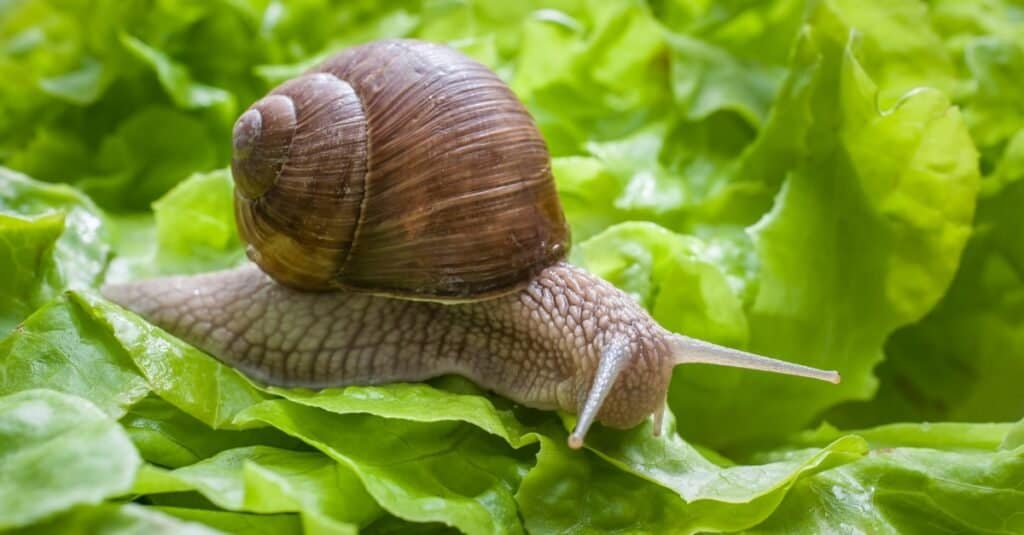
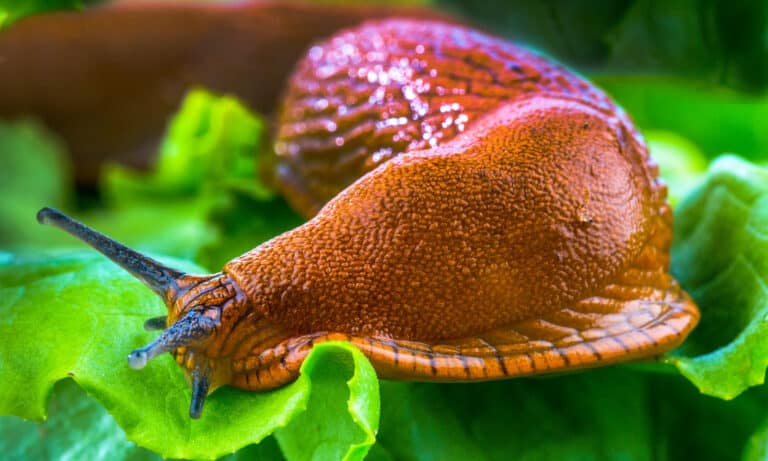
A common garden snail munching on some lettuce.
©Alexander Raths/Shutterstock.com
Land snails are classified as any type of snail that lives primarily on land, such as the common garden snail (Cornu aspersum). Many species of land snails are opportunistic feeders, taking advantage of whatever food sources are available in their environment. This includes plants (both living and decaying), fungi, and even other snails or animal remains, depending on the species.
How Land Snails Eat
Once a snail has something to eat, it depends on an organ called a radula to prepare its meal. The radula is a ribbon-like tongue covered in rows of tiny teeth used for scraping or cutting food before it’s ingested. It’s a key part of a snail’s mouth, acting like a file or a rasp to gather and process food. Research on radula function has shown that snails can adjust the force of their radula scraping depending on what they’re eating.
Sea Snails Diet
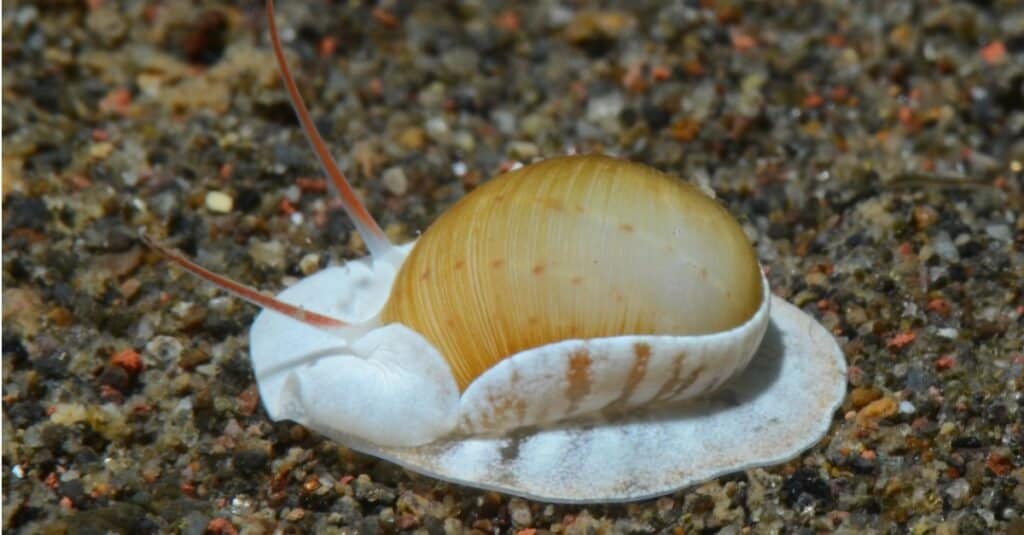
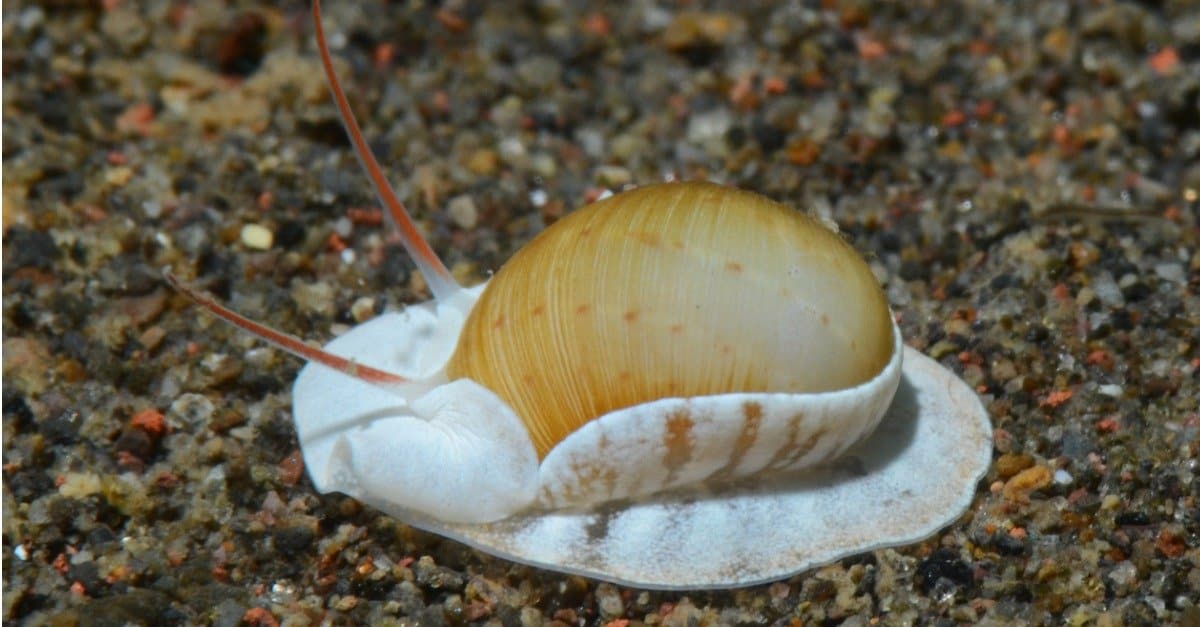
A sea snail scoots along the ocean floor.
©iStock.com/Giorgio Cavallaro
Sea snails, also known as marine snails, are characterized by their spiral-shaped shells and inhabit a wide range of marine environments, from shallow coastal regions to the deep sea. Depending on the species and their habitat, sea snails can be herbivores, carnivores, omnivores, or scavengers.
Herbivorous species graze on algae and seaweed, playing a crucial role in controlling algae growth, especially in coral reefs. Carnivorous sea snails are predatory, feeding on other invertebrates like mollusks, mussels, clams, smaller snails, slugs, worms, and fish. Omnivorous sea snails have a mixed diet, consuming both plant matter and small animals.
How Sea Snails Eat
Most herbivorous sea snails also possess a radula that they use to scrape algae, seaweed, and other plants off of rocks and other surfaces along the ocean floor. The thousands of tiny denticles on their radula slowly scrape up plant material and then cut it up into bite-sized pieces small enough to fit down their esophagus.
Carnivorous sea snails, however, are a bit different. Many, like the cone snail, use venom to immobilize their prey, which consists of fish, worms, or other snails.
Moon snails, or naticidae, tend to hide in the sand until an animal passes by. Once their prey gets close enough, a moon snail quickly envelops it and then drills a hole in its shell with its sharp proboscis. They use the proboscis to suck out the animal’s organs and flesh.
What Freshwater Snails Eat
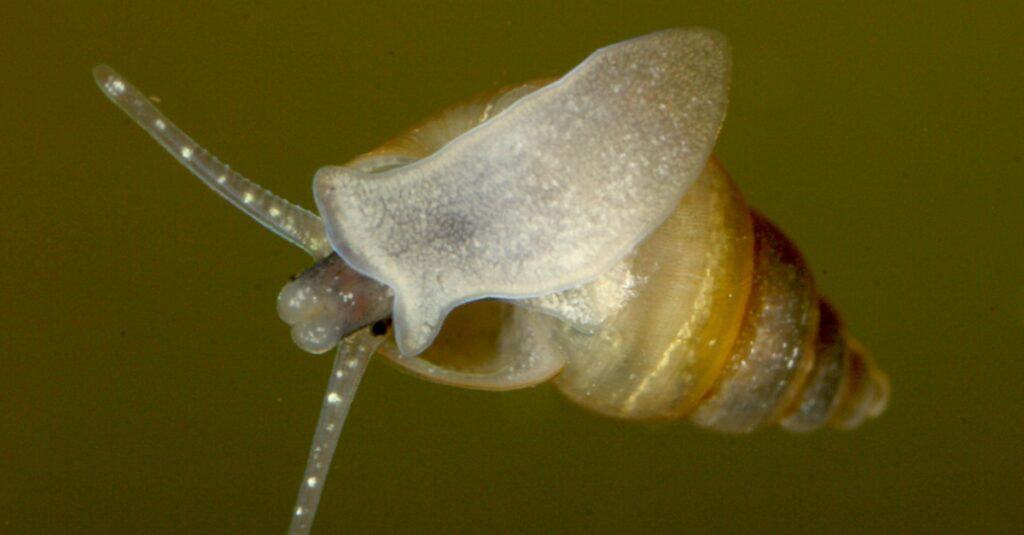
A New Zealand mud snail shows off its muscular foot and radula.
©iStock.com/Heather Broccard-Bell
Freshwater snails live in bodies of water such as lakes and rivers. There are thousands of recognized species of freshwater-dwelling snails, with estimates ranging from several thousand to over 5,000.
Most freshwater snail species, such a the apple snail (Pomacea maculata), are primarily herbivorous, though some are also detritivorous, meaning they will scavenge for decaying plant and animal matter.
How Freshwater Snails Eat
Freshwater snails, like their land and marine cousins, use their radula to slowly peel traces of algae, bacteria, and other organic material off of rocks and plants. Most freshwater snails graze throughout the day on all kinds of organic matter, both living and dead.