
Quick Take
- The very first meal a newborn snail eats is more unsettling than you'd expect. A snail's first meal →
- A snail's shell is far more than just a home. It is a survival system that does something remarkable in extreme weather. Shell as survival system →
- The shell ridges you've probably seen a hundred times are actually telling you something specific about the snail that made them. What shell ridges reveal →
Snails can be found in almost every backyard garden across the world. Many of us have probably seen empty snail shells while walking, but how did the empty shells get there? Do snails leave their old shells for larger ones as they mature? Are snails born with their shells? Read on to find out more about snail shells.
The Purpose of a Shell
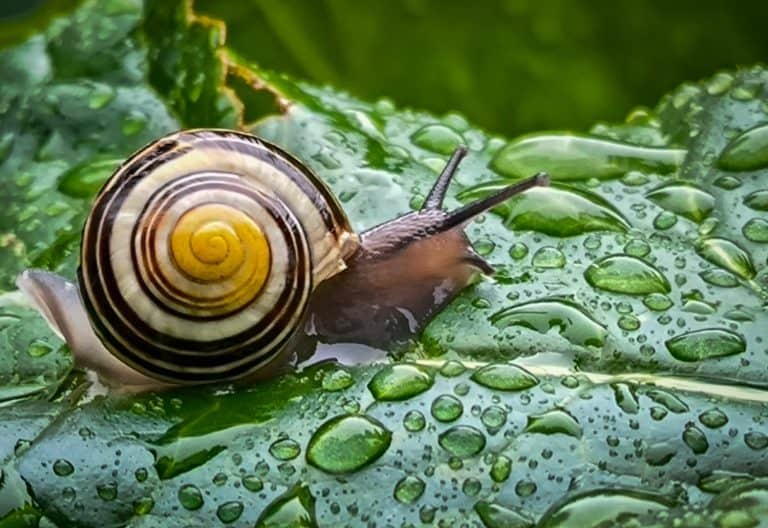
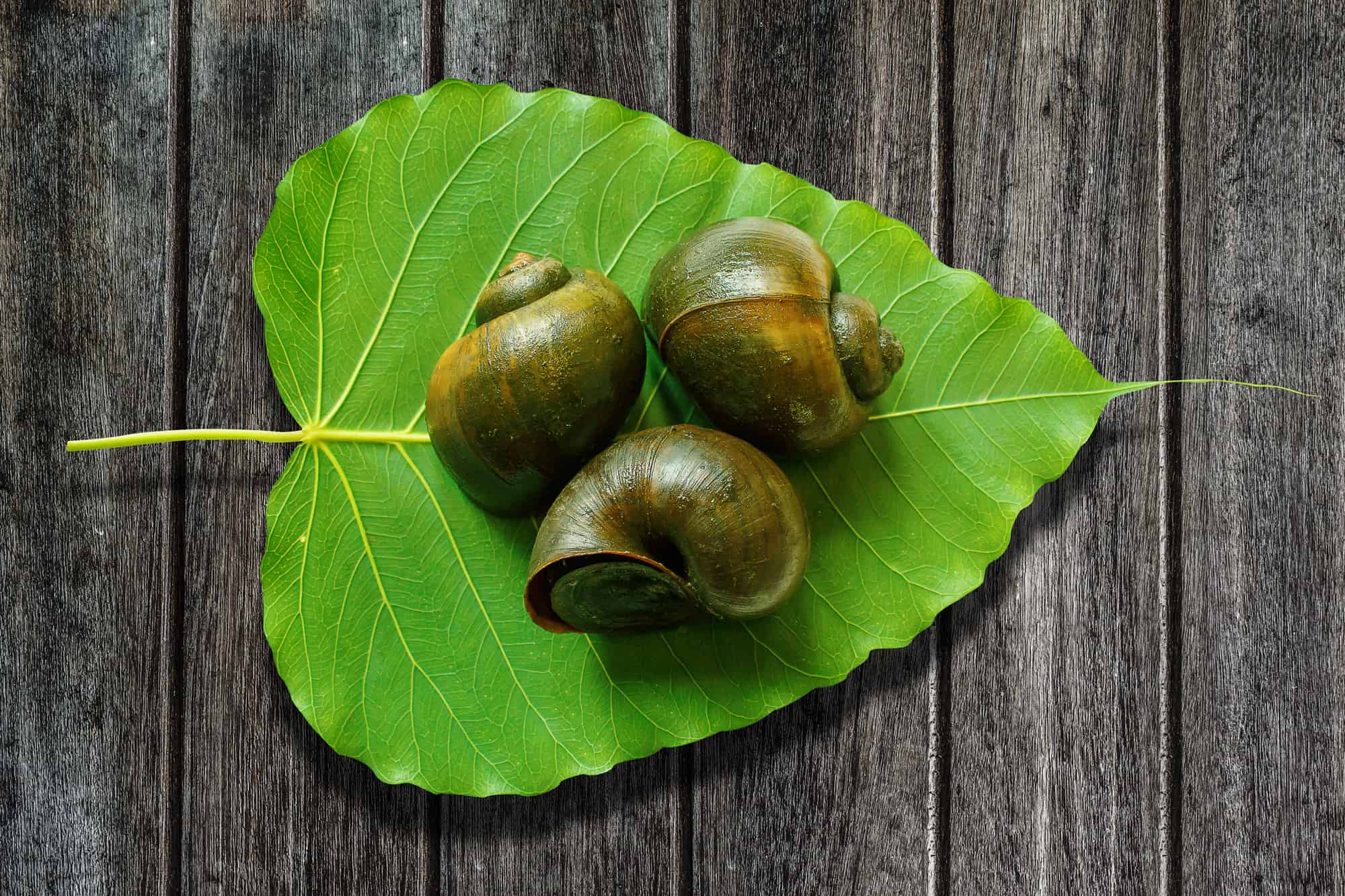
Shells are a crucial part of a snail’s biology, and they cannot live without their shells. The shell is attached to the snail’s body via the columellar muscle, which is connected to the inner spiral of the shell. The shell protects the snail’s body, internal organs, and respiratory system. Their shells also offer protection from predators. When threatened, a snail retreats into its shell. Some marine and freshwater snails have an operculum, which is a plate attached to the snail’s foot that covers the shell opening when the snail retracts.
Snails can also retreat into their shells during periods of extreme weather. When the weather is too hot and dry, snails can retract into their shells to keep from drying out. This is called estivation. If it is too cold, snails can also hibernate inside their shells. When retreating due to poor conditions, snails secrete a layer of mucus over the opening, which hardens to create a seal. The seal keeps moisture inside while still allowing for ventilation. When conditions improve, the snail will dissolve the seal and come out of its shell.
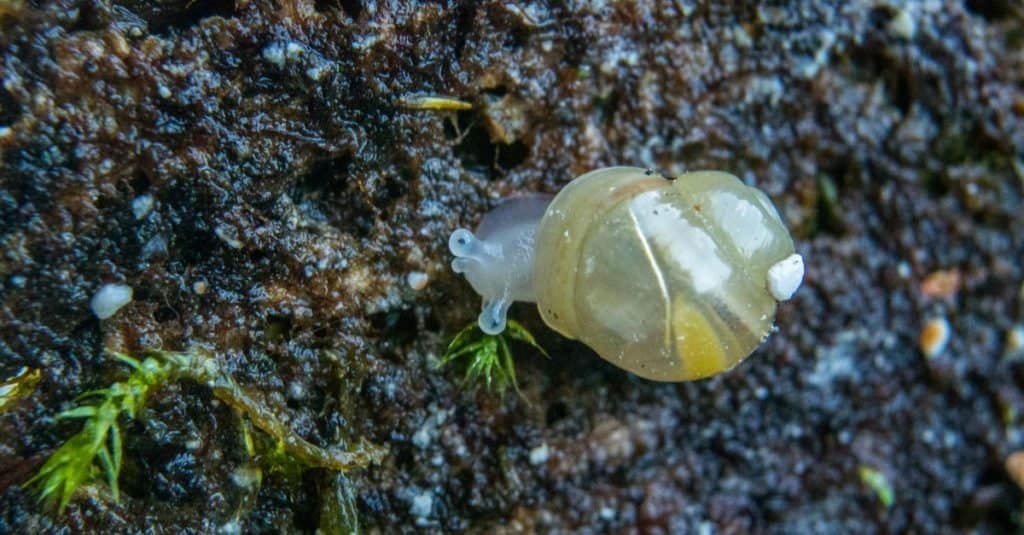
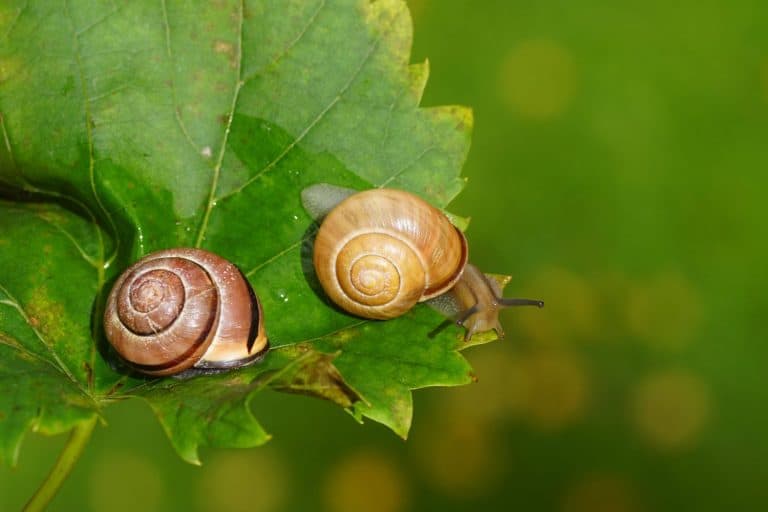
Snails are born with thin, soft, fragile, and nearly transparent shells called protoconches.
©Svitlyk/Shutterstock.com
A Snail’s First Shell
Most snails lay eggs, typically burying them in moist soil and then abandoning them. However, snails are independent as soon as they are born. A snail’s shell is formed while it is inside the egg. After around 2-4 weeks (depending on species), baby snails emerge from their eggs with tiny shells atop their bodies.
Their first shells, called protoconches, are thin, soft, fragile, and nearly transparent. Snails need calcium to harden and build their shells, so they typically consume their own eggshells, and sometimes the eggs of unborn siblings, to obtain calcium. As the snails mature, their shells harden and young snails will acquire their adult coloring. Depending on the species and the environmental conditions, this stage may last from a few weeks to a few months.
How Do Their Shells Grow?
Snails have an incredible mechanism that allows their shells to grow with them. Snails have a special, membrane-like organ called the mantle that begins secreting calcium carbonate as they grow. The calcium carbonate deposit is added to the opening of the shell, hardening to make up a new layer.
Over time, these layers accumulate to form a longer and larger shell for the snail to inhabit. Looking closely at a snail’s shell, you can see the individual deposits that make up the shell. These ridges indicate how long the snail has been alive and how long it has been adding to its shell.
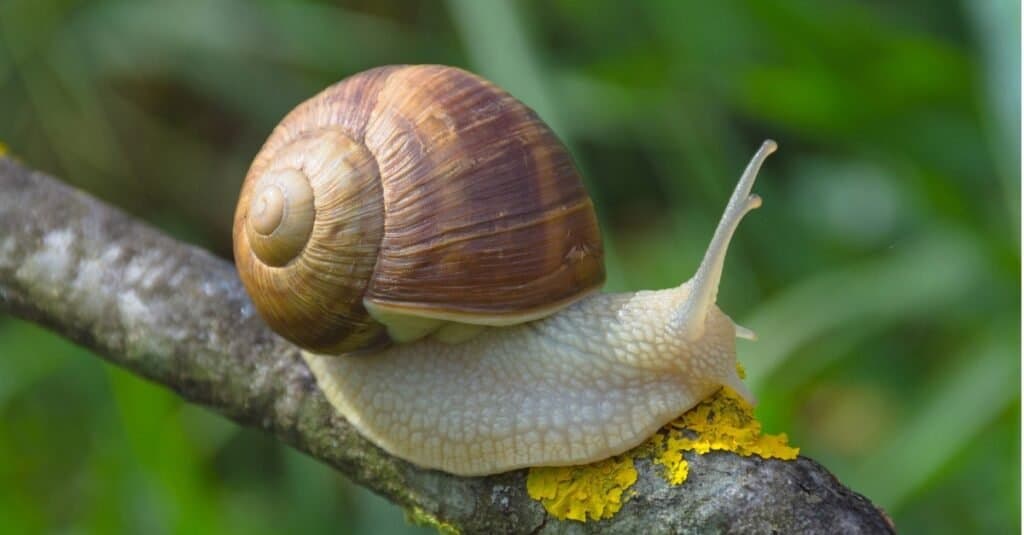
Snails grow their shells through the repeated addition of layers of calcium onto the outer opening of their shell.
©Aron M/Shutterstock.com
All Snails Have Shells
snails can be found all over the world in almost every environment. From ponds to gardens and everywhere in between, snails can be found slowly making their way to their next food source. Do all those different species of snails have shells, though?
Yes, in fact, it’s one of the defining characteristics of snails. snails are gastropods that belong to the phylum mollusca, along with slugs. Snails and slugs are so closely related that their primary distinguishing feature is the shell. Slugs don’t have external shells, but most land slugs have vestigial shells inside their bodies, located under the mantle. The internal shell typically stores calcium, which is vital for both slugs and snails.