
Quick Take
- Slugs lack lungs and breathe via a pneumostome on the right side that opens to the mantle cavity to oxygenate blood.
- They also absorb some oxygen through moist skin, aided by slime that keeps skin moist.
- The pneumostome opens and closes to regulate gas exchange, with a higher frequency in dry environments.
The process of oxygenating a body differs among many animal species. Mammals have lungs that expand and contract for proper gas exchange in the body. Most are familiar with this process, as it is how people oxygenate their bodies. However, fish use gills to filter oxygen from the water into their bodies, while insects have tracheae to regulate airflow and oxygen delivery. Not all creatures have lungs to help circulate oxygen throughout the body.
Slugs are among the creatures that do not have lungs. Yet, they can bring oxygen into the body and remove carbon dioxide from it. This leads to the question of how slugs breathe without lungs and what role the hole in their side plays in this process.
How Do Slugs Breathe Without Lungs?
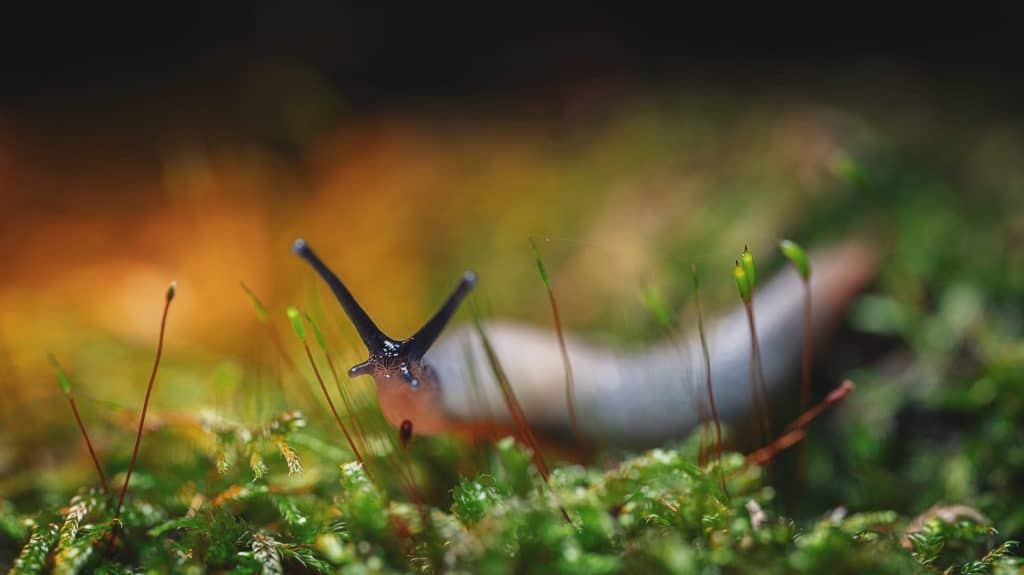
Slugs circulate oxygen throughout their bodies by bringing air into the mantle, which helps oxygenate their bloodstream.
©SleepOfReason/Shutterstock.com
Many believe that most animals have lungs. After all, mammals, birds, and reptiles all have lungs that circulate oxygen throughout their bodies. But creatures such as mollusks do not have lungs. Consequently, slugs, which are a type of mollusk, also lack lungs. How, then, do they breathe?
Animals with lungs breathe in air. As this air is brought into the body, the lungs expand and contract via the diaphragm and intercostal muscles. This helps the tiny air sacs, known as alveoli, oxygenate the blood. The body then exhales, releasing carbon dioxide into the environment.
Slugs do not oxygenate the body and expel carbon dioxide in the same manner as those with lungs. Instead, as air is breathed into the body, it is brought into the mantle, a fleshy, membrane-filled area behind the slug’s head. The mantle is a highly vascular area that not only helps to oxygenate the slug’s body via the bloodstream but also expels carbon dioxide.
Given that slugs do not have a nose in the traditional sense that mammals do, how is air breathed into the body? The answer comes from a hole on the side of the slug’s body, which plays a vital role in gas exchange.
Why Is There a Hole on the Side of a Slug’s Body?
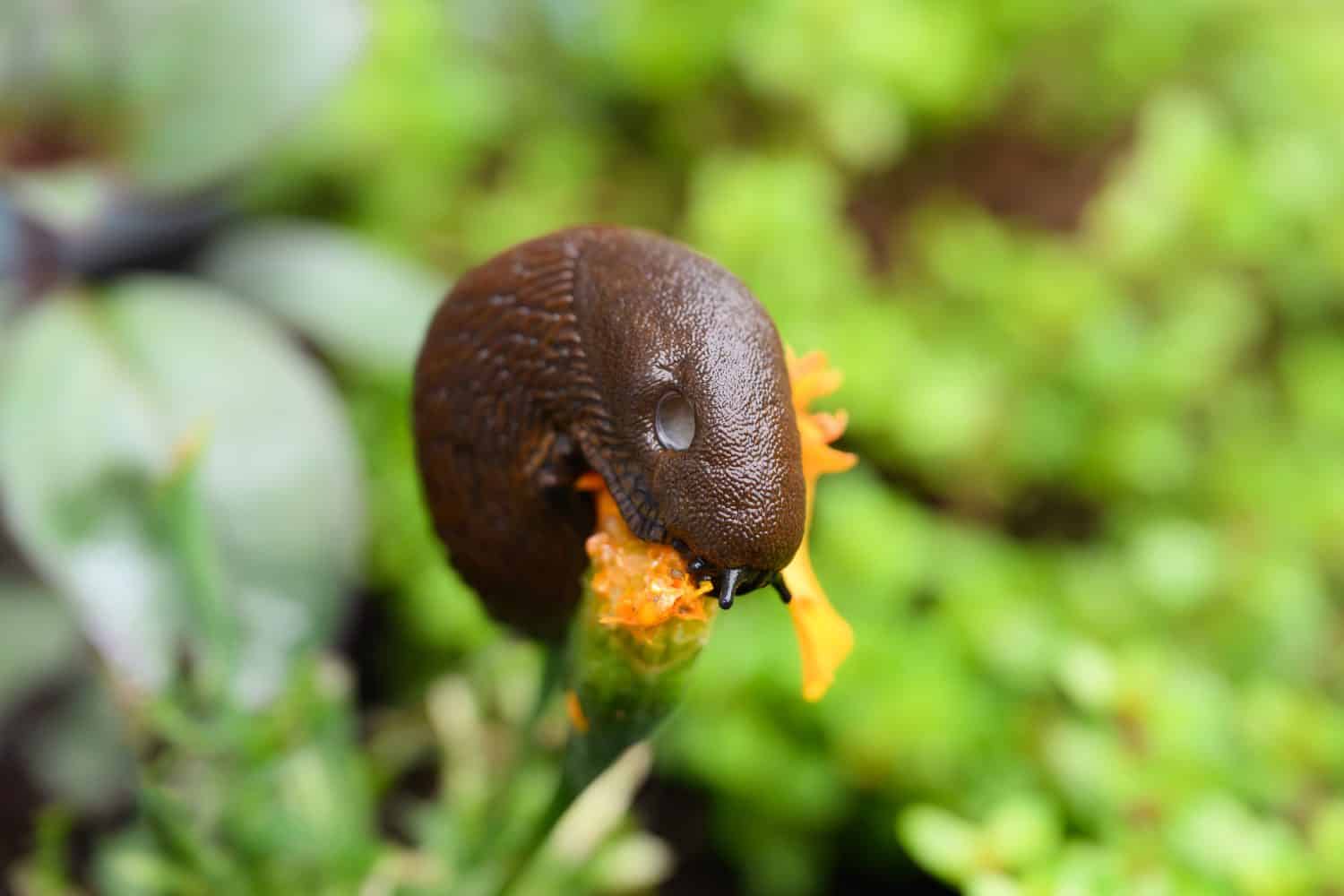
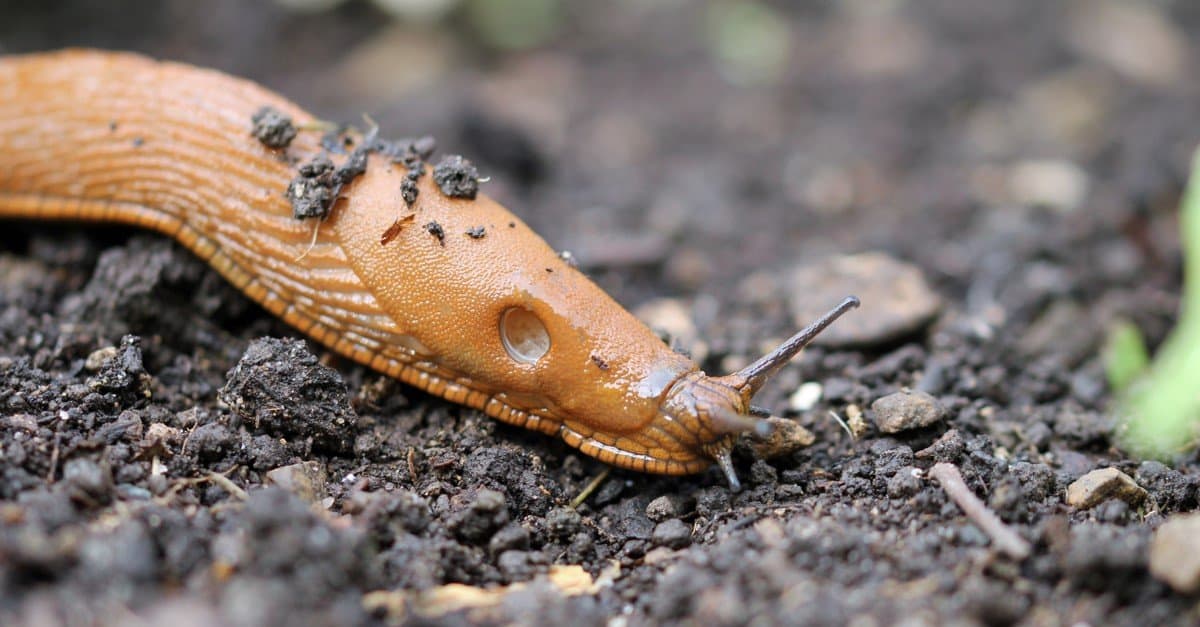
The hole on the side of a slug’s body is called the pneumostome.
©Ian Dewar Photography/Shutterstock.com
Those who have ever gotten close enough to a slug will notice there is a hole on the side of its body. It plays a crucial role in facilitating the gas exchange required to oxygenate the slug’s body. The hole on the side of slugs is called the pneumostome. Located on the right side of the body, the pneumostome brings air into the body. This air then goes through the mantle cavity, where the blood vessels are oxygenated. The carbon dioxide is then expelled through the pneumostome, completing the oxygenation process, all without a set of lungs.
However, the pneumostome is not always a prominent feature on slugs. This is because, if the slug does not need to oxygenate its body, the pneumostome will close, creating a seal to absorb all the oxygen from its last breath until it is time to open again.
The Pneumostome Opens and Closes as Needed
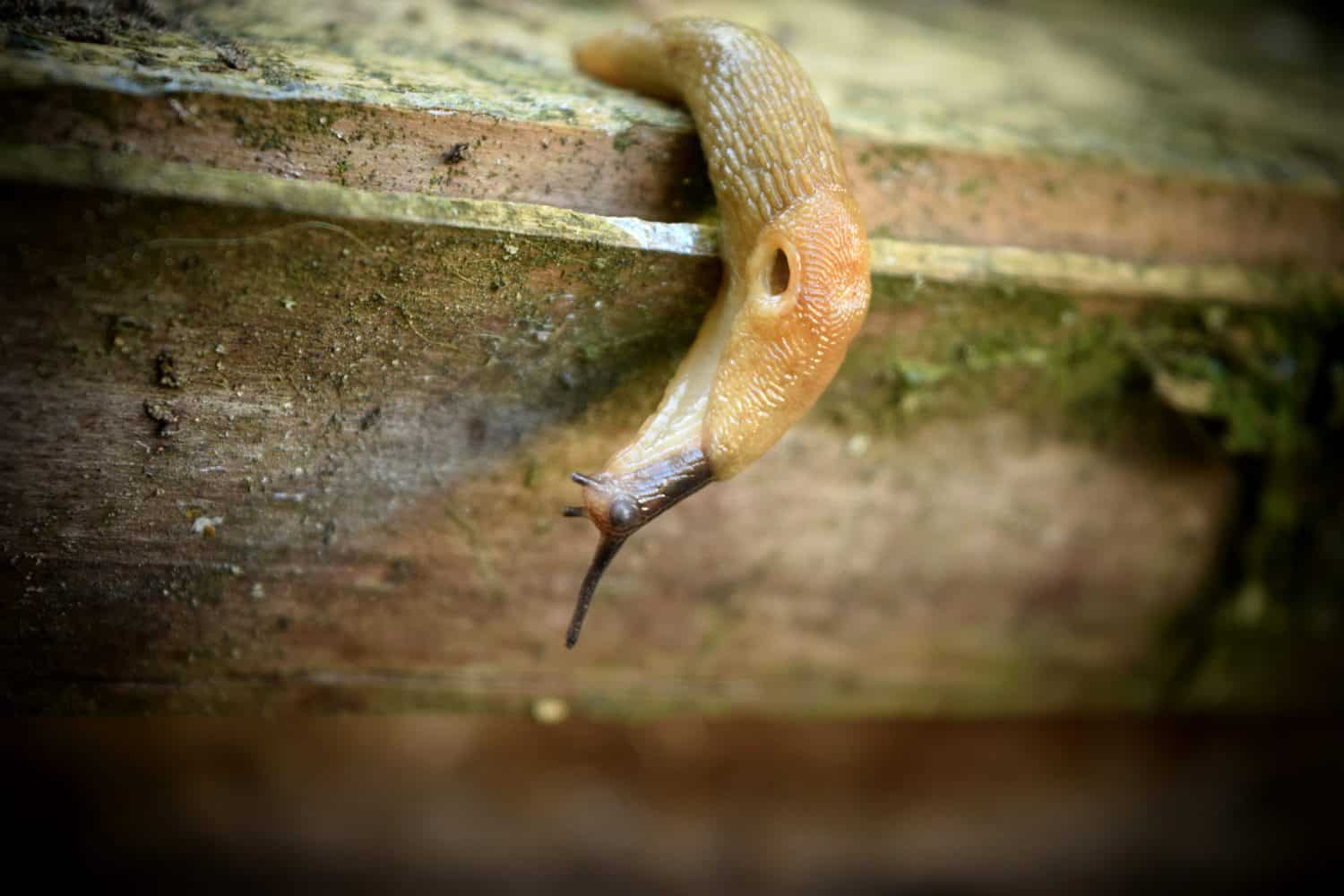
The pneumostome will open and close as oxygen is needed in the slug’s body.
©CerberZero/Shutterstock.com
If a slug is observed for long enough, the pneumostome will be seen opening and closing one to several times per minute. However, the frequency of this occurrence will vary depending on the level of dampness in the environment where slugs live.
The environment plays a significant role in how frequently the pneumostome opens and closes for oxygen in a minute. In a perfectly moist environment, slugs typically open and close their pneumostome 0.5 times per minute to optimize oxygen absorption. In drier environments, the number will increase. The number increases in environments lacking moisture because slugs become dehydrated.
As slugs dehydrate, they are unable to absorb sufficient oxygen through their skin. While this is not the primary way slugs oxygenate their bodies, it is still a necessary source of oxygen to keep them functioning properly, especially when gas exchange through the pneumostome is insufficient.
Slugs Also Absorb Oxygen Through Their Skin
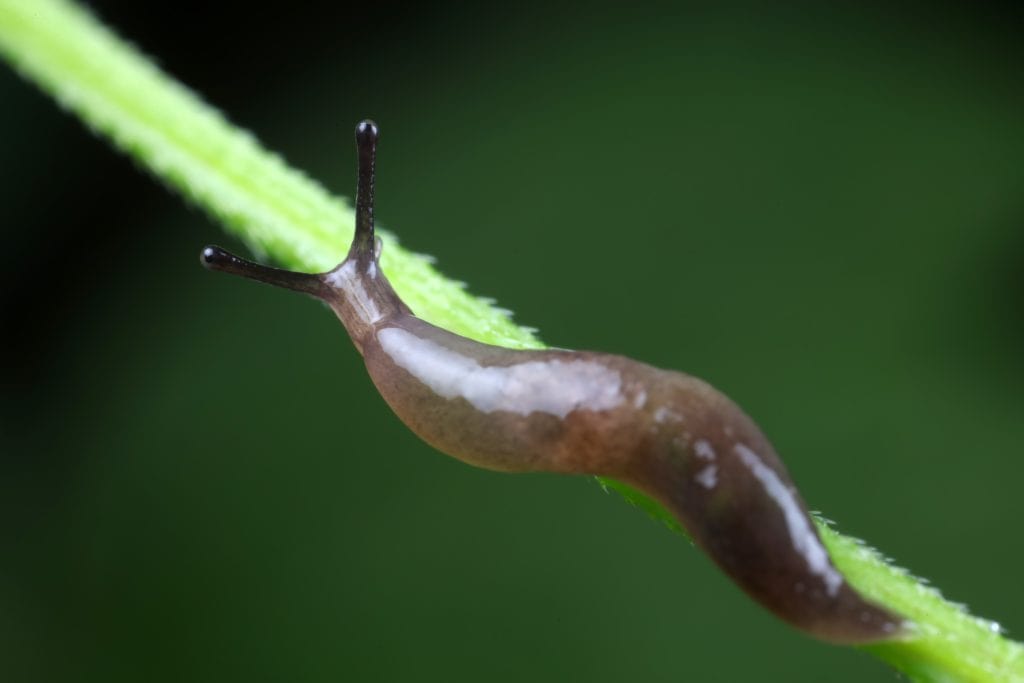
Slugs collect moisture via their slime to keep their skin moist, which helps them oxygenate their bodies.
©chinahbzyg/Shutterstock.com
As air is brought into the mantle cavity and gas exchange occurs, slugs receive their primary source of oxygen. However, it is not the only way, as some oxygen is absorbed through the skin as well.
Slugs use their slime for a variety of purposes. Be it as a defense mechanism, a means for locomotion, or to form a trail for communication, slime is multifunctional. In addition to all these uses, slime also helps to absorb moisture from the environment. As this happens, the moisture helps to keep the slug’s body moist. This is necessary as when slugs have moist skin, they can absorb some oxygen through their skin.
Compared to the gas exchange facilitated by the pneumostome, the oxygen absorbed through the skin is negligible. However, it is worth noting that it is another way slugs can breathe without having lungs.
On the surface, slugs do not appear to be complex creatures. However, nothing could be further from the truth. As they have evolved, the shell that was once external has become internal in most species. Additionally, because slugs have a pneumostome for bringing in oxygen and expelling carbon dioxide, they do not need lungs. These factors have enabled slugs to thrive in a variety of environments, rather than being limited to a single habitat. This is why slugs, in their most recent form, have existed for 300 million years and will likely live for many, many more.