
Quick Take
- The snail isn't actually melting into the water. A quirk of physics explains why it only looks that way. See the physics explained →
- Snails have a hidden trick for hydration that has nothing to do with drinking, and their skin is the key. Explore skin absorption →
- A creature that needs water to survive can actually drown in it, a surprising fact that involves an organ you've probably never heard of. Discover how snails drown →
- When conditions get too dry, snails pull off a survival move that can last for months, though it comes with a strange catch. Learn about estivation →
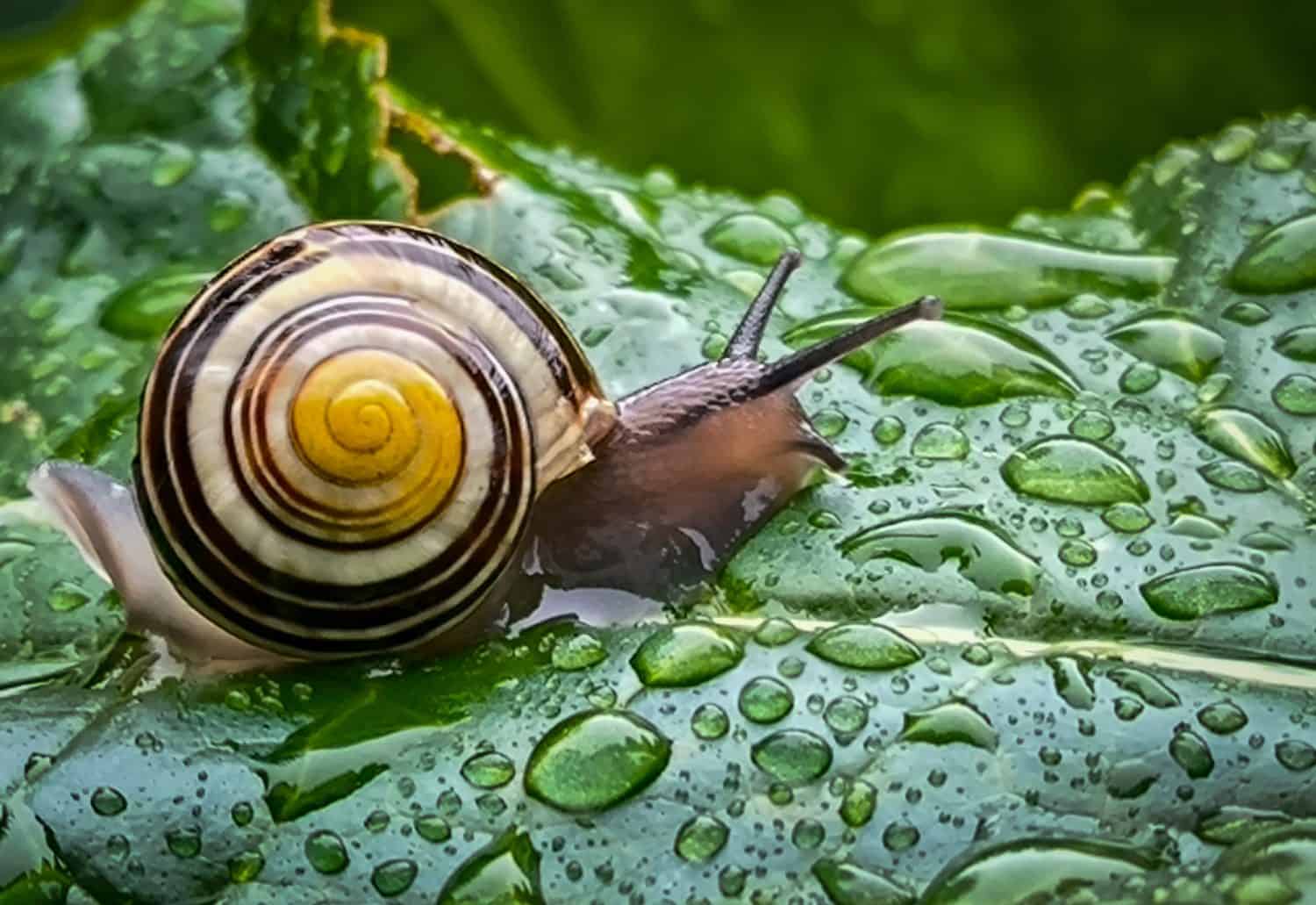
If you have never seen a snail “drink” water, you should check out the surprising Instagram video above. The snail approaches the water droplet, and suddenly, its head appears to merge with the water. It almost looks as if the water is swallowing the snail, rather than the snail drinking the water.
What’s Really Going on in the Video?
Actually, this sudden “melting” effect is a trick of physics. Snails’ bodies are coated in slick mucus. When the snail’s head touches the droplet, it breaks the surface tension, making it appear as if the snail melted into the water as the droplet instantly collapses and wraps around the snail’s face.
Snails don’t ingest water in the same way humans do. Instead, they rely on a combination of active drinking, specialized anatomy, and absorption through their skin to stay hydrated.
The Anatomy of a Thirsty Snail
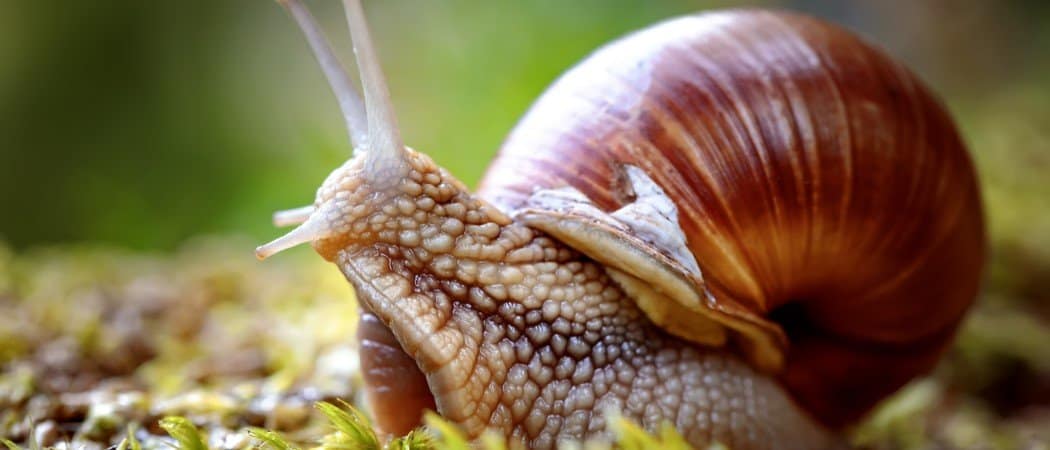
Snails need to stay hydrated to survive.
©Andrey Armyagov/Shutterstock.com
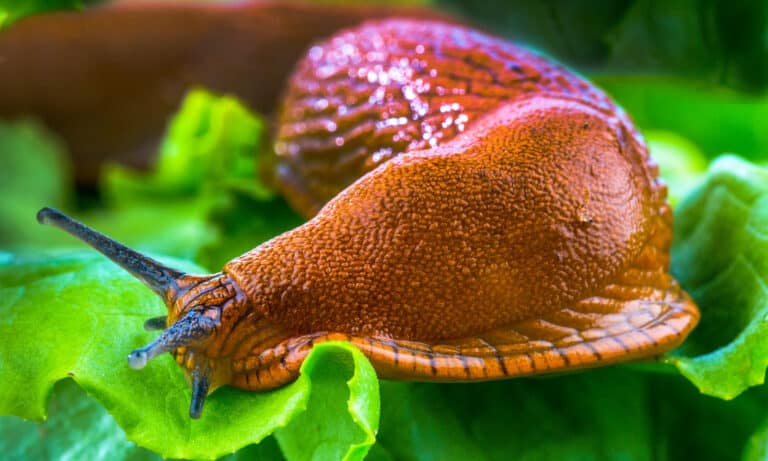
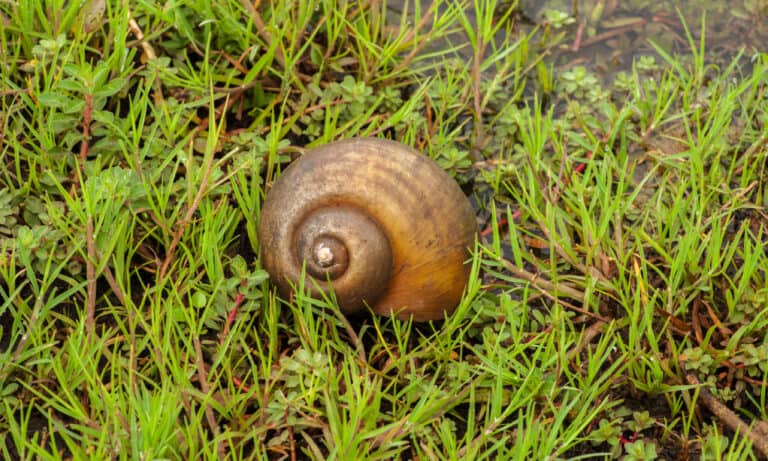
Snails are gastropod mollusks with a shell and a large, flat, muscular organ called the foot, which the snail uses to move around. Gastropods without external shells are known as slugs. A snail has two sets of tentacles, upper and lower. The snail’s upper tentacles are long stalks with an eye at the tip of each stalk. The two shorter tentacles on the bottom point downwards and are used for smelling and tasting.
A snail’s skin is highly permeable, and though water can pass through its semi-permeable membrane, the snail can also easily lose water. Snails must stay in moist environments to survive. Additionally, their skin contains mucus to create a barrier, keeping water in. The mucus on their skin not only protects the snail but also acts as a lubricant to let the snail glide along the ground.
Do Snails Drink Water or Absorb It Through Their Skin?
Snails do both. They have evolved with a combination of active ingestion, specialized anatomy, and whole-body absorption to survive. When snails ingest water directly, they use minor suction, capillary action, and a rough, ribbon-like tongue called a radula to bring water into their digestive cavity. The radula is a flexible band of thousands of microscopic teeth that acts as a raspy tongue.
Snails also use contact hydration to absorb water. Research on dehydrated slugs showed that the dehydrated mollusks flattened their bodies on a moist surface and absorbed water through their foot. Further research revealed they are actually capable of changing the permeability of their skin, letting more water in when they need it.
These microscopic studies revealed that snails’ skin cells actually adjust depending on their water needs. The spaces between the cells on their foot can expand to allow rapid absorption of water. And then they tighten back up to keep the moisture locked in.
How Much Water Does a Snail Need Each Day?
When a snail glides over a wet leaf, it’s taking in water through its skin. Land snails get their water from various sources, including dew drops, moist soil, wet leaves, vegetation, and condensation.
Unlike mammals, there isn’t a set amount of water a snail needs in a day. Instead, it depends on the environment. For example, humidity and temperature change the amount of hydration a snail may need in a day. Snails need water for critical body functions, such as digestion and movement. Taking in water helps them prevent dehydration and produce mucus.
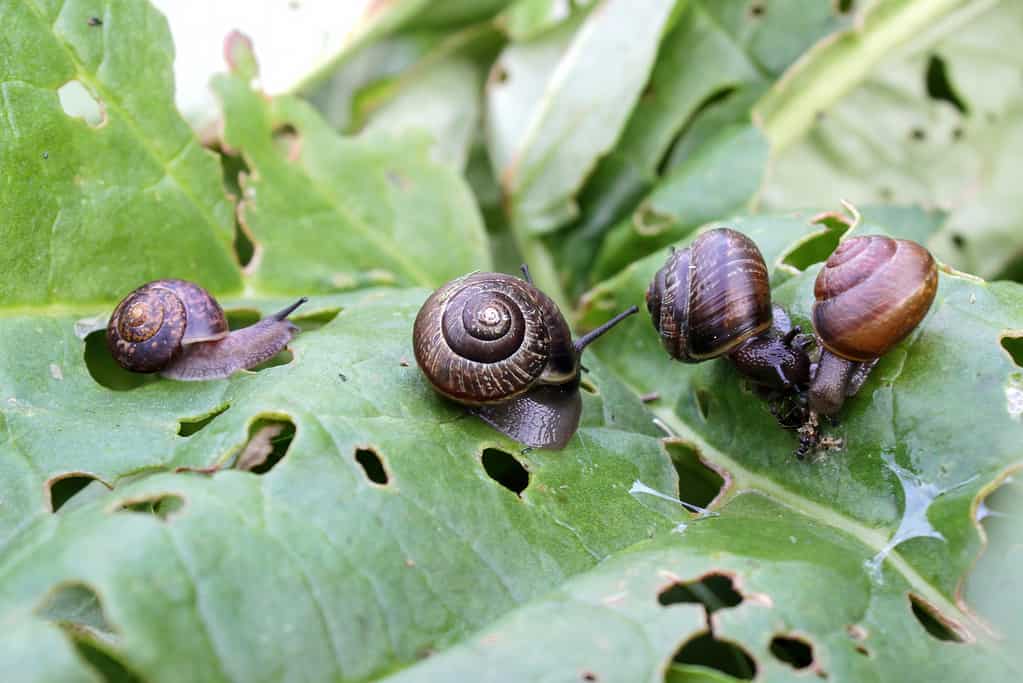
Snails use their raspy tongue-like radula to munch on lettuce leaves.
©VitaSerendipity/iStock via Getty Images
A snail can’t survive indefinitely without water, but it has adapted to withstand periods of drought. When a snail’s environment becomes dry and it starts to dehydrate, it will retreat into its shell and seal the entrance with a mucus membrane called an epiphragm.
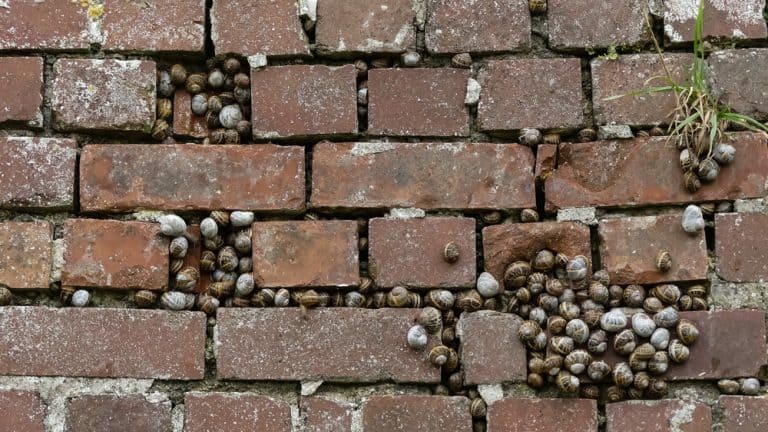
This way, the snail can survive in a state of dormancy (or estivation) for a day or even up to months at a time. Some snail species don’t use a mucus membrane; instead, they seal their shell with a hard trapdoor called an operculum.
Can Snails Drown?
Unlike aquatic snails, which may have gills for breathing underwater, land snails can’t survive if submerged underwater for too long. They have a modified breathing cavity that functions as a single lung, and they breathe through an opening on the right side of their body called a pneumostome. It opens and closes to bring air into the body. If a snail stays in water for too long, it can’t take in oxygen through its pneumostome and will drown.
Why Are Snails the Most Active After Rain?
Snails need moist environments to be active. You won’t see snails slithering through your yard on a dry day unless you’ve recently watered the area. If you garden much, you may notice snails and slugs are much more noticeable on a damp, rainy day. Snails are still present on sunny, hot days, but they are much harder to find. They retreat to dark places beneath leaves or under pots, waiting for night or early morning when it’s cooler and more humid.