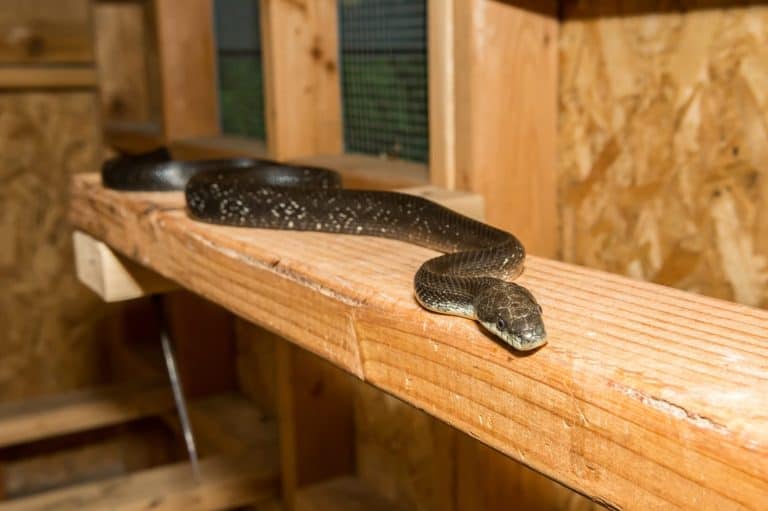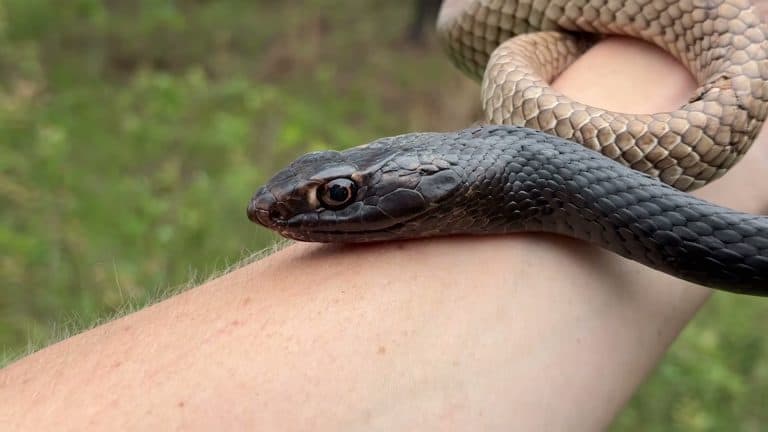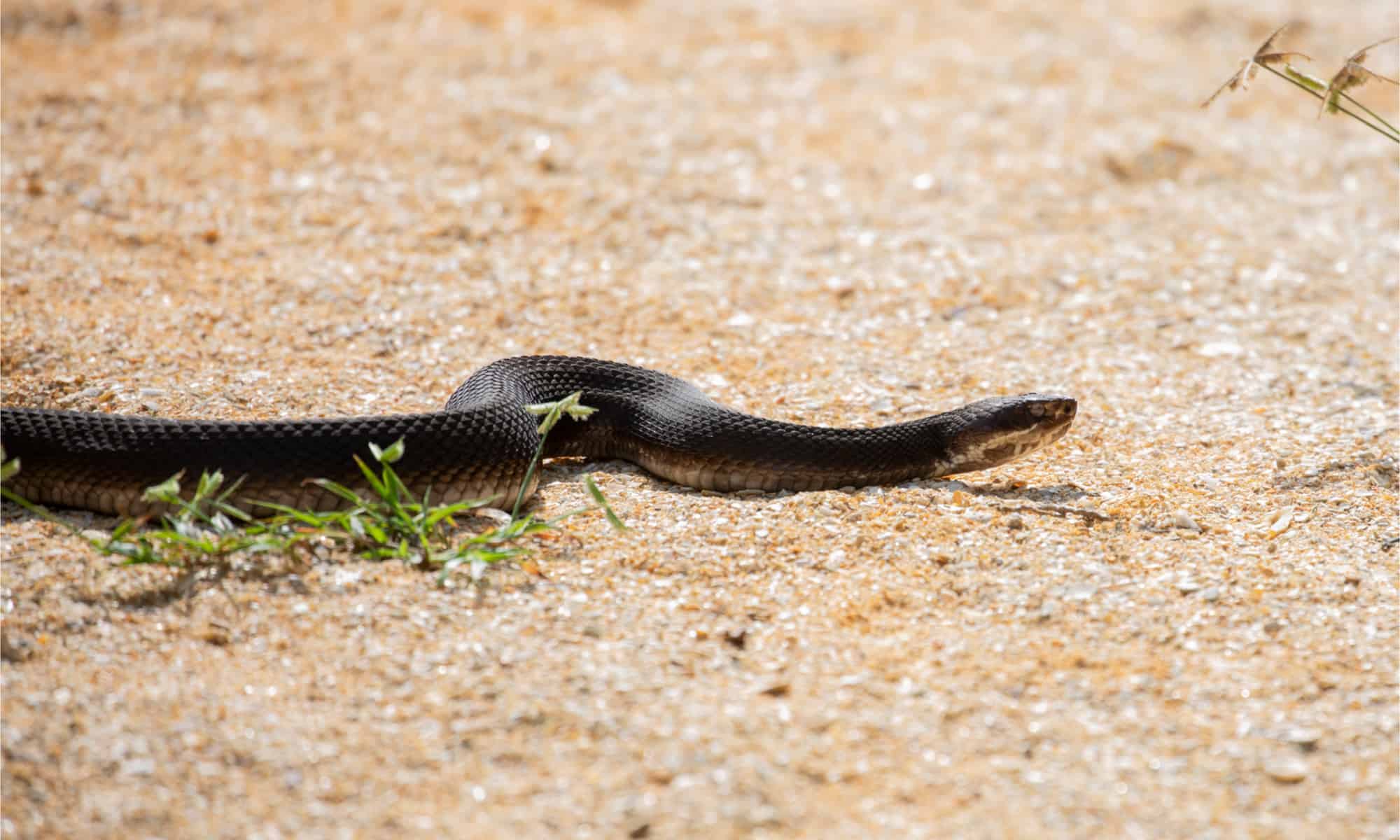

Snakes are predators that help maintain balanced ecosystems. They control pest populations, balance ecosystems as both predators and prey, help reduce the spread of diseases carried by rodents, and are essential to food webs and biodiversity. Of the approximately 4000 recognized species of snakes, Kansas is home to 42 species, six of which are black. Continue reading to learn more about the six black snakes in Kansas.
Black Rat Snake
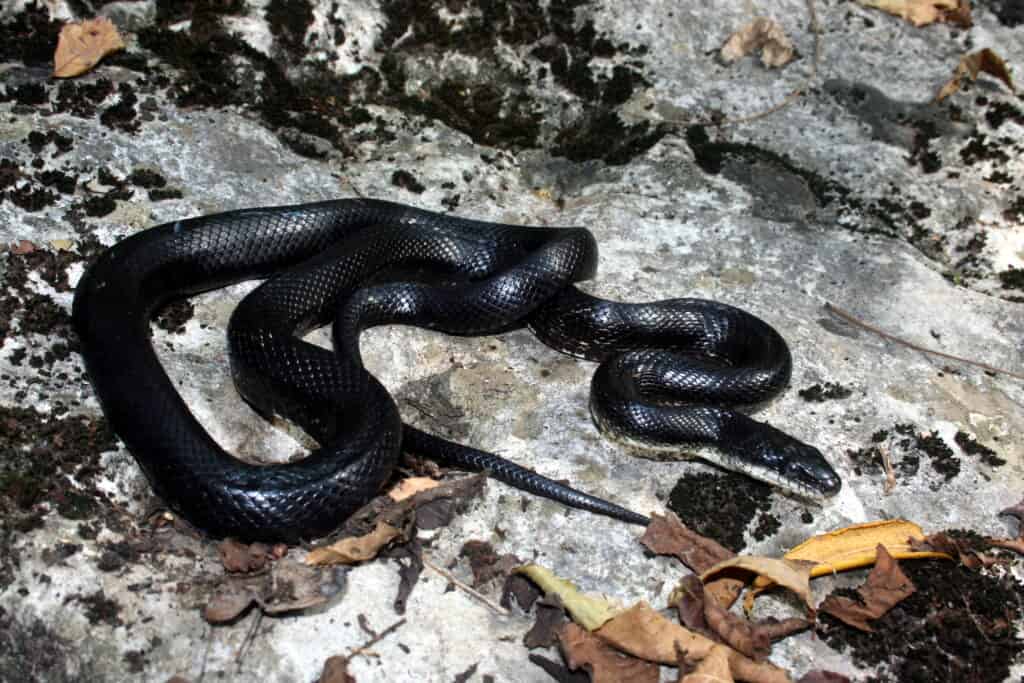
A black rat snake or western rat snake has a whitish belly.
©Psychotic Nature/Shutterstock.com
Black rat snakes (Pantherophis obsoletus), also known as Western rat snakes, are often found in Kansas. Adults weigh up to 3 pounds and measure up to 75 inches long. Their entire bodies are black with irregular patterns from head to tail, and their bellies are off-white with dark markings. These snakes are neither venomous nor aggressive despite their dark look. They are adaptable to various habitats and make excellent pets. They are constrictors, and their diet consists of birds, bird eggs, rodents, and rabbits. Black rat snakes are often preyed upon by hawks. To protect themselves, they mimic venomous rattlesnakes by vibrating their tails.
Western Worm Snake
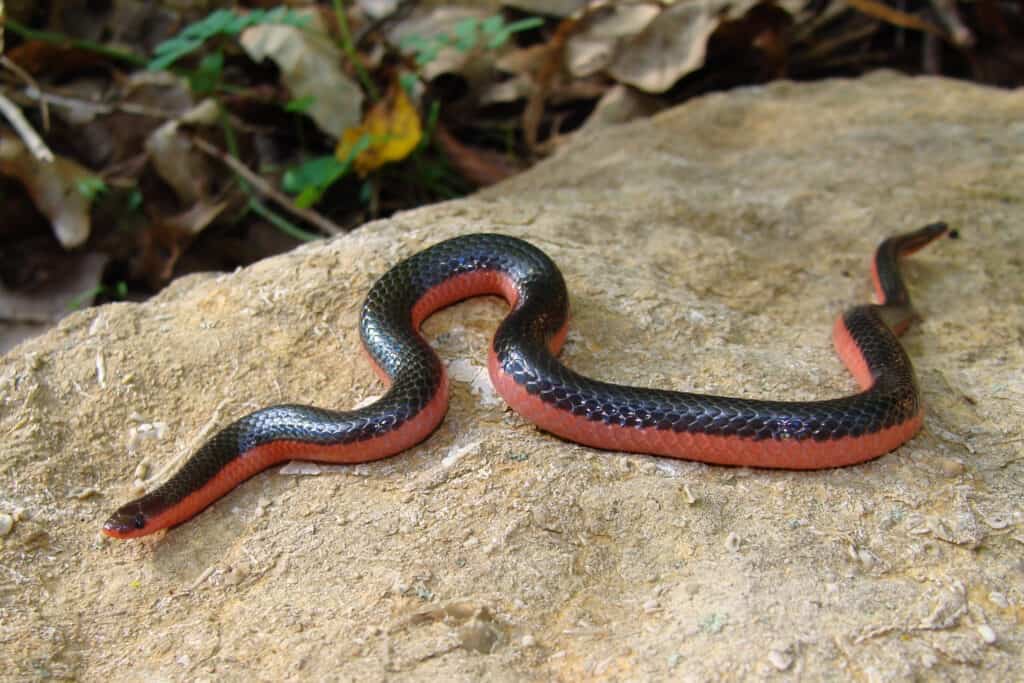
Western worm snakes have dark or black coloration that runs from their heads to their tails, as well as colored bellies.
©Matt Jeppson/Shutterstock.com
The nonvenomous western worm snake (Carphophis vermis) is a colubrid species found in the United States. Their dorsal side is solid black or purple, and their ventral side is red or pink. They measure 7.5 to 14.8 inches long and weigh approximately 0.5 ounces.
Western worm snakes are fossorial, living in loose, rocky soil and under leaf litter, which is why they are seldom seen. These snakes almost exclusively prey on earthworms, hence their common name.
Common Watersnake
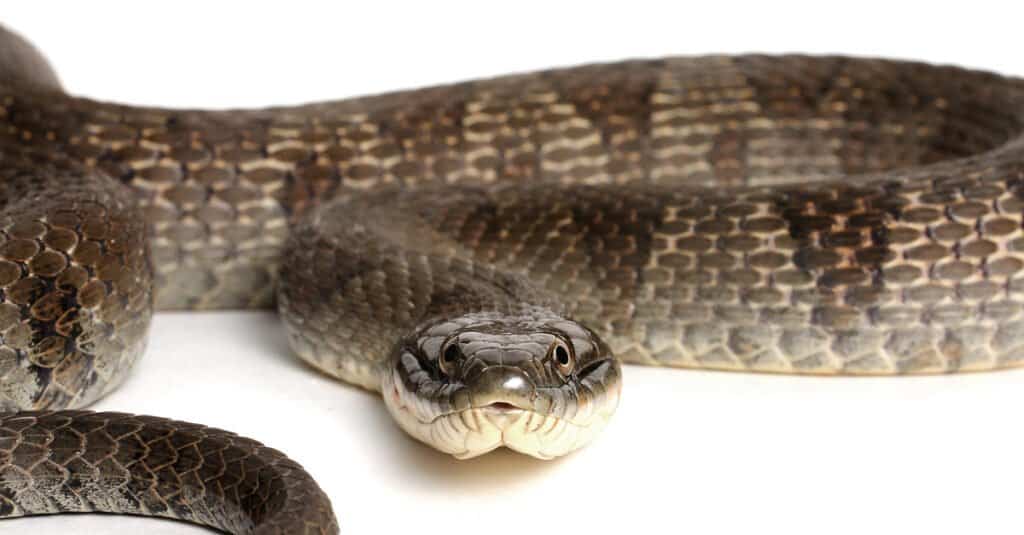
These snakes come in various colors, including black.
©Michiel de Wit/Shutterstock.com
Nonvenomous common watersnakes (Nerodia sipedon), which are often confused with venomous cottonmouths (Agkistrodon piscivorus), are found in Kansas. They come in various colors, like black, brown, gray, or red. However, black watersnakes are quite rare.
Generally, common watersnakes measure 2 to 4.5 feet long and weigh 5.6 to 14.4 ounces. Female watersnakes are larger than males. While nonvenomous, they will still bite and defend themselves from predators or unwanted contact with humans by spraying excrement and musk. Their saliva contains a mild anticoagulant, which prevents blood clotting and causes the wound to bleed more.
Western Ribbon Snake
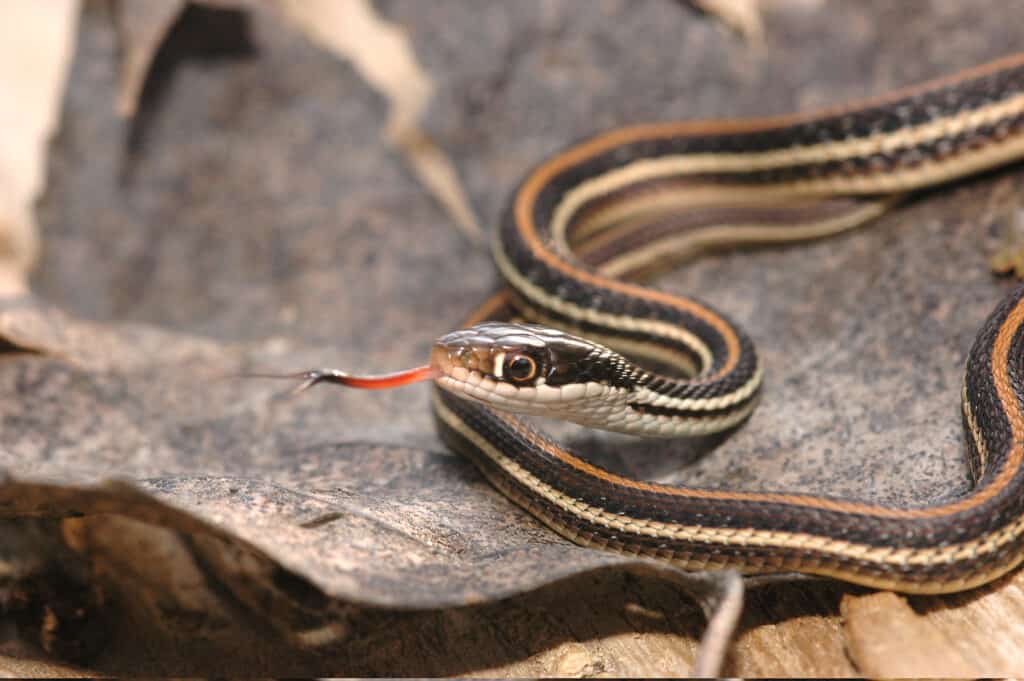
Western ribbon snakes are usually colored black, olive, or brown and have light-colored stripes.
©iStock.com/Shoemcfly
The Western ribbon snake (Thamnophis proximus) is a species of garter snake. It is nonvenomous and measures 17 to 50 inches long. They are black, olive, or brown and have three bright stripes; colors depend on the subspecies. These snakes are semiaquatic and found near streams and lakes.
Western ribbon snakes are not aggressive and scarcely bite even when attacked. They make great pets and are an excellent choice for novice snake handlers. These snakes primarily prey on earthworms, crayfish, lizards, fish, frogs, and tadpoles.
Plainbelly Watersnake
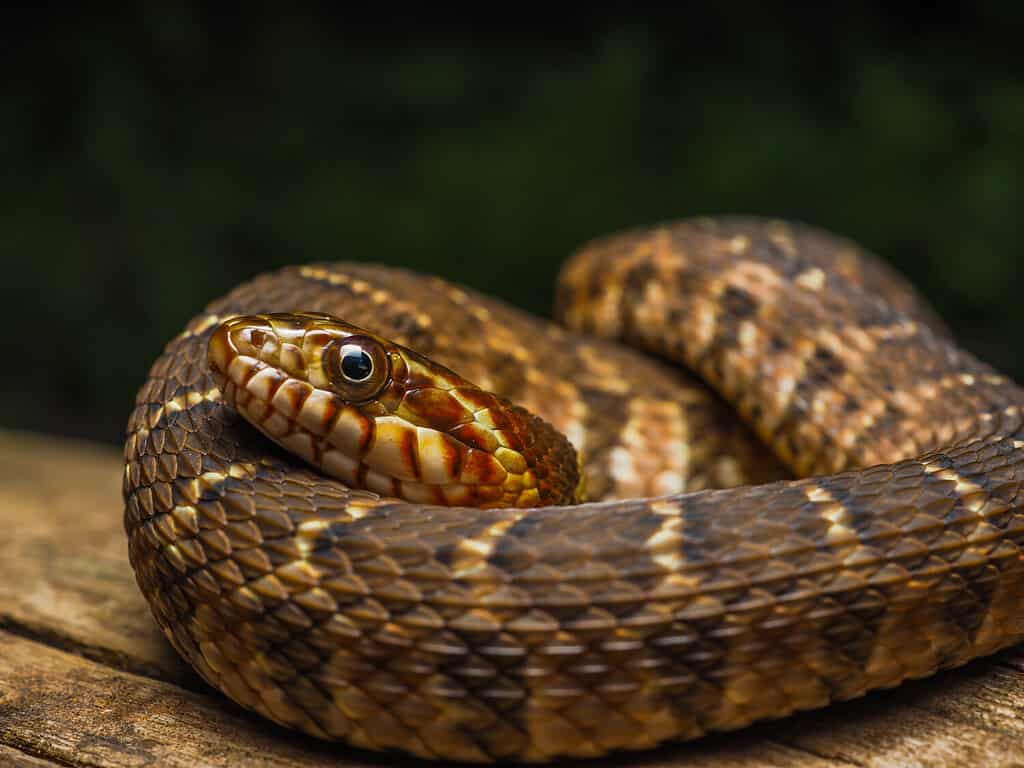
Plain-bellied watersnakes are nonvenomous and can be black, brown, gray, or olive green.
©Tyler Albertson/Shutterstock.com
Plainbelly watersnakes (Nerodia erythrogaster), also called plain-bellied watersnakes, are found in the lakes and rivers of Kansas City. They can be black, brown, gray, or olive green. These snakes have no markings on their sides and are more active in warm weather.
Plainbelly watersnakes are nonvenomous and do not attack humans unless threatened. When attacked by predators, they attempt to escape over land or water. If this fails, they will bite their predators. Although nonvenomous, they release musk with foul odors just like northern watersnakes. They are, however, shorter than common watersnakes and measure 24 to 40 inches long as adults.
Northern Cottonmouth
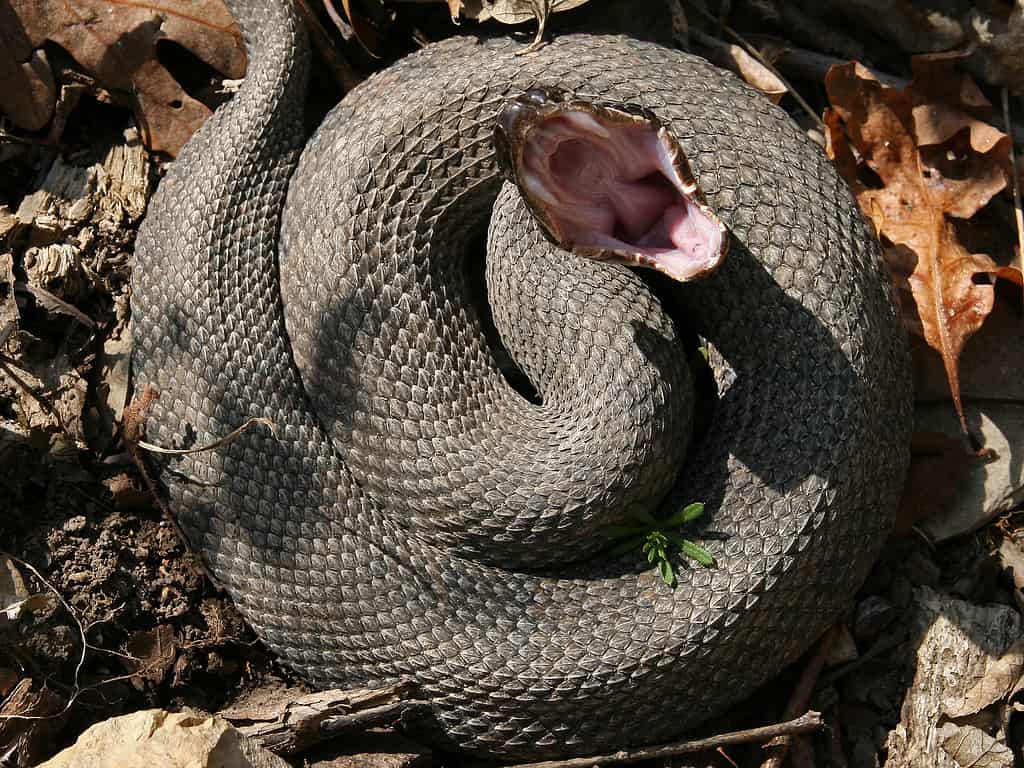
Western cottonmouth snake showing off its white mouth.
©Ryan M. Bolton/Shutterstock.com
Found in Cherokee County, Kansas, Northern cottonmouths (Agkistrodon piscivorus) are almost always black. A Northern cottonmouth will have a uniform color and no rattle. They measure 26 to 35 inches long and weigh 7.09 to 20.44 ounces. The largest verified northern cottonmouths measure up to 54 inches long and weigh 4 to 5 pounds.
Northern cottonmouths are nocturnal and use their heat-sensing pit organs to find prey. These snakes have a reputation for being aggressive and highly venomous. While it is true that Northern cottonmouths are extremely venomous, they are actually not aggressive and strike only in self-defense. However, they stand their ground when confronted or approached by humans.