
Quick Take
- Some "non-venomous" backyard snakes actually produce venom, though just not the kind that works on you. About garter snake venom →
- One common U.S. snake mimics a rattlesnake so convincingly that it fools even experienced observers, yet it is completely harmless. See the rattlesnake mimics →
- The largest snake in North America isn't a boa or a python, and it lives closer than you'd think. Meet North America's largest snake →
- Kingsnakes hunt and eat venomous rattlesnakes, and the reason they survive unharmed is stranger than you'd expect. How kingsnakes survive venom →
According to the Reptile Database, there are over 4,200 snake species in the world. Although snakes are some of the most feared creatures in the animal kingdom, it is estimated that globally, between 80% to 85% of snake species are non-venomous. In the U.S. alone, there are around 150 snake species, and 90% are considered non-venomous. In this article, we’ll take a look at some of the most common types of non-venomous snakes in North America and explore how they get food without dangerous venom.
Garter Snakes
There are at least 35 species of garter snakes and around 50 recognized subspecies in the genus Thamnophis. These snakes range from the subarctic regions of Canada, across the United States, and through Central America as far south as Costa Rica. With up to 13 recognized subspecies, the common garter snake (Thamnophis sirtalis) is the most widely distributed garter snake in North America. These snakes vary in size and color depending on subspecies and region, but they generally measure around 20 to 30 inches in length, though some individuals can reach up to 54 inches. They are often black, grey, brown, or green with brightly colored stripes along the length of their bodies.
These snakes favor grassy areas near permanent water sources, but they are very adaptable and can thrive in a variety of habitats. Garter snakes do produce a mild venom that mixes with their saliva. However it is only strong enough to help them subdue small prey such as amphibians, earthworms, and insects. Garter snakes are considered non-venomous and pose no danger to humans.
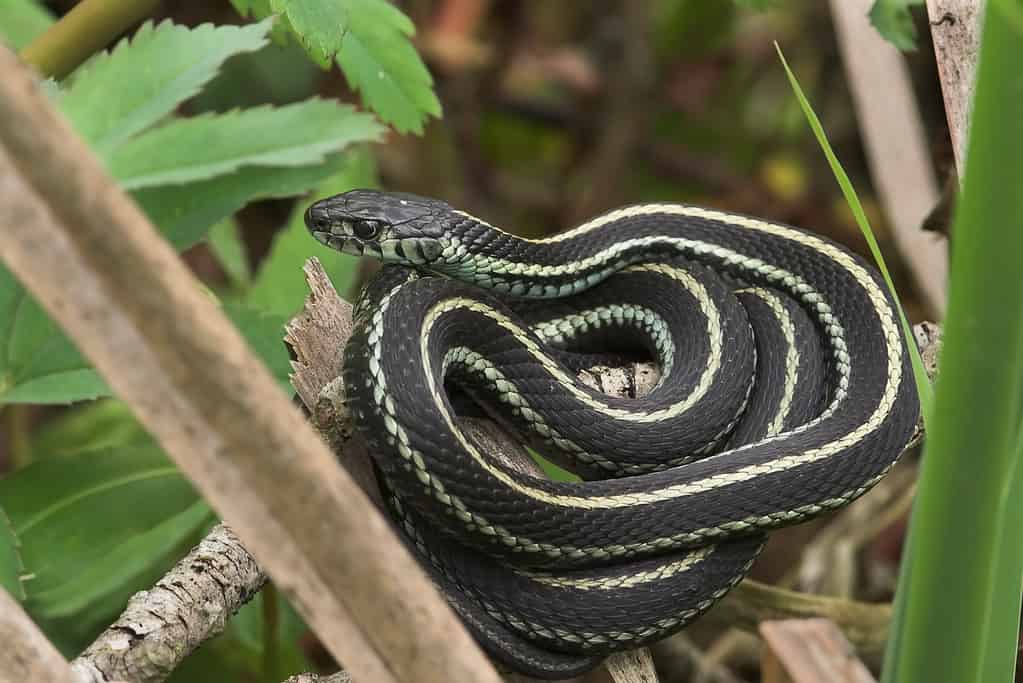
The common garter snake is the most common, widely distributed garter snake species in North America.
©iStock.com/rkhalil
Green Snakes
North American green snakes belong to the genus Opheodrys. There are two primary species: the smooth green snake (Opheodrys vernalis) and the rough green snake (Opheodrys aestivus). The main difference between them, as the name implies, is the arrangement of scales along the back. The smooth green snake has smoother scales, while the rough green snake has rough, keeled scales with a ridge running along the length of the body. They thrive in habitats as diverse as marshes, meadows, and woods throughout the United States and down to Mexico.
These very thin, sinewy snakes, which generally grow 1-3 feet long, are completely harmless to humans. Their bright green skin helps them to remain camouflaged from predators against the vegetation. If threatened, they would prefer to flee rather than fight, though it can emit a foul smell. Green snakes hunting insects and spiders by sensing vibrations in the ground. They grab their prey with small, rear-curved teeth and swallow them whole.
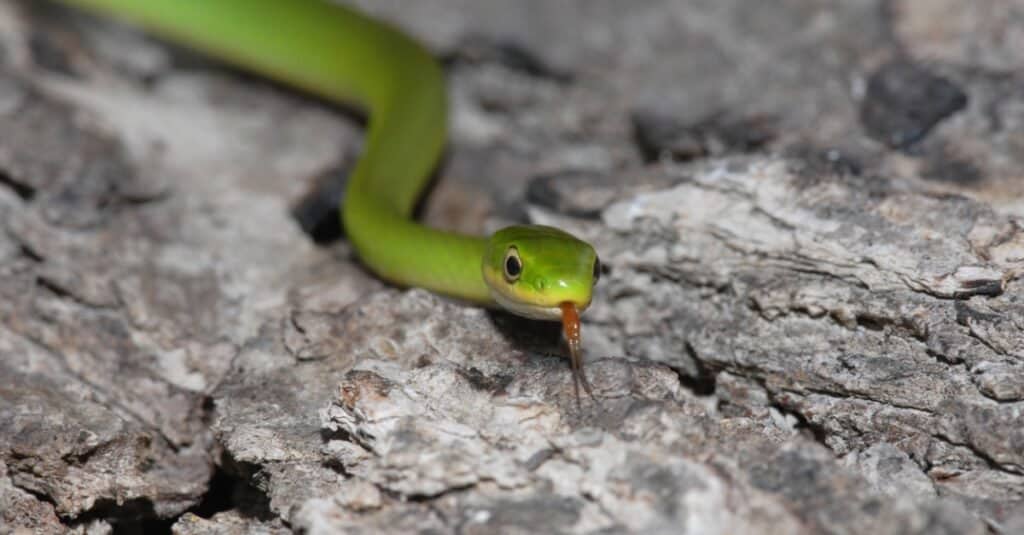
North American green snakes catch prey with their teeth and swallow it whole.
©iStock.com/Shoemcfly
Gopher Snakes
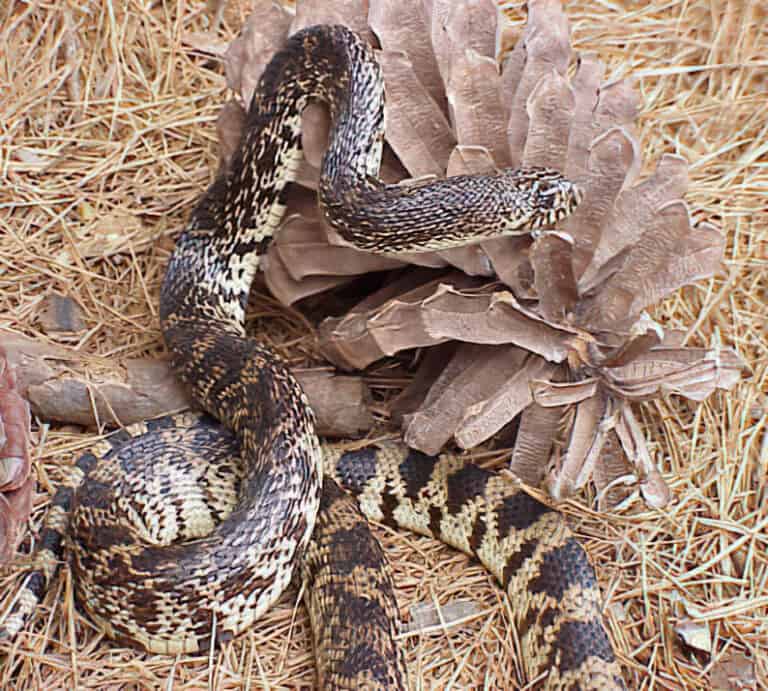
Also known as the pine snake or bullsnake, the gopher snake belongs to the genus Pituophis, which comprises 7 species and 16 subspecies, depending on the taxonomic authority. These nonvenomous snakes thrive in many different habitats across the western and central regions of the U.S., from the Pacific coast through the Great Plains and into parts of the Midwest. These snakes are at home in forests, deserts, prairies, shrublands, agricultural fields, and rocky bluffs.
Gopher snakes can measure anywhere between 2.5 and 7 feet in length, depending on subspecies. They often have a yellow or pale-colored bodies with dark brown or black patterns along the top and side to aid with identification. When threatened, the gopher snake is particularly known for producing a hoarse hissing sound. It can also curl up its body and vibrate its tail in the manner of a rattlesnake to fool potential predators. However, these snakes are harmless to humans. Gopher snakes feed on small rodents, birds, eggs, and lizards by constricting the prey’s lungs.

Gopher snakes have light-colored bodies with brown or black patterns.
©Cedar Dobson/Shutterstock.com
Racers
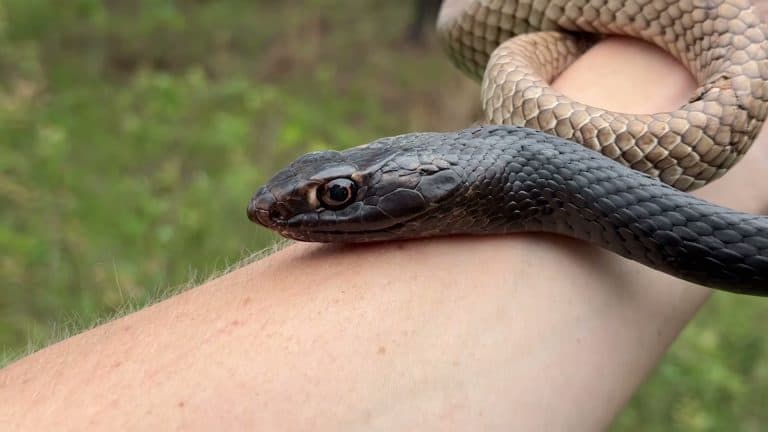
North American racers are a very diverse group of snakes found throughout the tropical and temperate Americas. These snakes belong to the genus Coluber, with one main species, Coluber constrictor, and 11 subspecies. They range from southern Canada through most of the contiguous U.S., parts of Mexico and into Guatemala and Belize in Central America. These snakes prefer open and semi-open habitats such as forests, open grasslands, and forest edges near open fields.
Racers average 2-4 feet, but may reach up to 5 feet in length. They can be identified by the long, thin body with a dark back and lighter-colored belly. Blue, tan, and black racers are named for their color patterns. They are among the fastest snakes in North America, reaching 8-10mph. They are also surprisingly good tree climbers, so they can raid birds’ nests for eggs and hatchlings with ease. Most prey items are simply swallowed whole. Their diet consists mostly of rodents, lizards, amphibians, and smaller snakes.

Racers have long, thin bodies with dark backs and light-colored bellies.
©Psychotic Nature/Shutterstock.com
Hognose Snakes
Native to sandy, semi-arid, or grassy habitats throughout North America, the hognose can be identified by the upturned snout, which allows it to dig in loose soil. The five species of North American hognose snakes belong to the genus Heterodon. The eastern hognose (Heterodon platirhinos) is the most widely distributed species, found throughout the eastern and central U.S.
The body colors of the hognose can vary, with most snakes being shades of tan, black, brown, grey, olive, orange, or red. They generally reach 2-3 feet in length. When threatened, the hognose may attempt to head-butt its opponent without actually biting. It can also roll onto its back and play dead with its tongue hanging out, reinforced by the emission of a foul-smelling substance that mimics the scent of dead animals. All hognose snakes produce possess a mild, rear-fanged venom that can subdue prey such as toads, frogs, lizards, birds, and small mammals. They are considered non-venomous to humans.
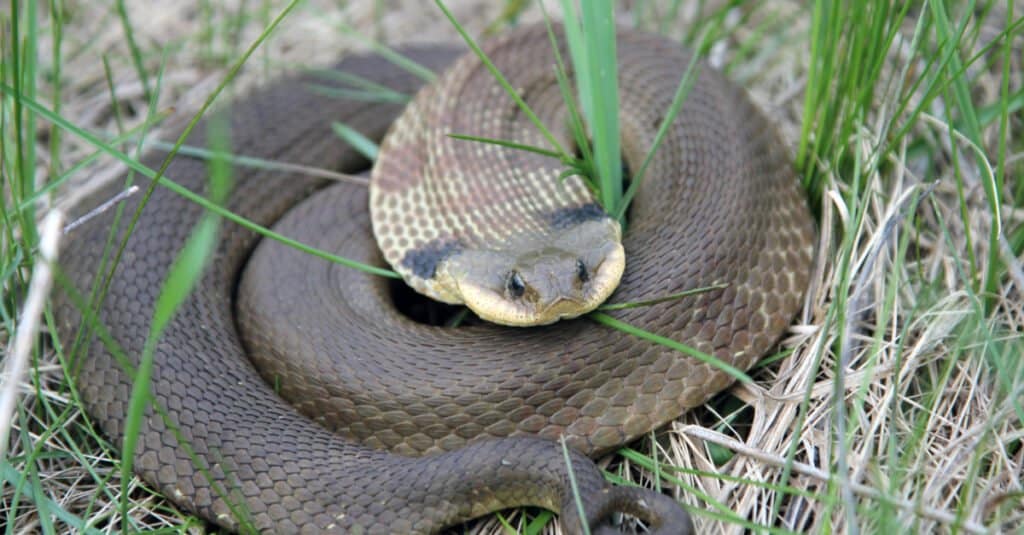
Hognose snakes produce a mild venom made to subdue prey such as toads and frogs.
©iStock.com/deepspacedave
Rat Snakes
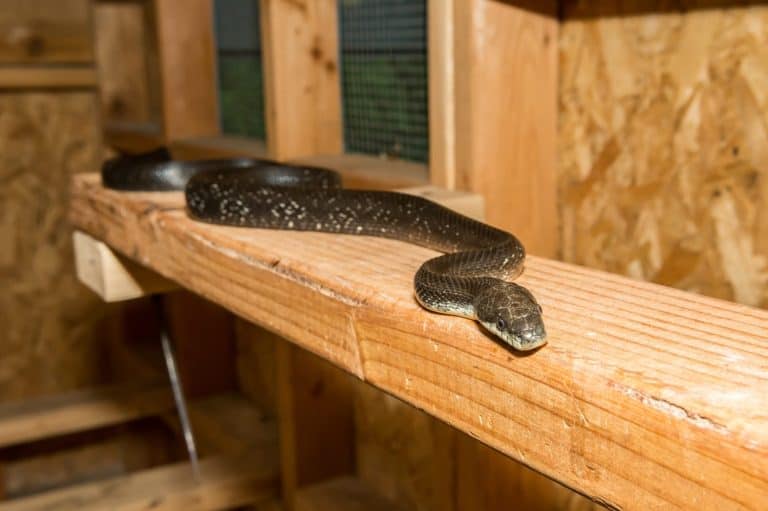
Rat snakes are a group of medium to large constricting snakes found all over the world. In North America, rat snakes belong to the genus Pantherophis. The eastern rat snake, Texas rat snake, and yellow rat snake are probably the best-known species in North America. Rat snakes generally measure from 3.5 to 6 feet, but some subspecies may grow larger. Rat snakes are highly variable in color depending on their region, age, and subspecies.
When threatened, rat snakes can vibrate their tail in an attempt to mimic the far more dangerous rattlesnakes and fool potential predators. Rat snakes are excellent climbers and swimmers. As the name suggests, they feed primarily on rodents, killing their prey using constriction. These snakes live in many different habitats, including forests, swamps, wetlands, grasslands, and man-made areas where rodents are common. However, They are considered harmless to humans. Some of these species, such as the corn snake (Pantherophis guttatus), are very docile, earning them a place among the most popular reptiles in the pet trade.
Baird’s rat snakes have a small range in Texas and northeastern Mexico.
Indigo Snakes
North America is home to two primary indigo snake species/subspecies in the genus Drymarchon: the eastern indigo snake (Drymarchon couperi) and the Texas indigo snake (Drymarchon melanurus erebennus). These snakes are generally found in the southeastern U.S., as well as Texas and northern Mexico. By all accounts, the eastern indigo snake is the largest snake species in all of North America, potentially measuring up to 9.2 feet long. These snakes generally average closer to 5-7 feet in length.
As their name indicates, indigo snakes are dark and glossy, often with distinctive, colorful markings around the chin, throat, and cheeks. They can be found in scrublands, brush, sandhills, and semi-arid terrain. These snakes eat all kinds of different prey, including rodents, turtles, lizards, and small birds and their eggs. They typically strike and grab their prey with powerful jaws, often holding it until it becomes exhausted from struggling, then swallowing the prey whole.

Indigo snakes are the largest snake species in North America.
©Patrick K. Campbell/Shutterstock.com
Kingsnakes
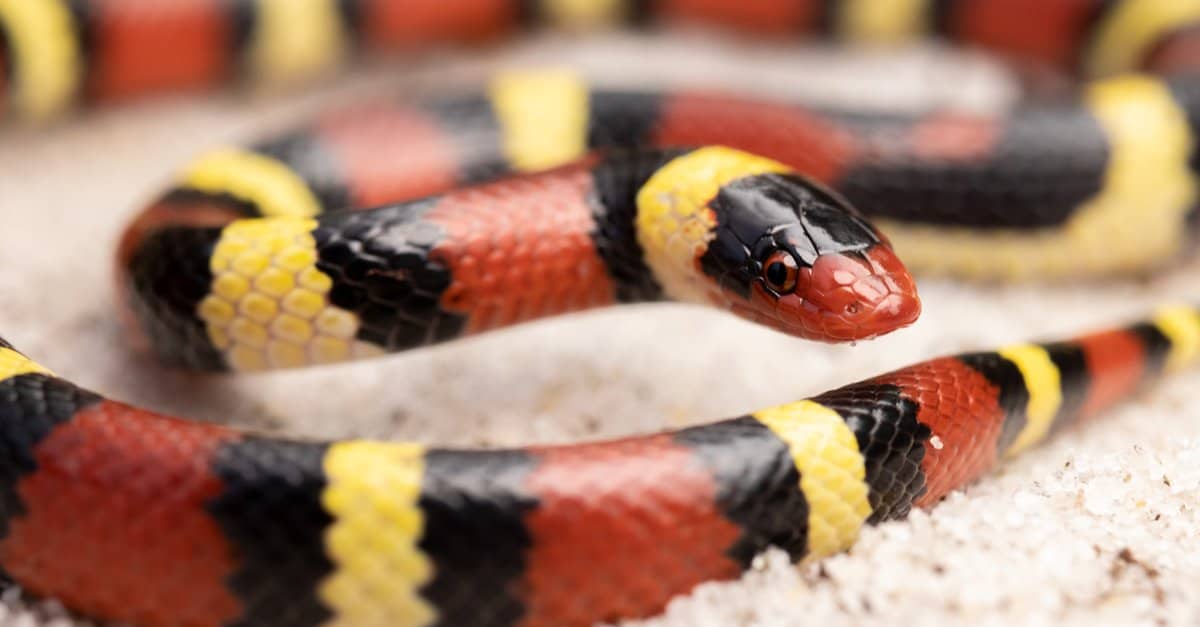
North American kingsnakes belong to the genus Lampropeltis, which includes 45 species. They are among the most common snakes in all of North America, residing in a variety of habitats, including river valleys, woodlands, fields, hillsides, rocky outcrops, and pine forests. Kingsnakes measure anywhere from 1 to 7 feet long, depending on species. They have smooth, glossy scales and vary dramatically in color scheme and pattern, which makes identification difficult. However, they tend to have dark rings or bands along the body.
For this reason, it’s easy to accidentally mistake some of these species for the venomous coral snake. In fact, kingsnakes kill and eat venomous snakes, including rattlesnakes, copperheads, and cottonmouths. Their amazing resilience to toxins enables them to survive these dangerous encounters safely. They also consume lizards, rodents, birds, and birds’ eggs. Pound for pound, kingsnakes are the strongest constrictors on Earth.

Kingsnakes are commonly mistaken for venomous coral snakes.
©Matt Jeppson/Shutterstock.com
Boas
Boas are a family of large tropical snakes primarily found in South America, Africa, and southern Asia. While the boa constrictor and green anaconda are the best-known species, all 49 members of this family kill their prey through constriction. There are two boa species native to North America, including the rubber boa (Charina bottae), found in western North America, and the rosy boa (Lichanura trivirgata), native to the southwestern U.S. Both snakes favor semi-arid habitats with access to water, but rubber boas live across a more diverse range of environments.
North American boas are much smaller than their South American counterparts, typically measuring only 1.5-3 feet in length. Rubber boas are generally a uniform shade of brown, grey, or olive with pale undersides. Rosy boas have three wide longitudinal stripes on a lighter-colored background, but color patterns vary widely depending on geographical region. These snakes primarily feed on rodents and other small mammals, reptiles, and birds. They are considered docile and completely harmless to humans, making both snakes popular in the pet trade.

Rosy boas are popular in the pet trade.
©Jason Mintzer/Shutterstock.com