
Quick Take
- Owning a snake in Hawaii carries a penalty most people would never expect from a wildlife law. See the penalties →
- One snake species has been in Hawaii so long that many consider it native, despite the fact that it absolutely isn't. Meet the long-established species →
- Hawaii actually imports one of its most dangerous snake threats on purpose, doing so for a very specific reason. See why Hawaii imports snakes →
- Christmas tree shipments have quietly brought snakes to Hawaii more than once, a situation whose consequences could have been catastrophic. Read about the Christmas tree stowaways →
Are There Snakes in Hawaii?
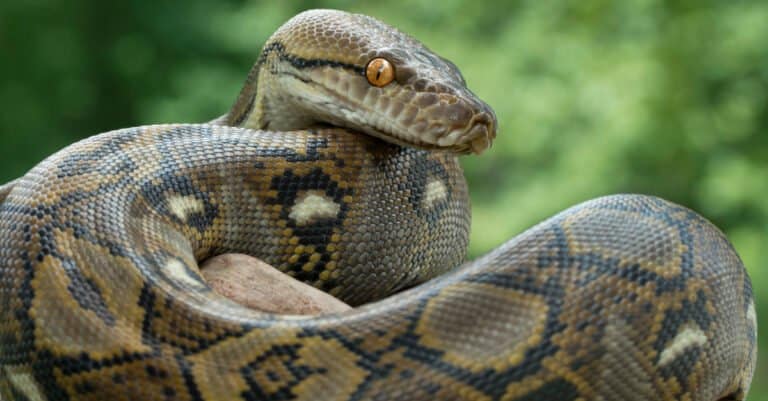
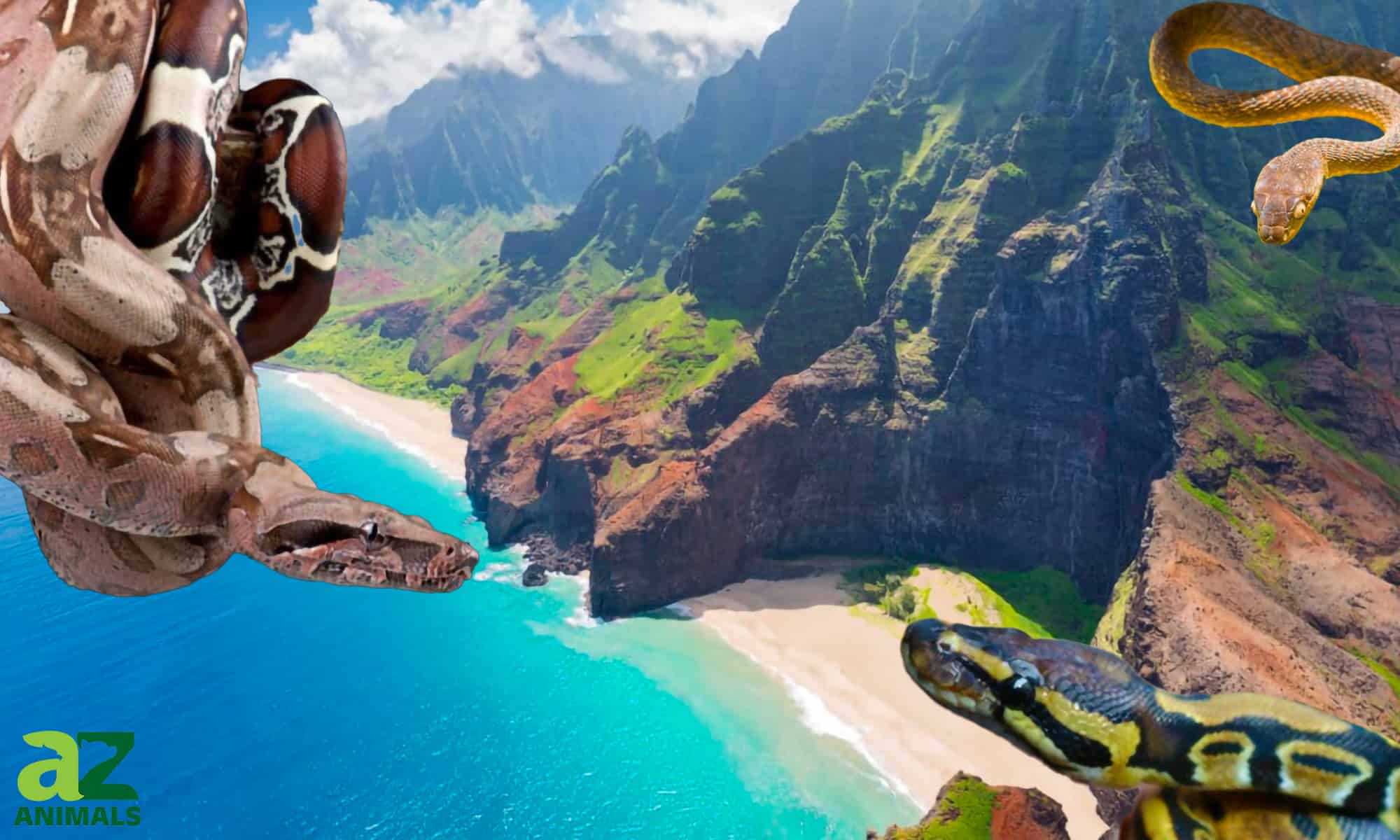
Are there snakes in Hawaii? The answer is yes, but there shouldn’t be, considering none of the terrestrial snakes present are native to any of the islands of the archipelago. In fact, possessing a snake in Hawaii is considered a Class C felony and can result in a fine of $200,000 or up to five years in prison. The Hawaiian Department of Agriculture has been successfully cracking down on unwanted snakes over the past few decades. The ecosystem of Hawaii is extremely delicate, so introducing non-native species threatens the safety of the native wildlife. Snakes have no natural predators on the islands, so they are easily able to outcompete existing animals and even diminish their populations. They also pose a threat to endangered native birds, preying on them and their eggs. While efforts to eradicate snakes are being made, several species are found in the state today. Continue reading to learn about the snakes that have lived or currently live in Hawaii.
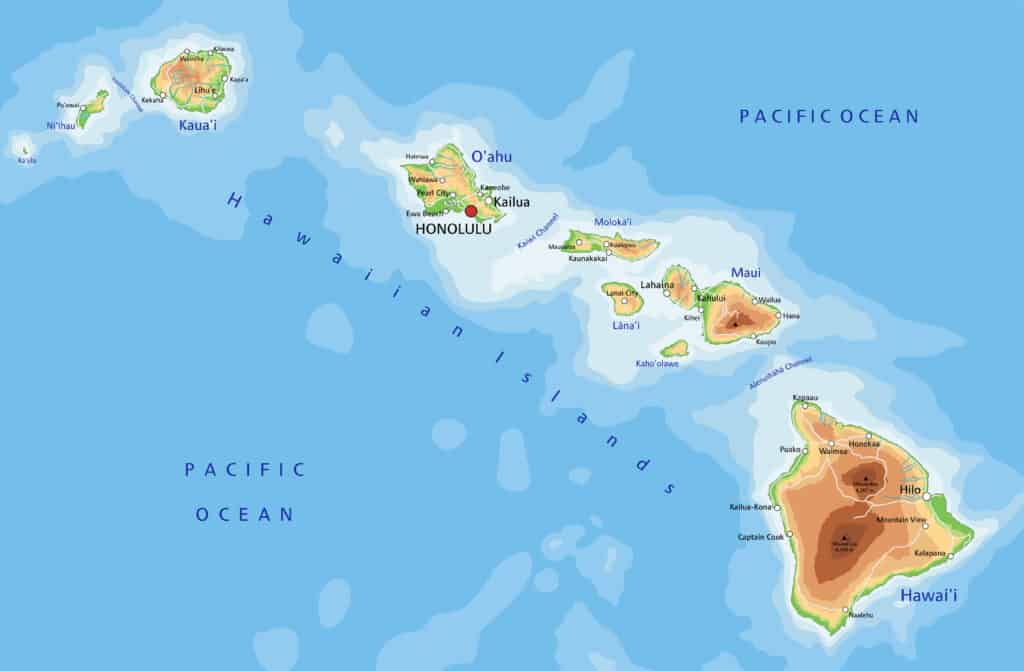
Hawaii is so isolated that plants and animals that have evolved on the islands had to travel more than 2,400 miles to get there.
©Bardocz Peter/Shutterstock.com
A Snakeless State
Hawaii lies approximately 2,400 miles to the south-southwest of the continental U.S. and began forming in isolation more than 5 million years ago in one of the most isolated areas in the world.
Being so isolated, the plants and animals that have reached and evolved on the islands had to travel more than 2,000 miles from the nearest continent or had to ride the winds from other far-flung Pacific islands.
Given this isolation, it is not surprising that there are no native snakes in Hawaii. the journey is simply too far for snakes to survive and then establish a thriving colony on the island. As with many other Pacific islands, the freedom from massive numbers of rodents and snakes allowed ecosystems to form that are unprepared for these invasive predators. Thus, if snakes are able to take hold in Hawaii, they could cause significant losses to native Hawaiian species.
Brahminy Blind Snake
Although the Brahminy blind snake (Indotyphlops braminus) wasn’t originally indigenous to Hawaii, it’s been there so long that many consider it a native species. This snake is one of the smallest snake species in the world, typically measuring 2–4 inches in length, and have slim bodies, so one could easily be mistaken for an earthworm. They feed on ants and termites, which some people might appreciate.
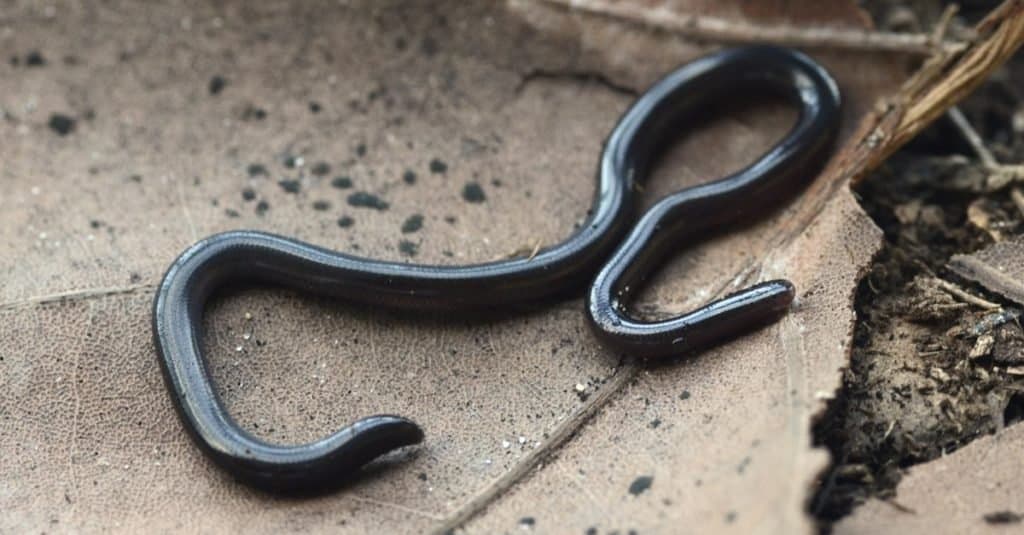
Brahminy blind snakes are harmless, but now inhabit Hawaii in significant populations.
©Patrick K. Campbell/Shutterstock.com
The Brahminy blind snake is called blind because its eyes are covered by head scales, rendering them incapable of forming images and only able to distinguish between light and dark. Because these snakes burrow underground in total darkness, they have no evolutionary need for functional sight, causing their vision to regress over time into simple, protected eye-spots.
All Brahminy blind snakes are female. It is the only known unisexual snake species in the world. The Brahminy blind snake is parthenogenetic, which means it reproduces by laying eggs that hatch without fertilization. This means only one snake is needed to produce countless generations.
While their parthenogenesis poses a challenge to eradication efforts, there is no need to remove them, as the Brahminy blind snake is nonvenomous and has little impact on the ecosystem.
Ball Python
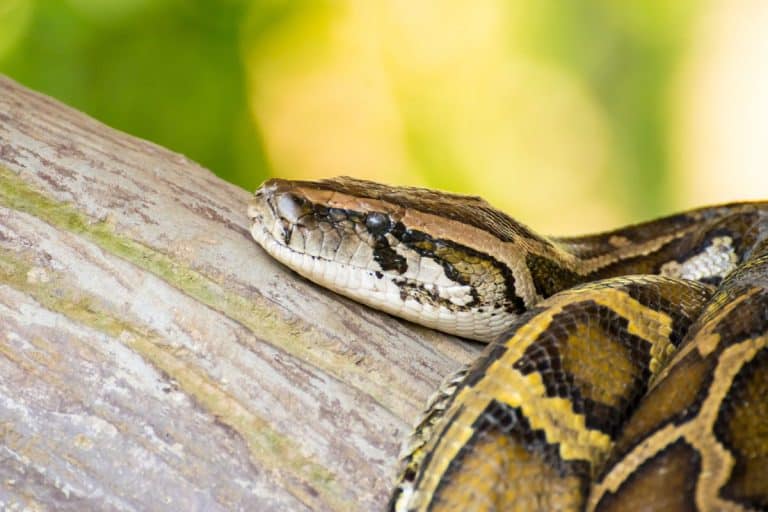
The ball python (Python regius) is a common pet around the world. They may be born small, but they can grow up to five feet long. Despite strict regulations, there has been at least one ball python sighting in the last seven years. In 2020, a 4-foot python was spotted in Kahalu’u Forest on Oahu Island by a hunter, who turned it over to the humane society.
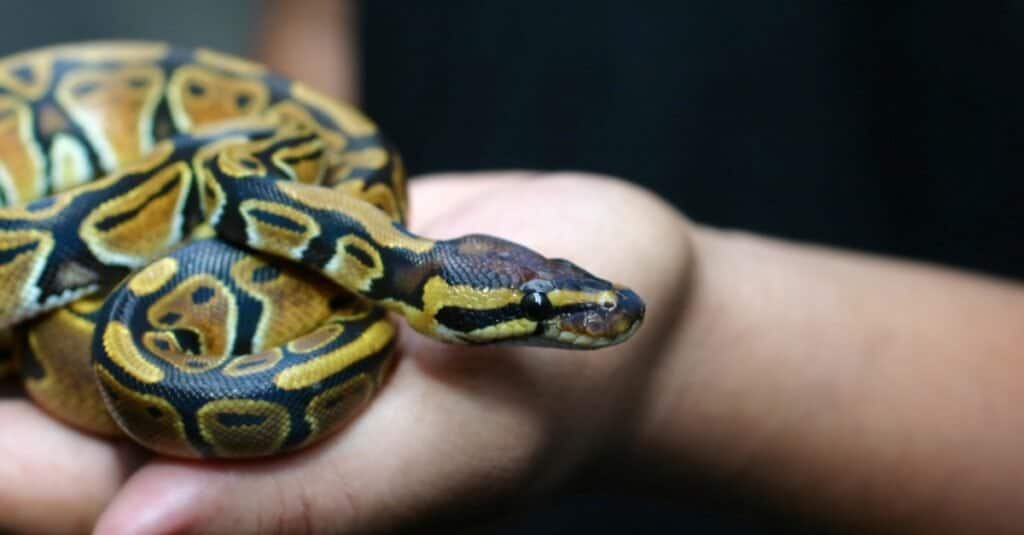
Ball pythons are a popular pet species that have been spotted in Hawaii.
©Krisda Ponchaipulltawee/Shutterstock.com
Unfortunately, when a pet ball python becomes too large to maintain, some owners will release them. Because Hawaii has limited border inspection resources to check every piece of mail, luggage, or shipping container, a small number of animals slip through the cracks. It is not known if the ball pythons found in Hawaii accidentally escaped or were intentionally released, but thankfully they have not established a breeding population.
Even though ball pythons are nonvenomous, if they were to become established in Hawaii, they would pose a severe threat to the islands’ fragile ecosystem. Because Hawaii evolved without any native land snakes or large predatory reptiles, the ecosystem is highly vulnerable to introduced predators.
Boa Constrictor
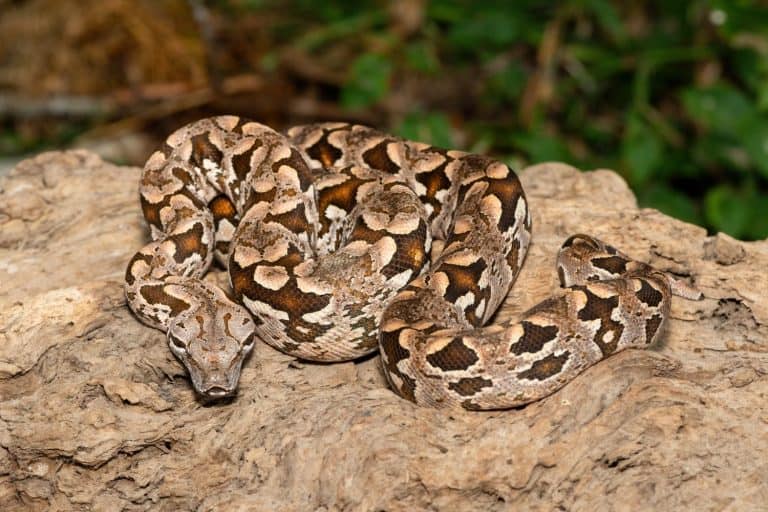
Another common pet, the boa constrictor (Boa constrictor), grows much larger than its fellow constrictor, the ball python. Unfortunately, there have been far more boa constrictor sightings in Hawaii. In 2011, two were spotted on a farm, one of which was 9 feet long. There were two separate incidents in 2013: a three-foot-long boa was sighted at a Honolulu crosswalk, and a five-foot-long boa was run over on the Pali Highway. In 2015, the HDOA confiscated a 7-foot boa in Nuuanu.
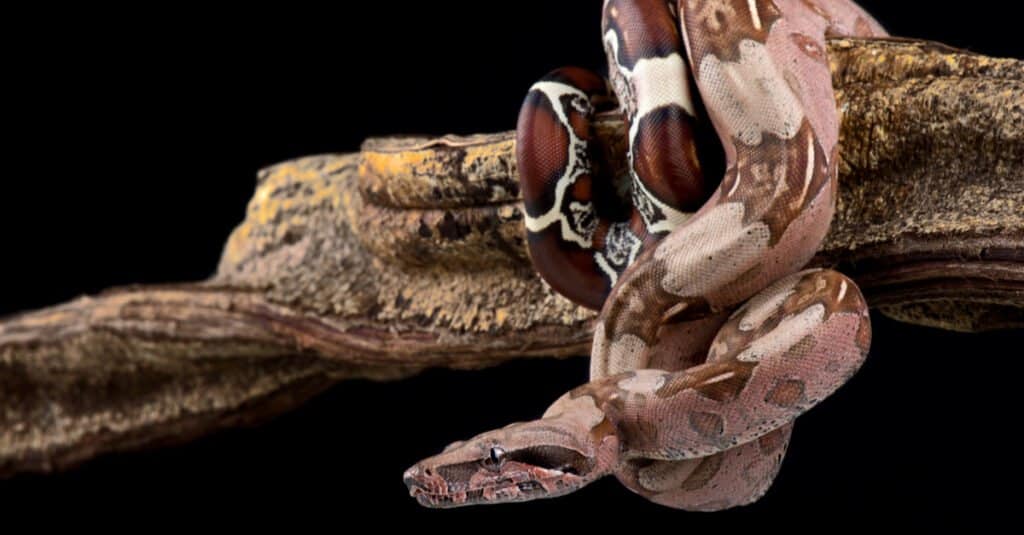
There have been several boa constrictors sighted in Hawaii across the past decade.
©reptiles4all/Shutterstock.com
Because of its larger size, the boa constrictor is considered more exotic than the ball python, which may explain why more sightings have been reported. If the ball python is too dangerous for Hawaiian wildlife, one can only imagine the devastating effects the boa constrictor would have on the islands should it become established.
Western Terrestrial Garter Snake
The Western terrestrial garter snake (Thamnophis elegans) was first discovered in 2004 in a shipment of Christmas trees from Oregon. The shipment included not only the trees but also a 13-inch Western terrestrial garter snake.
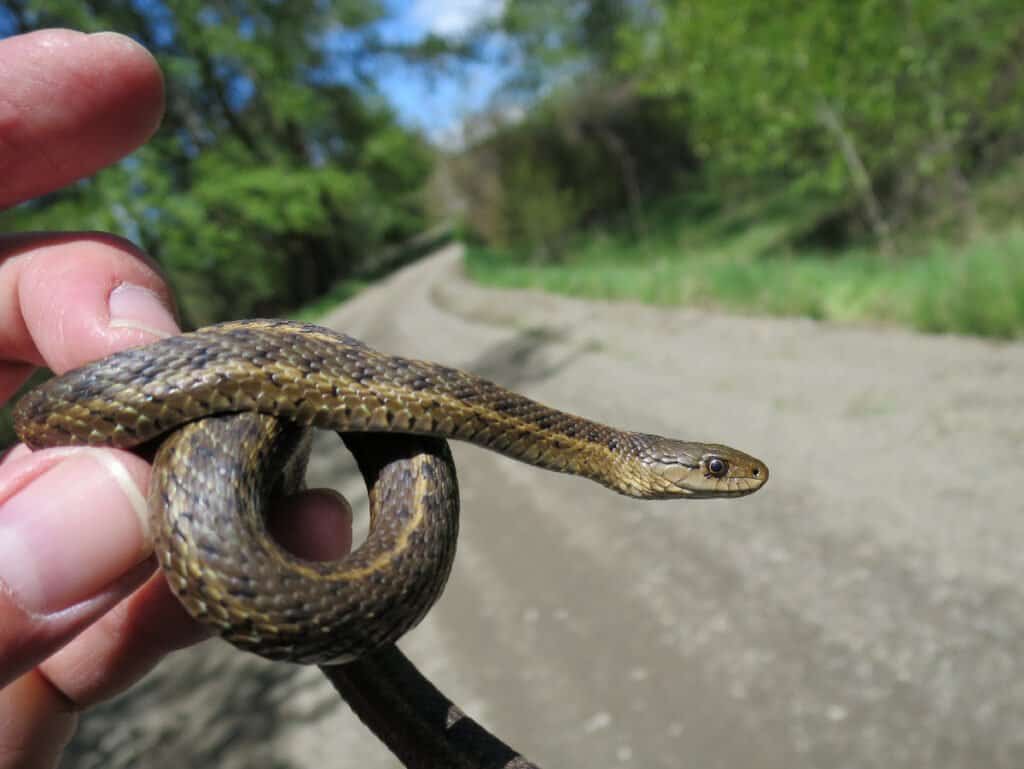
The Western terrestrial garter snake arrived in Hawaii in a shipment of trees.
©Randy Bjorklund/Shutterstock.com
In 2020, another Christmas tree shipment included a garter snake stowaway, though this one died in transit. These near-misses could have become ecological catastrophes. However, the Western terrestrial garter snake has not established a breeding population in Hawaii.
Corn Snake
Another nonvenomous snake that has been found in Hawaii is the corn snake (Pantherophis guttatus). Corn snakes can grow up to 6 feet long. Yet, despite their comparatively large size, they are not a threat to humans and stick to a diet of birds, their eggs, and small mammals. In other U.S. states, that wouldn’t be a problem, but in Hawaii, the corn snake would be a dangerous invasive predator.
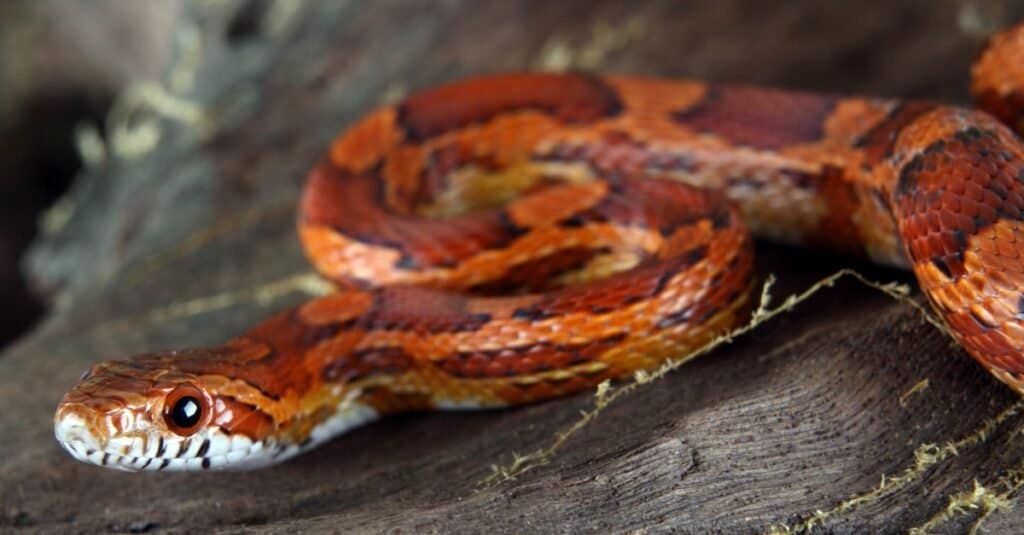
There has been one corn snake spotted in Hawaii in 2019.
©Enrique Ramos/Shutterstock.com
Corn snakes are seldom seen in Hawaii, with one reported sighting in 2019. It was found in someone’s backyard, and its origins are unknown. It was quickly reported to the HDOA, and there have been no sightings since. However, its unexplained appearance is concerning.
Venomous Snakes in Hawaii
Hawaii has a couple of venomous snakes to be aware of. The brown tree snake (Boiga irregularis) is especially problematic as it previously wiped out much of Guam’s native species after being accidentally introduced.
To date, the only brown tree snakes spotted in Hawaii are there for training purposes. Hawaii imported brown tree snakes specifically to train detection dogs to find them and stop the invasive species from becoming established on the islands.
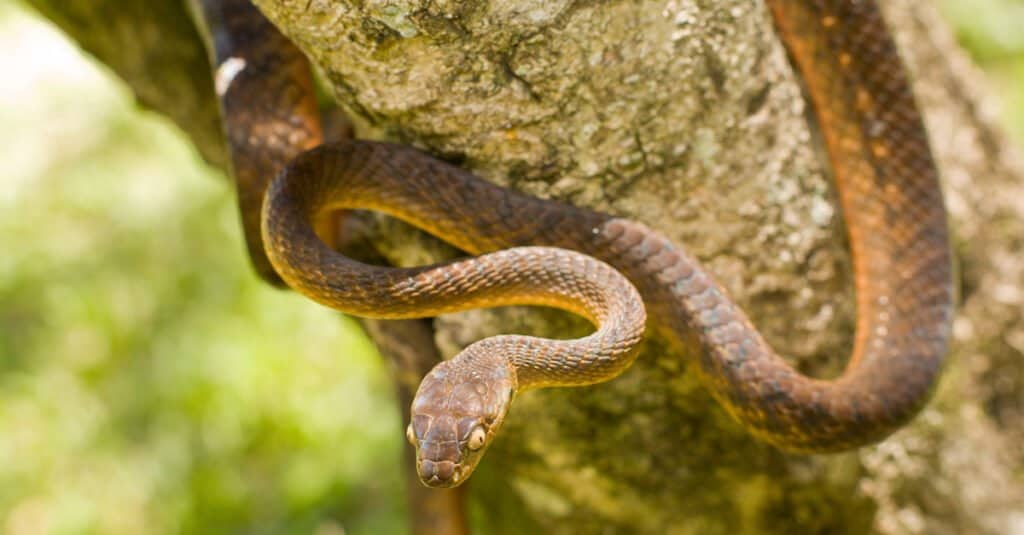
Brown tree snakes stow away on cargo vessels and aircraft.
©Janelle Lugge/Shutterstock.com
Yellow-bellied sea snakes (Hydrophis platurus) are the closest thing Hawaii has to a native snake, but they’re an aquatic species that is rarely found near the island’s shores.
Yellow-Bellied Sea Snake
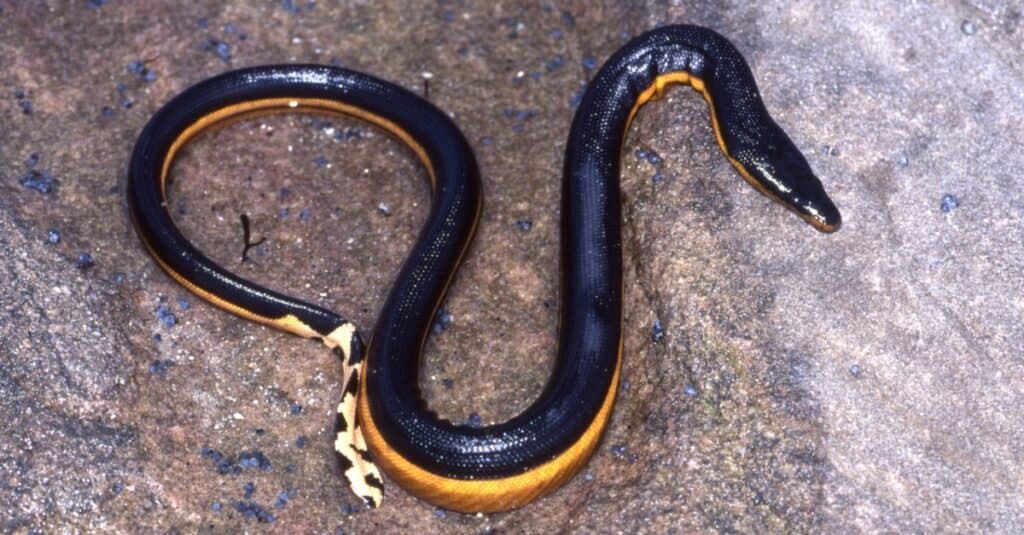
The yellow-bellied sea snake is found in all tropical oceanic waters except for the Atlantic Ocean.
©Ken Griffiths/Shutterstock.com
Anti-Snake Legislation in Hawaii
Given the ability of snakes to reproduce prolifically and set upon native species, and an absence of any natural predators, the state government is understandably intolerant of their presence.
Owning snakes is illegal in Hawaii, and violations can result in a hefty $200,000 fine and a three-year prison sentence.
However, the government has also generously provided a loophole for snake owners. Thanks to the state’s amnesty program, owners can turn in their snakes at any HDOA or rescue office without consequence.