
Have you ever wished that your dog’s obsession with sniffing things could lead to something productive? You may be in luck! A recent study has shown that regular pet dogs can be trained to sniff out an invasive agricultural pest. These pest-sniffing pups could help to protect vineyards, orchards, and forests from devastating damage. We’ve compiled the top details of this citizen science project where you get to take your dog to work!
Why the Spotted Lanternfly Is Such Bad News
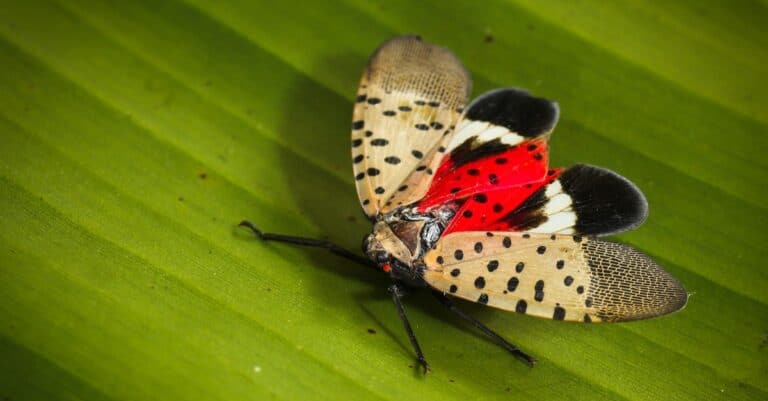
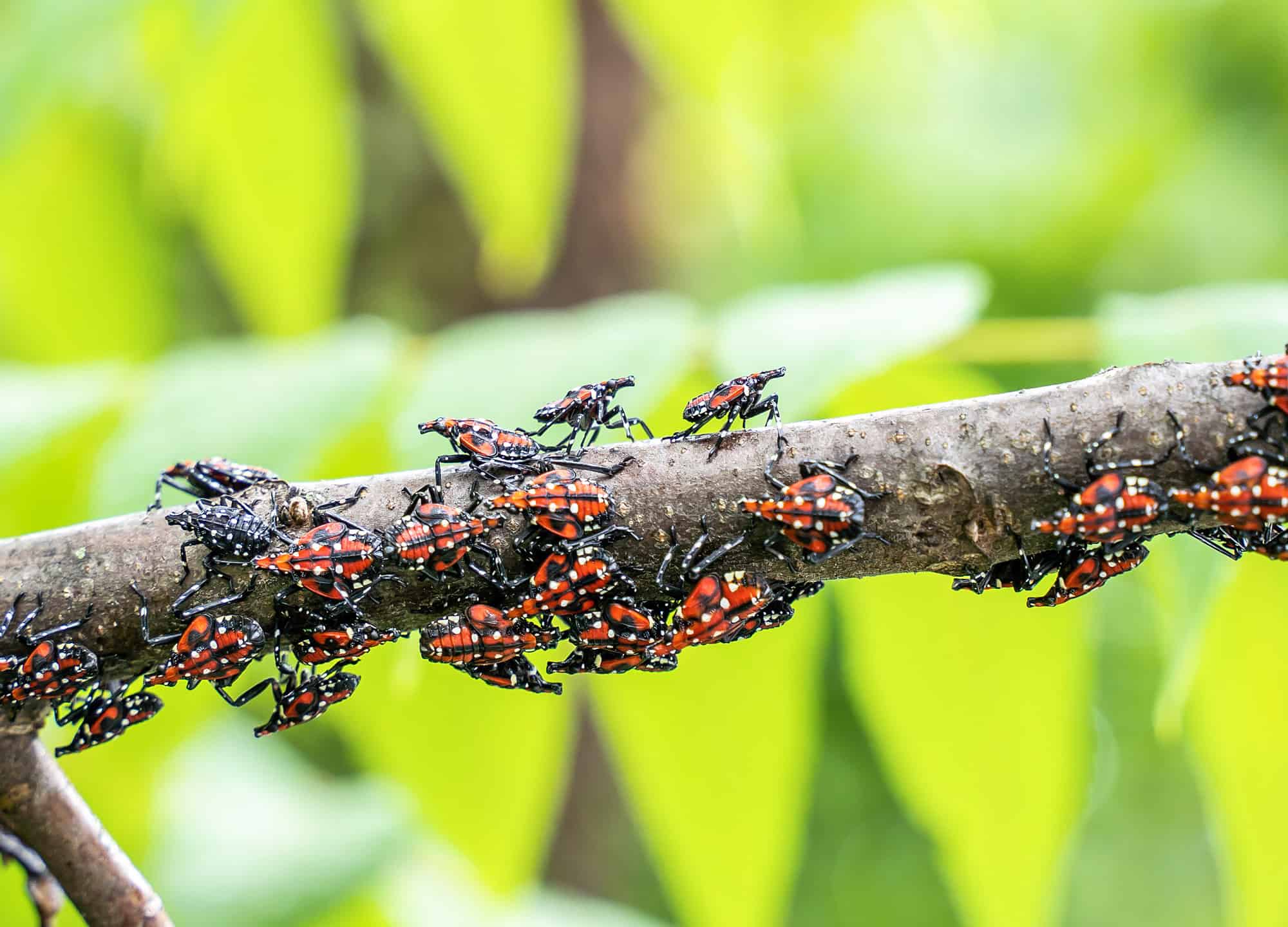
Spotted lanternflies (Lycorma delicatula) are a native species of China but have been spreading across several other countries, including the US. They were first recorded in Berks County, Pennsylvania, in 2014. It is suspected that they entered the state in a shipment of landscaping stone. Since then, they have spread further through the eastern US.
These insects live by sucking the sap of plants. This is a problem when they reach economically important crops, where they damage the health of the plants. Unfortunately, they have a strong preference for grapevines, maples, black walnut, birch, and willow. A projected impact study in Pennsylvania calculated that if left uncontrolled, spotted lanternflies could cost the state $324 million annually and more than 2,800 jobs.
Spotted lanternflies (SLF) also excrete a sugary waste called honeydew, which attracts bees, wasps, and other insects. This leads to the proliferation of sooty mold and black-colored fungi. The public has been recruited to try and stop the spread and is encouraged to “Kill it! Squash it, smash it…just get rid of it” by the Pennsylvania Department of Agriculture. But before you can do that, you need to find them, and that is where your dog’s nose comes in!
The Power of the Nose

A dog’s nose is 100,000 times better at smelling than ours.
©Jolanta Beinarovica/Shutterstock.com
Humans have been using the power of our dogs’ incredible noses for thousands of years. Our canine companions have a powerful sense of smell, which is at least 100,000 times more sensitive than a human’s. It is their main sense and the way in which they get most of their information about the environment. Crucially, they are also very good at tracking down the source of the smell. In the wild, their ancestors would have used this to find food, danger, or a mating partner.
Domestic dogs can be trained to seek out a wide range of target odors. This is why you see dogs used in drug and explosives detection, cadaver searches, and search and rescue.
A new subgroup of detection dogs, called conservation detection dogs (CDDs), is now being used to seek out ecologically important target odors. Already, they have been used to detect the great crested newt (Triturus cristatus), and the scat (poop) of black bears and bobcats. This information provides valuable data on population numbers and range.
Sniffing the Spotted Lanternfly
There is hope that dogs can help in the fight against the spread of the spotted lanternfly. This insect has six life stages: the egg stage, four nymph stages, and the adult stage. However, it is the egg stage that has been chosen as the target for detection dogs. If they can be destroyed at this stage, it prevents relocation and makes mass eradication easier. The problem is that the egg masses are often located in hard-to-see places, such as in crevices high up in trees and on the underside of lumber. Humans find it hard to locate them. Dogs do not! What’s more, the dogs do not disturb or damage the cases, so they can be retrieved and destroyed appropriately.
Some preliminary studies have shown that search and rescue dogs can successfully transition to this work and outperform humans at the task. The challenge is that recruiting, training, and continually employing detection dogs for this task will be a considerable financial burden on local agencies. This problem is made worse as the spotted lanternfly has become established across 17 to 18 states, increasing the area that needs to be monitored. So, what about harnessing the skills of local sport scent-detection dog communities? A recent study set out to establish if this was feasible.
Recruiting for the Study
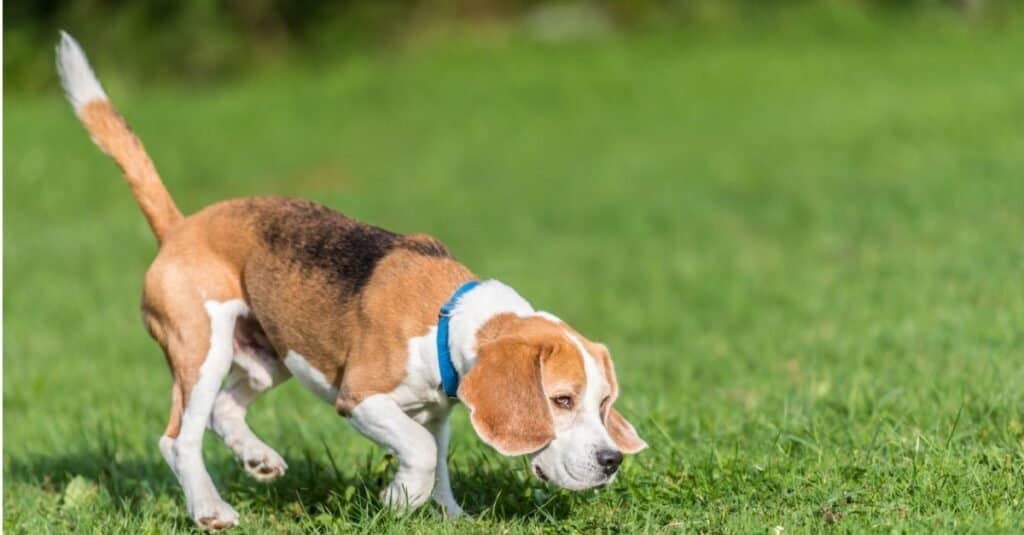
Most dogs love scent work.
©iStock.com/K_Thalhofer
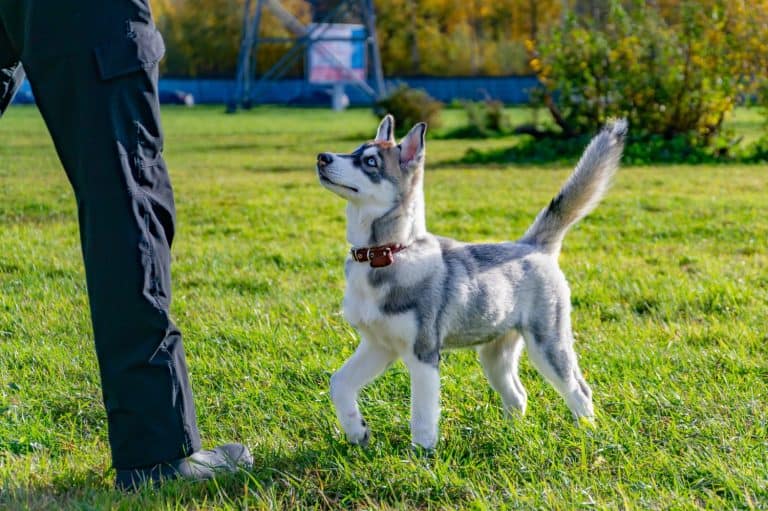
Sport scent detection is an increasingly popular hobby for dogs and their owners through organizations such as the National Association of Canine Scent Work. This enthusiastic community generally welcomes the opportunity to put their dogs’ skills to the test. This citizen scientist project aimed to evaluate whether companion dogs with prior experience in sport scent detection competition could be trained to detect devitalized SLF egg masses as accurately as professional detection dogs. Potential dog-handler teams were recruited through social media. All of the recruited dogs must have had either a sport scent detection competition or other detection work experience.
Training the Recruits
Importantly, the researchers provided no specific training guidance or instructions. They allowed the trainers to use their usual methods. However, they did have to record the number and length of the sessions. It was also up to the trainers to decide when their dogs were ready to start the evaluation. The researchers provided the SLF egg masses (devitalized) for use in the training.
The specific methods used for training the dogs are not reported in the study. Nevertheless, most scent dog training is reward-based. Dogs are rewarded (usually with a tasty treat) for investigating a particular scent. In regular training, this is typically a cotton pad soaked in an essential oil and placed in a ‘scent vessel’ so that the dog can smell it but not get at it. The scent is placed further and further away until the dog has to go and seek it in increasingly challenging environments. In this study, SLF egg masses were used instead. After training, the dogs were evaluated on how fast and how accurately they could detect SLF egg masses. Dogs that passed the evaluation were then allowed to progress to field evaluations using live egg masses.
Did It Work?
Overall, the study was a success. There was a high level of interest from the dog scent training community, which suggests that community scientists and their canine friends would be keen to help with this environmental problem. Nevertheless, almost half (47 percent) dropped out during the study, possibly because of the time commitment or because the dogs did not take to the activity. In the evaluation, 73.7 percent of dogs passed initial tests, and 60 percent passed the field evaluation. Importantly, the precision recorded in the field was excellent. The accuracy of true positive responses was 0.91. In the real world, these dogs could be used to detect SLF egg masses in shipped goods or orchards. However, widespread implementation is still to be tested.
Good News for Grapevines
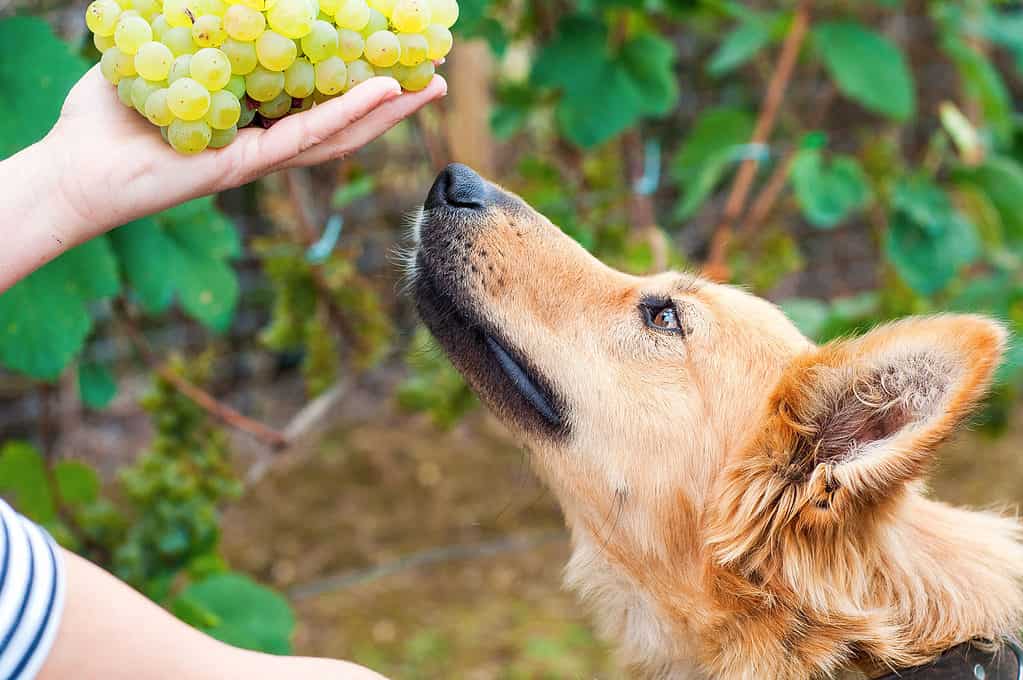
Dogs can detect mildew on grape vines.
©iStock.com/Irantzu_Arbaizagoitia
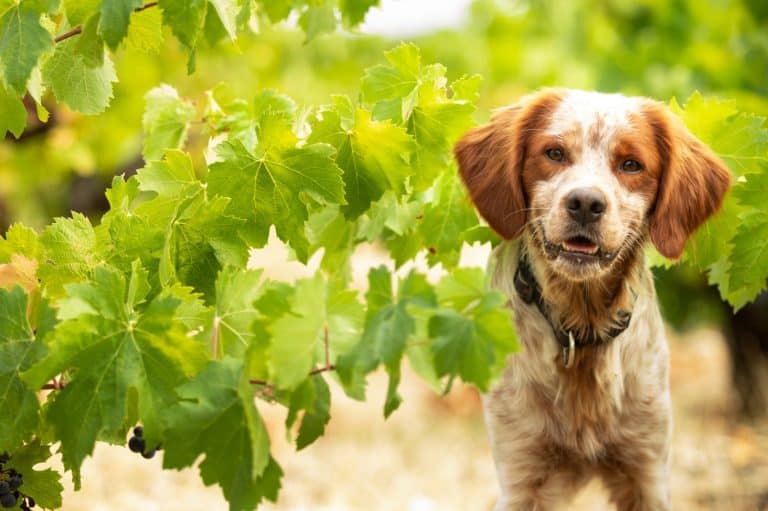
In a similar but separate study, three pet dogs were trained to detect a type of mildew. Powdery mildew (Erysiphe necator) is a widespread and destructive disease of grapevines. Severe infections cause the leaves to fall off prematurely, the young grapes to split, and the quality of the wine is reduced. Consumers report that the wine has an ‘off’ flavor.
In the study, three pet dogs were trained to detect vials containing powdery mildew on a leaf and discriminate it from a control leaf. The dogs were able to detect the volatile organic compounds given off by the mold. If powdery mold could be detected early in vineyards, it might be possible to reduce the use of fungicides. There are clear benefits for the environment and a reduction in the financial burden on grape producers. The current methods used for early detection of this fungus are costly, time-intensive, and unreliable. However, recent advances in technology have improved reliability and efficiency.
Together, these studies suggest that pet dogs could offer a scalable supplement to professional detection dogs and prove that we have yet to realize the true potential of our dogs’ noses!