
Quick Take
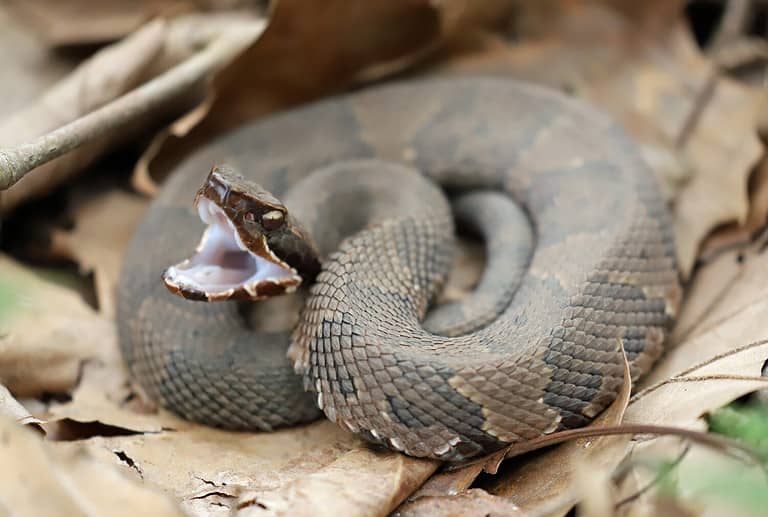
- One of Washington's snakes can convincingly fake being a rattlesnake, and it does so without having a rattle. Meet the rattlesnake mimic →
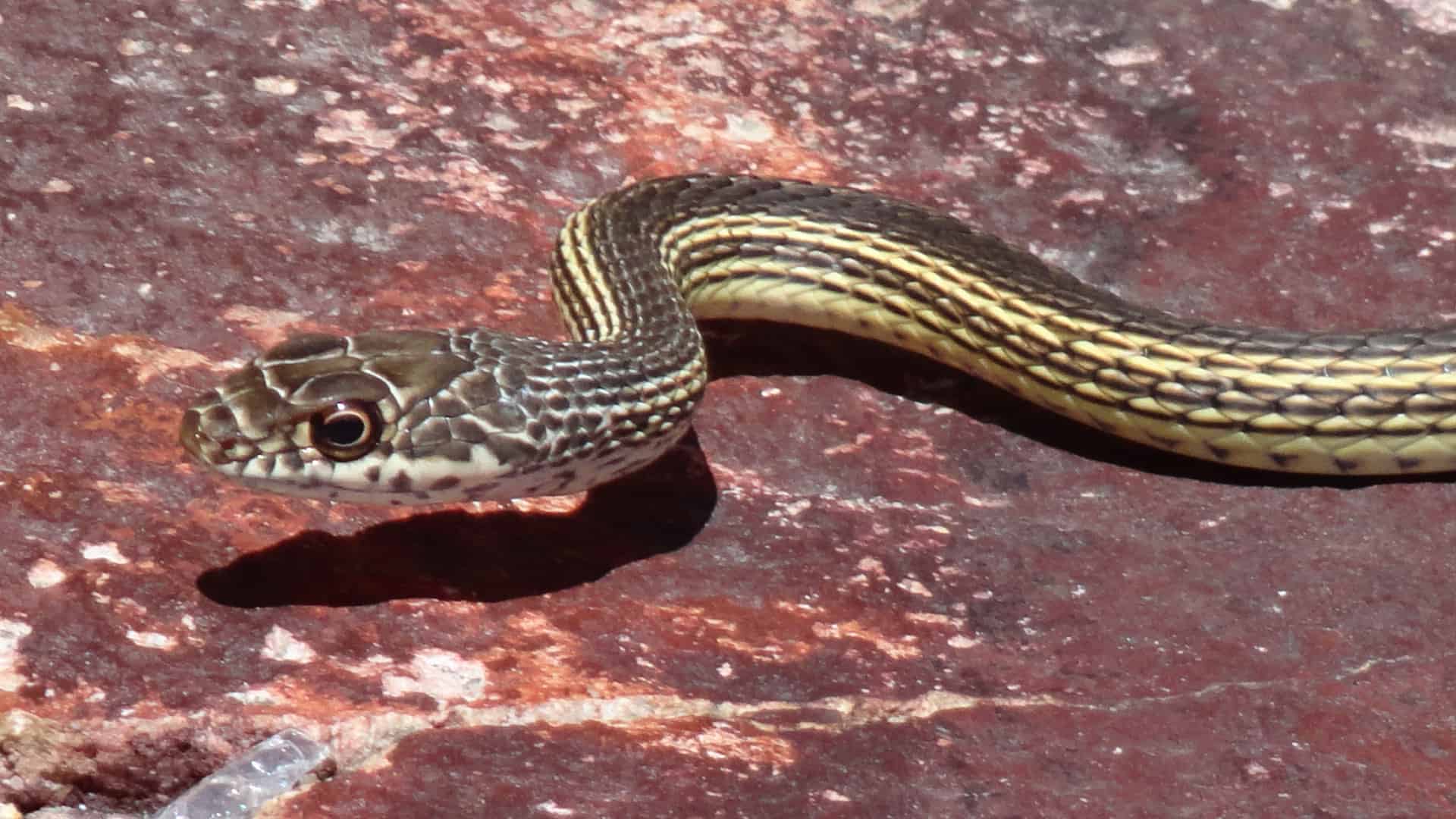
- Washington has a venomous snake you've almost certainly handled without knowing it. Discover the venomous garter snake →
- Washington's rarest snake is also its longest, and it is clinging to survival in only two known spots. Washington's rarest, longest snake →
- One snake here evolved a body so confusing that predators can't tell which end to strike. See the confusing tail trick →
The state of Washington is known for its wet weather, great forests, and stunning mountain vistas. The Evergreen State has a mild climate, giving the native plants and wildlife a great chance to flourish, even snakes. Although Washington’s cooler climate makes life more difficult for snakes, there are about a dozen native snake species. Continue reading to learn about snakes that are native to Washington.
Northwestern Garter Snake
The most common snake in Washington state is the Northwestern garter snake (Thamnophis ordinoides). It’s not as widespread as other species, but what it lacks in range it more than makes up for in numbers. Its population centers are in the coastal regions of Washington.
Northwestern garter snakes are relatively small; adults average between 13 and 38 inches long, but rarely grow longer than 24 inches. They’re usually brown, slate gray, or black with three stripes, one dorsal and two lateral stripes.
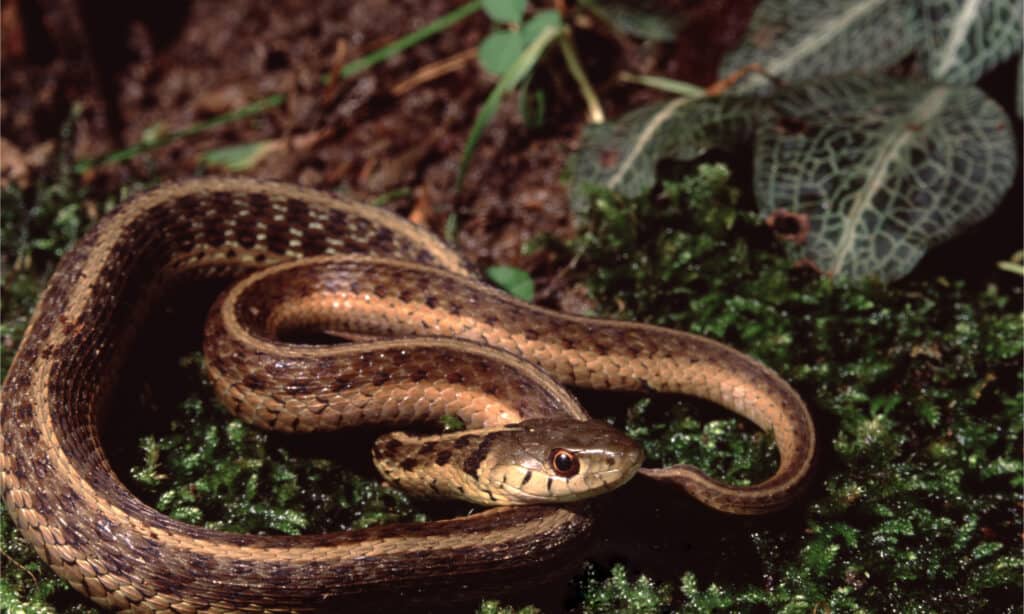
Northwestern garter snakes are highly variable, but three patterns are more common in Washington.
©Liz Weber/Shutterstock.com
In Washington, you’re most likely to see one of three variations:
- Dark body color with turquoise, green, blue, or yellow dorsal and lateral stripes
- Brown body color with yellow stripes and two rows of small dark spots above their lateral strips
- Dark brown or black dorsal color with red dorsal and yellow lateral stripes.
These snakes prey on slugs, salamanders, and frogs, so their habitat has to be moist enough to support these animals.
Common Garter Snake
The common garter snake (Thamnophis sirtalis ssp.) and its subspecies are present nearly everywhere snakes are found in Washington. Common garter snakes are daytime hunters that aren’t fussy about what they eat. They typically feast on small amphibians and earthworms, but they’ll also eat snails, slugs, crayfish, insects, fish, lizards, other snakes, small birds, and even rodents.
Although they’re not dangerous to people, common garter snakes have venomous saliva. The venom is exceptionally mild and is used to incapacitate small prey, making it easier to swallow without the prey putting up too much of a struggle.
Common gartersnakes can measure up to four feet long and most have stripes down the length of their body. They can be many colors including blue, black, green, red, brown, orange, or yellow.
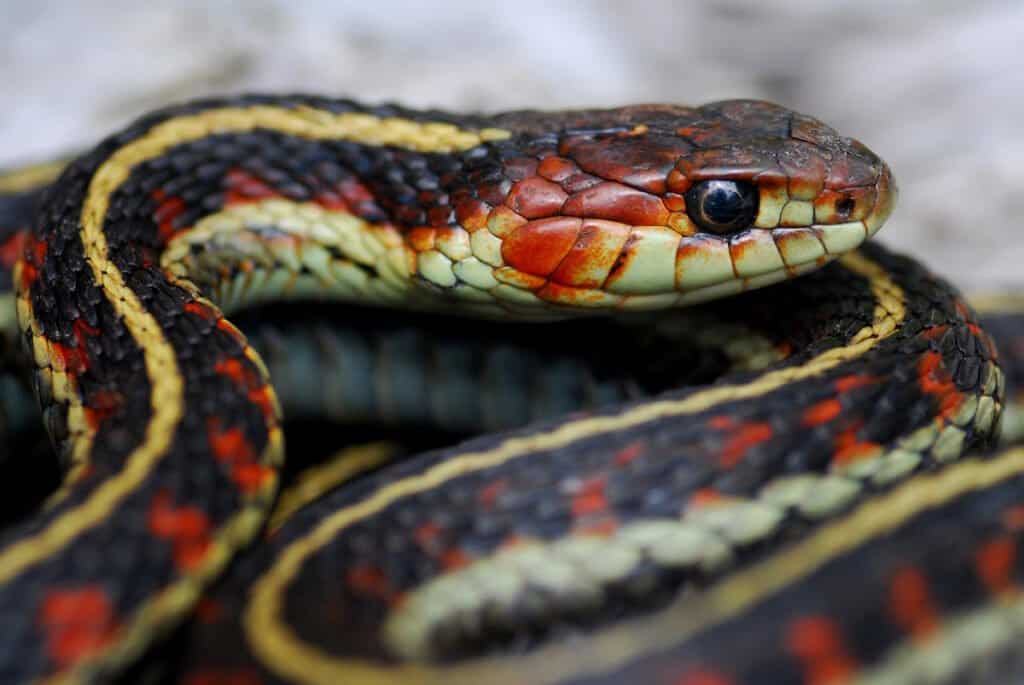
Valley garter snakes often have red spots on their sides.
©Jason Mintzer/Shutterstock.com
At least three subspecies are found in Washington. However, to properly identify any garter snake species or subspecies, you almost always have to look at scale counts, color, and pattern. They’re all so similar looking that it’s sometimes difficult for experts to tell the difference.
- Red-spotted gartersnake (T. s. concinnus) — Southwestern Washington
- Puget Sound Gartersnake (T. s. pickeringii) — Northwestern Washington
- Possibly the valley Gartersnake (T. s. fitchi) — Rocky Mountains
Gopher Snake
Gopher snakes were once found in Western Washington, but the Washington Department of Fish & Wildlife believes the population there is now most likely extirpated.
Gopher snakes can grow to 6 feet long and make themselves look and sound like a venomous rattlesnake by rapidly shaking their tails against dry leaves, grass, or hard ground to produce a buzzing noise that mimics a rattlesnake’s rattle.
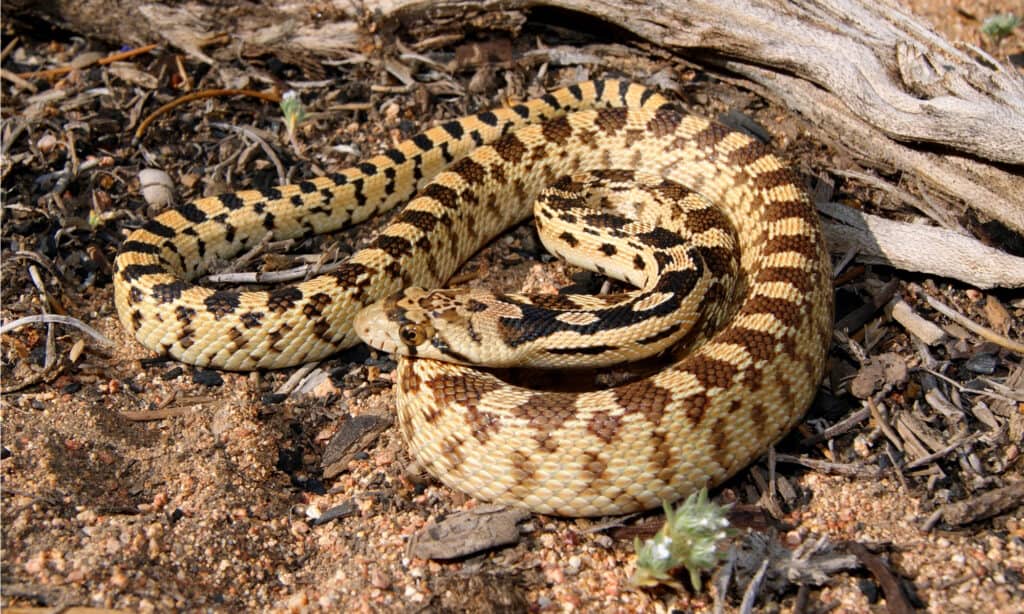
Gopher snakes resemble rattlesnakes but are not venomous like they are nor do gopher snakes have a rattle.
©Matt Jeppson/Shutterstock.com
In Washington, gopher snakes are usually tan with dark brown squarish blotches on their back, smaller blotches on the sides, and a noticeable eye stripe. They also have vertical bars around their lips and a banded tail.
Sharp-Tailed Snake
Sharp-tailed snakes (Contia tenuis) range from California to British Columbia, although their populations become thinner farther north. Sharp-tailed snakes are considered rare and localized in Washington, with their current population size and distribution unknown. They average between 12 and 18 inches long and are very secretive.
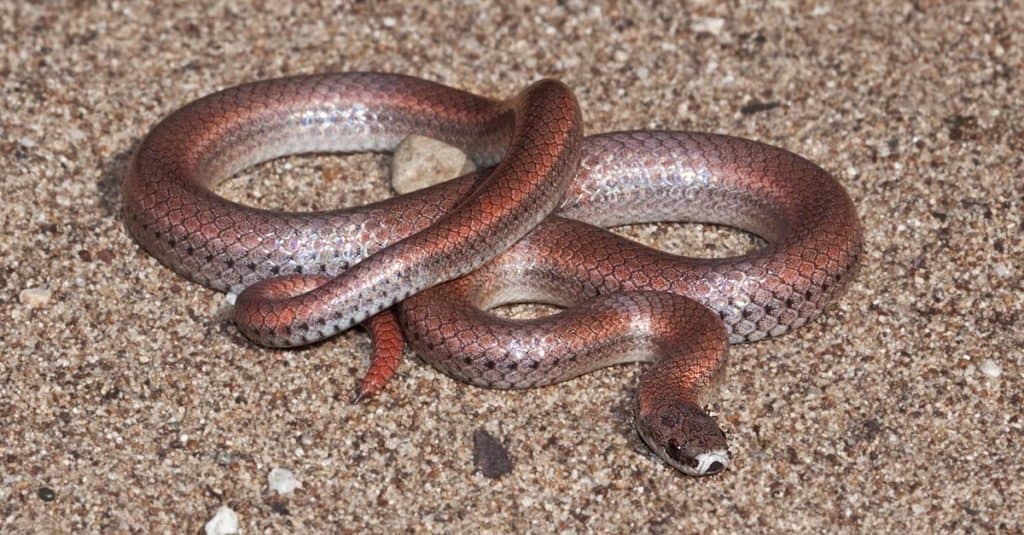
You will find sharp tail snakes under rocks and logs on the forest floor.
The dorsal side of sharp-tailed snakes is red, grayish brown, or brick red; sometimes you can find a bubblegum-pink individual. Their belly pattern is black-and-white crossbars.
Sharp-tailed snakes hide under rocks or logs. They are rarely out in the open but may come out of their hiding spot after a good rain. Most often, people find them when they’re digging in their garden or removing other debris.
Sharp-tailed snakes consume slugs and their eggs, but may also eat insects and earthworms. These nonvenomous snakes have an extra-long vertebra in their tail, which works like a poker to hold their prey still.
Terrestrial Garter Snake
Another harmless-to-humans snake in Washington, the terrestrial or Western terrestrial garter snake (Thamnophis elegans) is widespread across the state. They usually have three dorsal stripes and two lateral stripes, which are usually cream or yellow.
Terrestrial garter snakes have keeled scales (ridged) and dull coloration in comparison to some of the other species. Sometimes, their dorsal stripe is missing, and the spots on their back often overlap the stripe. Some terrestrial garter snakes may be more spotted than striped.
Like other garter snakes, there are several subspecies. The subspecies that occurs in Washington—the wandering garter snake (T. e. vagrans)—grows to about 38 inches.
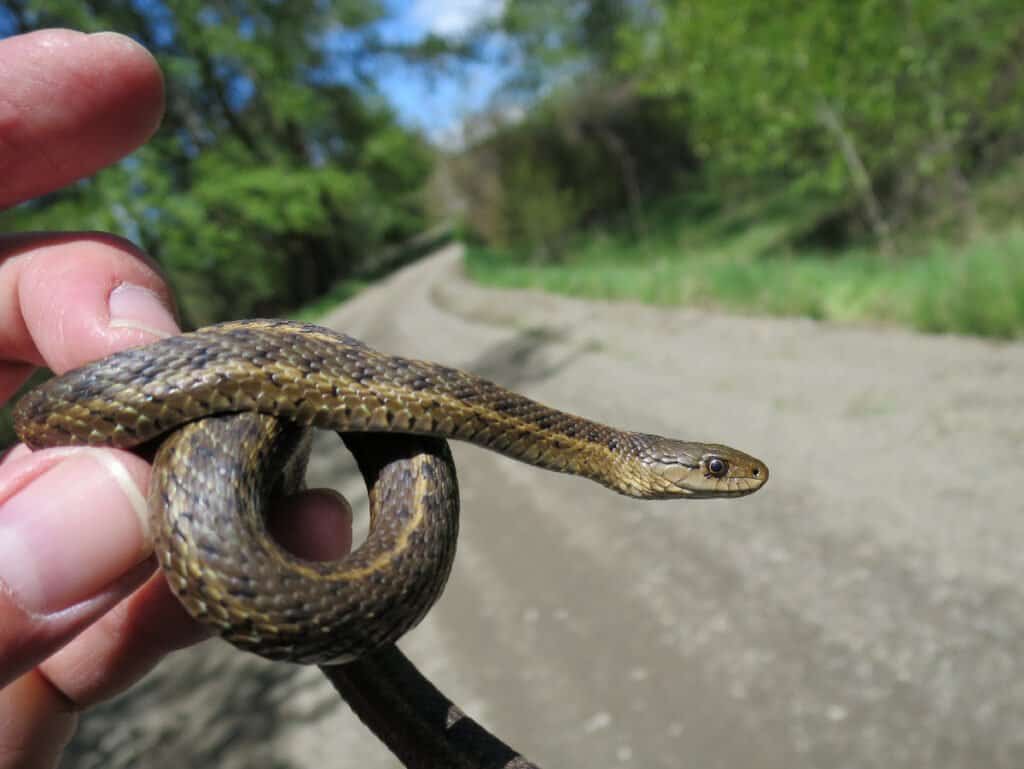
Terrestrial garter snakes are common across Washington state.
©Randy Bjorklund/Shutterstock.com
Northern Desert Nightsnake
The Northern desert nightsnake (Hypsiglena chlorophaea deserticola) is an adorable little snake. They’re a nightsnake subspecies local to the Pacific Northwest. Northern desert nightsnakes are venomous, but their venom isn’t medically significant to humans. On top of that, their tiny fangs are located in the back of their mouth to chew the venom into prey.
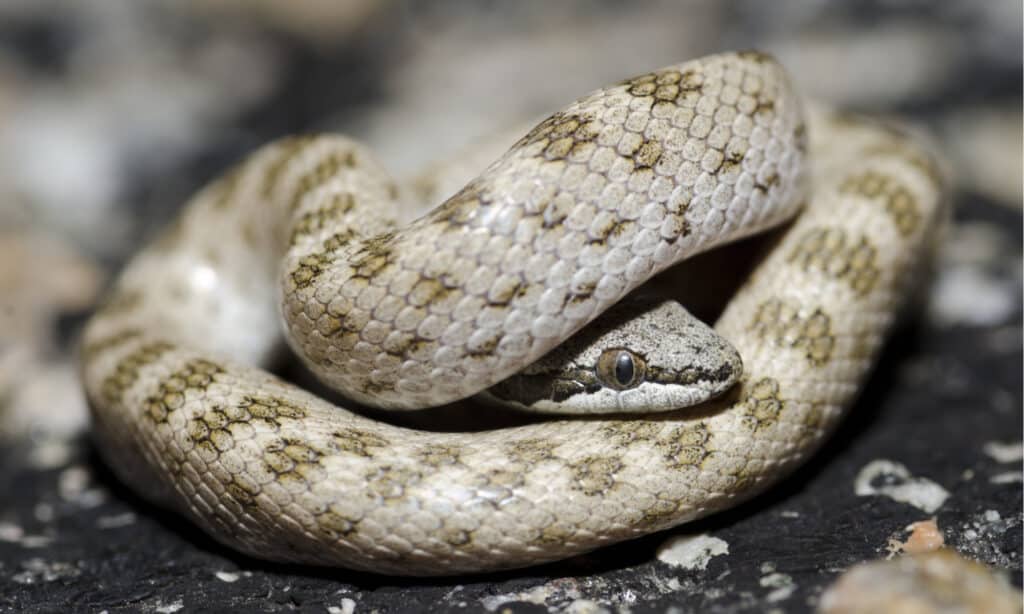
Northern desert nghtsnakes are small and sometimes confused with gopher and rattlesnakes.
©Jason Mintzer/Shutterstock.com
Northern desert nightsnakes only measure about 24 inches at their longest and have patterns reminiscent of gopher or rattlesnakes. They also have vertical pupils, if you can see them. Nightsnakes’ eyes are as small as they are.
These little snakes are adaptable and can live in many habitats, including chaparral, woodlands, desert scrub, and moist meadows. They mainly eat lizards and frogs, but may also eat small snakes, salamanders, and even mice.
Ring-Necked Snake
Ring-necked snakes (Diadophis punctatus) aren’t as common in Washington as other snakes. The state is at the northwestern edge of their range.
These snakes can grow up to 22 inches in the northwest and are often slate gray to greenish gray. Their name comes from the bright-colored neck band that usually matches their belly, which in Washington is usually bright orange.
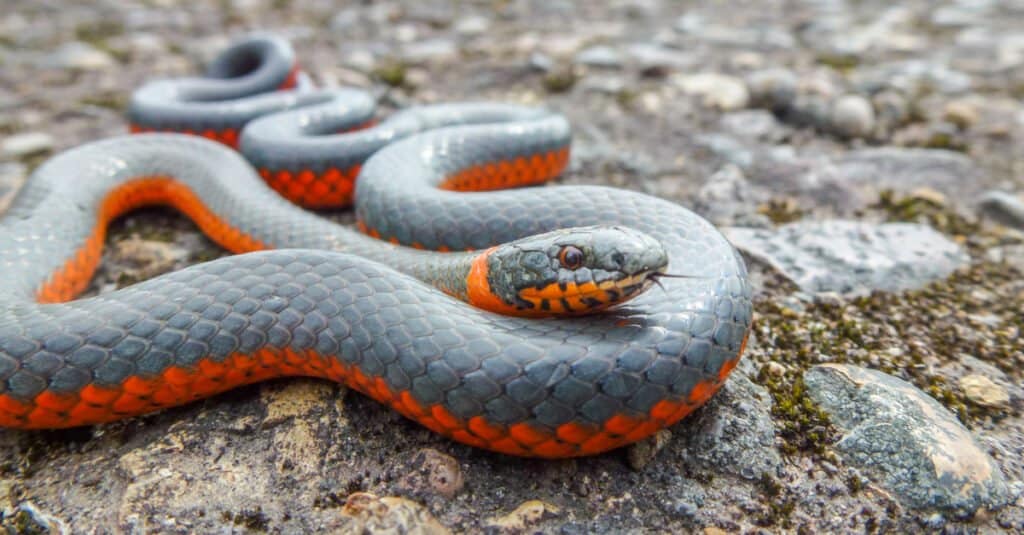
Ring-necked snakes aren’t common in Washington; most of them are found along the Washington-Oregon border.
©Tom Fenske/Shutterstock.com
Most ring-necked snakes occur in the southern areas of Washington, along the Oregon border. However, there’s also a population in Kickitat and Yakima counties, and in the east in Whitman County.
Ring-necked snakes mainly eat earthworms, small salamanders, and slugs. But they also eat small lizards, frogs, and young snakes.
Western Yellow-Bellied Racer
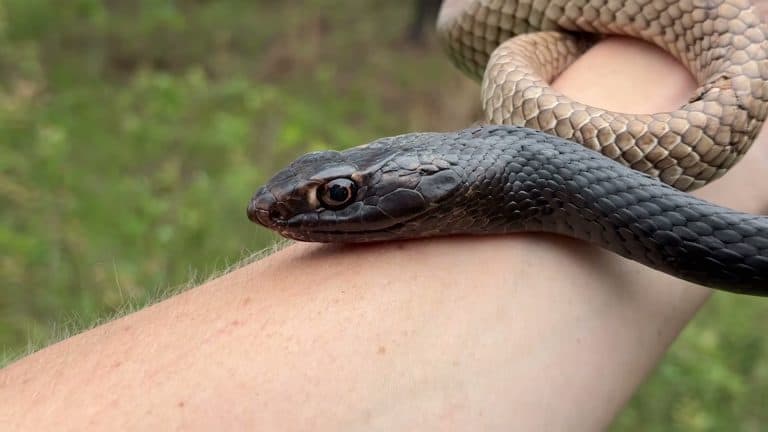
North American racers are hard to miss. They’re strikingly beautiful snakes that dart around at up to four miles per hour and are equally quick to bite you when cornered. Their 10-plus subspecies are pretty common across most of the country, including Eastern Washington State.
Western yellow-bellied racers (Coluber constrictor mormon) are found primarily in the Eastern half of Washington State. They grow up to 6 feet long and are very slender. These snakes hatch with a blotched pattern and have large eyes for their head. As they grow, Western yellow-bellied racers in Washington state lose their juvenile pattern and become solid colored brownish, gray, dark green, or blackish on the top with light-colored belly, which is often yellowish.
Known for holding their heads above the ground while they’re hunting, Western yellow-bellied racers sometimes climb into shrubs to see better. These snakes have excellent vision and hunt primarily during the day. They prefer grasslands near water, but are equally comfortable around trash piles, roadsides, and in the suburbs.
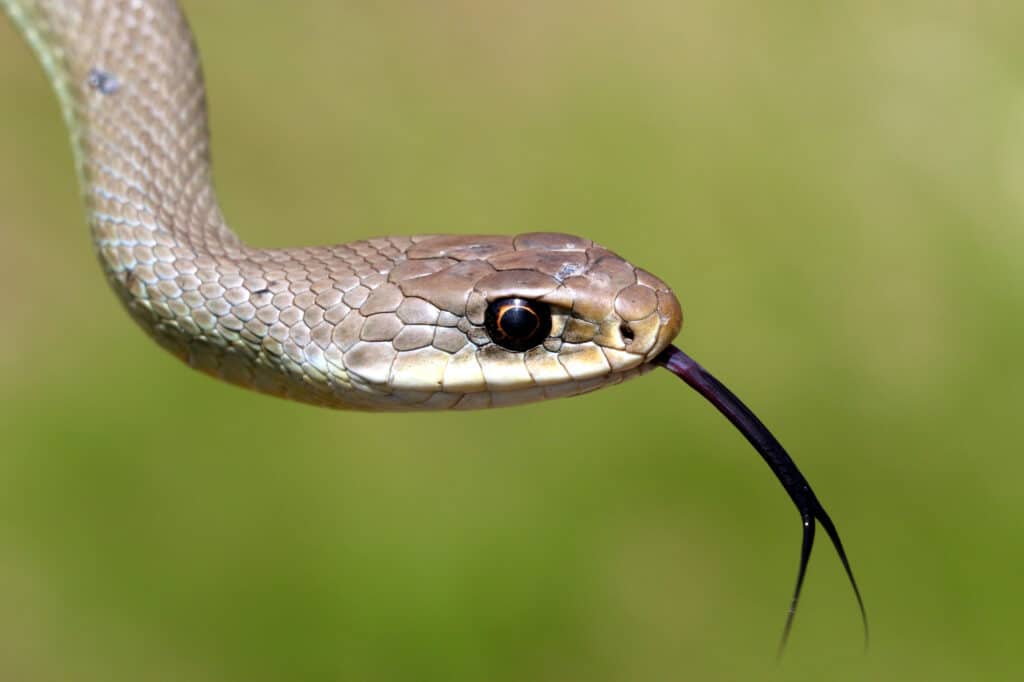
Western yellow-bellied racers are common in the eastern half of Washington.
©iStock.com/randimal
Western yellow-bellied racers eat a diet of anything they can overpower, including rodents, birds, amphibians, and other snakes. Instead of constricting prey, Western yellow-bellied racers grab it in their mouth and use brute force to pin it against something to subdue it.
Desert Striped Whipsnake
Desert striped whipsnakes (Masticophis taeniatus taeniatus) prefer only the driest areas of the Central Columbia Basin in shrub-steppe areas. Scientists believe the species was never common in Washington. However, their favorite habitats are in some of the same areas where land has been converted for agriculture and reservoirs, making their survival more difficult.
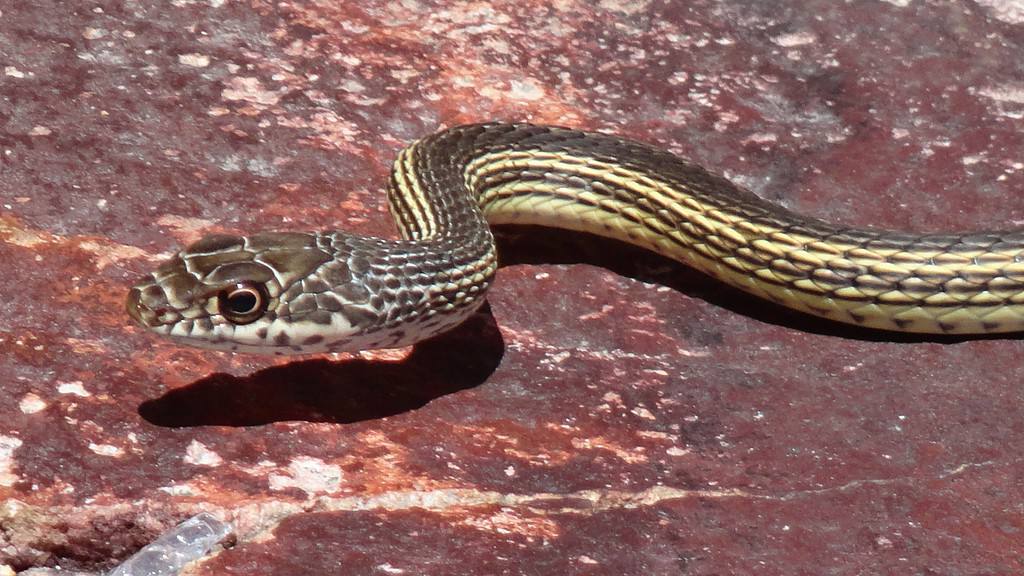
The rarest snake in Washington is also the longest.
©T71024, CC BY-SA 3.0 via Wikimedia Commons – Original / License
The desert striped whipsnake is Washington State’s rarest snake, with only two known populations, and adults can reach up to 6 feet (72 inches) in length. They’re usually black, gray, or dark brown with a bit of a greenish-blue hue and two or more cream to white stripes running the length of their body.
Desert striped whipsnakes have small heads with big eyes. They’re active daytime hunters who use excellent vision to track the lizards they eat, as well as small mammals, birds, frogs, insects, and other snakes.
Northern Rubber Boa
Rubber boas (Charina bottae) are small, extremely docile boas native to areas of the Western United States. In Washington, their population is patchy at best. Technically their range covers most of the state, but experts aren’t certain where exactly they are most common. Most reports are the result of an accidental sighting rather than a systematic study and the Washington Department of Fish & Wildlife believes that they’re probably more common than the numbers indicate.
This adorable little boa is secretive and nocturnal. Only measuring 1-2.5 feet long, they are small. Their baggy skin is covered in tiny scales, which, combined, give northern rubber boas a rubber-like texture.
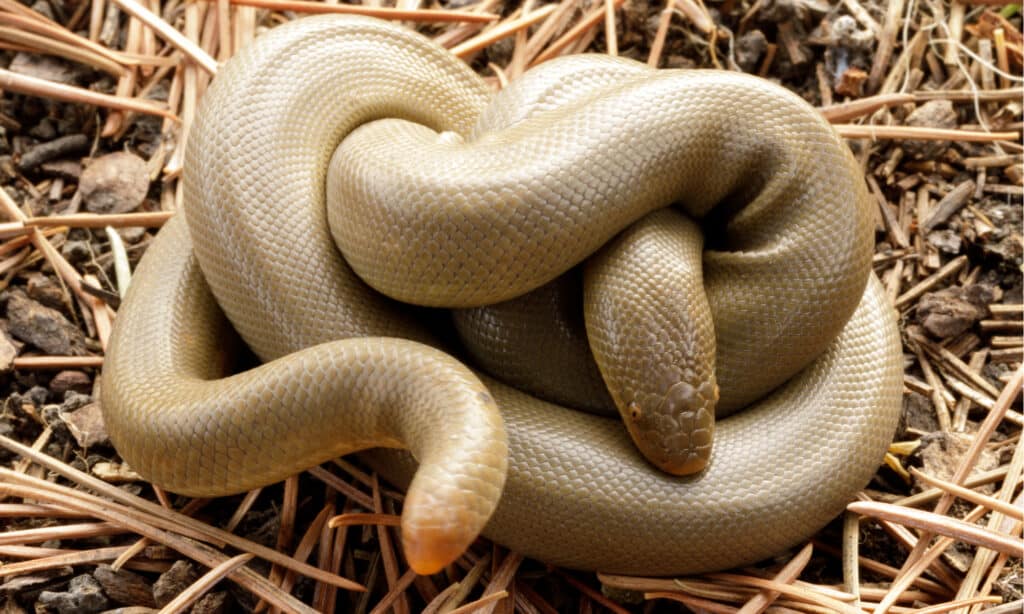
Rubber boas are extremely docile and only about 1-2.5 feet long.
©yhelfman/Shutterstock.com
Northern rubber boas are solid-colored and can be tan, dark brown, olive-green, yellow, or orange with a lighter belly color. Northern rubber boas have small eyes and short heads that look a lot like their tails, which is likely part of their defense. After all, if a predator can’t tell its head from its tail, where does it strike?
Rubber boas can live in many different habitats including meadows, grasslands, chaparral, and forests, and alpine climates. They’re not fond of very dry or hot climates but tolerate cold better than most boas.
The rubber boa’s diet consists of young mammals like voles, shrews, and mice. These snakes get into rodent nests and try to eat all the babies while they fend off the mothers with their tails. As a result, northern rubber boas often have extensive scarring on their tails.
Northern Pacific Rattlesnake
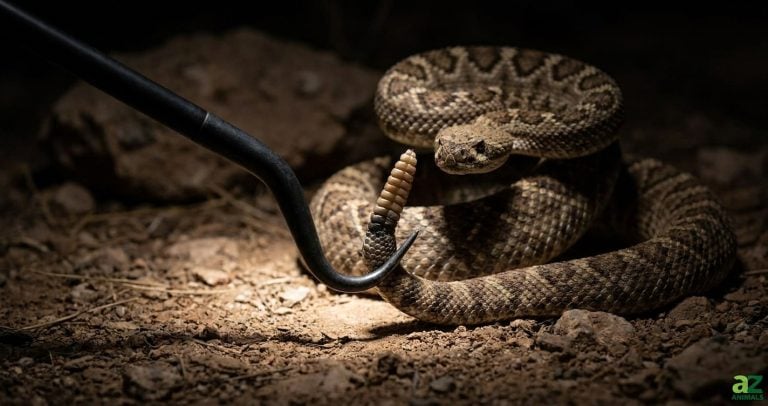
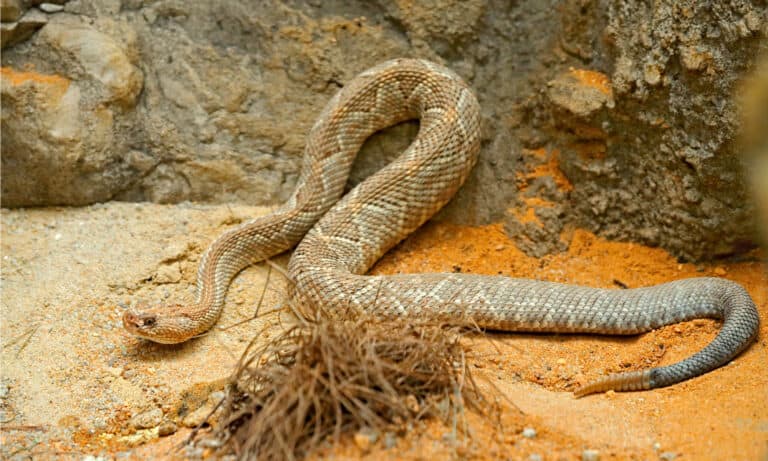
There’s only one snake in all of Washington state whose venom is medically significant to humans. The Northern Pacific rattlesnake (Crotalus oreganus) is only found east of the Cascade Mountains in Washington.
Northern Pacific rattlesnakes have colors that usually run the range of brown to olive. They have dark oblong-ish spots outlined in black and white with additional spots on the side of their body. Like other rattlesnakes, they have vertical pupils, but that’s not a defining characteristic. To identify these snakes, look for the pattern, the dark, wide eye stripe beginning right behind the eye, and chunky body that ends in a rattle or a button.
This species can grow to 5 feet or so but in Washington, most of them are around 2 feet. Northern Pacific rattlesnakes prey on various animals including rabbits, mice, birds, bird eggs, reptiles, amphibians, and even insects.
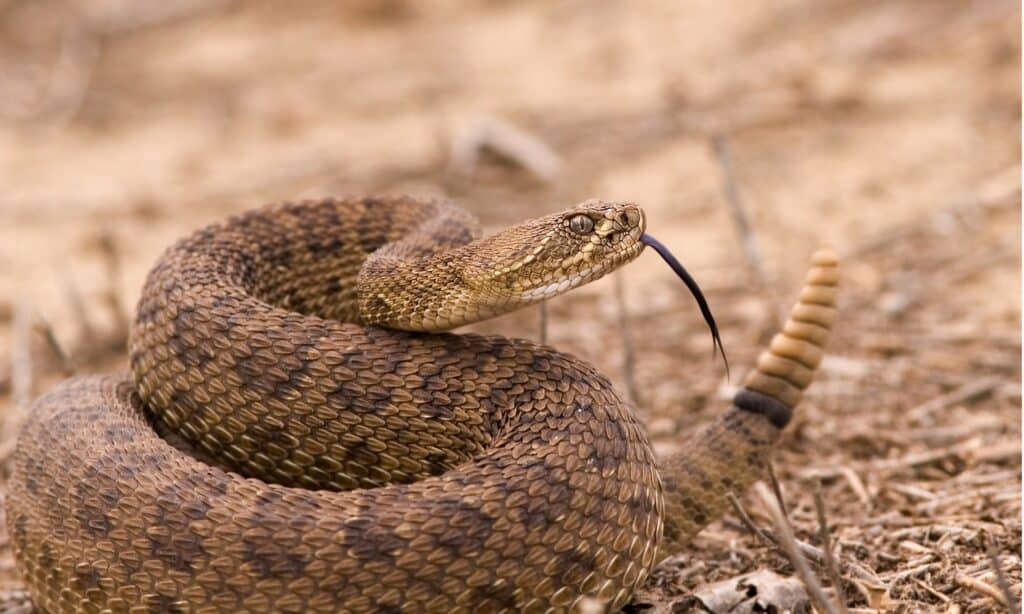
Western rattlesnakes are also called northern Pacific rattlesnakes.
©iStock.com/SteveMcsweeny