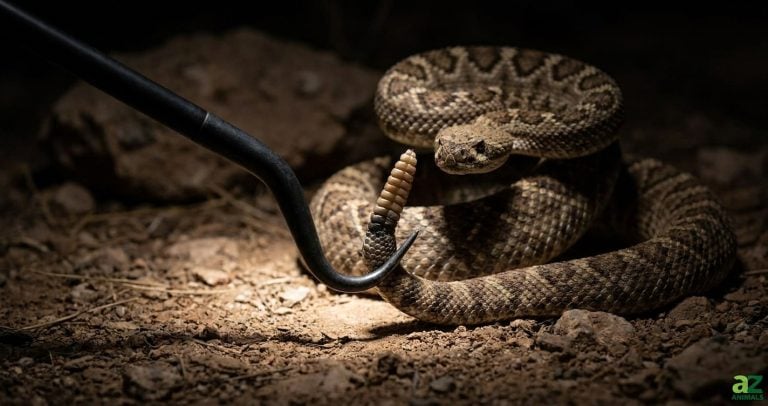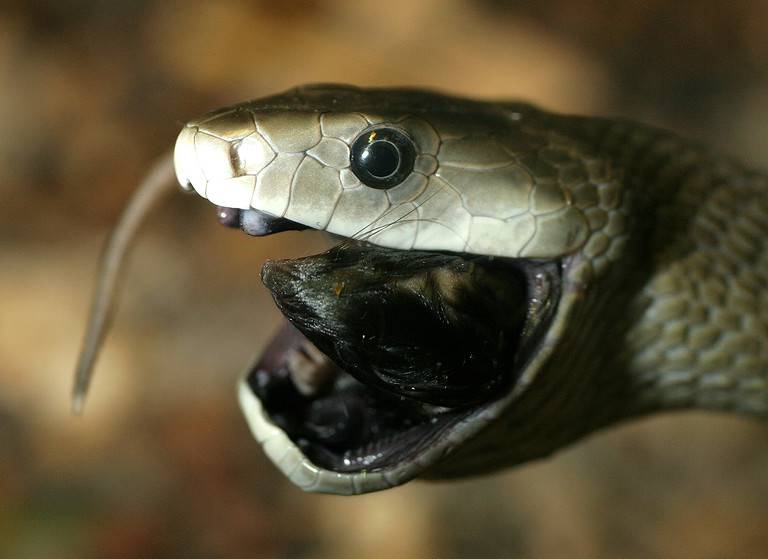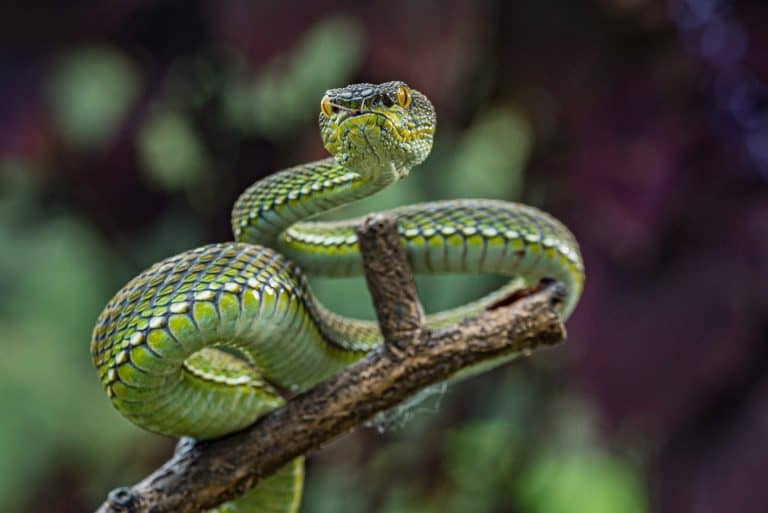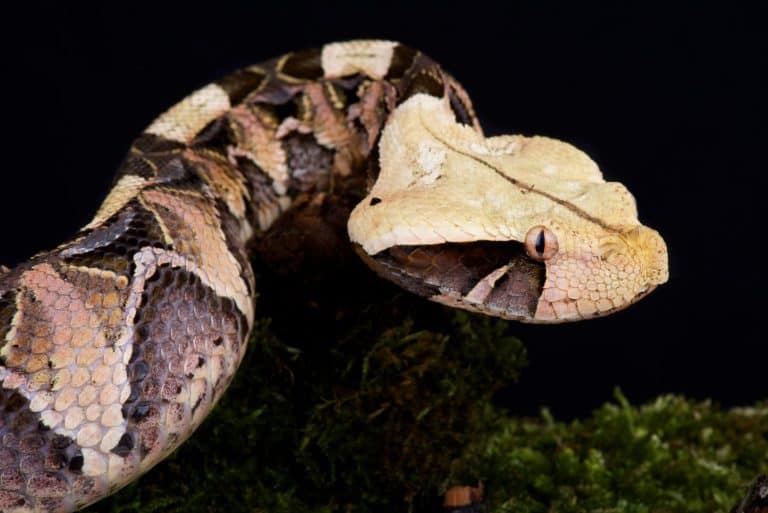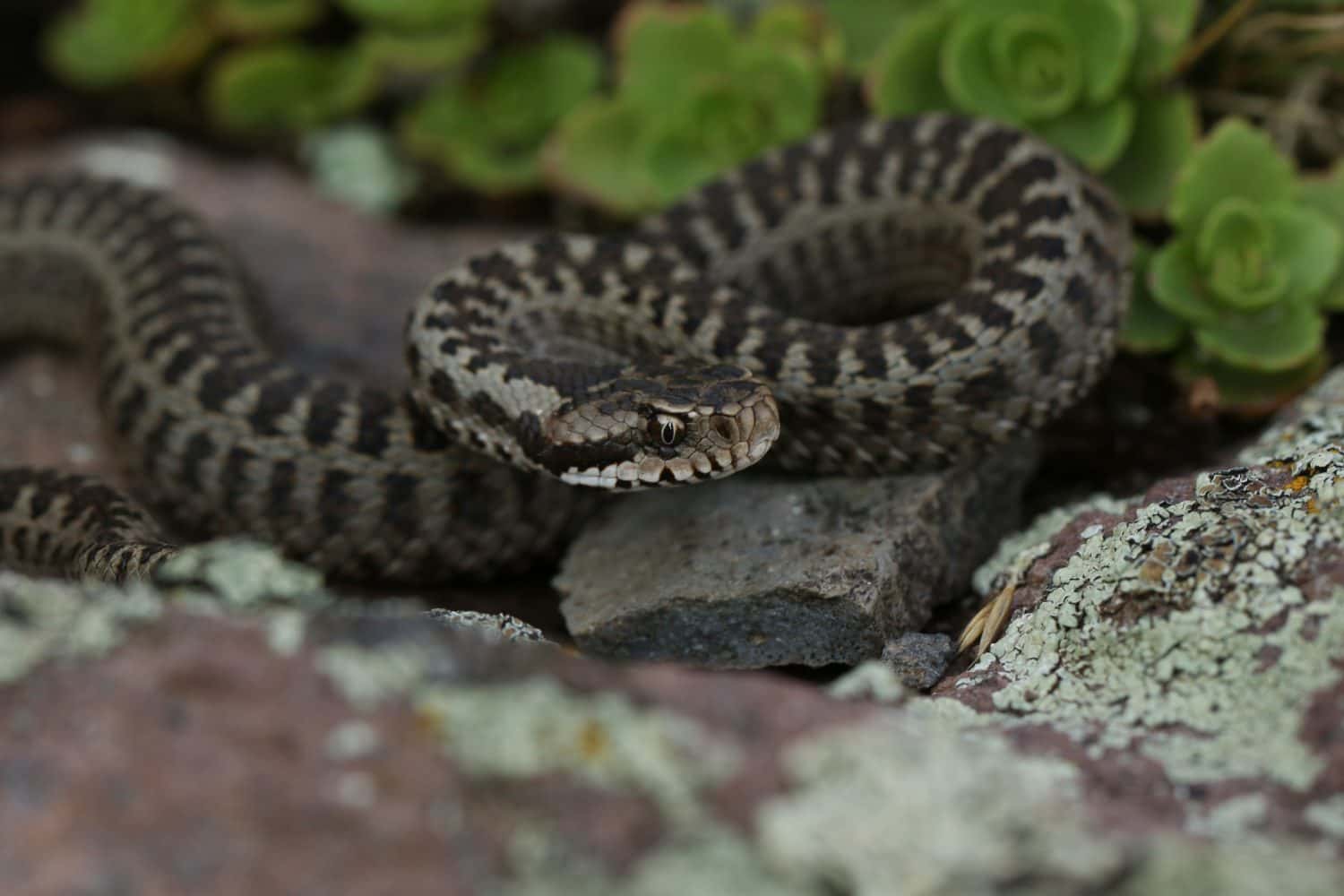

Viperidae is a family of snakes that lives everywhere on Earth except Australia, Antarctica, Hawaii, Ireland, Madagascar, and other islands. They are characterized by long, hinged fangs that can fold in and out like switchblades. All vipers are venomous and share the characteristic of vertically elliptical pupils. The Viperidae family comprises over 350 species, split into four subfamilies: true vipers (Viperinae), pit vipers (Crotalinae), Fea’s vipers (Azemiopinae), and night adders (Causinae). Viper species range in size from under a foot long to over six feet for the largest vipers in the world. Continue reading to learn about the ten largest vipers in the world, ranked by weight.
10. Common European Adder
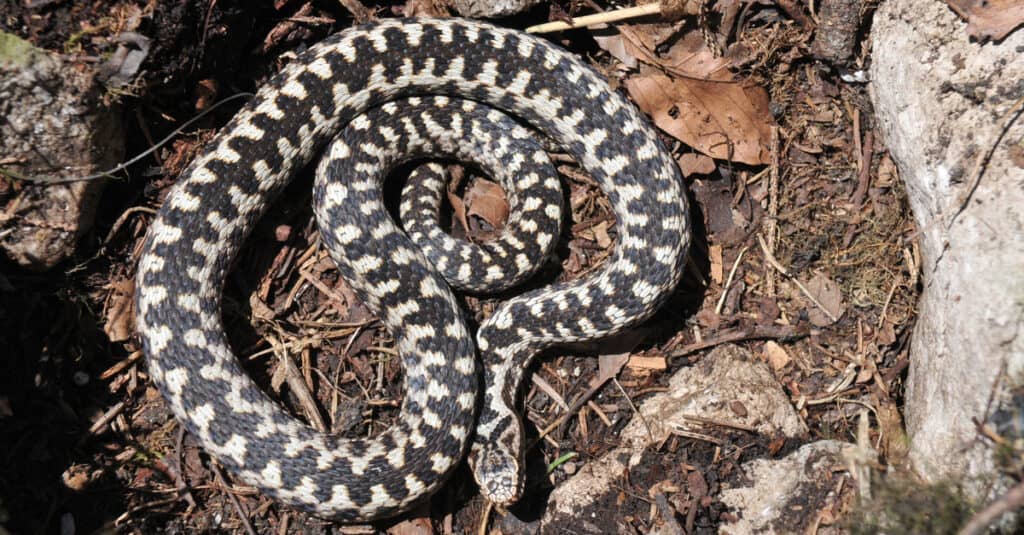
European adders, also known as common adders or common vipers, live throughout Western Europe and Asia.
©Simlinger/Shutterstock.com
Like all vipers, common European adders (Vipera berus) are venomous, although their venom is not particularly potent, and they rarely bite people. These snakes eat anything small enough to catch, like rodents, reptiles, birds, insects, and amphibians. They measure 2 to 2.6 feet in length and weigh 1.8 to 6.3 ounces.
9. Cottonmouth
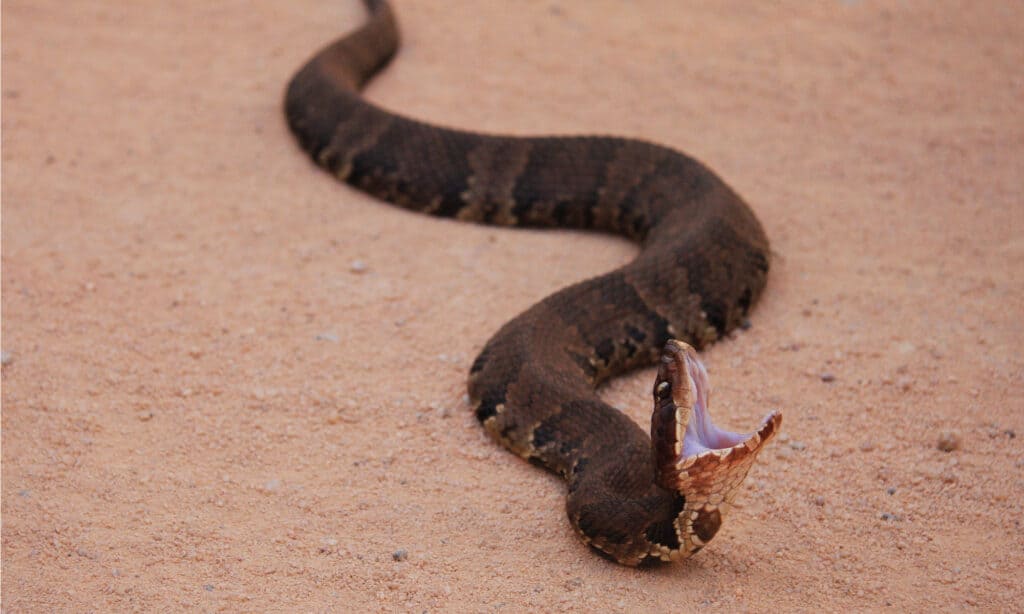
Also known as water moccasins, cottonmouths have cottony white mouths.
©Nathan A Shepard/Shutterstock.com
Cottonmouths (Agkistrodon piscivorus) are pit vipers, meaning they have infrared heat-sensing pit organs. They are one of the largest vipers in the world, with adults growing up to four feet long and weighing 7 to 21 ounces. Cottonmouths live in the Southeastern United States in semi-aquatic environments like lakes, rivers, and marshes. They are frequently confused with nonvenomous species of watersnakes. Watersnakes lack the elliptical pupils and fangs of cottonmouths.
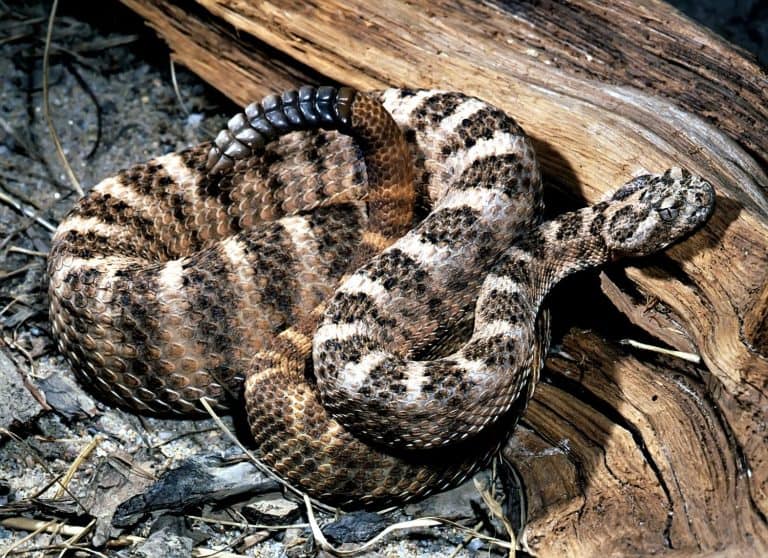
8. Timber Rattlesnake
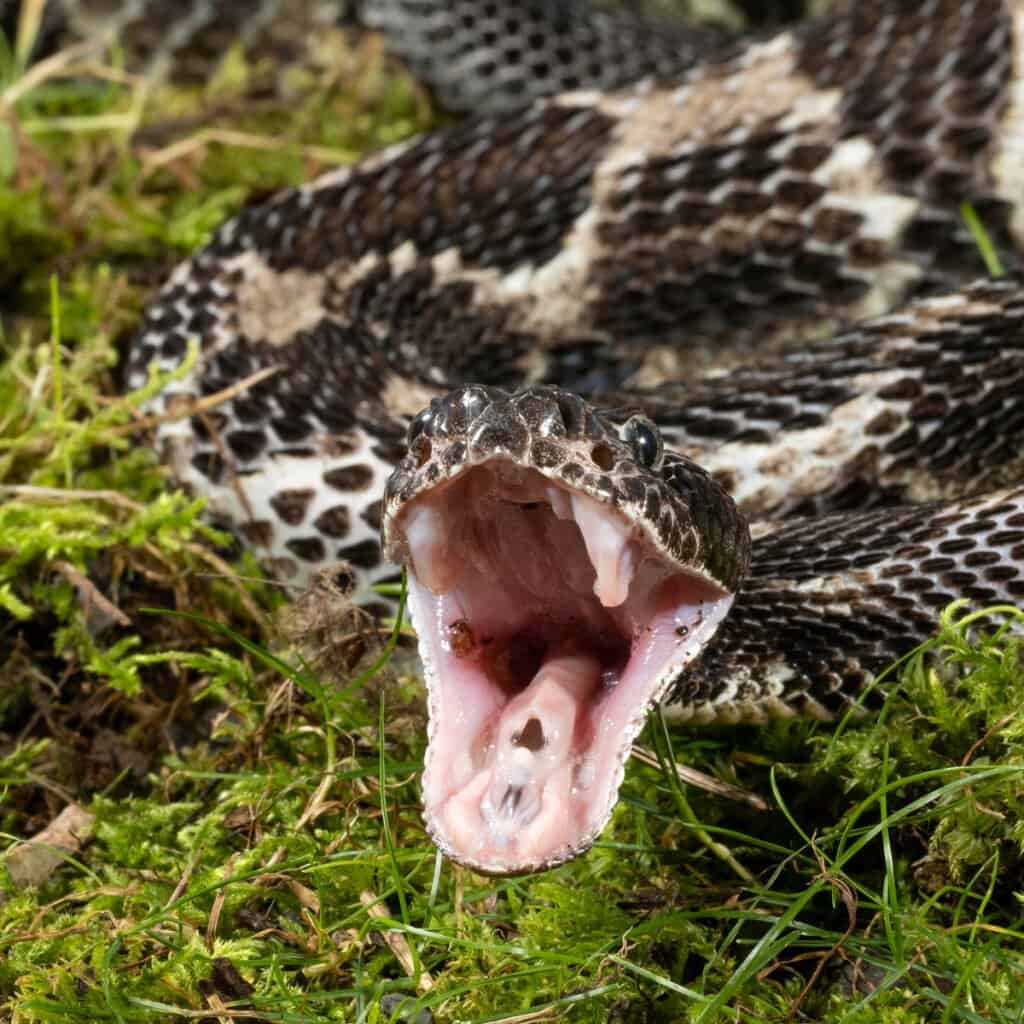
The timber rattlesnake is also known as the canebrake or banded rattlesnake.
©Joe McDonald/Shutterstock.com
Timber rattlesnakes (Crotalus horridus) are endemic to Eastern North America. They are closely related to other rattlesnakes, such as the prairie rattlesnake (Crotalus viridis) and the Great Basin rattlesnake (Crotalus lutosus). As members of the viper family, timber rattlesnakes are highly venomous, although they rarely bite humans. They grow to a maximum length of approximately five feet and weigh 1 to 3 pounds.
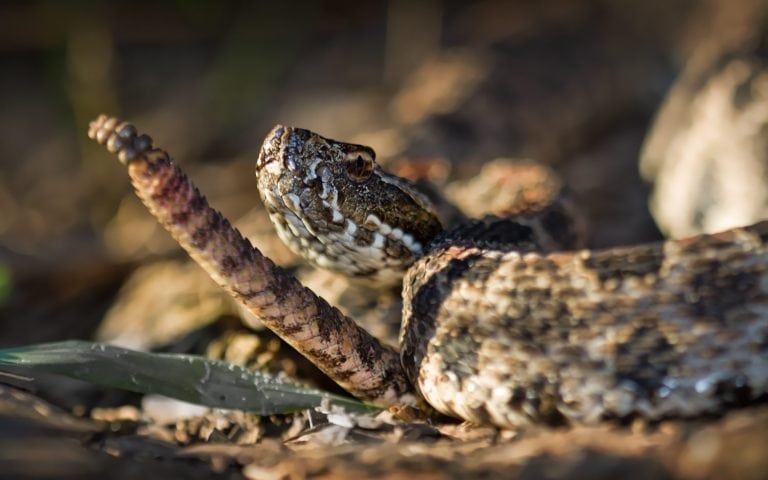
7. Northern Pacific Rattlesnake
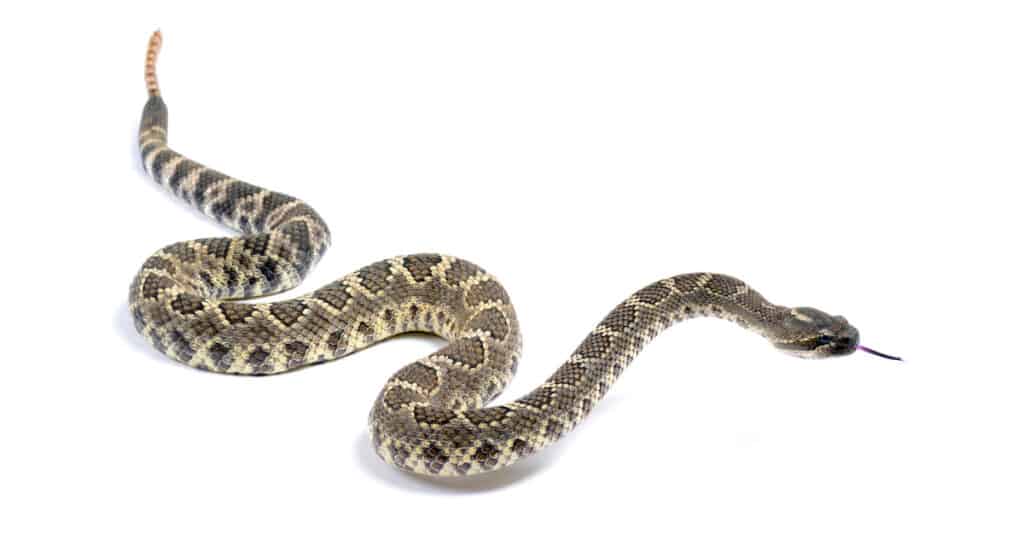
Pacific rattlesnakes live along the Pacific coast of North America, from Baja in the south to British Columbia in the north.
©Audrey Snider-Bell/Shutterstock.com
Most northern Pacific rattlesnakes (Crotalus oreganus) are approximately four feet long and weigh around 2 pounds. However, some individuals measure five feet or more. Like cottonmouths, Pacific rattlesnakes are pit vipers with long, folding fangs used to inject hemotoxic venom into their prey.
6. Russell’s Viper
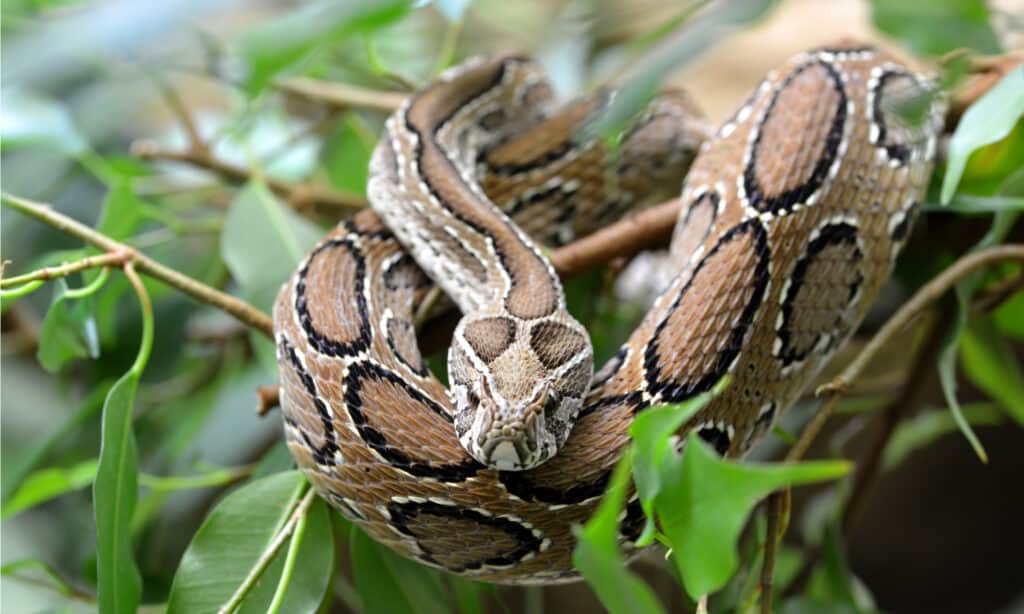
Russell’s vipers live in the Indian subcontinent as well as Sri Lanka.
©jaroslava V/Shutterstock.com
One of the largest vipers in the world is Russell’s viper (Daboia russelii), which measures up to five feet long and weighs 2.2 to 11 pounds. Russell’s vipers have a distinctive dark brown diamond pattern on a sand-colored body. They are one of the four species of snake responsible for nearly all severe snakebites in India.
5. Western Diamondback Rattlesnake
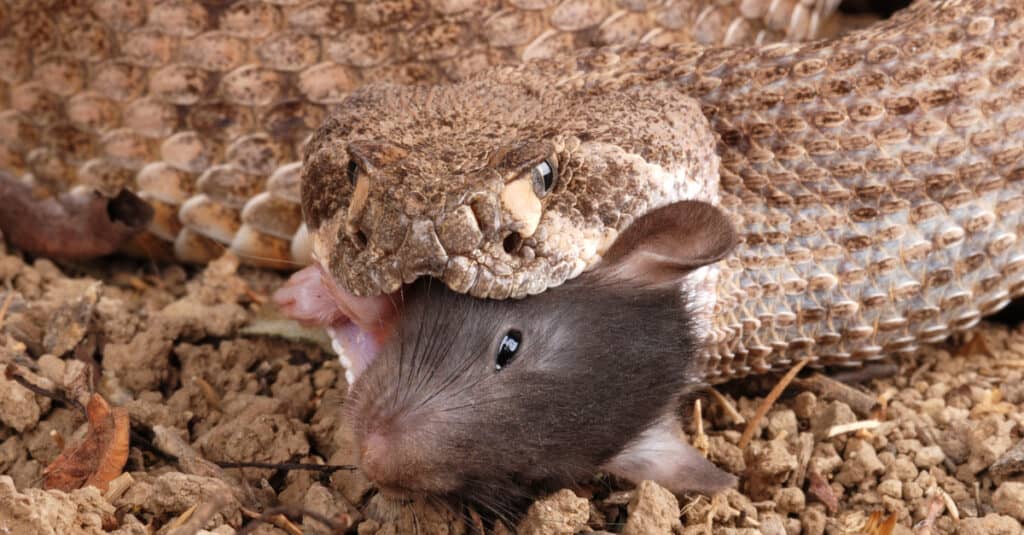
The western diamondback rattlesnake has a broad, triangular head and large fangs.
©Audrey Snider-Bell/Shutterstock.com
Western diamondback rattlesnakes (Crotalus atrox) measure up to five feet long and weigh 3 to 6 pounds, with some individuals reaching 15 pounds. They are the most well-known species of rattlesnake as they, unfortunately, deliver more bites to humans than any other rattlesnake species. These snakes live throughout the desert southwestern regions of the United States and Northern Mexico.
4. Eastern Diamondback Rattlesnake
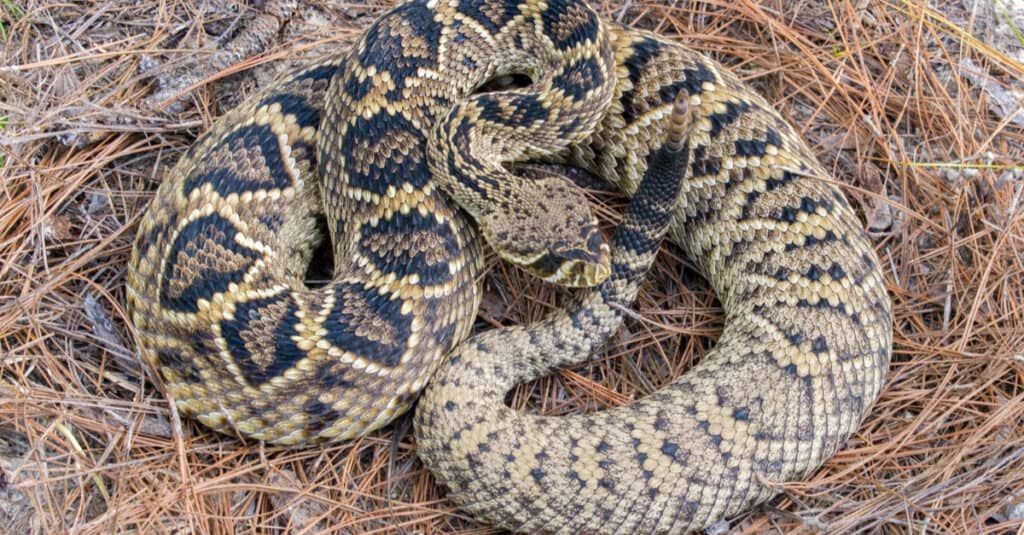
The eastern diamondback rattlesnake can be found only in the extreme Southeastern United States.
©Chase D'animulls/Shutterstock.com
Eastern diamondback rattlesnakes (Crotalus adamanteus) measure up to 7 feet long and weigh 5 to 10 pounds. Their diet primarily consists of small mammals, such as rats and rabbits, as well as birds, reptiles, and any other small creature unfortunate enough to cross their path. Eastern diamondbacks have heavy, thick bodies characterized by regular patterns of light and dark brown scales. Like all rattlesnakes, they have wide, flat heads and vertically elliptical pupils. They are longer than Gaboon vipers, but Gaboon vipers weigh more despite their shorter length.
3. Terciopelo
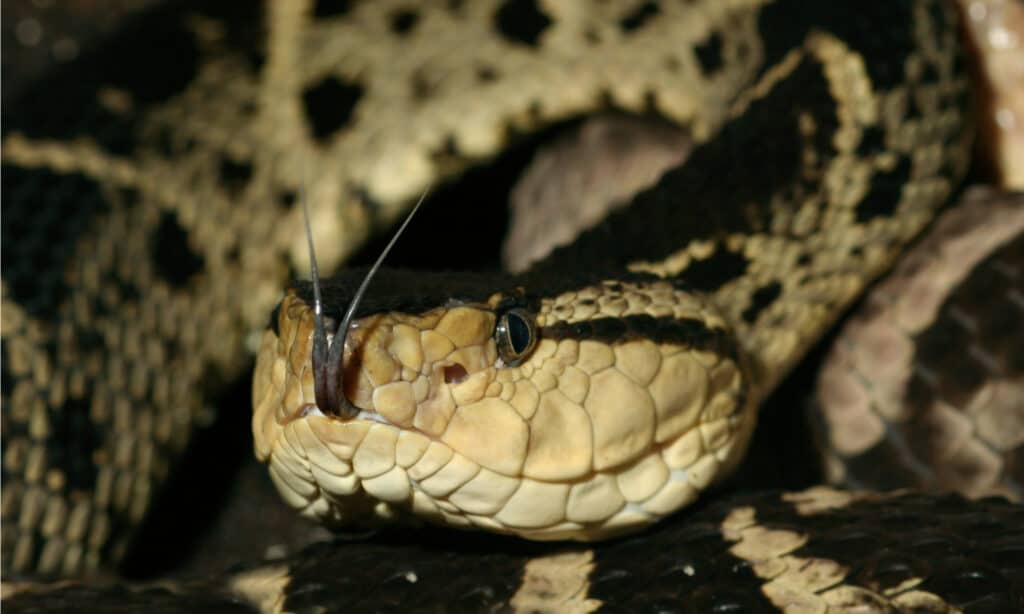
Known for their large, yellow eyes and striking pattern, terciopelos are one of the prettiest species of pit viper.
©Mark_Kostich/Shutterstock.com
Terciopelos (Bothrops asper) are endemic to Central America and Northern South America. They have thick bodies that measure 5.5 feet long and weigh up to 13 pounds. Like all vipers, they are venomous and use their highly toxic venom to incapacitate and kill prey.
2. Puff Adder
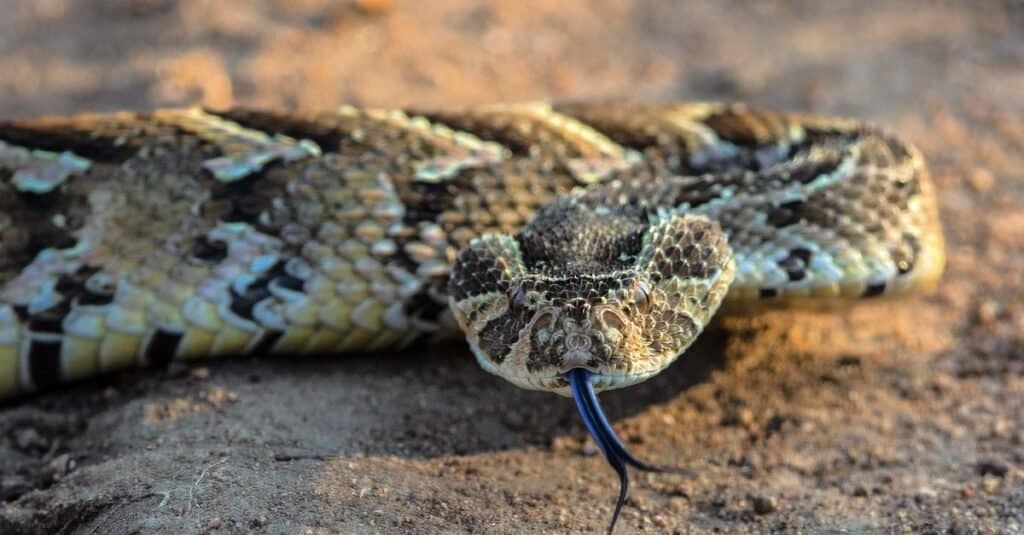
As their name suggests, puff adders are known for puffing up their bodies to appear bigger when they are threatened.
©iStock.com/S_Lew
The puff adder (Bitis arietans) measures up to 6 feet long and weighs 9.9 to 15 pounds. Puff adders are not to be messed with; they have potent venom and will not hesitate to defend themselves. They have heavy bodies that are perfect for blending into the ground and low foliage of Central, Eastern, and Southern Africa. Puff adders are nocturnal and feed on rodents, reptiles, and amphibians. Unfortunately, people often come into contact with puff adders, resulting in painful and occasionally life-threatening bites.
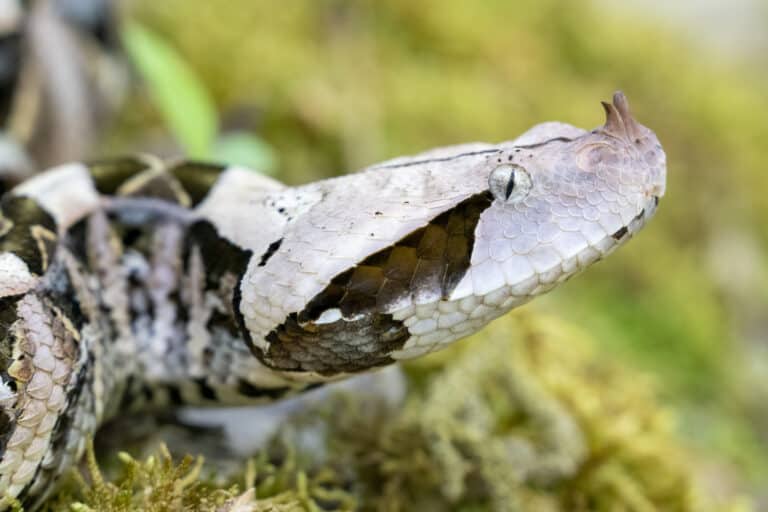
1. Gaboon Viper
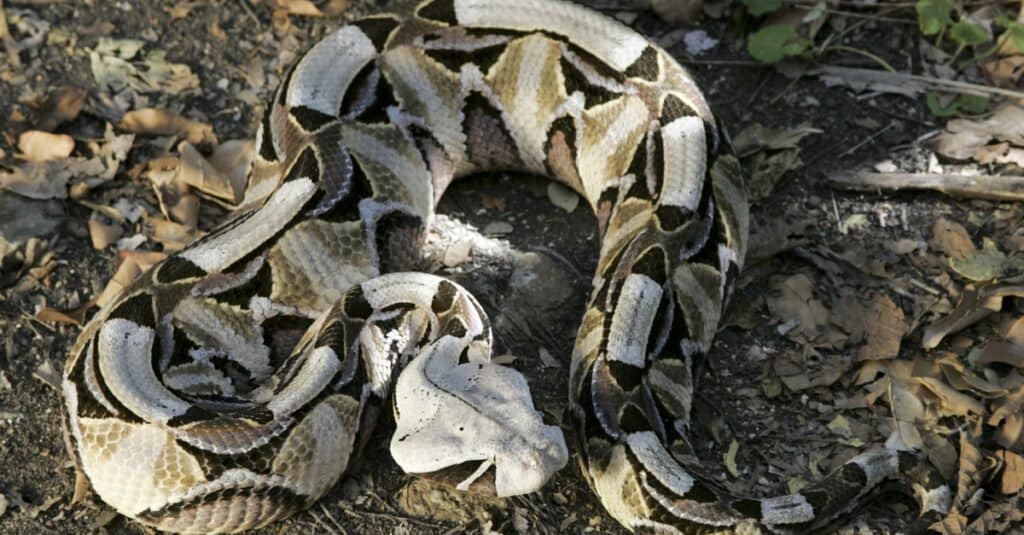
Native to central Africa, Gaboon vipers spend their entire lives on the forest floor.
©Stu Porter/Shutterstock.com
Gaboon vipers (Bitis gabonica) measure five feet long and weigh 10 to 20 pounds, with rare individuals reaching up to 25 pounds. These vipers have the distinction of possessing the longest fangs of any venomous snake; their fangs can measure over two inches long. Luckily for humans, these venomous snakes tend to avoid populated areas, instead hunting rodents and other small mammals in leafy forests.