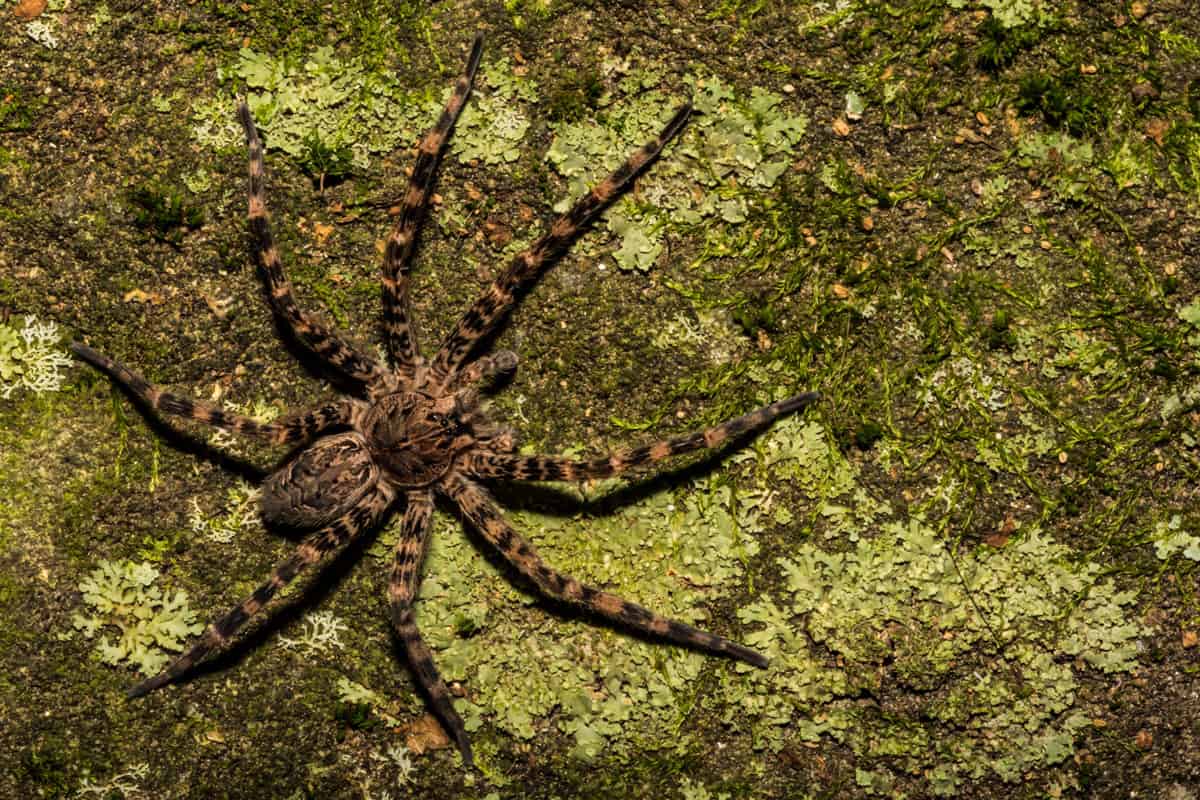

Iowa may be called a flyover state, but it’s also a key producer of corn in the U.S. With all those open fields comes a lot of room for unique animals. This state is home to bobcats, cougars, coyotes, and even mountain lions. It’s also home to a fair number of spiders, and some of them get quite big. Find out how big they get and how dangerous they are to humans. Keep reading to learn more about five of the biggest spiders in Iowa.
5. Long-Bodied Cellar Spider
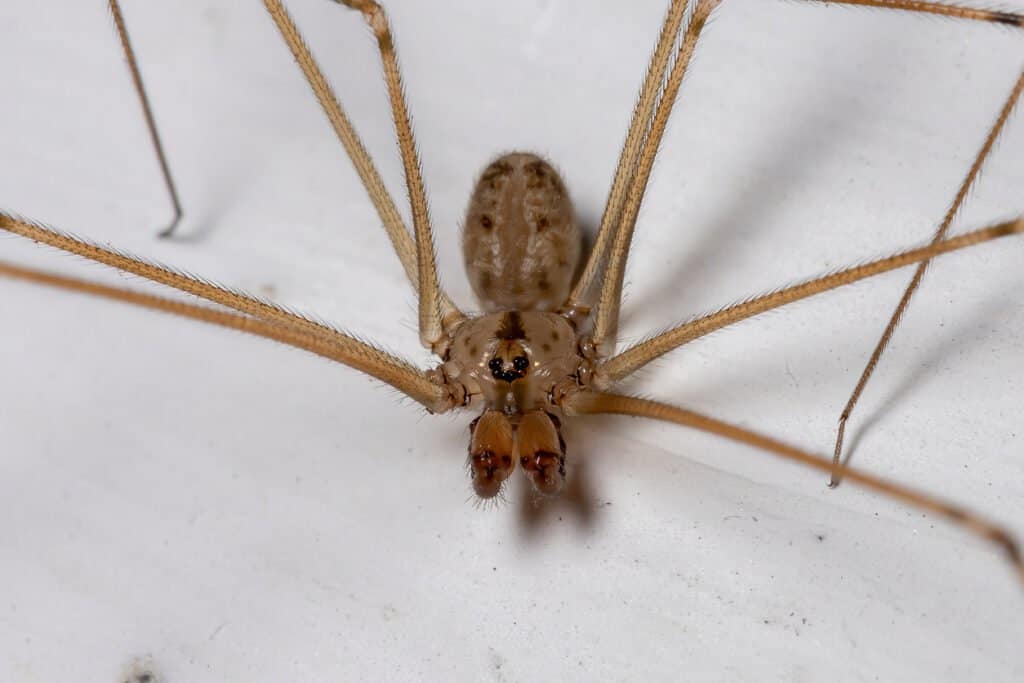
Cellar spiders inhabit dark, quiet areas inside buildings.
©iStock.com/ViniSouza128
| Scientific Name | Size | Danger to Humans |
|---|---|---|
| Pholcus phalangioides | Up to 0.38 inches in body length with a leg span of up to 2 inches | A bite may cause a mild burning sensation. |
The long-bodied cellar spider is tan, brown, or greyish-brown with a peanut-shaped, somewhat translucent body, and long, skinny legs. They are sometimes referred to as daddy long legs because of their long legs and their resemblance to the harvestman, which also shares that common name. They measure up to 0.38 inches in body length with a leg span of up to 2 inches.
As their name implies, these spiders usually build their webs in basements and storm cellars, but they can also be found in dark, secluded places in garages and warehouses. This spider rarely comes near humans to bite them. However, if one does bite you, it may cause a mild burning sensation, but it is not considered harmful.
4. American Funnel Web Grass Spider
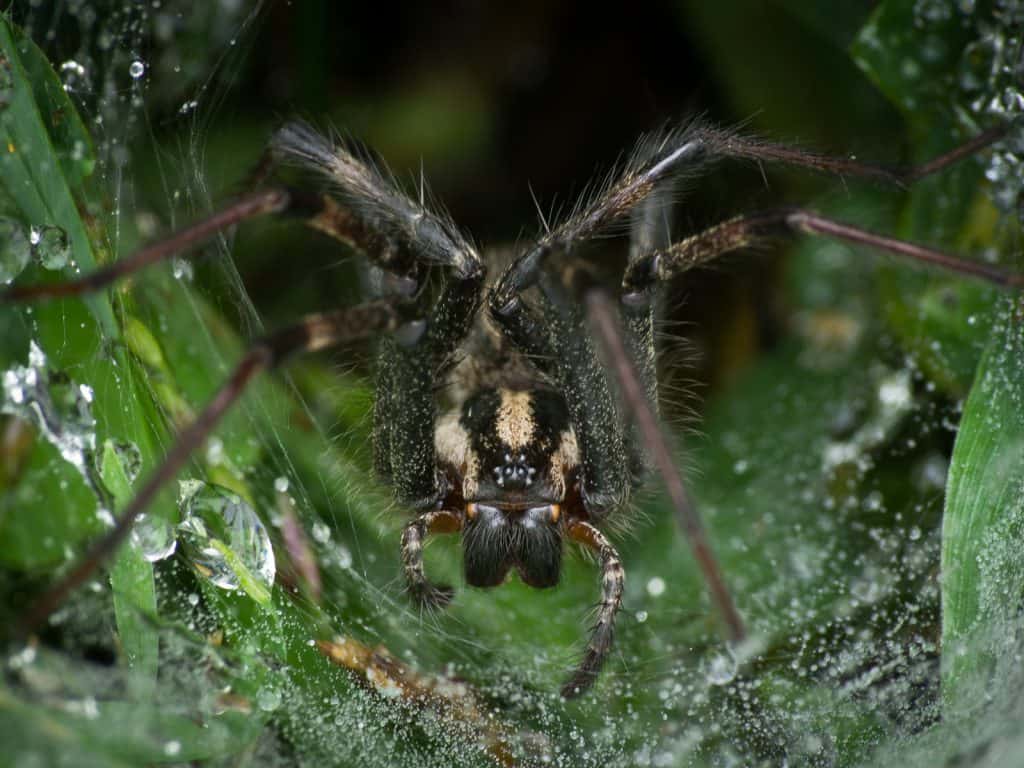
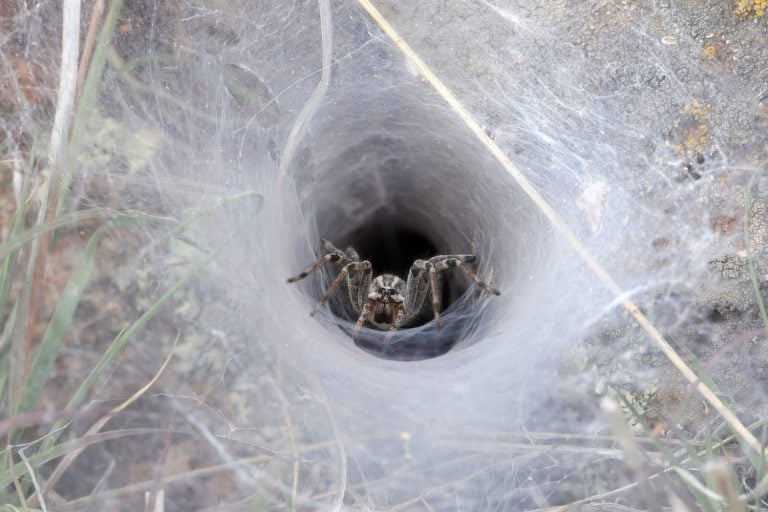
Agelenopsis naevia is a common funnel web spider found in Iowa.
| Scientific Name | Size | Danger to Humans |
|---|---|---|
| Agelenopsis naevia | 0.75 inches in body length with a leg span that can reach over 2 inches | Pain, itching, swelling, and redness at the bite site |
Often just referred to as grass spiders, these common Iowa spiders have rounded, light brown carapaces with two dark, vertical stripes. Their abdomens are brown and often lack distinctive markings. Their legs are banded with reddish-brown and dark brown. These spiders measure up to 0.75 inches in body length with leg spans that can reach over 2 inches.
These spiders spin funnel-shaped webs in tall shrubs, grass, under debris, and in the corners of buildings. Their webs are not sticky, but these spiders move very quickly and can easily capture prey that disturbs their webs. They may move inside homes during cold weather. Bites are uncommon but can cause short-lived localized pain, itching, swelling, and redness.
3. Black and Yellow Garden Spider
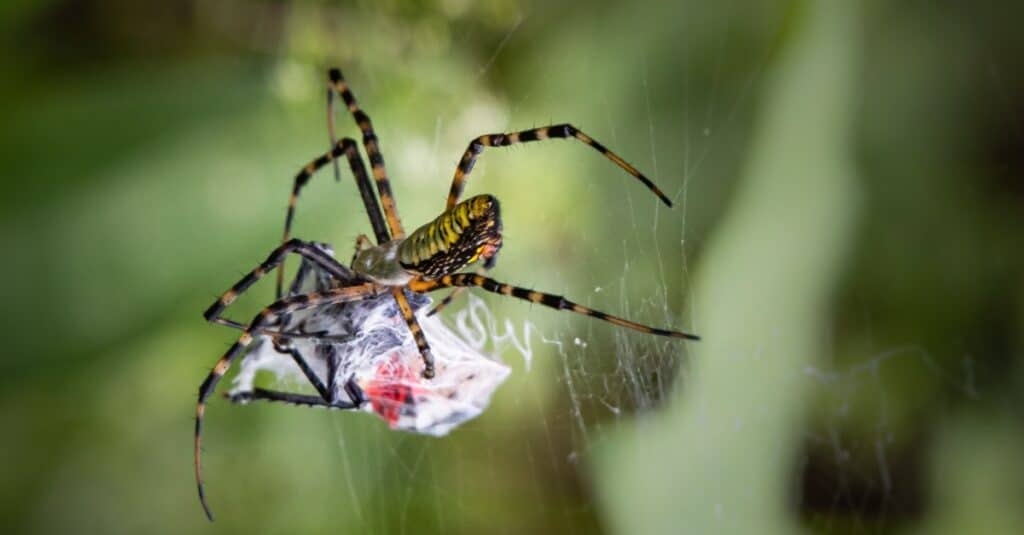
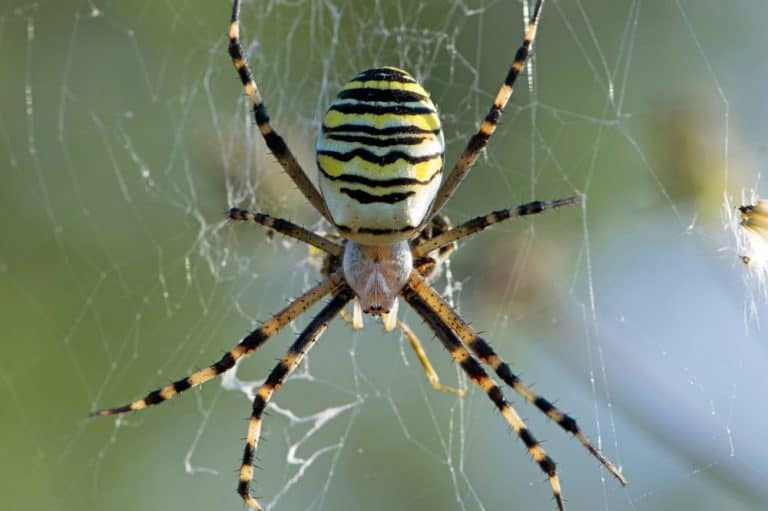
Black and yellow garden spiders are orb weavers with a unique web.
©cwieders/Shutterstock.com
| Scientific Name | Size | Danger to Humans |
|---|---|---|
| Argiope aurantia | Up to 1 inch in body length with a leg span of up to 3 inches | Rarely bites humans, but it may cause pain and swelling. |
The black and yellow garden spider is a type of orb weaver. These spiders make webs that can measure several feet wide and have a very conspicuous, thick, zig-zag line running down the center. This line is called the stabilimentum. Its purpose is still being debated, but it may be a visual warning to birds to avoid the web. They have black and yellow markings on their abdomens and silvery cephalothoraxes. They can measure up to 1 inch in body length, with a leg span of up to 3 inches.
These spiders are found in vegetation in open areas, under the eaves of houses, and around outbuildings. They are unlikely to invade your home, but they are often seen in gardens. These spiders are not aggressive and avoid humans. Their bites can cause some pain and swelling, but their venom is not medically significant.
2. Dark Fishing Spider
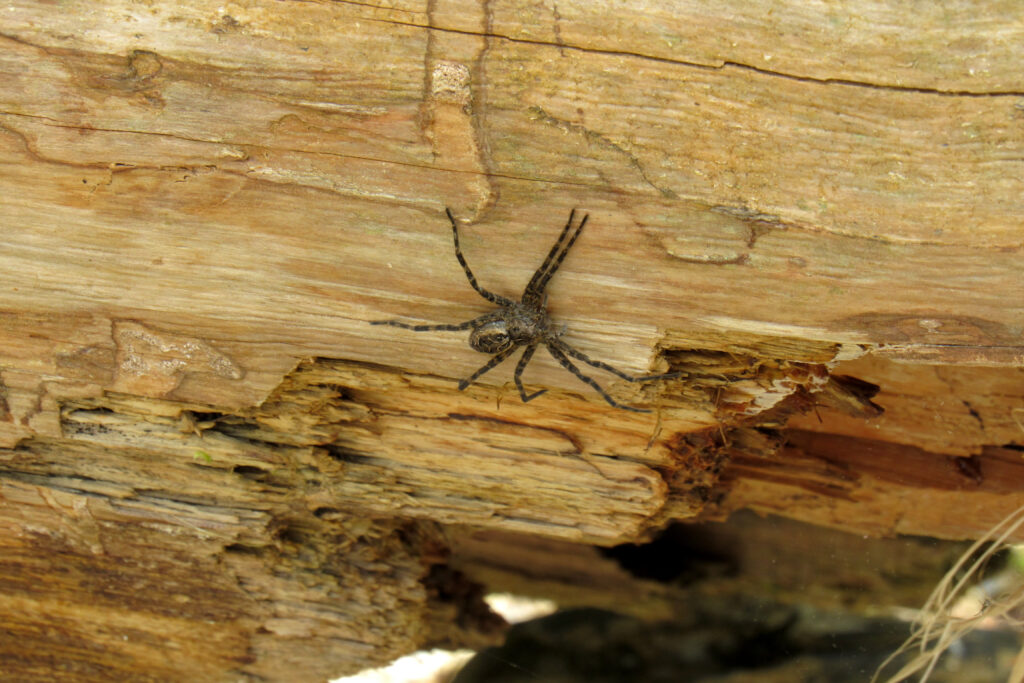
Dark fishing spiders are often confused for wolf spiders due to their similar coloring and size.
©Bailey Davenport/Shutterstock.com
| Scientific Name | Size | Danger to Humans |
|---|---|---|
| Dolomedes tenebrosus | Up to 1 inch in body length with a leg span of 3-4 inches | Can cause pain similar to a bee sting |
The dark fishing spider is a common sight for people who spend time on the lakes in Iowa. However, unlike many other members of Dolomedes, the dark fishing spider may also be found in drier, forested areas and around human structures. These spiders can grow up to 1 inch in body length, with leg spans between 3 and 4 inches. They have highly patterned black and brown bodies with dark banding on their legs.
Dark fishing spiders hunt on and around the water, chasing down and eating small aquatic insects and invertebrates. Although their size and speed may be unnerving to some people, they are not dangerous to humans. A rare bite from one of these spiders is similar to a bee sting, but they tend to avoid people and would rather escape.
1. Carolina Wolf Spider
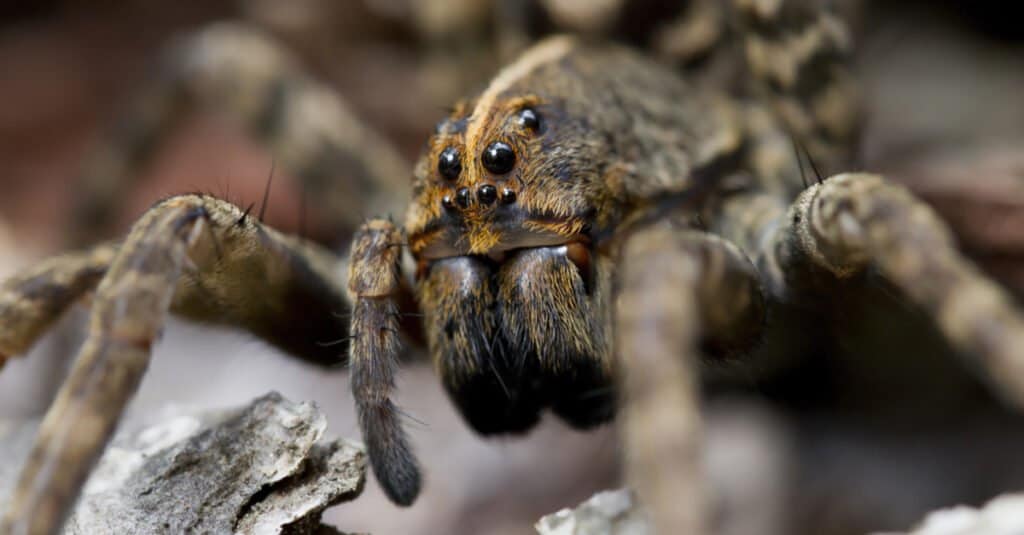
Carolina wolf spiders are usually a mottled brown to grey with orange mouthparts.
©Will E. Davis/Shutterstock.com
| Scientific Name | Size | Danger to Humans |
|---|---|---|
| Hogna carolinensis | Body length of up to 1.4 inches and a leg span of 3-4 inches | The bite from this spider causes localized pain and swelling. |
The Carolina wolf spider is arguably the biggest spider in Iowa, with a body length of up to 1.4 inches and a leg span that can reach up to 4 inches. Its hairy body is a mottled brown to grey in color. It has a dark brown stripe down the center of its abdomen. The front of its mouthparts is a light orange color, and males can also have orange on their sides.
These spiders actively hunt their prey, so they do not build webs. They can be found on the ground in many different open habitats, hiding in vegetation, or waiting in small burrows under rocks or logs. Although a bite can be painful due to the spider’s large size, it generally only causes localized symptoms similar to those of a bee or wasp sting.