
Quick Take
- The Eastern hare-wallaby wasn't hunted, poisoned, or outcompeted. Its extinction came from something far less obvious that Europeans did on arrival. See how habitat was lost →
- A chance encounter in 1841 revealed something physically extraordinary about this small marsupial that no one expected from a creature its size. Read Gould's 1841 encounter →
- Its extinction beat other Australian wallabies by decades, and the timing tells you exactly why this one was different. Explore the extinction timeline →
- What Aboriginal communities practiced for tens of thousands of years took less than a century to unravel, and Australia's wildlife is still paying for it. Discover fire management's role →
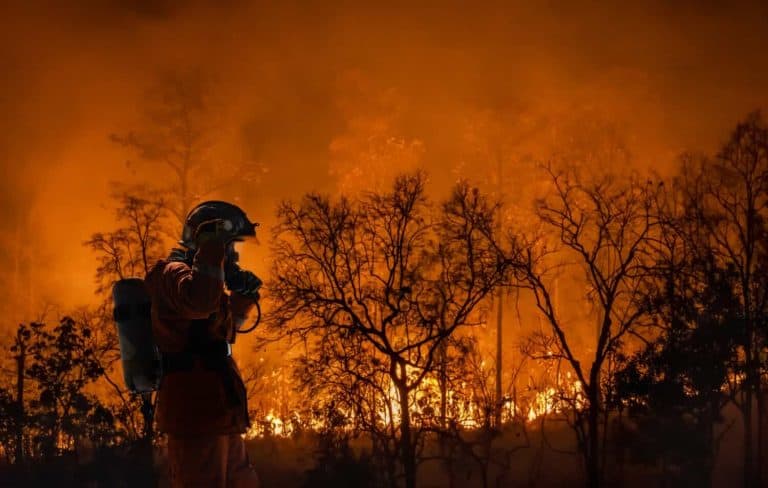
Aboriginal fire management was practiced in Australia for tens of thousands of years. It kept animal habitats protected and cleared unnecessary brush. When Europeans banned the controlled burns in the 18th century, they inadvertently doomed a marsupial acrobat. The Eastern hare-wallaby would be extinct approximately 100 years later.
Eastern Hare-Wallaby Population Decimated by Alteration in Fire Management
As Europeans came to Australia, they introduced species and altered habitats, putting the country’s native animals at risk of extinction. While some species were able to adapt, others were not. One such species was the Eastern hare-wallaby. However, it was not for the typical reasons other species were eradicated from Australia that the Eastern hare-wallaby went extinct. Instead, it was the alteration of long-held fire management practices that led to the wallaby’s loss.
The Eastern hare-wallaby relied on open forests, grasslands, and scrub for its survival. Thanks to the Aboriginal practices of keeping undergrowth under control via small burns, the Eastern hare-wallaby thrived. With new grasses growing in the wake of the fires where brush had once been, and with the grasslands protected from the fires, the land was well cared for.
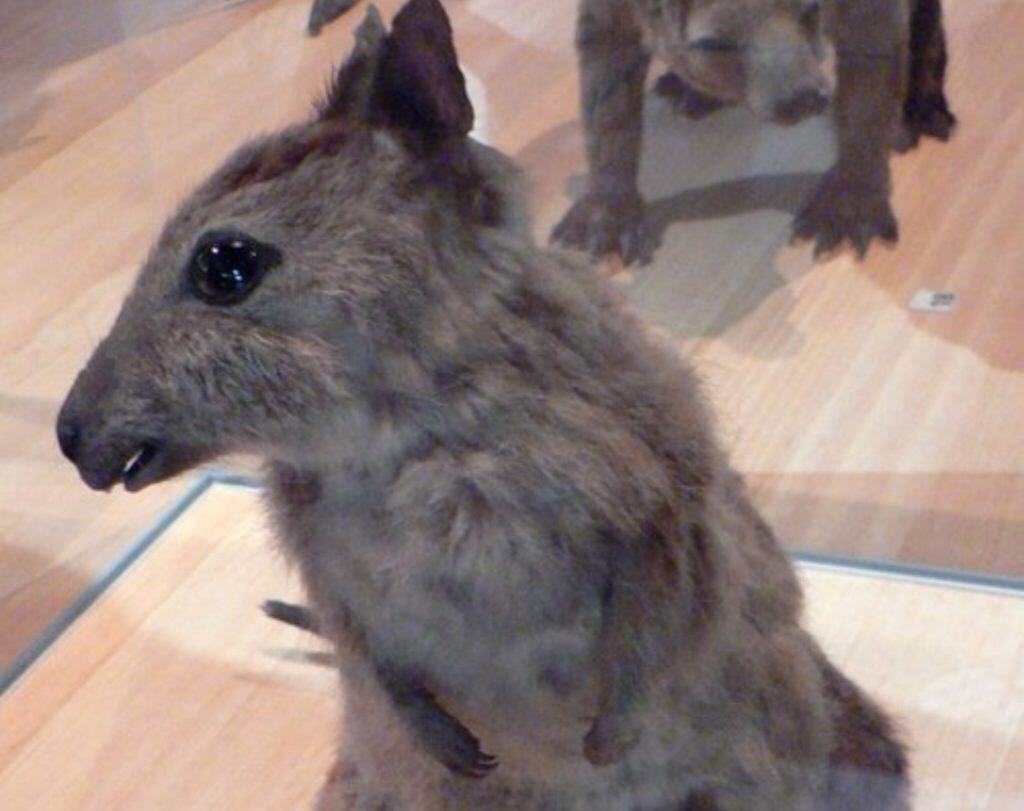
The Eastern hare-wallaby went extinct after Aboriginal fire management ended.
©Peter Halasz / Wikimedia Commons / CC BY SA 3.0 – Original / License
As Europeans came to Australia, they banned Aboriginal fire management. This allowed the undergrowth to grow out of control. Fires that started by accident or from lightning strikes could not be controlled. The habitat of the Eastern hare-wallaby was destroyed with each fire.
Within a century or so after the Aboriginal fire management ended, the Eastern hare-wallaby went extinct. While the exact cause is not known, it is believed the lack of clearing brush and resulting uncontrolled fires led to their demise.
What Did the Eastern Hare-Wallaby Look Like?
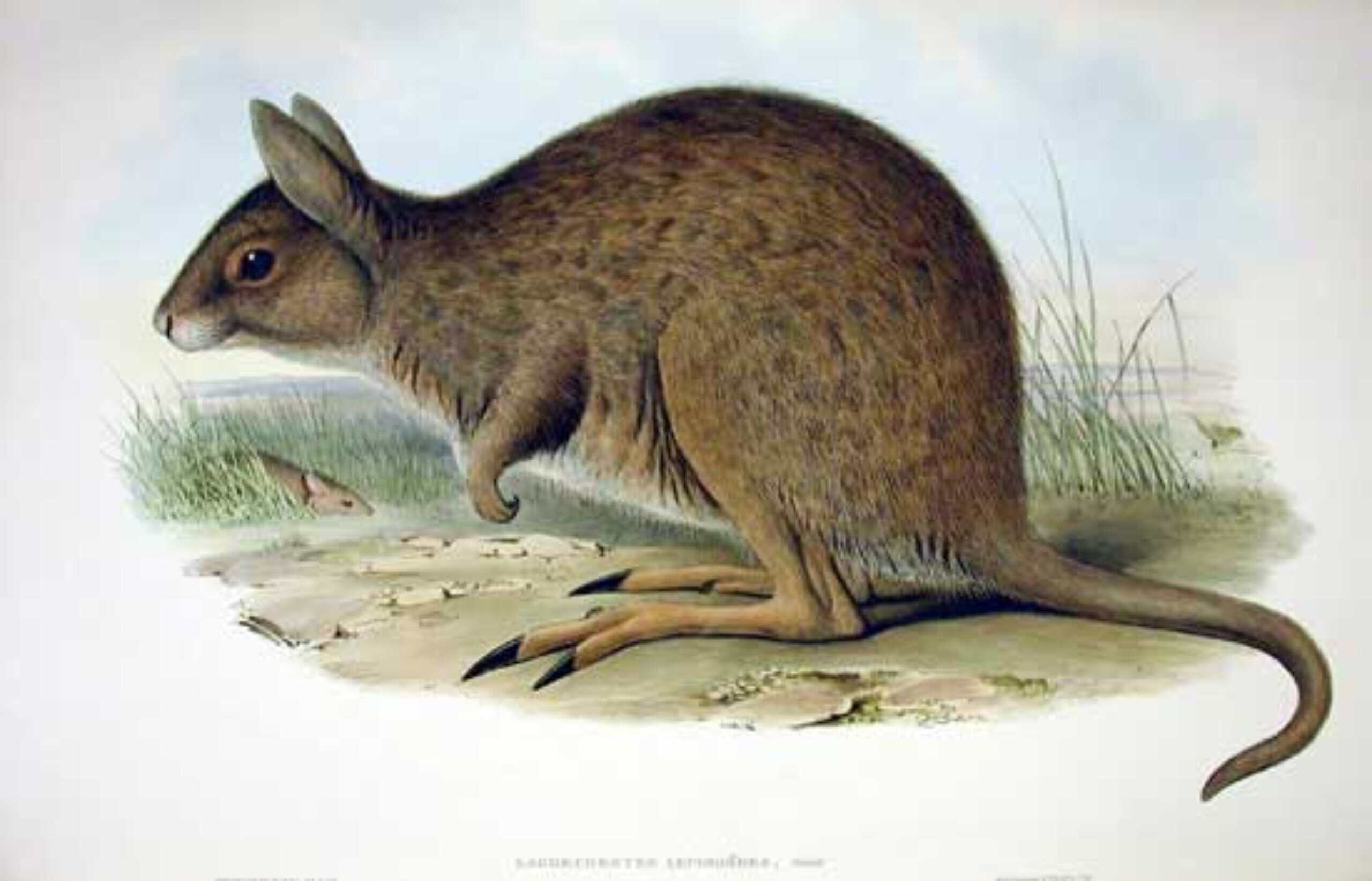
Eastern hare-wallabies were smaller than most wallabies. They were approximately 19.6 inches long and weighed up to 22 pounds. But it was their distinct looks that earned the wallabies their name.
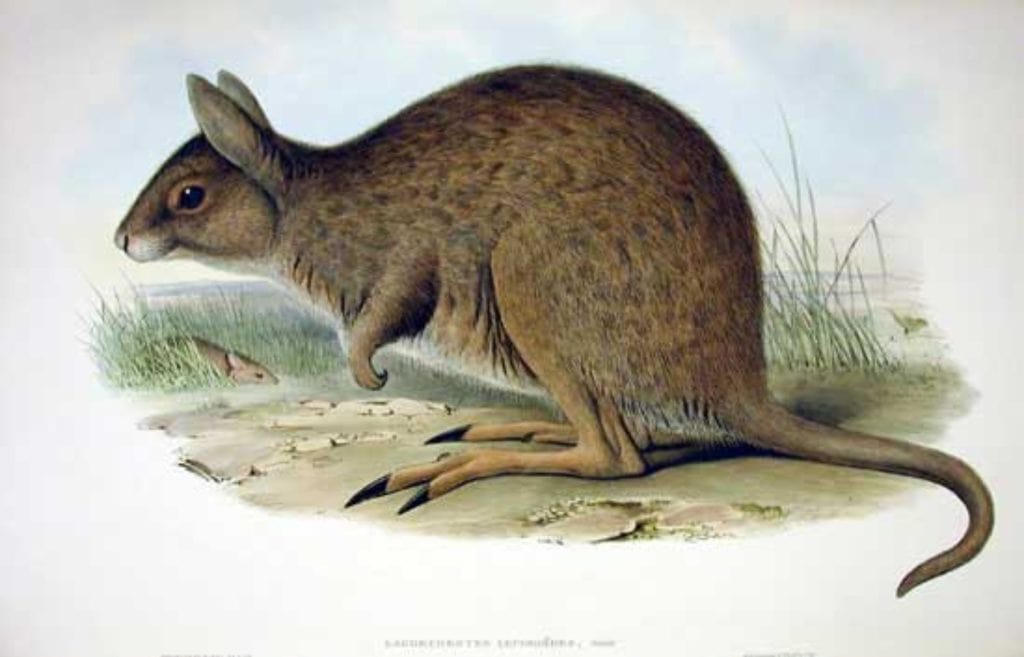
Eastern hare-wallabies looked similar to rabbits, hence their name.
©John Gould, Public domain, via Wikimedia Commons – Original / License
With ears that looked like rabbits, the Eastern hare-wallaby is aptly named. The coloration was light brown to gray, with dark stripes on the back. The animal had strong legs and a long tail that added another 15 inches to their overall length.
Eastern hare-wallabies were not typically seen during the day as they were nocturnal. They would feed on grasses in the grasslands and open forests of Queensland and North South Wales regions of Australia.
The Eastern Hare-Wallaby Jumped Incredible Heights
Wallabies in Australia are known for being fast and skilled jumpers, and the Eastern hare-wallaby certainly had some impressive jumping skills. This is especially true given its small stature.
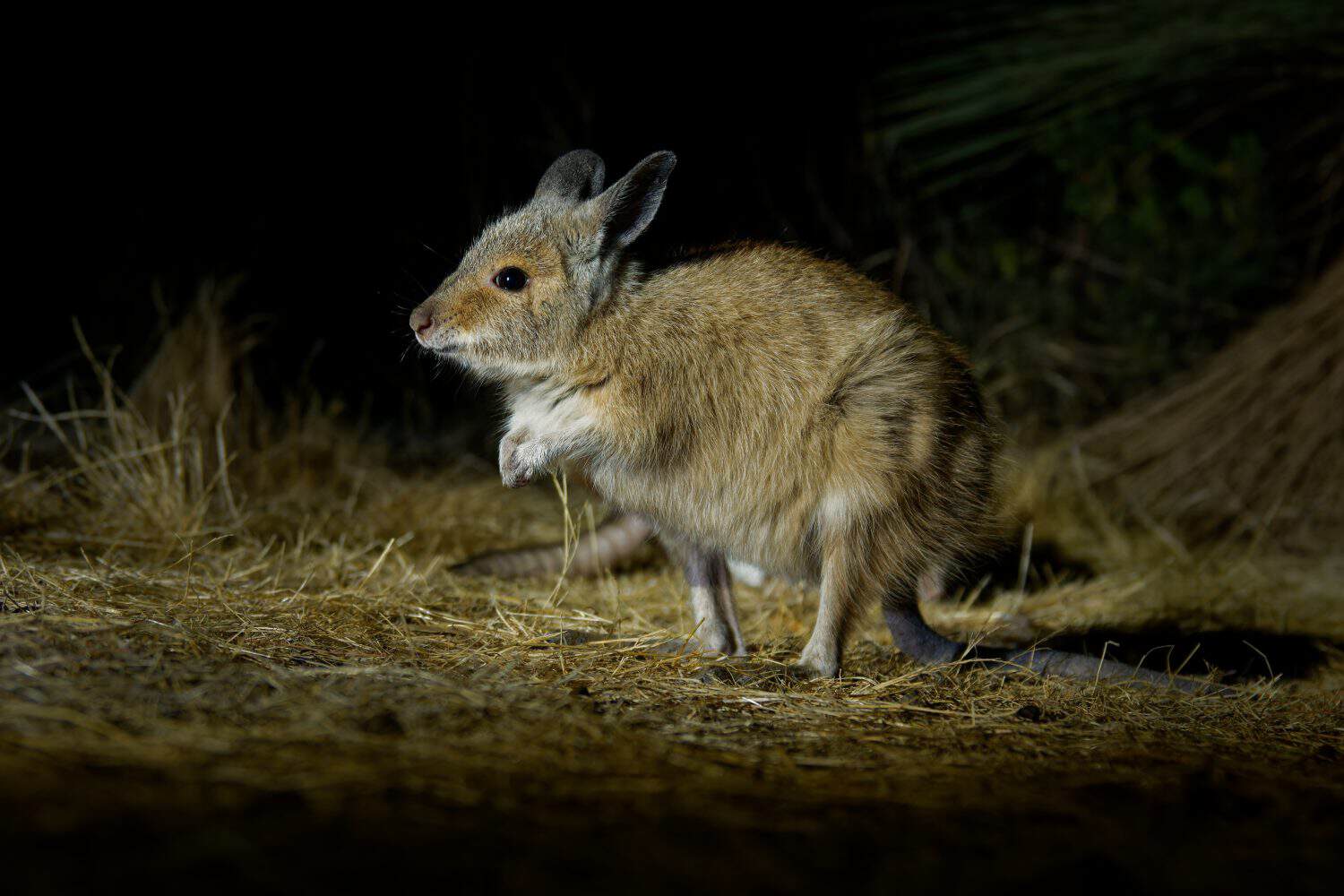
The rufous hare-wallaby is the closest living relative of the Eastern hare-wallaby, which also jumps to great heights.
©Martin Pelanek/Shutterstock.com
John Gould, an ornithologist, taxidermist, and illustrator, was in pursuit of an Eastern hare-wallaby in 1841. Incidentally, this was the same year that Gould became the first person to describe the wallaby. While chasing an Eastern hare-wallaby, Gould witnessed the small animal abruptly change directions by leaping over his head.
The kangaroo-like critter was said to have jumped six feet high. Quite a feat for a wallaby that was just under 20 inches in length, which speaks to the athleticism of the species.
Why the Eastern Hare-Wallaby Extinction Is Not as Puzzling as Once Believed
The fact that the Eastern hare-wallaby went extinct is not surprising. During the time period that European explorers were settling in different countries, their presence and practices led to the extinction of multiple species. This includes other wallabies, such as the Toolache wallaby and the crescent-nail tail wallaby. However, unlike with other species, the extinction of the Eastern hare-wallaby occurred before typical causes of extinction took root.
The wallabies that went extinct in the 20th century were the direct result of habitat loss to agriculture and the introduction of red foxes. While there was confusion about whether the Eastern hare-wallaby was still alive in the early part of the 20th century, the last known sighting was in 1889. If this was indeed the last of the Eastern hare-wallabies to live, its extinction occurred decades before that of other wallabies.
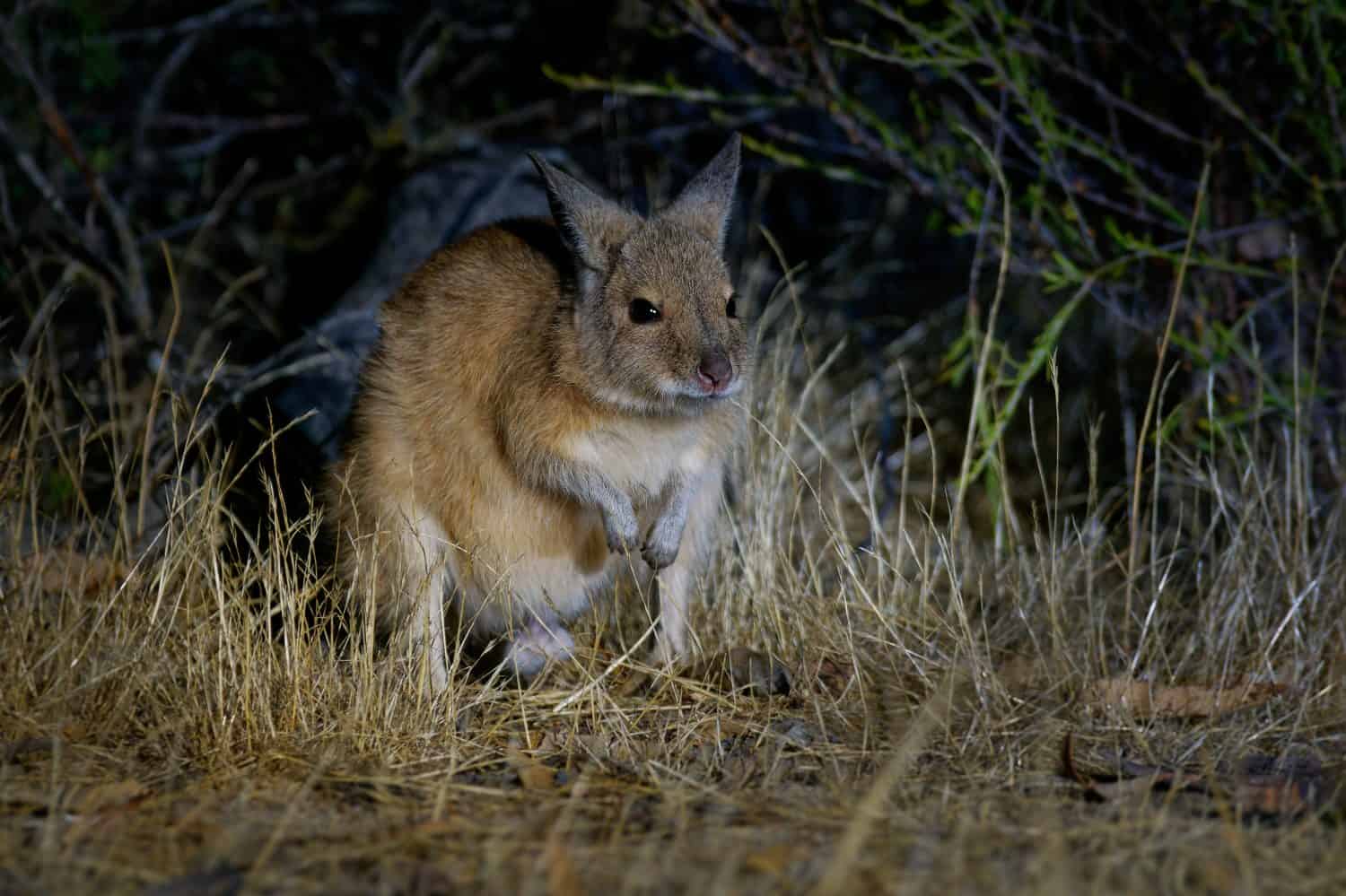
Eastern hare-wallabies, similar to the rufous hare-wallaby, did not go extinct like other wallabies in Australia during the 20th century.
©Martin Pelanek/Shutterstock.com
The environmental benefits Aboriginals had contributed to for tens of thousands of years by setting small fires to protect Australia’s grasslands were undone in approximately one century. Along with the fires, species that relied on the grasslands disappeared.
Today, the effects of Aboriginal fire management practices continue to be felt. Wildfires now burn hotter, longer, and wider than ever before. Wildlife has been deeply affected by it, as the survival of some species is more at risk with each raging wildfire. The hope is that other native species do not go the way of the Eastern hare-wallaby, though optimism is not high.