With over 1,000 recognized spider species, California is among the states with the highest spider diversity in the United States.. California boasts a rich coastal landscape and diverse natural habitats, which provide suitable environments for spiders, which are found in a wide range of habitats, from the coast to the desert. Spiders in California vary in size and appearance, from the tiny dwarf orb-weaver (Anapistula secreta), which measures less than 0.02 inches, to much larger species. Continue reading to learn about the five biggest spiders in California, what they look like, where they live, and whether their bites are harmful to humans.
5. Mouse Spider – 2 inches
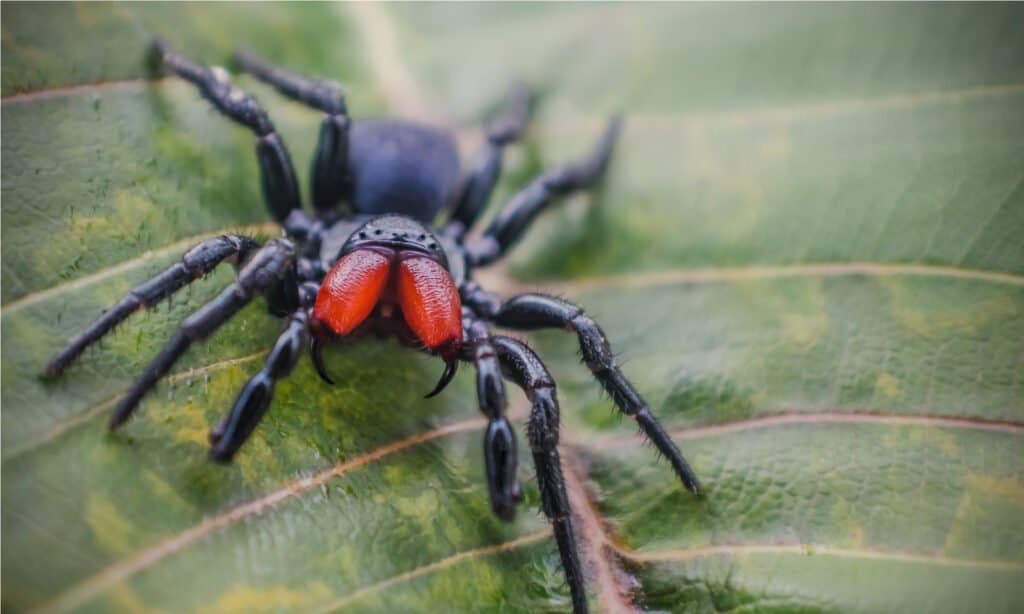
Mouse spiders are often found indoors, where they evade capture due to their quick and agile nature.
©Brittany North/Shutterstock.com
The mouse spider (Scotophaeus blackwalli) is native to Europe, the Caucasus, Turkey, and Iran, but can also be found in Ireland, the United Kingdom, Peru, and the United States, specifically in California, Oregon, and Hawaii. Mouse spiders can have up to a 2-inch legspan. As with most spiders, and all of the species on our list, females are larger than males.
The mouse spider has a black body with a red mouth. Their dark-colored bodies are covered in fine hairs that are the same color as their reddish-brown fangs and mouth.
Mouse spiders are often found indoors in homes, basements, and other buildings. Outdoors, mouse spiders hide under bark, in holes in walls, and on fences.
The mouse spider has very large fangs. Despite this, they rarely bite humans. The mouse spider’s bite is painful but not dangerous to humans. Beyond basic first aid, no medical treatment is required.
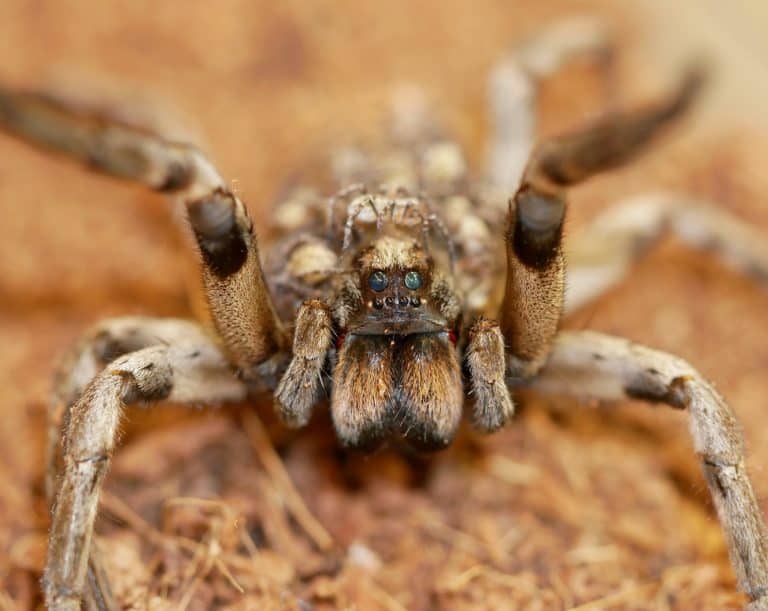
4. Giant Crab Spider – 2.5 inches
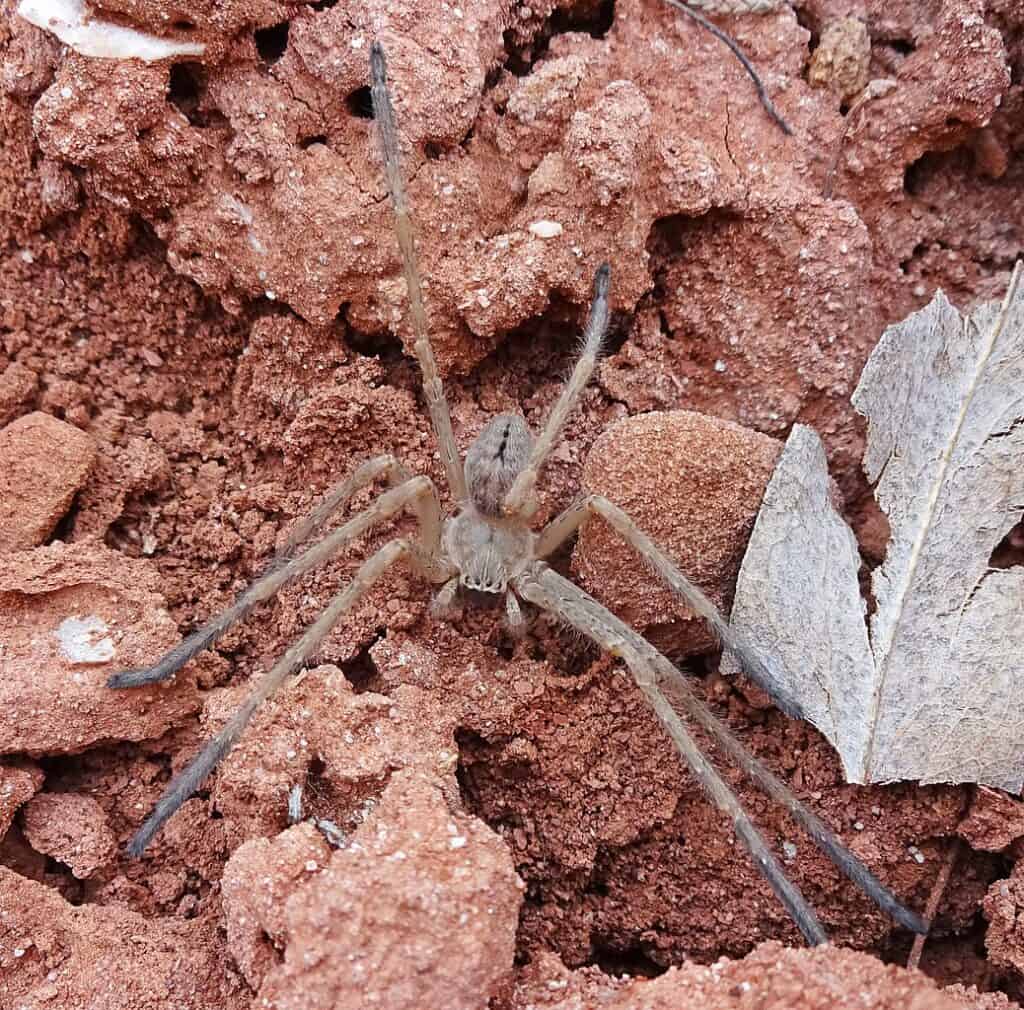
Ambush predators, crab spiders use speed to catch their prey
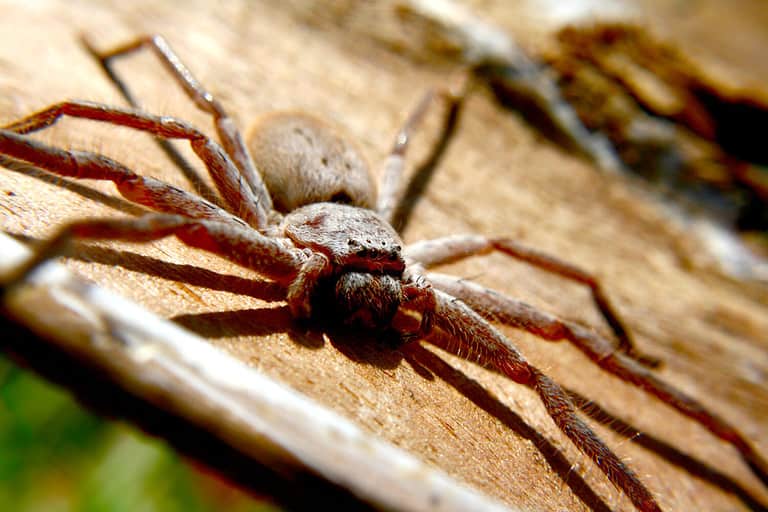
The giant crab spider (Olios giganteus) is a large spider that has an adult legspan of between 2 and 2.25 inches.’They are unusually large compared to other members of the crab spider family. Giant crab spiders prefer a dry and warm climate like that found in California.
Giant crab spiders have a flattened, medium-to-light brown body, long and bulky legs that are held at right angles to the body, and a large, circular cephalothorax. They are named for their crab-like appearance and ability to move sideways rapidly.
Giant crab spiders’ habitats include natural areas like forests, under bark, rocks, and tree trunks, as well as human structures such as sheds, woodpiles, and homes.
These large, agile spiders are very fast and are often labeled aggressive.. However, if given the opportunity, they flee from humans. Their bite can be painful due to their large jaws, but their venom is not considered medically significant to humans, although some systemic effects like nausea or headache have been reported.
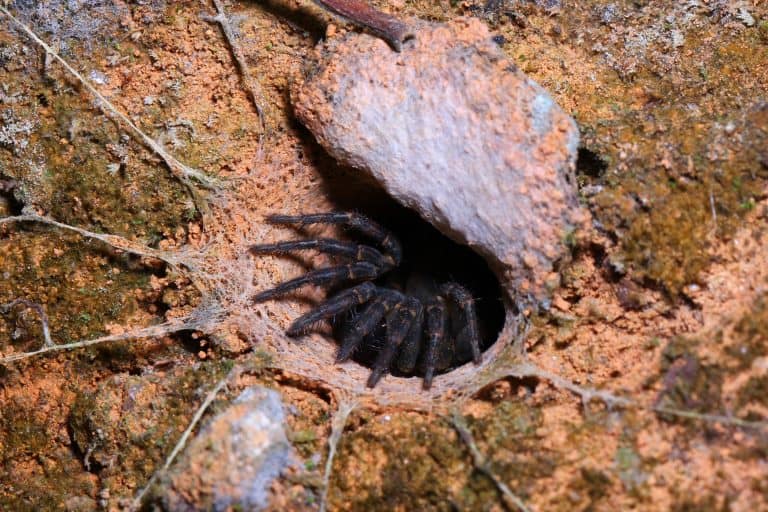
3. Calisoga Spider – 4 to 5 inches
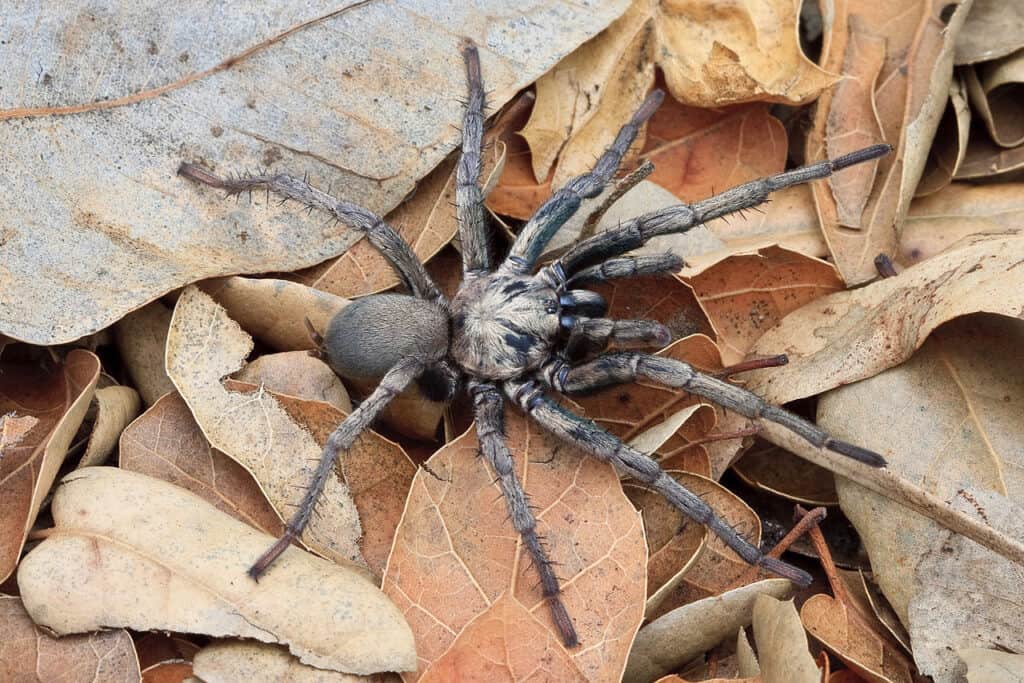
Calisoga spiders are often known as false tarantulas and reach 4 to 5 inches long
©Marshal Hedin from San Diego, CC BY 2.0, via Wikimedia Commons – Original / License
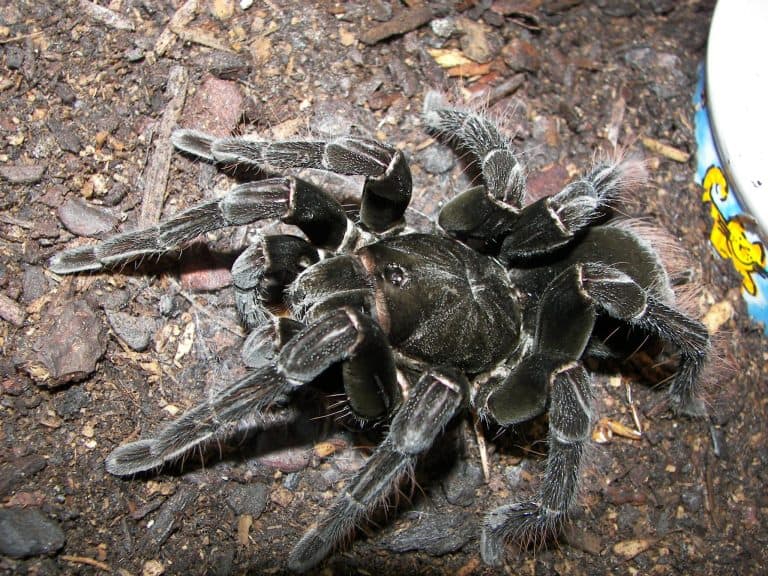
Commonly referred to as false tarantula, calisoga spiders are part of the Nemesiidae family. They are slightly smaller than most true species of tarantula, with a legspan of 4 to 5 inches. One feature that sets the calisoga spider apart from true tarantulas in California is the lack of bristly hairs that cover a tarantula’s body. The calisoga spider has a smooth and shiny brown body with a large abdomen.
Calisoga spiders hide in burrows in sandy and rocky terrain and prefer warm and humid climates. They are often sighted outdoors and are rarely found in homes. Sightings of this species drastically increase in the fall when male calisoga spiders go on long walks in search of a mate.
A Calisoga spider bite is not considered dangerous to humans but can be painful, with symptoms including stinging pain that typically dissipates within 24 hours.
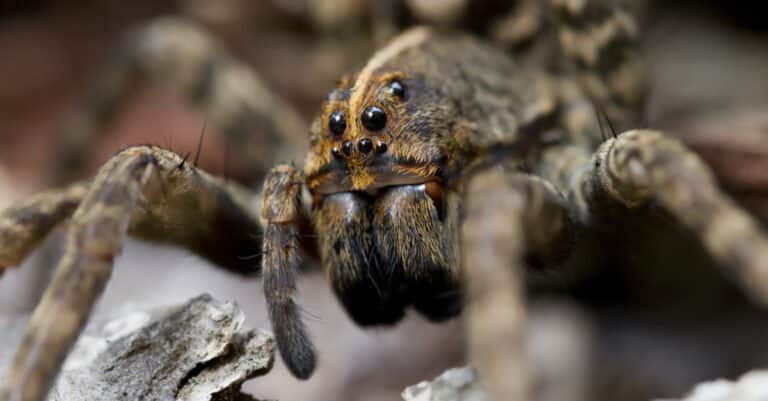
2. Pantropical Huntsman Spider – 5 to 6 inches
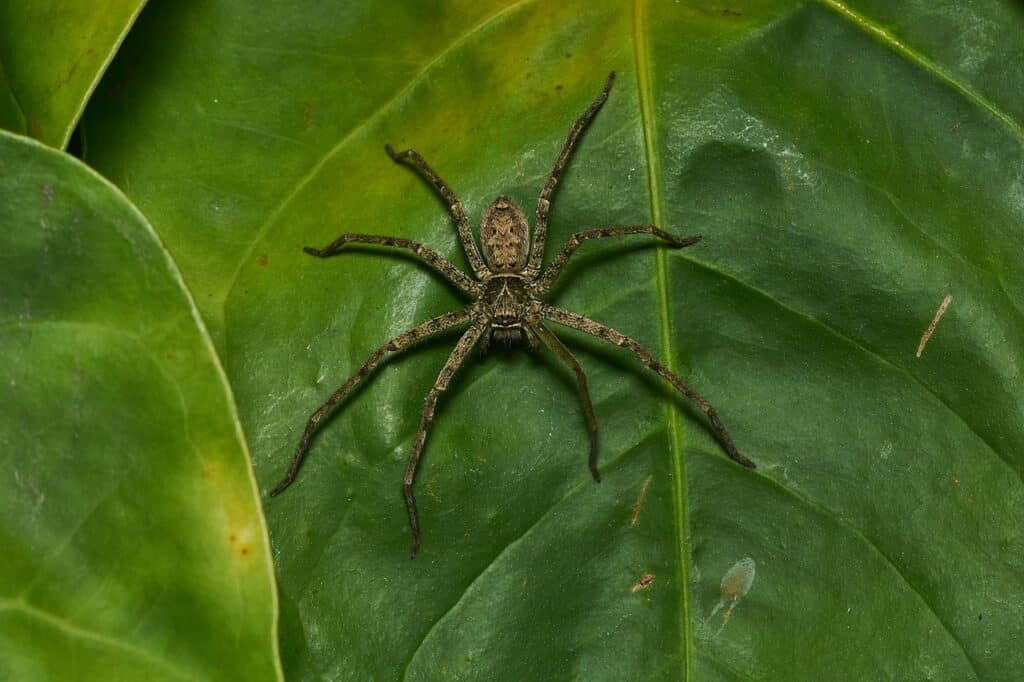
The pantropical huntsman spider is a member of the crab spider family and reaches 5 to 6 inches in size.
©Jee & Rani Nature Photography / CC BY-SA 4.0 – Original / License
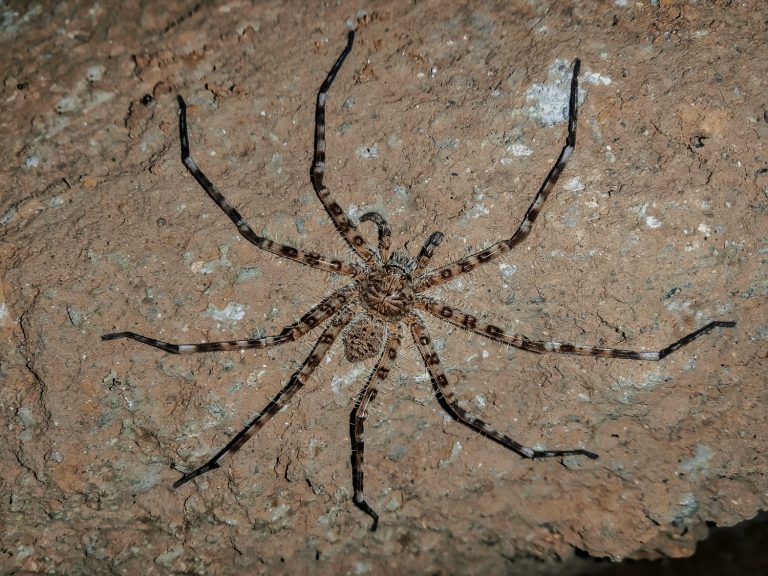
The pantropical huntsman spider (Heteropoda venatoria) is a member of the huntsman spider family (Sparassidae) and can be found in the subtropical and tropical regions of North America. It is commonly found in warm states, including California. Pantropical huntsman spiders have legspans of 5 to 6 inches.
The pantropical huntsman spider’s small light or dark brown body is notably flattened, which allows it to fit into surprisingly narrow crevices. This flat shape, combined with long, splayed legs, gives it a crab-like appearance.
The pantropical huntsman spider does not produce any webbing and prefers to actively hunt its prey during the night.
The bite of the pantropical huntsman spider is not dangerous to humans and typically causes only mild, localized pain, swelling, and redness. The pain is often compared to a bee sting.
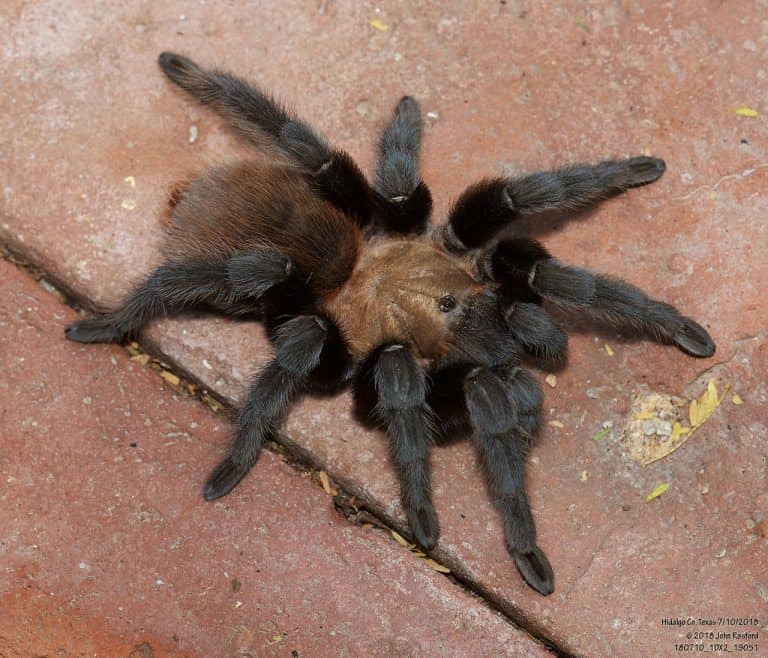
1. Johnny Cash Tarantula – 6 inches
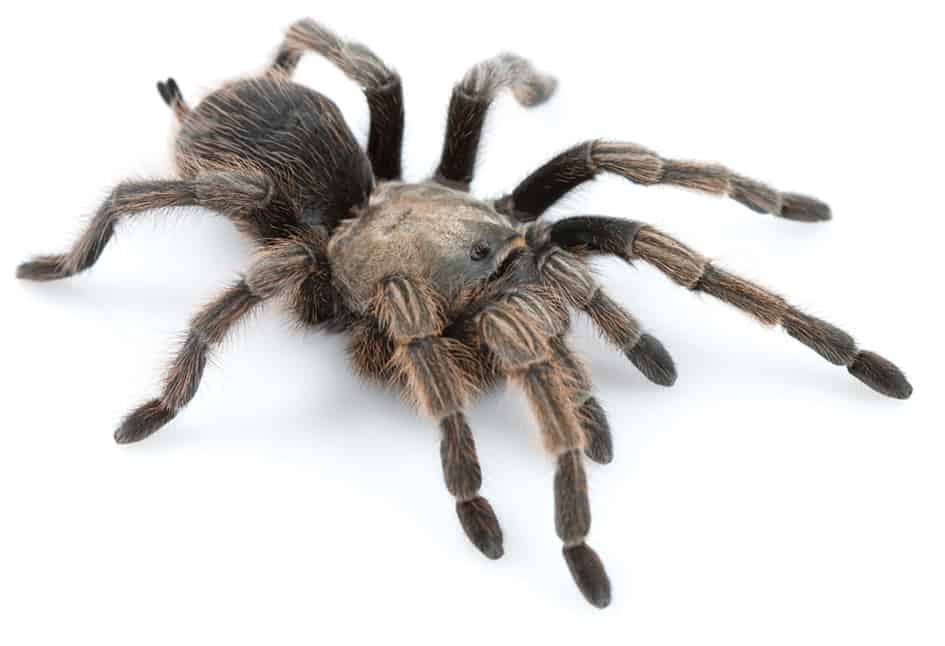
The Johnny Cash tarantula is a newly discovered species that has a legspan of nearly 6 inches.
©Chris A. Hamilton, Brent E. Hendrixson, Jason E. Bond / CC BY 4.0 – Original
The newly discovered Johnny Cash tarantula (Aphonopelma johnnycashi) is a medium-sized tarantula that has a legspan approaching 6 inches.
This tarantula is distributed across the Western foothills of the Sierra Nevada mountains. It was discovered in 2015 near Folsom Prison, which is associated with Johnny Cash’s famous 1968 album, Live at Folsom Prison, which helped revive Cash’s career and cemented the prison’s place in music history. Therefore, it would seem only fitting to name the newfound species after the man in black.
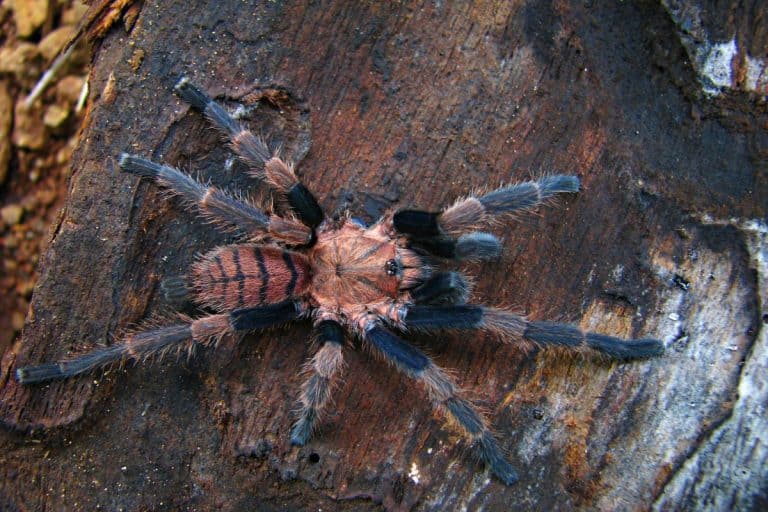
Female Johnny Cash tarantulas have a brown, black, and tawny-colored body with a well-developed abdomen, covered in fluffy hairs. Males have black bodies, with rust-colored hairs covering the lower half of their small abdomen and long legs.
The bite of the Johnny Cash tarantula is not considered medically significant to humans, and bites are rare. As with other North American tarantulas, its venom is mild, with symptoms comparable to a bee sting. However, both male and female Johnny Cash tarantulas can shoot irritating hairs from their body to protect themselves from predators. This behavior involves flicking barbed hairs from their abdomen at their predators. These hairs can be irritating if they contact the skin and are especially dangerous if they get into the eyes.