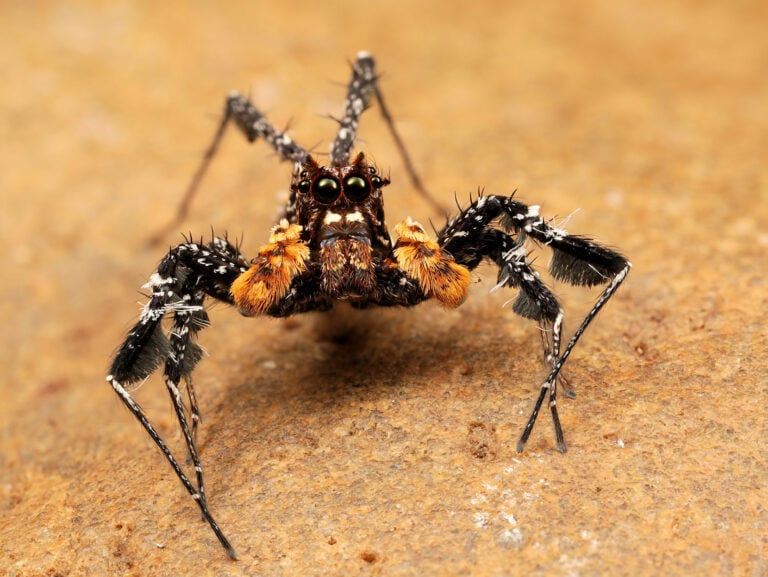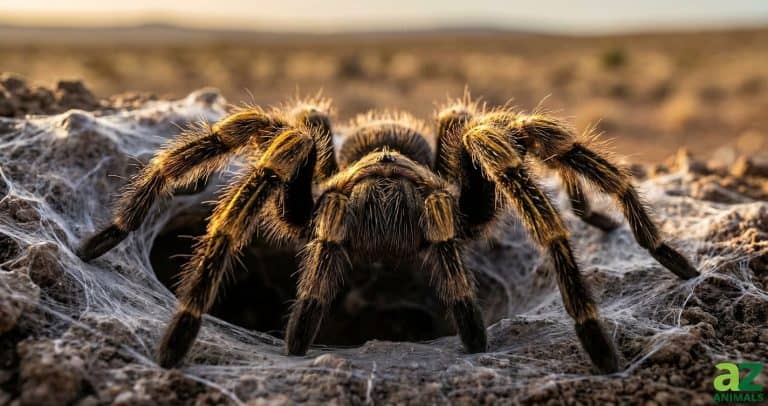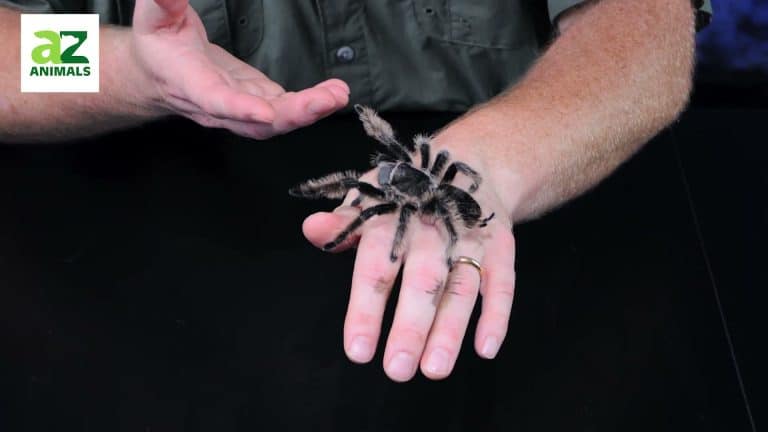

Wolf spiders (Lycosidae) and tarantulas (Theraphosidae) are both maligned and feared throughout the world. They are venomous, as are almost all spiders. Their venom helps them subdue prey, but neither is considered medically significant to humans. So, although they are not dangerous, it can be helpful to know the differences between a wolf spider vs. a tarantula so you identify the spider that may be living in or near your home. Keep reading to learn the most significant differences between these two spiders and find out what sets them apart.
Comparing a Wolf Spider and a Tarantula
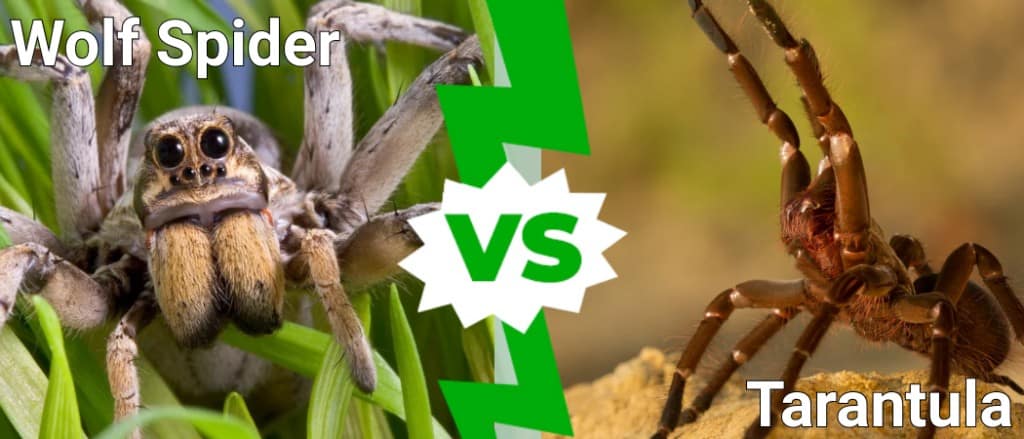
| Wolf Spider | Tarantula | |
|---|---|---|
| Size | Weight: less than 1 ounce Length: 0.25-1.4 inches in body length; up to 4 inch leg span | Weight: 0.9-6 ounces Length: 1 to 5 inches in body length; up to 11 inches in leg span |
| Setae (Hair) Type | Short, fine hairs cover its body; primarily sensory | Longer, more prominent hairs that look fluffy; used for sensory perception and defense |
| Color and Patterns | Mostly brown, gray, or black; may have darker stripes or mottled patterns | May range from brown and black to vibrant colors; distinctive leg patterns |
| Eye Arrangement and Vision | Visible eyes; eight eyes arranged in three horizontal rows | Eyes are often covered by hair; two rows of four eyes |
| Fang Position | Araneomorph: fangs facing forward and crossing like pincers | Mygalomorph: fangs point downward and do not cross |
| Speed and Movement | Speeds up to 3mph; relies more on muscles and less on hydraulics; lower endurance than tarantulas | Speeds up to 1.18mph; relies more on hydraulics; some of the highest endurance among spiders |
Key Differences Between a Wolf Spider vs. a Tarantula
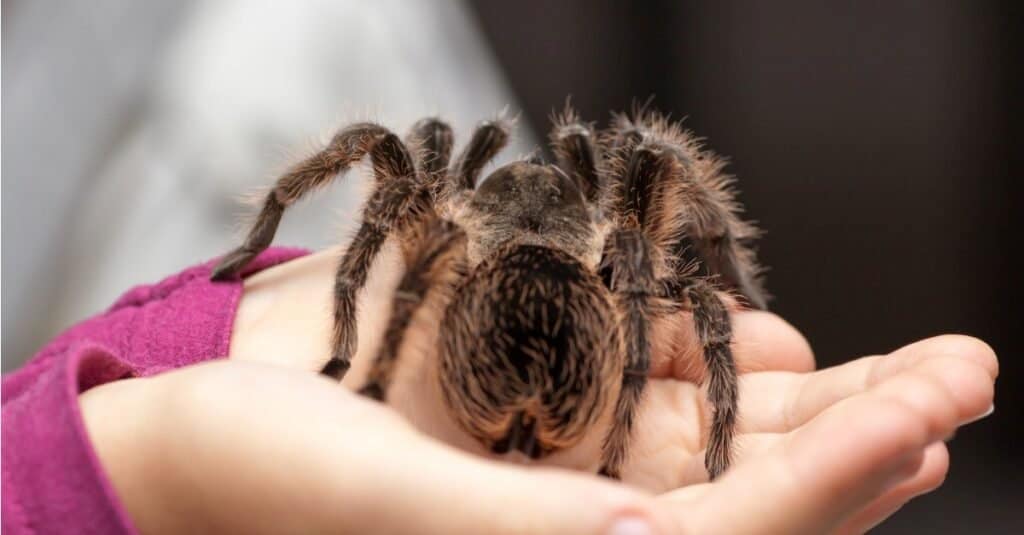
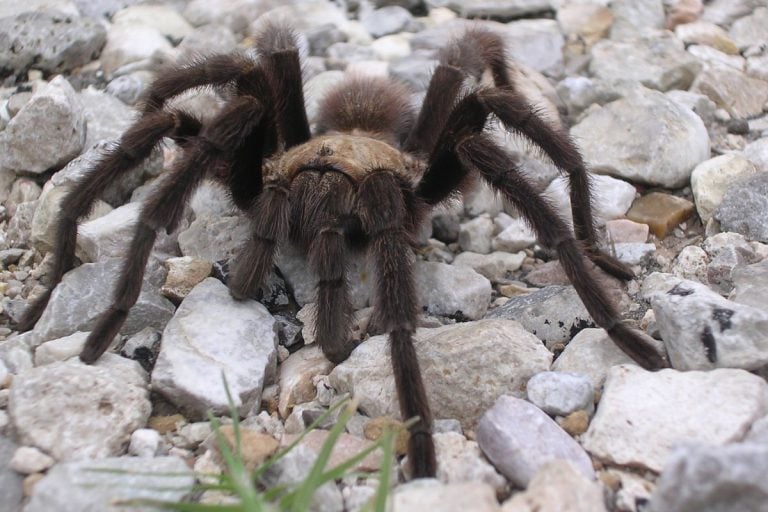
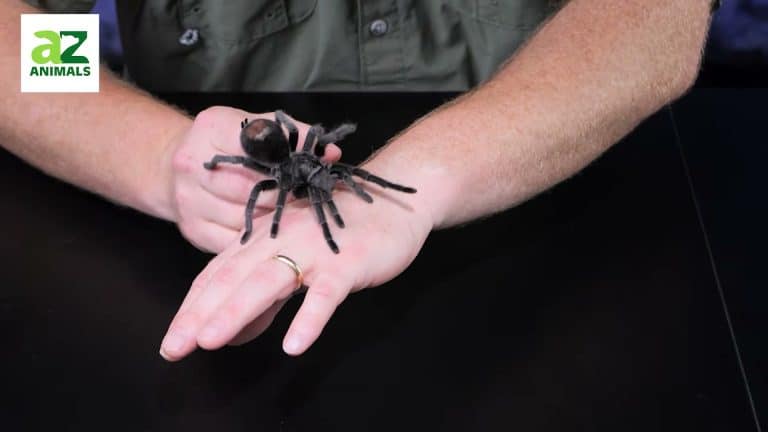
Tarantulas are bigger, hairier, and come in a variety of colors compared with the wolf spider.
©iStock.com/waldru
Although some may confuse large wolf spiders with small tarantulas, they are fairly easy to tell apart. They are distinguished by size, hair type, colors and patterns, eye arrangement and vision, fang position, and speed and movement. Take a look at each of these differences in greater detail in the following sections.
Size
Wolf spiders and tarantulas can typically be distinguished by their size disparity. Wolf spiders are usually much smaller than tarantulas, weighing less than 1 ounce. They grow to a maximum of 1.4 inches in body length and up to 4 inches in leg span in the largest species, the Carolina wolf spider (Hogna carolinensis).
Tarantulas weigh 0.9-6 ounces. The measure 1 to 5 inches in body length and up to 11 inches in leg span in the largest species, the Goliath birdeater (Theraphosa blondi), which is also the planet’s biggest spider by mass.
Setae Type
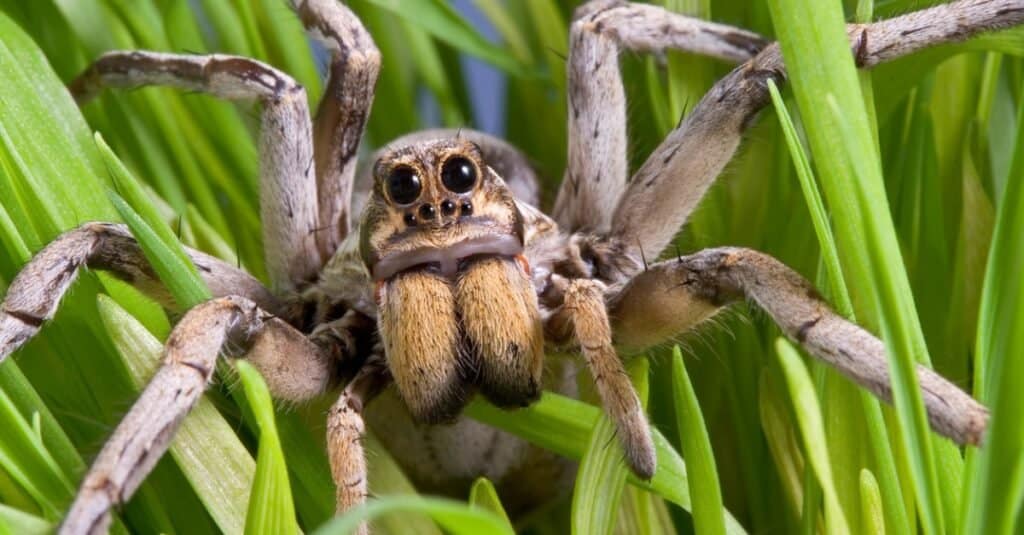
Wolf spiders have short, fine hairs on their body, but tarantulas have long hairs on their body.
©iStock.com/CathyKeifer
Setae look like hairs to the human eye. However, only mammals possess hair, while spiders have hair-like structures. Wolf spiders have shorter setae than tarantulas. They are covered in short, fine hairs that lie close to the body, giving the hairs a more velvety appearance. The finest setae, called trichobothria, are the most sensitive and can detect vibrations and air currents. Setae on their legs and palps (appendages near its mouth) are used as chemoreceptors. Wolf spiders also have larger spines on their legs to help secure prey.
Tarantulas also depend on their setae to navigate and sense the environment. They can detect vibrations from prey and predators, as well as air currents. Some setae can also detect chemical signatures, which helps in finding a mate. However, New World tarantulas have medium-length setae called urticating hairs on their abdomens. They flick these irritating barbs at threats, including people. Old World tarantulas lack urticating hairs, so they rely on venom and threat displays for defense.
Colors and Patterns
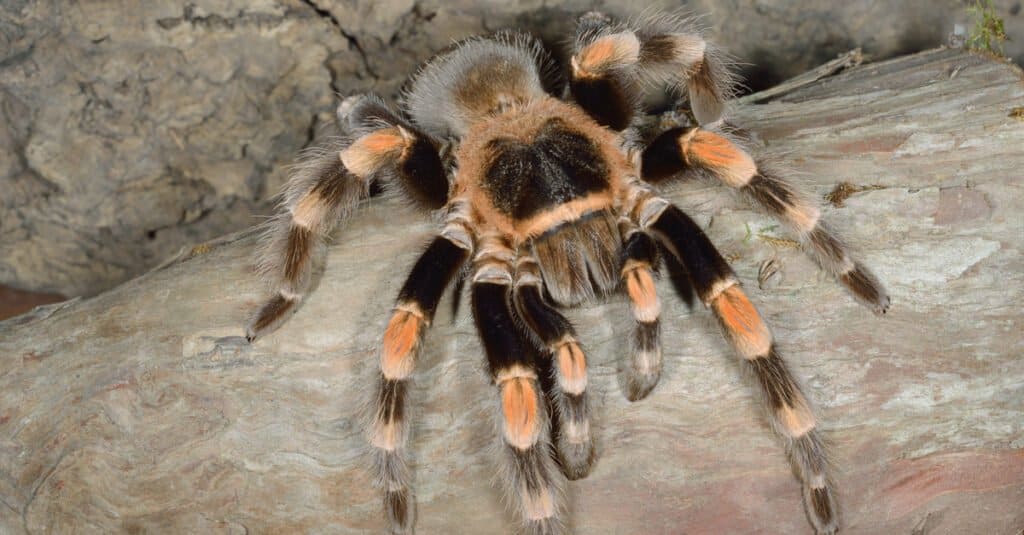
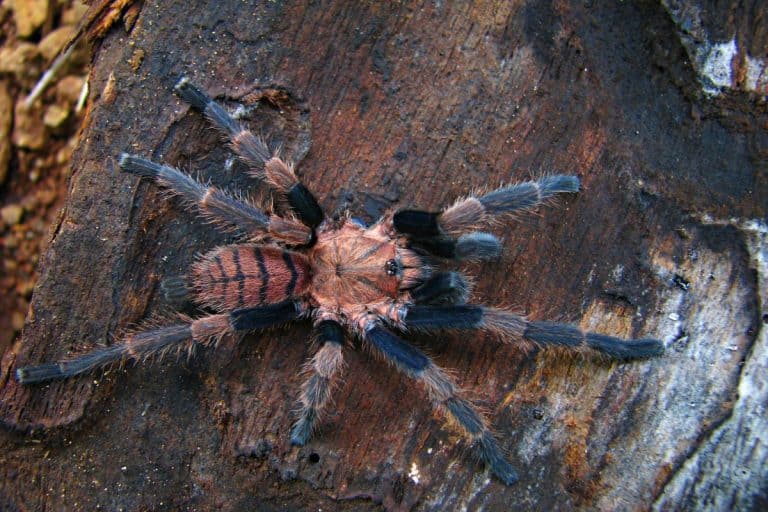
Mexican red-knee spiders have colorful banding on their legs.
©Dean Pennala/Shutterstock.com
Wolf spiders are most commonly brown, gray, or black. They also have darker stripes and mottled patterns on their bodies to aid in camouflage. One of the most common patterns is a darker brown stripe running down its back. Note that this stripe can make the wolf spider resemble the hobo spider. However, hobo spiders have eight eyes arranged in two straight rows, while wolf spiders do not, as discussed below.
Tarantulas are usually dark brown or black, but they can also be red, green, blue, and other colors as well. Many tarantulas also exhibit visible patterns or contrasting color bands. For example, the Arizona blond tarantula and Mexican red-knee tarantula, shown above, both have distinct patterns. These patterns often appear on the tarantula’s legs.
Eye Arrangement
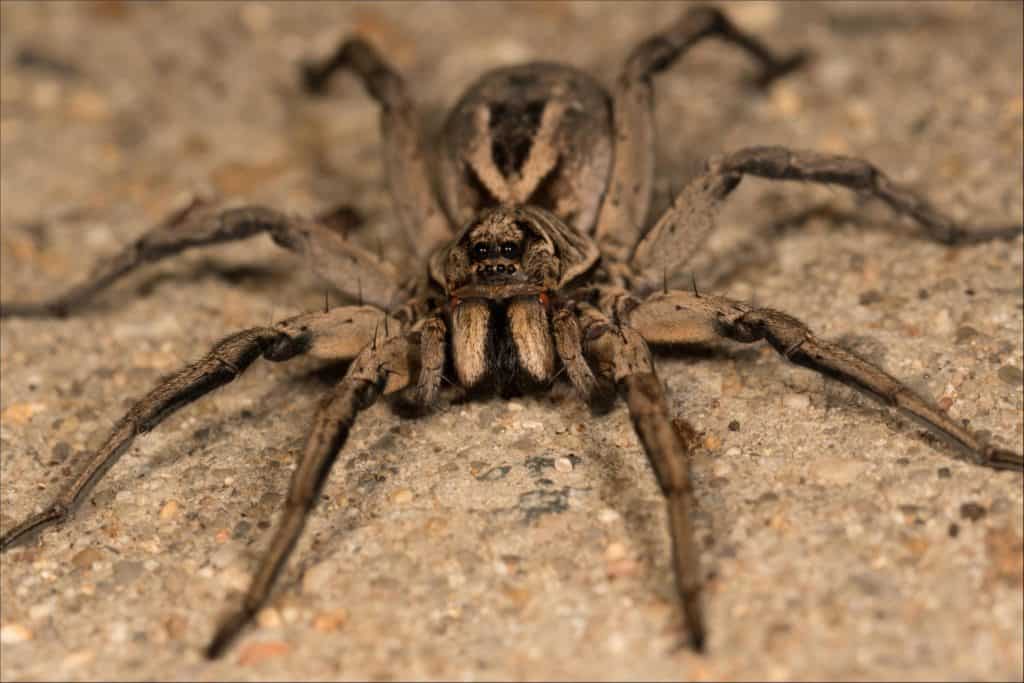
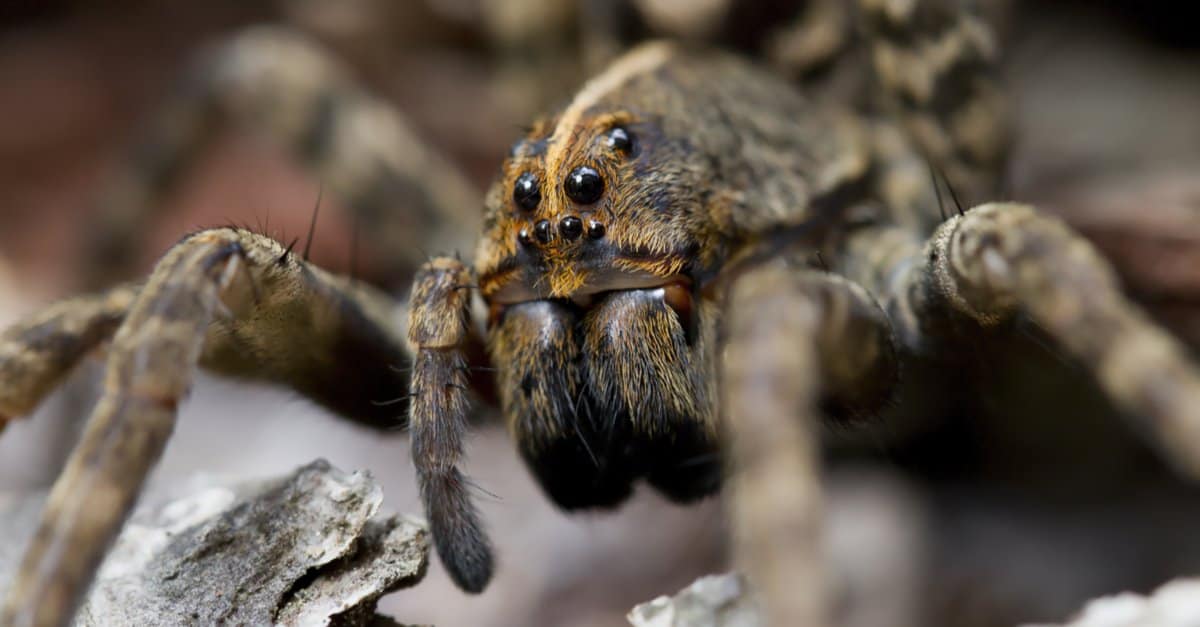
Wolf spiders have two large, prominent eyes and six smaller eyes.
©Katarina Christenson/Shutterstock.com
Both spiders have eight eyes, but wolf spiders have more prominent eyes than tarantulas. Their eyes are arranged in three horizontal rows. They have two large, forward-facing primary eyes, two medium-sized eyes on the sides of their head, and four small eyes below their primary eyes. Wolf spiders have excellent eyesight, which is crucial to their hunting strategy. Wolf spiders also have a reflective layer called the tapetum lucidum, which helps them hunt in low-light conditions.
Tarantulas’ eyes are often covered by their setae. Their eight eyes are typically grouped closely together in two rows. One pair of eyes lies in the center of their head with three smaller eyes on each side. Tarantulas have limited vision. They can detect movement and light, but they cannot see clear images. They also lack the reflective tapetum lucidum layer. With their poor eyesight, tarantulas generally rely on their setae to hunt and navigate.
Fang Position
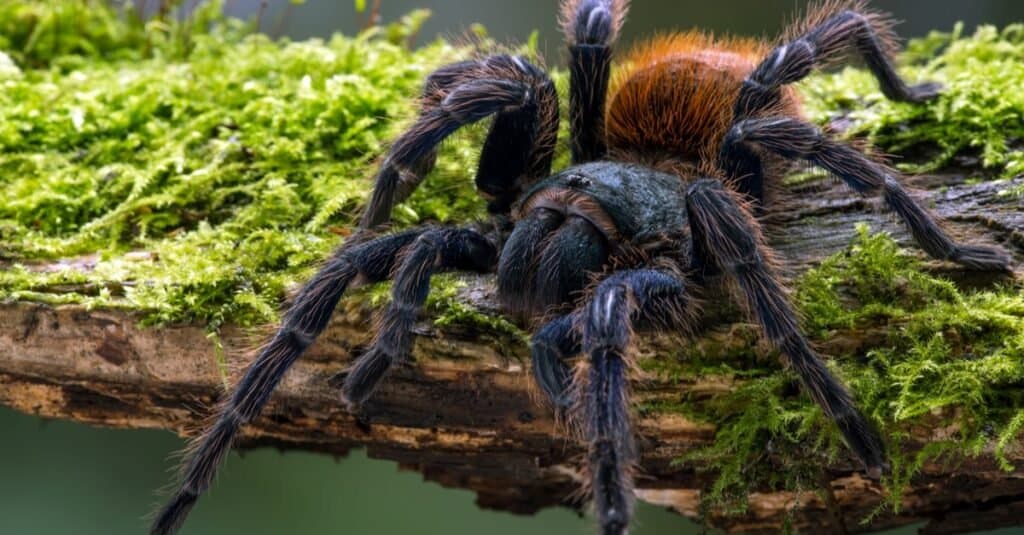
Tarantulas have fangs that point downward and do not cross.
©davemhuntphotography/Shutterstock.com
Wolf spiders belong to the infraorder Araneomorphae, which accounts for about 90% of spiders. These spiders are characterized by front-facing, pincer-like fangs that appear to cross or nearly cross.
Tarantulas belong to the infraorder Mygalomorphae, which also includes funnel web spiders and trapdoor spiders. Spiders in this order are said to be more primitive and have a larger venom apparatus than those in the Araneomorphae infraorder. Mygalomorphs have fangs that point downward and do not cross.
Movement
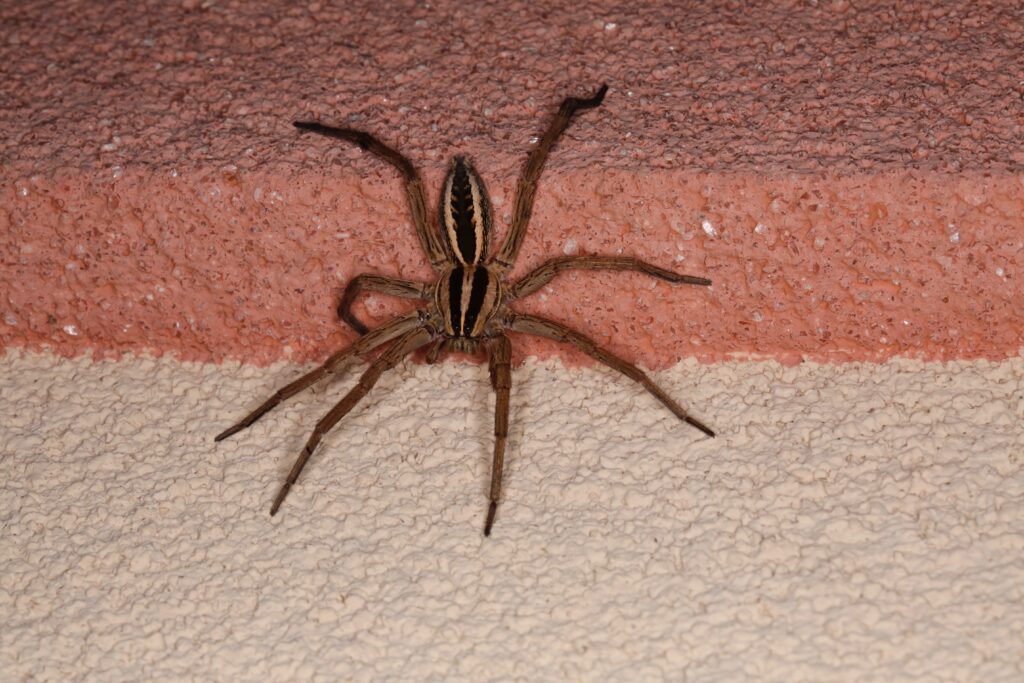
Wolf spiders can run at a top speed of up to 3mph.
©Cathleen Wake Gorbatenko/Shutterstock.com
Spiders’ legs move using a combination of hydraulics and muscle-based contraction. Flexor muscles pull their legs in, but a fluid called hemolymph allows them to extend their leg joints hydraulically. However, smaller spiders rely less on hydraulics and more on their muscles than larger spiders. Wolf spiders depend on speed to chase prey and escape predators. They can sprint at a top speed of 130cm/s, which is approximately 3mph, or over 4 feet per second. They are much faster than tarantulas, but they do not have the endurance that tarantulas have due to their larger size.
In fact, tarantulas have been found to have some of the highest endurance among spiders. They have some of the lowest burst performance, but they can move relatively quickly when fleeing danger or chasing prey. For example, the Texas brown tarantula can sprint at a top speed of around 53cm/s, which is 1.18mph or 1.7 feet per second. Researchers also found that speed is related to temperature. Hemolymph flows more easily when warm. So, when temperatures are higher, tarantulas can move about 2.5 times faster. Scientists also found that their coordination suffers, as there is not enough time for the hemolymph to cycle through and initiate the next stride.