
The words flying spiders may conjure visions of winged arachnids flying like birds. Though spiders can’t really fly, some can glide, or balloon, through the air using strands of silk made inside their bodies. Some spiders glide for short distances while others travel thousands of miles! Spiders have been observed as high as two and a half miles up in the air! These small creatures move along wherever the air currents take them.
Scientists believe these spiders steer themselves using their front legs. They also think that these creatures may be able to speed up or slow down by making adjustments in their body position. However, scientists are still studying the mechanics of spider air navigation.
There is recorded evidence of spiders crossing the Atlantic and Pacific oceans to relocate from one side of the world to the other. Carried by the jet stream and trade winds, they are transported over vast distances.
Bridge Spider
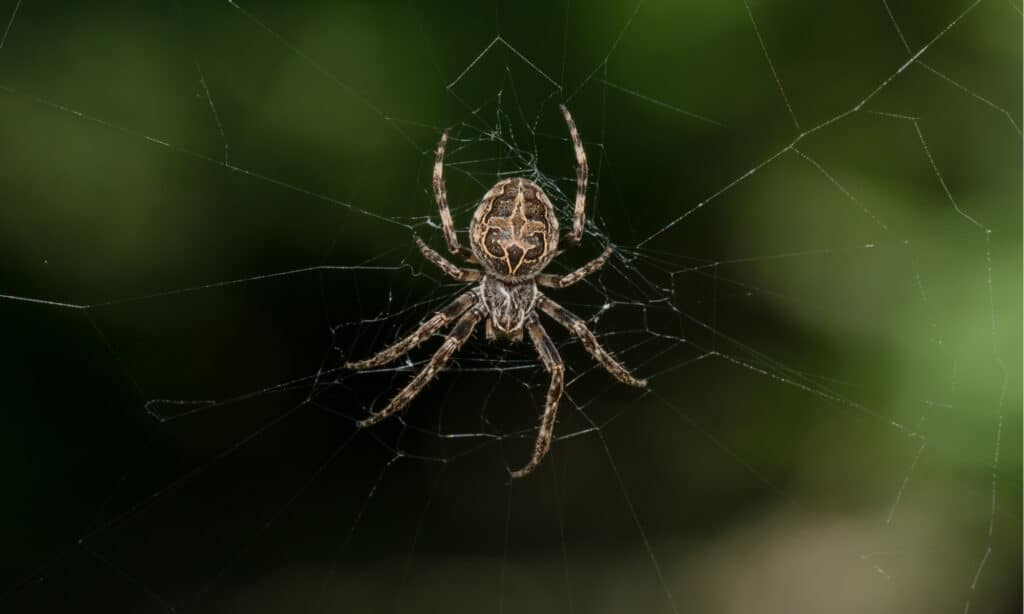
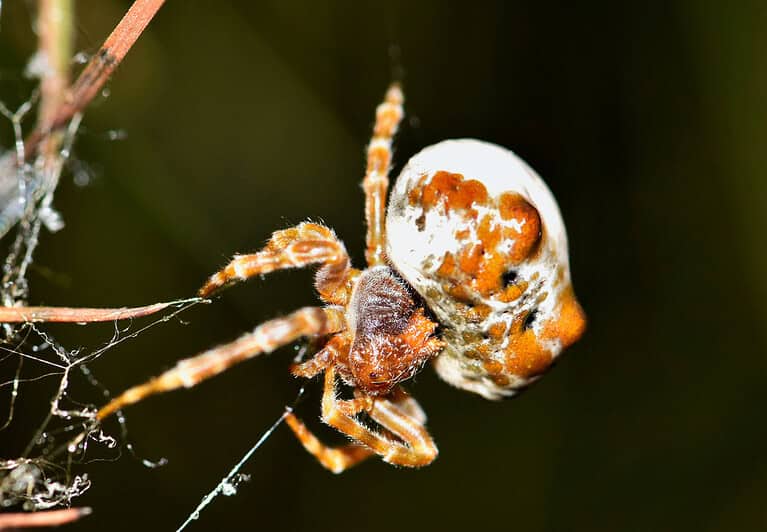
A female gray cross-spider in her nest.
©Paul Reeves Photography/Shutterstock.com
Yes. Spiders that glide through the air are real. Several types of spiders glide. The gray cross-spider or bridge spider (Larinioides sclopetarius) is known for its gliding skills. This arachnid is sometimes called the bridge spider because they are often seen on bridges. They build their orb-shaped or circular webs on the sides and underneath these structures. Originating in Europe, these spiders have been introduced in the U.S.
Bridge spiders are gray or brown with a brown and tan pattern on their legs. Adult female bridge spiders can be half an inch long while adult males reach about one-third of an inch in length. These spiders are attracted to bodies of water as well as artificial light. They may glide to find another habitat that contains a more powerful source of light in search of food.
Furrow Spider
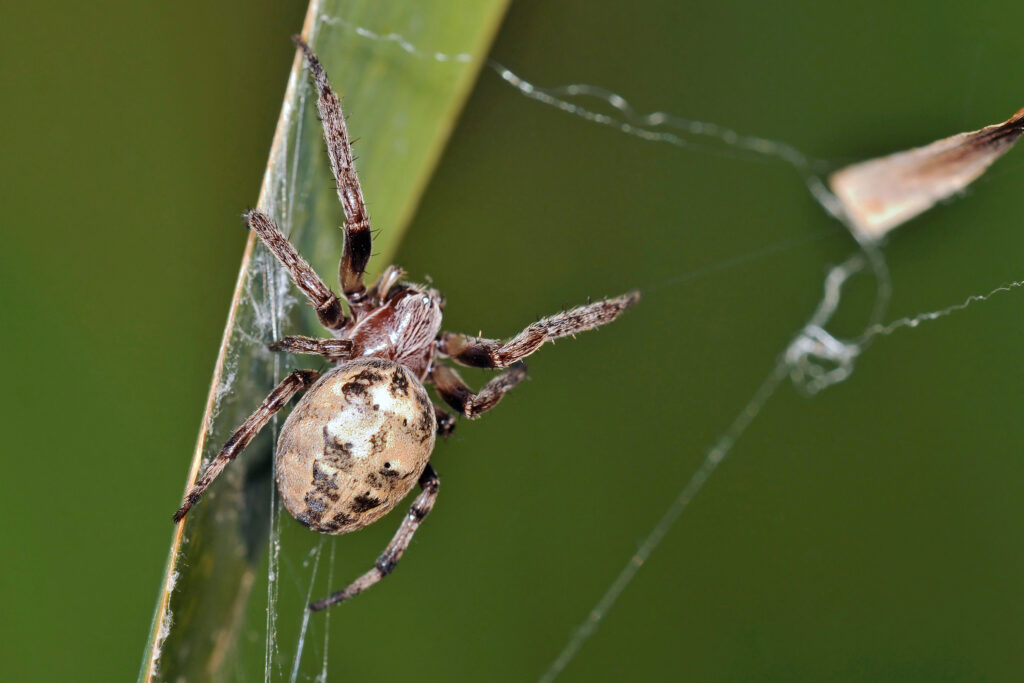
Furrow spiders have thick, bulbous abdomens.
©ASakoulis/Shutterstock.com
The furrow spider (Larinioides cornutus) is another example of an arachnid that glides through the air. Adult female furrow spiders measure about half an inch in length while males are one-third of an inch long. They can be brown, black, or reddish. They are notable for their thick, bulbous abdomen. Furrow spiders are widespread, living in North America, South America, Northern Africa, Asia, and Europe.
Wall Crab Spider
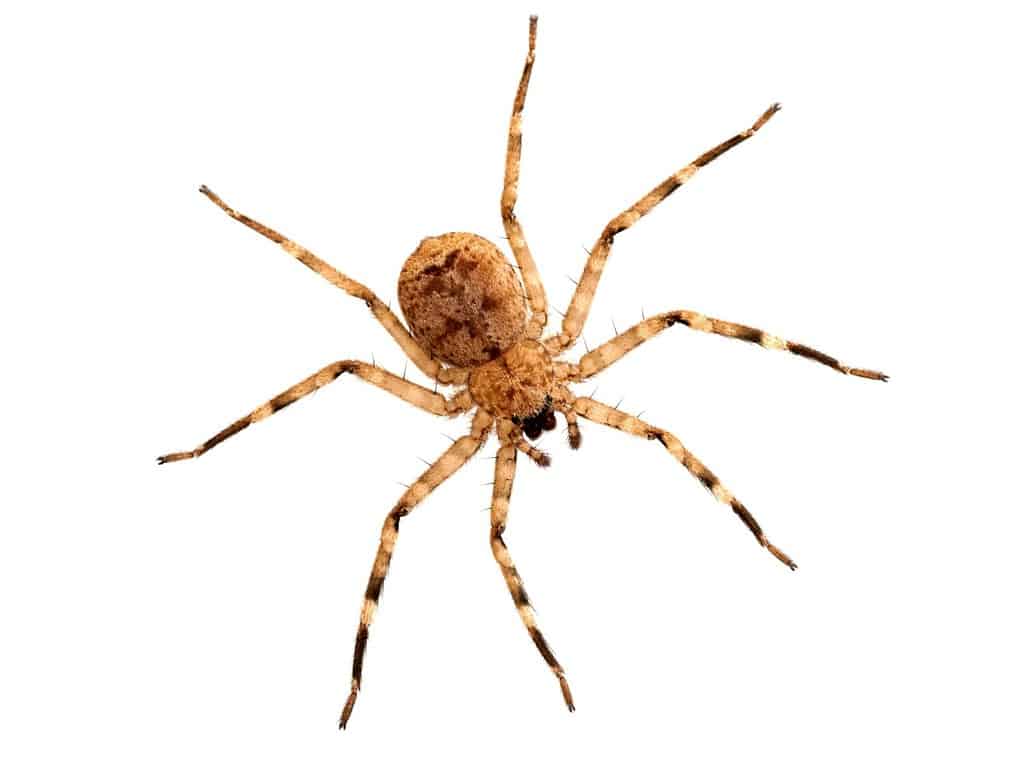
©Ernie Cooper/Shutterstock.com
Belonging to the Selenopidae family, wall crab spiders are yet another flying spider. They are sometimes called flatties because their bodies are very slender. Its body design along with its black and brown coloration helps these arachnids stay hidden while resting on tree trunks or branches. With their legs spread out, flatties can be half an inch to almost an inch in length.
Flatties are different in their approach to flying. They don’t use silk threads like other flying spiders. This spider’s extremely flat body helps it to stay aloft and glide through the air as it moves toward its destination. Flattie spiders can make sharp right or left turns by repositioning their legs mid-flight. Normally, these spiders stay up in the high branches of trees to avoid the dangers of the forest floor. Flattie spiders are found in Africa, Central and South America, and North America.
Ballooning
Flying spiders typically hide during daylight hours and watch their webs at night, awaiting prey. In some cities, hundreds of flying spiders can be spotted during peak flight. In some urban areas, including Chicago, residents have reported seeing increased numbers of ballooning spiders during certain times of the year, leading to advisories to keep windows closed.
Do Flying Spiders Have Wings?
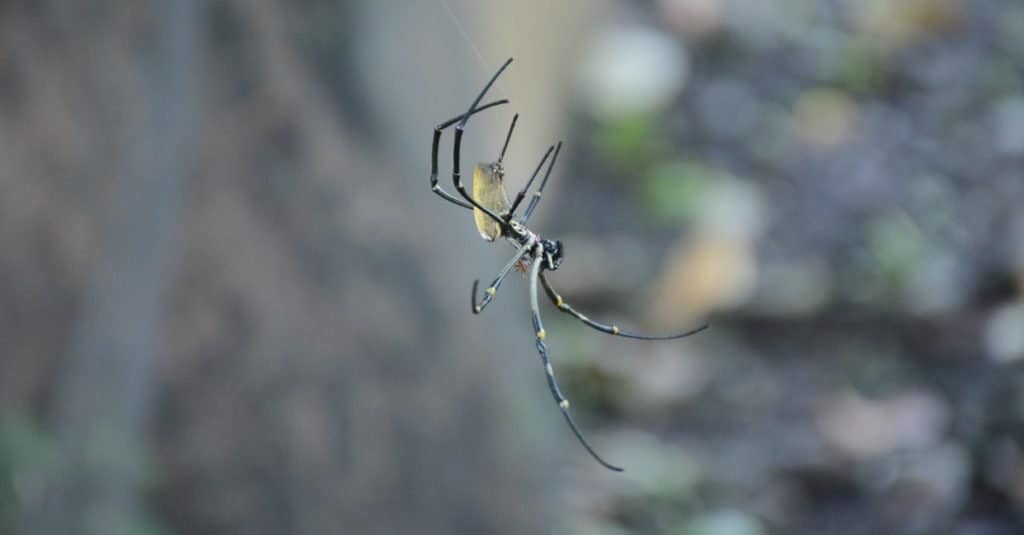
Flying spiders send out silk strands that allow them to be lifted on air currents.
©Anggi Paramita Sovinc/Shutterstock.com
No, flying spiders aren’t winged creatures. They glide through the air using a silk thread as a kind of parachute. These creatures use the earth’s electric field to take flight.
First, a spider climbs onto a tall flower or a rock located on high ground. Next, it releases a silk thread from its abdomen that scientists call anchor silk. The anchor silk attaches to the rock or flower to prevent the spider from falling before it takes off. Then, the spider raises its front legs into the air to evaluate the electrical conditions in the atmosphere. It takes in this atmospheric information via the hairs on its legs. If it decides it’s safe to take off, the spider raises its back end (or abdomen) and releases a gathering of long silk threads from its body. These threads can be as long as 6 feet! Finally, the spider breaks the anchor silk and is carried away by the wind. From there? The spider travels in whatever direction the breeze blows!
Why Do Spiders Fly?
Scientists have a lot of theories as to why spiders glide or balloon through the air. One theory is that the spiders are looking for a new habitat with more insects available to eat. Or they could be looking for a mate. Another possible reason is they may feel threatened in their current habitat and are looking for a different habitat with fewer predators around. Scientists still have a lot more to learn about this amazing spider behavior. In the meantime, keep an eye on the sky and maybe you’ll spot an adventurous spider taking a trip by air!