
Quick Take
- Boulenger’s backpack frog females carry fertilized eggs in a dorsal pouch, providing protection and moisture.
- Embryos undergo direct development, emerging as fully formed froglets without a free-swimming tadpole stage.
- This reproductive strategy reduces egg loss compared to pond-laid eggs, illustrating the diversity of amphibian parental care.
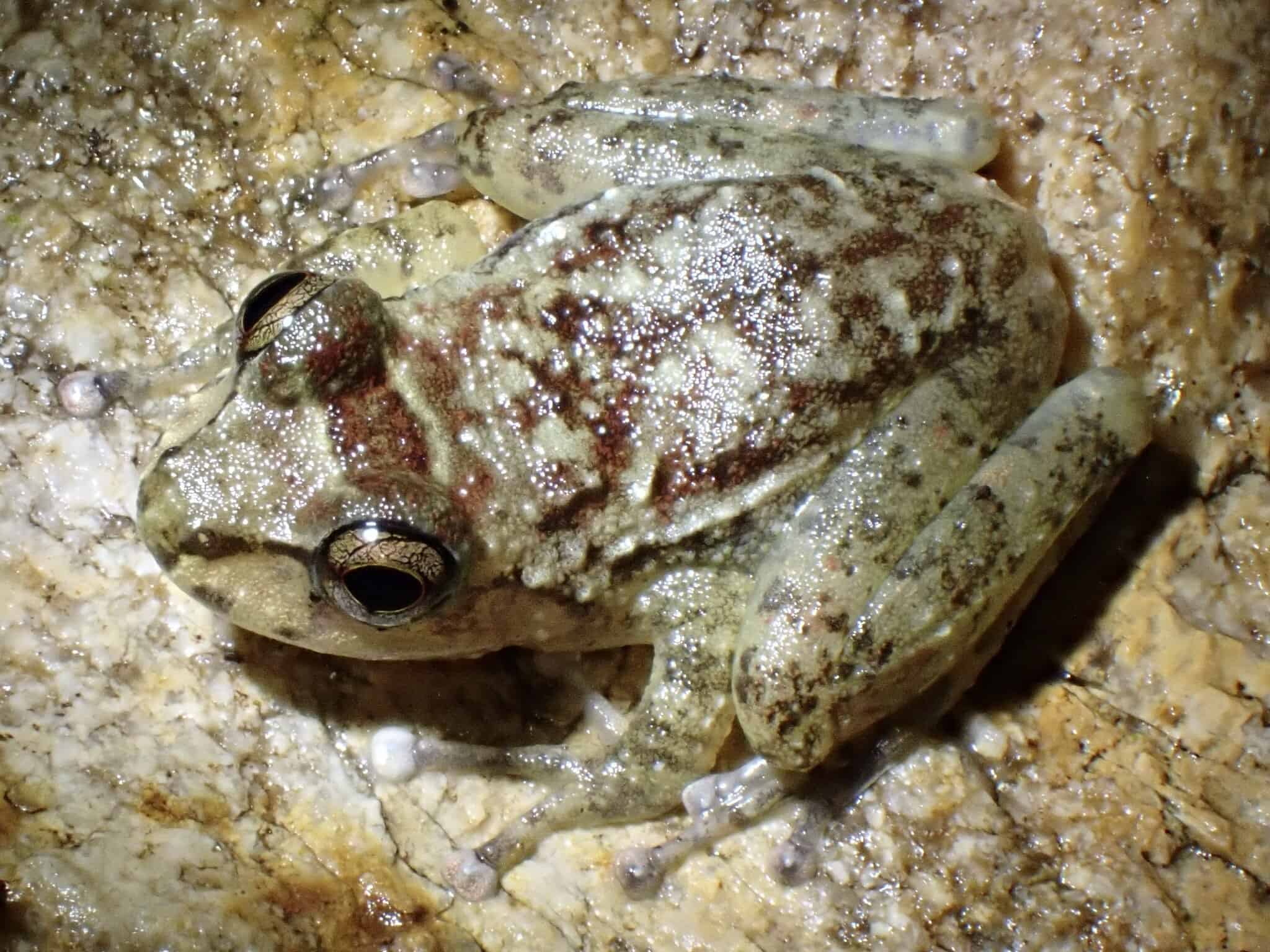
When I got my first look at Boulenger’s backpack frog, I thought the poor thing was suffering from the world’s most unpleasant skin disease. The frog in this video appears to be wearing a cluster of pale, jelly-like packets on its back—almost as if it had wandered too close to a pile of sticky pearls. But those packets are neither pearls nor a dermal infection—they’re egg sacs, and the key to one of the most unusual reproductive strategies in the amphibian world.

Meet Boulenger’s Backpack Frog
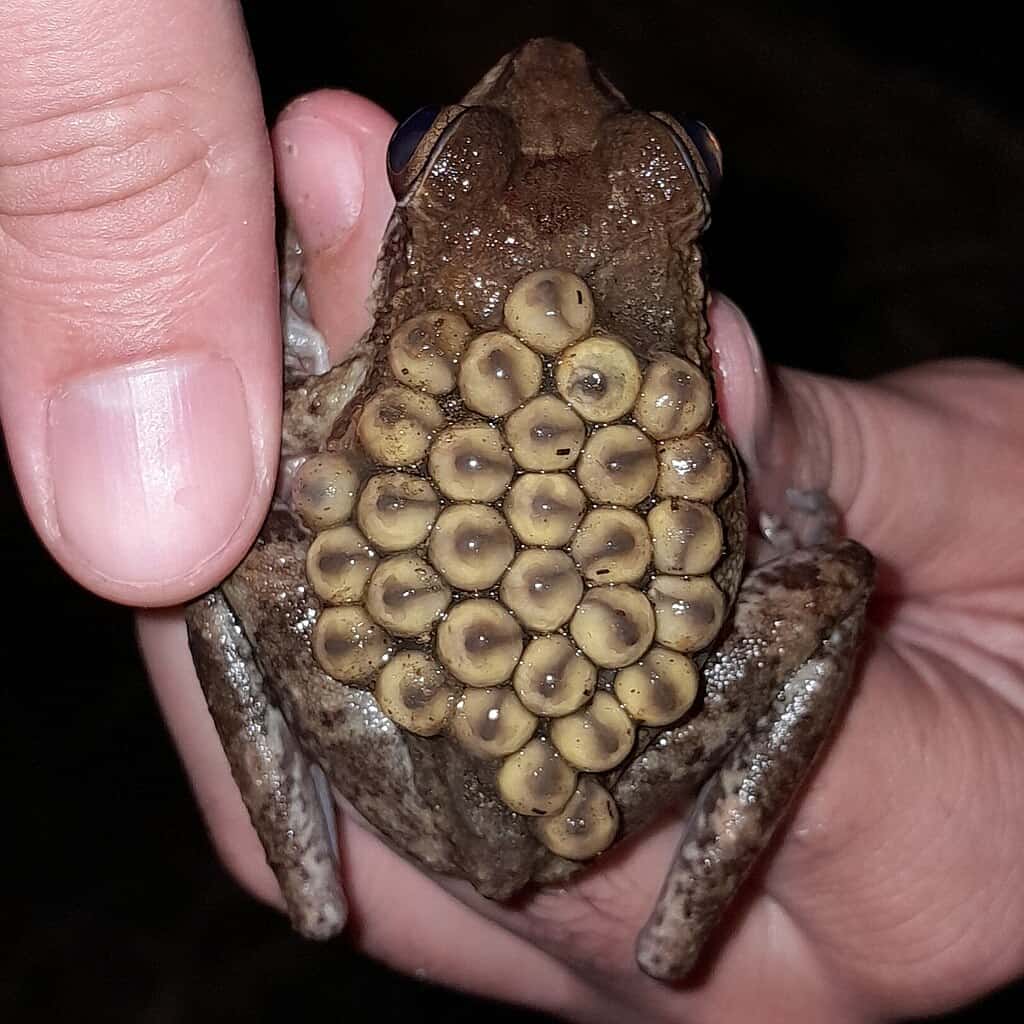
Female marsupial frogs carry fertilized eggs in a sealed dorsal pouch, protecting them during development.
Boulenger’s backpack frog belongs to a group known as marsupial frogs, a name borrowed from mammals like kangaroos, which carry their developing young in a pouch. This frog native to the Andean regions of South America, particularly parts of Ecuador, where it inhabits moist montane forests and rocky, stream-adjacent environments. Typically modest in size, adult frogs measure just a few inches long from snout to vent. Their coloration tends to be earthy—browns, tans, and muted greens—which provides camouflage among rocks, moss, and leaf litter.
Like many high-elevation amphibians, Boulenger’s backpack frog lives in an environment where conditions can be unpredictable. Cool temperatures, fluctuating rainfall, and fast-moving streams all pose challenges for animals that rely on water to reproduce. Because of these conditions, this particular frog has developed an unusual reproductive strategy.
Marsupial frogs are defined by this striking reproductive trait: females possess a specialized brood pouch on their backs. This pouch can vary in structure among species, but in all cases it serves as a protected space where eggs—and sometimes tadpoles—develop. In Boulenger’s backpack frog, the pouch opens along the top of the back and closes over the eggs, not unlike a backpack, and forms a chamber that shields them from the outside world. This strategy stands in sharp contrast to what many people imagine when they think of frogs: large clutches of eggs laid in ponds, left unattended, and subject to intense predation. Marsupial frogs take a more hands-on approach. One might say they quite literally carry the load on their backs.
The Whole Process
Fertilization
Despite the unusual outcome, fertilization in Boulenger’s backpack frog begins in a fairly familiar way. During mating, the male and female engage in a position known as amplexus, in which the male clasps the female with his forelimbs, typically around her torso or just behind her front legs. This position allows the male to fertilize the eggs externally as the female releases them.
But what happens next is where things diverge from the norm. Instead of the eggs dropping into water or being attached to vegetation, they are guided into the female’s dorsal pouch through a combination of body positioning by the female, the process of the pouch opening itself, and active assistance by the male. Once inside, the pouch closes, sealing the eggs into a moist, protected environment.
The result is a small number of relatively large eggs, each packed with enough yolk to fuel development over an extended period. Carrying eggs in a pouch limits how many a female can produce, but it allows her to invest far more resources into each one.

Inside the Pouch
The pouch of Boulenger’s backpack frog is not just a storage compartment; it’s an active developmental chamber. Inside, the eggs are kept moist and protected from temperature extremes, drying winds, and aquatic predators like fish and insect larvae.
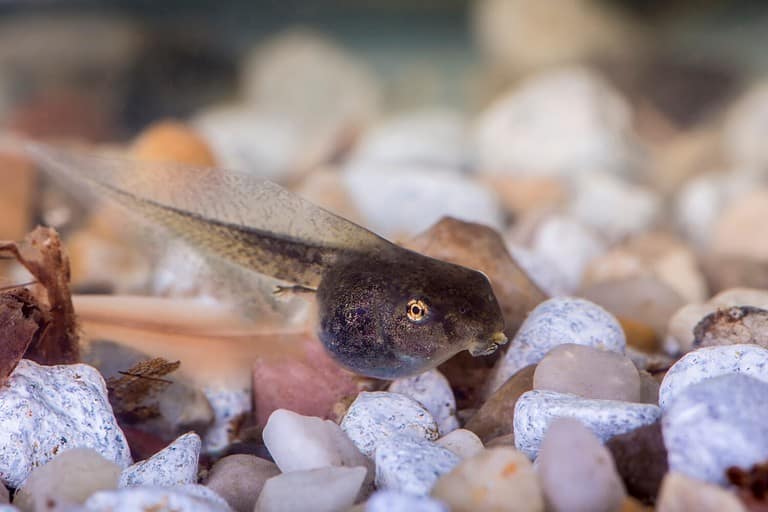
As development progresses, the embryos undergo the same basic stages seen in other frogs, but with a crucial difference. In many Gastrotheca species, a genus to which Boulenger’s backpack frog is a member, development is direct. This means that instead of hatching into tadpoles that need to feed and grow in water, the young bypass the tadpole stage altogether, developing into fully formed miniature frogs while still inside the pouch. By the time they emerge, they already have legs, lungs, and the ability to live on land, which is a major advantage in environments where suitable bodies of standing water are scarce or risky.
After the Pouch
When development is complete, the young frogs emerge from the pouch and begin life on their own. At this stage, they’re tiny but fully functional, capable of hopping, feeding, and avoiding predators. Their early independence is another advantage of direct development; they don’t need to find a suitable body of water or survive a vulnerable tadpole phase.
Little is known about the detailed behavior of juvenile Boulenger’s backpack frogs after emergence, but like many amphibians, they likely lead secretive lives, hiding among rocks and vegetation while feeding on small invertebrates.
How Carrying Eggs Reduces Loss
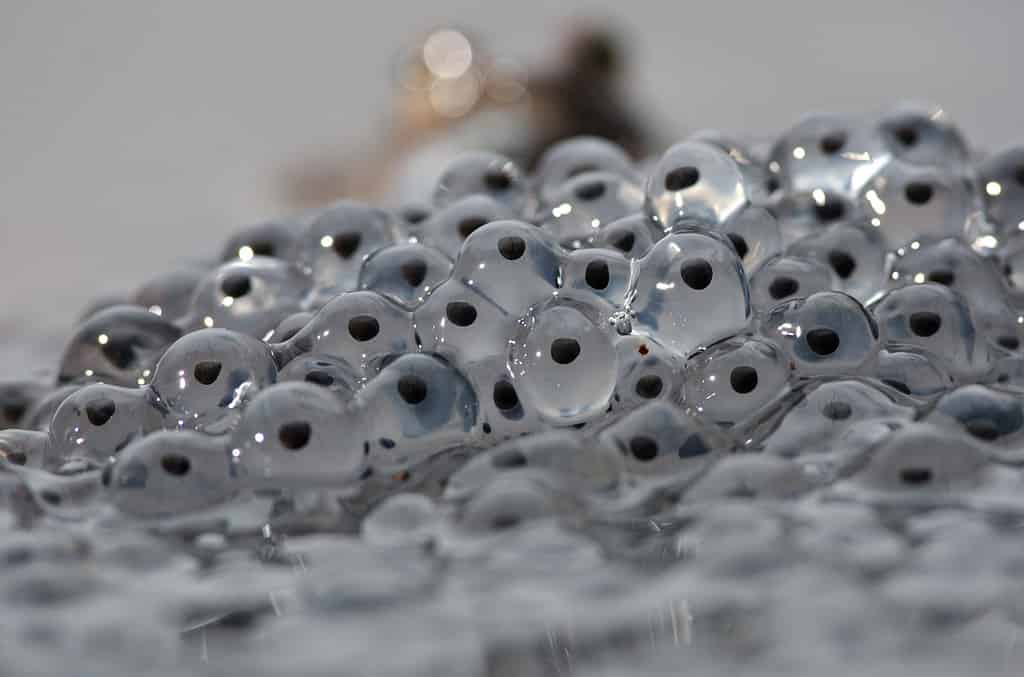
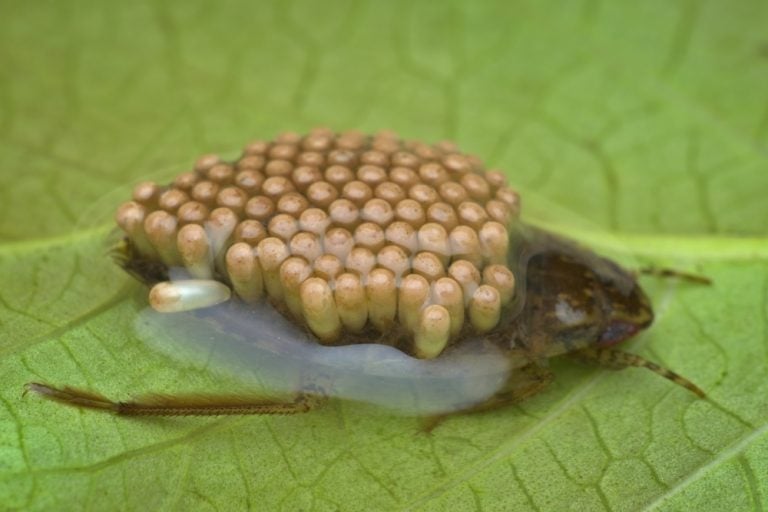
Egg clutches left in open water are at risk of predators, floods, disease, and sudden environmental changes.
©Marco Maggesi/Shutterstock.com
To appreciate the benefits of this strategy, it helps to consider the challenges faced by frogs that lay eggs in water. Aquatic egg masses are vulnerable to a long list of threats: fish, aquatic insects, fungi, bacteria, sudden changes in water level, and even strong sunlight. In many species, the vast majority of eggs never make it to adulthood.
By carrying eggs on her back, a female Boulenger’s backpack frog dramatically reduces these risks. Predators that specialize in eating frog eggs simply can’t reach them. The pouch also provides a stable, humid environment that prevents eggs from drying out. Additionally, temperature fluctuations are buffered by the mother’s body, and the risk of being swept away by floods or currents is eliminated.
The trade-off is quality over quantity. While a pond-breeding frog might lay hundreds or even thousands of eggs, a marsupial frog produces far fewer, but each of those eggs has a much higher chance of surviving to become a juvenile frog.
Amphibian Parental Care
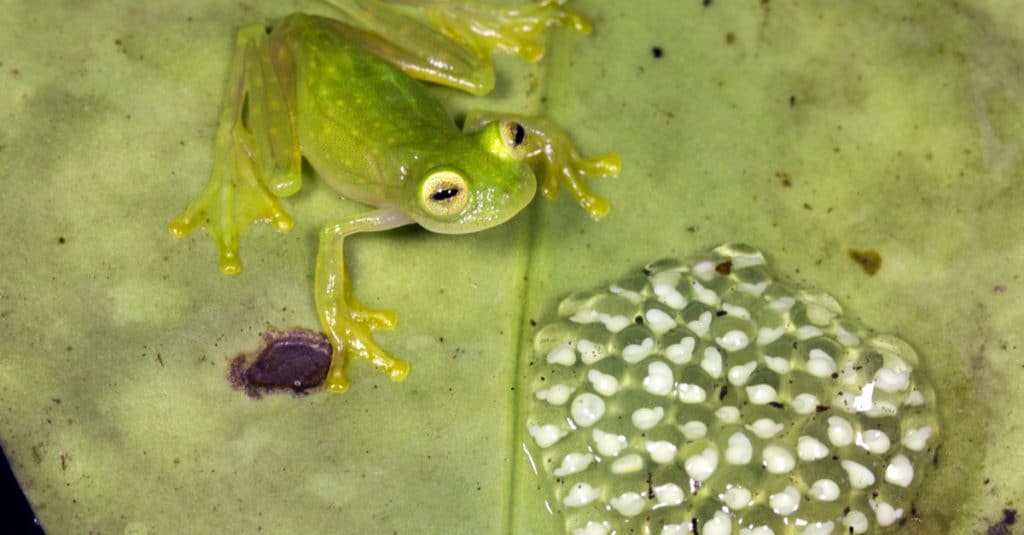
Some species of frog physically guard their egg clutches.
©Dr Morley Read/Shutterstock.com
Boulenger’s backpack frog may seem extreme, but it’s actually just another part of a surprisingly diverse spectrum of parental care strategies in amphibians. While many frogs provide little to no care after laying eggs, many have evolved other elaborate behaviors to protect their offspring.
Some species guard egg clutches laid on leaves or rocks, physically fending off predators. Others transport tadpoles on their backs from one pool to another, ensuring they end up in suitable habitats. A few frogs even take parental care to astonishing extremes. One well-known example is the now-extinct gastric-brooding frogs of Australia, which swallowed their eggs and raised their young in the stomach. Another is the Surinam toad, whose eggs embed in the female’s back skin, each developing in its own pocket until fully formed.
Considering some of these examples, marsupial frogs actually occupy a middle ground. Their pouch provides extensive protection, but without the physiological extremes seen in some other species. It’s a solution shaped by millions of years of evolution, tailored to life in tough, often water-limited environments.
A Different Way to Be a Frog
At first glance, Boulenger’s backpack frog carrying eggs looks alarming, like something has gone terribly wrong in the animal kingdom. But the strange clusters on its back are actually evidence of a reproductive strategy that has gone quite well. By carrying her eggs in a sealed pouch, the female protects her offspring from predators, harsh weather, and the many hazards that wipe out most frog eggs long before they ever hatch.
In a world where amphibians are often defined by vulnerability, marsupial frogs offer a reminder that evolution is endlessly inventive. There is more than one way to be a frog, more than one way to raise young, and more than one answer to the challenges of life on land and water. Sometimes, the safest place for the next generation isn’t a pond; it’s riding along on their mother’s back.