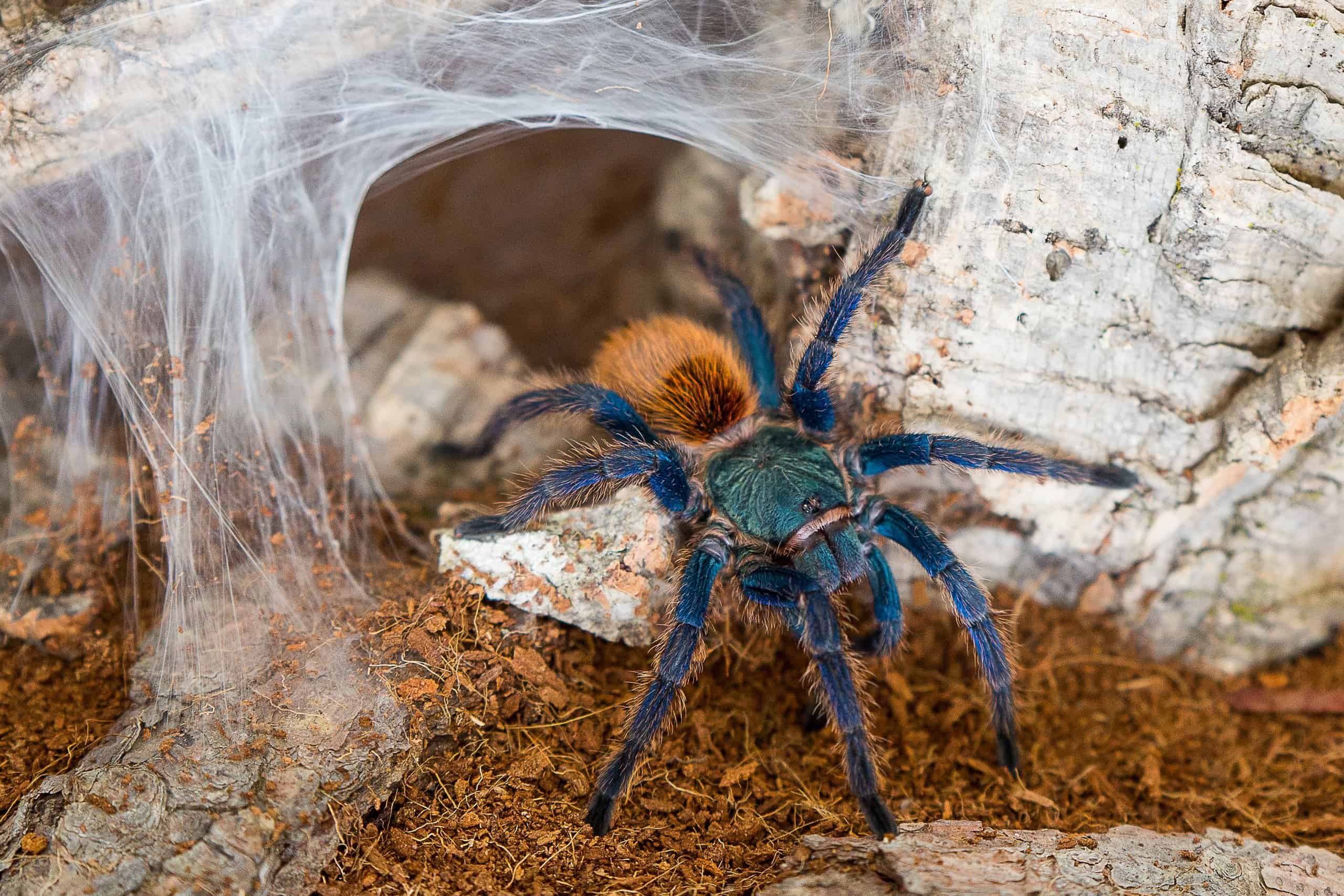

When you think of spiders, what is the first thing that comes to mind? Chances are, it is their webs. All spiders can produce webs. Although they use their webs in different ways, the web is made of silk and has impressive physical properties. It is stronger than steel pound-for-pound. However, when it comes to making webs, tarantulas are different.
These fuzzy creatures spin silk for several purposes, but not for capturing prey. Unlike other spiders, tarantulas prefer to live in their burrows and hunt for prey at night. So, if they don’t use webs to capture prey, what are they used for? What do tarantula webs look like and how are they built? Keep reading to find out.
What Tarantula Webs Look Like
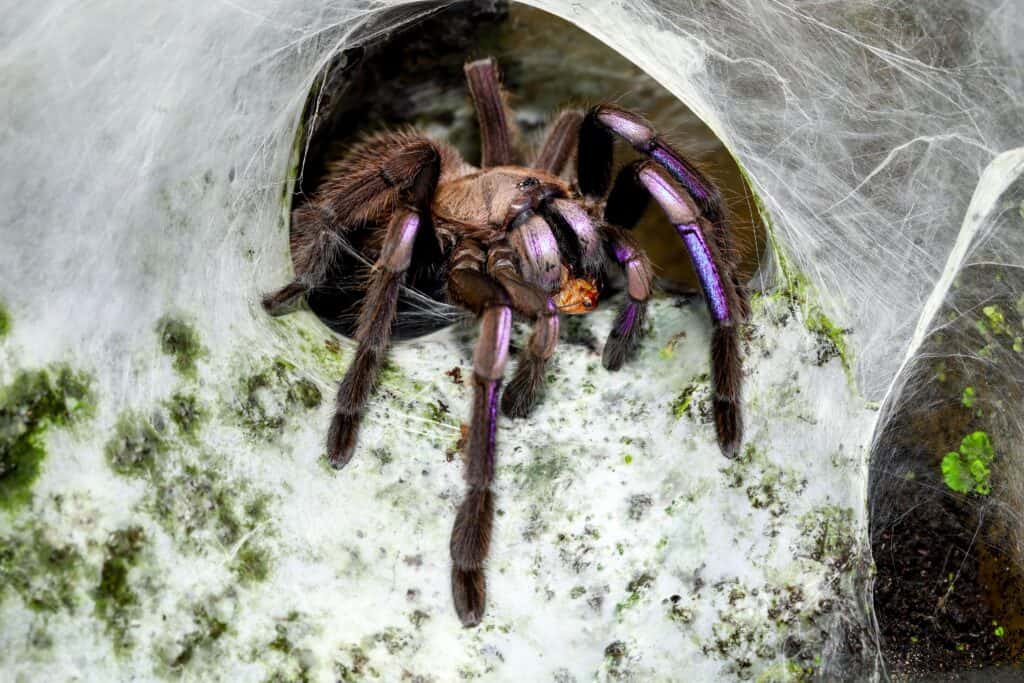
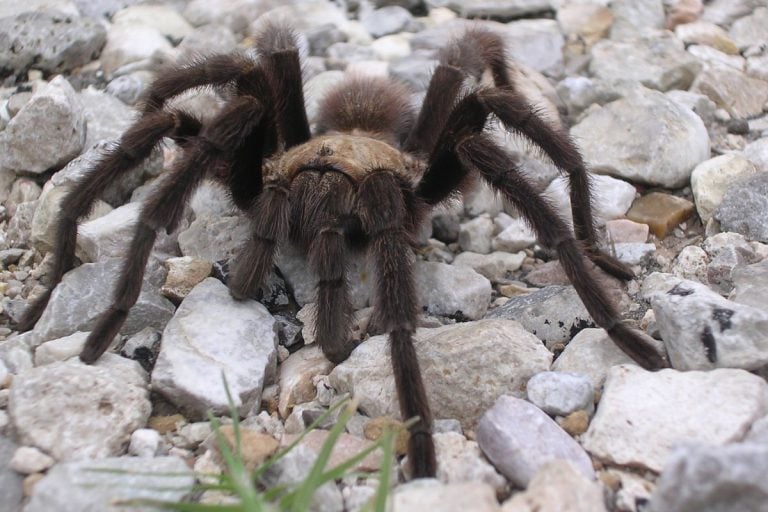
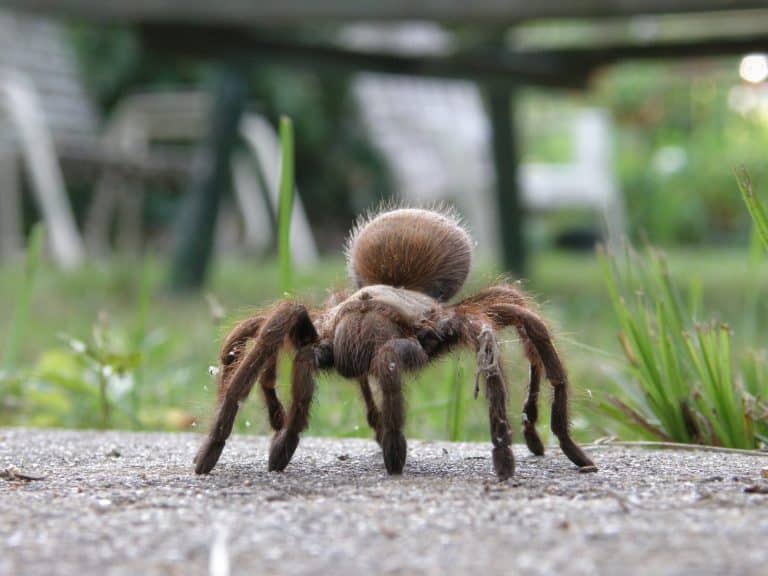
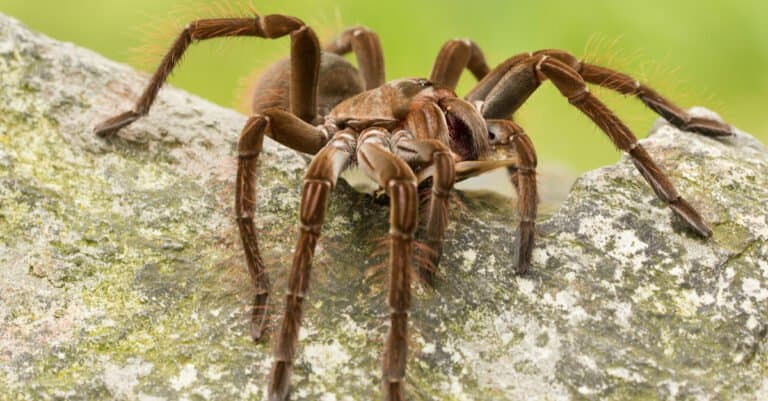
Unlike other spiders, tarantulas prefer to live in burrows and go out to hunt and feed.
©monster_code/Shutterstock.com
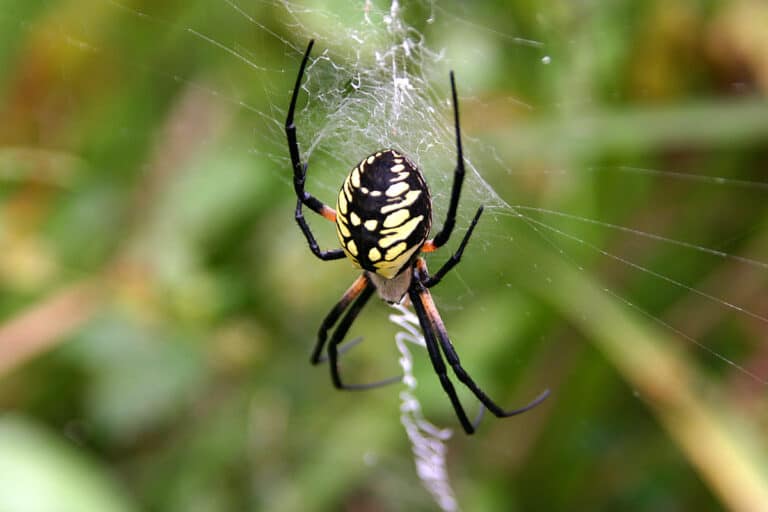
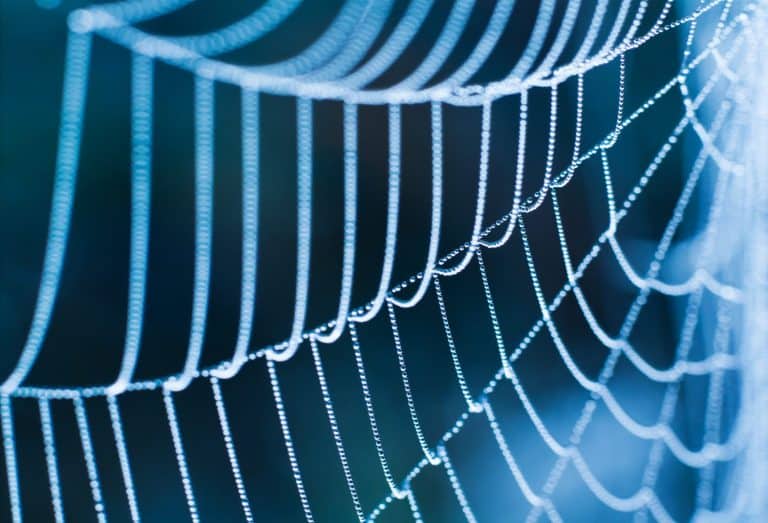
The typical spider web is the round, intricately-woven web with spokes that are common in Halloween cartoons and scary movies with giant spiders. However, tarantulas do not make their webs this way. Instead, their webs look like a jumbled mass of cobwebs, similar to what common house spiders make.
The intricately woven webs made by other spiders are meant to catch prey. Tarantulas don’t catch prey this way, so they do not need to weave their webs into complex traps. That’s why they stick to the heavy mass of thin silk threads instead. The silk threads still have remarkable tensile strength and great extensibility as well.
How Are Tarantula Webs Made?
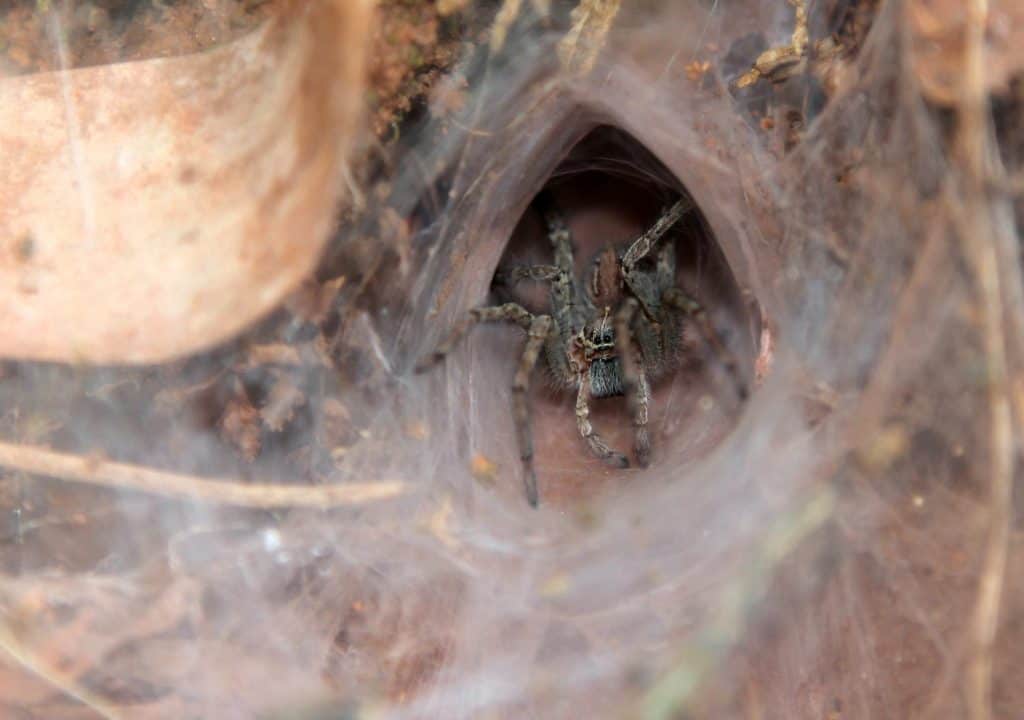
Tarantulas secrete silk from their abdominal spinnerets.
©Katoosha/Shutterstock.com
To make their webs, tarantulas use the silk-producing organs on their abdomen, called spinnerets. They convert liquid protein into solid fibers by pulling the liquid through a narrow duct. The physical force of pulling, along with chemical changes the liquid undergoes in the duct — such as shear stress and a drop in pH — cause these proteins to polymerize.
Since the 2010s, experts have debated whether or not tarantulas also shoot silk from the hair-like structures on their feet in order to stick to slick surfaces. Some researchers argued that there was evidence silk was excreted from nozzles on the spider’s tarsi. Others countered that tarantulas simply took the silk from their spinnerets and used it as a sort of glue to attach to surfaces. Subsequent studies have indicated that the silk is likely transferred from the spinnerets by the feet, rather than being secreted directly from the feet.
What Do Tarantulas Use Their Webs For?
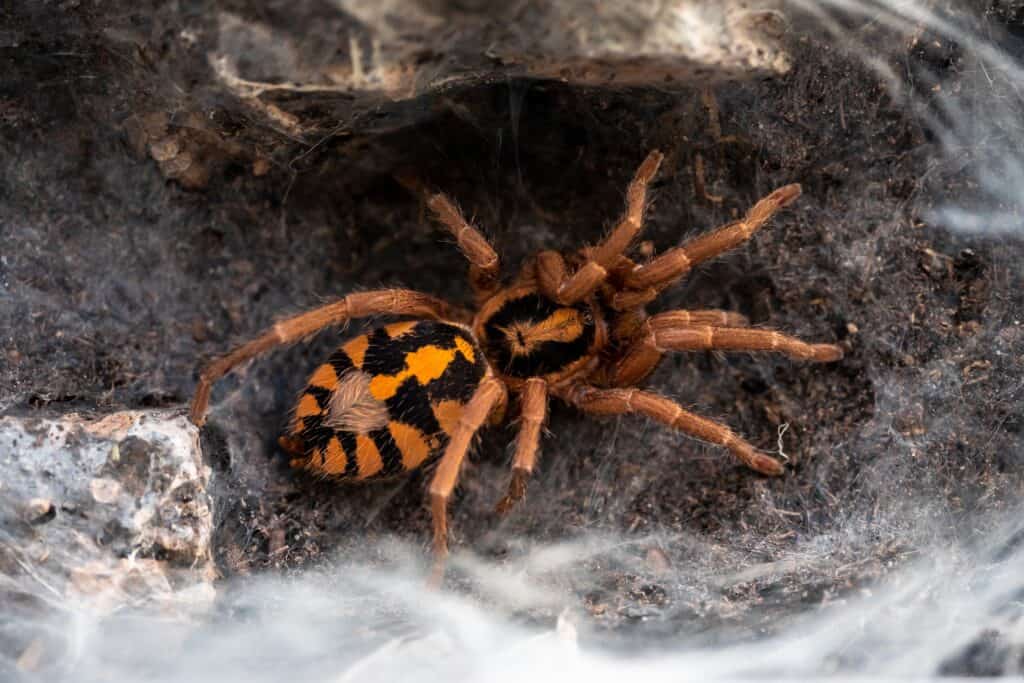
Tarantulas line their burrows with layers of silk.
©tempisch/Shutterstock.com
So if tarantulas don’t spin webs to catch prey, what exactly do they use their webs for? There are a few other distinct ways a tarantula uses its silk that are highlighted below.
To Line Their Burrows
One common use is to line and protect their burrows. Ground-dwelling tarantulas are solitary arachnids that spend most of their time in their underground burrows. They’ll only emerge at night to feed. The entrance of these burrows is typically covered with webbing. The web sometimes also serves as additional support for burrow structures.
Tarantula species that live in trees spin silk to connect different objects. Tarantulas are also fond of covering the floor of their burrows with layers of silk to create some sort of carpet. The reason for this is not exactly known, but it is generally believed that they prefer to rest on their soft “floor.”
For Protection During Molting
Tarantulas can also make molting mats out of their webs. The molting mats make them comfortable while shedding their exoskeleton and reduce their susceptibility to damage and injury during the process. They usually leave these mats in place even after molting has ended.
Anchoring
Perhaps the most important use of their silk is anchoring the spider on different types of surfaces. Although they are relatively heavy, tarantulas have fragile bodies. Their bodies may suffer from serious injury if they fall. So, tarantulas use their webs for structural support while climbing.
For Reproduction
Mature male tarantulas construct sperm webs using the small, leg-like appendages near their mouth, called pedipalps. They load this web with sperm cells before they go in search of a female. Sperm webs do not have a specific shape. They are small and barely noticeable.
In contrast, females create a bowl-like structure with silk to hold their eggs. A single egg sac can contain more than 100 eggs. They use the web to form a protective cocoon around the eggs as they transport it. Once the incubation period is over, the little tarantula babies burst open the egg sac themselves.
Reasons Why a Tarantula May Not Spin Webs
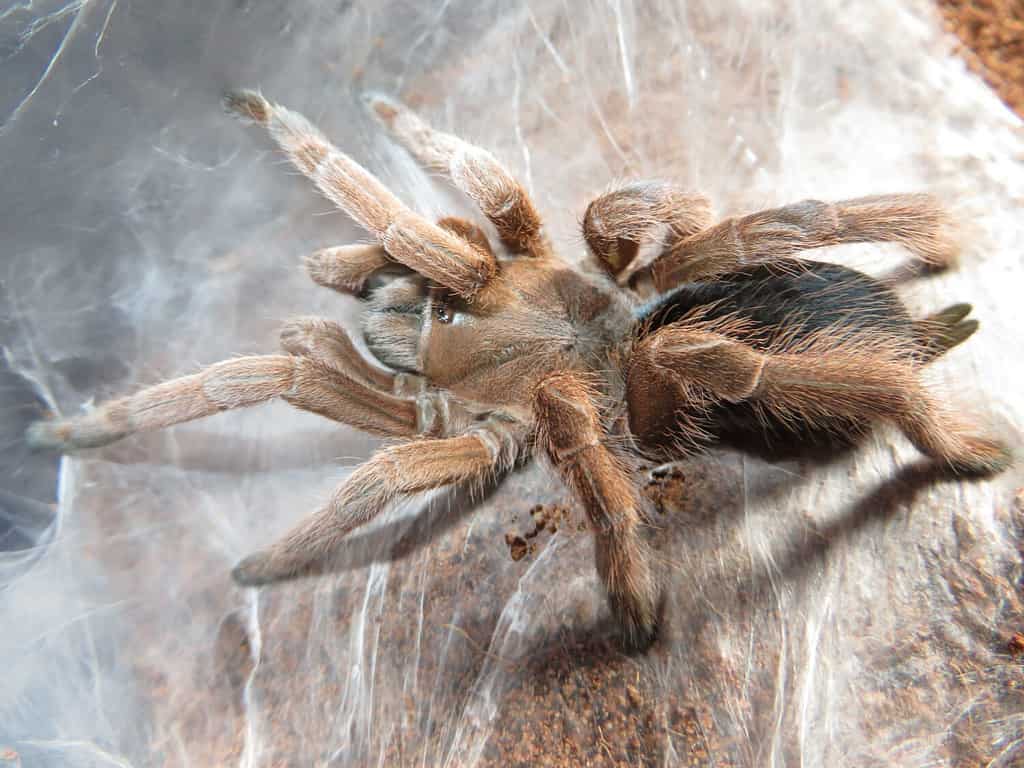
The probability of a tarantula not spinning a web can increase with stress.
©DesertViking/Shutterstock.com
There are also situations where tarantulas won’t make webs at all. This often happens with tarantulas in captivity. Since the reasons they primarily produce webs differ from those of other spiders, it means they may not need to make webs. It takes a great deal of energy to produce silk. So some species may not spin a web unless it is necessary.
The probability of a tarantula not spinning web can also increase with stress. Due to the energy required to make a web, an already stressed tarantula would most likely refrain from doing so. If the temperature or humidity isn’t right or if the spider lacks proper hiding places in its tank, it might be too stressed to make webs. An injured or unhealthy tarantula would also not spin a web.