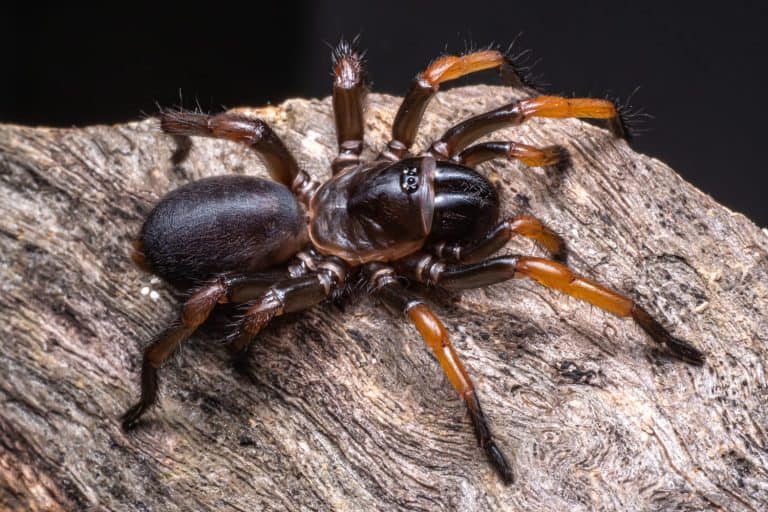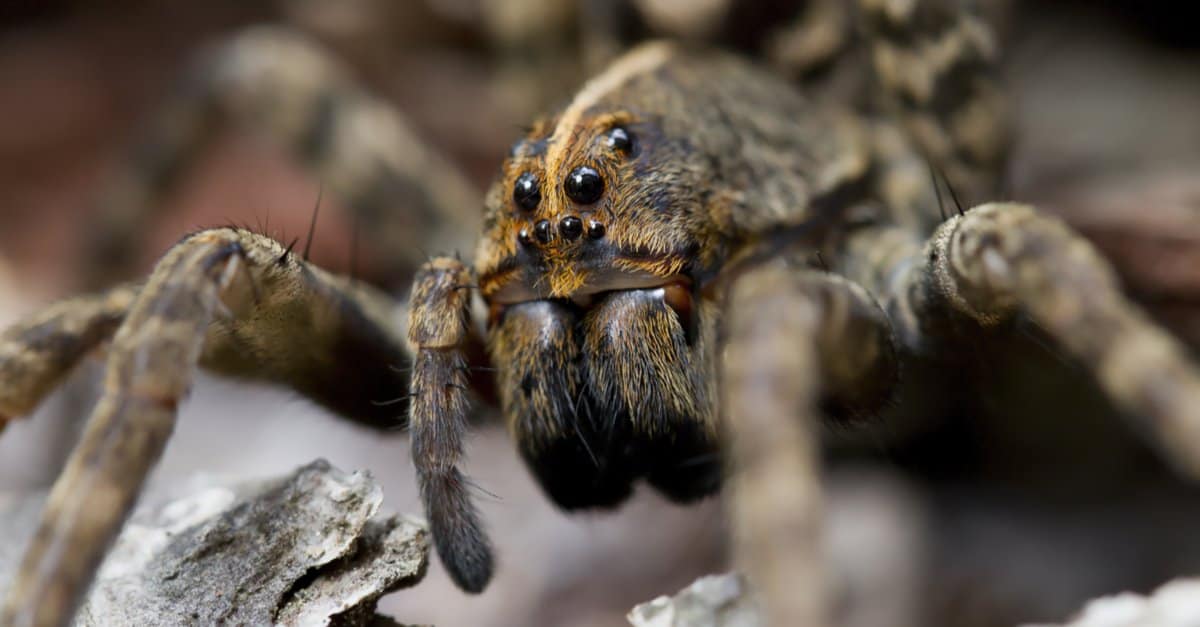

Pennsylvania is home to both large cities and extensive rural areas. With a few hours of driving, you can find yourself in Philadelphia, standing on the shores of Lake Erie, or marveling at the Appalachian Mountains. As one might imagine, the diversity of habitats means that it is home to a wide variety of creatures, including spiders. You’ll learn where you’re likely to encounter these spiders, how large they can grow, and whether they pose any threat to you or your family if they bite. Today, we will examine 5 of the biggest spiders in Pennsylvania arranged from the smallest to largest leg span.
5. Folding Trapdoor Spider
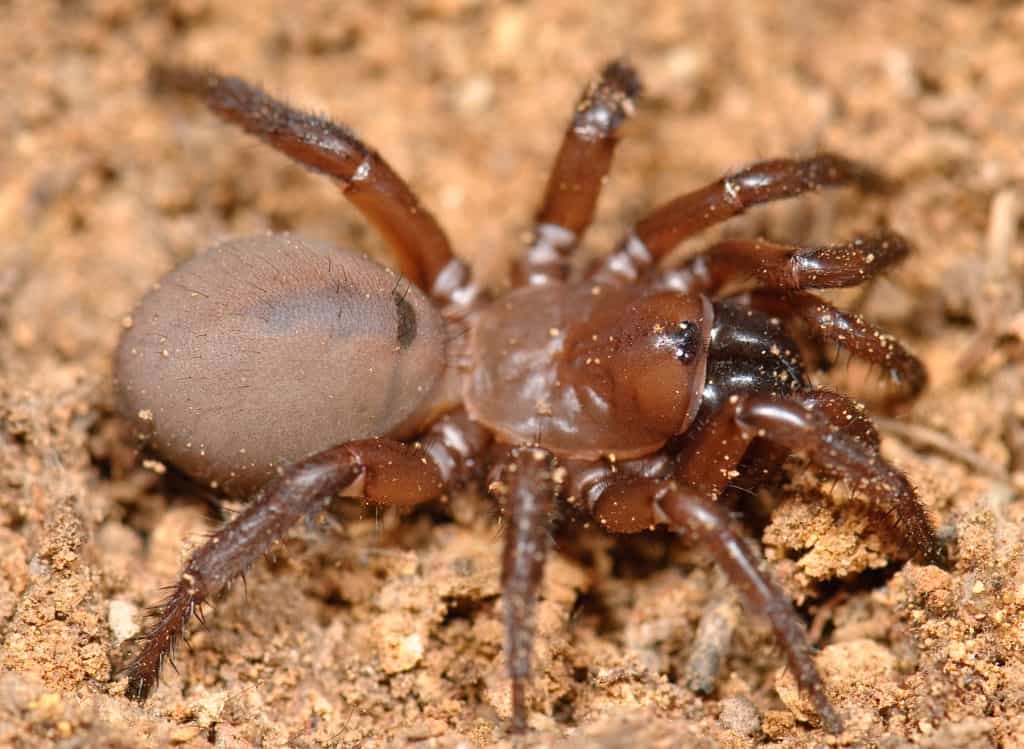
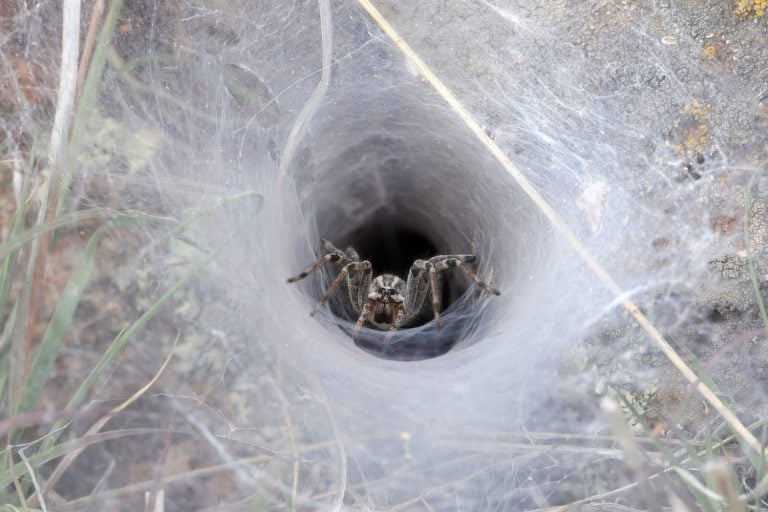
Antrodiaetus unicolor is thought to be the most common trapdoor spider in Pennsylvania.
| Scientific Name | Size | Danger to Humans |
|---|---|---|
| Antrodiaetus unicolour | 0.8 inches with a leg span of 1.6 inches | This spider delivers a mildly painful bite. |
The trapdoor spider hunts from its deep, web-lined burrow. These spiders are not commonly seen because they spend most of their time in their burrows digging or waiting to catch prey. They are called trapdoor spiders because they build a camouflaged trapdoor with silk, soil, and other debris. When they sense prey nearby, they spring through the trapdoor, snatch their prey, and drag it back into the burrow, closing the trapdoor behind them.
The most common trapdoor spiders in Pennsylvania are Antrodiaetus unicolour, which is a type of folding trapdoor spider. These spiders are widely distributed throughout the Central Appalachians. They are large, dark, reddish-brown spiders with a shiny, reddish-brown cephalothorax and a lighter brown, hairy abdomen. They have some resemblance to tarantulas because of their bulbous abdomens, but they are far smaller.
Trapdoor spiders prefer cool, humid, dense forests with loamy soil. So, they are typically encountered outside. They are venomous, but their venom is mostly harmless to humans. Trapdoor spiders are not aggressive and generally only bite in self-defense. In the rare event that you get bitten by a trapdoor spider, you will experience mild pain and swelling at the site. A bite is said to be similar to a wasp sting.
4. American Nursery Web Spider
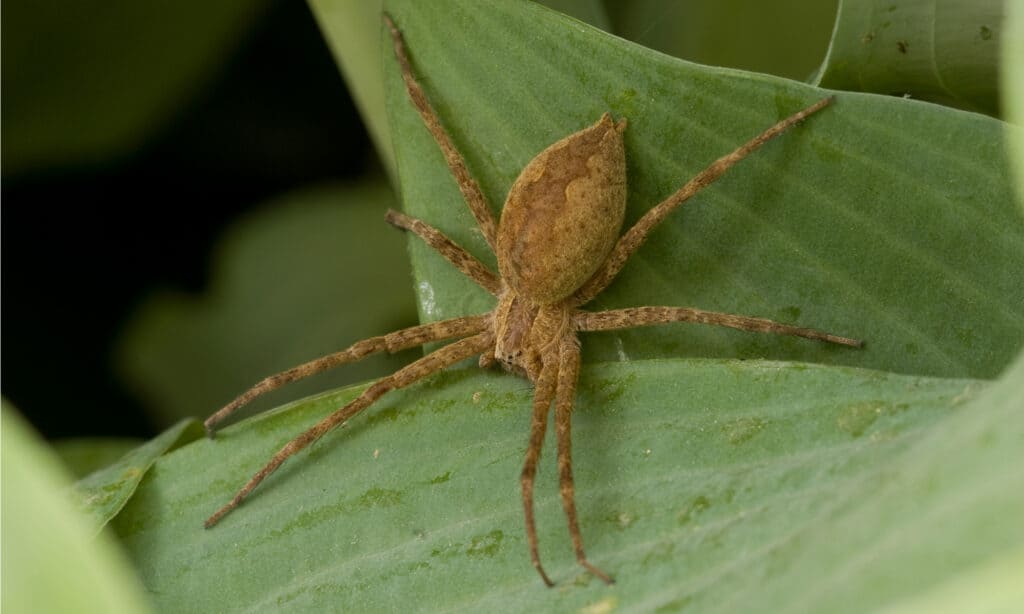
The American nursery web spider is typically found on vegetation.
©SDeming/Shutterstock.com
| Scientific Name | Size | Danger to Humans |
|---|---|---|
| Pisaurina mira | 0.59 inches with a leg span of 1.77 inches | Bites may cause pain and swelling. |
The American nursery web spider is a common spider in the eastern U.S. and is regularly found in Pennsylvania. The female carries her egg sac in her mouth, then builds a pouch from her web to house the eggs when they are about to hatch. This is why they are called “nursery web” spiders.
These large spiders have slender, brownish-grey bodies with darker brown to black stripes. They also have a dark stripe down the middle of their cephalothorax and abdomen. They are sometimes mistaken for wolf spiders, but they have eight eyes in two rows while wolf spiders have eight eyes in three rows.
American nursery web spiders are most often found outdoors. They prefer to live in tall grass, around woods, and in the shrubs near homes. They are venomous, but their venom is considered harmless to humans and pets. These spiders are not aggressive and only bite in self-defense. If they do bite a person, the bite may cause swelling and aching for a short time, similar to a bee sting.
3. Long-Bodied Cellar Spider
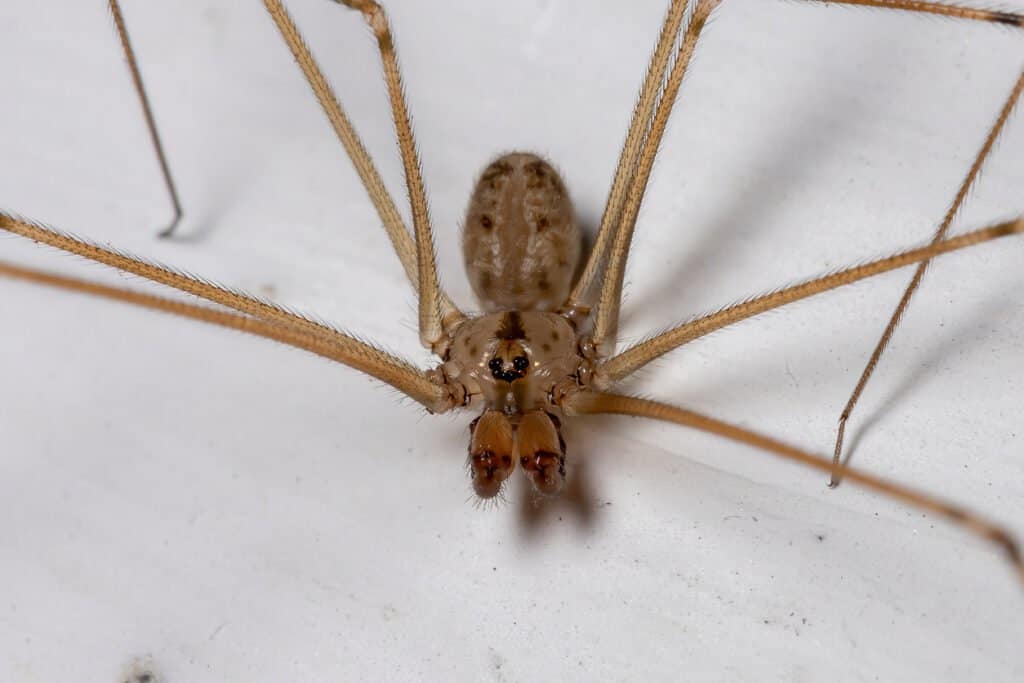
Cellar spiders are often confused with “daddy long legs,” which are actually harvestmen spiders.
©iStock.com/ViniSouza128
| Scientific Name | Size | Danger to Humans |
|---|---|---|
| Pholcus phalangioides | 0.35 inches with a leg span of up to 2.75 inches | A bite may cause a mild burning sensation. |
The cellar spider is one of the most common spiders in homes and basements across the U.S. They are frequently found throughout the state of Pennsylvania. These spiders are often found hanging upside down in garages, basements, attics, or other quiet, sheltered spaces.
Cellar spiders have a light yellow-brown body with a grey spot on the cephalothorax. They have a bulbous abdomen that seems to make up much of their total body length. Their extremely long, thin legs almost appear translucent and can be as much as 6 times their body length.
Long-bodied cellar spiders are unlikely to cause any harm and are not known to bite. They are not aggressive and their weak venom is not harmful to humans or pets. If one does bite you, then you can expect a mild burning sensation.
2. White-Banded Fishing Spider
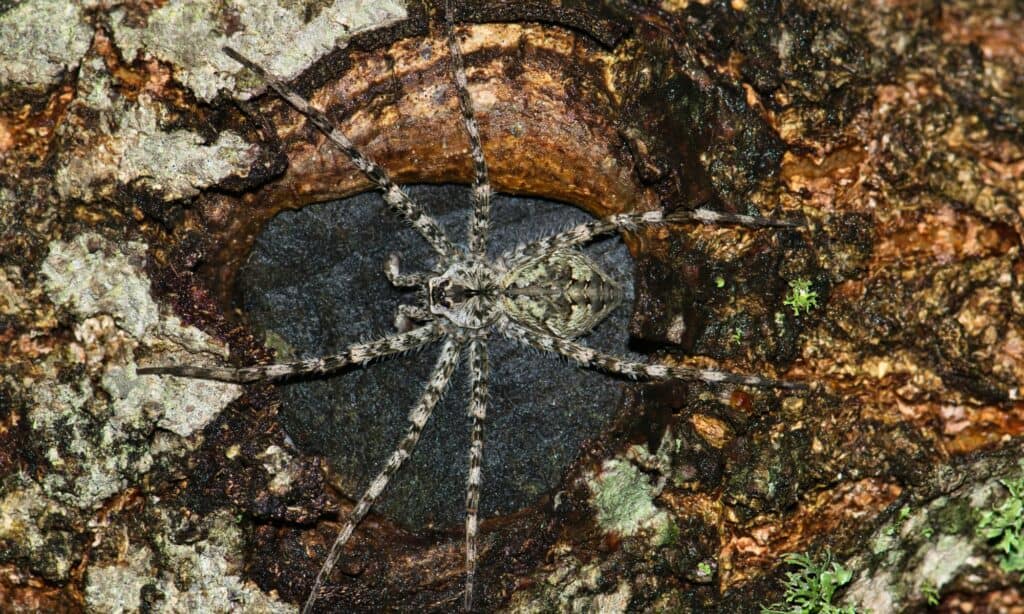
The white-banded fishing spider has regional differences in its coloration, so it can be very dark.
©iStock.com/Brett_Hondow
| Scientific Name | Size | Danger to Humans |
|---|---|---|
| Dolomedes albineus | 1 inch with a leg span of up to 3.5 inches | A bite may result in localized pain, redness, swelling, and itching. |
The white-banded fishing spider is found in aquatic environments across Pennsylvania. These spiders walk on the surface of the water, searching for insects and even small fish. They are one of eight species of fishing spiders in North America.
These spiders are usually tan, grey, or a mossy green color with dark markings, but their colors are variable. They often have a white band on the face, and many individuals have a white carapace. White-banded fishing spiders also sometimes have a greenish tint on the surface of their bodies. They have long legs covered in stiff hairs.
These spiders spend most of their time near the water, but they may also be found on walls or trees. Even though they are very dangerous to their prey, they are not dangerous or aggressive to humans. Although rare, they may bite when threatened. A bite will cause pain, redness, swelling, and possibly itching.
1. Carolina Wolf Spider
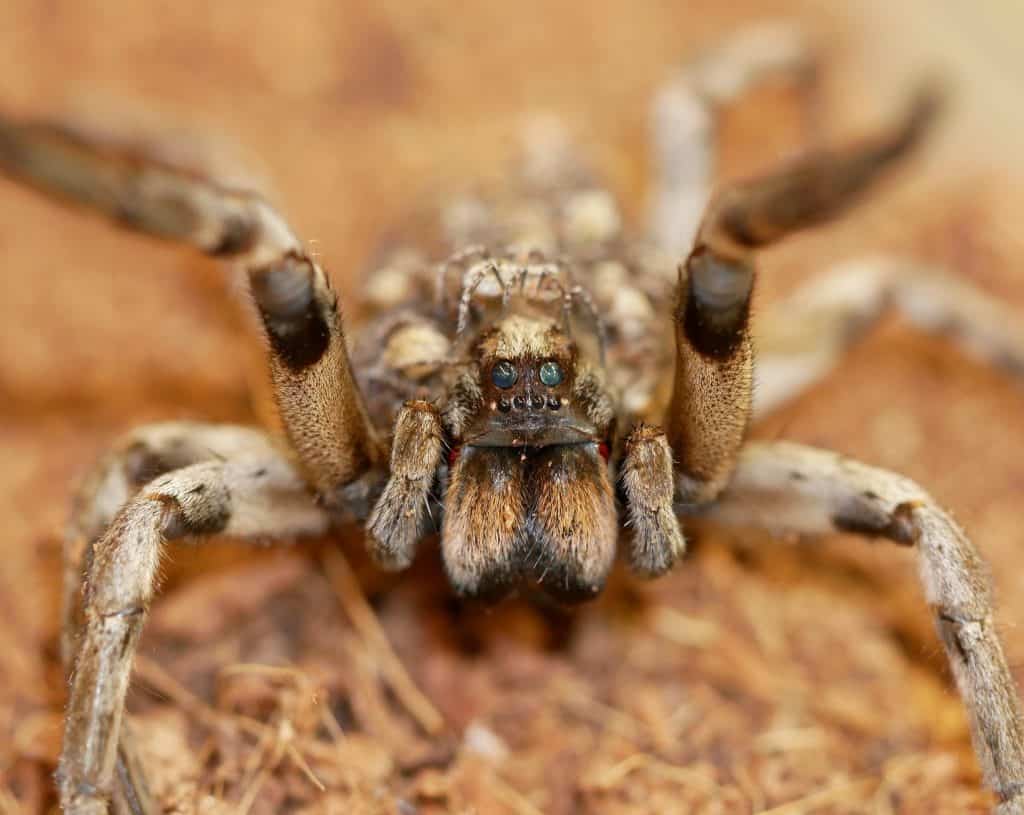
Carolina wolf spiders are the largest wolf spiders in North America.
| Scientific Name | Size | Danger to Humans |
|---|---|---|
| Hogna carolinensis | 1.4 inches with a 3-4 inch leg span | Bites cause localized pain, redness, and swelling. |
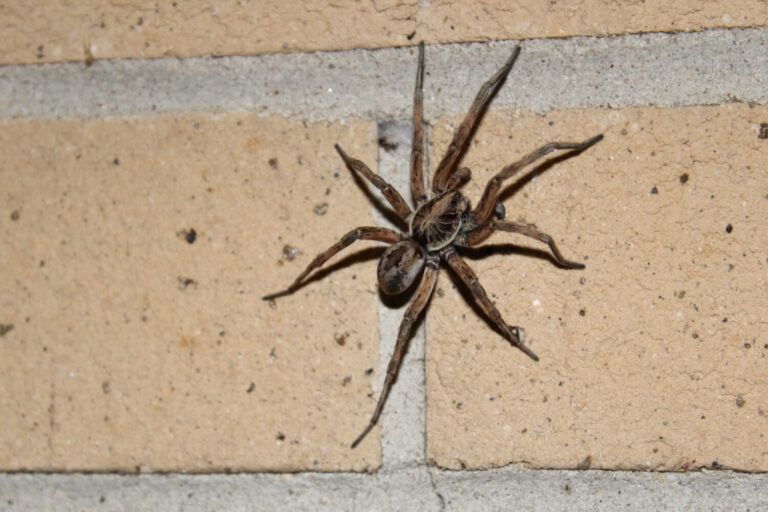
The Carolina wolf spider is the largest wolf spider in North America. These spiders do not use their webs to trap prey. Instead, they hide in their burrows to ambush prey. They also leave their burrows to hunt at night. They feed on insects, small invertebrates, and even small reptiles.
The Carolina wolf spider is generally brown with a darker colored underside and dark markings along the middle of the cephalothorax and abdomen. They have some orange on the front of the chelicerae, or mouthparts, and males may also have orange on the sides of their abdomens. Their bodies are hairy, as are their long legs.
Carolina wolf spiders are most commonly found in open fields and grasslands but are occasionally encountered in Pennsylvania homes. While they are venomous, their venom is not considered medically significant. Carolina wolf spiders are not typically aggressive, but they will bite when threatened or provoked. If you are bitten, you can expect localized pain, redness, and swelling.