
Snapping turtles belong to the Chelydridae family, which has existed for approximately 90 million years and includes several modern turtle species. The earliest turtle fossils date back over 200 million years, showing that the snapping turtle family has remained largely unchanged for 90 million years, a period during which they co-existed with dinosaurs. Although the largest snapping turtle ever recorded was enormous, it was still much smaller than a dinosaur. Continue reading to learn about the largest snapping turtle ever recorded.
Snapping Turtles: An Overview
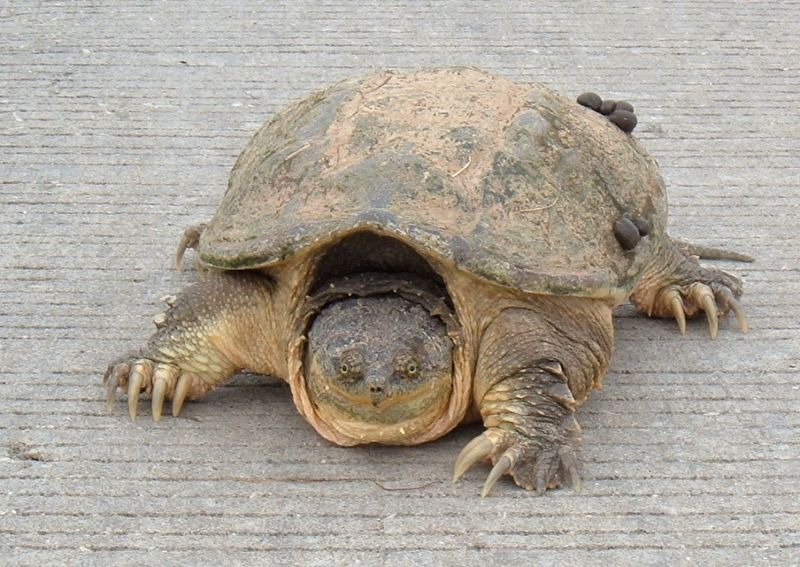
The common snapping turtle co-existed with dinosaurs.
©Willy Logan / Creative Commons – Original
Snapping turtles are large freshwater turtles that are unable to fully withdraw their head and legs into their shells. They have extremely powerful jaws, which they use to defend themselves by snapping. However, despite their fearsome reputation, they are not particularly dangerous to humans.
These fascinating freshwater turtles are excellent swimmers and are found across North America. There are two types of snapping turtles: the common snapping turtle (Chelydra serpentina) and the alligator snapping turtle (Macrochelys temminckii). Common snapping turtles average 8 to 14 inches long and weigh between 10 and 35 pounds, while alligator snapping turtles are between 13 and 32 inches long and weigh from 19 to 176 pounds.
The Largest Snapping Turtle Ever Recorded
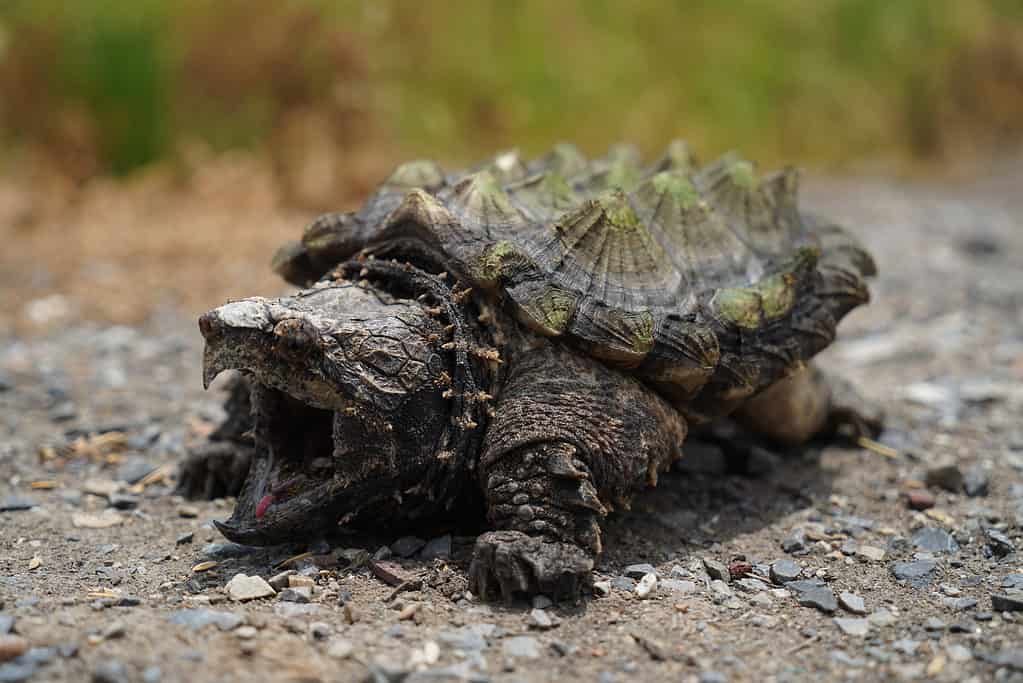
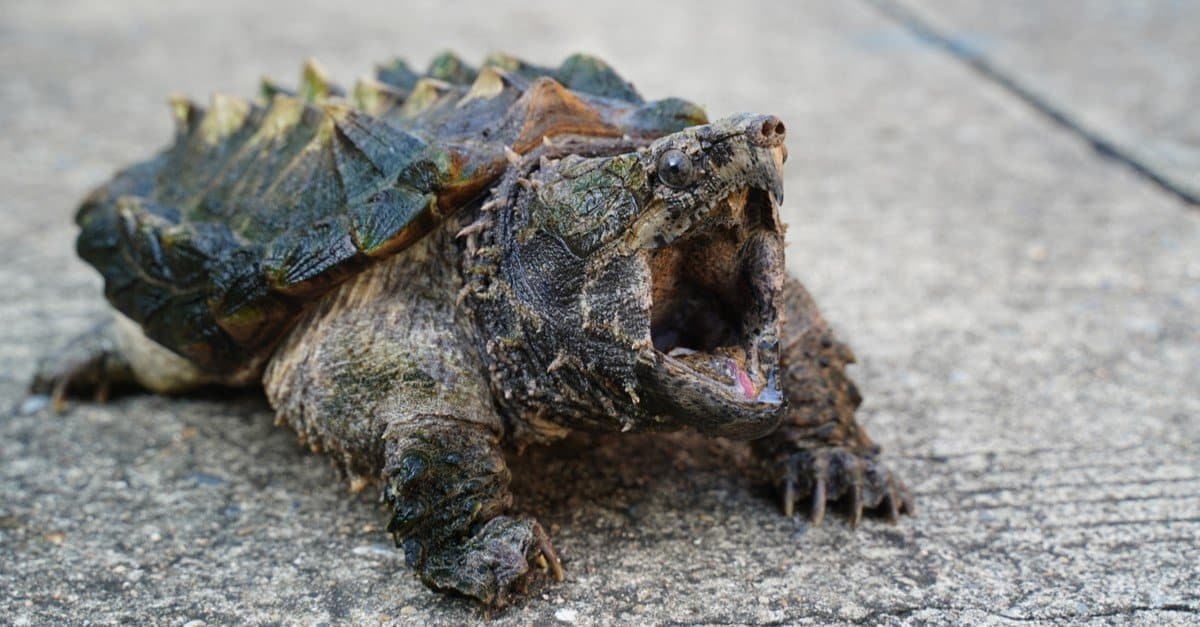
Alligator snapping turtles are among the largest freshwater turtles in the world.
©iStock.com/Sista Vongjintanaruks
The largest snapping turtle on record was a 16-year-old alligator snapping turtle that weighed 249 pounds. This massive turtle was weighed at Shedd Aquarium in Chicago in 1999. Unfortunately, the unnamed turtle died unexpectedly in late 2023, with the cause of death attributed to complications from severe pneumonia, while at the Tennessee Aquarium, where it was on loan for breeding. The specimen left behind numerous offspring, two of which continue to serve as ambassador animals for education at the Tennessee Aquarium in Chattanooga.
Although never officially confirmed, an alligator snapping turtle rumored to weigh 403 pounds was found in Kansas in 1937.
Snapping Turtles vs. Other Turtles
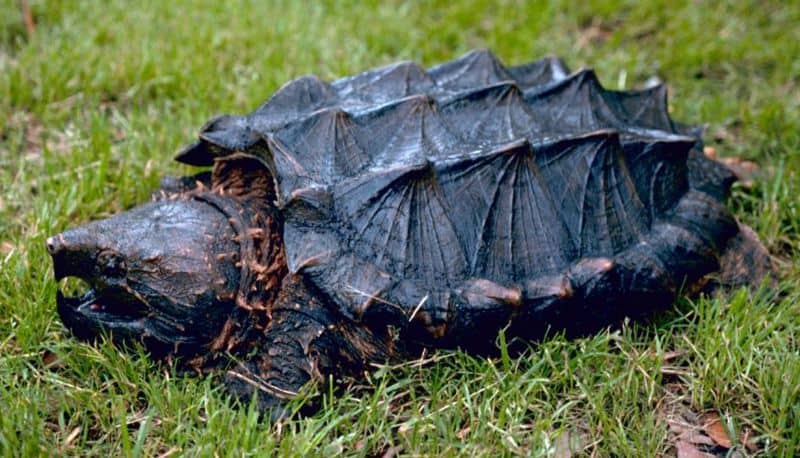
The largest snapping turtle official recorded weighed 249 pounds
©Gary M. Stolz / Public Domain
Compared to other freshwater turtles, snapping turtles are only slightly smaller than the largest turtle, the Yangtze giant softshell turtle. The Yangtze giant softshell turtle can grow to over 39 inches in length and can weigh up to 440 pounds.
Although snapping turtles are impressive in size for freshwater turtles, they are still much smaller than sea turtles. Leatherback turtles typically weigh between 500 and 1,000 pounds, with the largest ever recorded weighing about 2,019 pounds.
Ancient Turtles
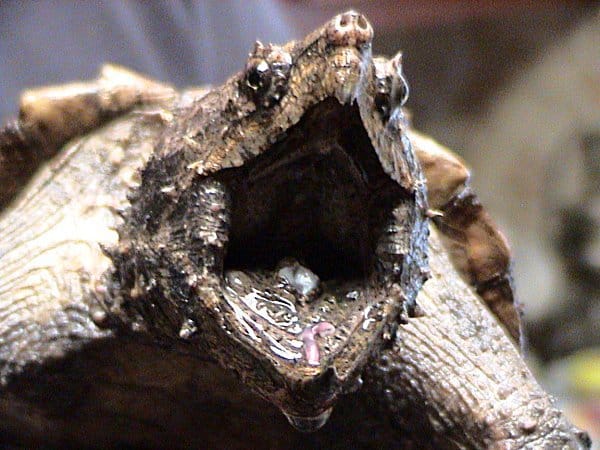
Snapping Turtles look much more lethal than they are.
©LA Dawson, CC BY-SA 2.5, via Wikimedia Commons – Original / License
Although not a lot is known about extinct species of snapping turtles, it is easy to imagine that they were much larger than their modern relatives. The largest extinct turtle, the Archelon, was a sea turtle that lived between 66 and 83 million years ago and reached lengths of up to 12 feet.
The second largest extinct turtle species, the Stupendemys, was a large freshwater turtle that was 11 feet long and lived between 5 and 10 million years ago, in what is now South America. It is believed that, like the alligator snapping turtle, Stupendemys was an omnivore and lived at the bottom of freshwater rivers and lakes.